
Beijing Transportation: 7 Ways to Get Around
Getting around Beijing is easier for foreign tourists than it has ever been. Since 2024, your Visa or Mastercard taps directly onto the subway. DiDi runs in full English with foreign card support. Both airports have designated ride-hailing zones. The old friction points — cash-only ticket machines, app setups requiring Chinese bank accounts — have largely been solved.
What hasn’t changed: Beijing is a large, complex city with seven distinct ways to move around it. Each one has a specific use case, a specific cost, and specific situations where it fails. This guide covers all seven, then shows you exactly how to use them to reach Beijing’s most-visited destinations.
One thing to set up before you land: Alipay or WeChat Pay linked to your foreign card. The subway now accepts physical card tap-and-go, so you can survive without these apps — but DiDi, buses, and bike-sharing all require them. Both apps support international cards without a Chinese phone number. Verification needs a stable connection; the airport Wi-Fi queue is not the right moment.
Table of Contents
Part 1: The 7 Ways to Get Around Beijing
1. The Subway

The Beijing metro is the backbone of tourist navigation. Close to 30 lines, nearly 500 stations, fares from ¥3 to ¥9 by distance, running roughly 5:00 AM to 11:00 PM. The network expanded again in December 2025 with Line 18 and extensions to Lines 6 and 17.
Since September 2024, Beijing’s metro accepts tap-and-go from overseas Visa and Mastercard — the first metro in mainland China to do so. JCB and American Express followed in June 2025, completing the rollout to all five major international card networks. Walk straight to the gate, tap your physical card, and the fare is calculated at local rates. No ticket, no app, no cash needed.
Every station has bilingual English/Chinese signage and announcements. Apple Maps and Amap both handle metro routing without a VPN. Amap shows which exit to take and walking directions from the gate — worth using at large interchange stations.
One detail no guide mentions: every Beijing metro station requires bags through an X-ray machine on entry. Allow an extra 2–4 minutes at busy stations during peak hours. If you’re connecting to the Airport Express with a tight window, factor this in.
For frequent use: the Yikatong (一卡通) smart card (¥20 deposit, available at any station service window) gives a 60% discount on buses and works in 327+ cities across China. Worth it from day four onwards.
Beijing Pass vs. Yikatong: the Beijing Pass (¥20, sold at both airports and major stations) covers metro, buses, and entry to 30+ ticketed attractions including the Summer Palace, Temple of Heaven, and Ming Tombs on a single card. If your trip involves four or more paid attractions, it pays for itself. If you’re mainly moving around the city, the Yikatong is simpler. Don’t buy both.
Rush hours: 7–9 AM and 5–7 PM on weekdays. Trains are packed to a level that makes carrying luggage difficult. Avoid moving heavy bags in these windows.
2. DiDi
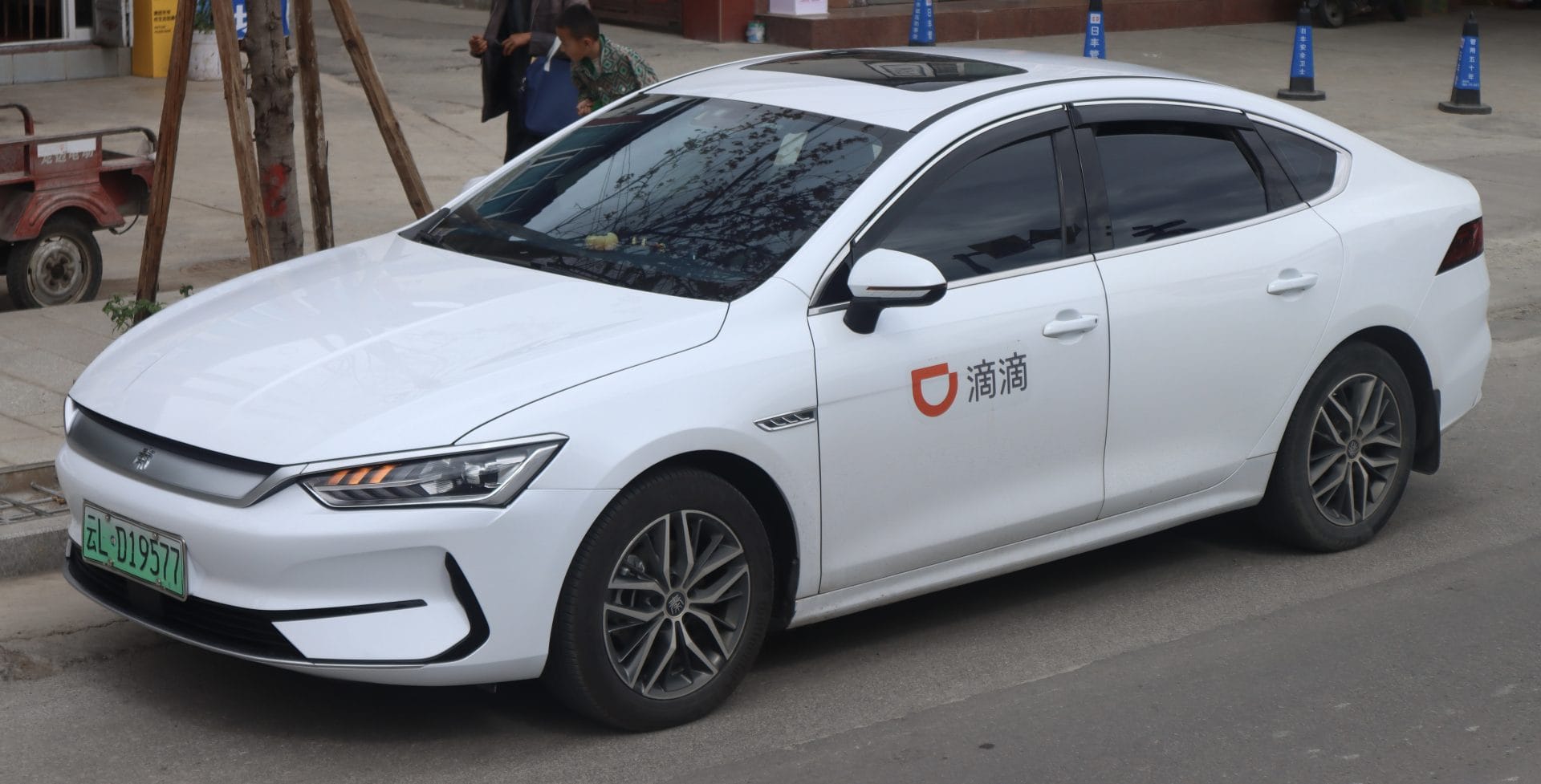
DiDi is how most people in Beijing actually get around when the subway isn’t enough — 600 million users, full English interface, and it works with your foreign card. Use it when the subway exit leaves you 15 minutes from your actual destination, when you have luggage, or when you want door-to-door service.
Download the DiDi app and register with your international phone number. Alternatively, use the DiDi mini program inside WeChat (search “滴滴出行” in Mini Programs). For payment, link your card through Alipay or WeChat Pay rather than directly — direct foreign card connections work in Beijing but occasionally hit bank risk-control blocks.
Choose DiDi Express (快车) for standard rides. A 20-minute, 8-km ride typically costs ¥35–50 in normal conditions. Surge pricing can double this during peak hours — at those times, the subway is both faster and cheaper.
One honest warning: a small number of Beijing DiDi drivers decline orders from foreign phone numbers or cancel after accepting. It happens less than it did before 2024, but it does still happen. If a driver cancels twice in a row, switch to the DiDi Taxi option, which summons metered cabs whose drivers are more accustomed to foreign passengers.
For a full guide to DiDi and other ride-hailing services across China, see our China taxi and ride-hailing guide.
READ ALSO: Avoiding Taxi and DiDi Scams in China: A Complete Guide for Travelers
3. Metered Taxis
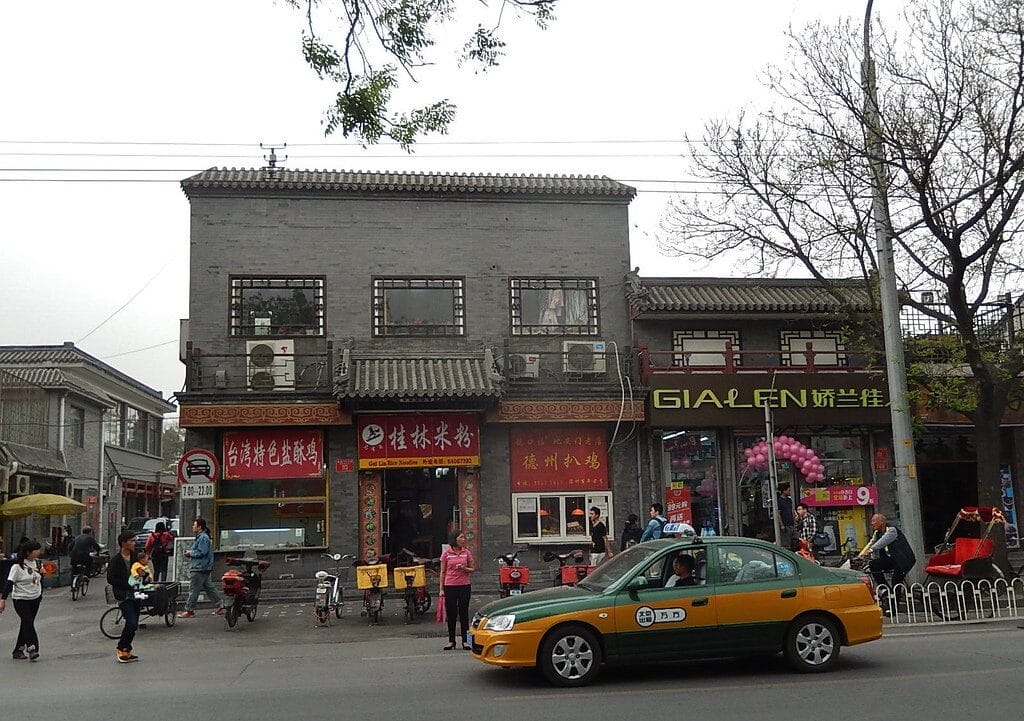
Metered taxis are useful when DiDi isn’t available, when you prefer cash, or when heavy luggage makes the walk to a ride-hailing zone impractical.
Fares start at ¥13 for the first 3 km, then ¥2.3 per kilometer. A typical cross-city ride runs ¥40–80; airport runs are more. Most Beijing taxis do not accept foreign credit cards — cash is the reliable option.
The non-negotiable rule: every legitimate Beijing taxi has a meter. Before moving, say “请打表” (qǐng dǎ biǎo — “please start the meter”). If the driver refuses or names a flat price, get out. This rule applies every time, without exception.
Most drivers speak no English. Have your destination saved in Chinese characters on your phone — copied from the hotel website or front desk. Show the screen; don’t attempt to pronounce it.
4. Buses
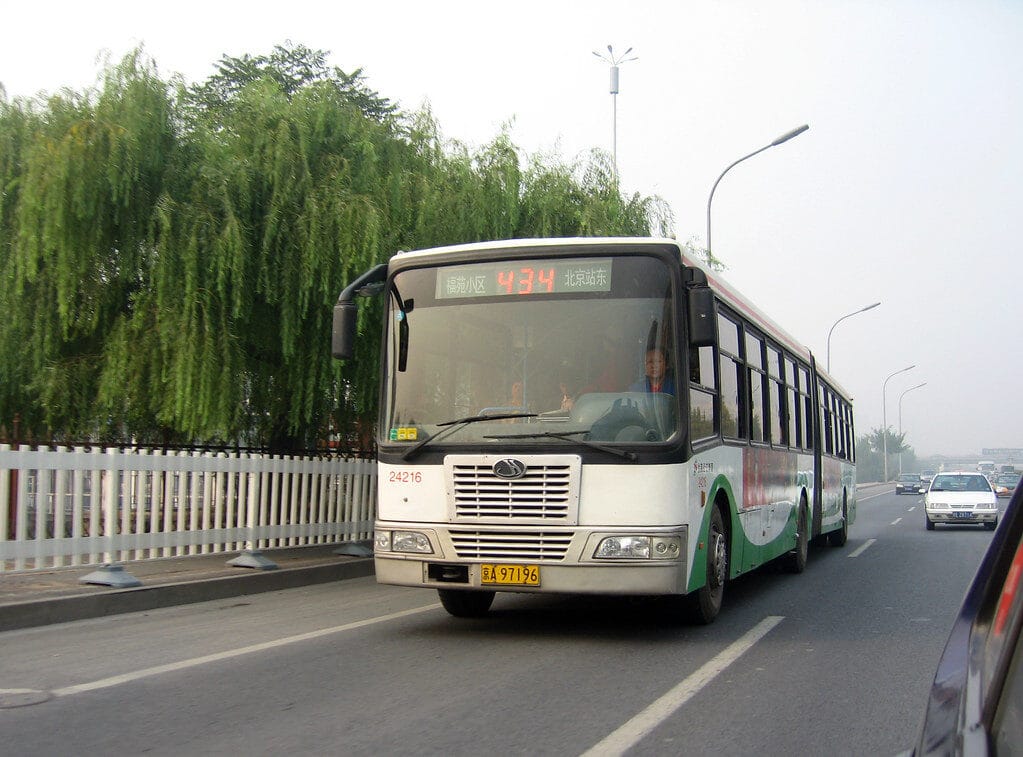
Beijing has over 1,000 bus routes covering areas the subway doesn’t reach. For most tourists, the subway handles everything — buses become relevant mainly for two situations: reaching Great Wall sections (Bus 877 from Deshengmen to Badaling; Bus 980 from Dongzhimen toward Mutianyu), and reaching destinations in outer districts where subway coverage is thin.
Bus stop signboards are in Chinese only. Audio announcements are bilingual. Having Amap open to track your position makes bus travel workable without reading Chinese. Pay with Yikatong or Alipay/WeChat Pay — card payment gives a 60% fare discount over cash.
5. Bikes
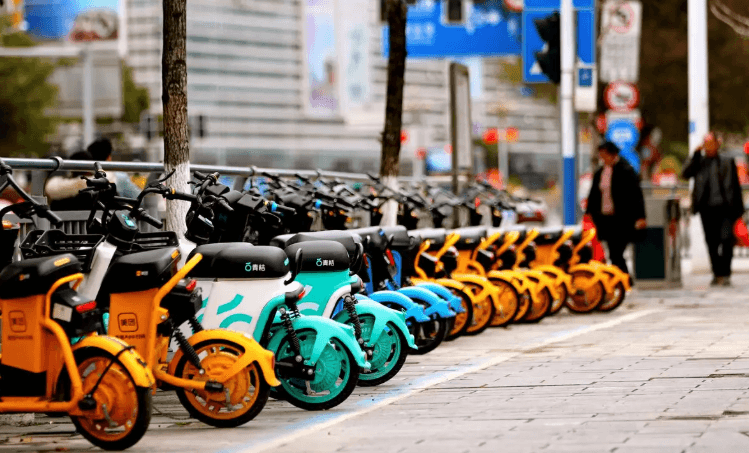
Beijing’s bike-sharing network is one of the world’s largest. Meituan bikes (yellow) and Hello Bikes (blue) are parked throughout the central city. Unlock via app, ride, park within the allowed zone. Cost: ¥1.5–2 per 30 minutes.
The combination most tourists miss: subway to the right district, bike to the specific address. Metro exits almost always have a bike rack within 50 meters. This pairing — metro for distance, bike for the last stretch — is how locals actually navigate central Beijing. It’s faster than a taxi in traffic and far cheaper.
Bikes work well specifically for hutong exploration, where narrow lanes make taxis impractical, and for the area between Drum Tower, Nanluoguxiang, and Houhai Lake. Avoid Beijing’s ring roads on a bike — they’re wide, fast, and not suited to inexperienced urban cyclists. Stick to designated bike lanes on arterials.
For hutong navigation on foot and by bike, see our Beijing hutong guide.
6. High-Speed Rail

High-speed rail is often the best way to travel between Chinese cities. Door-to-door it beats domestic flights on most routes under 1,000 km, and it’s bookable with a foreign passport through 12306.cn, Trip.com, or Klook.
Beijing’s two main high-speed stations for tourists:
Beijing South Station (北京南站, Line 4): trains to Shanghai (fastest around 4.5 hours), Tianjin (30 minutes), Jinan, and Nanjing.
Beijing West Station (北京西站, Lines 7 and 9): trains to Xi’an (around 4.5 hours), Chengdu, Zhengzhou, and destinations in central and southwest China.
Book tickets 5–7 days ahead for popular routes like Beijing–Shanghai on weekends or around Chinese public holidays — seats sell out. We cover the full booking process in our train tickets guide for foreigners.
7. Flights

Beijing is China’s primary aviation hub, served by two international airports.
Beijing Capital Airport (PEK) is the main international gateway — home to Air China and Star Alliance carriers, with long-haul routes to North America (Los Angeles, New York, Vancouver), Europe (London, Frankfurt, Paris, Amsterdam), and major Asian cities. Most international visitors arrive here.
Beijing Daxing Airport (PKX), designed by Zaha Hadid and opened in 2019, serves as the hub for China Southern and China Eastern. It handles growing international traffic — primarily Asian routes plus select European destinations — and has strong domestic coverage. PKX is ultramodern and less crowded than PEK, but sits farther from the city center.
For domestic travel, both airports connect Beijing to virtually every major Chinese city. Key routes international visitors use: Beijing–Xi’an (around 2 hours, versus 4.5 by HSR), Beijing–Chengdu (2.5 hours), Beijing–Guilin (3 hours), Beijing–Zhangjiajie (2.5 hours). For short hops like Beijing–Shanghai, high-speed rail is usually faster door-to-door. For longer distances or routes with limited HSR service, flying is the practical choice.
When booking, check which airport your flight uses — PEK and PKX are 67 km apart and not directly connected. Transferring between them requires 90–120 minutes by taxi or multi-leg subway journey.
For a detailed comparison of both airports and which to choose, see our Beijing airport guide.
Part 2: Getting to Specific Destinations
From the Airport to Your Hotel
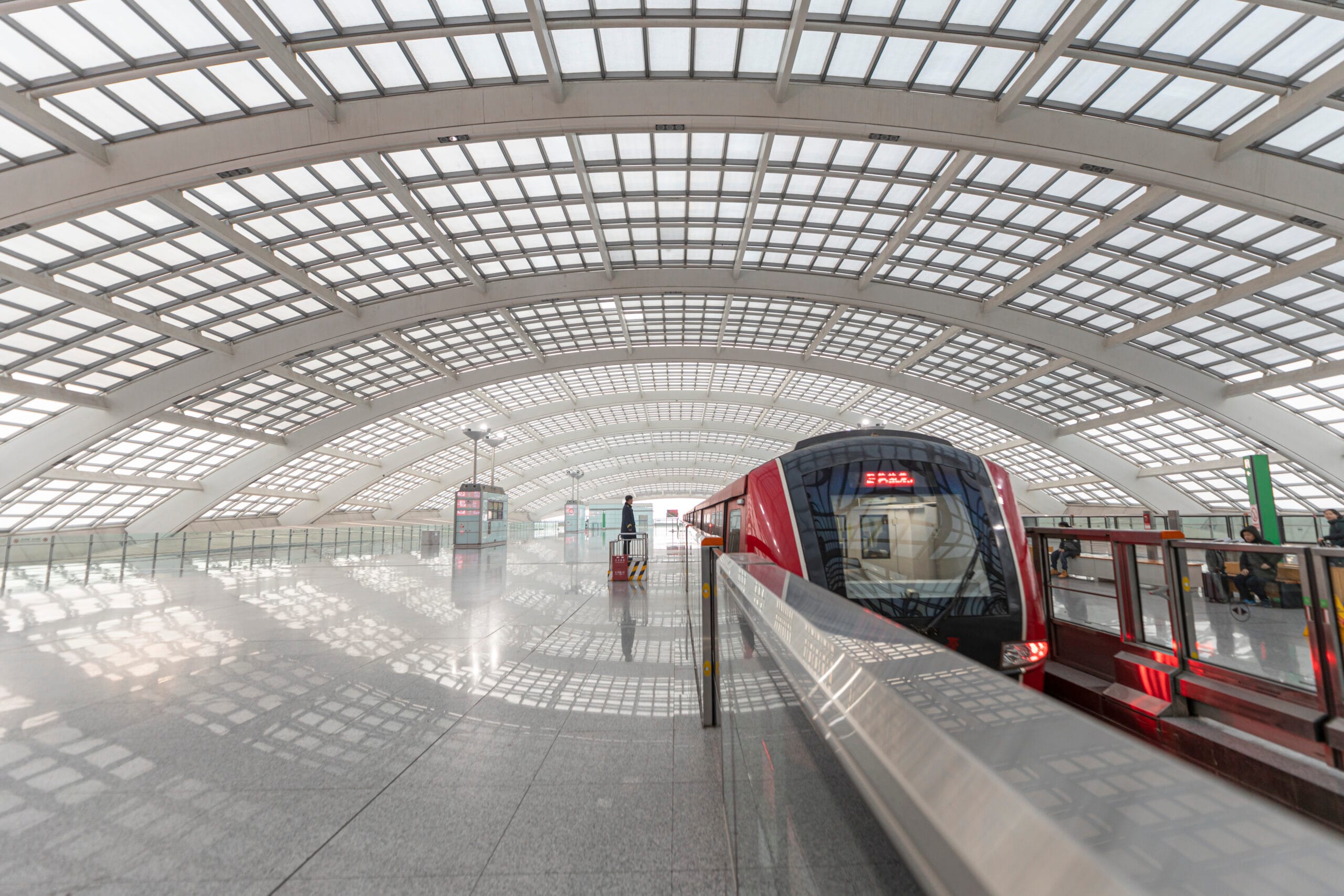
From PEK: The Airport Express runs from Terminals 2 and 3, stopping at Sanyuanqiao and Dongzhimen before terminating at Beixinqiao. Journey time to Dongzhimen is about 20–25 minutes; trains run every 10–15 minutes from roughly 6:20 AM to 23:10 PM (T3) for ¥25. From Dongzhimen, transfer to Lines 2 or 13 for most central destinations. Total to Wangfujing or the Forbidden City area: under ¥30. Taxi runs ¥110–¥180 depending on destination and traffic, with 30–45 minute queues during peak periods. For DiDi, follow the 网约车 signs in arrivals to the designated zone — book after you reach it, not before.
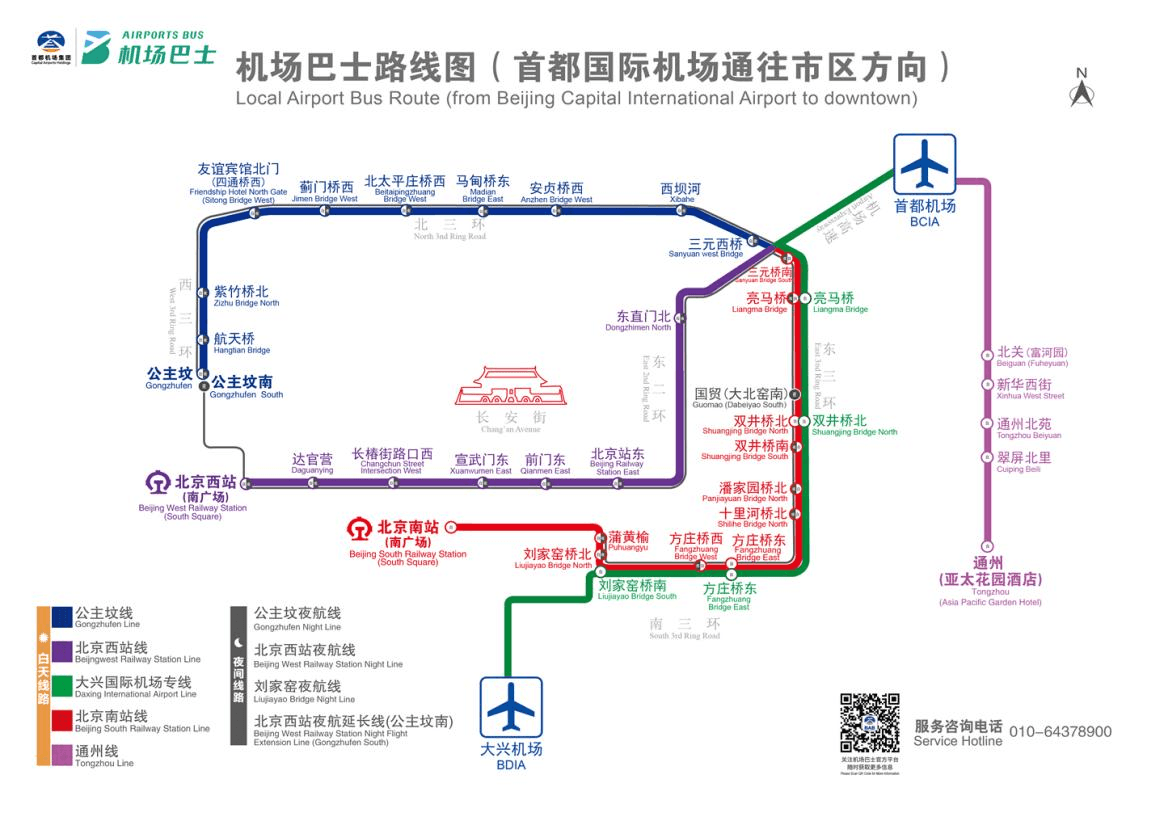
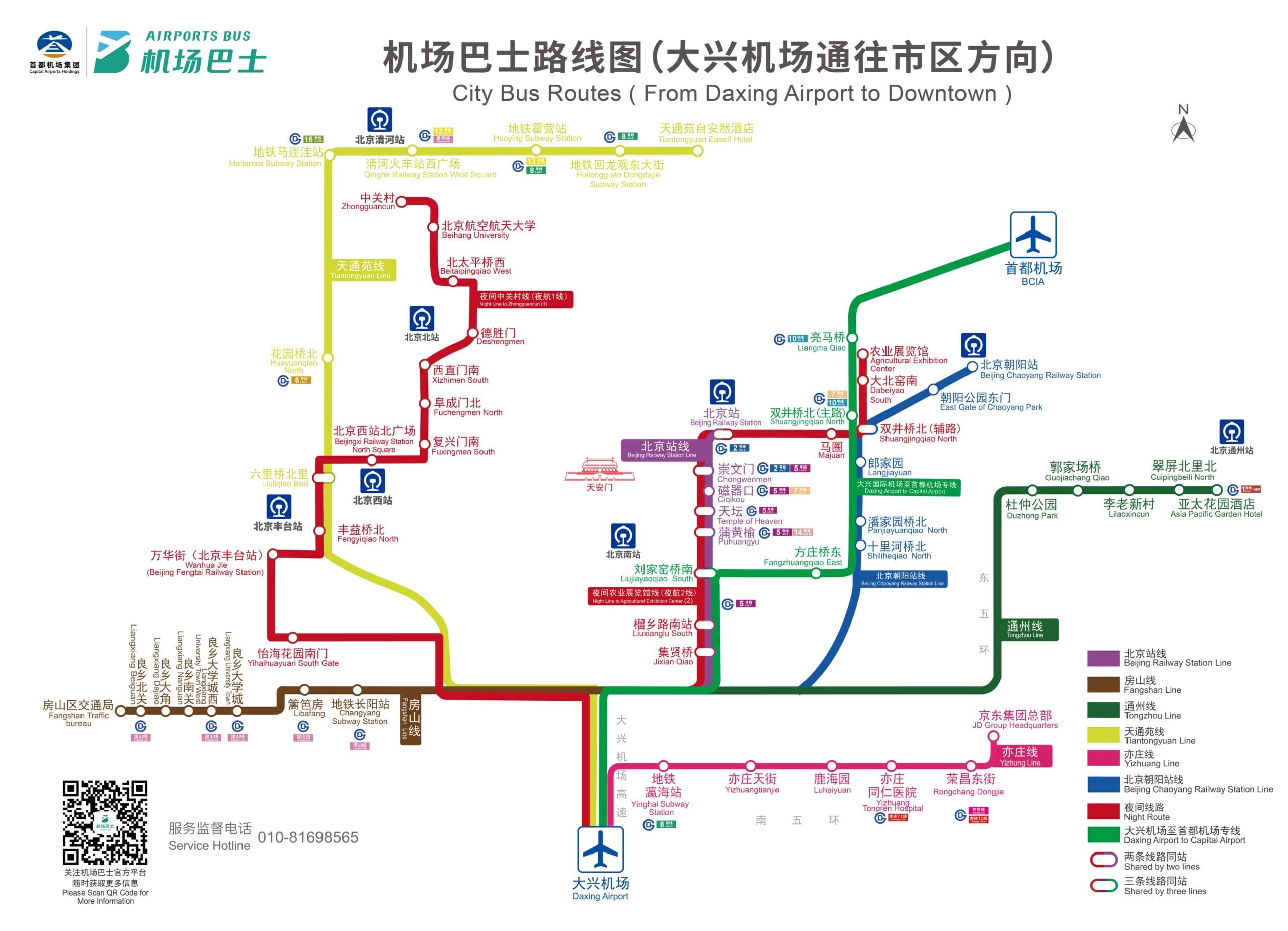
From PKX: The Daxing Airport Express reaches Caoqiao Station in 22 minutes, where you transfer to Lines 19 or 10 for downtown. Full trip to central Beijing: around 35–40 minutes total, international cards accepted at the gates. Fare ¥35. PKX also has a second option PEK doesn’t: the Jingxiong intercity high-speed train runs directly to Beijing West Station in about 29 minutes for ¥30 (second class) — useful if you’re staying near the west side of the city or continuing by train to Xi’an or Chengdu. Taxi to central Beijing: ¥180–¥320, 60–90 minutes in normal traffic.
Airport to City Center: Time & Cost Comparison
Times are estimates to central Beijing (Wangfujing area) in normal traffic conditions. PEK Airport Express time is to Dongzhimen; add ~10 min for onward subway connection. PKX subway time includes transfer at Caoqiao. Sources: Beijing Metro official data; field experience 2024–2026.
Getting to the Great Wall
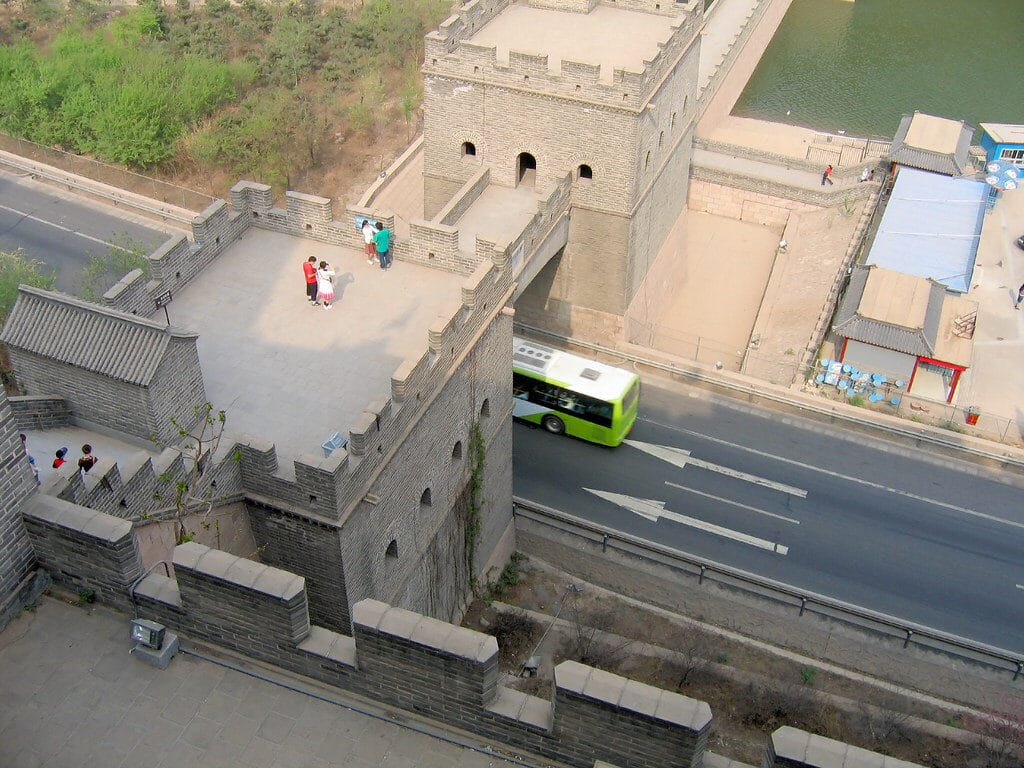
The Great Wall sections differ significantly in how you reach them.
Badaling: High-speed rail from Beijing Qinghe Station to Badaling Great Wall Station — 25 minutes, trains every 30 minutes. Book via 12306.cn or Trip.com with your passport. Bus 877 from Deshengmen takes around 90 minutes but costs far less. See our Badaling Great Wall guide for full transport details.
Mutianyu: No direct public transport. Subway to Dongzhimen, then Bus 916 to Huairou, then a local shuttle — total 2–2.5 hours. Most travelers find a private car or tour more practical.
Jinshanling: Public transport requires 4–5 hours each way across multiple transfers. Private car from Beijing takes 2–2.5 hours. We consistently recommend a guided tour or private vehicle. See our Jinshanling guide.
One mistake we see regularly: underestimating return times from the wall. On weekends, expressway traffic back to Beijing can add 45–90 minutes. Build buffer time into any wall-day plan. For a full comparison of all sections, see our Great Wall section guide.
Key Attraction Subway Stations
Attraction | Station | Line |
|---|---|---|
Tiananmen East | Line 1 | |
Tiantandongmen | Line 5 | |
Beigongmen | Line 4 | |
Yonghegong | Line 2 / 5 | |
Nanluoguxiang hutongs | Nanluoguxiang | Line 8 |
798 Art District | Jiuxianqiao | Line 14 |
Olympic Park | Olympic Green | Line 8 |
For attraction-specific details, see our Beijing attractions hub.
Subway Time to Major Attractions (from Wangfujing)
Approximate door-to-station times from Wangfujing Station by subway. Actual times vary by hotel location and exit. All fares ¥3–6 by distance. Sources: Beijing Metro trip planner; field experience 2024–2026.
Part 3: Practical Notes
Before You Arrive
Install Alipay or WeChat Pay and link your foreign Visa or Mastercard before landing — both apps support international cards without a Chinese phone number. Also download Amap for navigation; Google Maps requires a VPN and has outdated location data in China (check its best alternatives). Apple Maps works without a VPN.
If you arrive without any setup, you can still tap your physical card on the subway and hail a metered taxi to your hotel. You'll have fewer options, but you won't be stranded.
What Goes Wrong
Wrong subway exit. Beijing stations can have 20+ exits. Check the exit letter before going underground — Exit A and Exit G at the same station can be a 15-minute walk apart.
Security check delay. Every metro station has bag X-ray on entry. At busy interchange stations like Guomao or Dongzhimen during rush hour, the queue adds 5–10 minutes. Allow for this if you're catching the Airport Express with a tight connection.
DiDi pickup zone confusion at airports. The ride-hailing zone (网约车) is not the taxi rank. Book after you reach the zone — not before.
Rush hour miscalculation. 7–9 AM and 5–7 PM on weekdays. The subway handles this. DiDi and taxis do not — surge pricing and gridlock can turn a 20-minute ride into 75 minutes.
No hotel address in Chinese. Taxi drivers who speak English are rare. Have the Chinese characters saved on your phone to show the driver.
Google Maps. It doesn't work without a VPN. Use Apple Maps or Amap.
FAQ - Beijing Transportation
What is the Beijing Pass and do I need it?
The Beijing Pass is a prepaid card for foreign visitors (¥20, available at both airports and major train stations). It covers metro, buses, and entry to 30+ attractions including the Summer Palace, Temple of Heaven, and Ming Tombs. Worth it if you plan to visit four or more ticketed sights. If you're mainly using transport, the Yikatong card is simpler and cheaper.
Can I use my credit card on the Beijing subway?
Yes. Since September 2024, Beijing accepts tap-and-go from Visa and Mastercard across all lines. JCB and American Express were added in June 2025. Tap your physical card at the gate — fare is calculated at local rates automatically.
Is DiDi safe for foreigners in Beijing?
Yes. The app shows the driver's name, photo, license plate, and car model before pickup. Match the plate to the vehicle before getting in. Built-in chat translation handles communication without Chinese.
Do Beijing taxis take credit cards?
Most do not. Cash (RMB) is the reliable payment method. The DiDi Taxi option within the app allows cashless payment via Alipay or WeChat Pay.
How do I get from Beijing Capital Airport to the city center?
Airport Express from Terminal 2 or 3 to Dongzhimen: 20–25 minutes, ¥25. Transfer to Lines 2 or 13 for most central destinations. Taxi: ¥110–¥180 depending on destination and traffic.
When should I take a flight vs. high-speed rail within China?
For Beijing–Shanghai, high-speed rail is usually better door-to-door. For longer routes — Beijing to Chengdu, Guilin, Zhangjiajie — flying saves significant time. Check our train tickets guide for booking instructions.
What's the best way to get to the Great Wall?
Depends on the section. Badaling: high-speed rail from Qinghe (25 min) or Bus 877. Mutianyu: Bus 916 from Dongzhimen plus transfer, or private car. Jinshanling and Simatai: private car or guided tour.
Can I use Alipay or WeChat Pay without a Chinese bank account?
Yes. Both apps support international cards without a Chinese phone number. Set up and verify before you land — the process requires a stable internet connection.
We've been running tours in China since 2006, with guides across all major languages. Contact us to plan your perfect Beijing trip today!