Best Beijing Opera Theaters: Where to Enjoy Authentic Peking Opera
The moment we arrived at Liyuan Theatre last April, something felt different from the tourist traps we’d visited before. The staff spoke fluent English. Subtitles scrolled clearly on screens beside the stage. Most importantly, the performers weren’t going through the motions—they were masters showcasing their craft.
After attending over 50 Beijing Opera performances across seven different venues over the past three years, we’ve learned which theaters deliver genuine experiences and which waste your money. This guide cuts through the marketing fluff to tell you exactly where to go based on your priorities.
Table of Contents
Quick Answer: Which Theater Should You Choose?
- Best for first-timers: Liyuan Theatre
- Best for quality seekers: Mei Lanfang Grand Theatre
- Best for history lovers: Huguang Guild Hall
- Best value for money: Chang’an Grand Theatre
- Best for serious enthusiasts: National Center for the Performing Arts (NCPA)
What Makes a Great Beijing Opera Experience

Before diving into specific venues, understand what separates outstanding theaters from mediocre ones. We’ve identified four critical factors after years of comparison:
English Accessibility Without Losing Authenticity
The best venues offer English subtitles synchronized with performances. This isn’t “dumbing down”—it’s making the artform accessible. Huguang Guild Hall and Liyuan Theatre excel here. Without subtitles, you’ll spend 90 minutes confused rather than captivated.
Some “authentic” venues skip subtitles entirely, forcing foreign audiences to guess plot points. That’s not authentic—it’s exclusionary. Traditional Chinese audiences understood the stories from childhood. You need help, and good theaters provide it.
Performer Quality You Can Actually See
Top theaters employ performers from the China National Peking Opera Company or provincial troupes. These artists trained 10+ years and won national awards. The difference is obvious—their movements are precise, vocals controlled, and emotional expression genuine.
Budget venues hire whoever’s available. We’ve seen “performers” who clearly hadn’t mastered their roles, creating an awkward experience for everyone. Check if the theater lists performer credentials. If they don’t mention training background, that’s a red flag.
Program Length and Content Balance
Full Beijing Opera performances run 3-4 hours. Most tourist theaters offer 70-90 minute highlight programs. This isn’t inherently bad—think of it as a sampler menu.
The problem? Some venues cram six random scenes together without narrative flow. Quality theaters curate programs that tell complete mini-stories or showcase diverse opera styles logically. Liyuan’s 90-minute program flows beautifully despite being condensed.
Real Value Beyond Price Tags
Cheapest doesn’t mean best value. A 120 RMB ticket at Liyuan (includes tea, snacks, English support, good sightlines) delivers more value than a 100 RMB ticket at a generic venue with obstructed views and no amenities.
We’ve learned to evaluate: performer quality + sightlines + subtitles + ambiance vs. price. Sometimes paying 280 RMB instead of 120 RMB transforms the experience from “okay” to “unforgettable.”
Top Beijing Opera Theaters: Detailed Reviews
1. Liyuan Theatre – Best Introduction for Foreign Travelers
Address: 1F, Qianmen Jianguo Hotel, 175 Yong’an Road, Xicheng District
Performance Schedule: Daily at 7:30 PM (90 minutes)
Price Range: 120-380 RMB
Metro: Hufangqiao Station (Line 7), Exit C, 8-minute walk

Liyuan Theatre has perfected the tourist-friendly Beijing Opera experience without sacrificing quality. This teahouse-style theater seats about 200 at traditional wooden tables where staff serves tea and local snacks during the performance.
What we love: The venue installed individual screens at each table displaying synchronized English and Chinese subtitles. Before the show, staff demonstrate traditional makeup techniques—you’ll understand why faces are painted differently for each character type. The 90-minute program features highlights from 3-4 famous operas, providing variety without narrative confusion.
Performance quality: We’ve attended Liyuan eight times over three years. Performer quality remains consistently high—these are professional artists from recognized opera companies, not amateur performers. The intimate setting (200 seats) means you’re close enough to see facial expressions and hand gesture details.
Who should go: First-time visitors, families with older children (10+), anyone wanting a comfortable introduction with full English support.
Booking tip: VIP tables (380 RMB) sit stage-level with superior sightlines and better snacks. The 100 RMB price difference is worthwhile. Book 2-3 weeks ahead for weekend performances.
Actual traveler experience: “We were skeptical about the ‘tourist theater’ reputation, but Liyuan exceeded expectations. The English subtitles let us follow the stories, and seeing makeup application beforehand helped us understand character symbolism. Worth every yuan.” – Sarah M., Australia (visited March 2025)
2. Huguang Guild Hall – Best Historical Atmosphere
Address: No. 3 Hufang Road, Xicheng District
Performance Schedule: Sunday at 2:00 PM (90 minutes)
Price Range: 150-380 RMB
Metro: Hufangqiao Station (Line 7), Exit C, 6-minute walk

Built in 1807, Huguang Guild Hall is where Beijing Opera’s history breathes through 200-year-old wooden architecture. This is one of Beijing’s “Four Great Theatres” and the only guild hall retaining its original opera theater layout.
What makes it special: The building itself is the attraction. Walking through the courtyard before performances, you’re following paths where Qing Dynasty audiences walked two centuries ago. The ground floor houses a comprehensive Beijing Opera museum displaying antique costumes, instruments, and historical photographs with English explanations.
Performance notes: Huguang currently stages “The Monkey King” programs on Sunday afternoons. The 90-minute show features the beloved character Sun Wukong with extensive acrobatics and martial arts sequences—perfect for children and action enthusiasts. The venue provides English subtitles on side screens.
Atmosphere vs. comfort: Traditional wooden benches in lower-tier sections lack cushioning. The historical building means no central air conditioning—summer shows get warm. But these “discomforts” are part of experiencing Beijing Opera as audiences did historically.
Who should go: History enthusiasts, architecture lovers, families with children (the Monkey King appeals to kids), photographers (the building is stunning).
Booking tip: Arrive 45 minutes early to tour the museum. The costume collection includes outfits worn by famous performers over 100 years old.
What you should know: Performances are weekly (Sundays only), not daily like Liyuan. Check the schedule before planning your visit—some weeks skip performances for maintenance or special events.
3. Mei Lanfang Grand Theatre – Serious Opera House Quality
Address: No. 32 West Ping’anli Street, Xicheng District
Performance Schedule: Varies, check website (often full-length 2.5-3 hour productions)
Price Range: 180-580 RMB
Metro: Chegongzhuang Station (Line 2 or 6), Exit B, 8-minute walk


Named after Beijing Opera’s most legendary performer, this 1,000-seat theater is the China National Peking Opera Company’s home base. If you want to experience Beijing Opera at the highest artistic level with comprehensive programs, this is your venue.
Performance standard: The National Peking Opera Company employs China’s top opera artists. Many have won national performance awards or studied under renowned masters. When these artists perform, you’re watching the artform at its peak—every movement precise, every vocal inflection emotionally weighted.
Program offerings: Mei Lanfang stages both full-length traditional operas and experimental new interpretations. We watched a modern adaptation of “The Drunken Concubine” that maintained traditional techniques while incorporating innovative staging. These productions demonstrate Beijing Opera as a living, evolving artform.
The trade-off: Programs run 2.5-3 hours for full productions (with intermissions). This demands patience but rewards with narrative depth impossible in 90-minute highlights. The theater also hosts pre-performance lectures explaining historical context and artistic techniques—invaluable for deeper understanding.
Who should go: Culture enthusiasts wanting comprehensive immersion, opera fans who appreciate high art, travelers with time for longer performances.
Booking tip: Tuesday evening performances often feature rising stars rather than established masters, with tickets 30-40% cheaper. Quality remains excellent—these are award-winning young performers. Book through the theater’s website.
4. Chang’an Grand Theatre – Best Value and Convenience
Address: No. 7 Jianguomen Inner Street, Dongcheng District
Performance Schedule: Frequent performances, check current schedule
Price Range: 80-380 RMB
Metro: Jianguomen Station (Line 1 or 2), Exit A, 5-minute walk


Chang’an Grand Theatre offers surprising quality at budget-friendly prices. This 800-seat venue hosts various troupes, from student groups to provincial companies visiting Beijing.
Why we recommend it: The theater invested in quality acoustics despite modest ticket prices. English signage is excellent, staff speak basic English, and the location near Jianguomen subway station is highly convenient. Electronic subtitles appear on side screens, visible from most seats.
Performance variability: Quality varies by company. When the China National Peking Opera Company performs here, productions rival premium venues at significantly lower prices. Student performances are competent but not exceptional. Check who’s performing before booking.
Programming: Chang’an leans toward 70-90 minute highlight packages featuring famous scenes from classic operas—martial arts sequences, comic scenes, romantic drama, and tragic moments. Efficient showcases of Beijing Opera’s range without full narrative depth.
Who should go: Budget-conscious travelers wanting quality performances, visitors staying near Jianguomen area, anyone seeking convenient location and straightforward booking.
Booking tip: If the China National Peking Opera Company is performing during your visit, book immediately—these are exceptional value at Chang’an’s prices.
5. National Center for the Performing Arts (NCPA) – Absolute Peak Quality
Address: No. 2 West Chang’an Avenue, Xicheng District
Performance Schedule: Irregular Beijing Opera dates, check website
Price Range: 180-880 RMB
Metro: Tiananmen West Station (Line 1), Exit B, 5-minute walk
Official Website: en.chncpa.org


The “Giant Egg” represents Beijing Opera’s modern evolution. When the National Peking Opera Company performs here, you’re experiencing the absolute pinnacle of the artform.
What sets it apart: Production scale and technical execution. The rotating stage allows seamless scene transitions. Lighting design enhances emotional narrative without overshadowing performers. Acoustic design means every vocal nuance carries clearly to back rows.
The reality: Beijing Opera performances here are infrequent compared to dedicated opera theaters. The modern concert hall setting, while comfortable, lacks traditional teahouse atmosphere. You’re watching world-class art in premium facilities rather than experiencing historical cultural context.
Who should go: Travelers who’ve seen Beijing Opera before and want to experience it at its absolute best, culture enthusiasts with flexible schedules, anyone willing to wait for NCPA’s irregular Beijing Opera programming.
Special opportunity: NCPA offers backstage tours (100 RMB) including costume and makeup demonstrations. Book through their WeChat official account (NCPA_Official) or website.
Comparison Quick Reference
Theater | Daily Shows? | English Subtitles | Ticket Price | Best For | Performance Length |
|---|---|---|---|---|---|
Liyuan Theatre | Yes | Excellent | 120-380 RMB | First-timers | 90 min |
Huguang Guild Hall | No (Sundays) | Yes | 150-380 RMB | History lovers | 90 min |
Mei Lanfang Grand Theatre | Varies | Some shows | 180-580 RMB | Quality seekers | 2.5-3 hours |
Chang’an Grand Theatre | Frequent | Yes | 80-380 RMB | Value seekers | 70-90 min |
NCPA | Rare | Yes | 180-880 RMB | Peak experience | 2.5-3 hours |
Practical Booking and Visiting Tips
When to Book
Peak season (April-October, Chinese New Year) requires 2-3 weeks advance booking for popular venues. NCPA and Mei Lanfang sell out 4-6 weeks ahead. Off-peak winter months offer flexibility—you can often book 3-5 days ahead.
Pro tip: Book immediately after confirming Beijing travel dates if your schedule is inflexible. Quality seats disappear quickly, especially for weekend shows.
How to Book
Easiest: Book from us.
Best value: Official theater websites (Chinese language, but often have functional English options). Mei Lanfang and NCPA websites work well for English speakers.
Hotel concierge: Most convenient but highest markup (30-50% above face value). Worth it if you value simplicity over savings.
Seat Selection Strategy
Best value zones:
- Liyuan Theatre: Central tables D-G (280-380 RMB range)
- Huguang Guild Hall: Rows 3-6 main floor (220-280 RMB)
- Mei Lanfang: Orchestra rows 8-15 (280-380 RMB)
Avoid:
- Extreme side angles (you’ll miss facial expressions)
- Last three rows any venue (sound quality drops)
- Center front rows at raised-stage venues (uncomfortable neck angle)
What Your Evening Looks Like
6:00-6:45 PM – Arrival: Arrive 30-45 minutes early. Collect tickets, use restrooms, explore museum spaces (Huguang), watch pre-show makeup demonstrations (Liyuan).
6:45-7:15 PM – Pre-show: Teahouse venues serve tea and snacks. Some present brief introductions explaining opera basics and the evening’s program.
7:30 PM – Performance Begins: Shows start punctually. Latecomers wait until scene breaks to enter. The performance typically includes:
- Opening scenes establishing setting and characters (15-20 min)
- Core narrative development (30-45 min)
- Climactic sequences with martial arts or emotional peaks (15-20 min)
- Resolution and closing tableaus (10-15 min)
9:00-9:30 PM – Conclusion: Most shows end between 9:00-9:30 PM. Some venues offer photo opportunities with performers (50-100 RMB) or souvenir shopping.
Cultural Etiquette
Do:
- Silence phones completely
- Applaud after impressive sequences (follow local audience cues)
- Stay until final bow
- Take a few photos without flash early, then put phone away
Don’t:
- Talk during vocal performances
- Leave mid-performance except emergencies
- Use flash photography
- Eat heavily before (you’ll be uncomfortable sitting 90+ minutes)
Understanding What You’re Watching
The Color Language
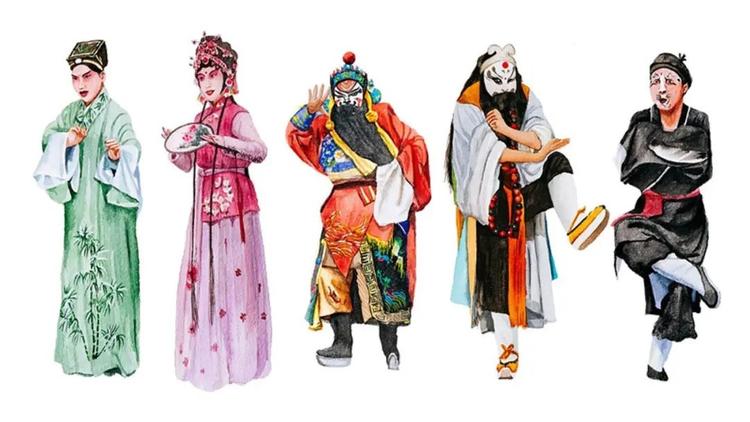
Beijing Opera uses colors systematically to communicate character traits:
- Red: Loyalty, righteousness, heroes
- White: Cunning, treachery
- Black: Integrity, boldness
- Yellow (with dragons): Imperial family
- Blue/Green: Impetuous, sometimes bandits
Once you know this code, you can identify character types before they speak.
Common Performance Elements
Water sleeves: Long white silk extensions on sleeves. Masters manipulate these to express emotions—throwing forward for anger, holding delicately for grace, swirling for confusion.
Pheasant feathers: Long feathers on helmets indicate warrior generals. Watch how performers move their heads to make feathers dance—this requires years of practice.
Symbolic movements:
- Mounting invisible horses: Swinging leg over, adjusting reins
- Opening doors: Sleeve pulls in specific patterns
- Climbing mountains: Circular stepping patterns
Famous Opera Stories You Might See
“Farewell My Concubine”: General Xiang Yu faces defeat. His concubine Yu Ji performs a sword dance, then takes her life. Emotionally powerful with beautiful choreography.
“The Drunken Concubine”: Yang Guifei waits for the emperor in a garden. When he doesn’t arrive, she drinks wine and becomes increasingly intoxicated. Showcases comedy and pathos simultaneously.
“Havoc in Heaven”: The Monkey King Sun Wukong rebels against heaven. Features extensive acrobatics, combat sequences, and humor. Children love this one.
Frequently Asked Questions
Is Beijing Opera suitable for children?
Children aged 10+ who can sit quietly for 90 minutes generally enjoy Beijing Opera. The colorful costumes and acrobatics (especially “Havoc in Heaven”) capture attention. Avoid bringing very young children—the vocal style can seem loud, and restlessness disrupts others.
Can I understand without speaking Chinese?
Absolutely. English subtitles translate dialogue and explain context at recommended venues. The symbolic gesture language communicates beyond words. Pre-reading story summaries (available online) helps tremendously.
How should I dress?
Business casual works fine (slacks/collared shirt or equivalent). Some attendees wear suits to NCPA premieres, but it’s not required. Comfortable shoes matter more—you’ll wait in lines and stand during intermission. Avoid shorts, tank tops, and flip-flops at formal venues.
Are photos allowed?
Policies vary. Most allow photography without flash. Video recording is typically prohibited. Check specific theater rules. Take a few photos for memories, then engage with the live performance.
What if I find it boring?
Beijing Opera isn’t for everyone. The pacing is slower than Western entertainment. If struggling, focus on different aspects—if singing doesn’t engage you, watch costumes, musicians, or gesture language. Give it time; interest often develops gradually. It’s acceptable to not love it—attending once demonstrates cultural openness.
Can I leave at intermission?
Leaving before the final bow is considered disrespectful. If you must leave early, do so during intermission. But give the performance a full chance—the second half often improves as you adjust to the style.
Final Recommendations by Travel Style
- Limited time (one evening): Liyuan Theatre. Best introduction with full support, daily performances, convenient booking.
- History and culture focused: Huguang Guild Hall. The building and museum add context that enriches the performance.
- Quality over convenience: Mei Lanfang Grand Theatre. Longer programs, higher artistic standards, comprehensive experience.
- Budget conscious: Chang’an Grand Theatre. Solid quality at lower prices, especially when National Opera Company performs.
- Return visitors or opera enthusiasts: NCPA when Beijing Opera is scheduled. Absolute peak quality in premium facilities.
How We Can Help
We’ve spent years attending these performances and building relationships with theater staff. If you’re planning a Beijing Opera evening and need booking assistance, detailed recommendations for your specific dates, or answers to questions not covered here, contact us through Travel China With Me.
We can verify performer quality for specific dates, secure better seats through our connections, and provide pre-show briefings that transform your experience from confusing to enlightening.
Last updated: October 2026. All prices and schedules verified through direct theater contact and recent attendance. Ticket prices subject to change—always confirm current information before booking.