Beijing Pass: The Complete Guide for Foreign Visitors
Most foreign visitors landing in Beijing face the same problem within the first ten minutes: they can’t pay for anything. WeChat Pay and Alipay — the two apps that run China’s cashless economy — require a Chinese bank account to set up. Standing at a subway gate with a suitcase and a foreign credit card is not a great start to a trip.
The Beijing Pass is the government’s answer to that. It’s a prepaid card for international visitors that covers the subway, buses, airport express, taxis, and entry at 30 tourist attractions — bought at the airport with just your passport.
We’ve been running private tours in China since 2006. This guide covers what the card actually does, what it doesn’t do, and the limitations most other articles skip over.
Table of Contents
What Is the Beijing Pass?
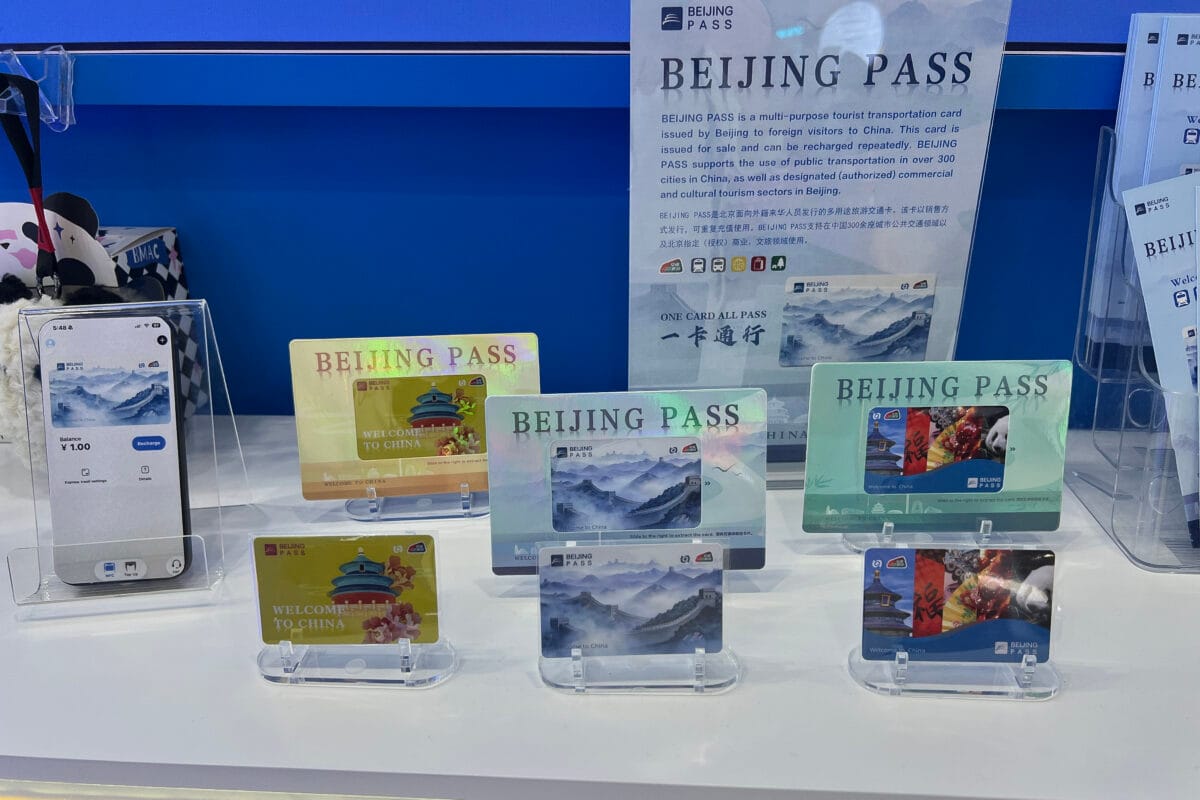
The Beijing Pass is a prepaid card for international visitors, issued by the Beijing Municipal Government on July 31, 2024. It works for subway rides, buses, airport express trains, taxis, tourist attraction entries, and shopping — all on one card.
It runs on the same infrastructure as the Yikatong (一卡通), Beijing’s existing transit card used by locals since 2003. The difference: locals buy the Yikatong with a Chinese ID and phone number. The Beijing Pass is specifically designed for foreign passport holders — no Chinese number or bank account required.
Think of it the way you’d think of London’s Oyster card or Singapore’s EZ-Link. You load money onto it, tap to pay, and top it up when it runs low. The main problem it solves: China’s payment ecosystem runs almost entirely on WeChat Pay and Alipay, both of which require a local bank account or meaningful setup time. The Beijing Pass gets you moving the moment you land, before any of that is sorted.
One Canadian visitor who picked up the card at Capital Airport told us she was surprised it wasn’t “just a plain transit card” — the Great Wall design on the front caught her off guard. She later mailed it home as a keepsake. Three newer designs have since been released: “Ink Great Wall,” “Beijing-Style Temple of Heaven,” and “Colorful China.” If you want a functional souvenir, check the airport counter for what’s available when you arrive.
One detail many travelers miss: the ¥20 card price is a purchase fee, not a deposit. You will not get that ¥20 back. Only the balance you load on top is refundable.
What Does the Beijing Pass Cover?
Public Transportation in Beijing
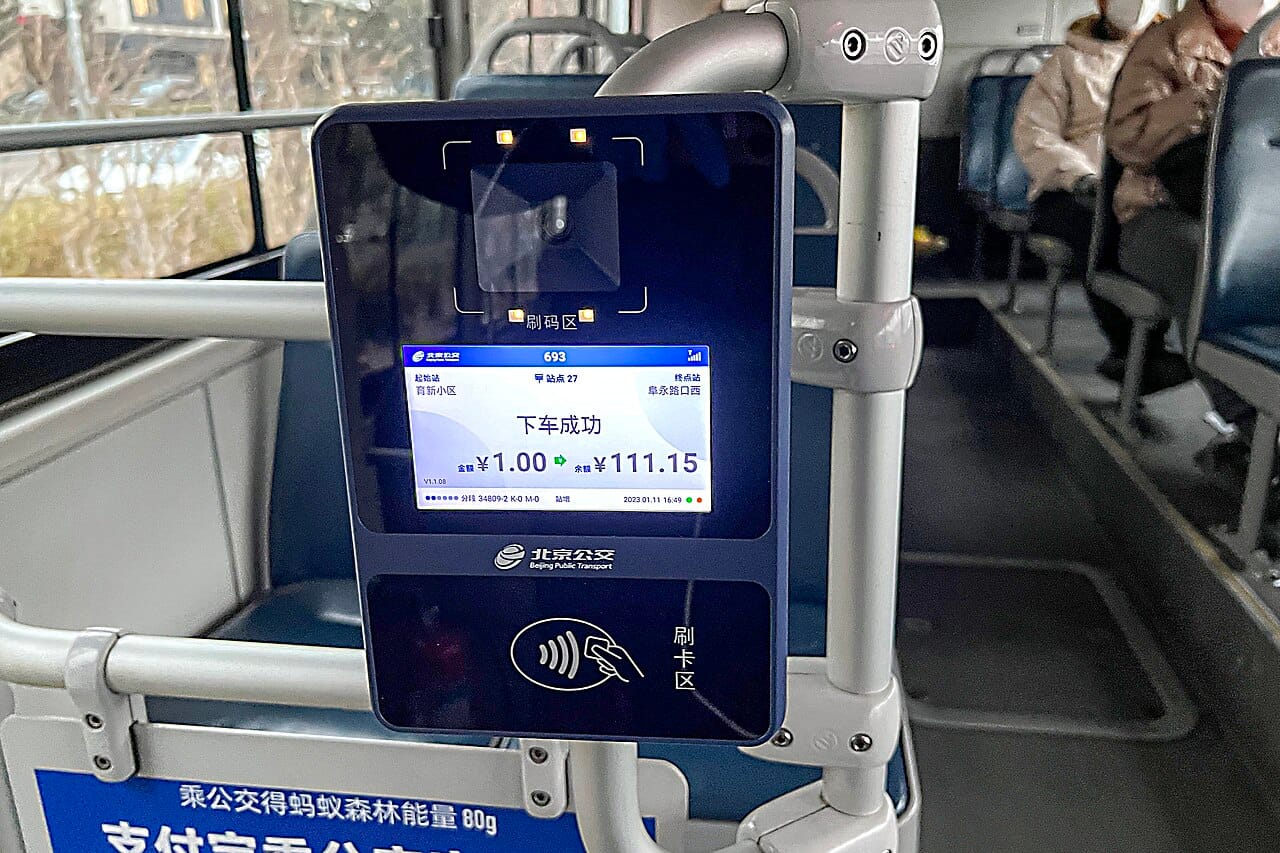
The card works on the subway, buses, trams (Western Suburb Line, Yizhuang T1 Line), suburban railway, Capital Airport Express, Daxing Airport Express, and Beijing cruising taxis.
This covers virtually every transit option a tourist needs. The airport express from T2 or T3 to Dongzhimen costs ¥25 and takes 20 minutes — pay directly with your Beijing Pass. No separate ticket queuing needed.
Subway fares range from ¥3–9 depending on distance. Buses get roughly 50% off versus paying cash. That discount adds up quickly on a week-long trip.
Public Transportation Across China
This is the part most travelers overlook. The card works in over 300 cities across China — buses, subways, light rails, trams, ferries — including Shanghai, Guangzhou, Shenzhen, Nanjing, Hangzhou, Suzhou, Tianjin, and Chongqing.
The key caveat: look for the “交通联合” (China Transportation Union) logo on fare gates. Without it, the card likely won’t work. Based on traveler reports from late 2025, the Beijing Pass was still not accepted in Datong, Luoyang, and Chengdu, where metro staff looked at the card with confusion. The “300 cities” claim is technically accurate but applies mainly to larger, well-connected networks.
Also important: you cannot recharge the card outside Beijing. If you’re continuing to Shanghai for a week, top up well before leaving the capital.
Tourist Attractions in Beijing
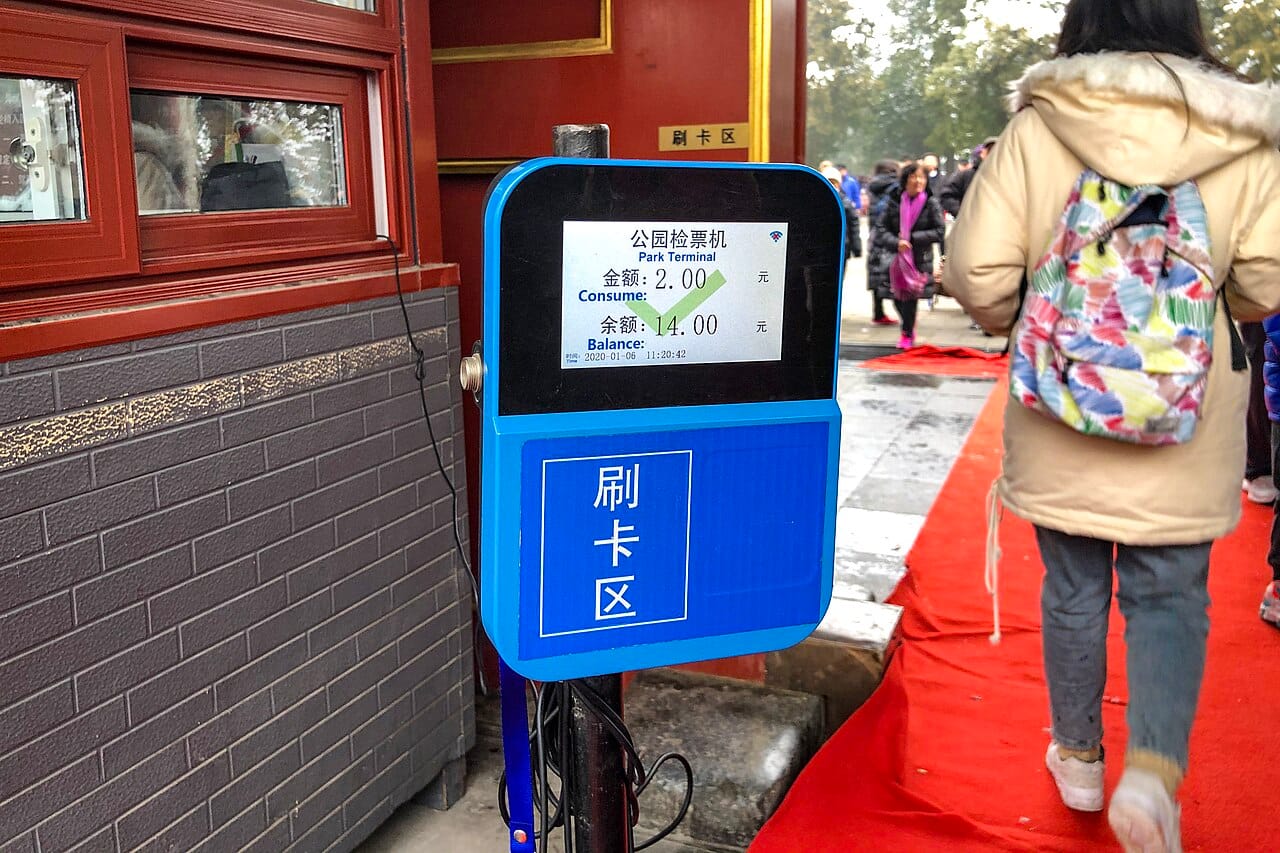
The card covers ticket payment at 30 Beijing attractions. Confirmed popular usage points include the Summer Palace, Temple of Heaven, Ming Tombs, and Badaling Great Wall. At the ticket counter, look for the “BEIJING PASS” signage, tap the POS machine, and confirm the displayed amount before the transaction completes.
The card does not give skip-the-line access. High-demand sites like the Forbidden City still require advance timed-entry booking through official WeChat mini-programs — the Beijing Pass only handles the payment, not the reservation. If you’re planning to visit the Forbidden City, book that slot before you arrive in Beijing.
Shopping
The card is accepted at thousands of stores across 50+ shopping venues in Beijing, including Hanguang Department Store, Wumart, Wedome, and Watson. Useful for grabbing groceries or toiletries without needing a mobile payment app.
How to Buy the Beijing Pass
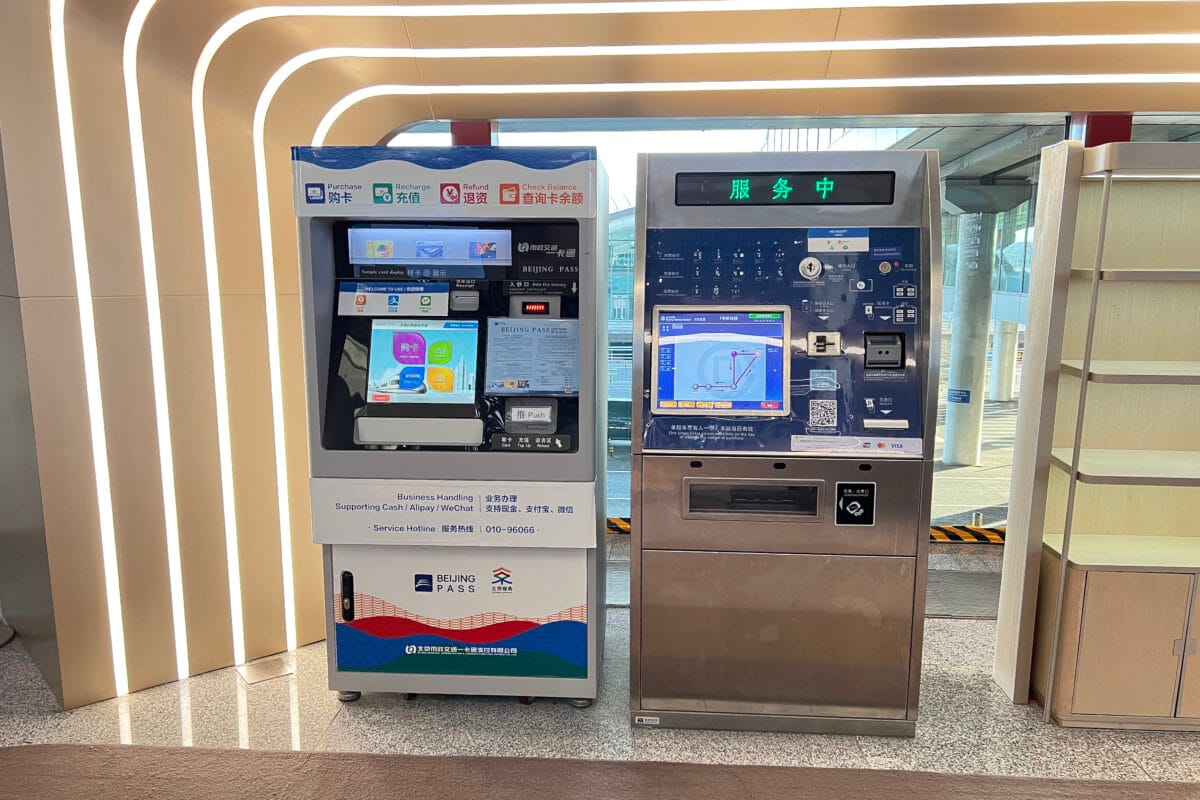
You need your passport. That’s the only requirement.
The standard card costs CNY 20. The most convenient purchase points for arriving visitors:
Location | Buy | Top-Up | Refund |
|---|---|---|---|
Beijing Capital Airport (PEK) | ✓ | ✓ | ✓ |
Beijing Daxing Airport (PKX) | ✓ | ✓ | ✓ |
Capital Airport Express T2 & T3 stations | ✓ | ✓ | ✓ |
Major railway stations (Beijing, West, South, Fengtai, Qinghe) | ✓ | ✓ | ✓ |
Xizhimen Subway Station | ✓ | ✓ | ✓ |
All 490 stations across 27 subway lines | ✗ | ✓ | Staffed windows only |
Yikatong Offices (Dongzhimen & Xidan) | ✓ | ✓ | ✓ |
Buy it at the airport the moment you arrive. Service counters are right in the arrivals hall at both Capital (PEK) and Daxing (PKX). Don’t wait until you’re standing at a subway gate with luggage and a queue behind you.
How Much Should You Load?
The airport express costs ¥25 each way — ¥50 round trip just for that. A typical subway ride in central Beijing is ¥4–6. Entry at a major park like the Temple of Heaven is ¥15–34 depending on which sections you visit.
Based on what we see our clients actually spend:
Trip Length | Suggested Top-Up | What It Covers |
|---|---|---|
3 days | ¥150–200 | Airport express both ways + subway daily + 1–2 attraction entries |
5 days | ¥250–350 | Airport express + subway + buses + 3–4 attraction entries |
7+ days | ¥400–500 | All of the above + some shopping + buffer for refund |
Load on the generous side. The unused balance is refundable at the airport on departure — you lose nothing by over-loading, but running out mid-trip means finding a staffed counter to top up. The card holds a maximum of ¥1,000, and each top-up must be in multiples of ¥10.
How to Top Up (Recharge)
Option 1: In person at subway stations. Any of Beijing’s 490 stations across 27 lines has a staffed window or self-service machine. Cash, Alipay, and WeChat Pay are all accepted at staffed windows.
Option 2: SilkPass App (NFC). Download the app → tap “Tap card now” → place your physical card on the phone’s NFC area → enter amount → pay. Keep the card still until the success prompt appears. Removing it early cancels the transaction.
Option 3: Digital NFC card. You can activate a virtual version entirely through SilkPass, stored on your phone. It works identically to the physical card at transit gates.
One practical note: Google Wallet is not currently supported, so Android users may not be able to use NFC gate access until after setting up the full app inside China. iOS users generally have a smoother experience via Apple Wallet.
How to Use It Day-to-Day
On the subway: Tap at entry and again at exit. The fare deducts based on distance; your remaining balance flashes on screen after each tap.
On buses: Tap once when boarding. No exit tap needed.
At attractions: Confirm the “BEIJING PASS” sign is posted at the ticket booth before tapping. Check the amount on the POS screen before the payment goes through.
In taxis: Tell the driver you want to pay by Beijing Pass. Standard cruising taxis accept it. Didi now has an English interface with international card support — a practical backup.
One card, one person. Each family member needs their own, children included.
Refunding Your Remaining Balance
You can get unused balance back in RMB cash at any staffed subway service counter before leaving Beijing. The Capital Airport Express stations at T2 and T3 both handle refunds — convenient on departure day.
The ¥20 card purchase fee is not returned, only the balance loaded on top of it. Digital/NFC version refunds process back to the linked payment account within a few working days via the SilkPass app. If the card is lost, the balance is unrecoverable — treat it like cash.
Plan around this: refunds only work in Beijing. We usually tell clients to arrive at the departure airport with ¥50–100 left on the card, cover the airport express (¥25), and refund whatever remains at the T2 or T3 counter before checking in.
Beijing Pass vs. Your Foreign Credit Card
Beijing opened its subway gates to foreign Visa and Mastercard contactless payments in late 2024 — useful to know, but it doesn’t make the Beijing Pass redundant. Here’s why:
Feature | Beijing Pass | Foreign Credit Card |
|---|---|---|
Subway access | ✓ | ✓ (tap-and-go) |
Subway discount | ✓ Cheaper fares | ✗ No discount |
Bus payment | ✓ | ✗ Generally not accepted |
Attraction ticket payment | ✓ (30 Beijing sites) | ✗ Not applicable |
Works across China | ✓ (where 交通联合 logo shown) | ✗ No |
Airport Express | ✓ | ✓ |
Retail shopping | ✓ (50+ Beijing venues) | ✓ Malls and larger stores |
Setup required | Passport only | May need contactless enabled |
Refundable balance | ✓ | N/A |
If you’re doing a 2–3 day Beijing-only trip and staying central, a foreign contactless card covers the basics. But for a week or more in Beijing — riding buses, visiting multiple parks, using the card across other cities — the Beijing Pass saves money and removes friction at every step.
We recommend it to every client as a practical first step on arrival day, even those who eventually set up Alipay or WeChat Pay during the trip. The first 24–48 hours in Beijing are hectic enough. One less thing to figure out.
If you’d like help planning your Beijing itinerary, get in touch with our team — we’ve been running private Beijing tours since 2006.
What the Beijing Pass Does NOT Cover
The Forbidden City: The card handles ticket payment, but the Forbidden City runs a separate timed-entry reservation system through the Palace Museum WeChat mini-program. Without a reservation, no entry — regardless of payment method. Our Forbidden City guide walks through the booking process in full.
High-speed trains (G/D trains): The Beijing Pass is a stored-value transit card. It cannot purchase inter-city HSR tickets. Use the Trip.com or the 12306 app for those.
Top-ups and shopping outside Beijing: You cannot recharge the card in Shanghai, Suzhou, or any other city. The card also does not support attraction payments or shopping outside the capital — transit only in other cities.
Didi and ride-hailing apps: These use in-app payment. International cards (Visa, Mastercard) are now accepted directly inside the Didi app.
Practical Tips From Our Guides
Buy it at the airport, not later. Service counters are in the arrivals hall. Once you’re in the city with bags and a full schedule, hunting for a staffed subway window is a nuisance you don’t need.
Take a photo of your balance. After each top-up, the machine shows your new balance. A quick screenshot saves guesswork later in the trip.
Plan your refund before the last day. Don’t leave it until 20 minutes before your airport express. The T2 and T3 counters are reliable, but give yourself time.
Traveling to Shanghai or Shenzhen afterward: Both metro systems show the 交通联合 logo and accept the card. Budget enough before leaving Beijing — you can’t top up there.
Where to stay matters for subway access. The card works on all 27 Beijing subway lines, but if you’re staying in central Dongcheng or Xicheng, you’ll use the card far more efficiently than if you’re in a distant district with limited metro access.
Frequently Asked Questions
Who can buy the Beijing Pass?
Any foreign visitor with a valid passport. Hong Kong and Macao residents use their mainland travel permits; Taiwan residents use their entry/exit travel pass. No Chinese phone number or bank account needed.
Can I buy the Beijing Pass before arriving in China?
No. You have to buy it in person at designated locations in Beijing — airports, subway stations, or one of the two Yikatong offices in Dongzhimen or Xidan. Passport required at purchase.
Is the Beijing Pass the same as the Yikatong?
Same underlying infrastructure, different product. The Beijing Pass is specifically for foreign passport holders. The regular Yikatong requires a Chinese phone number and ID for most functions. If you see locals using a similar-looking card, that’s a Yikatong — not interchangeable with yours.
How does the SilkPass digital/NFC version work?
Download the SilkPass App, register an account, and activate a virtual NFC card. It functions identically to the physical card at transit gates and participating venues. Top up via Alipay or WeChat Pay within the app. iOS users tend to have a smoother experience; Android users outside China may hit limitations since Google Wallet is currently not supported.
Can I use the Beijing Pass on the airport express?
Yes — both the Capital Airport Express from T2/T3 to Dongzhimen (¥25, 20 min) and the Daxing Airport Express from PKX. First thing you’ll use it for on arrival day. See our Beijing Airport Guide for full airport logistics.
Does the Beijing Pass get me into the Forbidden City?
It handles ticket payment, but you still need an advance timed-entry reservation through the Palace Museum WeChat mini-program. Without the reservation, you cannot enter — regardless of how you plan to pay. Book before you arrive in Beijing. Full walkthrough in our Forbidden City guide.
Does the card work at other major attractions?
Yes, at 30 confirmed Beijing sites including the Summer Palace, Temple of Heaven, Badaling Great Wall, and Ming Tombs. Look for the “BEIJING PASS” sign at the ticket window.
What if I lose the card?
Balance is gone. No recovery, no transfer. Treat it like cash.
Can two people share one card?
No. One card per person — the subway calculates fares based on individual entry and exit taps.
Is the ¥20 card fee refundable?
No. Purchase price, not deposit. Only the balance loaded on top is refundable.
Can I top up outside Beijing?
No. Recharge only works at Beijing subway stations, airports, and Yikatong offices. Top up before leaving the capital.
Does it work on Didi?
No. Didi uses its own in-app payment, which now accepts international Visa and Mastercard directly.
What’s the difference between the Beijing Pass and the Beijing Museum Pass?
Completely different products. The Beijing Museum Pass is a printed booklet (¥120) giving two people discounted or free admission at 140 museums all year — aimed at Beijing residents. The Beijing Pass is a stored-value transit and payment card for foreign visitors. Not interchangeable.