What You Cannot Take Out of China: Exit Customs Rules Every Traveler Must Know
We’ve been guiding international visitors through China since 2006. The phrase we hear most often from travelers who get stopped at the airport — not people who did something obviously wrong, but ordinary tourists — is some version of this:
“Nobody told me this wasn’t allowed.”
That’s the whole problem. China’s exit customs rules are genuinely different from the entry rules, and most travel guides either skip them entirely or bury them inside a general customs overview. This article is specifically about what you cannot take out of China — written from nearly two decades of watching what actually gets flagged, confiscated, and misunderstood at Chinese airports.
Here is the short answer first. Items you cannot take out of China include: cultural relics created before 1949, all ivory and wildlife products, raw musk and certain traditional Chinese medicines (combined value limit: RMB 300), manuscripts or storage media containing state secrets, and more than RMB 20,000 in cash or the equivalent of USD 5,000 in foreign currency. Everything else in this guide fills in the details, the grey areas, and the real situations that catch people off guard.
Table of Contents
1. What You Absolutely Cannot Take Out of China
These are prohibited exports under the GACC official exit customs guide for international passengers. No permit exists for individual travelers. Getting caught with them at exit means confiscation at minimum, and in serious cases, criminal charges.
Cultural Relics Created Before 1949
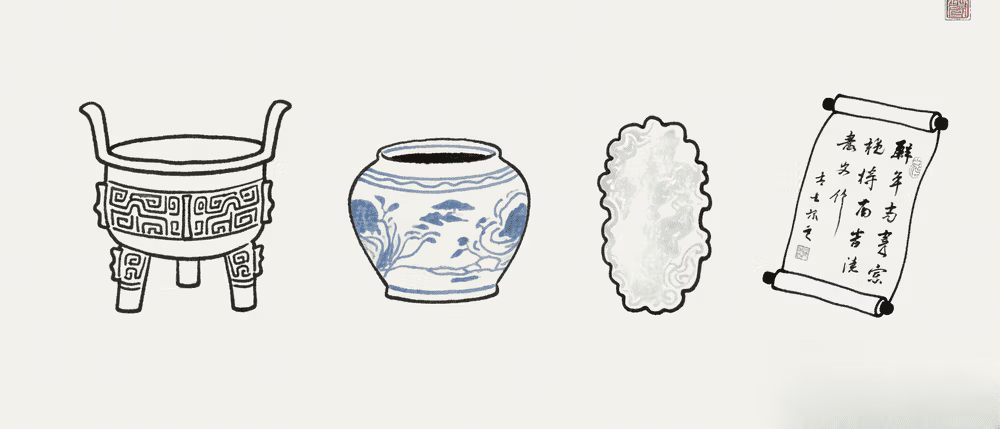
This is the category that causes the most problems for international tourists — especially those who have spent time at China’s antique markets.
According to GACC’s official identification range for outbound cultural relics, the definition covers: ceramics, goldware, silverware, copperware and other metalware, jade, lacquerware, glassware, sculptures, furniture, paintings and calligraphy, stone inscriptions, rubbings, books, literature, embroideries, stamps, currency, appliances, and arts and crafts — created, manufactured or published before the founding of the People’s Republic of China in 1949. Also prohibited: works of deceased famous modern painters and craft artists produced after 1949, vertebrate paleontology fossils, and ancient human fossils.
One clarification that matters directly for tourists: GACC explicitly states that “artifacts and replicas produced after the founding of the People’s Republic of China do not fall into cultural relics and may be managed as general articles.” A modern reproduction is legally not a cultural relic. The problem, as we’ll explain in section 4, is proving that something is a modern reproduction when it doesn’t look like one.
Rare and precious cultural relics are completely prohibited from export. General cultural relics may be permitted for export only upon special approval of the State Bureau of Cultural Relics, evidenced by an official Export Certificate for Cultural Relics with a red wax seal affixed by the authorities. Individual travelers cannot obtain this at the airport.
Ivory and Wildlife Products
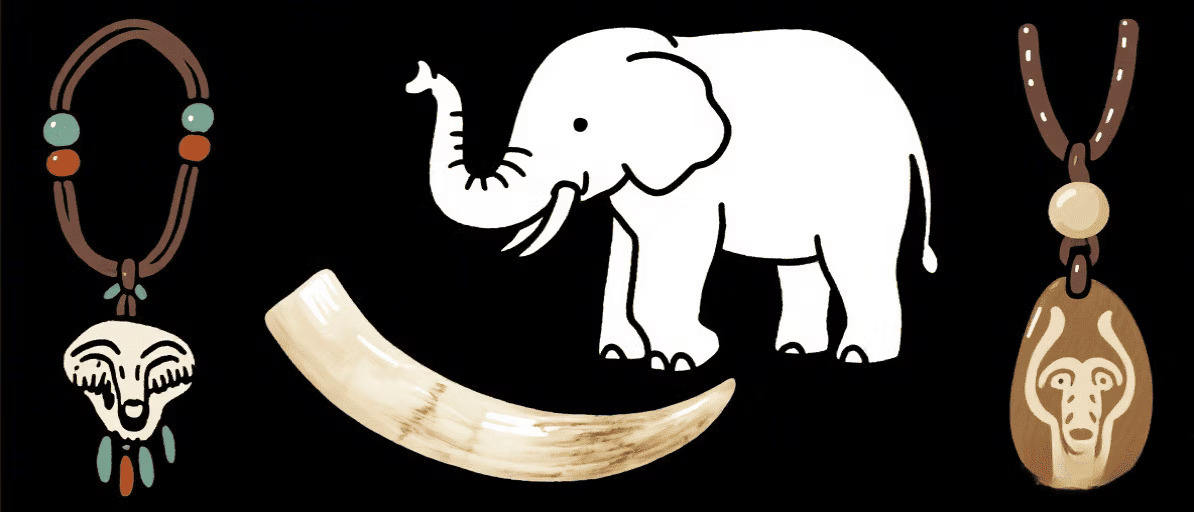
China is a CITES signatory. Taking wildlife products across the border without permits violates both Chinese law and international treaty.
The prohibited list includes: ivory of any origin or age, rhinoceros horn, tiger and leopard bone and fur, pangolin scales, raw musk (麝香), dried toad venom (蟾酥), dried sea horse, sea turtle products, hawksbill items, crocodile skin products, and other endangered species products. Almost no tourist goes looking for ivory or rhino horn. The category that actually creates real-world problems is raw musk in TCM products — covered in detail in section 3.
Two things worth confirming: mink coats made from artificially bred mink are permitted to leave China. Those made from otter are not. If you’re unsure of the species, declare it at the Red Channel.
Manuscripts and Storage Media Containing State Secrets
Printed matter, films, photographs, and storage media that “involve state secrets” are prohibited from export — physical and digital formats equally. Most tourists will never encounter this. Researchers, journalists, and some business travelers should be aware that storage devices can be inspected at exit, and that “state secrets” is defined broadly under Chinese law.
2. Items That Must Be Declared When Leaving China
These are not prohibited — but they require declaration at the Red Channel. Failing to declare triggers penalties even when the items are ultimately legal to export.
Item | Threshold |
|---|---|
RMB cash | RMB 20,000 or above |
Foreign currency (cash) | Equivalent to USD 5,000 or above |
Gold, silver, precious metals | Any amount |
Cultural relics or antiques | Any item |
Endangered species products | Any item |
High-value electronics (camera, laptop, etc.) | Over RMB 5,000 per item, if you plan to re-enter China with it |
Radio transmitters or receivers | Any device |
Commercial goods or samples | Any amount |
Cash Limits When Leaving China
You can take out up to RMB 20,000 in Chinese yuan. The GACC guide is direct: “The exceeding part is prohibited” — not taxable, prohibited.
For foreign currencies, the threshold is the equivalent of USD 5,000 in cash. Above that, you must declare. There is a mechanism for carrying more: if you declared foreign currency when entering China, customs will release that amount on exit based on your original entry declaration form. Without that record, taking out more than USD 5,000 in foreign cash requires a certificate from the Foreign Exchange Bureau or its authorized banks — and obtaining that at an airport takes time you may not have.
We’ve seen this play out more than once. The typical situation is a business traveler who accumulated cash during a two or three week trip. The reasoning we hear: “I’m just carrying it, I’m not doing anything with it.” Chinese customs doesn’t look at intent. The rule applies to the amount. If you’re leaving with significant foreign currency and didn’t declare it on entry, go to the Red Channel and bring whatever bank documentation you have.
Precious Metals and Jewelry
Gold, silver, and their products must be declared at exit. There’s no prohibition, but the officer will assess whether the quantity suggests personal use or something more commercial. For jewelry worn during your trip, amounts under 50g typically clear without issue. For items purchased in China, keep your receipts.
3. Traditional Chinese Medicine: Stricter Than the Pharmacy Suggests
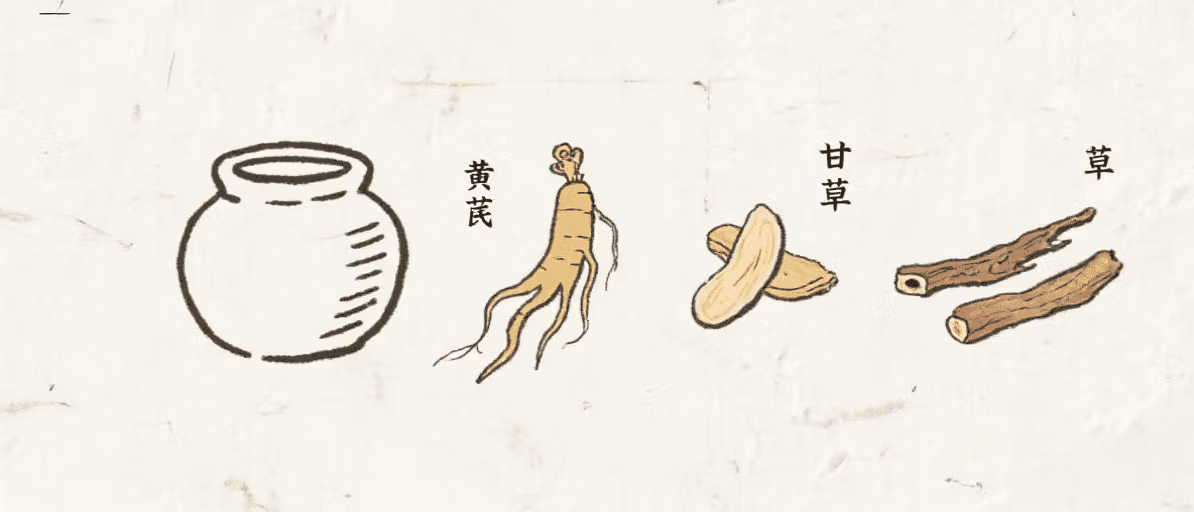
TCM is among the most popular purchases foreign visitors make in China. The exit rules are more restrictive than most shops mention, and more restrictive than most travelers expect.
What TCM Cannot Leave China at All
Under the PRC’s Table of Prohibited Entry and Exit Items (海关总署令第43号), the following TCM ingredients are prohibited from export regardless of quantity or packaging: raw musk (麝香), dried toad venom (蟾酥), tiger bone (虎骨), rhinoceros horn (犀角), and natural calculus bovis — natural bovine bezoar (天然牛黄).
One important nuance: medicines containing trace amounts of musk or toad venom in compound formulas — such as 麝香还阳膏 or 六神丸 (Liushenwan / Six Spirits Pills) — are not included in the prohibition. However, medicines containing rhinoceros horn or tiger bone are prohibited even in compound form, even in trace amounts. Read the ingredient list, not just the product name.
The RMB 300 Limit Almost No One Knows
For all other Chinese herbal medicines and patent drugs, the rule is: to foreign countries, a maximum of RMB 300 per passenger (carry-on) or RMB 200 if mailed. To Hong Kong or Macau, the limits are RMB 150 (carry-on) or RMB 100 (mailed).
RMB 300 combined total. Not per item — total. Goods must be commercially packaged, for personal use, and within reasonable quantity. Bringing ten boxes of the same formula will raise flags regardless of total value.
Our internal rule when guests ask about TCM shopping: only buy finished, commercially packaged products with clear English ingredient labels, and avoid raw herbs, loose dried materials, anything sold in bulk. For most visitors, we suggest experiencing TCM while you’re in China rather than trying to transport it home. Between China’s exit rules and your destination country’s own biosecurity restrictions, the complications stack up fast.
A German guest of ours came through Beijing after a Beijing and Zhangjiajie trip — the kind of traveler who genuinely engages with local culture, spent time in a hutong pharmacy, asked good questions about ingredients. At a reputable-looking chain pharmacy near Wangfujing, he bought ginseng slices, dried angelica root, wolfberries, and a couple of pre-blended soup packs. At Beijing Capital Airport, the bag was flagged. The officer’s position: these were animal and plant products without quarantine documentation, and they couldn’t leave China without it. Even if they cleared Chinese exit, German biosecurity would likely confiscate them on arrival.
He had receipts. Professional packaging. None of it mattered — because the question wasn’t where he’d bought them. It was what they were. He left the herbs at the airport. What he said stayed with us: “Nobody told me this wasn’t allowed.”
The pharmacy staff knew the rules. They simply didn’t mention them. The items were legal to buy inside China — just not legal to carry out. That gap between “legal to purchase” and “legal to export” is where most traveler problems live.
4. Antique Markets, Cultural Relics, and the Panjiayuan Problem
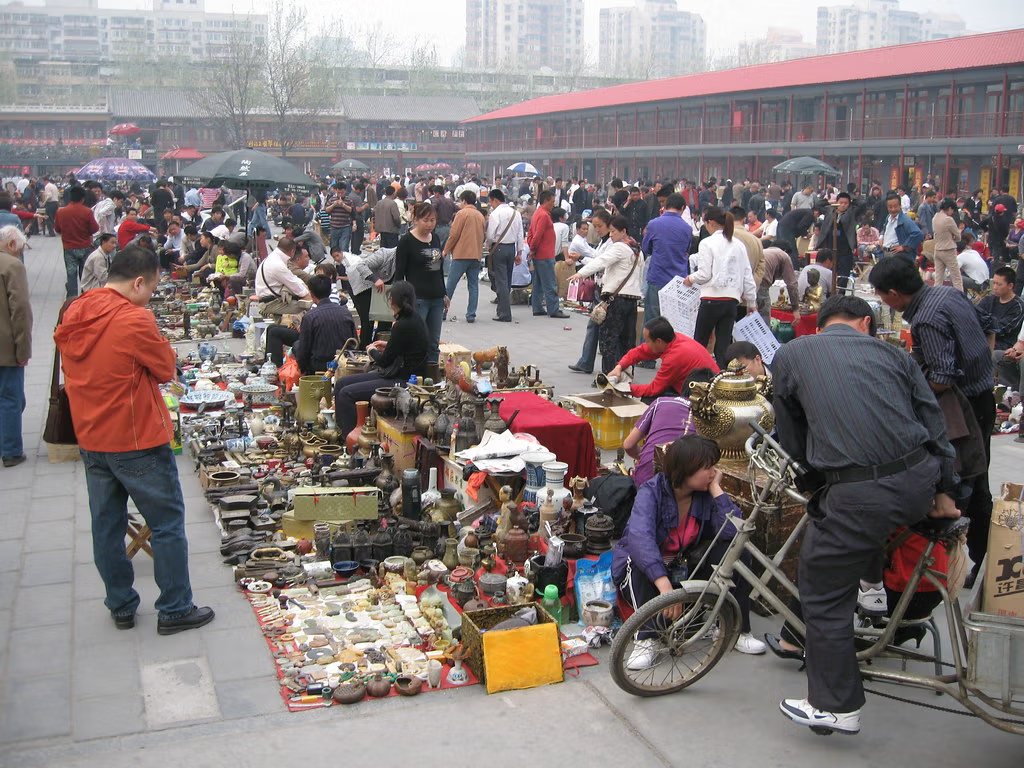
Panjiayuan Antique Market in Beijing is one of the most popular destinations for culturally curious international visitors. We take guests there. But we’ve learned to be very direct about what kind of place it is:
Panjiayuan is an experience market, not a shopping market.
Here’s what we tell every guest before they go. 99% of what’s sold as “antique” is reproduction or outright fake — and most vendors know exactly what they’re selling. The problem isn’t authenticity. The problem is documentation.
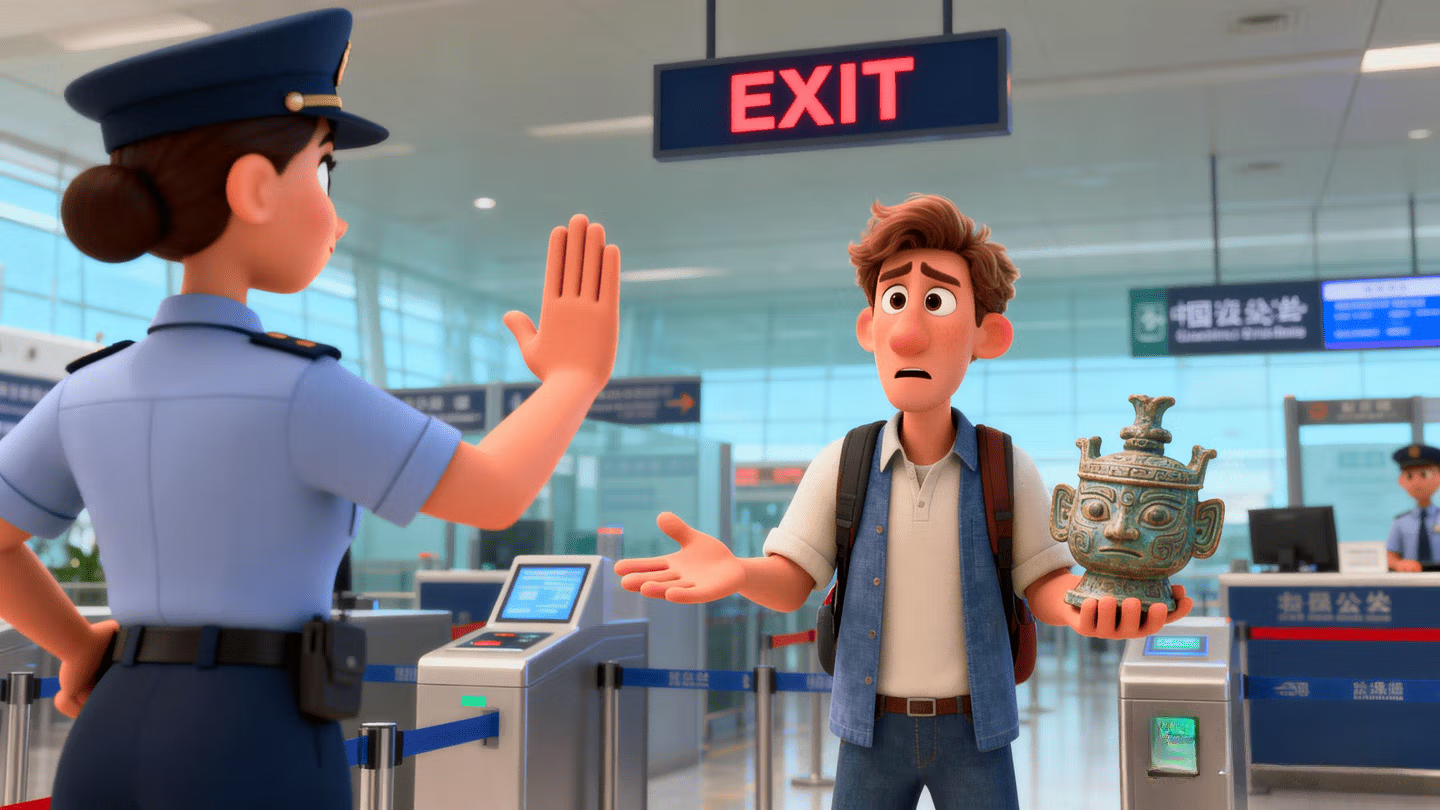
GACC is explicit: artifacts and replicas produced after 1949 “do not fall into cultural relics and may be managed as general articles.” Modern reproductions are legally clear. But a bronze figure that looks convincingly aged — whether it’s a genuine antique or a well-made replica — can get flagged at the airport because it resembles a cultural relic. The burden of proof falls on you. You need documentation showing it’s a modern reproduction or a cleared cultural relic. Most Panjiayuan vendors provide neither.
A guest of ours — an American professor of East Asian history, mid-forties — spent a morning at Panjiayuan a few years ago. He was genuinely knowledgeable about what he was looking at, not a casual browser. He bought two things: a bronze figure the vendor described as a “Qing dynasty replica,” priced around RMB 1,500–2,000 (roughly USD 200–300), and a scroll painting with convincing age-wear, around RMB 1,000. Total outlay around USD 350–400 — not trivial, not enormous.
At Beijing Capital Airport, his checked bag was flagged after X-ray. The customs officer’s assessment of the bronze was immediate: it resembled a potential cultural relic. He needed to prove otherwise. He had a receipt from an antique market, written in Chinese. That made things worse, not better.
The officer asked two questions: Did he have a formal invoice showing this was a modern reproduction? Did he have an Export Certificate for Cultural Relics? He had neither. He had a flight to catch. He left both items at the airport.
He wasn’t the kind of person who got dramatic about it. But what he said was precise: “I thought buying it was the hard part.”
He’d spent his morning doing exactly what you’d expect a historian to do — evaluating authenticity, thinking carefully about what was worth the price. That felt like the challenge. The idea that bringing it home was the real obstacle hadn’t occurred to him until he was standing at customs.
This is the core problem at markets like Panjiayuan, and it affects knowledgeable buyers more than casual ones — because the more genuinely interested you are, the more likely you are to buy something that looks historical, and the more you’ll pay for it.
If you shop at antique markets in China and want to take something home, the practical options are narrow: buy things that are obviously contemporary, get a formal written invoice in both Chinese and English stating the item is a modern reproduction made after 1949, or arrange official Cultural Relic Export Certification from an authorized appraisal authority before you travel to the airport. The first option is the only one you can reliably execute on your own.
5. Plants, Seeds, and Botanical Souvenirs
Seeds of any kind cannot leave China without phytosanitary certificates — this covers flower seeds, vegetable seeds, herb seeds, and fruit pits, even commercially packaged ones. We’ve seen travelers tuck seed packets into clothing thinking it’s a minor item. It isn’t. Seeds are a hard line under both Chinese export rules and the import biosecurity requirements of most destination countries, and officers do find them.
Fresh fruits, vegetables, soil, and live plant material — cuttings, bulbs, nursery stock — are also prohibited without quarantine documentation that individual travelers cannot practically obtain. Sealed packets of dried flowers or pressed botanical crafts may pass depending on the officer’s discretion, but there’s no guarantee.
The dividing line is between finished consumer products and raw biological material. Commercially sealed tea, packaged herbal food products, and dried mushrooms sold as food are treated as finished goods and are generally fine. Anything that could grow, sprout, or carry pests is not.
6. Taking Pets Out of China
This is a scenario that often catches travelers off guard — particularly those who adopted a pet during a longer stay, or who brought a dog or cat into China and now need to leave with it.
READ ALSO: Complete Guide to Bring Pet to China (Latest Requirements & Tips)
China permits dogs and cats to exit, but the process requires documentation. You need a health certificate and a rabies vaccination certificate issued by a Chinese official veterinary authority. The health certificate is typically issued within a set number of days before departure, so timing matters. You’ll also need to check the entry requirements of your destination country, which may impose its own quarantine period or documentation requirements — and those vary significantly.
Declare the animal at the Red Channel. Customs will refer to the port animal quarantine authority for inspection. If documentation is complete and the animal passes inspection, a quarantine certificate valid for 30 days is issued and you proceed. If documentation is missing or the animal doesn’t pass, customs will arrange temporary detention while issues are resolved.
If you’re planning to take a pet out of China, start the documentation process several weeks before your departure date, not the week before.
7. Taking Prescription Medicine and Western Drugs Out of China
This is a gap most exit customs guides don’t address. TCM gets all the attention, but many travelers are also carrying standard prescription medications they brought from home — or bought in China — and aren’t sure whether there’s a problem at the airport.
For ordinary over-the-counter medicines and prescription drugs for personal use, the general rule is straightforward: keep them in original packaging, carry a copy of the prescription or a doctor’s note, and the quantity should correspond to the length of your trip. Customs operates on the “personal use, reasonable quantity” principle. A month’s supply of a blood pressure medication you’ve been taking for years is not going to be questioned. Twenty boxes of the same drug is a different conversation. In our experience with tour groups, we’ve never seen a traveler stopped specifically over personal medication — the issue, when it comes up at all, is always quantity, not the type of medicine.
The more complicated category is controlled substances — medications containing narcotics, psychotropics, or precursor chemicals. These are subject to the same prohibition that applies to illicit drugs. If you arrived in China with a legitimately prescribed controlled substance and have the proper documentation, exit should be fine. The documentation that matters: the original prescription, ideally with a note from your doctor stating the diagnosis and the necessity of the medication, kept with the medication in its original labeled container.
One practical point specific to exit: individual travelers carrying personal-use amounts of prescription medication do not need pre-approval to leave China with them. What you do need is the paperwork to explain what you’re carrying if asked. Officers at exit focus on volume and documentation, not the presence of medication itself.
If you purchased prescription medication in China and want to take it home, check your home country’s import rules before you buy — many countries restrict the importation of certain drug classes regardless of where they were purchased.
READ ALSO: Traveling to China with Medicine: What to Bring, What’s Banned, and Where to Buy
8. What’s Genuinely Fine to Take Home from China
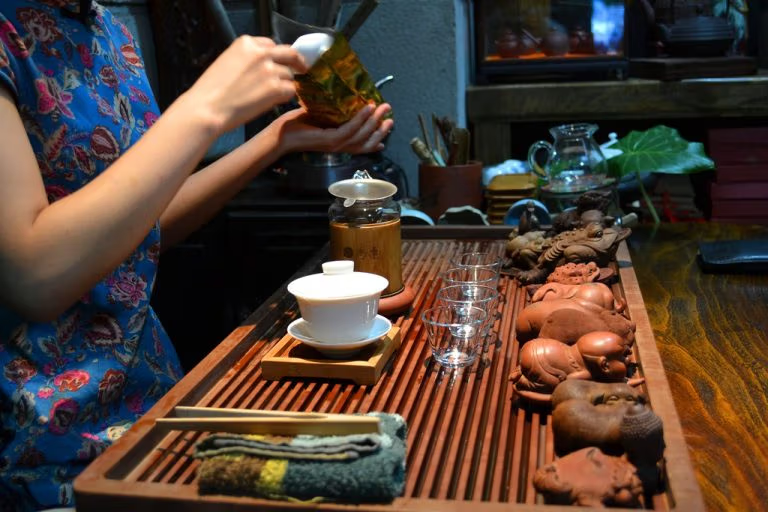
To put the restrictions in context: the vast majority of what tourists buy in China leaves without any issue. Tea in all varieties — pu-erh cakes, loose leaf, gift-boxed sets — is one of the safest and most meaningful souvenirs from any China trip, with no formal weight cap for personal use amounts. Silk products, whether fabric, scarves, or clothing, have no restrictions. Contemporary ceramics and porcelain from a modern kiln are completely uncomplicated; Chinese tea sets in particular combine cultural significance with everyday practicality.
Calligraphy, paintings, and art from living artists don’t fall under cultural relic rules. If you’re visiting Zhangjiajie or Hunan Province, our Zhangjiajie souvenirs guide covers what’s worth buying locally and what travels well. Packaged food — instant noodles, sealed snacks, condiments — is generally fine with original packaging intact, though you’ll want to avoid meat products, fresh produce, and dairy. Electronics you purchased in China are fine for personal use with receipts. Baijiu and alcohol have no Chinese exit restriction on personal quantities, though your home country will impose its own duty-free limits, typically one to two liters.
On tobacco and cigarettes: many travelers wonder about exit limits. Unlike entry, where 400 cigarettes is the duty-free threshold for bringing tobacco into China, outbound passengers are not required to declare tobacco for exit. You’re leaving China, not importing into it. Whatever your home country’s customs rules are will apply on arrival — plan accordingly.
Keep receipts for anything you buy with foreign currency — customs will ask for them if the item is flagged on exit. For a broader look at what’s worth buying across China, our guide to the best souvenirs from China covers specific recommendations by category.
9. The Exit Process at the Airport
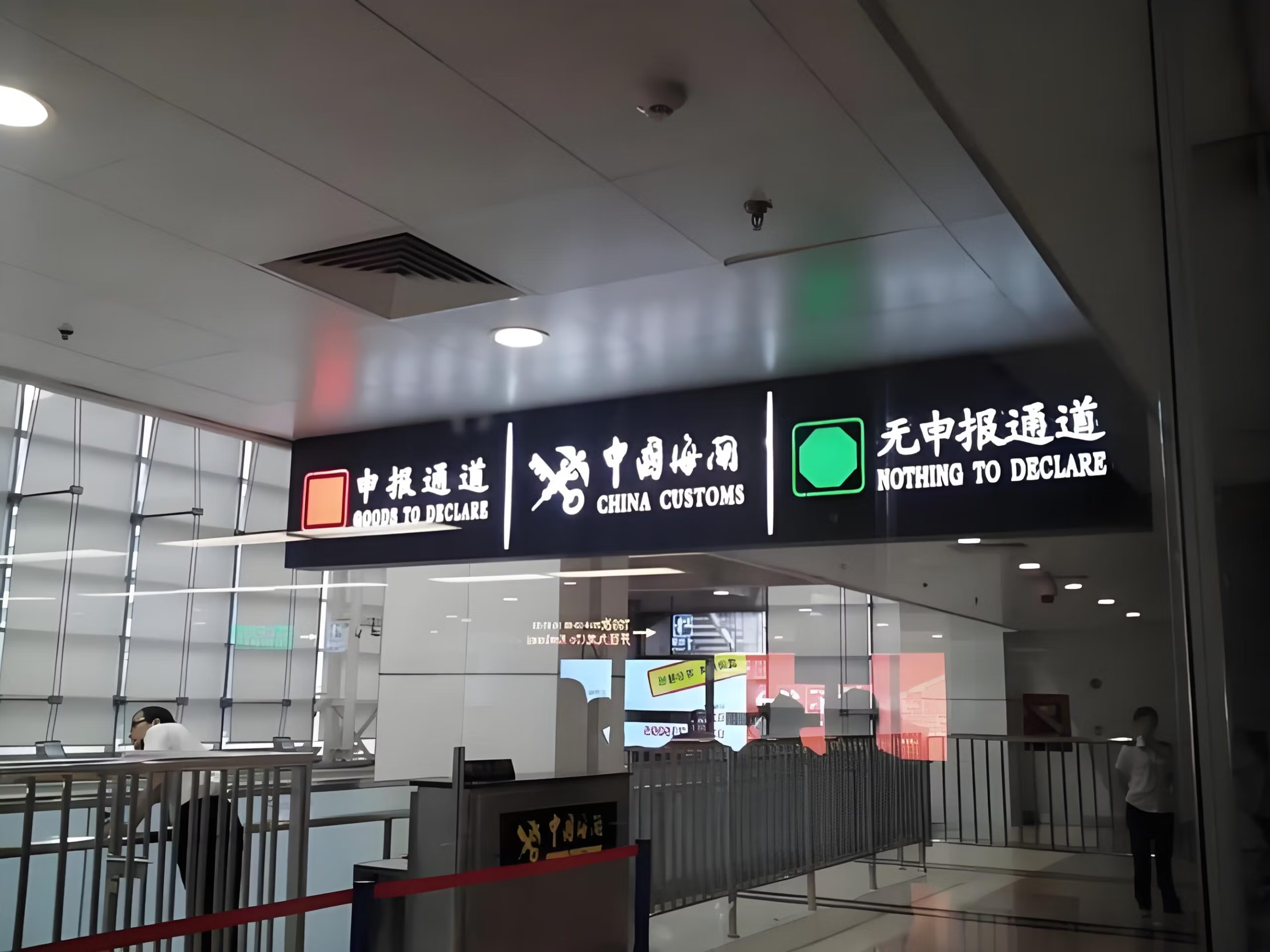
After check-in and airport security, you reach the customs inspection area before immigration. The Green Channel is for passengers with nothing to declare — walk through, though luggage may still be X-rayed. If something is flagged after you’ve entered this channel, the conversation with customs is harder than if you’d gone to the Red Channel voluntarily. The Red Channel is for items to declare: fill in the outward baggage declaration form, present relevant items and documents to the officer.
One procedure worth knowing: if you’re carrying electronics valued over RMB 5,000 per item that you intend to bring back into China, fill in two copies of the declaration form at exit and keep the customs-endorsed copy. Without it, that laptop or camera may be assessed as newly imported goods on re-entry and taxed accordingly.
When you’re uncertain about anything, choose the Red Channel. The delay is a few minutes. Being stopped in the Green Channel with something that should have been declared is a substantially longer and more stressful outcome.
For everything to verify before departure day, our China travel checklist covers it in detail.
10. FAQ – Can I Take X Out of China?
Can I take Chinese tea out of China?
Yes, without restriction for personal use quantities. All varieties are fine — loose leaf, pu-erh cakes, aged pu-erh, gift-boxed sets. No formal weight cap for tourist amounts. Pu-erh in particular is one of the most hassle-free souvenirs you can buy in China. Check your home country’s import rules separately; most countries accept commercially packaged tea without issue.
Can I take baijiu home?
Yes. Alcohol has no Chinese exit restriction on personal quantities. Your home country’s customs will have its own duty-free limits, typically one to two liters.
Can I take alcohol on a plane out of China?
Two separate rules apply. For Chinese customs: no exit restriction on personal quantities, so baijiu, wine, or beer clears without issue. For the flight: airline regulations limit carry-on liquids to 100ml per container and 1 liter total — any bottle over 100ml must go in checked luggage. Some airlines also restrict very high-proof spirits (above 70% ABV) even in checked luggage, so check with your carrier if you’re buying high-strength baijiu.
Can I take Chinese silk out of China?
Yes, without any restriction. Silk fabric, scarves, clothing, and embroidery have no export limitations. Keep your receipt if the item is valuable.
Can I take jade or jewelry I bought in China?
Modern jade from standard retail is fine. Antique jade — anything marketed as pre-1949 — requires official Cultural Relic Export Certification from the State Bureau of Cultural Relics. Keep receipts for any valuable purchase. Gold and silver should be declared; amounts under 50g typically clear without issue.
Can I take calligraphy or paintings out of China?
Work by living artists: yes, no restrictions. Cultural relic rules only apply to works by deceased famous modern artists and anything created before 1949. If you buy from a contemporary gallery or directly from a living artist, you’re fine — keep the receipt showing the purchase date and artist’s name. If the work looks old or the seller describes it as antique, get written documentation as you would for any antique market purchase.
Can I take Chinese medicine pills out of China?
Commercially packaged Chinese patent medicine pills fall under the RMB 300 combined value limit for international travel. Check the ingredient list: pills containing rhinoceros horn or tiger bone are prohibited entirely, even in trace amounts. Pills containing trace amounts of musk or toad venom in compound formulas (such as Liushenwan) are permitted within the value limit. When in doubt, check the full ingredient list against the five prohibited ingredients listed in section 3.
Is there a limit on how much TCM I can take out?
For Chinese herbal medicines and patent drugs: RMB 300 combined value for international travel. Raw musk, rhinoceros horn, tiger bone, dried toad venom, and natural calculus bovis are completely prohibited regardless of quantity. Medicines containing trace amounts of musk or toad venom in compound formulas (like Liushenwan) are permitted within the value limit.
Can I take prescription medicine out of China?
Yes, for personal use amounts in original packaging with a prescription or doctor’s note. The quantity should match the length of your trip. Controlled substances require the same documentation you’d need to carry them into China. If you bought prescription medication in China to take home, check your home country’s import rules first — some countries restrict certain drug classes regardless of origin.
Can I take a drone out of China?
If it’s the same drone you brought in for personal use, exit is straightforward — no special exit formalities. The main restriction is aviation safety: lithium batteries must travel as carry-on, not checked baggage. If you bought a new drone in China to take home, keep the receipt and check your home country’s import rules and drone registration requirements before landing.
Can I take seeds or live plants home from China?
No. Seeds of all kinds, live plant material, fresh fruit, and soil require phytosanitary certificates that individual travelers cannot obtain. Commercially sealed herbal teas and packaged botanical food products are generally fine.
Do I need to declare my laptop when leaving?
Only if it’s valued over RMB 5,000 and you plan to return to China with it — fill in two declaration forms and keep the endorsed copy. For personal electronics leaving China with you permanently, no exit declaration is required.
What happens if I accidentally carry a prohibited item?
Declare it at the Red Channel. You’ll be exempt from punishment, but the item will be confiscated. If customs finds a prohibited item after you’ve passed through the Green Channel, penalties are substantially more serious: fines, and in significant cases, criminal investigation. Declare anything you’re uncertain about.
What about counterfeit goods from tourist markets?
Technically prohibited for export under Chinese law. In practice, small quantities of tourist-grade fakes are rarely stopped at Chinese exit. More relevant: your home country’s customs may confiscate them on arrival, and several countries impose fines for importing counterfeits regardless of declared value.
I bought something at an antique market and I’m not sure if it’s an issue. What do I do?
If you’re still in China: ask the vendor for a formal written invoice in both Chinese and English stating the item is a modern reproduction made after 1949. At the airport: go to the Red Channel and declare it. Bring whatever documentation you have. If it gets flagged and you can’t demonstrate it’s cleared for export, you may have to leave it behind — which is a far better outcome than being stopped in the Green Channel with an undeclared item.
Can I take antiques I bought as gifts out of China?
The same rules apply regardless of whether an item is for personal use or a gift. “It’s a gift” does not change the customs classification. If the item is a cultural relic or resembles one, it needs the same Export Certificate for Cultural Relics as it would if you were keeping it yourself.
Can I take my pet dog or cat out of China?
Yes, but it requires a health certificate and rabies vaccination certificate issued by a Chinese official veterinary authority. Start this process several weeks before departure — the health certificate has a validity window. Check your destination country’s import requirements separately, as quarantine rules vary significantly.
11. Before You Leave: Where Are You Right Now?
Most customs guides end with a checklist of things to remember. The more useful question is: what stage are you at, and what can you still do?
If you’re still in China and haven’t bought anything yet, apply the “legal to buy ≠ legal to export” principle from the start. Keep receipts for everything of value. Before buying anything from an antique market, ask the vendor directly what export documentation they can provide.
If you’ve already bought something and you’re not sure about it, go back to the vendor and get a formal written invoice in both Chinese and English stating the item is a modern reproduction made after 1949. For TCM, check the total value of everything combined against the RMB 300 limit. For cash, count what you’re carrying and compare to the RMB 20,000 yuan and USD 5,000 foreign currency thresholds.
If you’re at the airport, choose the Red Channel when in doubt about anything in your bag. Every time. Declaring something you ultimately didn’t need to declare costs you five minutes. Being stopped in the Green Channel with something you should have declared costs you significantly more.
We’ve been running inbound China tours since 2006, with a focus on major destinations across the country. The companion guide to this one covers what you can bring to China — equally worth knowing before you fly. For questions about carrying cash and mobile payments, our guide to paying in China has you covered. For overall trip preparation, our China travel how-to guides cover the rest.