White Water Terrace (Baishuitai), Shangri-La: The Complete Guide
White Water Terrace (Baishuitai) is China’s largest freshwater travertine formation — a 300,000-year-old cascade of white and blue calcium pools nestled at 2,380m in the Shangri-La foothills. It costs CNY 30 to enter, takes 2–3 hours to visit, and remains genuinely unknown to most international travelers.
If you’ve been planning a Yunnan trip and searching for something beyond Lijiang’s crowded cobblestone streets, White Water Terrace (Baishuitai) is the place. Draped in shimmering white calcium carbonate in the foothills of Haba Snow Mountain — roughly halfway between Lijiang and Shangri-La — it doubles as the sacred birthplace of Naxi Dongba culture: a combination that doesn’t exist at any other travertine site on earth.
We’ve been running inbound China tours since 2006, escorting tens of thousands of international travelers through Yunnan. Baishuitai is one of those places we keep bringing guests back to — not because it’s on every tourist checklist, but precisely because it isn’t.
Table of Contents
1. Quick Facts
Chinese Name | 白水台 (Báishuǐtái) |
Naxi Name | “Shibuzhi” (释卜芝) — “gradually growing flower” |
Location | Baidi Village, Sanba Township, Shangri-La, Diqing Tibetan Autonomous Prefecture, Yunnan |
Altitude | 2,380 meters (7,808 ft) |
Area | ~3 km² (741 acres) |
Formation Age | 200,000–300,000 years |
Main Feature | Calcium carbonate travertine terraces, 140m long × 160m wide |
Scenic Spot Rating | National AAAA (4A) — upgraded November 2024 |
Entrance Fee | CNY 30 per person |
Opening Hours | Apr–Oct: 08:00–18:00 / Nov–Mar: 08:30–17:00 |
Recommended Visit Time | 2–3 hours |
Distance from Shangri-La | ~101 km (about 2–2.5 hrs by car) |
Distance from Lijiang | ~130 km (about 2.5–3 hrs by car) |
2. What Is White Water Terrace — and Why Does It Look Like That?
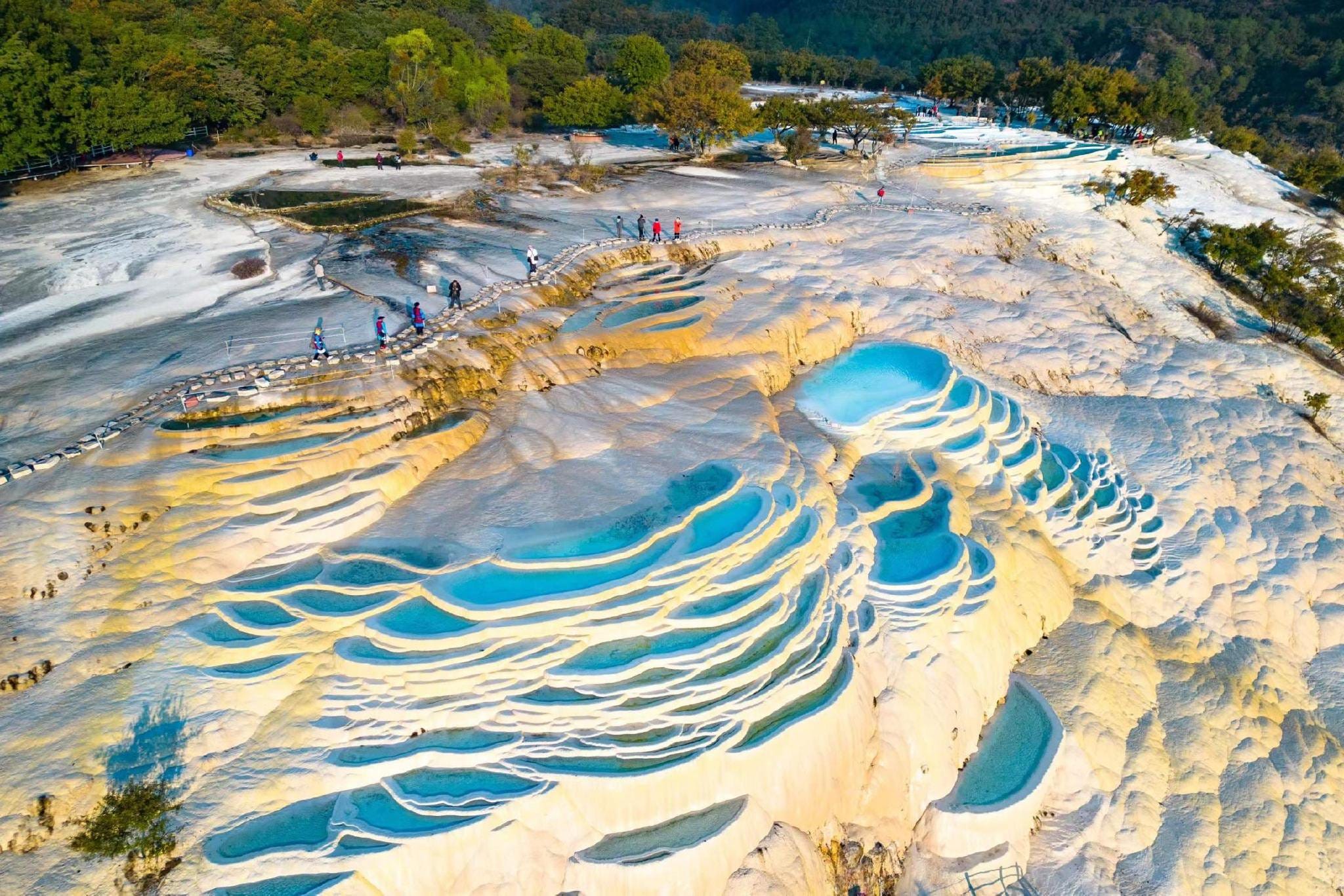
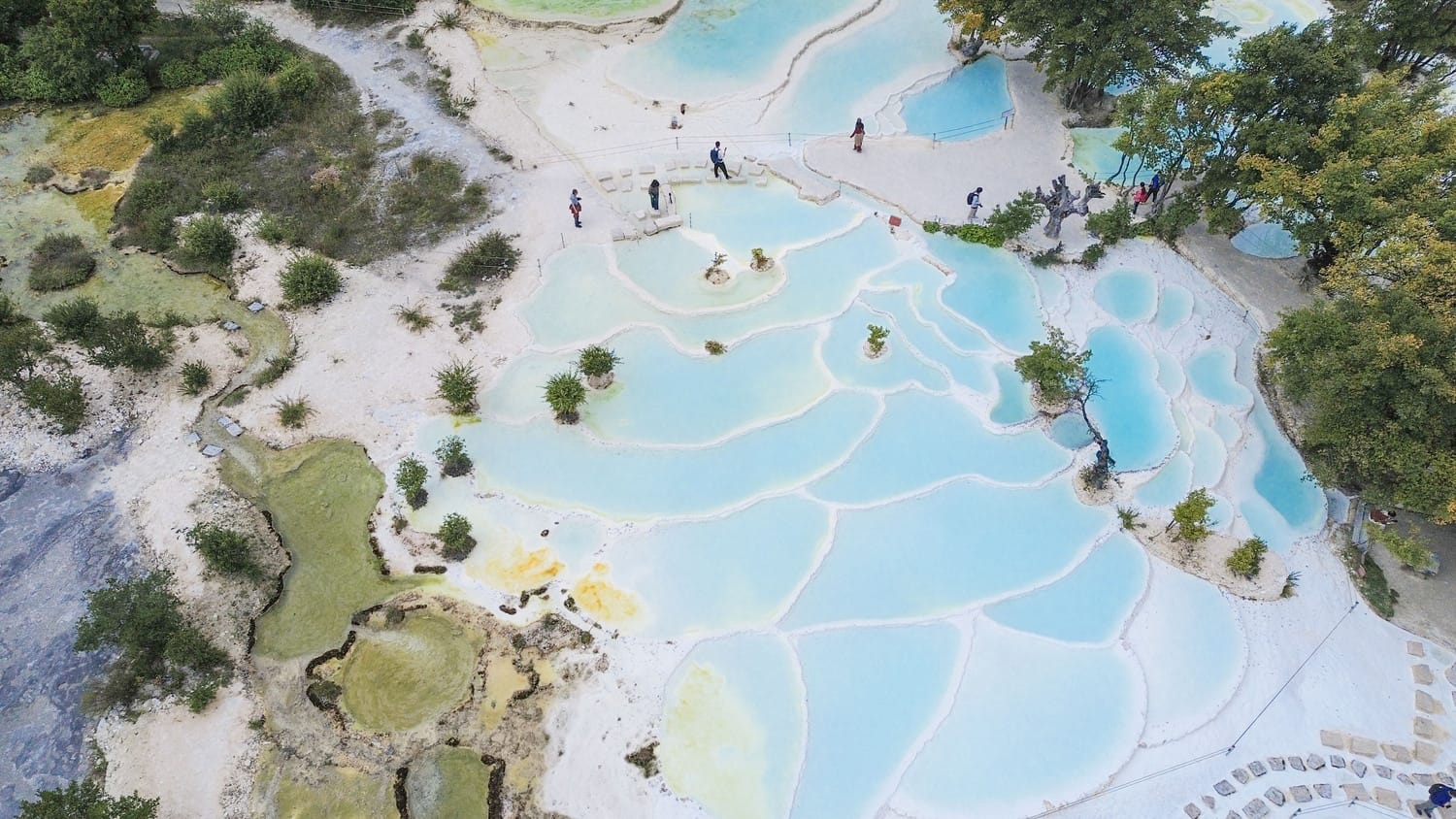
The terraces are travertine, the same rock type that makes Turkey’s Pamukkale so famous. Spring water laden with calcium bicarbonate seeps out from the flanks of Haba Snow Mountain. As that water flows downhill and is exposed to sunlight, the calcium carbonate precipitates out of solution — slowly, year after year, over hundreds of thousands of years — coating the hillside in layer after layer of white mineral crust.
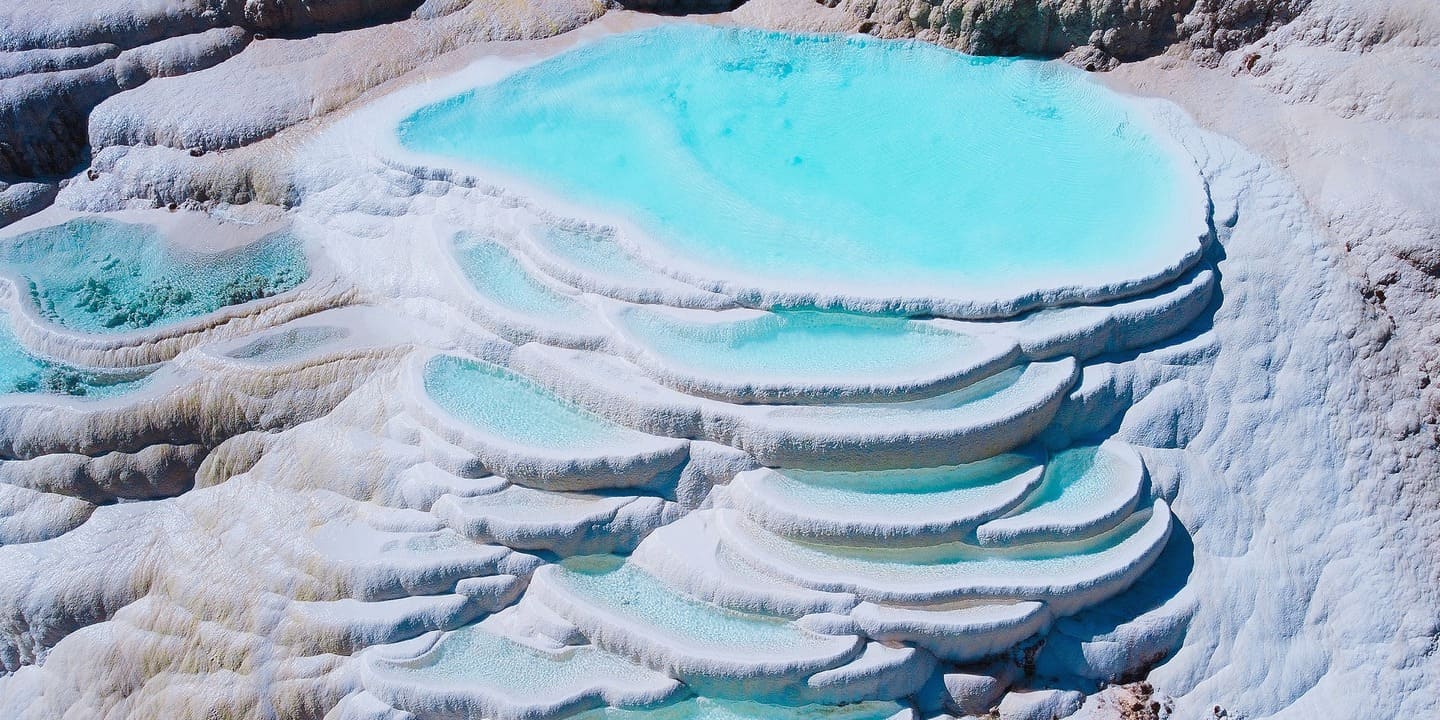
The result is a series of crescent-shaped, semicircular pools stacked one above another, glowing white against the deep green of the surrounding mountain forest. When sunlight hits the water at the right angle, the pools shift from milky white to electric blue-green to pale gold — all in the space of a few minutes.
The process is still happening now. Parts of the terrace look wetter, more vibrant, or more colorful than others because the calcium deposit is thickest where the spring flow is most active. What you’re looking at isn’t frozen geology — it’s a surface that was different last year and will be different next year.
Scale note: Baishuitai is smaller than Pamukkale. The main active terrace measures 140m × 160m — a fraction of Pamukkale’s 2.7km length. But that’s also why you can walk the full circuit in 2–3 hours without queuing, without crowds, and with actual mountain silence. Several guests who had already visited Pamukkale told us they preferred Baishuitai for precisely that reason.
3. History and Cultural Significance
3.1 The Birthplace of Dongba Religion
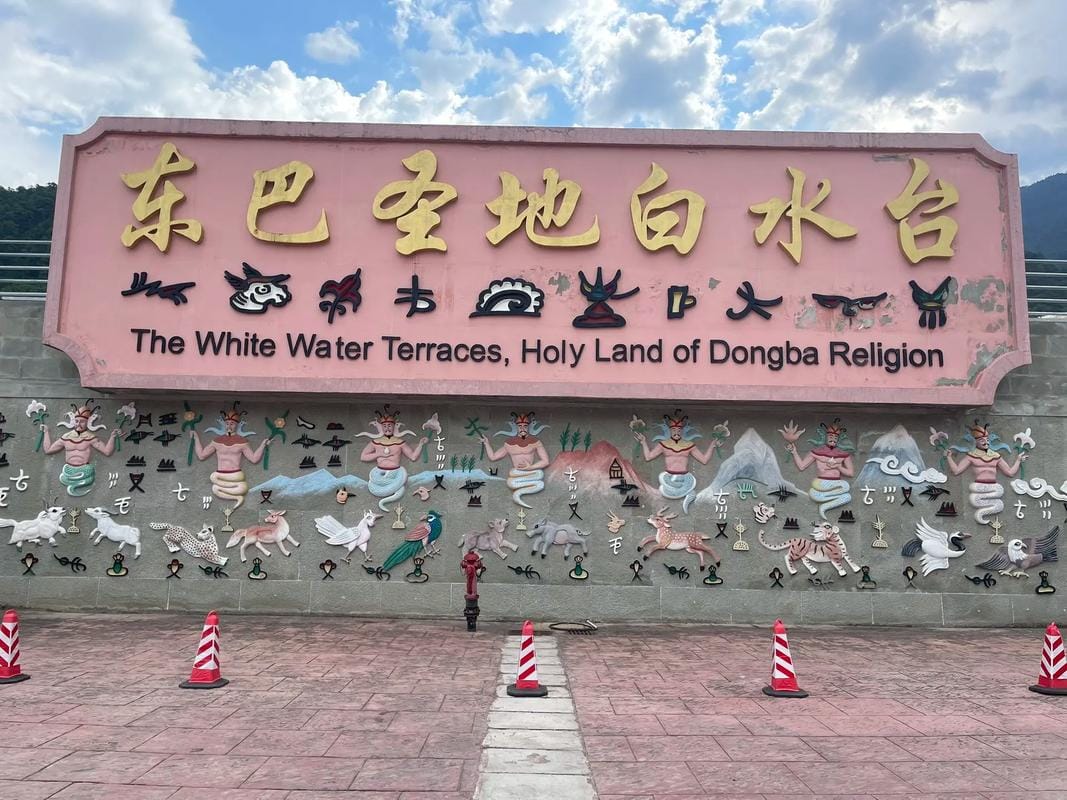
Baishuitai holds a specific, well-documented place in Naxi history. According to historical and religious tradition, Dingba Shiluo — the founding ancestor of the Naxi Dongba religion — was traveling back from Tibet when he passed through this valley. He was so captivated by the white terraces that he stopped, settled, and began preaching. He and his disciples wrote Dongba scripture here for the first time, using the Naxi pictographic script that remains one of the world’s few living hieroglyphic writing systems.
The historical record backs this up. As early as the Tang and Song dynasties (7th–13th centuries), Baishuitai was already documented as a famous pilgrimage site and tourist destination in western Yunnan. A stone carving on the rock near the source bears a poem by Mugao, a Naxi magistrate of the Ming dynasty — the scene it describes is still recognizable today, five centuries later.
In the Naxi language, the terraces are called “Shibuzhi” (释卜芝), meaning “gradually growing flower.” The Dongba doctrine explains white as the color of auspiciousness and purity. According to Naxi belief, only those who have truly visited Baishuitai can call themselves genuine followers of the Dongba faith.
3.2 The Annual “Chao Baishui” Festival
Every year on the 8th day of the 2nd lunar month (roughly March), Naxi, Tibetan, Yi, Bai, and Lisu peoples converge on Baishuitai for the “Chao Baishui” (朝白水) festival — literally, “pilgrimage to the white water.” Thousands of people come, some traveling for days. There is singing, traditional dancing, wild picnics on the hillside, and formal ceremonial worship.
If your dates align with this festival, it’s worth building your itinerary around it. The gathering draws real pilgrims traveling days to get here — not an audience assembled for a cultural show, but communities enacting something continuous and alive.
3.3 A Landscape That Almost Disappeared
Baishuitai nearly died. In 1998, local authorities had already built a dedicated water canal to supplement the natural spring flow from a source 2 km away — a sign that even then, the water supply was recognised as precarious. Between 2002 and 2005, poor management by a private operator led to the entire travertine surface turning yellow and losing its white coloring. The site was described at the time as “on the verge of abandonment.”
In 2008, the Diqing government revoked the operating license and invested CNY 150 million to reclaim and restore the area. The 1998 canal remained in use throughout. It’s the reason the terraces look as vibrant as they do today — without supplemental water, the spring flow alone would not sustain the active calcium deposition visitors come to see.
In November 2024, Baishuitai was officially upgraded to a National AAAA (4A) scenic area — the first formal national recognition of this scale for the site.
4. What You’ll See and Do
4.1 The Travertine Terraces (仙人遗田 — “Fields Left by Immortals”)
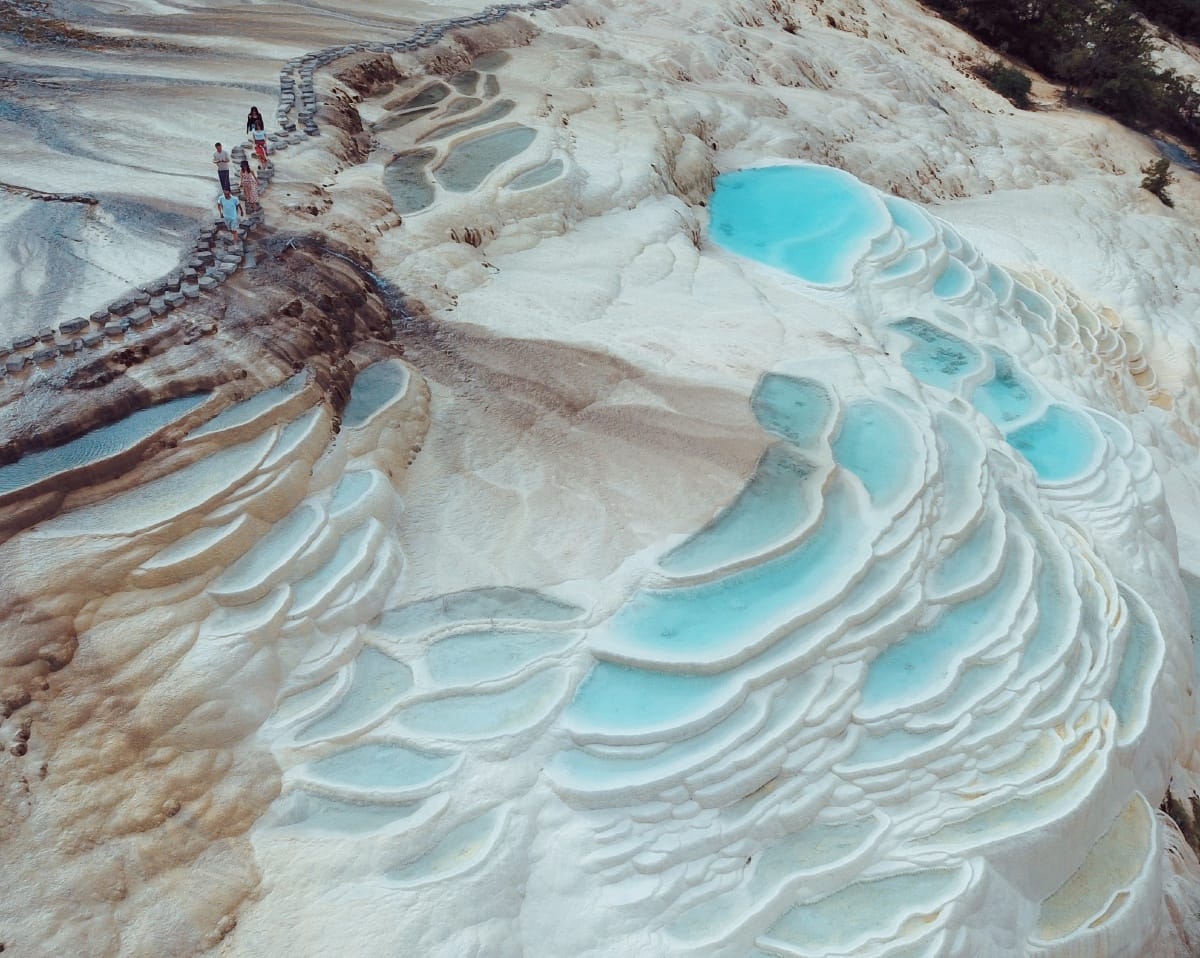
The centrepiece is the main terrace field: a 140-meter-long, 160-meter-wide cascade of white and pale-blue semicircular pools, stacked like a giant natural staircase down the hillside. The pools fill and overflow into each other continuously. In strong sunlight the colors stop visitors mid-step — multiple guests have told us they stood there longer than they planned to, not quite believing what they were looking at.
4.2 The Sacred Spring (神泉) and Ming Dynasty Stone Carving
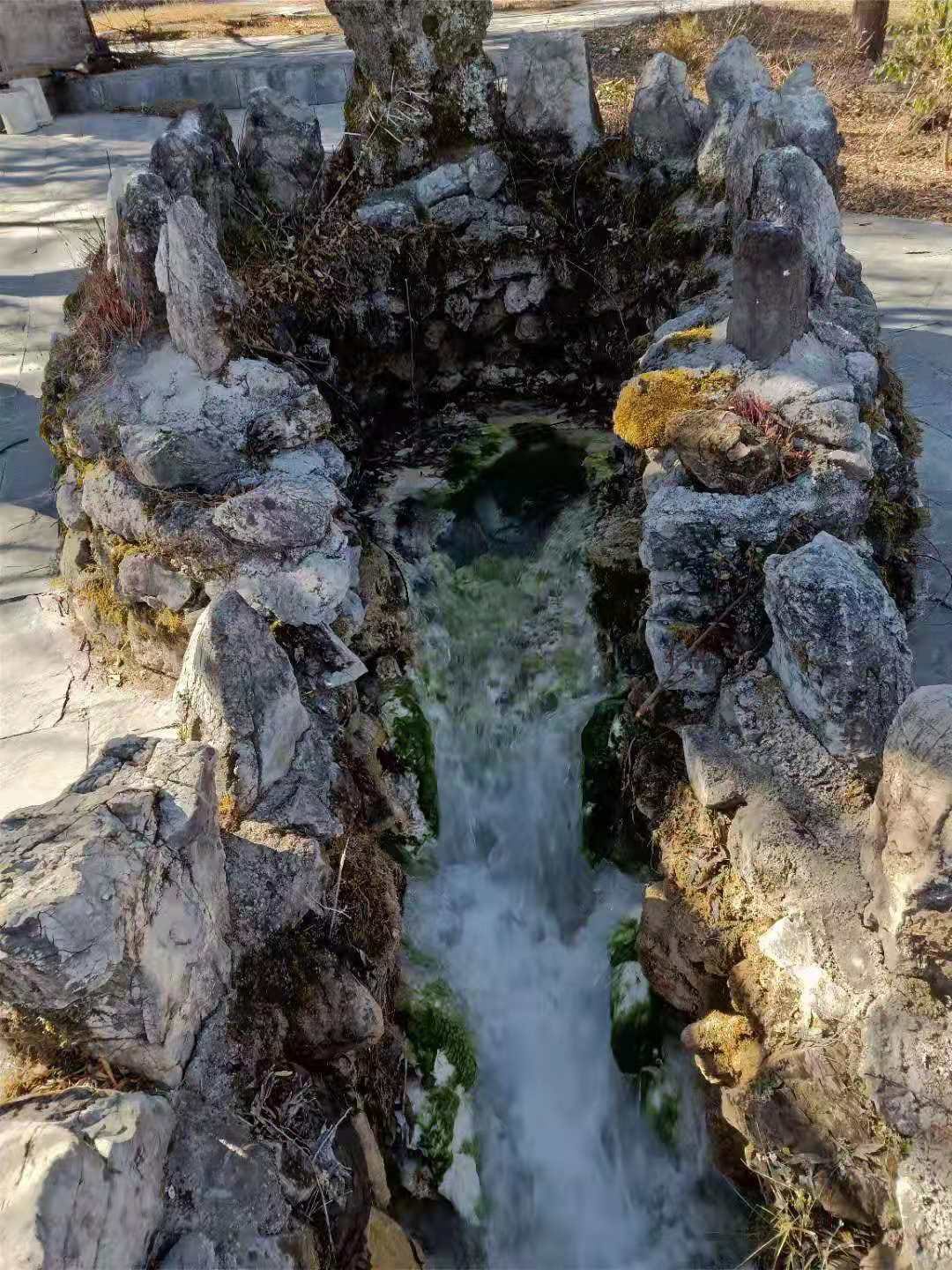
At the top of the circuit, the trail reaches the original water source — a spring emerging beneath a willow tree, pooling before flowing down through the entire terrace system. Naxi people have called this the sacred spring (神泉, shénquán) for generations. According to Dongba scripture, the spring is home to “Shu,” a deity who governs the natural world. Locals still come here to make offerings and pray for protection from misfortune.
A short distance from the spring, a rock face bears the Ming dynasty poem by Mugao — a Naxi magistrate whose verse describes the scene in vivid detail, still legible after five centuries.
4.3 The Goddess of Fertility Stone (神女显灵)
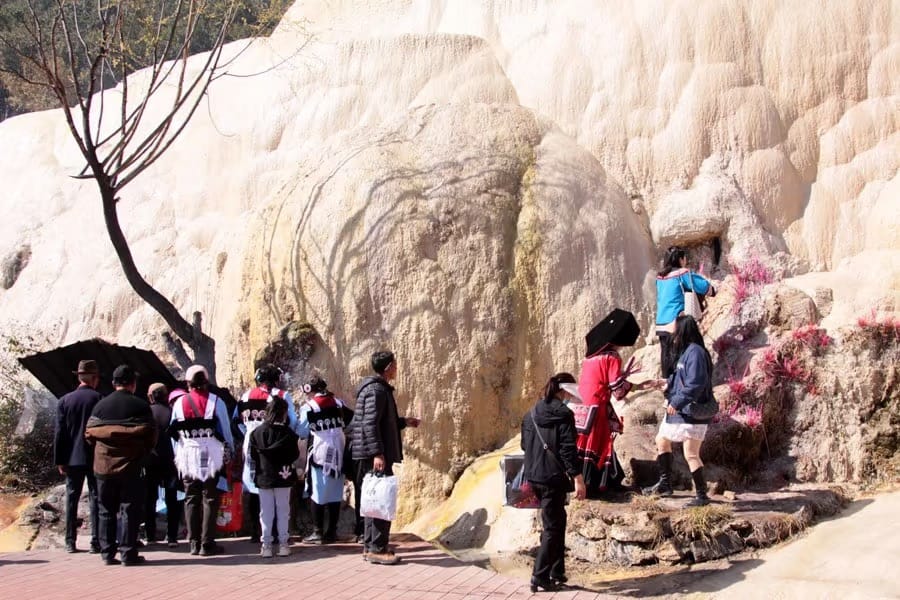
At the lower left of the terrace, a natural stone formation has been worn by centuries of calcium deposits into the shape of a pregnant woman. Local people have long enshrined this as a goddess of reproduction and fertility, and offerings are still left here today.
4.4 The Forest Hiking Trails
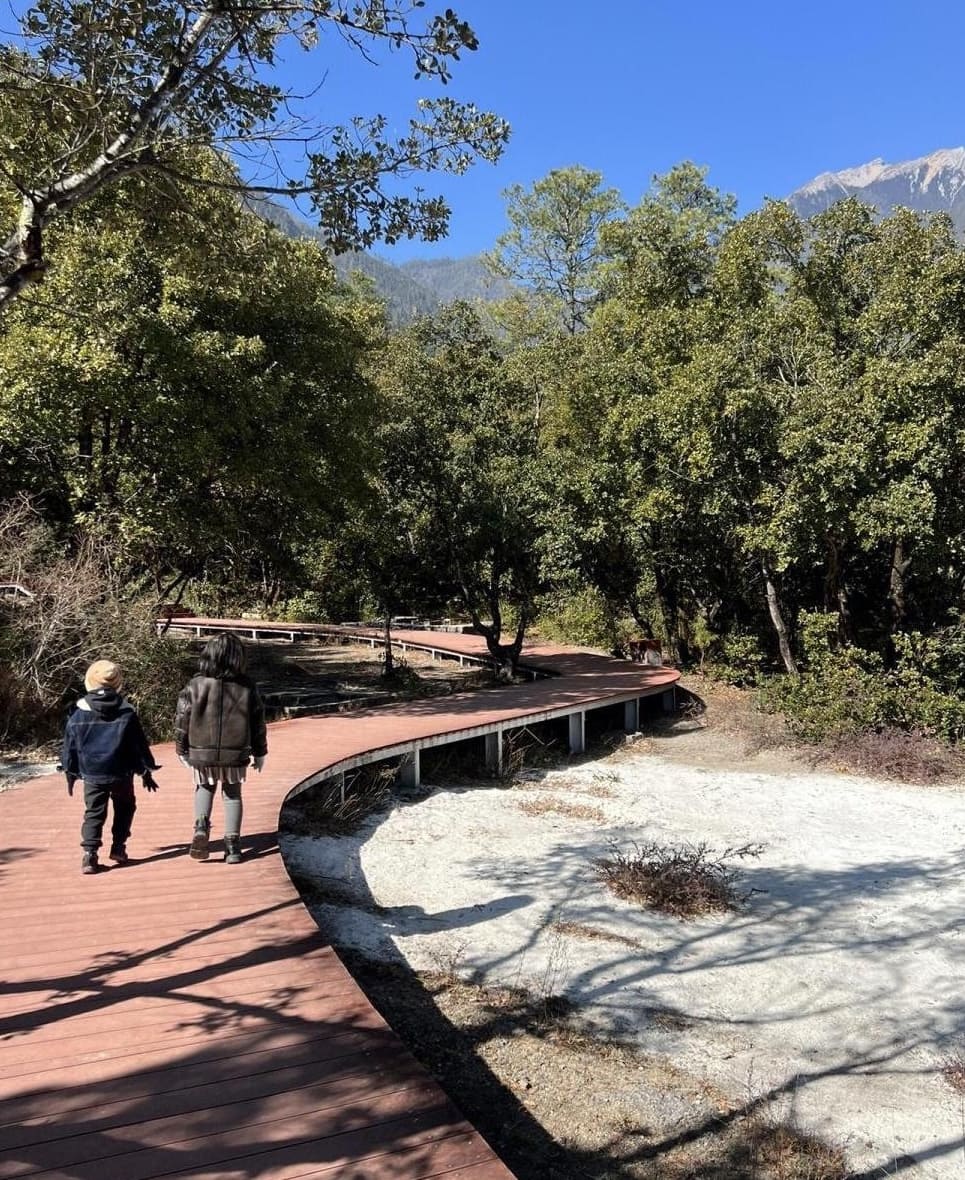
Beyond the main terrace, boardwalks and trails wind through the surrounding mountain forest. These connect to views of Haba Snow Mountain on clear days and pass by smaller, less-visited spring pools that most visitors never reach. We find the forest section genuinely underrated — quieter, cooler in summer, and often more rewarding for photography.
4.5 Baidi Village Itself
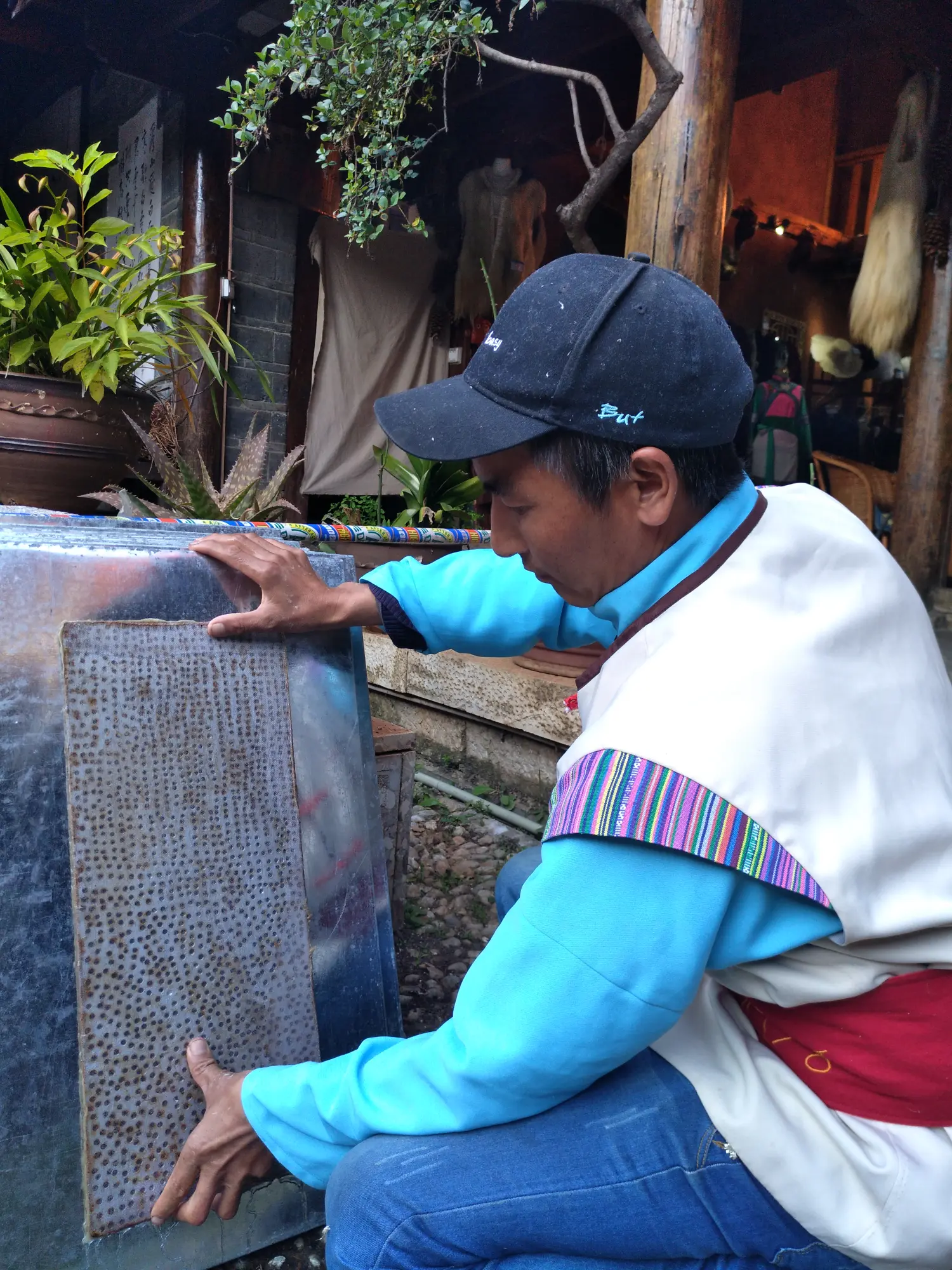
Baidi Village, which sits next to the terrace entrance, is a genuinely lived-in Naxi community. The village is known for Dongba papermaking, a UNESCO-listed intangible cultural heritage. This craft follows Tang dynasty techniques and produces paper that reportedly lasts over a thousand years without deterioration — the same paper still used by Dongba priests to write scripture today. The continuity is unbroken: the technique that was developed here, at the founding site of the religion, is still being practised here by the descendants of the people who developed it. Some households demonstrate the process and sell finished sheets as souvenirs.
Local elderly vendors sell fresh-picked apples and hand-shelled walnuts at the entrance. If you’re heading onward toward Tiger Leaping Gorge, buy some — they’re excellent and cheap.
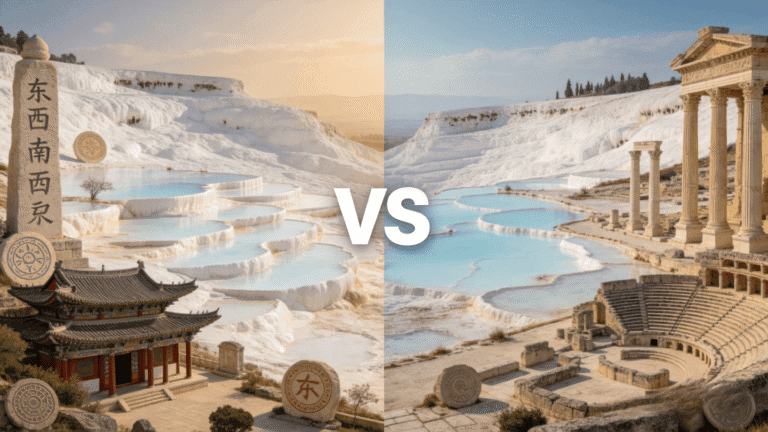
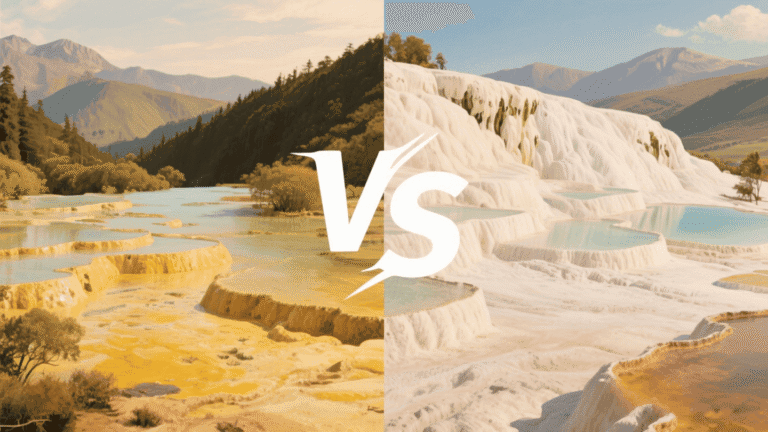
5. Baishuitai vs. Pamukkale vs. Huanglong: How Do They Actually Compare?
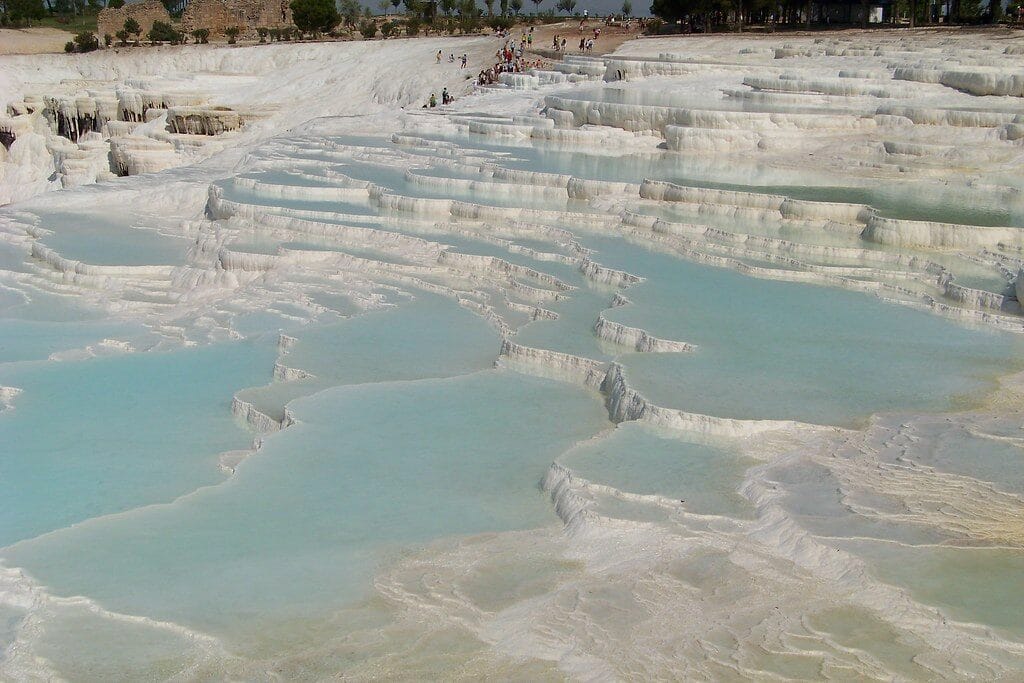
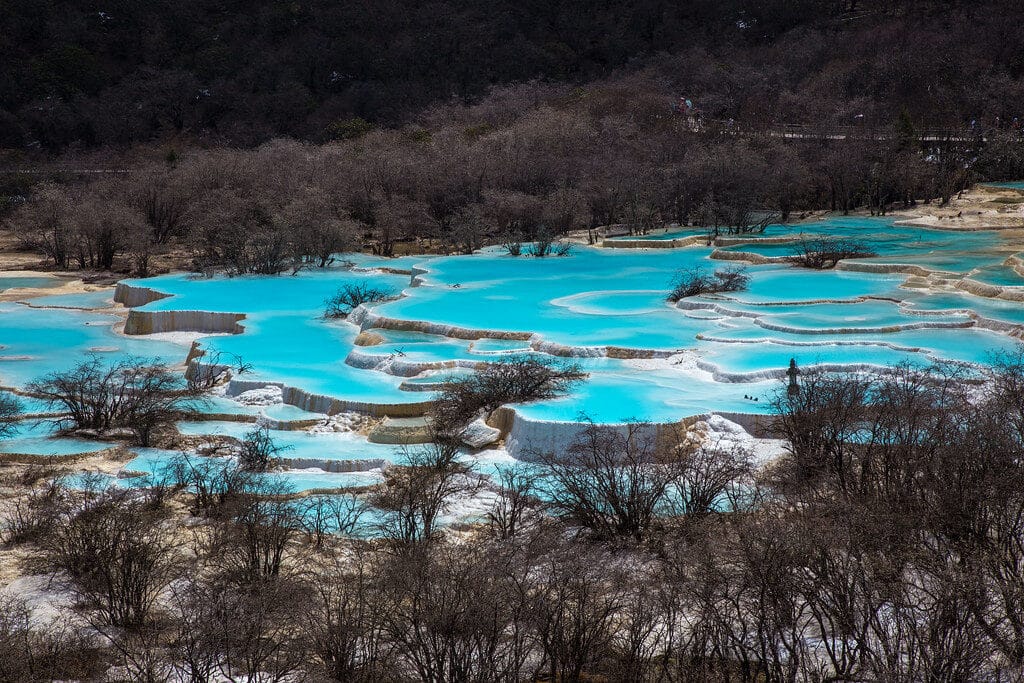
All three are travertine sites — calcium carbonate formations built by mineral-rich water — but arriving at each feels nothing alike. We’ve brought guests to Baishuitai and Huanglong both; the differences below are drawn from those visits and from the travelers who’ve done all three.
Baishuitai (China) | Pamukkale (Turkey) | Huanglong (China) | |
|---|---|---|---|
Water source | Freshwater spring (2°C–10°C) | Thermal hot springs (35–100°C) | Freshwater mountain springs |
Terrace size | 140m × 160m (intimate) | 2,700m long × 600m wide (vast) | 3.6 km valley corridor |
Altitude | 2,380m | ~350m (sea-level climate) | 3,500–3,800m |
Pool colors | White, blue-green, pale gold | Brilliant white, turquoise | Vivid turquoise, jade green, gold |
Can you swim? | No | Yes (designated sections) | No |
Annual visitors | Tens of thousands | 2+ million | 1–2 million |
Crowds | Low — genuinely quiet | Very high, especially summer | High; strict daily quota |
UNESCO status | No (National 4A) | Yes — with Hierapolis ruins | Yes (1992) |
Cultural layer | Deep — Naxi Dongba birthplace | Greco-Roman ruins (Hierapolis) | Tibetan Qiang minority culture |
Entrance fee | CNY 30 (~€4) | €30 (~CNY 235) | CNY 170 peak / CNY 60 off-peak (cable car ¥80 extra) |
Getting there | Remote; 2–3 hrs from Shangri-La | Easy; buses from Denizli | Remote; fly to Jiuzhaigou airport |
Best for | Off-the-beaten-path, culture, quiet | Swimming in pools, archaeology | Pure visual spectacle, photography |
Our honest take: If you want to swim in thermal pools under the Anatolian sun alongside Roman ruins, Pamukkale is the right choice. If you want the single most visually overwhelming travertine spectacle in China, Huanglong wins on sheer scale and color intensity. Baishuitai sits in its own lane: smaller, colder, culturally richer, and significantly less visited. It’s the choice for travelers who want the experience over the Instagram post.
One detail that has stuck with us after years of visits: the Naxi women around Baishuitai wear plain rectangular woven capes — not the embroidered dress most people recognize from Lijiang. The two communities speak dialects different enough to cause genuine communication difficulty. If you’ve been to Lijiang, Baishuitai shows you a different face of the same culture. For a full side-by-side breakdown of the two Chinese travertine sites, see our Huanglong vs White Water Terrace guide.
6. The Special Experience: The “Chao Baishui” Pilgrimage Festival
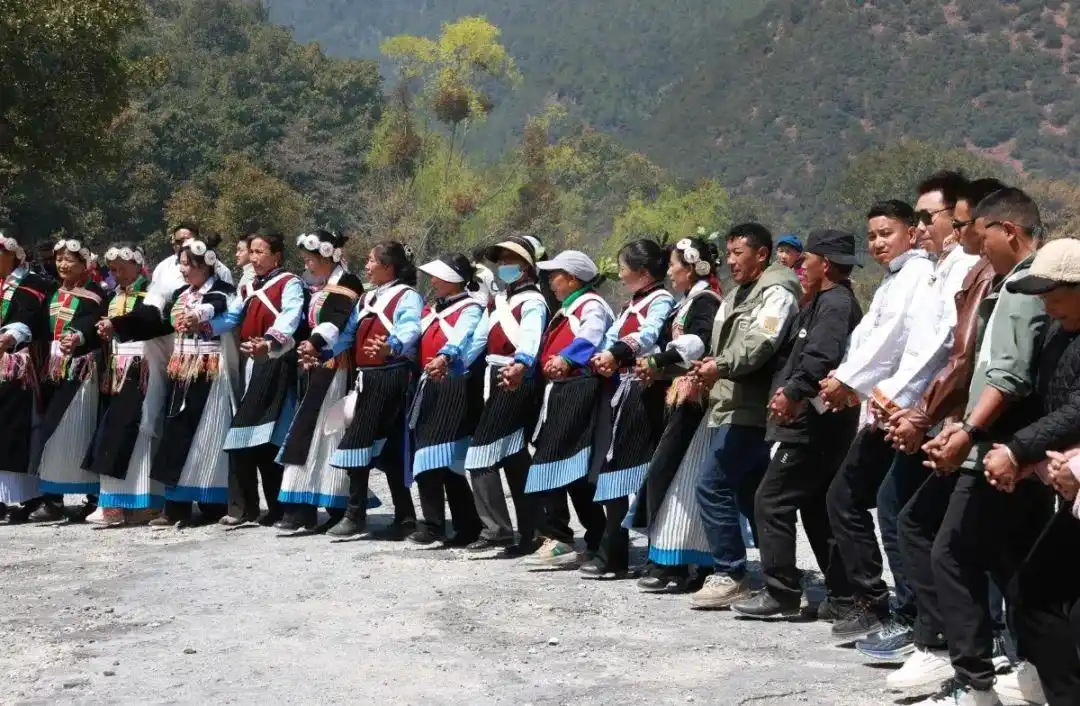
The 8th day of the 2nd lunar month is when Baishuitai comes fully alive.
On that day, thousands of people from five ethnic groups — Naxi, Tibetan, Yi, Bai, and Lisu — set up picnics across the hillside. Women come in full ceremonial dress. Dongba priests chant. Families bring offerings to the spring source. It has been happening here for over a thousand years. It’s not a performance for tourists — tour buses don’t include Baishuitai on their itineraries, and the festival isn’t marketed to outside visitors. Most people at it are there because their parents brought them, and their parents before that.
This is the largest annual gathering of Dongba religion practitioners in the world, at the religion’s founding site. There is genuinely nothing like it in Yunnan.
2026 date: The 8th day of the 2nd lunar month falls on March 27, 2026. Arrive the evening before and overnight in Baidi Village.
7. Best Time to Visit
Season | Months | Conditions | Our Verdict |
|---|---|---|---|
Spring | Feb–Apr | Flowers in bloom on surrounding hills; clear skies common; festival season | Best overall |
Summer | May–Jul | Green and lush; some rain; good water flow in terraces | Good, bring rain gear |
Autumn | Sep–Nov | Autumn color on hillsides; clear skies; cool temperatures | Best overall |
Winter | Dec–Jan | Cold (-5°C to 5°C range); fewer visitors; dramatic frost on terraces | Beautiful but cold |
Morning light is better. The terraces face roughly southwest. Morning light hits them obliquely and creates more dimension and color contrast in photographs. By early afternoon, the light can flatten. We recommend arriving by 9–10am.
Avoid rainy-day visits — this is not optional advice. In mist or overcast conditions, the colors of the pools disappear almost entirely. The blue-green turns grey. The white terraces blend into the sky. This is the single most consistent complaint in visitor reviews, and it’s entirely avoidable: check the 72-hour forecast before you make the drive. Sunny conditions are genuinely transformative here; cloudy conditions make it hard to understand why anyone came.
Weekdays over weekends. Baishuitai still sees relatively light tourist traffic by Yunnan standards, but weekend and holiday crowds have grown noticeably since the 2024 4A upgrade. Weekdays are noticeably quieter.
8. Getting There
8.1 From Shangri-La (~101 km, 2–2.5 hrs)
Private car (recommended): CNY 400–500 for a round-trip charter, depending on vehicle type and season. The road follows the “East Ring Route” (东环线) through some of Yunnan’s most spectacular mountain scenery, and a private car lets you stop whenever you want. Most guests who take this route tell us the drive itself was a highlight — the road winds through Tibetan farmland, Yi minority villages, and river gorge sections that most visitors to Yunnan never see. Budget extra time if you’re driving; there are a dozen places where you’ll want to pull over.
Public bus: Shangri-La Bus Station runs two buses daily to Sanba Township (三坝乡), departing at approximately 9:00am and 2:00pm. Fare is around CNY 30–35 per person (buy via the 迪庆交运 WeChat mini-program; prices adjust periodically). Get off at Baidi Village (白地村). Journey time: 2.5–3.5 hours. Note: the 9am bus gives you enough time at the terrace; the 2pm bus means you will almost certainly need to overnight in Baidi.
8.2 From Lijiang (~130 km, 2.5–3 hrs)
Baishuitai sits roughly between Lijiang and Shangri-La, making it a natural stopover on the route between the two cities. Our Lijiang travel guide covers the broader context if you’re planning that loop.
Private car: CNY 600–800 for a Lijiang–Baishuitai–Shangri-La one-way transfer. There is no direct public bus from Lijiang to Baishuitai; the standard approach is to change at Shangri-La or hire a private vehicle.
8.3 From Tiger Leaping Gorge (Mid-Gorge)
There is a daily bus from Tiger Leaping Gorge town (Tina’s Guesthouse area) to Baishuitai, departing at noon. This is popular with hikers who have completed the Tiger Leaping Gorge upper trail and want to continue toward Shangri-La. Journey time: approximately 1.5–2 hours.
Note: road conditions on this stretch have historically been rough, with construction delays particularly 2020–2023. Recent reports indicate the main road surface has been significantly improved, with 2024–2025 visitors noting a smooth tar road. Verify current conditions if you’re driving in a standard passenger car rather than an SUV.
8.4 A Note on the Road
The route from Shangri-La uses the East Ring Route through mountainous terrain. It’s genuinely beautiful — but there are significant bends and altitude changes. Guests with serious motion sickness should either take preventive medication or consider whether the journey is worth it. If you have any flexibility in your itinerary, approaching from the Lijiang direction (slightly gentler terrain) can be easier.
9. Opening Hours and Tickets
Item | Details |
|---|---|
Opening Hours (Apr–Oct) | 08:00–18:00 |
Opening Hours (Nov–Mar) | 08:30–17:00 |
Entrance Fee | CNY 30 per person |
Horse Ride (up the hill, one-way) | CNY 50 per person |
Booking | On-site ticket purchase; no advance booking required |
On the horse ride: Most visitors who’ve done both say the walk is more rewarding. The boardwalk trail provides better access to the terraces and more photographic angles. The horse path bypasses much of what you come to see. Save the CNY 50.
On the ticket price: At CNY 30, this is one of the best-value scenic area tickets in Yunnan. For context, Pudacuo National Park costs CNY 138, and Jade Dragon Snow Mountain costs over CNY 200.
10. Planning Your Visit: A Practical Walk-Through
The trail climbs before it levels. From the entrance gate, a paved path and boardwalk ascend steadily to the spring source — roughly 30–45 minutes of uphill walking — before looping back down. The total circuit runs 2–3 hours at a comfortable pace. It’s not technical, but the gradient is consistent enough that guests who underestimate it tend to regret not bringing water.
Wear comfortable walking shoes — the boardwalk can be slippery when wet. Bring sunscreen and sunglasses (high-altitude UV is significantly stronger than at sea level), a jacket for when cloud or wind comes in, and water, since vendors inside are limited. A wide-angle lens makes the most of the terrace’s horizontal spread. If you’re visiting during the festival, dress modestly out of respect for the religious context.
Do not step on the terraces themselves. This is strictly enforced and with good reason — even light foot traffic destroys the fragile calcium deposits. In the period 2002–2005, inadequate visitor management allowed damage that took years to reverse. Stay on the boardwalks.
Overnight options: The most reliable option is the guesthouse directly opposite the scenic area entrance — look for the sign on the building next to the road. Rooms run CNY 60–150 per night with WiFi, private shower, and are large enough for two beds. Multiple foreign visitors have stayed there and found the owner friendly despite no shared language. We’ve also stayed in guesthouses with heated floors further into the village; quality has improved considerably since the 4A upgrade brought investment to the area. If you’re coming from Tiger Leaping Gorge by the noon bus, overnighting here and catching the 9am bus to Shangri-La the next morning is the most sensible plan.
11. Combining Baishuitai With Nearby Attractions
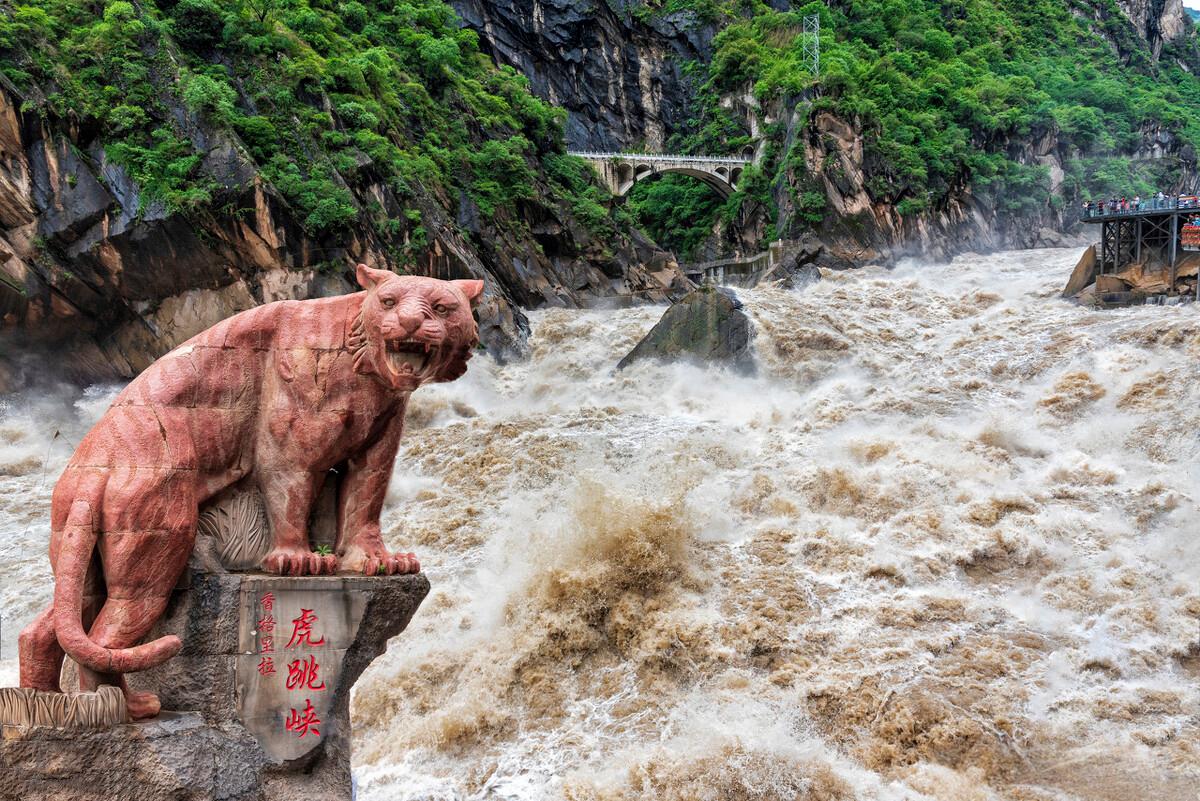
Baishuitai earns its place on a Yunnan itinerary most naturally when it sits between two other stops — not as a destination that justifies a dedicated return trip, but as the thing that transforms a transit day into something memorable. Our most-recommended combinations:
The Shangri-La East Ring Loop (1 day): Depart Shangri-La early → Baishuitai (3 hours) → return via scenic East Ring → arrive back in time for evening at Gandan Songzanlin Monastery.
The Lijiang–Shangri-La Transfer (1–2 days): Depart Lijiang → stop at Tiger Leaping Gorge upper lookout → continue to Baishuitai (overnight in Baidi Village) → continue to Haba Snow Mountain viewpoint → arrive Shangri-La. This is the itinerary we use most frequently with guests who have time to do it properly.
The Hardcore Option: Hike from Walnut Garden (Tiger Leaping Gorge) over Haba Snow Mountain to Baishuitai. This is a multi-day high-altitude trek requiring a guide, permits, and serious preparation — not for general tourists, but it exists.
12. Practical Tips
Altitude awareness: At 2,380m, Baishuitai is lower than Shangri-La city (3,160m). If you’re already acclimatized from Shangri-La, you’ll be fine. If you’re coming directly from Lijiang (2,400m), the altitude is comparable. Either way, don’t sprint up the boardwalk.
Weather changes fast. Mountain weather in this region shifts rapidly. We’ve seen clear mornings turn to rain inside an hour. A lightweight rain jacket takes up no space and saves the day.
Photography timing and position: The left-side viewing platform near the top of the circuit gives the widest unobstructed angle across the full terrace width — most photographers who know the site head there first. Golden hour (first 90 minutes after sunrise or before sunset) gives the most dramatic colors, and the morning light hits the southwest-facing terraces with more dimension than afternoon. If you can overnight in Baidi Village, the sunrise shot from that platform with almost no other visitors is the frame most people come back for.
Respect the religious context. The fertility goddess stone is an active object of worship with offerings left regularly. The festival brings thousands of genuine pilgrims. Dress accordingly and give space to any ritual activity you encounter.
Drones: Drone use is permitted in many areas outside formal protected zones, but verify current local rules with your guide before flying. The area around the terrace offers extraordinary aerial perspectives.
Mobile data: China telecom signals can be weak in the Sanba Township valley. Download your maps offline before leaving Shangri-La or Lijiang.
Toilets: The official facilities inside the scenic area have been reported as unreliable — an attendant at an unofficial toilet near the entrance typically charges CNY 1. Bring tissues.
13. Frequently Asked Questions
Is White Water Terrace worth visiting?
Yes — with the right expectations. It’s not a visual spectacle on the scale of Huanglong or Pamukkale. The terrace itself takes about an hour to walk; the drive from Shangri-La takes two to three times longer. What Baishuitai delivers instead is quietness, cultural depth, and a landscape that most tour groups never reach. For CNY 30, that combination is hard to argue with.
How long do I need at Baishuitai?
Allocate 2–3 hours for the terrace circuit. Add another hour if you want to walk through Baidi Village and watch Dongba papermaking. If you’re hiking the forest trails beyond the main terrace, add another 1–2 hours.
Can I visit Baishuitai as a day trip from Shangri-La?
Technically yes, but it’s tight. The 9am bus means you won’t arrive until noon, giving you 3 hours before needing to head back for the return bus (if available) or arrange a car. A private charter car, departing Shangri-La at 7:30–8am, makes a day trip more comfortable.
Is Baishuitai accessible for children and older travelers?
The main boardwalk circuit is well-paved and manageable for most fit adults. The ascent is steady but not steep. For those who find the uphill difficult, the horse option (CNY 50 one-way) exists, though the descent still requires walking. Children generally love the unusual colors and textures of the terraces.
How does Baishuitai compare to Pamukkale?
Baishuitai and Pamukkale are both calcium carbonate travertine formations, but they differ fundamentally. Pamukkale’s terraces span 2.7 km and are fed by thermal hot springs (35–100°C) that you can swim in; it draws over 2 million visitors a year and sits at low altitude near a Greco-Roman city. Baishuitai’s main terrace is 140m × 160m, fed by freshwater springs at 2,380m elevation, and sees only a fraction of that traffic. Baishuitai cannot be swum in, is set against snow-mountain scenery, and carries deep Naxi cultural significance. Scale and experience are very different — comparable in geology, not in feel.
How does Baishuitai compare to Huanglong?
Huanglong in Sichuan is China’s largest and most visually spectacular travertine valley — a 3.6km corridor of coloured pools at 3,500–3,800m altitude, UNESCO-listed, and highly regulated with a daily cap of 25,000 visitors. Baishuitai is smaller, lower, cheaper (CNY 30 vs. CNY 170 peak / CNY 60 off-peak, plus ¥80 cable car at Huanglong), and has no visitor quota. Huanglong is a bigger spectacle; Baishuitai is a more personal experience. For a full practical comparison, see our Huanglong vs White Water Terrace guide.
Does Baishuitai have altitude sickness risks?
At 2,380m, the risk is much lower than at Shangri-La (3,160m) or other Yunnan highlights. Most healthy visitors feel no symptoms. Older travelers or those with heart/lung conditions should follow standard high-altitude precautions.
Can I combine Baishuitai with Tiger Leaping Gorge?
Yes, and the logistics work well in both directions. Hikers finishing the Tiger Leaping Gorge upper trail can catch the noon bus directly to Baishuitai. Drivers can link the two on a Lijiang–Shangri-La transfer with a night in Baidi Village. The road between them has significantly improved since the construction chaos of 2020–2022; most recent visitors report 1.5–2 hours between the two sites.
14. A Personal Note from Our Team
We’ve been bringing international guests to Baishuitai for years — long before it became the talk of Chinese travel platforms. What keeps bringing them back isn’t the geology alone. It’s the specific combination: the absolute quiet of a mountain morning, the crunch of the boardwalk underfoot, the Naxi woman selling walnuts at the gate, the faint sound of spring water moving through pools nobody else is standing over.
One of our guides, Tom, who grew up in the region, once described Baishuitai like this: “It’s a place where you can hear the mountain thinking.” That line has stayed with us.
The travertine will keep forming — one calcium layer at a time — for as long as that spring flows. The Dongba faith will keep making its annual pilgrimage. Your window to see it while it’s still quiet and largely unknown to international travelers is real, and it won’t last forever.
If you’d like to include Baishuitai in a Yunnan itinerary, or combine it with Shangri-La, Tiger Leaping Gorge, or the Haba Snow Mountain area, talk to our team. We know this road well.