Avatar Mountains in Zhangjiajie: The Complete Guide to China’s Floating Peaks
First Things First
The Avatar Mountains are specifically in Yuanjiajie, which is part of the larger Wulingyuan Scenic Area.
We still remember the first time we stepped off the Bailong Elevator at dawn. The mist was just beginning to lift from the valley floor, revealing the towering sandstone pillars that inspired James Cameron’s Pandora. After 20+ years of bringing travelers to these mountains through Travel China With Me, we’ve learned that the Avatar Mountains deliver something cinema can’t capture: the profound silence between those ancient stone giants, broken only by your breath and the whisper of wind through vertical forests.
This isn’t another recycled travel guide. We’re sharing insights from over 300 client visits recently, conversations with local Tujia villagers, and countless sunrise hikes through trails most tourists never discover.
Table of Contents
Quick Facts About Avatar Mountains
Official Name | Yuanjiajie Scenic Area (part of Wulingyuan) |
Location | Zhangjiajie, Hunan Province, Central China |
UNESCO Status | World Heritage Site (since 1992) |
Elevation | 1,074 meters at Avatar Hallelujah Mountain |
Total Peaks | Over 3,000 quartz-sandstone pillars |
Highest Peak | 1,262 meters (Huangshi Village) |
Park Size | 397.5 square kilometers (entire Wulingyuan) |
Daily Visitor Cap | 53,000 people |
Best Months | April-May, September-October |
Average Visit | 2-3 days minimum recommended |
History and Cultural Significance
The Geological Story: 300 Million Years in the Making
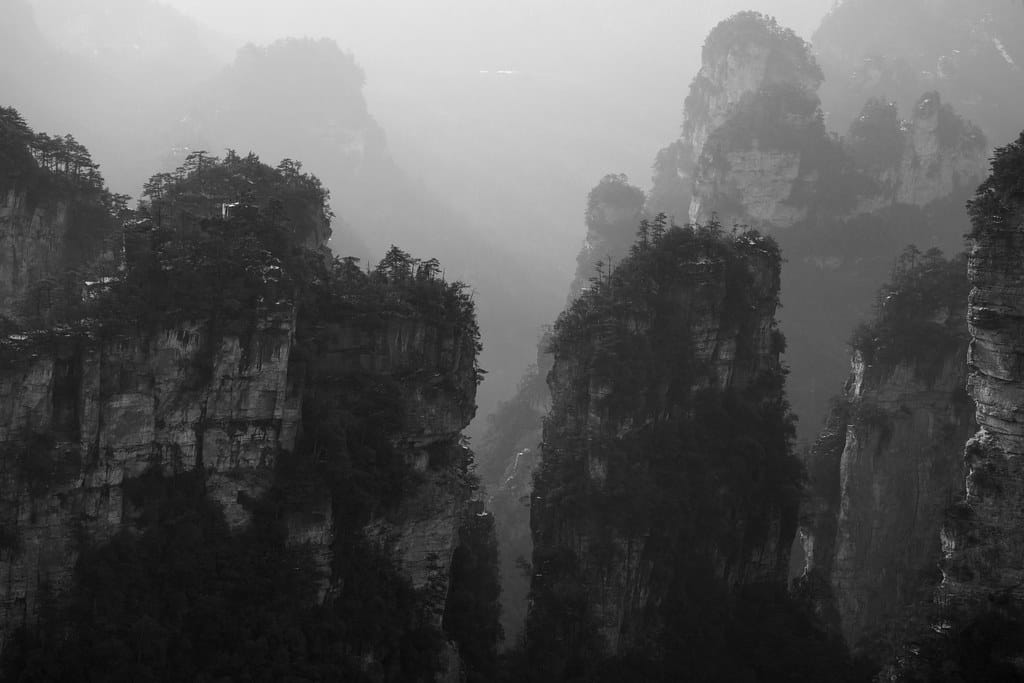
The Avatar Mountains aren’t limestone karst formations like Guilin. They’re quartz-sandstone pillars—a crucial distinction. Around 380 million years ago, this region lay beneath a vast ocean. Sediment accumulated in layers over millions of years, eventually forming thick sandstone deposits rich in quartz.
The magic happened during the Himalayan orogeny about 65 million years ago. As tectonic plates collided and the earth’s crust uplifted, this ancient seabed rose to become land. But the transformation had only begun.
What makes Zhangjiajie unique is physical erosion, not chemical dissolution. Water and ice worked as sculptors. During winter, water seeps into rock cracks and freezes. The expanding ice splits the stone, piece by piece. In summer, monsoon rains wash away softer sediments while the hard quartz sandstone endures.
The plants growing on these pillars aren’t just decoration—they’re active erosion agents. Root systems penetrate cracks, accelerating the splitting process. Over millions of years, what was once solid rock became isolated pillars, each standing like a natural skyscraper.
The result? More than 3,000 individual peaks, many exceeding 200 meters in height. The weathered material gets carried away by streams flowing through the valleys, continuously revealing new formations.
From “South Sky Column” to Global Icon
Before 2009, few international travelers had heard of Zhangjiajie. The park was already China’s first national forest reserve (established 1982) and a UNESCO World Heritage Site (1992), but it remained relatively unknown outside Asia.
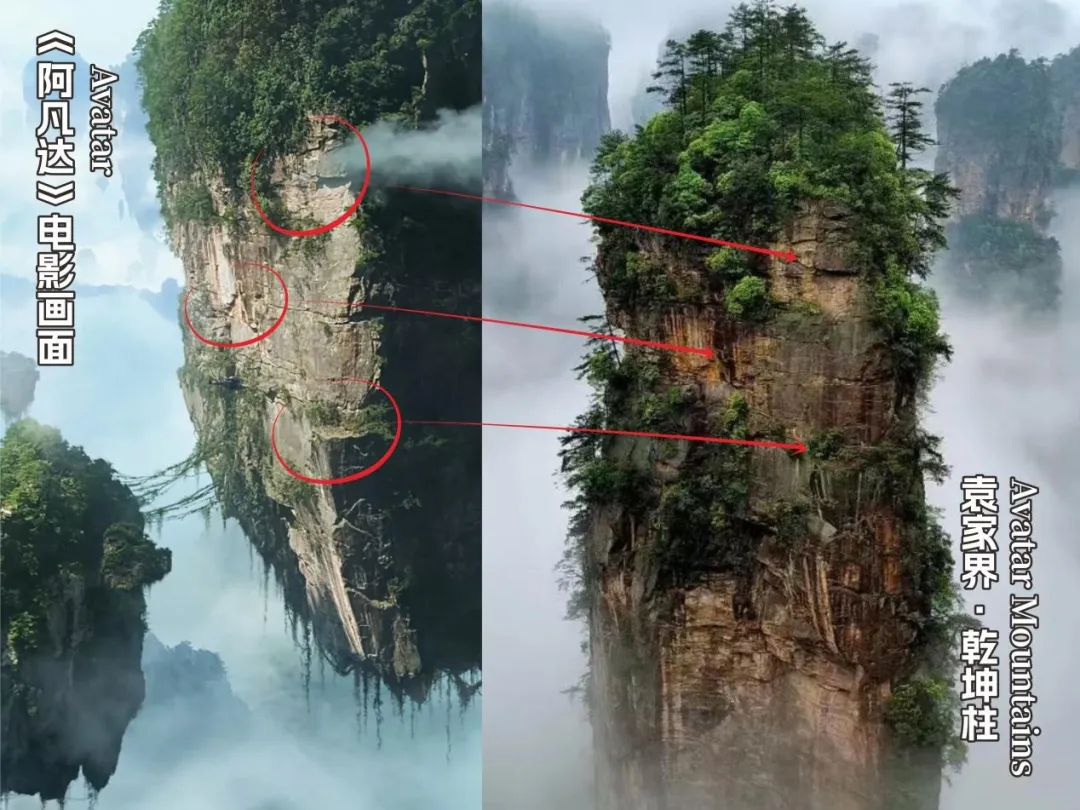
Then Avatar premiered. James Cameron’s production team had scouted mountains worldwide—Guilin, Huangshan, even locations in South America. But Zhangjiajie’s vertical pillars provided something unique: the visual sensation of mountains defying gravity.
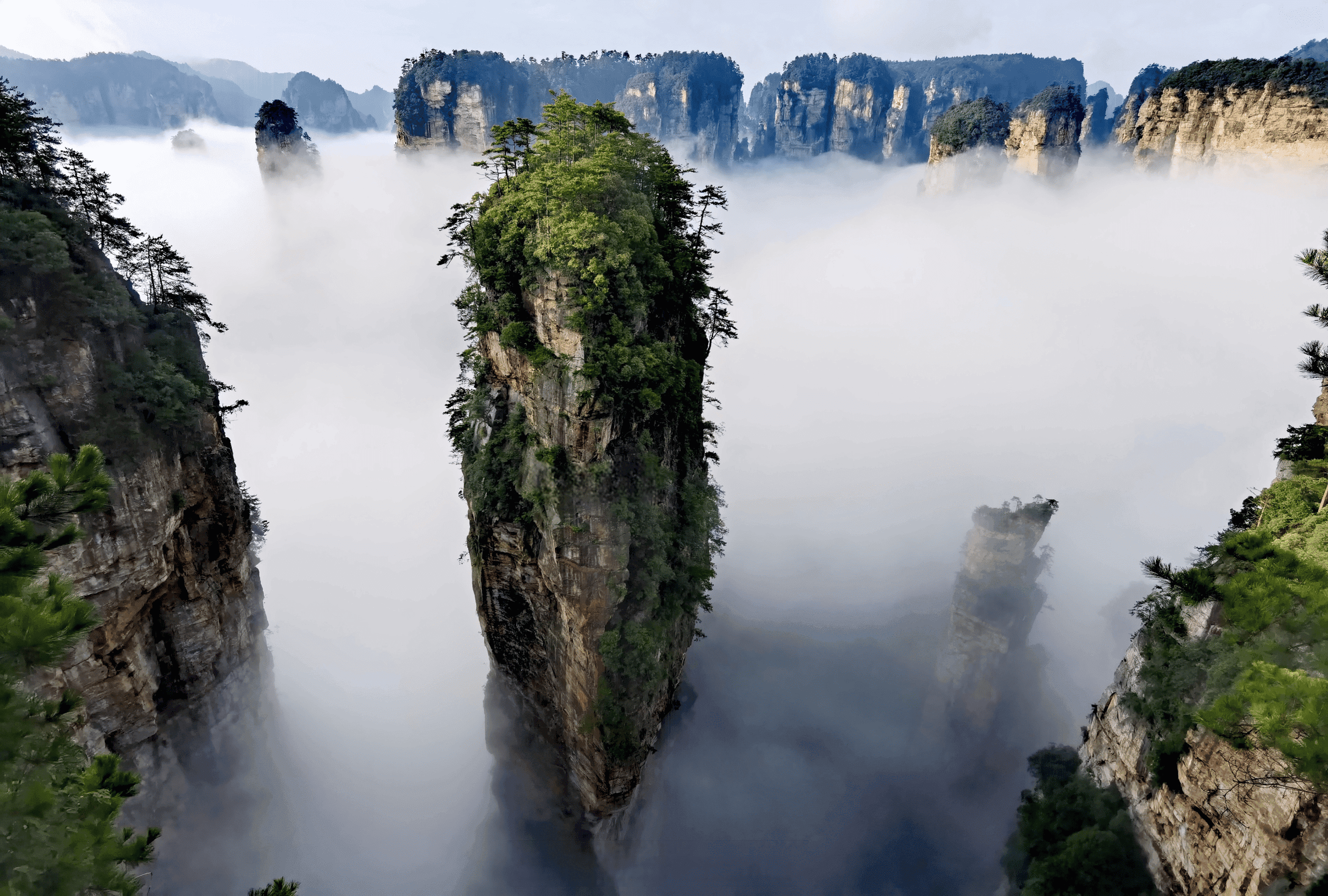
The most famous pillar, originally called “Qiankun Column” (Heaven and Earth Pillar) or “Southern Sky Column,” stood 1,080 meters tall with a distinctive narrow base supporting a wider top—rare in nature. In January 2010, local authorities officially renamed it “Avatar Hallelujah Mountain” (阿凡达-哈利路亚山).
Some criticized this as commercial opportunism. We see it differently. The renaming brought global attention to a geological wonder that deserves protection and appreciation. Today, the park attracts visitors from over 50 countries annually.
DIG DEEPER: Unveiling the Top 10 Filming Locations of Avatar in Zhangjiajie
The Tujia Connection
Long before Avatar, these mountains held deep significance for the Tujia ethnic minority. Local legends speak of the Monkey King from “Journey to the West” dropping his golden cudgel here, creating the towering pillars. The classic Chinese TV series filmed key scenes in Zhangjiajie in the 1980s.
Several Tujia villages remain within the park boundaries. During our visits, we’ve stayed overnight in Yuanjiajie Village, where families maintain traditional wooden houses and still practice ancient agricultural techniques on impossible-seeming terraced fields carved into mountain slopes.
The Tujia have a saying: “If you don’t visit Huangshi Village, you’ve wasted your trip to Zhangjiajie” (不上黄石寨,枉到张家界). This reflects centuries of reverence for these formations.
Why the Avatar Mountains Are Worth Your Journey
What Sets Them Apart from Other Chinese Landscapes
We’ve organized tours throughout China—Guilin‘s karst peaks, Huangshan‘s granite spires, Tibet‘s Himalayas. Zhangjiajie remains distinct.
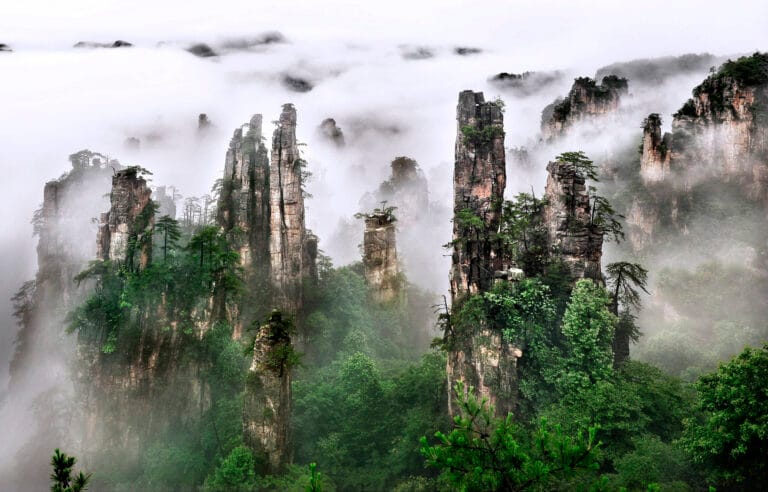
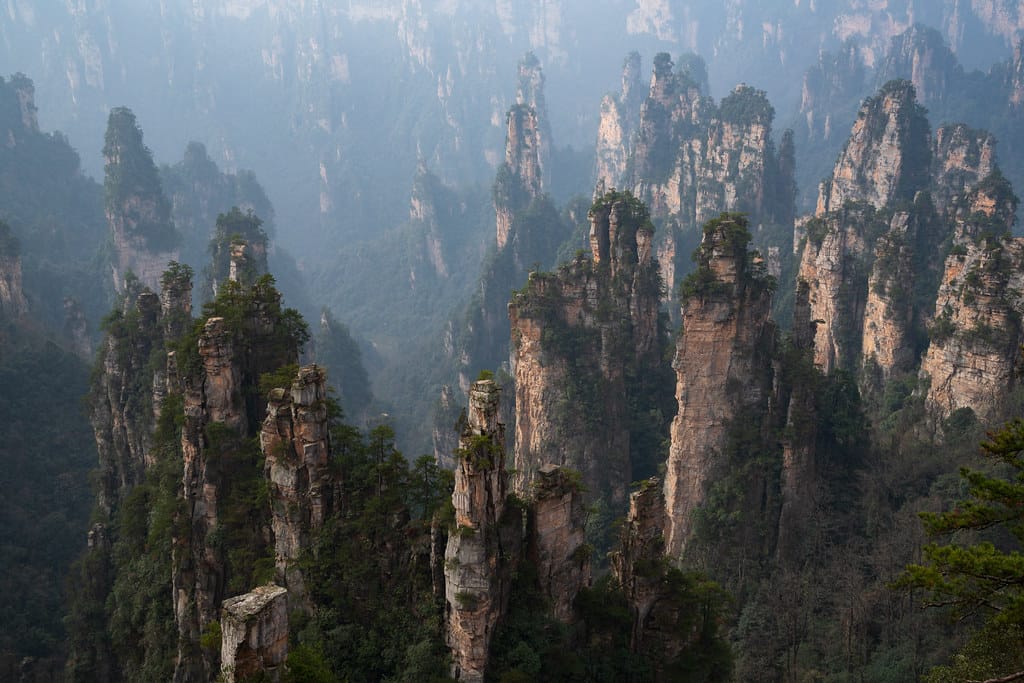
The Vertical Drama: Most Chinese mountains are pyramidal or rounded. Zhangjiajie’s pillars shoot straight up with minimal taper. When mist fills the valleys, only the peaks emerge—they genuinely appear to float.
Accessibility Without Crowds: Unlike Huangshan, where you’re shoulder-to-shoulder with tour groups, Zhangjiajie’s vast network of trails allows escape. We regularly take clients on 3-hour hikes where they encounter fewer than 10 other people.
Year-Round Viability: Many Chinese mountain destinations are miserable in winter or sweltering in summer. Zhangjiajie’s elevation (most viewing areas sit between 800-1,200 meters) creates moderate microclimates. We’ve guided successful trips in every season.
Cultural Depth: This isn’t just scenery. The Tujia culture, centuries-old Buddhist and Taoist temples tucked on impossible cliff ledges, and the connection to Chinese artistic traditions add layers most visitors miss.
The Photography Factor
Professional photographers return repeatedly. The reasons:
Ever-Changing Conditions: Humidity creates daily fog cycles. Morning mist rises from valleys around 7-9 AM, creating dreamlike layers. Afternoon clouds roll in from the east, constantly reshaping compositions.
The Golden Hour Effect: Those vertical faces catch sunrise and sunset light at angles impossible elsewhere. We’ve watched Avatar Hallelujah Mountain glow orange for exactly 12 minutes before the light shifted—worth every second of the 5 AM wake-up.
Wildlife Encounters: Macaques inhabit the forests. The rare Chinese giant salamander lurks in streams. Over 517 vertebrate species and 3,000 plant species create biodiversity hotspots.
One photographer we worked with spent eight days here capturing a single viewpoint in different conditions. His resulting series sold in galleries for significant sums. The mountains reward patience.
Main Highlights: What You Can’t Miss
Avatar Hallelujah Mountain (阿凡达哈利路亚山)
Location: Yuanjiajie Scenic Area
Height: 1,080 meters total elevation; 150 meters of exposed pillar
Viewing Distance: Approximately 100-150 meters from main platform
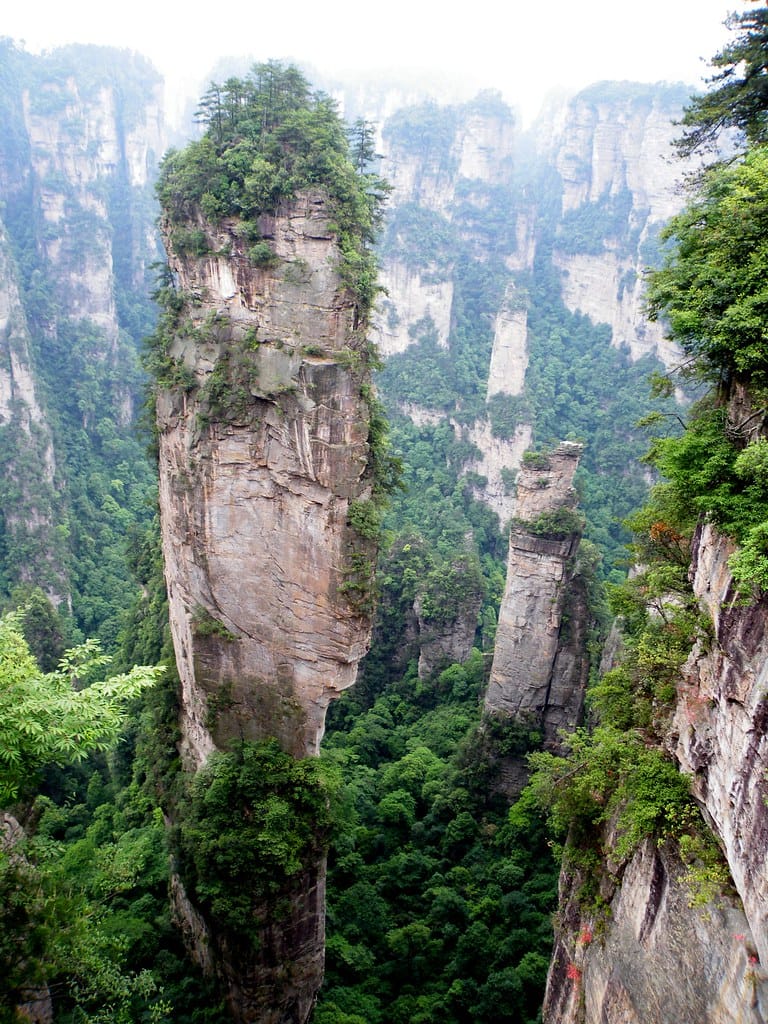
This is the star. But understanding what you’re seeing matters.
The pillar’s distinctive shape—narrow base, wider top—results from differential weathering. The base experiences more moisture exposure and freeze-thaw cycles. The top, covered in vegetation, has a protective layer slowing erosion.
Best Viewing Times:
- 6:30-7:30 AM: Mist rises from below, creating the floating effect
- 4:30-5:30 PM: Golden hour lighting (spring/summer)
- Post-rain: Within 2 hours after rain stops, clouds create drama
Photography Setup: The main viewing platform gets crowded (100+ people during peak hours). Walk 200 meters further along the trail to the “Bridge Viewing Terrace.” You’ll have similar views with 90% fewer people.
Insider Tip: The pillar looks completely different from Huangshi Village (2 kilometers away). That perspective shows the pillar integrated into the broader landscape—equally stunning, rarely photographed.
First Bridge Under Heaven (天下第一桥)
Dimensions: 20-meter span, 2 meters wide, 4 meters thick
Height Above Valley: 357 meters
Formation: Natural stone arch
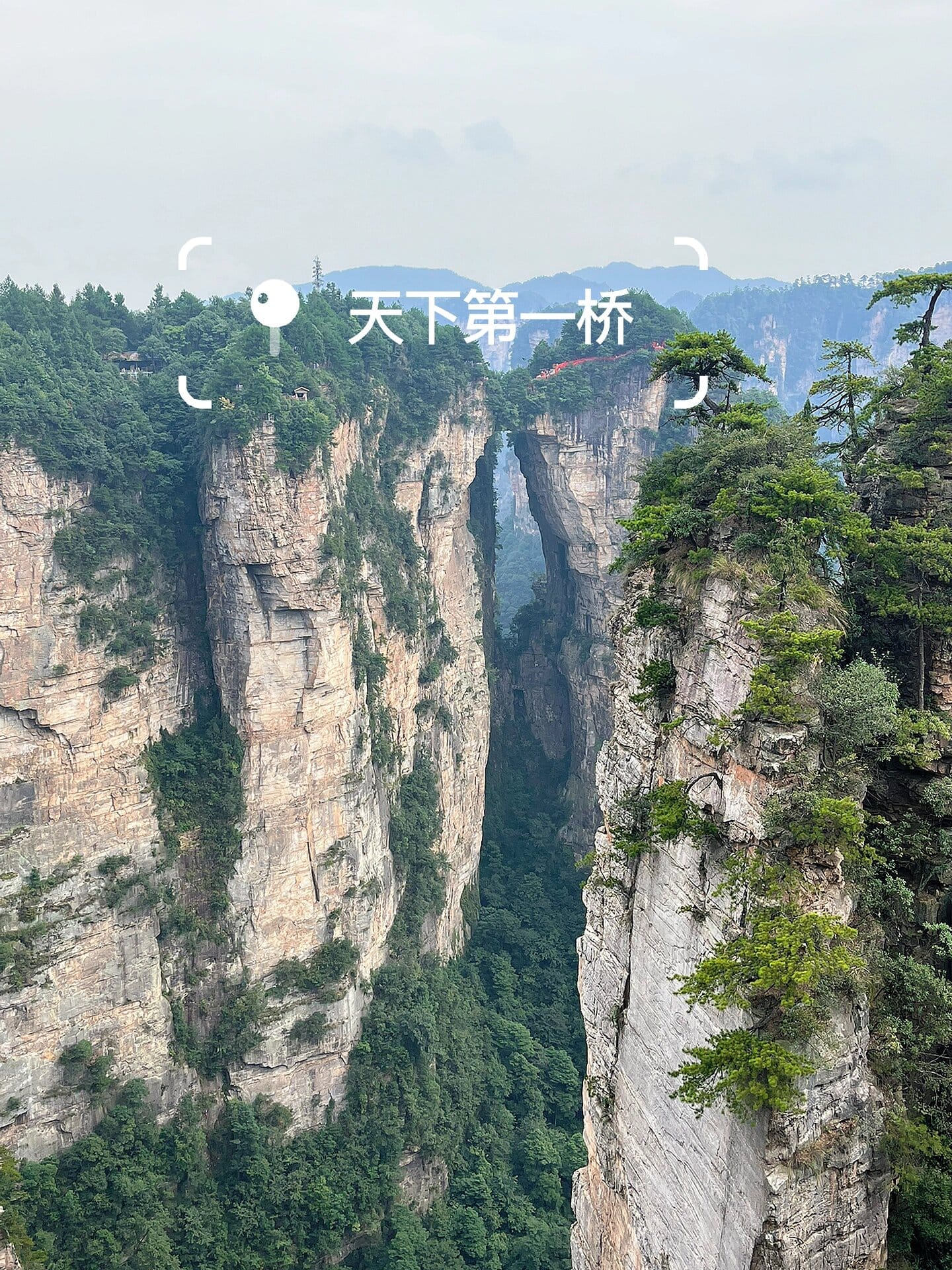
This natural bridge connects two massive peaks. It’s not enhanced—just erosion creating an arch strong enough to walk across (though public access is restricted to adjacent viewing platforms).
The bridge demonstrates the strength of quartz-sandstone. Despite appearing delicate, it has supported its own weight for thousands of years. Geologists estimate it will remain stable for centuries more.
What Makes It Special: Stand at the viewing terrace and look down. The valley floor is visible 357 meters below—taller than the Eiffel Tower. The psychological impact is profound.
Enchanting Terrace (迷魂台)
Elevation: 1,068 meters
Viewing Range: 360-degree panorama
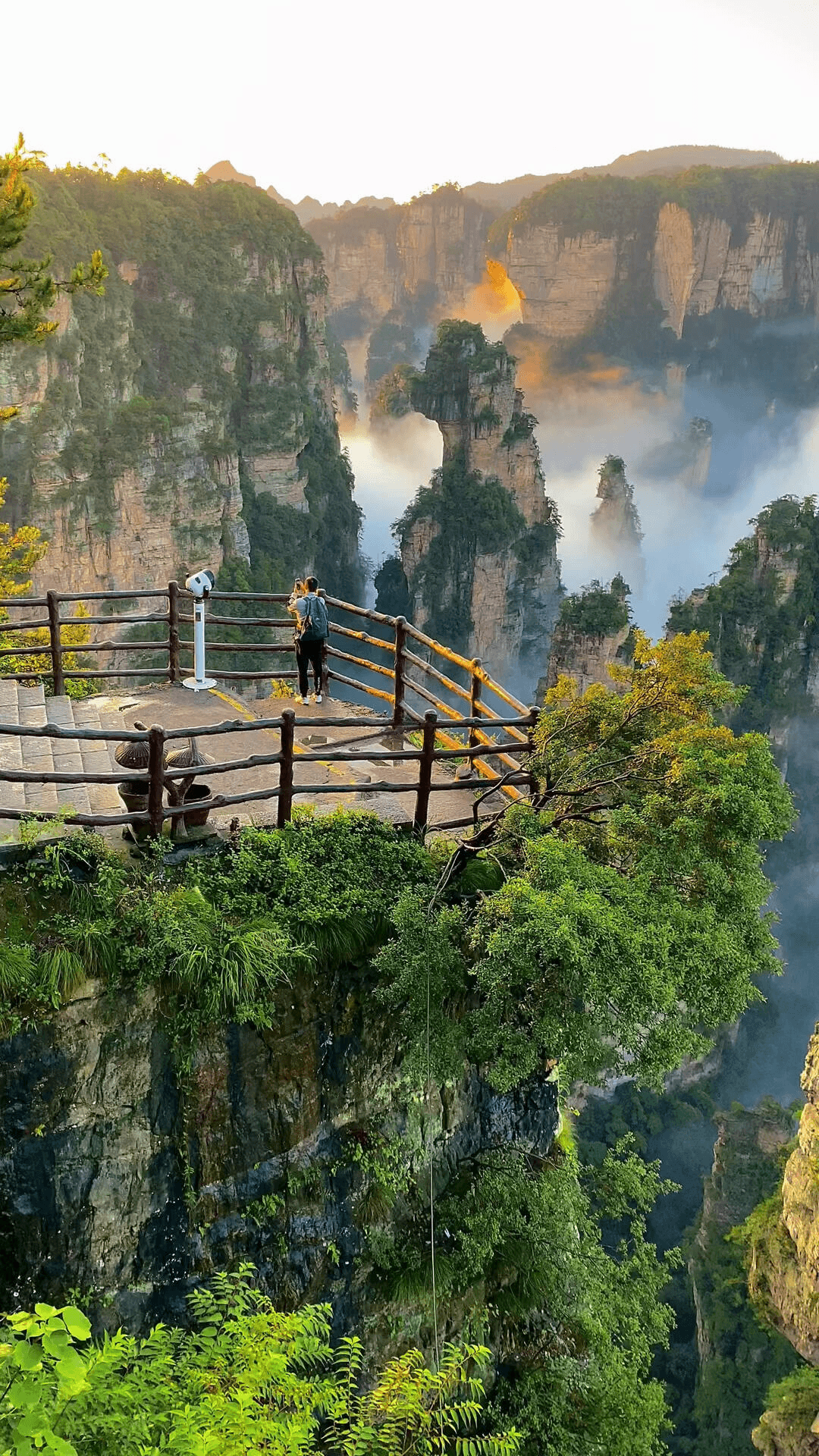
The Chinese name translates to “Soul-Confusing Platform.” Standing here, hundreds of pillars surround you in all directions. The lack of reference points creates spatial disorientation—in the best way.
We bring every client here at sunrise. As dawn light progressively illuminates pillars from east to west, you witness the landscape awakening in waves.
Technical Note: The platform accommodates about 50 people. Arrive 30 minutes before sunrise to secure a front position.
Back Garden (后花园)
Trail Length: 800 meters loop
Difficulty: Easy (paved paths)
Crowds: Light (most tourists skip it)
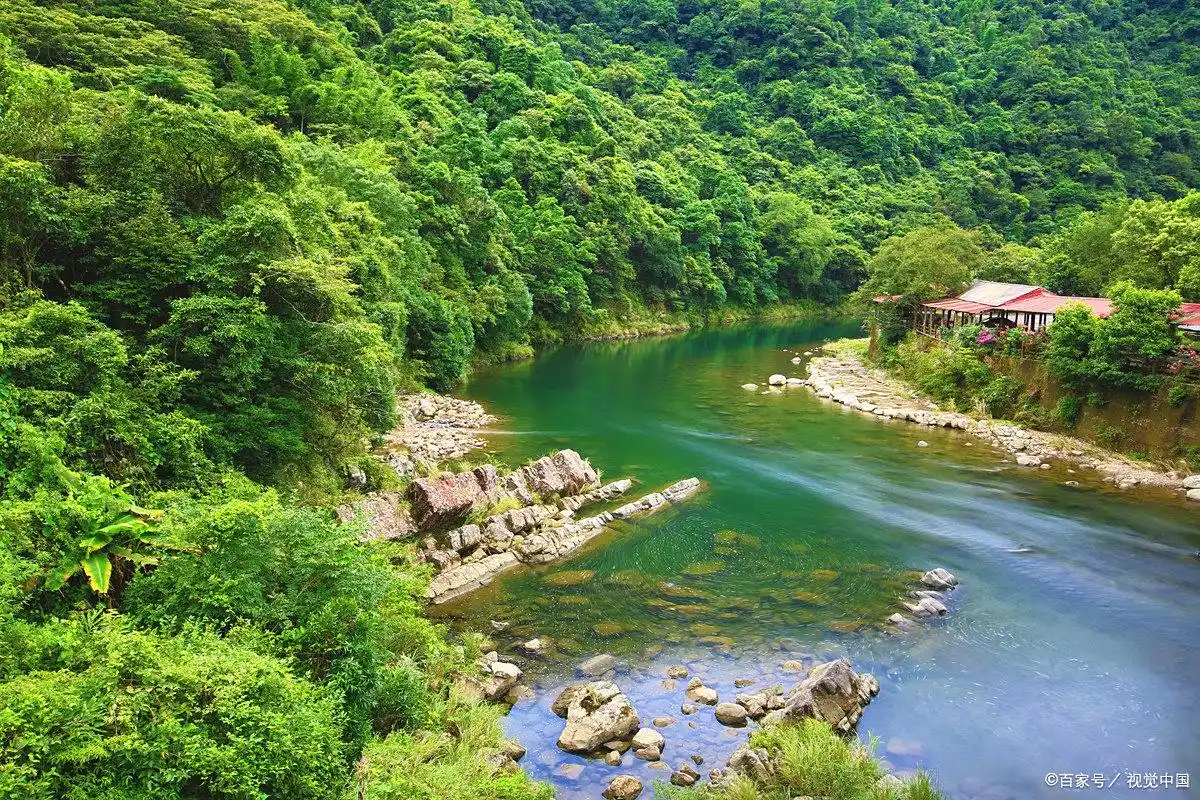
This area lives up to its name. A stream meanders through the valley floor, surrounded by ancient trees and smaller peaks. It feels like discovering a secret garden inside an already magical landscape.
Why Visit: After the drama of Hallelujah Mountain, Back Garden provides contemplative space. We often see clients sitting here for 30-40 minutes, simply absorbing the tranquility.
Bailong Elevator (百龙天梯)
Height: 326 meters
Speed: 3 meters per second
Duration: 1 minute 58 seconds
Capacity: 50 people per car
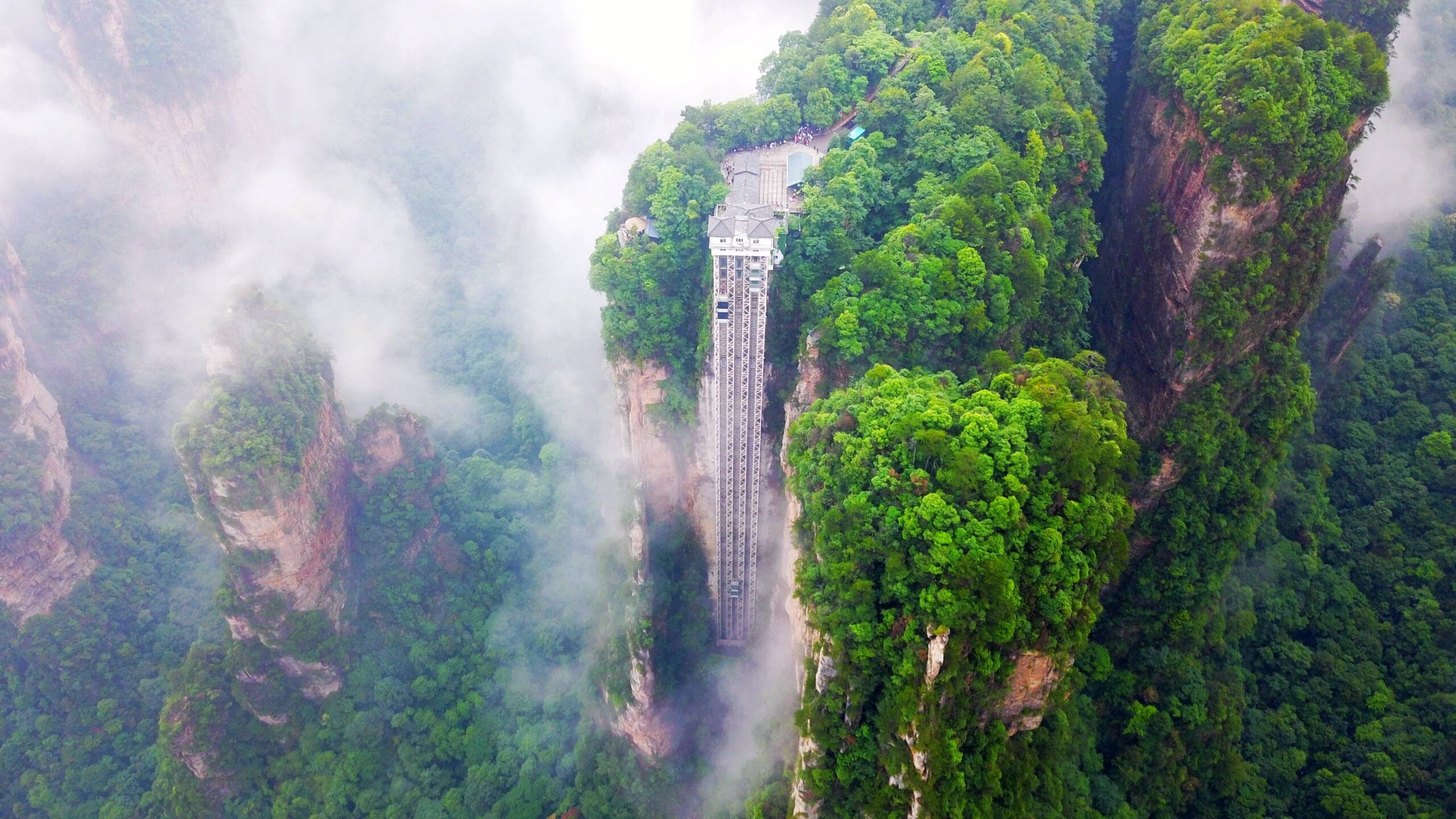
Love it or hate it, the Bailong Elevator is impressive. Built into the cliff face with a glass exterior section, it shoots you up the equivalent of a 100-story building in under two minutes.
Controversy: Purists argue it mars the natural landscape. UNESCO expressed concerns during construction. However, it dramatically improves accessibility, allowing elderly visitors and those with mobility limitations to experience the upper plateaus.
Practical Advice: Lines can exceed 2 hours during peak season (May 1-3, October 1-7). Use it strategically. We typically have clients hike up (2-3 hours) and ride down, avoiding the worst lines.
Cost: 65 RMB one-way (no discount for foreigners or children over 1.2 meters tall)
Yangjiajie: The Overlooked Masterpiece
Cable Car Access: Yes (separate fee)
Average Visitors: 30% less than Yuanjiajie
Unique Features: Natural Great Wall, Tianbo Mansion viewing platforms
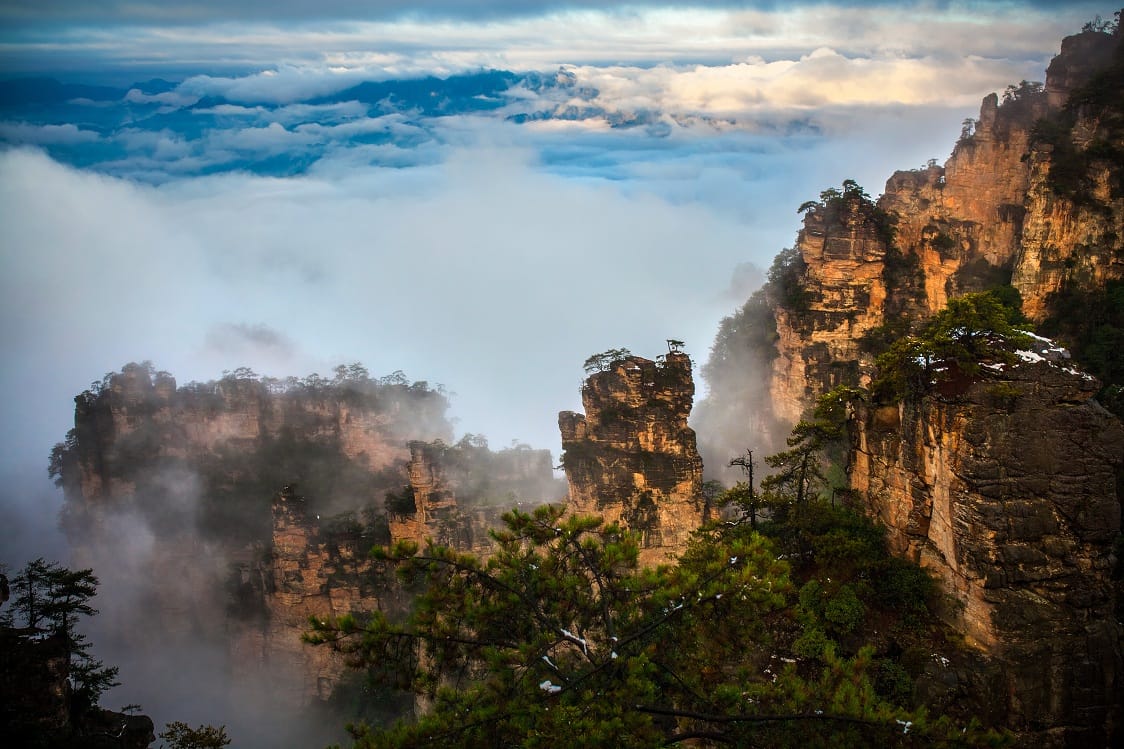
Most visitors rush through Yangjiajie or skip it entirely. This is a mistake.
Tianbo Mansion (天波府): A series of viewing platforms offering perspectives of peaks arranged in rows, resembling ancient military formations. The Chinese nickname is “Supernatural Army Gathering”—apt description.
Natural Great Wall: A ridge formation that genuinely resembles China’s Great Wall, but created entirely by erosion. The resemblance is uncanny.
Why It Matters: Yangjiajie provides variety. If Yuanjiajie is about iconic individual pillars, Yangjiajie is about mass formations and patterns.
Special Experiences Only Locals Know
The Sunrise Ritual at Laowuchang
Access: Requires overnight stay inside the park
Difficulty: Moderate hike (45 minutes from lodging)
Reward: Terraced rice fields at 1,000+ meters elevation with mountain backdrop
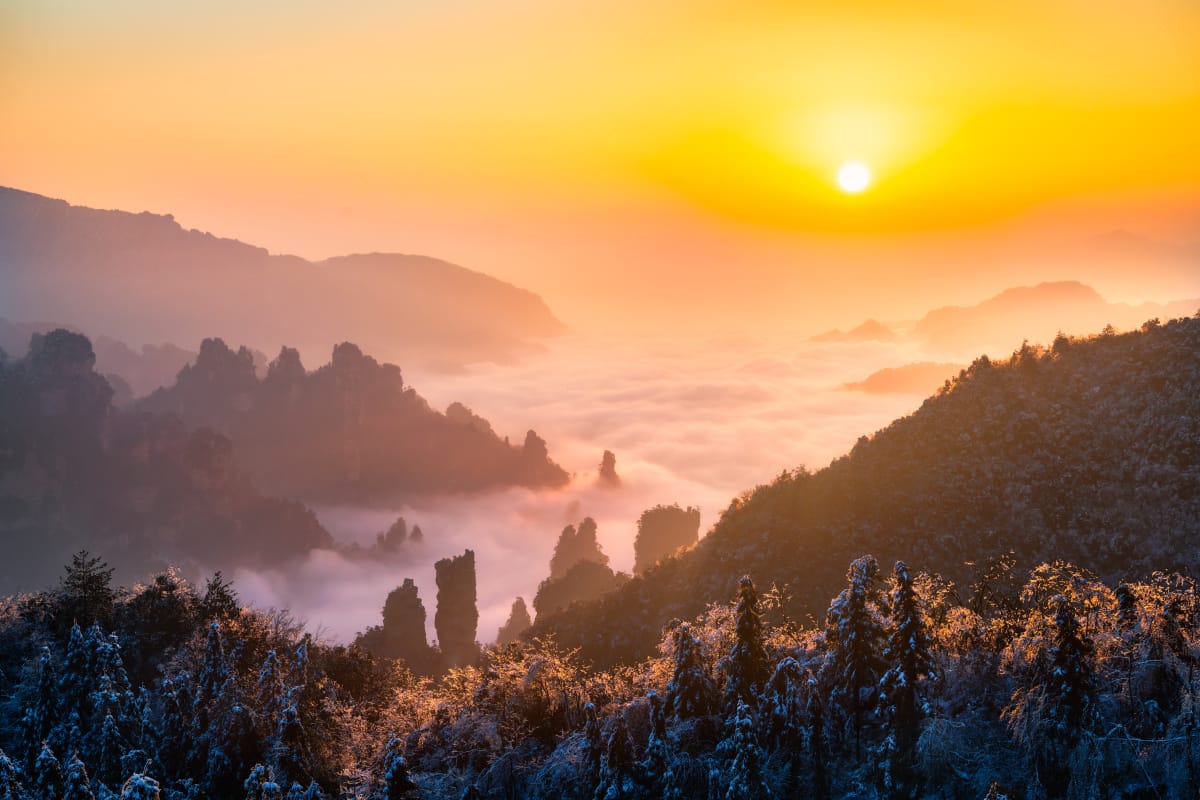
Laowuchang is where Tujia farmers have cultivated rice on mountain terraces for centuries. When we discovered this spot three years ago through a local guide, it transformed our tour offerings.
What Makes It Special: You’re photographing a landscape that fuses human agriculture with natural grandeur. The paddies reflect sunrise light, creating golden mirrors against dark mountain silhouettes.
Best Season: May-June (bright green rice shoots) or September-October (golden harvest)
Getting There: Only accessible if you stay at accommodations inside the park. We partner with a family-run guesthouse that provides guided sunrise walks.
The Empty Trails
Everyone follows the main loop: Bailong Elevator → Yuanjiajie → bus to Tianzi Mountain → cable car down. This leaves entire trail networks virtually empty.
Our Favorite Secret Routes:
- Golden Whip Stream Alternative Exit: Instead of the standard 7.5-kilometer one-way walk, take the path that loops up to Luanchuanpo Village. Add 2 hours, subtract 99% of tourists.
- Huangshi Village Perimeter Trail: The main village loop is packed. But a trail continues around the mountain’s backside. In five trips using this route, we’ve seen a total of 12 other hikers.
- Tianzi Mountain to Shentang Gorge: A 4-hour descent through primary forest. You’ll need a local guide (the trail isn’t on standard maps), but you’ll experience Zhangjiajie as it was before tourism.
Safety Note: Never hike unmarked trails alone. The park is vast, cell coverage is patchy, and getting lost is genuinely dangerous.
The Macaque Encounter Zone
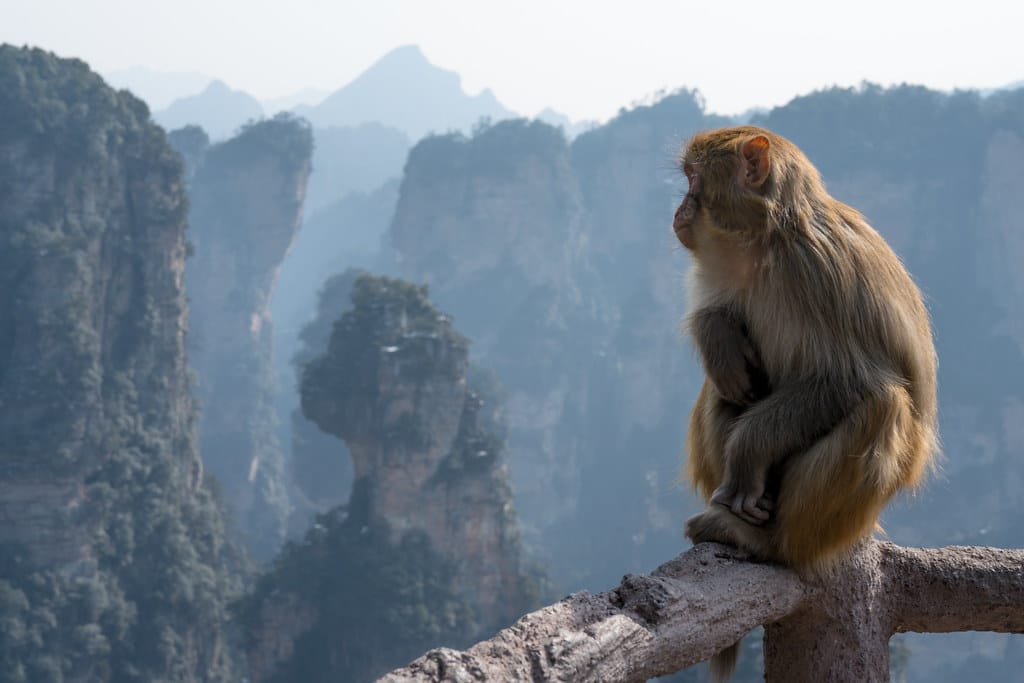
Rhesus macaques are everywhere along Golden Whip Stream and lower Huangshi Village trails. Most tourists snap quick photos and move on. Understanding the macaques creates different experiences.
Best Observation Times: 7-9 AM and 4-6 PM (feeding and grooming periods)
What to Watch For:
- Family dynamics (juveniles playing, mothers grooming)
- Dominant males displaying (chest-beating, branch-shaking)
- Tool use (some macaques crack nuts using rocks)
Critical Rules:
- No feeding (serious fines, plus it damages their health)
- No eye contact with dominant males (perceived as challenge)
- Secure all bags (they’re skilled thieves)
A ranger we know has studied these groups for 15 years. He can identify individual macaques and their relationships. Hire a knowledgeable guide and you’ll see behaviors most visitors miss.
Tianmen Mountain: The Companion Peak
Separate Location: Near Zhangjiajie City (not inside forest park)
Cable Car: 7.5 kilometers—longest cable car in Asia
Signature Feature: Tianmen Cave (131m high natural arch)

While not technically part of the Avatar Mountains, Tianmen deserves at least one day of your visit.
The 999 Steps: Stone stairway ascending to Tianmen Cave at 45-degree angle. Climbing it is as much cultural experience as physical challenge.
Glass Skywalk: Suspended glass path along cliff face. If you have acrophobia, this will test you.
Heaven-Linking Avenue: Road with 99 hairpin turns ascending the mountain. Tour buses navigate this while passengers cling to seats—thrilling or terrifying depending on your perspective.
Our Take: Tianmen offers different geology (more typical karst limestone) and different experiences (emphasis on human-built thrills). It’s worth doing, but don’t let it dominate your time. The forest park is why you came.
How to Visit: Practical Logistics
Getting to Zhangjiajie
Method | Details | Best For |
|---|---|---|
By Air | Zhangjiajie Hehua Airport (DYG) has direct flights from Beijing, Shanghai, Guangzhou, Chengdu, Xi’an | International visitors connecting through major hubs |
By High-Speed Train | Stations: Zhangjiajie West (primary), Sangzhi Station. Routes from Changsha (3h), Wuhan (5h), Guangzhou (6h) | Budget travelers, those already in China |
By Bus | Central Bus Station connects to regional cities | Least recommended (uncomfortable, time-consuming) |
Airport to Wulingyuan:
- Taxi: 120-150 RMB (40 minutes)
- Hotel shuttle: Many hotels offer pickups (book in advance)
- Public bus: Exists but requires Chinese language skills
Pro Tip: Most first-timers stay in Wulingyuan Town, not Zhangjiajie City. When booking airport transfers, explicitly specify “Wulingyuan” to avoid confusion.
Understanding the Geography
This confuses everyone initially. “Zhangjiajie” refers to three different things:
- Zhangjiajie City (张家界市): The administrative city with airport and train station
- Zhangjiajie National Forest Park (张家界国家森林公园): The southern entrance to the scenic area
- Wulingyuan Scenic Area (武陵源): The entire UNESCO World Heritage Site encompassing multiple sections
The Avatar Mountains are specifically in Yuanjiajie, which is part of the larger Wulingyuan Scenic Area.
Five Entry Gates:
- East Gate (Wulingyuan): Most convenient for tours, near accommodation
- South Gate (Forest Park): Main entrance, less crowded early morning
- West Gate (Yangjiajie): Least used, good for avoiding crowds
- North Gate (Tianzi Mountain): Direct cable car access
- Central Gate (Zhangjiajie Village): Mid-park access
Choose your entry based on your hotel location and itinerary.
Tickets and Costs (2026 Prices)
Item | Price | Notes |
|---|---|---|
Base Park Admission | 225 RMB (4-day pass) | Valid for 4 days, includes shuttle buses |
Low Season (Dec-Feb) | 115 RMB | Significantly cheaper but colder weather |
65 RMB one-way | No discounts for foreigners | |
Tianzi Mountain Cable Car | 72 RMB one-way | Both up and down available |
Yangjiajie Cable Car | 72 RMB one-way | Less crowded than Tianzi |
Huangshi Village Cable Car | 65 RMB one-way | Alternative to hiking |
Ten-Mile Gallery Mini Train | 52 RMB round-trip | Optional, mainly for leg-weary visitors |
Combo Tickets: The park offers bundled packages combining admission with various transport options. The most popular:
- Ticket Combo 1: Admission + Bailong Elevator (one-way) + Tianzi Cable Car (one-way) = 537 RMB
- Ticket Combo 2: Admission + Four cable car/elevator rides = 537 RMB (flexible usage)
Booking:
- Directly from Travel China With Me.
- Chinese website: Official park website (requires Chinese fluency)
- On arrival: Possible but time-consuming and risky during peak periods
Important: Park has daily capacity limits (53,000 visitors). During Golden Week holidays (Oct 1-7) and Labor Day (May 1-3), tickets sell out. Book at least 3 days ahead during these periods.
Best Time to Visit
We’ve sent groups during every month. Here’s what we’ve learned:
Prime Seasons: April-May and September-October
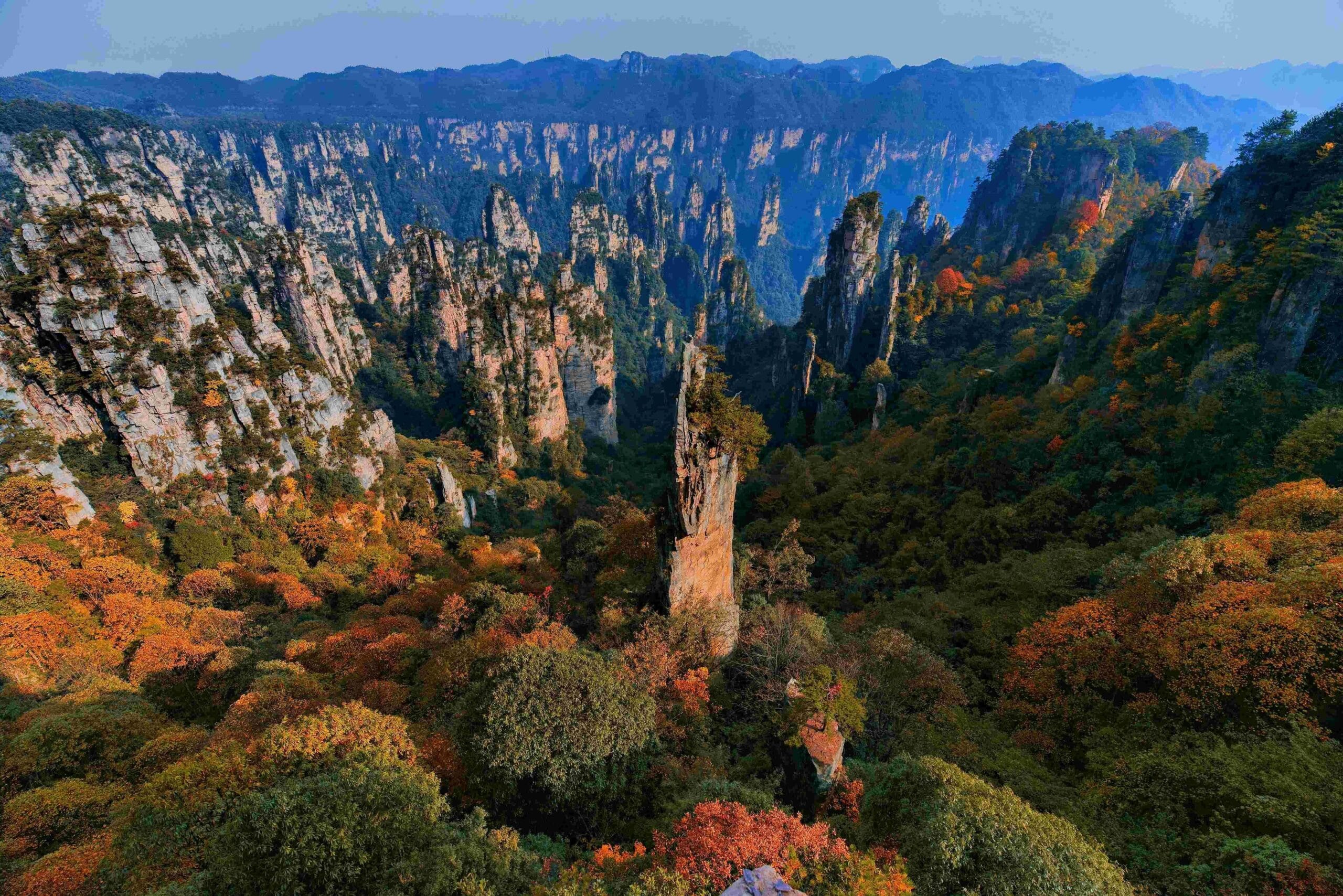
Why They’re Best:
- Mild temperatures (15-25°C)
- Lower humidity than summer
- Spectacular color (spring blossoms or autumn foliage)
- Clear days mixed with atmospheric mist
- Manageable crowds outside Chinese holidays
Spring (April-May): The dove tree (Davidia involucrata), called the “panda of the plant kingdom,” blooms in April. These rare white blossoms appear throughout the forest. Rhododendrons explode in pink across hillsides.
Autumn (September-October): The sweet osmanthus trees bloom, filling valleys with fragrance. Autumn foliage creates stunning color contrast against grey stone pillars.
Photography Note: Professional photographers debate whether spring or autumn light is superior. Spring morning mist is thicker and more reliable. Autumn afternoon light has warmer tones and clearer air.
Summer (June-August): The Double-Edged Sword
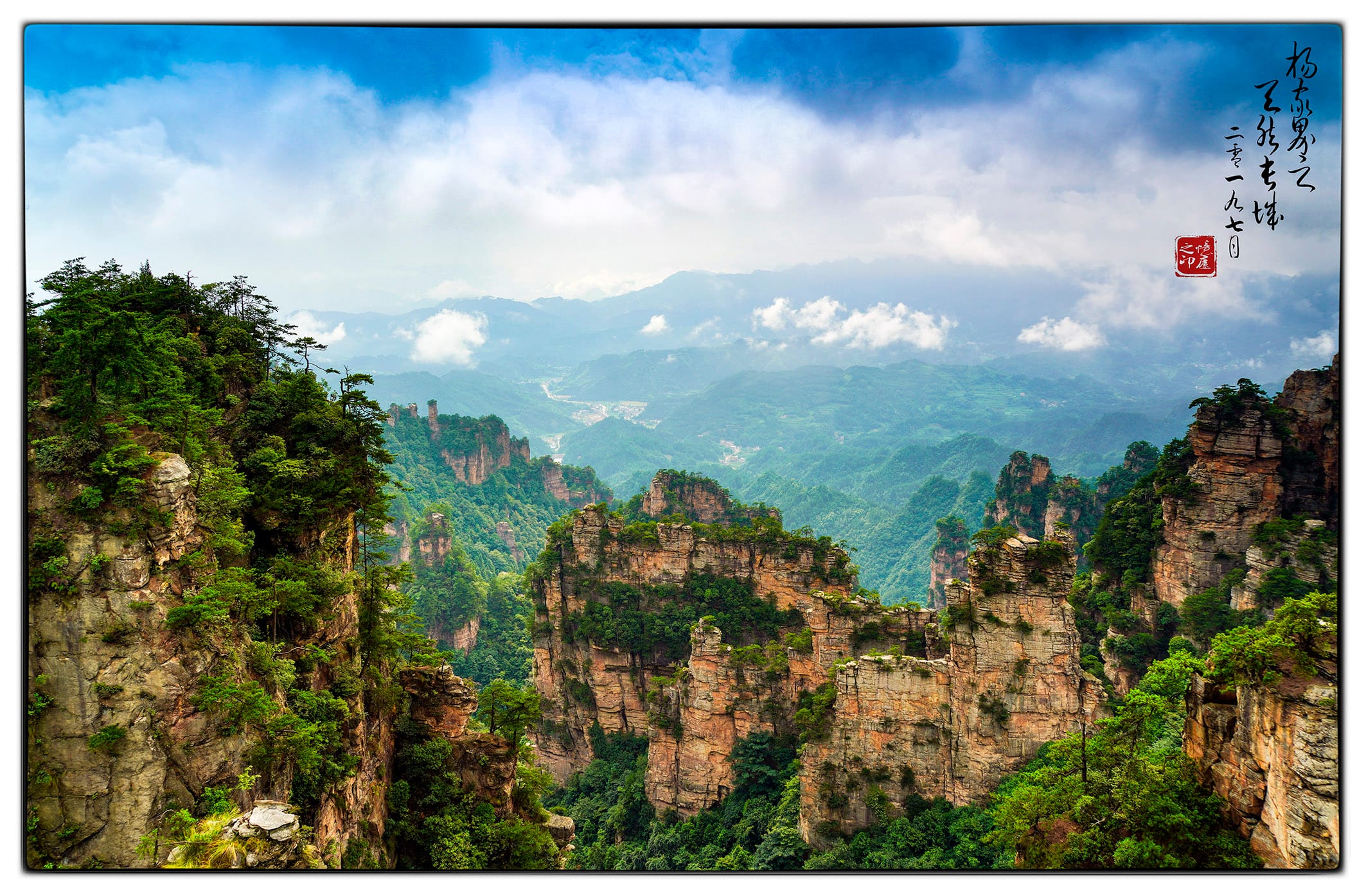
Pros:
- Lush green vegetation at peak
- Post-rain mist creates dramatic scenes
- Waterfalls at full volume
- Long daylight hours (sunrise at 5:30 AM, sunset at 7:30 PM)
Cons:
- Peak tourist season (expect serious crowds)
- High humidity (often 90%+)
- Afternoon thunderstorms (almost daily in July-August)
- Temperatures can hit 35°C in valleys
Our Recommendation: If you must visit in summer, arrive at park gates by 7 AM. Complete main viewing areas by 11 AM before crowds and heat peak. Use midday for indoor attractions (Yellow Dragon Cave) or rest.
Winter (December-February): The Underrated Choice
Many dismiss winter visits. We think this is shortsighted.
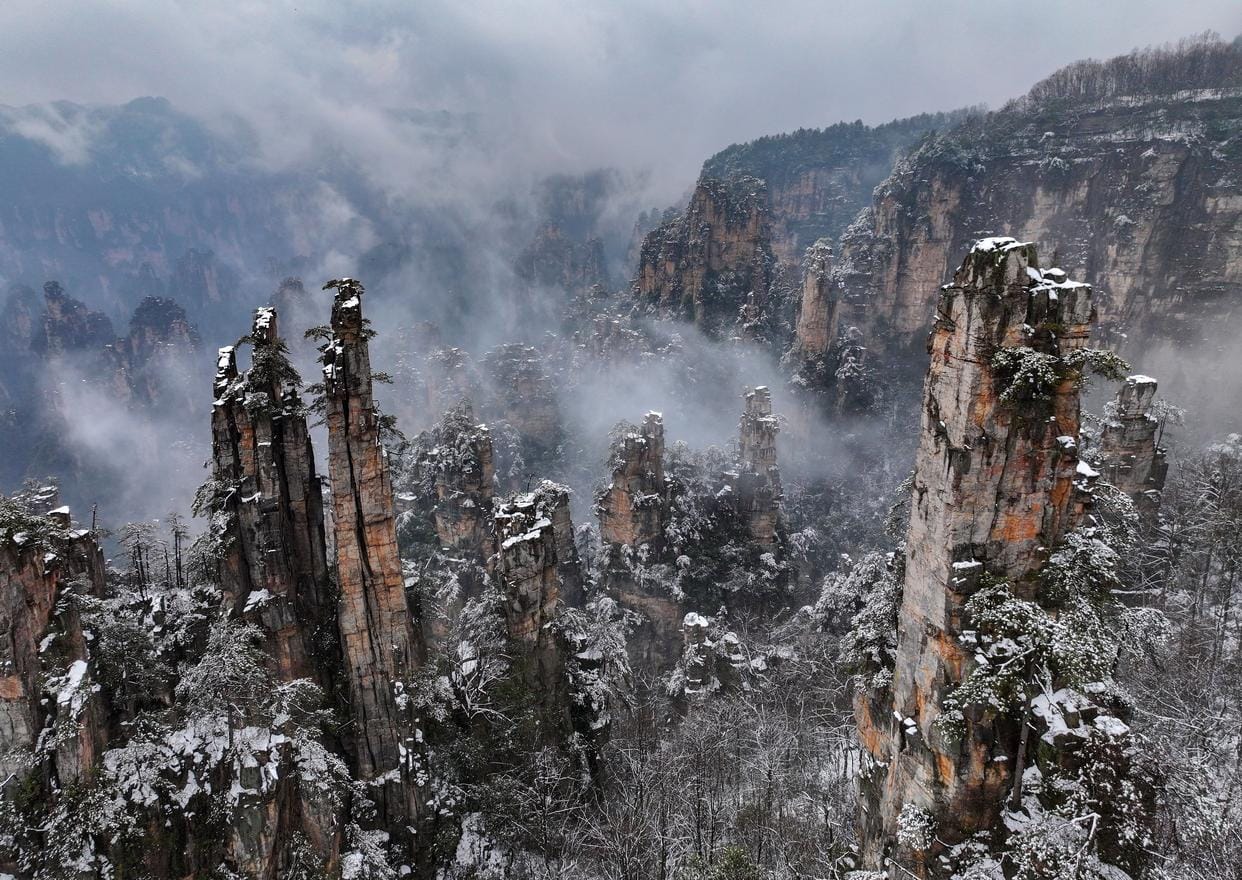
Pros:
- Dramatically fewer tourists (sometimes 10% of peak season)
- Unique snow-capped pillar scenery (2-3 snowfalls per winter)
- Reduced admission prices (115 RMB vs 225 RMB)
- Crystal-clear air (best visibility)
- Easier accommodation availability
Cons:
- Cold temperatures (-2°C to 8°C)
- Some trails may close after heavy snow
- Fewer food options (some restaurants close)
- Shorter daylight hours
The Snow Experience: When fresh snow dusts the pillars, Zhangjiajie becomes another world. We organize special winter photography tours timed with forecast cold fronts. The resulting images are unlike anything from other seasons.
Practical Tips for Winter: Bring proper clothing (layering is essential), waterproof boots with grip, and hand warmers. The park stays open during snow, but cable cars may pause during active snowfall.
Avoiding the Masses
Chinese holidays mean crushing crowds. Avoid:
- Golden Week (October 1-7): Worst time possible
- Labor Day (May 1-3): Second worst
- Chinese New Year (late January/early February): Park is less crowded but many services close
Weekday vs Weekend: Even outside holidays, weekends see 2-3x more visitors. If your schedule allows, visit Tuesday through Thursday.
Planning Your Visit: Accommodation and Strategy
Where to Stay
Wulingyuan Town (武陵源镇):
- Pros: Walking distance to East Gate, many hotels and restaurants, authentic town atmosphere
- Cons: Less English spoken, can get noisy
- Our Picks:
- Budget: Edinburgh Hostel (popular with backpackers, English-speaking staff)
- Mid-range: Vienna Hotel (clean, reliable, accepts foreigners easily)
- Upscale: Pullman Zhangjiajie (international chain, 15 minutes from gate)
Inside the Park:
- Pros: Sunrise/sunset access, escape the daily crowds, immersive experience
- Cons: Limited options, more expensive, basic facilities
- Our Pick: Avatar Mountain Resort (500m from entrance, English-speaking staff who book tickets and arrange transport)
Zhangjiajie City:
- Pros: More international hotels, easier airport access, proximity to Tianmen Mountain
- Cons: 40-50 minutes to Avatar Mountains, requires daily commute
- Best For: Those prioritizing comfort and splitting time between Tianmen and the forest park
Our Strategy: Most clients stay in Wulingyuan for 2 nights, then move to a city hotel for their final night before departure. This provides park convenience plus easy morning airport access.
DIG DEEPER: Where to Stay in Zhangjiajie: Complete Accommodation Guide
Sample Itineraries
The Essential (2 Days):
Day 1:
- 7:00 AM: Enter via Wulingyuan East Gate
- 7:30 AM: Ride Bailong Elevator to upper plateau
- 8:00 AM-11:00 AM: Explore Yuanjiajie (Avatar Mountain, First Bridge, Back Garden)
- 11:30 AM: Take shuttle to Tianzi Mountain
- 12:00 PM-1:00 PM: Lunch at Tianzi Mountain food area
- 1:00 PM-3:30 PM: Explore Tianzi Mountain viewpoints
- 3:30 PM: Descend via Tianzi Mountain Cable Car
- 4:00 PM-6:00 PM: Hike Golden Whip Stream (partial route)
- 6:00 PM: Exit and return to hotel
Day 2:
- Full day: Tianmen Mountain (separate location and ticket)
The Photographer (4 Days):
Day 1: Scout locations, late afternoon Huangshi Village for sunset
Day 2: Sunrise at Laowuchang (requires internal accommodation), full day Yuanjiajie with afternoon light on Avatar Mountain
Day 3: Dawn at Tianzi Mountain, midday rest, sunset at Yangjiajie
Day 4: Golden Whip Stream at sunrise, secondary viewpoints
The Thorough (5-6 Days):
Add Zhangjiajie Grand Canyon and Glass Bridge (separate location, separate ticket), Yellow Dragon Cave, and relaxed pacing with repeat visits to favorite spots under different light conditions.
Real Traveler Experiences

“The Most Surreal Place I’ve Photographed”
Marcus K., Professional Landscape Photographer, Australia
“I’ve shot Patagonia, Iceland, the Dolomites. Zhangjiajie is different. The vertical scale messes with your perception. I spent three days here and only on day two did I start seeing compositions that weren’t clichés.
The key is patience. Everyone rushes to Avatar Mountain, snaps photos during golden hour crowds, and leaves. I stayed overnight in the park (not easy to arrange, but worth it) and shot the same location over four dawn sessions. The light variation was incredible—from heavy mist to crystal clear—and I saw fewer than five other photographers each morning.
One thing nobody mentions: the humidity destroys gear. My lenses fogged constantly. Bring lens warmers or silica gel packets. But that same humidity creates the mist that makes Zhangjiajie magical. Tradeoff worth accepting.
The macaques at Golden Whip Stream provided unexpected subjects. I watched a mother grooming her infant for 20 minutes—intimate moment in this grand landscape. Both scales work here.”
“Accessibility Beyond Expectations”
Robert and Susan T., Retired Couple, United Kingdom (Ages 68 and 71)
“We read reviews about steep stairs and challenging hikes and nearly canceled. So glad we didn’t.
Yes, there are stairs. Thousands of them if you choose those routes. But the cable cars and Bailong Elevator make the key viewpoints accessible without intensive hiking. We used every elevator and cable car available and still had wonderful experiences.
The Bailong Elevator was initially terrifying (I’m afraid of heights), but the ride is so quick, and the payoff—suddenly being atop those pillars—was worth it. Yuanjiajie has paved paths. We walked at our own pace, taking breaks on benches (plenty available), and spent three hours there comfortably.
What helped: we hired a guide through Travel China With Me. She arranged everything, knew exactly which paths had minimal stairs, and even found us a golf cart service we didn’t know existed for one section. Her Chinese fluency meant we didn’t stress about communication.
The macaques were delightful. Families with babies, completely unfazed by tourists. We watched them for ages. One juvenile kept photobombing everyone’s pictures—seemed to enjoy the attention.
One surprise: the food inside the park is expensive but decent quality. We paid 40 RMB (£4.50) for a large bowl of noodles—not outrageous. Much better than theme park pricing in the West.”
“Crowded but Manageable with Strategy”
Chen Wei, IT Professional, Singapore
“I visited during May Day holiday—terrible timing, I know. But I had no choice due to work schedule. The crowds were insane—probably 50,000 people in the park.
Here’s what worked: I arrived at the East Gate at 6:30 AM when gates opened. Took the earliest Bailong Elevator (still had to queue 30 minutes). Reached Yuanjiajie by 7:15 AM when most visitors were still having breakfast.
Between 7:15-9:00 AM, I had Avatar Mountain viewpoint nearly to myself. As I was leaving around 9 AM, tour groups were arriving—easily 200+ people waiting for photos at the platform I’d just left.
I skipped Tianzi Mountain (too crowded) and instead hiked down through the quieter Golden Whip Stream alternative trail. Saw maybe 20 people over 2 hours. Perfect.
Returned to park on day two, Tuesday, after the holiday. Completely different experience—maybe 20% of the crowds. Could actually photograph without people in every frame.
Lesson: If you must visit during Chinese holidays, extreme early mornings are your only option. Otherwise, avoid those dates entirely.”
“Solo Female Traveler—Felt Completely Safe”
Emma L., Graduate Student, Canada
“I traveled solo through China for three weeks, and Zhangjiajie was a highlight. Safety was never a concern.
The park itself is extremely safe. Well-maintained paths, frequent security personnel, emergency phones at major viewpoints. I hiked Golden Whip Stream alone for five hours and felt perfectly comfortable.
Wulingyuan Town at night was fine. I walked from my hotel to restaurants without issues. People were curious (I’m blonde, 5’10”, so quite visible) but friendly. Several locals helped me with directions using translation apps.
One awkward moment: a tour group asked to take photos with me at Avatar Mountain. Initially weird, but they were sweet about it, and I ended up having fun.
What helped: I downloaded maps on Maps.me (works offline) and had key locations saved in Chinese characters. This meant I could show taxi drivers exactly where I needed to go.
I hired a private guide for one day through a local agency. Cost was 600 RMB ($95) for full day. Worth every yuan. She knew shortcuts, best photo spots, and explained Tujia culture. As a solo traveler, having company that day was nice.”
“Weather Roulette—But Always Beautiful”
Yuki S., Teacher, Japan
“We visited in October with hopes for clear autumn weather. It rained three of our four days. Initially disappointed, but those rainy days created the most dramatic scenes.
Rain brings mist. And mist creates the floating mountain effect everyone wants. We visited Avatar Mountain three times across four days. Clear day was pretty but ordinary. Misty mornings after rain were transcendent—pillars emerging from clouds, exactly like the movie.
Pro tip: Don’t let rain discourage you. Buy cheap rain ponchos at park entrance (10 RMB). Trails stay open unless there’s lightning or flooding warnings. We hiked during light rain and often had locations almost to ourselves because tour groups avoid bad weather.
The Golden Whip Stream during rain was spectacular. Waterfalls that were trickling streams on clear days became roaring cascades. The sound echoing between stone walls was powerful.
Pack waterproof bags for electronics. Everything gets damp in that humidity, rain or not. My phone case fogged up constantly. Silica gel packets in camera bag were essential.”
Frequently Asked Questions
How many days do I need for Avatar Mountains?
Minimum: 2 full days to see main highlights without rushing. Ideal: 3-4 days allowing for weather flexibility and deeper exploration. Photography intensive: 5-7 days for varied conditions and light.
Can I visit Avatar Mountains with young children or elderly parents?
Yes, with planning. The cable cars and elevators make viewpoints accessible without intense hiking. Golden Whip Stream has flat, paved sections perfect for strollers (though you’ll need all-terrain wheels). Many families visit successfully. However, very young children (under 4) may find the long days tiring.
Is Zhangjiajie the same as Avatar Mountains?
Technically, no. Zhangjiajie refers to the broader region and city. The Avatar Mountains are specifically the pillars in Yuanjiajie section of Wulingyuan Scenic Area, which is part of Zhangjiajie National Forest Park. But most people use “Zhangjiajie” and “Avatar Mountains” interchangeably.
Do I need a tour guide or can I explore independently?
You can explore independently if you’re comfortable navigating with limited English signage. The park has clear main paths and shuttle buses. However, a guide provides significant value: navigating language barriers, finding optimal viewpoints, explaining geology and culture, and adjusting plans based on crowds and weather. We see guides as optional but highly beneficial. Hire one from us.
What’s the best viewpoint for Avatar Hallelujah Mountain?
The main platform in Yuanjiajie is the classic view, about 100-150 meters from the pillar. For fewer crowds, walk 200 meters further to Bridge Viewing Terrace. For a completely different perspective, Huangshi Village offers a distant view showing the pillar in landscape context. Each angle has merits.
When is the mist most dramatic?
Morning, typically 7-9 AM, especially after overnight rain or during high humidity periods. The mist rises from valleys as temperatures warm. Winter mornings after cold nights also create stunning fog effects.
Are there hotels inside the park?
Yes, but limited. Several family-run guesthouses and one upscale resort operate in Yuanjiajie and near Tianzi Mountain. Booking requires Chinese language skills or working through tour operators. Most visitors stay in Wulingyuan Town just outside the park.
Can I use drones in the park?
No. Drones are strictly prohibited throughout Wulingyuan Scenic Area. Security checks bags at entry gates and confiscates drones. This rule is enforced to protect wildlife and other visitors’ experiences.
How do I avoid crowds?
Visit during non-holiday weekdays (Tuesday-Thursday best)
Arrive at park gates by 7 AM
Use less popular entry gates (West or North)
Skip peak season (May, October)
Explore secondary trails
Consider winter visits
What about altitude sickness?
Unlikely. The viewing areas sit between 800-1,300 meters elevation—far below thresholds for altitude sickness (typically above 2,400 meters). However, the humidity and physical exertion can stress cardiovascular systems in similar ways.
Can I hire a private car for the day?
Yes. Private drivers with vehicles cost approximately 600-800 RMB for a full day. Useful for flexibility and door-to-door transport, though the park’s internal shuttle buses handle most transport needs once inside. Hire one from us.
Is there WiFi in the park?
Limited. Some restaurants and visitor centers offer WiFi, but it’s unreliable. Chinese SIM cards (data-only available for foreigners) work best. Cell coverage is good in developed areas but spotty on remote trails.
What food is available inside the park?
Multiple food courts and small restaurants exist at main hubs (Yuanjiajie, Tianzi Mountain, Huangshi Village). Expect Chinese standards: noodles, fried rice, stir-fries. Prices are marked and reasonable by tourist area standards (30-60 RMB per meal). Options are limited for specific dietary restrictions.
How physically demanding is it?
Moderate if you use lifts and cable cars. Strenuous if you hike everything. Expect 8-15 kilometers of walking daily, much of it on stairs. Good general fitness is sufficient, but anyone with knee, hip, or cardiovascular concerns should consult doctors before visiting.
A Personal Note from Our Team
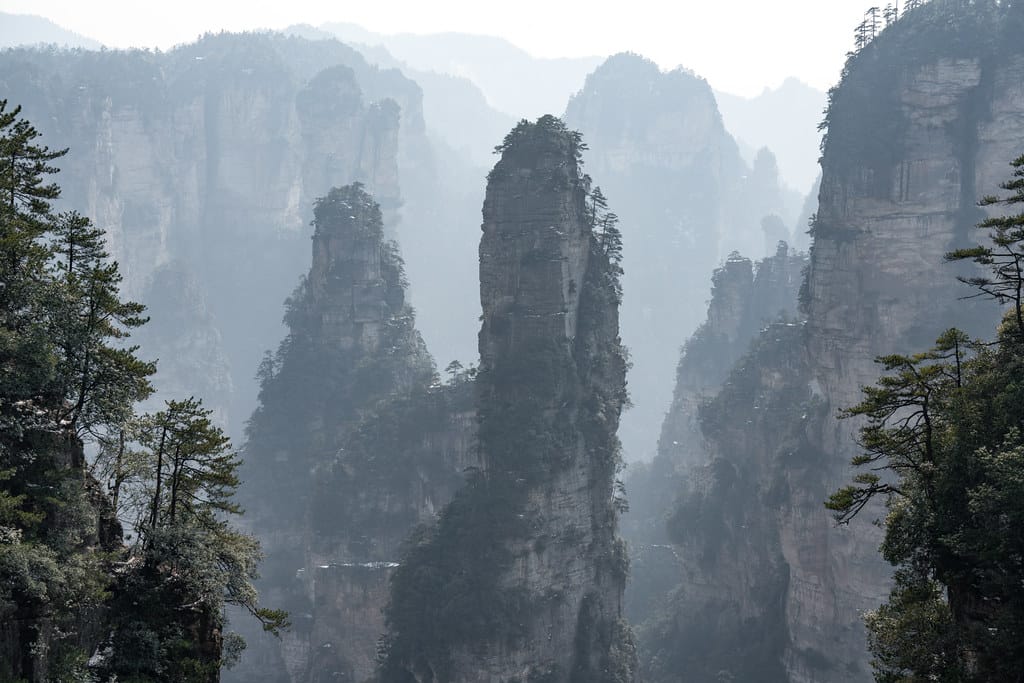
After five years of bringing travelers to these mountains, we still get excited before each visit. The anticipation as the Bailong Elevator rises through morning mist never gets old. Watching clients’ faces when they first see those pillars—that moment of wonder—reminds us why we do this work.
Zhangjiajie isn’t just about checking a famous location off a list. It’s about standing in a landscape that challenges your perception of what’s possible. It’s about understanding geological processes measured in millions of years. It’s about the Tujia farmers who’ve lived among these peaks for centuries, adapting their lives to vertical terrain.
We’ve watched photographers spend entire days waiting for perfect light. We’ve helped elderly couples fulfill lifelong dreams of seeing these mountains. We’ve seen children run through Golden Whip Stream, discovering their first monkeys in the wild. Each visit is different because each traveler brings their own perspective to this landscape.
The Avatar connection brought global fame to Zhangjiajie. That fame has positives (infrastructure improvements, conservation funding, international appreciation) and negatives (crowds, commercialization pressures). But the mountains themselves remain unchanged. Stand on Enchanting Terrace at dawn, surrounded by hundreds of stone pillars emerging from mist, and tourism industry concerns fade. You’re experiencing something profound—a landscape that existed long before humans and will endure long after we’re gone.
When you come—and we hope you do—give yourself time. Don’t rush. These mountains reward patience. The perfect photograph might require three early mornings. The peaceful hiking experience might mean skipping famous viewpoints for empty trails. The understanding of what makes this place special might not click until day three.
But when it does click—when you find yourself sitting on a stone ledge, watching golden light move across vertical rock faces while macaques chatter in the forest below—you’ll understand why we keep returning.
We’ve built Travel China With Me around the belief that travel should be transformative, not just transactional. Zhangjiajie represents that philosophy perfectly. Come see why.
Safe travels, and we hope to welcome you among these floating mountains soon.
Ready to experience the Avatar Mountains? Contact us for personalized itineraries, expert guides, and insider access to Zhangjiajie’s hidden corners. We handle all logistics so you can focus on the experience.