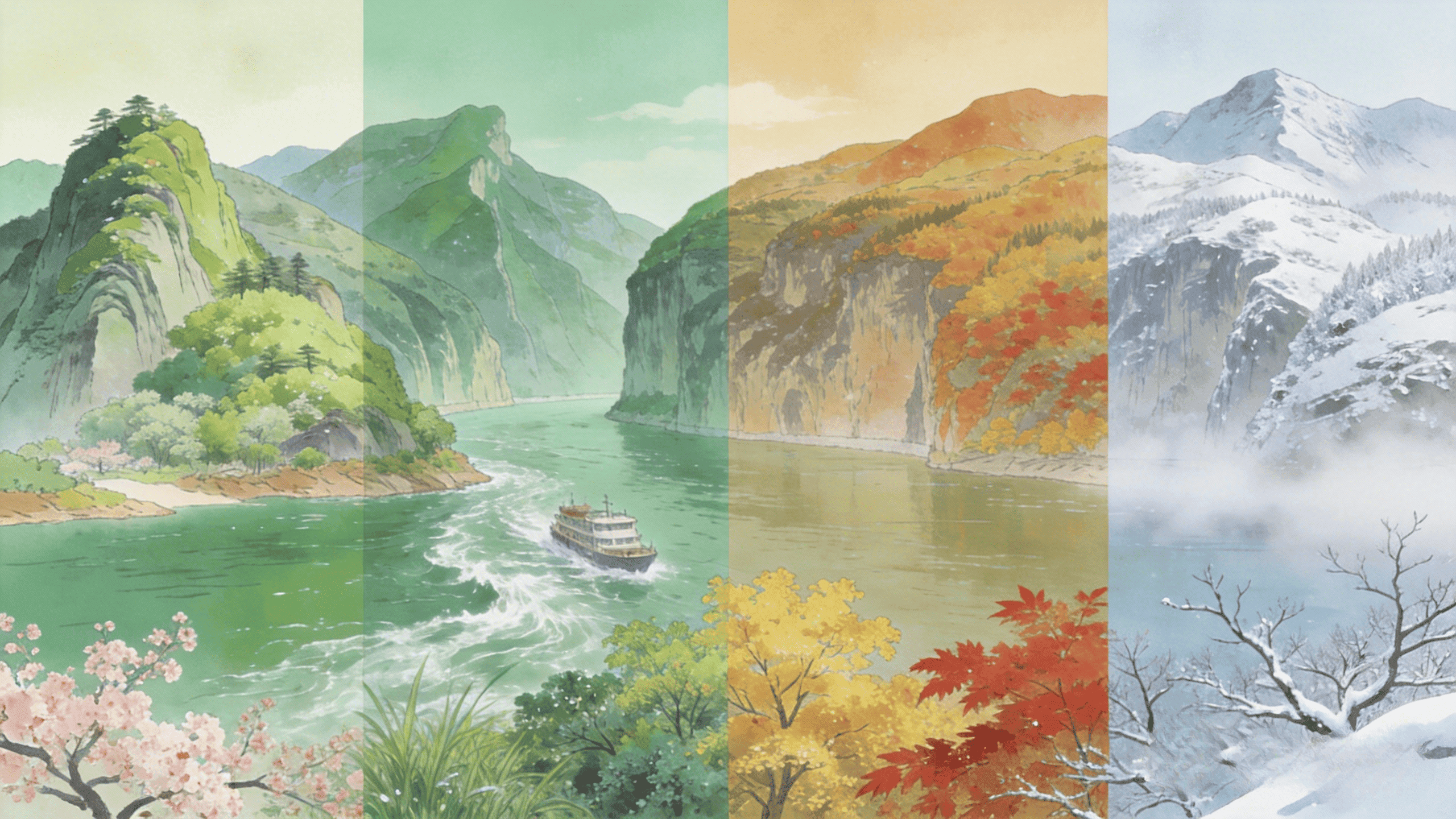
Best Time to Visit the Yangtze River: Timing Your Cruise for Perfect Conditions
After analyzing weather data, water levels, and hundreds of recent cruise reviews from recent years, we’ve identified timing windows that dramatically affect your Yangtze River experience. The answer isn’t simply “spring or autumn”—it’s about matching specific months to what you actually want to see.
Here’s what the data reveals: April, September, and late October through November deliver the most rewarding experiences. But each month offers distinct trade-offs that other travel blogs won’t tell you about.
Table of Contents
Understanding What Actually Affects Your Experience
Three factors determine your Yangtze cruise quality far more than promotional photos suggest:
Water appearance changes drastically by season
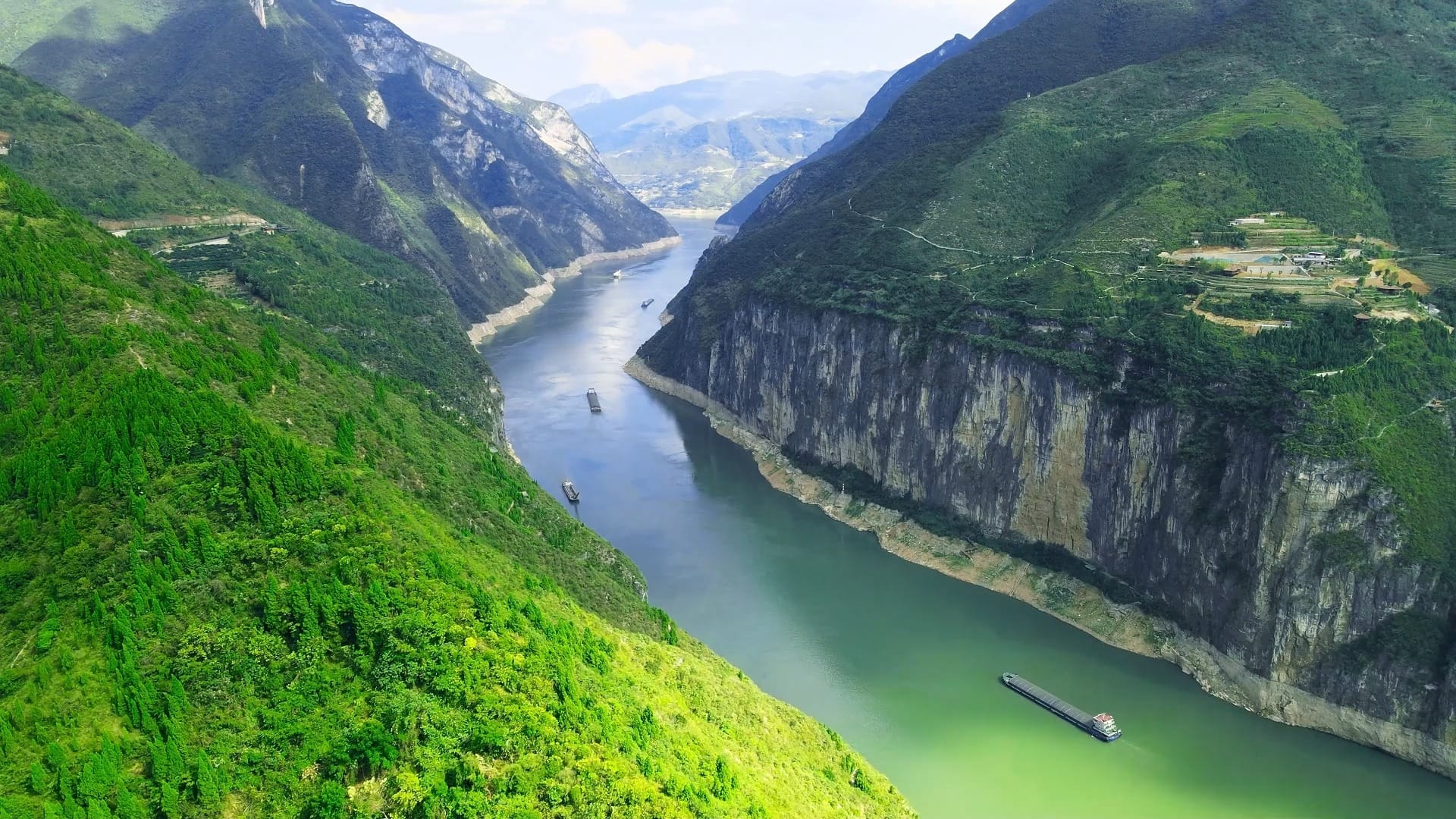
In July 2025, one cruiser reported: “During this time of year the water level is quite high/flooded and the waters are brown, apparently during low water season the water is more green and pleasant to look at“. This isn’t a minor detail—it’s the difference between emerald waters and turbid brown.
Temperature extremes matter more than averages
Chongqing is known as one of the three “furnace cities” of the Yangtze River, where the temperature has reached 43°C (110°F). The other two are Wuhan and Nanjing. Modern ships handle this with air conditioning, but shore excursions become grueling.
Timing flexibility saves money
March versus April means shoulder season versus peak pricing—often a 20-30% difference for identical itineraries.
Month-by-Month Reality: What Travelers Actually Experience
Month | Daytime Temp | Water Condition | Scenery Highlight | Cruise Availability | Real Traveler Notes |
|---|---|---|---|---|---|
January | 5-10°C | Emerald, high level | Red leaves lingering, misty gorges | Limited (many ships in maintenance) | Bone-chilling river breeze despite mild temps |
February | 6-12°C | Clear green | Early spring preparation | Limited | Lowest water levels of year |
March | 13-22°C | Recovering clarity | Early blossoms beginning | Good | Possible embarkation at Fengdu vs Chongqing |
April | 15-25°C | Green | Peak peach blossoms, rapeseed fields | Excellent | “A truly nice cruise from start to end…everything was well organized” |
May | 18-28°C | Transitioning | Late spring flowers | Excellent | Avoid May 1-7 holiday at all costs |
June | 24-32°C | Beginning to brown | Lush green mountains | Good | Heat building, summer pricing begins |
July | 28-35°C | Brown, turbid | Unbroken green landscape | Good | Hottest month, highest water levels |
August | 27-34°C | Brown, turbid | Monsoon green | Moderate | Continued heat, peak water |
September | 20-28°C | Clearing | Early autumn colors | Excellent | “One of the best months for cruising, with cooler temperatures (20-28°C / 68-82°F) and clearer skies” |
October | 15-25°C | Clear | Autumn colors building | Excellent | Avoid October 1-7 holiday |
November | 10-18°C | Emerald | Peak red leaves | Good | “Cool and comfortable, with temperatures ranging from 10-18°C (50-64°F)” |
December | 5-12°C | Emerald, calm | Red leaves still vibrant | Moderate | “Especially in December, there are still may unfallen red leaves decorating the hills splendidly” |
Spring (March-May): The Classic Choice With Caveats
The average temperature in spring is about 12-18℃ and in autumn average temperature is 15-20℃. This makes spring comfortable, but several factors complicate the “perfect spring cruise” narrative.

March: Shoulder Season Savings
Temperature fluctuations define March cruising. In spring in the Yangtze River middle reaches, the weather gets warmer rapidly with big monthly and day-to-day fluctuations. You might experience 18°C one day and 10°C the next.
The water level consideration is real. During dry season, ships may embark at Fengdu Port instead of Chongqing’s Chaotianmen Dock, requiring a 1-2 hour coach transfer. One March 2025 cruiser confirmed the experience despite this adjustment was “A truly nice cruise from start to end”.
April: Peak Conditions, Peak Prices
April delivers what promotional photos promise. One of the best months to cruise, with pleasant temperatures (15-25°C / 59-77°F) and vibrant spring scenery. Peach blossoms paint the gorges pink while rapeseed flowers create golden carpets near Yichang.
The rainfall reality: There is only about 36mm of rainfall in March, but rise a lot in April and May, with 105mm and 152mm respectively. April sees nearly three times March’s precipitation.
May: Beautiful But Complicated
May brings warmth and flowers, but two factors make it challenging. Rainfall increases significantly—152mm versus April’s 105mm. More critically, May 1-7 marks Labor Day Golden Week when cruise availability crashes and prices spike 30-50%.
Summer (June-August): The Misunderstood Season
Summer gets dismissed in most guides, but recent reviews reveal nuances worth considering.
The Water Appearance Reality
This matters more than most travelers expect. “The sights as you go through the gorges are really amazing” one July cruiser confirmed, but added: “During this time of year the water level is quite high/flooded and the waters are brown, apparently during low water season the water is more green and pleasant to look at”.
If you’ve envisioned emerald waters from promotional materials, summer will disappoint. Monsoon runoff creates turbid brown conditions throughout July-August.
The Heat Is Manageable Onboard
The hottest months along the Yangtze River between Chongqing and Yichang are July and August, which also coincide with the rainy season, resulting in high temperatures and high humidity. However, “The ship/cabin/staff/meals were absolutely 5 star level” according to a July 2018 cruiser, confirming modern climate control handles the heat effectively.
Shore excursions require planning around the heat. Early morning or late afternoon timing becomes essential when temperatures exceed 35°C.
Summer’s Actual Advantages
Lower prices than peak season by 20-30%, lush unbroken green landscapes, and school vacation alignment for families make summer viable despite the heat and water appearance.
Autumn (September-November): The Photography Window
With an average temperature from 24°C in September and 14°C in November, autumn is one of the best pleasant seasons to cruising on Yangtze River.

September: Clear Skies Return
Fall marks the perfect time to experience the Yangtze River by cruise. The Three Gorges section from Chongqing to Yichang enjoys ideal weather conditions – comfortable temperatures between 14-26°C (57-79°F), low humidity, and clear skies.
As the rainy season has passed, fall is considered one of the best seasons for a Yangtze River cruise. September brings the year’s lowest rainfall alongside clearing skies after summer monsoons.
October: Peak Colors, Peak Crowds
October delivers spectacular autumn foliage, but timing within the month determines your experience entirely.
October 1-7: Avoid completely. National Day Golden Week brings overwhelming domestic crowds and 30-50% price increases. These seven days should be crossed off your calendar entirely.
October 8-31: Ideal conditions. The Three Gorges are at their most picturesque, with golden foliage painting the mountainsides. After the holiday week ends, you’ll find manageable crowds with peak autumn colors.
November: The Red Leaf Phenomenon
This is where the Yangtze offers something genuinely unique. The viewing period of the red leaves in the Three Gorges of the Yangtze River lasts for about 3 months, which lasts from the beginning of November to January the following year.
Unlike typical autumn foliage destinations that peak for 2-3 weeks, the Yangtze’s varied elevations create an extended season. The viewing period of other red leaf scenic spots is only about one month—the Yangtze’s three-month window is exceptional.
The epicenter: Wushan County. As Asia’s largest red leaf destination, Wushan features approximately 80,000 hectares of red leaf landscapes. The 19th International Red Leaf Festival runs November 22-December 31, 2025.
In a narrow sense, it is the territory of Wushan County. The most concentrated areas are Wushan County, with tens of thousands of acres of red leaves distributed on both sides of the Yangtze River, particularly around Goddess Creek and the Twelve Peaks of Wu Gorge.
Winter (December-February): The Budget Season
In winter, you can enjoy Yangtze River cruises with the lowest costs of the year, often 30-50% below peak season rates.
December: Extended Red Leaf Season
The scenery in the gorges is similar to autumn’s. Especially in December, there are still may unfallen red leaves decorating the hills splendidly. This extends the autumn color season well into winter—a timing advantage unique to the Yangtze.
One December 2025 cruiser reported: “We had a good cruise. Crew did everything to make us feel comfortable and happy“.
The Winter Trade-offs
Even though temperatures rarely drop below freezing, the river breeze, laden with icy vapor, can be unbearably damp and bone-chilling. The temperatures on paper (5-12°C) feel colder due to high humidity and river wind.
Less daylight to enjoy the scenery with is a downside—winter’s shorter days reduce scenic viewing time by several hours compared to summer.
Many cruise lines reduce operations or suspend service for maintenance, so confirm availability when booking winter cruises.
Comparing Peak vs Shoulder vs Low Season
Factor | Peak (April-May, Sept-Oct) | Shoulder (March, June-Aug, Nov) | Low (Dec-Feb) |
|---|---|---|---|
Temperature Comfort | 15-25°C, ideal | 13-32°C, variable | 5-12°C, cold |
Weather Stability | Good with some rain | Variable | Stable but cold |
Water Appearance | Green to clear | Brown in summer, green in Nov | Emerald green |
Rainfall | Moderate | High in summer, low in Nov | Very low |
Scenic Highlights | Blossoms or autumn colors | Green mountains or late autumn | Red leaves, mist |
Crowd Level | High (avoid holidays) | Moderate | Minimal |
Booking Window | 6-8 months ahead | 3-4 months ahead | 2-3 months ahead |
Critical Dates: What to Avoid
Two holiday periods transform the Yangtze cruise experience negatively:
May 1-7 (Labor Day Golden Week)
- Prices increase 30-50% above normal peak rates
- Ships fully booked months in advance
- Shore excursion sites become overwhelmingly crowded
- Difficult to arrange pre/post-cruise travel throughout China
October 1-7 (National Day Golden Week)
- Most expensive week of the year
- Attraction wait times significantly longer
- Flight and hotel prices spike nationwide
- Book 8-12 months ahead if dates unavoidable
DIG DEEPER: Golden Week Holidays in China: Your Complete Survival Guide
One traveler’s experience captures it: The cruise during holiday weeks includes “a tough schedule with all the joint events on board…there wasn’t much time to relax“.
Rainfall Patterns: Month-by-Month Data
Nearly half of the riverside area’s annual rainfall falls between June and August during summer flood season. Monthly precipitation in Yichang can reach 300mm in summer.
Here’s what this means practically:
Dry Season (October-April): September and November typically see the lowest rainfall of the year, making them optimal for weather-conscious travelers. September sees about 100mm while November drops to 70-80mm.
Plum Rain Season (mid-June to early July): Continuous wet weather lasts about a month due to the Jianghuai quasi-stationary front. This creates stationary fronts that keep rain localized.
Summer Monsoon (July-September): Frequent short bursts of heavy rain cause rapid river level rises. Afternoon thunderstorms are common but brief.
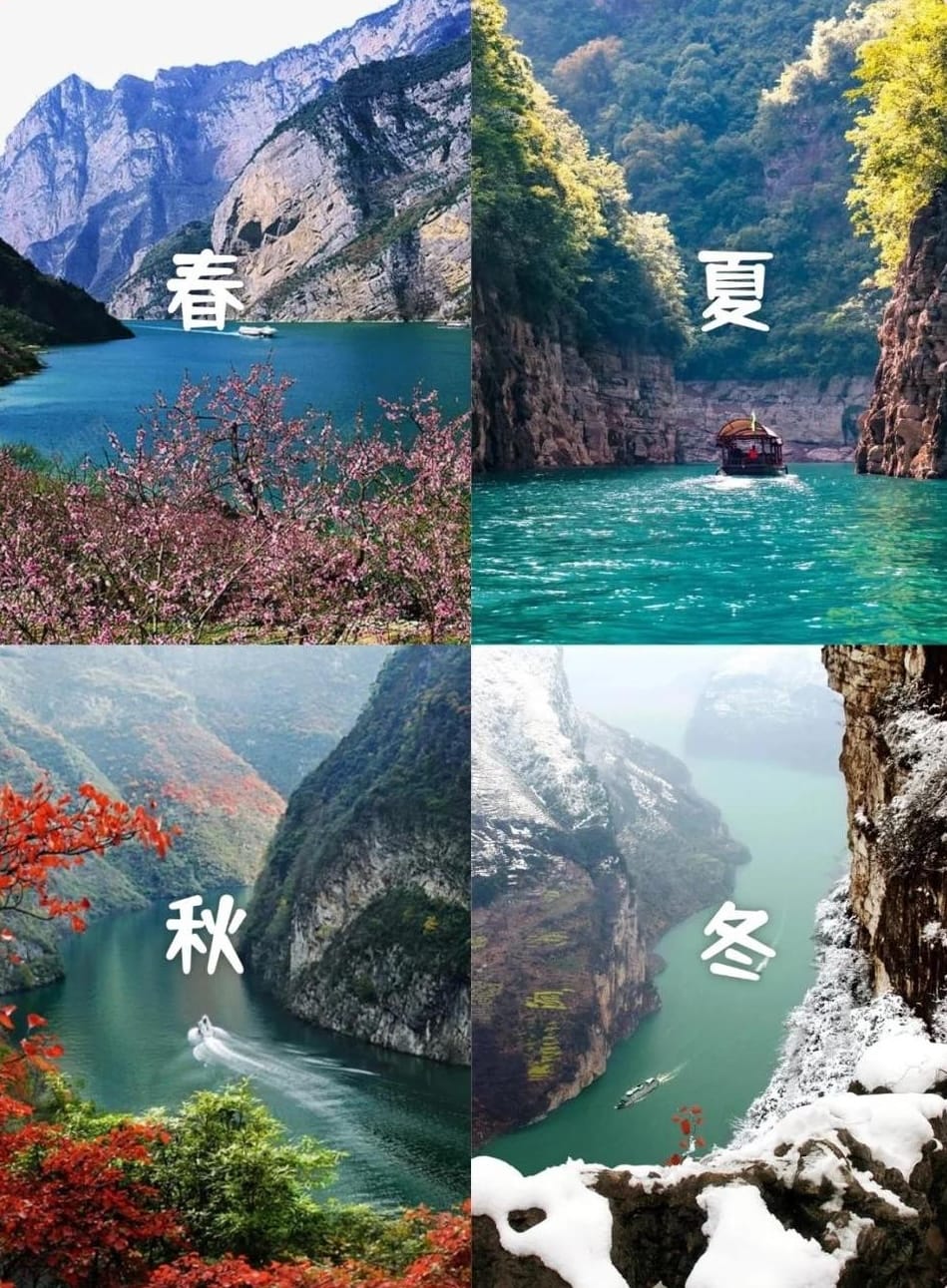
Scenery Highlights by Season
Spring Blossoms (Late March-April)
Peach blossoms paint the gorges pink, while vast rapeseed flower fields create golden landscapes near Yichang. The combination creates what looks like classical Chinese paintings come to life.
Summer Green (June-August)
Lush greenery creates unbroken mountain coverage. While water appears brown, the mountains display vibrant green that covers every visible slope.
Autumn Colors (Late October-January)
The unique extended season sets the Yangtze apart. In Wushan, it is a mixture of colors in mid-autumn, dominantly red in late autumn and flamboyantly red in early winter.
The best place to view the red leaves of the Three Gorges is Wushan County, particularly Goddess Creek and the Twelve Peaks area. In late November and early December, the Three Gorges is dyed into fiery red by the full mountains of red leaves.
Winter Mystique (December-February)
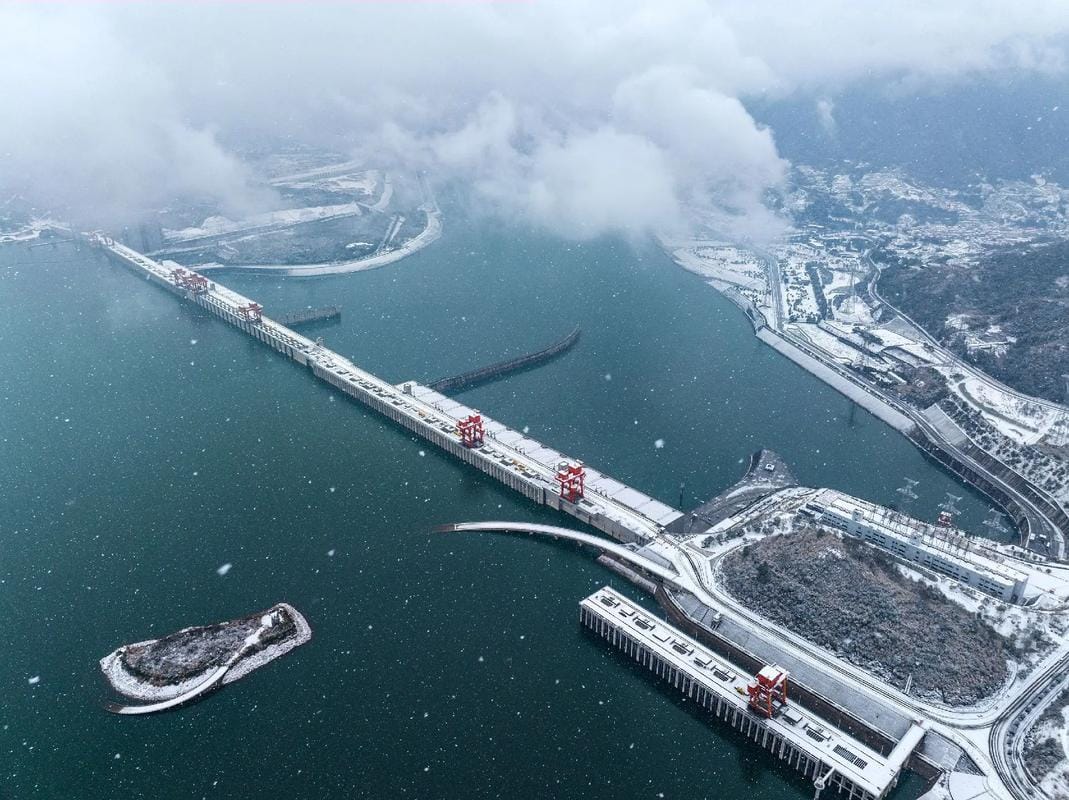
Mountains along the Three Gorges may be dotted with snow, and mist often lingers over the river and mountains, creating a unique natural scene. The water appears more emerald than usual with less river wind.
Temperature Reality: What the Numbers Actually Mean
The Yangtze’s subtropical monsoon climate creates dramatic seasonal swings:
Winter (December-February): Daily low temperatures are 5-10°C (41-59°F), but you may feel freezing on cruise deck due to damp river wind. Fog is frequent.
Spring (March-May): Temperatures gradually rise to between 10-25°C (50-77°F) with frequent alternations of cold and warm air, resulting in significant day-to-day fluctuations.
Summer (June-August): Temperatures can reach extreme highs of 40°C (104°F) with frequent short-term downpours and high humidity throughout.
Autumn (September-November): Maximum temperatures steadily decrease from around 30°C (86°F) in September to 15°C (59°F) in November. Weather is mostly sunny and comfortable.
The average temperature is 30°C (90°F) in July and 10°C (50°F) in January—a 20-degree swing that affects everything from packing to activity planning.
When Each Type of Traveler Should Visit
First-Time Visitors: April 10-28 or September 15-30
These windows deliver comfortable weather, full cruise operations, and the scenery visitors expect from promotional materials. Book 6-8 months ahead.
One April 2025 cruiser confirmed: “My wife and I spent two weeks travelling through China in April 2025 on a tailor-made tour…China is a beautiful country to visit“.
Photography Enthusiasts: October 25-November 25
The red leaf phenomenon peaks during this window. In late September, when the cool breezes start to blow, the Three Gorges green leaves turn red and yellow. They cover all the hills on the two steep banks of the spectacular gorges. Fall hues are especially spectacular in Wu Gorge.
Budget Travelers: December 1-20 or March 1-20
Winter rates drop to 30-50% of peak season. December maintains red leaves while March offers improving weather at shoulder pricing. Book 2-4 months ahead.
Families with Children: Late June-July
School vacation alignment makes summer practical despite heat. Ships maintain comfortable interior temperatures while offering lower pricing than peak season. Book 3-4 months ahead.
Autumn Color Seekers: November 5-December 15
The viewing period extends from early November through January—far longer than typical autumn destinations. As Asia’s largest red leaf destination, Wushan features approximately 80,000 hectares currently at peak.
Weather-Sensitive Travelers: September 15-October 15 (excluding Oct 1-7)
The rainy season has passed, creating the year’s most stable weather conditions with minimal rainfall and comfortable temperatures.
Water Level Impact on Routes
Water levels fluctuate significantly throughout the year, directly affecting embarkation ports and itineraries.
Low Water Season (March-April): Ships may embark at Fengdu Port instead of Chongqing’s main Chaotianmen Port, requiring a coach transfer. Cruise operators notify passengers in advance, but build this possibility into your schedule.
High Water Season (July-August): Water levels reach their annual peak. While this enables ships to access all ports, it creates the turbid brown appearance many travelers find disappointing.
Optimal Levels (September-November): Water levels remain relatively high but clearing from summer turbidity, creating emerald appearance with calm conditions.
Frequently Asked Questions
Q: What is truly the single best month to visit the Yangtze River?
A: September 15-30 offers the best overall combination if you can travel then. One of the best months for cruising, with cooler temperatures (20-28°C / 68-82°F) and clearer skies. However, April runs close second for spring scenery.
Q: When should I absolutely avoid cruising?
A: May 1-7 and October 1-7 during Chinese national holidays. Prices skyrocket 30-50%, crowds overwhelm attractions, and booking becomes extremely difficult. These periods should be avoided at all costs.
Q: How long does the red leaf season actually last?
A: The viewing period lasts about 3 months, from early November to January—significantly longer than other destinations. The period to enjoy red leaves can last as long as three months, from early November to January of the following year. Peak viewing occurs late November through early December.
Q: Does water color really matter that much?
A: Yes, more than most travelers expect. Summer brings brown, turbid water versus emerald green in winter/spring. One July cruiser noted this was “just a minor thing” that didn’t detract from the overall experience, but it’s visually noticeable in photos and viewing.
Q: How much can I realistically save in winter?
A: Winter cruises offer 30-50% discounts. The prices for winter cruises can be as low as half the peak season rates. A $600 April cruise might cost $300-350 in January.
Q: Is autumn rain a major concern?
A: No. As the rainy season has passed, fall is considered one of the best seasons for a Yangtze River cruise with minimal rainfall. September and November see the year’s lowest precipitation.
Q: Can I cruise year-round?
A: Technically yes, but with limitations. From December to next March is the low season when many ships stop cruising or reduce operations for maintenance. Confirm availability when booking winter months.
Q: How does climate change affect traditional patterns?
A: Increasingly. Hot weather may last to the end of September despite historical patterns suggesting September is cooler. Day-to-day variations have increased.
Our Final Recommendations
After analyzing weather patterns, water levels, pricing, and hundreds of traveler experiences from recent years, here’s our definitive guidance:
Best Overall Time: April 10-28 and September 15-30
These windows deliver comfortable weather, spectacular scenery, green water, and full cruise operations while avoiding the worst holiday crowds. Book 6-8 months ahead.
Best Value Time: November 20-December 15
This period combines red leaf viewing, comfortable temperatures, 30-40% discounts, and minimal crowds. It’s the sweet spot for budget-conscious travelers wanting quality scenery. Book 3-4 months ahead.
Best for Unique Scenery: November 5-December 20
The extended red leaf season from early November to January is genuinely unique to the Yangtze. As Asia’s largest red leaf destination, Wushan features approximately 80,000 hectares of landscapes. Book 3-4 months ahead.
Best Weather Stability: September 15-October 15 (skip Oct 1-7)
After the rainy season passes and before winter cold arrives, this window offers the year’s most reliable weather with minimal rainfall. Book 6-8 months ahead.
Avoid Completely: May 1-7 and October 1-7
These Chinese holiday weeks combine maximum prices, overwhelming crowds, and difficult logistics. Skip them unless you have absolutely no alternative.
The Yangtze River rewards thoughtful timing. Match your priorities—whether weather, scenery, budget, or crowds—to seasonal realities rather than promotional promises.
We at Travel China With Me specialize in matching travelers to their ideal cruise windows, with insider knowledge of seasonal patterns, water levels, and booking strategies that maximize value. Contact us today to plan your perfectly-timed Yangtze River cruise!