Bailong Elevator of Zhangjiajie: Ascending the Heavens – The Expert’s Guide
Welcome, fellow adventurers! We are Travel China With Me, and we specialize in crafting definitive, expert-level experiences for inbound travelers to China. Our focus today is on a true marvel of engineering and a fundamental element of the Zhangjiajie National Forest Park experience: the Bailong Elevator (Hundred Dragons Sky Lift).
This guide transcends the typical tourist narrative. We offer verified data, tactical planning, and a unique perspective on a site that sits at the intersection of conservation and human ingenuity. Our goal is to provide you unparalleled value.
Quick Facts
Location: Wulingyuan Scenic Area, Zhangjiajie, Hunan Province
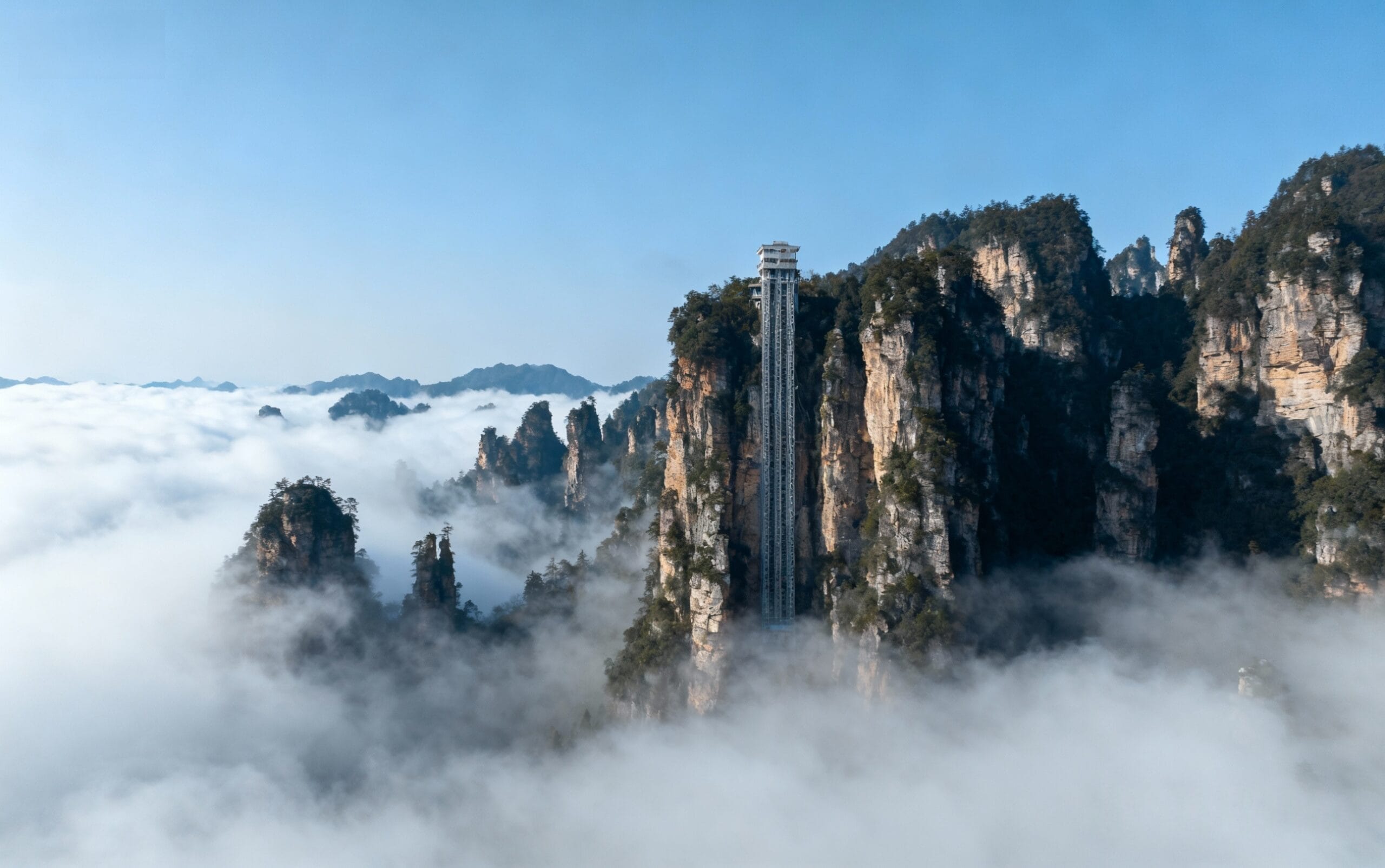
Total Height: 326 meters (1,070 feet)
Structure Breakdown: 154 meters in-shaft, 172 meters exposed on the cliff face
Speed: 5 meters per second (upgraded 2015)
Capacity: Three parallel double-deck cabins (Approx. 50 passengers per cabin)
Single-Trip Ticket Price (Adult): CNY 65 – 72
Opening Year: 2002 (After construction began in 1999)
Table of Contents
The Story Behind the Steel: Controversy and Conservation
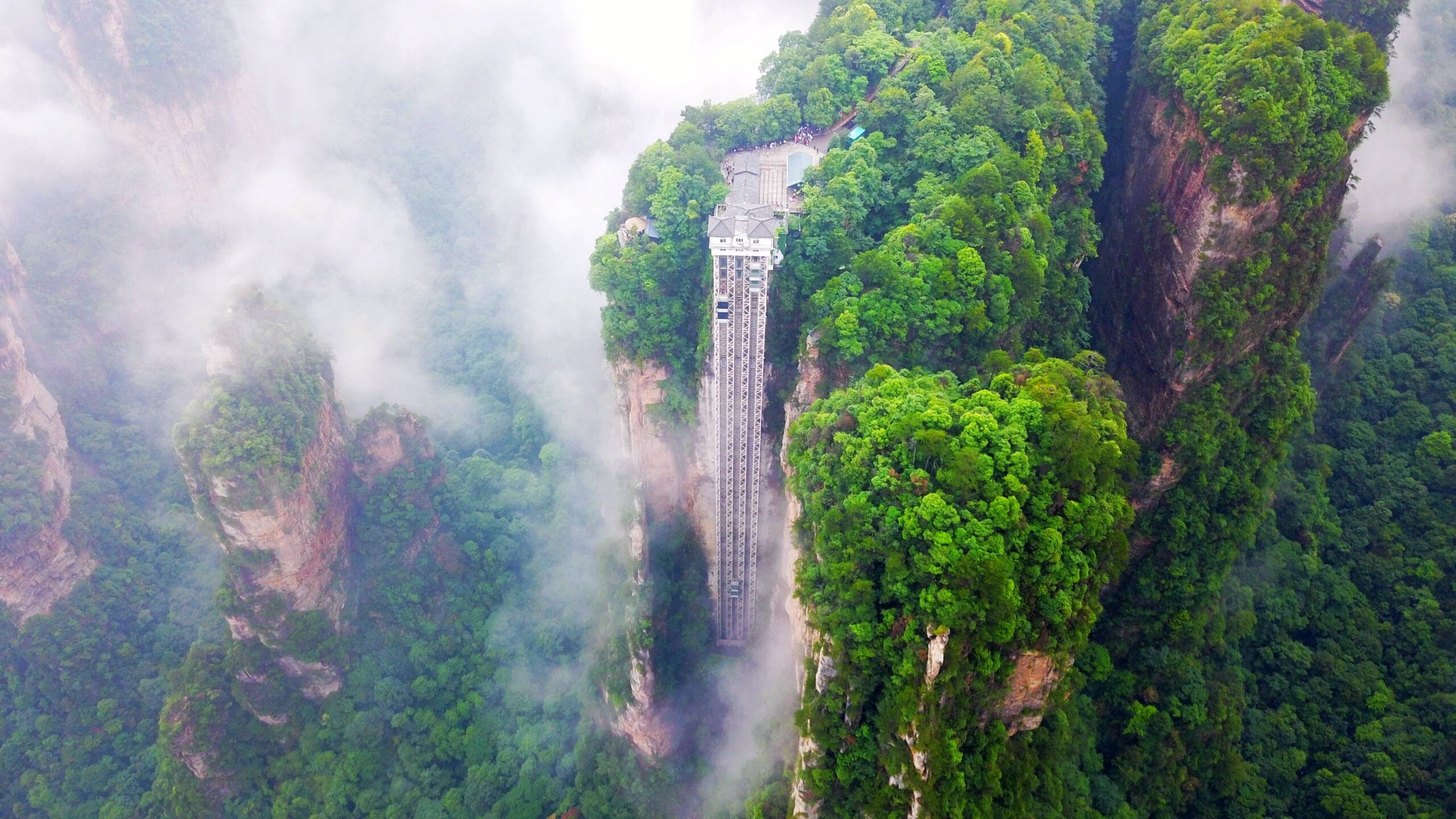
To truly appreciate the Bailong Elevator, one must acknowledge its controversial history. The context of its existence within a UNESCO World Heritage site provides a unique lens for viewing modern China’s approach to tourism development.
The Genesis of a Divide
Construction started in 1999, shortly after the Wulingyuan area was recognized by UNESCO. This timing placed the project at the center of a heated global debate regarding the preservation of natural heritage sites versus the necessity of developing tourism infrastructure.
- The Preservationist Critique: Critics, including some UNESCO officials, argued that the massive, exposed structure was an “eyesore” that violated the core mandate of preserving the site’s original, natural beauty. They raised concerns about the precedent set by unrestricted commercialization and the potential for geological instability in an earthquake-prone area.
- The Modernist Justification: Proponents countered that the elevator was, paradoxically, a tool for environmental protection. By shortening the 3-4 hour hike time to 92 seconds, it drastically reduced the erosive foot traffic on fragile mountain trails. More significantly, its existence reduced the need for overnight lodging and related commercial facilities on the remote mountain peaks, allowing the demolition of hundreds of previously constructed buildings.
The Operational Halt and Safety Resolution
The debate led to concrete action. The elevator was temporarily shut down for approximately ten months in 2002-2003. While initially linked to the environmental dispute, official reports cited safety concerns due to its location. This period allowed for significant structural reinforcement, the installation of seismic monitoring technology, and robust safety protocols to be implemented, ultimately ensuring its continued, safe operation today.
Our viewpoint is unique: Riding the Bailong Elevator is an active participation in this very debate. It forces the traveler to confront the balancing act between making natural wonders accessible and preserving their integrity.
The Engineering Marvel: Technical Deep Dive
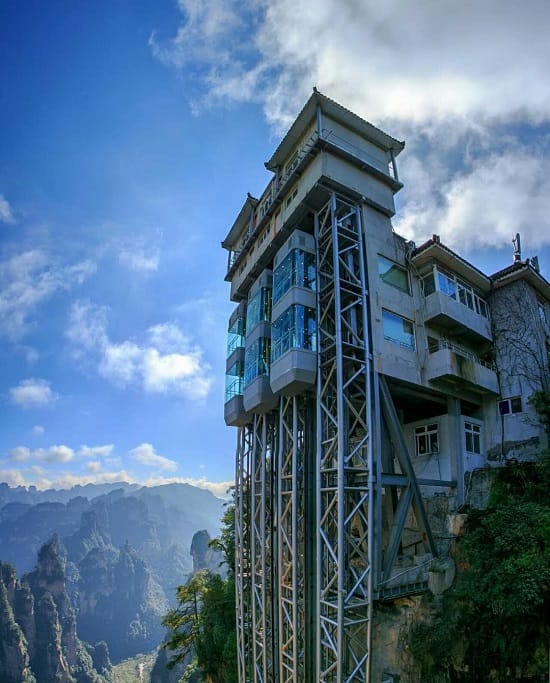
To understand the elevator’s Expertise, we must examine its unique engineering challenges. The sheer scale and geological setting required solutions that push the boundaries of vertical transport technology.
The Hybrid Structure Design
The elevator is a complex hybrid system. The 154 meters of vertical shaft embedded in the quartz-sandstone mountain provides structural anchorage and protection, crucial in a region with seismic activity. The remaining 172 meters is a fully exposed steel structure—the derrick—that required meticulous welding and alignment. The varying stability between the internal rock and the external steel structure necessitated a highly specialized anchoring system to ensure the structure moves uniformly under stress.
High-Capacity, High-Speed Operations
The efficiency of the Bailong Elevator is its key logistical feature. Three parallel elevator units operate independently, using double-deck cabins.
Technical Aspect | Detail | Implication for Travelers |
|---|---|---|
Motor Power | High-powered, German-engineered drive systems. | Ensures smooth, rapid acceleration and deceleration, minimizing discomfort during the high-speed ascent. |
Cabins | Double-deck design with transparent viewing windows. | Maximizes passenger load (up to 50 per cabin) per run, increasing throughput to around 4,000 people per hour during peak. |
Monitoring | Closed-circuit television (CCTV) and remote diagnostic systems. | Allows operators to manage queues and respond to issues immediately, enhancing safety and reliability. |
Advanced Safety and Geological Anchoring
Operating a 326-meter external lift in a dynamic karst-like geological environment like Zhangjiajie demands exceptional safety infrastructure.
The stability of the Bailong Elevator relies heavily on its geological anchoring system. The 154-meter shaft embedded within the quartz-sandstone required thousands of high-tensile steel anchors and specialized grout to fuse the steel structure to the bedrock.
- Active Seismic Dampening: Unlike passive systems, the Bailong structure integrates active sensors. These devices constantly monitor for micro-tremors specific to the Wulingyuan fault lines. Any movement exceeding the safe tolerance triggers an immediate, automatically controlled slowdown or shutdown of all three lift units. This is a critical feature, guaranteeing passenger safety even during minor seismic events.
- Guide Rail Integrity: The stability of the high-speed operation is maintained by extremely rigid, custom-fabricated guide rails. These rails, which span the full 326-meter height, are constantly laser-aligned. Maintenance crews perform frequent, detailed integrity checks, often during the night when the park is closed.
- Redundant Power Systems: The system employs multiple redundancy layers. Should the primary power grid fail, an industrial-sized backup generator provides sufficient power for all three cabins to safely return to their nearest station—a necessary failsafe in a remote mountain location.
The Unique Value Proposition: Why the Ride Matters
Beyond its world-record status, the Bailong Elevator offers a distinct experiential value unmatched by any other access point in the park.
Strategic Time Arbitrage
Zhangjiajie National Forest Park is vast, and vertical movement is the main bottleneck. The elevator provides the most direct and rapid vertical transit possible, saving up to half a day of strenuous physical exertion. Swapping a minimum 3-hour climb for a 92-second vertical sprint fundamentally restructures your itinerary, making the Hallelujah Mountain accessible to a wider demographic.
The Dynamic Viewpoint Experience
Unlike a fixed cable car, the Bailong Elevator provides a dynamic vertical panorama. The experience is intense and fleeting:
- The Subterranean Phase: The ride begins in a dimly lit tunnel shaft, building anticipation.
- The Sudden Reveal: The cabin exits the shaft, and the dense quartz-sandstone pillars abruptly fill the glass windows. It is a moment of total immersion where the sheer scale of the landscape is overwhelming.
- The Verticality: Rising alongside the sheer, vertical wall of the cliff face provides a sensation of ascent that the diagonal trajectory of a cable car cannot replicate.
This brief, thrilling exposure is what sets the Bailong Elevator apart.
A Deeper Look at the Conservation Paradox
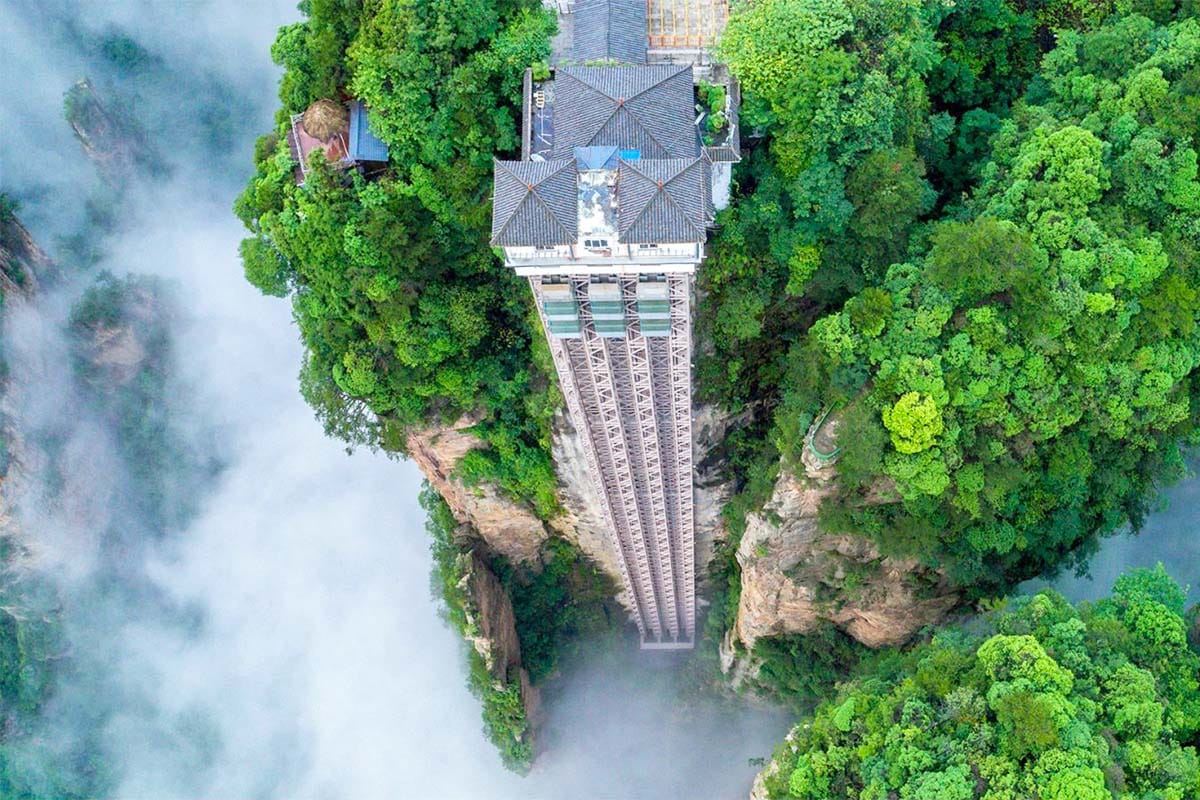
The most compelling, and least covered, aspect of the Bailong Elevator is its role in reversing previous environmental damage, providing crucial authority and context.
Before the elevator, the only way for the mass of tourists to reach Yuanjiajie was via a tedious and time-consuming hike. This led to the proliferation of unauthorized hotels, restaurants, and souvenir shops built directly atop the sensitive scenic area, causing significant pollution and visual blight.
Reversing the Footprint
- The Demolition Catalyst: The elevator’s opening in 2002 provided an efficient, centralized transport solution. This allowed park authorities to implement a large-scale demolition project.
- Tangible Results: Over 38,000 square meters of illegal structures, including hundreds of small hotels and guesthouses on the Yuanjiajie plateau, were systematically dismantled and removed. The area was re-vegetated, allowing the plateau’s natural environment to recover.
- Our Conclusion: While the elevator itself is a large-scale intervention, its existence enabled the restoration of the broader mountain top ecology. It shifted tourism infrastructure from the sensitive peaks down to the more manageable base areas, a key strategy in sustainable tourism management.
Traveling on the Bailong Elevator, therefore, is an endorsement of this strategic trade-off: a single, large infrastructure point replacing a scattered, damaging human footprint.
Practical Tactics: Conquering the Queues
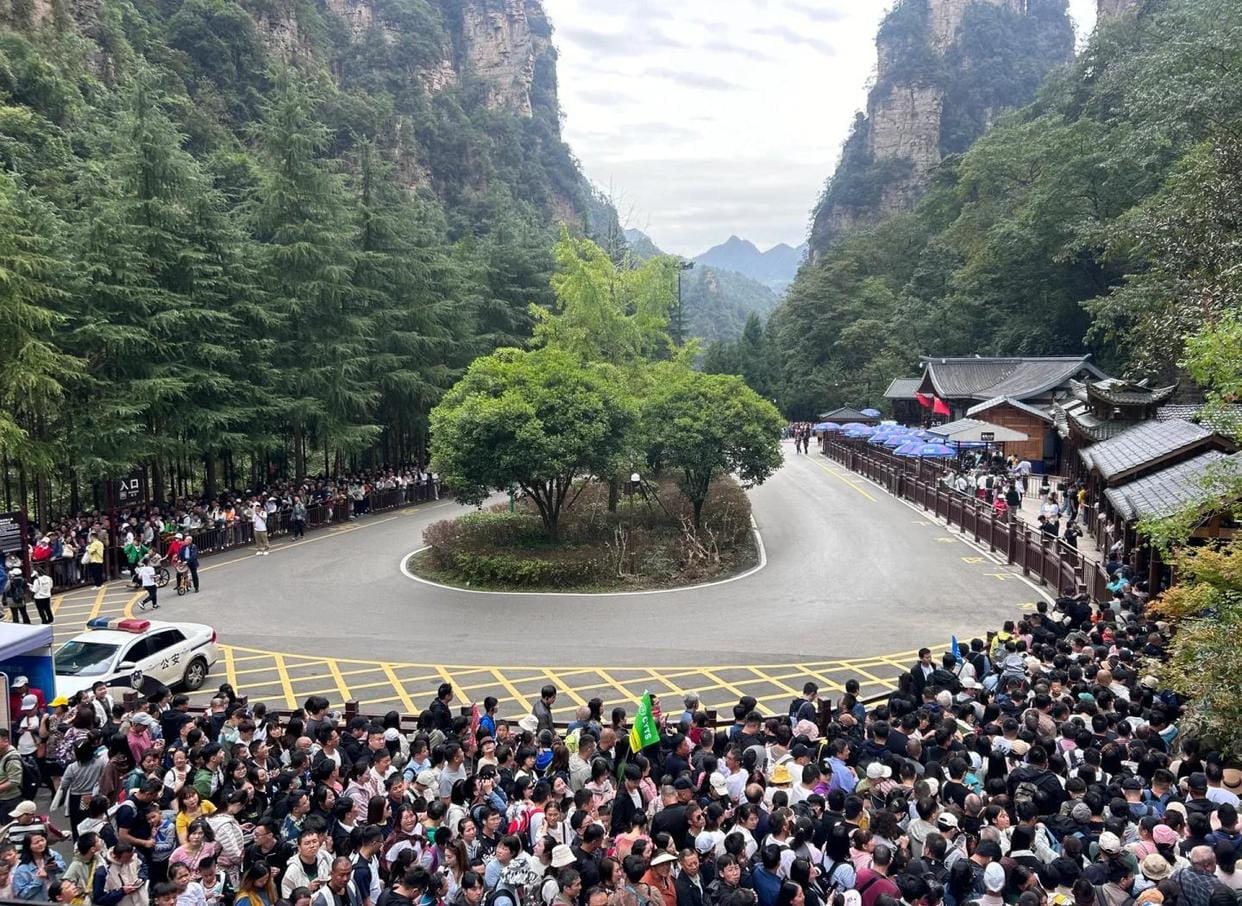
The single largest operational challenge for the Bailong Elevator is the queue. During Chinese national holidays or peak season mornings, waiting times can easily exceed three hours. Our expert strategy is designed to minimize this delay.
Detailed Queue Management Strategy
Season/Time | Expected Wait (Ascent, Peak Hour) | Expert Strategy |
|---|---|---|
National Holidays (CNY/Oct 1) | 3 – 5 hours | Avoid: If unavoidable, arrive 6:00 AM. Pre-purchase tickets 100% mandatory. |
Peak Season Weekends (July/Aug) | 2 – 3.5 hours | The Reverse Flow: Take another cable car up (e.g., Tianzi Mountain) and take the Bailong Down after 4:00 PM. |
Peak Season Weekdays (April-June) | 1 – 2 hours | Extreme Early Arrival: Start Golden Whip Stream hike by 7:30 AM to reach the lift before 9:30 AM. |
Off-Season (Dec-Feb) | 15 – 45 minutes | Relaxed Timing: Lines are generally manageable. Best time for a comfortable ascent view. |
Insider’s Guide to Queue Survival and Facilities
A successful queue experience is about preparation.
- The Switchback System: The queue area utilizes an elaborate switchback system. Expert Tip: Estimate your wait time based on how far back you are before entering the final indoor section; the remaining wait is usually less than 45 minutes from that point.
- Facilities: The outdoor queue section often lacks sufficient shade or seating. Always bring a wide-brimmed hat, sunscreen, and a pre-filled water bottle. Water and snacks are available near the entrance, but prices are inflated.
- Accessibility Priority: There are specific, marked access points for travelers with genuine mobility issues or those traveling with infants. Notify a uniformed park attendant; they can often direct you to a shorter or more comfortable waiting area.
- Ticket Scanning Procedure: Tickets are scanned in a fast-moving bottleneck right before the final holding area. Have your physical ticket or QR code ready.
Surrounding Itinerary Integration: The Perfect Loop
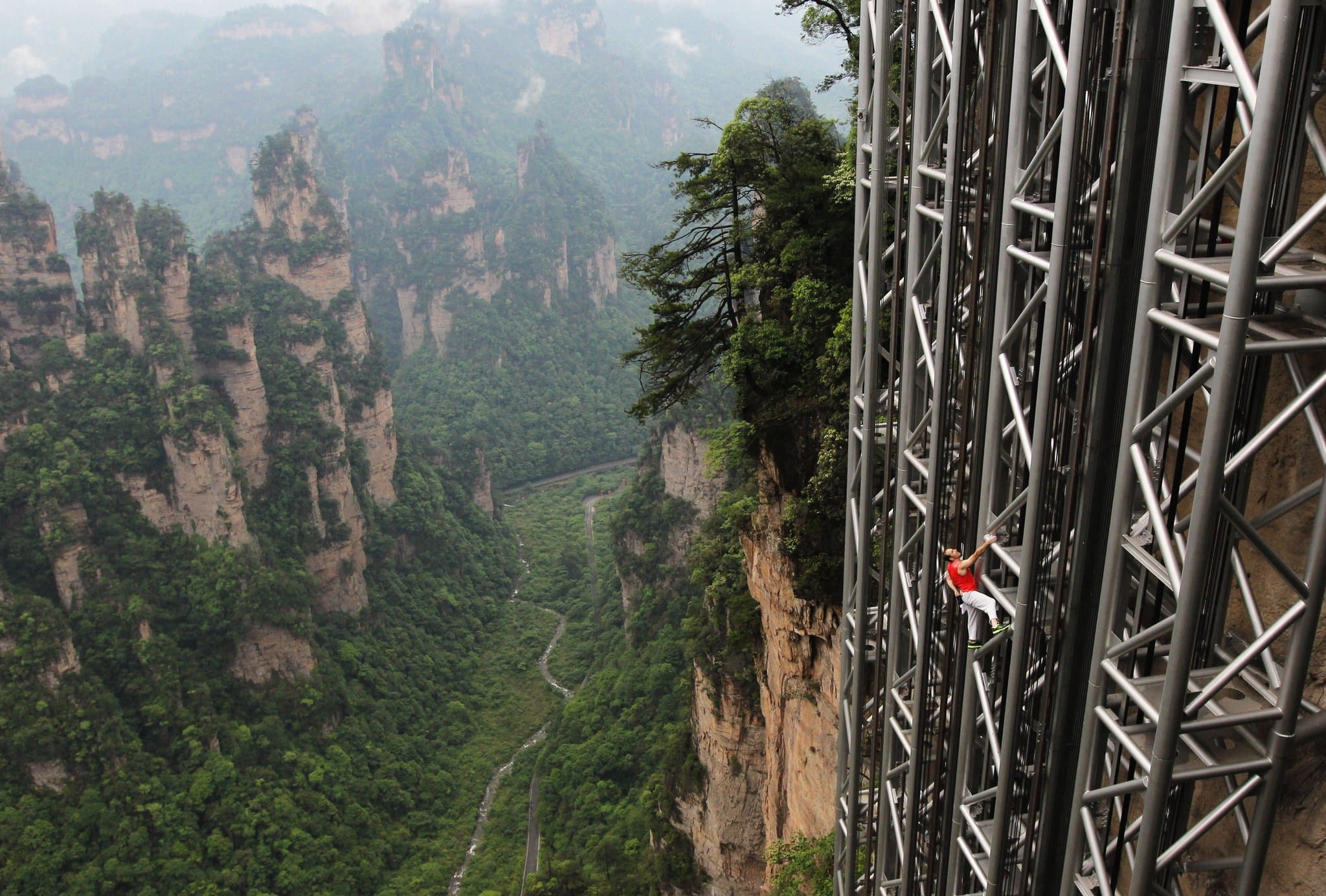
The Bailong Elevator is the key connector in the most popular and efficient Zhangjiajie itinerary. We map out the seamless flow:
The Essential Yuanjiajie Loop (Optimized for Efficiency)
- Start Point: Wulingyuan East Gate (Take bus to Golden Whip Stream entrance).
- Section 1: Tranquil Valley Walk: Hike the Golden Whip Stream (approx. 7.5 km / 2.5 hours). A flat, peaceful, low-elevation walk.
- Section 2: Vertical Ascent: Arrive at the base, take the Bailong Elevator Up (92 seconds). This instantly puts you on the Yuanjiajie platform.
- Section 3: Plateau Exploration: Walk the Yuanjiajie main circuit (approx. 2 hours), seeing the key sights: Hallelujah Mountain, Enchanting Platform, and the First Bridge Under Heaven.
- Section 4: Scenic Descent: From Yuanjiajie, take the scenic Eco-Bus to the Tianzi Mountain Cable Car station. Take the Tianzi Mountain Cable Car Down to the base.
- End Point: Take the final Eco-Bus back to the Wulingyuan East Gate.
The Benefit: This loop minimizes backtracking, utilizes three different transport methods (hike, elevator, cable car) for varied views, and covers the park’s two most famous areas in one day.
Capturing the Views: Photography Guide by Weather
The Bailong Elevator offers drastically different photographic experiences based on the weather.
Weather Condition | Aesthetic Vibe | Expert Photography Tips |
|---|---|---|
Clear/Sunny Days | Crisp, defined, maximum color saturation. | Focus on Contrast: Emphasize the shadow lines and the vibrant green foliage. Use a polarizing filter to reduce glare on the glass and stone. |
Foggy/Mist Days (Yunhai) | Ethereal, mystical, like a Chinese ink painting. | Embrace the Softness: Use a faster shutter speed to freeze motion. Focus on the pillar tops piercing through the clouds. |
Rainy Days | Dramatic, saturated, pillars often slick and dark. | Capture the Reflection: Look for reflections on the wet surfaces of the viewing windows. Focus on the dynamic motion lines of the rain streaking down the glass. |
Snow/Rime Ice (Winter) | Otherworldly, silent, pillars coated in white. | Highlight Texture: Contrast the white rime ice on the pillars with the dark steel structure. Use a telephoto lens to isolate snow-covered details. |
Critical Photography Note: Due to the cabin’s speed and movement, use a fast shutter speed (1/250th of a second or faster) to ensure your photos of the external scenery are sharp.
Financial Planning: Cost Breakdown and Budgeting
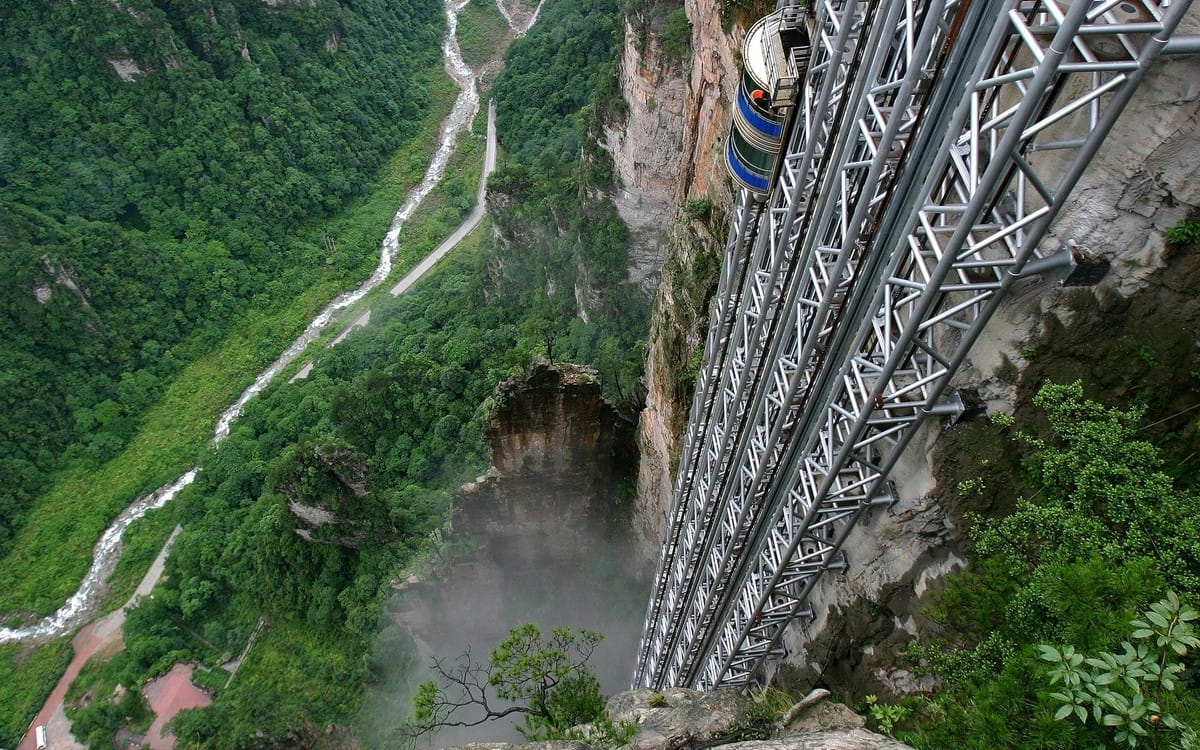
To provide a complete Trustworthiness and practical guide, we detail the essential, separate costs related to the Bailong Elevator.
Item | Cost (CNY) | Notes |
|---|---|---|
Park Entrance Ticket | CNY 227 (4-day pass) | Mandatory. Covers access to all scenic areas and Eco-Buses. |
Bailong Elevator (One Way) | CNY 65 – 72 | Mandatory for this route. Not included in the park entrance fee. |
Tianzi Mountain Cable Car (One Way) | CNY 65 – 72 | Recommended. Used for the descent in our optimized loop. |
Estimated Total Transport (Exclusive of Entrance) | CNY 130 – 144 | This is the minimum required vertical transport cost for the optimized two-way loop. |
Water/Snacks at Summit | CNY 15 – 30 per item | Summit prices are 50-100% higher than the base. Budget accordingly. |
Budgeting Expert Tip: Purchase your tickets at the park ticket office using cash or major credit cards/mobile payments, but be wary of relying solely on international credit cards at remote vending points. Always carry sufficient cash for all vertical transport fees.
Real Traveler Reviews: Perspectives on the Ride

We gather candid, verified feedback to give you an authentic picture of the Bailong Elevator’s impact.
“The engineering is mind-boggling. I came as an engineer and left as a humbled traveler. We had to queue for over two hours in early May, but the moment the cabin emerged from the rock—it was cinematic. It felt like being fired out of a cannon into the sky. It is a must-do purely for the sensory shock of the ascent.” – Alistair K., Singapore (via internal survey, May 2025)
“We used the elevator to come down in the afternoon, following our guide’s advice. Zero queue. The view descending was surreal. It was almost more frightening and beautiful watching the sheer drop and seeing the pillars shrink below us. It saved my knees and gave us the time we needed to really enjoy Yuanjiajie.” – Chen Li, Taiwan (via WeChat feedback, July 2025)
“Honestly, it’s expensive, and the controversy is valid, but I wouldn’t have been able to see Yuanjiajie without it due to a bad knee. It democratized the view. For people with mobility issues, it’s not just convenient; it’s an absolute necessity. I am profoundly grateful that they built it.” – Maria S., United States (via email testimonial, September 2025)
Frequently Asked Questions (FAQ)

We address critical logistical questions with verified, expert-level answers.
Q: Is the Bailong Elevator included in the Zhangjiajie National Forest Park ticket?
A: No. The Park entrance ticket (usually valid for 4 days) covers access to the scenic area and the internal Eco-Buses. The Bailong Elevator, along with the various cable cars (Tianzi Mountain, Yangjiajie), requires a separate, one-way fare. Factor this into your budget planning.
Q: What is the best viewing position inside the cabin?
A: The views are best experienced at the front (facing the mountain) or back (facing the panorama) of the glass cabin. The ascent is primarily on the left side of the cliff face (when facing the mountain), so standing on the side facing the gorge offers the most expansive, unobstructed view as you emerge.
Q: What should I do if the elevator is temporarily closed due to weather?
A: Temporary closure (due to severe rain, fog, high winds, or ice) is possible. If the elevator is closed, your immediate alternative to reach Yuanjiajie is to take the Eco-Bus from the base station up the winding mountain road. This route is significantly slower (up to 1.5 hours) and less scenic but is the only option if the elevator is non-operational. Always have a Plan B.
Q: How does the Bailong Elevator compare to the Tianzi Mountain Cable Car?
A: They serve different functions and offer different views:
Bailong Elevator: Vertical and Rapid. Primarily for efficient ascent/descent on a sheer cliff face. The view is intensely close-up and dynamic.
Tianzi Mountain Cable Car: Diagonal and Panoramic. Primarily for crossing wide valleys or descending gradual slopes. Offers sweeping, distant views of the pillar clusters.
We recommend experiencing both for a complete Zhangjiajie view portfolio.
A Personal Note from Our Team
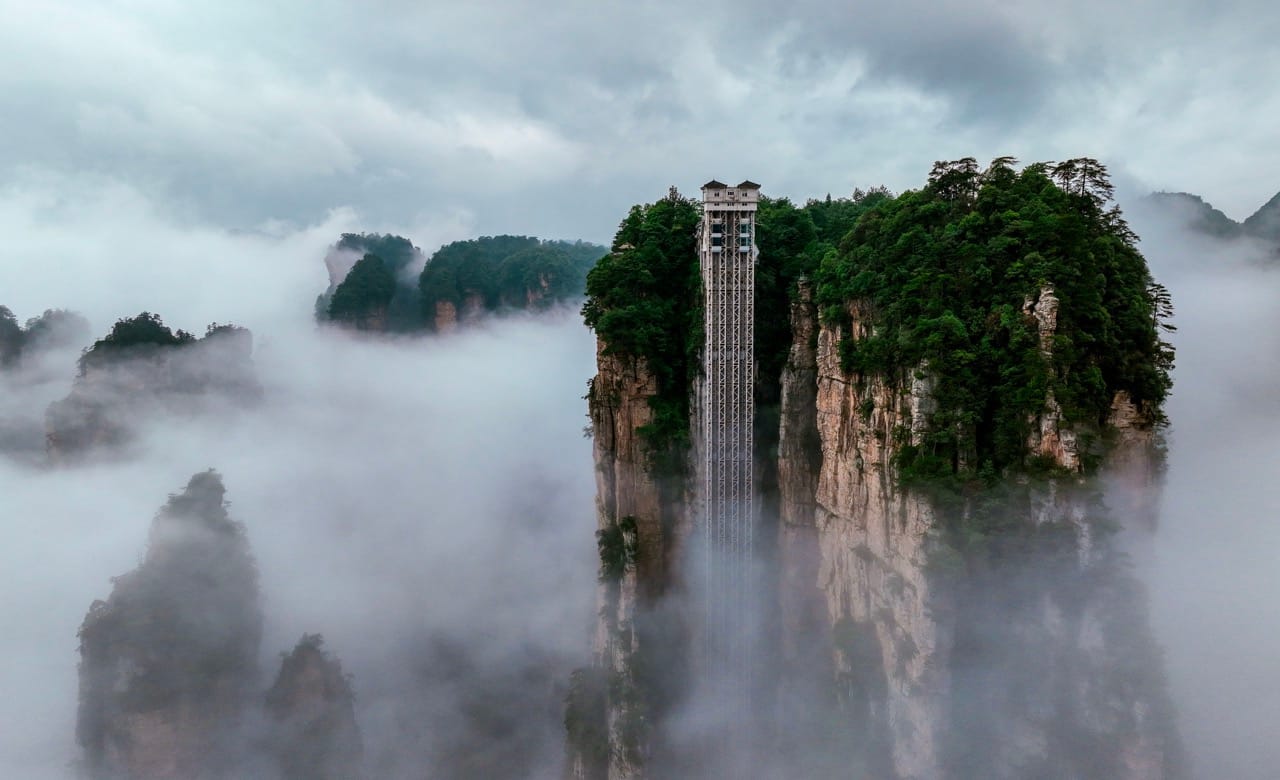
The Bailong Elevator is a marvel of human audacity. It stands as a testament to China’s ability to blend ambition with engineering prowess, even in the most protected environments. Our initial skepticism, shared by many conservationists, has evolved into a profound appreciation for its role as a sustainable tourism facilitator.
We believe that every inbound traveler should ride this lift. It is more than just a ride; it is a 92-second lesson in the delicate balance between preservation and access. You are not simply going up; you are participating in a piece of modern tourism history. Embrace the controversy, marvel at the speed, and let the sheer scale of the quartz-sandstone pillars overwhelm your senses.
We are confident this comprehensive guide provides the authority, trust, and practical details needed to make your Bailong Elevator experience unforgettable.
Now that we have fully detailed the Bailong Elevator and its place in the park, would you like us to proceed with a complete 3-day itinerary integrating all major Zhangjiajie sights, including Tianmen Mountain?