


How to Choose the Perfect Three Gorges Cruise Route on the Yangtze River
Choosing your Three Gorges cruise route determines more than just your schedule. After guiding travelers through this decision for over two decades, we’ve learned the route shapes your entire experience—from which gorges you see in daylight to how rushed or relaxed you feel.
The classic routes between Chongqing and Yichang cover what locals call the “golden section” of the Yangtze. But within these 400 kilometers lie critical differences that most guides overlook.
Table of Contents
Understanding the Two Main Three Gorges Cruise Routes

The Yangtze River offers two primary directions for Three Gorges cruises. Both cover the same stunning scenery, but they deliver vastly different experiences.
Downstream Route: Chongqing to Yichang (4 Days, 3 Nights)
Downstream cruises flow with the current, traveling at 28-30 km/h. Most ships complete this journey in 4 days and 3 nights.
You board at Chaotianmen Dock in Chongqing. The ship departs in the evening, usually between 21:00-23:00. You disembark at Maoping Port near Yichang on the final morning.
One exception: Yangtze 1 is the only ship offering a 5-day downstream route, giving you an extra day to experience all three gorges during morning hours.
Upstream Route: Yichang to Chongqing (5 Days, 4 Nights)
Upstream cruises fight against the current at 15-18 km/h. This slower pace extends the journey to 5 days and 4 nights.
Boarding happens at Maoping Port in Yichang. Free shuttle buses run from Yichang Three Gorges Center Cruise Terminal and Yichang East Railway Station in the late afternoon (typically 17:30-20:00).
You finish at Chaotianmen Dock in Chongqing around 9:00 AM on day five.
Detailed Day-by-Day Route Comparison

Understanding what happens each day helps you choose wisely.
Day | Downstream (Chongqing to Yichang) | Upstream (Yichang to Chongqing) |
|---|---|---|
Day 1 | Evening boarding in Chongqing | Afternoon/evening boarding at Maoping Port |
Day 2 | Morning: Fengdu Ghost City OR Shibaozhai | Morning: Three Gorges Dam visit |
Day 3 | Morning: Sail through Qutang Gorge & Wu Gorge | Morning: Shennong/Goddess Stream |
Day 4 | Morning: Three Gorges Dam | Morning: Fengdu OR Shibaozhai |
Day 5 | N/A | Morning: Disembark in Chongqing around 9:00 |
Downstream vs Upstream: Making Your Choice
The direction matters more than most travelers realize.
Choose Downstream (Chongqing to Yichang) If You:
Connect from western China. Traveling from Chengdu, Chongqing, Leshan, or Tibet? Starting downstream eliminates backtracking. High-speed trains connect Chengdu to Chongqing in just 1-2 hours.
Have limited time. One fewer night means you save 24 hours for other destinations. This matters when planning multi-city China tours.
Prefer consistent sleep. Downstream ships dock every evening. The ship rarely moves at night, minimizing rocking motion. Light sleepers report better rest.
Want guaranteed daylight gorge viewing. The faster pace ensures all major gorges appear during daylight hours. Xiling Gorge viewing may not always be available in daylight on all cruises, but downstream schedules maximize your chances.
Value efficient sightseeing. The 4-day pace keeps you moving. Each day brings new shore excursions without extended downtime.
Important limitation: Most downstream ships do NOT show Xiling Gorge during daytime. If seeing all three gorges matters to you, book Yangtze 1's 5-day downstream route OR choose an upstream cruise instead.
Choose Upstream (Yichang to Chongqing) If You:
Have flexible schedule. That extra day provides breathing room. Upstream cruises often include one additional shore excursion compared to downstream.
Prioritize photography. The slower 15-18 km/h speed gives more time to frame shots. Professional photographers consistently choose upstream for this reason.
Connect through eastern China. Coming from Shanghai, Wuhan, Zhangjiajie, or Guilin? Yichang makes geographic sense as your starting point.
Enjoy leisurely travel. Five days means less rushing between excursions. You have time to fully absorb each destination.
Want deeper cultural immersion. The extra day typically adds experiences like visiting 816 Underground Nuclear Project, Baiheliang Underwater Museum, or extended time at cultural sites.
Beyond Classic Routes: Special Three Gorges Itineraries
Some ships offer variations worth considering.
Yangzi Explorer’s Special Routes
Yangzi Explorer operates three routes in 2026: the classic downstream route and two upstream variations to Shennongjia Natural Reserve or Badong Park.
The Shennongjia route replaces standard shore excursions with access to this UNESCO World Heritage site. You’ll explore pristine forests and rare wildlife instead of typical cultural stops.
The Badong route includes Wuyuan Cave and unique mountain scenery. These alternatives suit travelers who’ve already done classic Three Gorges tours.
Yangtze 1’s Unique 5-Day Downstream
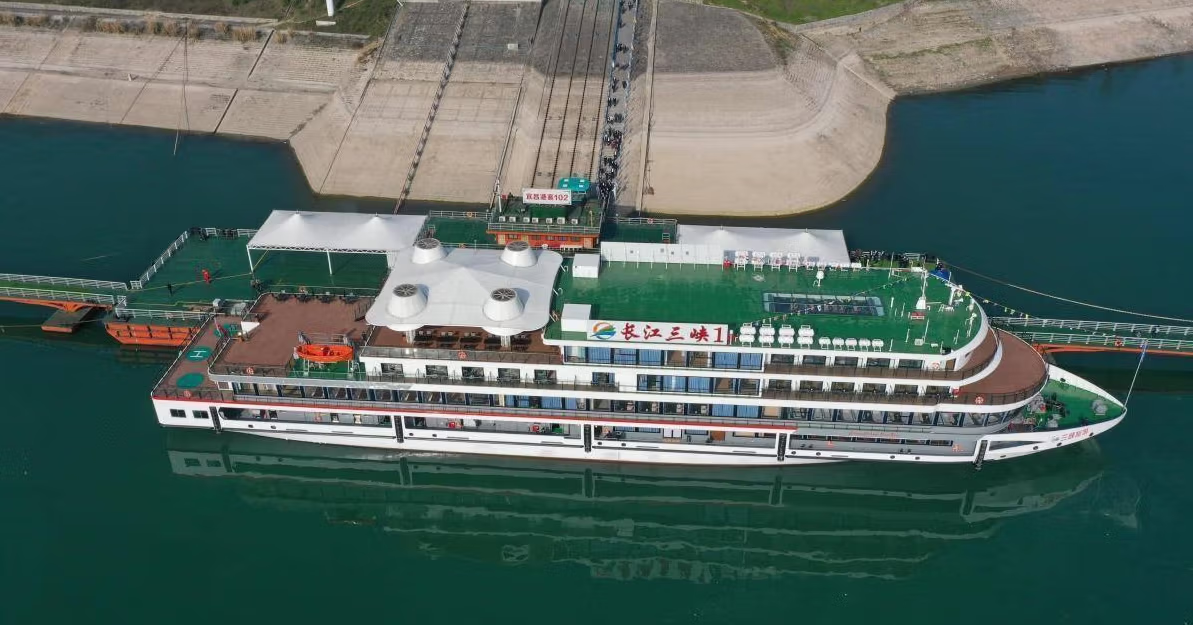
Yangtze 1 is THE ONLY SHIP that sails through all three gorges—Qutang, Wu, and Xiling—during daylight hours on a downstream route. This solves the most common downstream complaint: completely missing Xiling Gorge.
Most standard 4-day downstream cruises bypass Xiling Gorge entirely or pass through it at night. Yangtze 1 extends the journey to 5 days specifically to ensure you see all three gorges in perfect daylight.
The ship also travels through both the Three Gorges Dam Ship Lift and Gezhou Dam. Yangtze 1 is the only ship allowing tourists to explore Wu County independently on the third evening.
Extended Yangtze River Cruises
Century Legend operates Chongqing to Shanghai (11 days) and Shanghai to Chongqing (12 days) routes. These comprehensive journeys continue past Yichang to major eastern cities.
You’ll visit Wuhan, Nanjing, and other major ports. This works for travelers seeking river journeys beyond Three Gorges highlights.
Practical Route Selection Factors
Geographic Connections
Your broader China itinerary determines which route flows naturally.
Western China connections (choose downstream):
- Chengdu/Leshan (Giant Buddha) → Chongqing → Downstream cruise → Yichang
- Tibet → Chengdu → Chongqing → Downstream cruise → Yichang
- Lijiang/Shangri-La → Chongqing → Downstream cruise → Yichang
Eastern China connections (choose upstream):
- Shanghai → Yichang → Upstream cruise → Chongqing → Western destinations
- Guilin/Yangshuo → Yichang (via train) → Upstream cruise → Chongqing
- Zhangjiajie → Yichang (4-hour drive) → Upstream cruise → Chongqing
Time Investment
Consider your total available days carefully.
The upstream cruise takes 5 days and 4 nights, while downstream takes 4 days and 3 nights. That 24-hour difference compounds when planning multi-week trips.
Calculate total travel time including:
- Transport to starting city (Chongqing or Yichang)
- Cruise duration
- Transport from ending city to next destination
A 4-day cruise actually requires 5 days when including arrival and departure logistics.
Shore Excursion Priorities
Not all ships visit the same attractions. Study itineraries closely.
Core stops on most routes:
- Three Gorges Dam (all ships)
- Qutang Gorge viewing (all ships)
- Wu Gorge viewing (all ships)
- Fengdu Ghost City OR Shibaozhai (most ships offer one or the other)
Variable stops:
- White Emperor City (optional on most ships, included on Century Voyage)
- Shennv Stream vs. Shennong Stream vs. Lesser Three Gorges (ships vary)
- Goddess Sky Road (exclusive to certain ships like Yangtze 1)
- Cultural shows (Romance of Three Kingdoms, Tribe of Three Gorges)
Physical Considerations
The routes demand different energy levels.
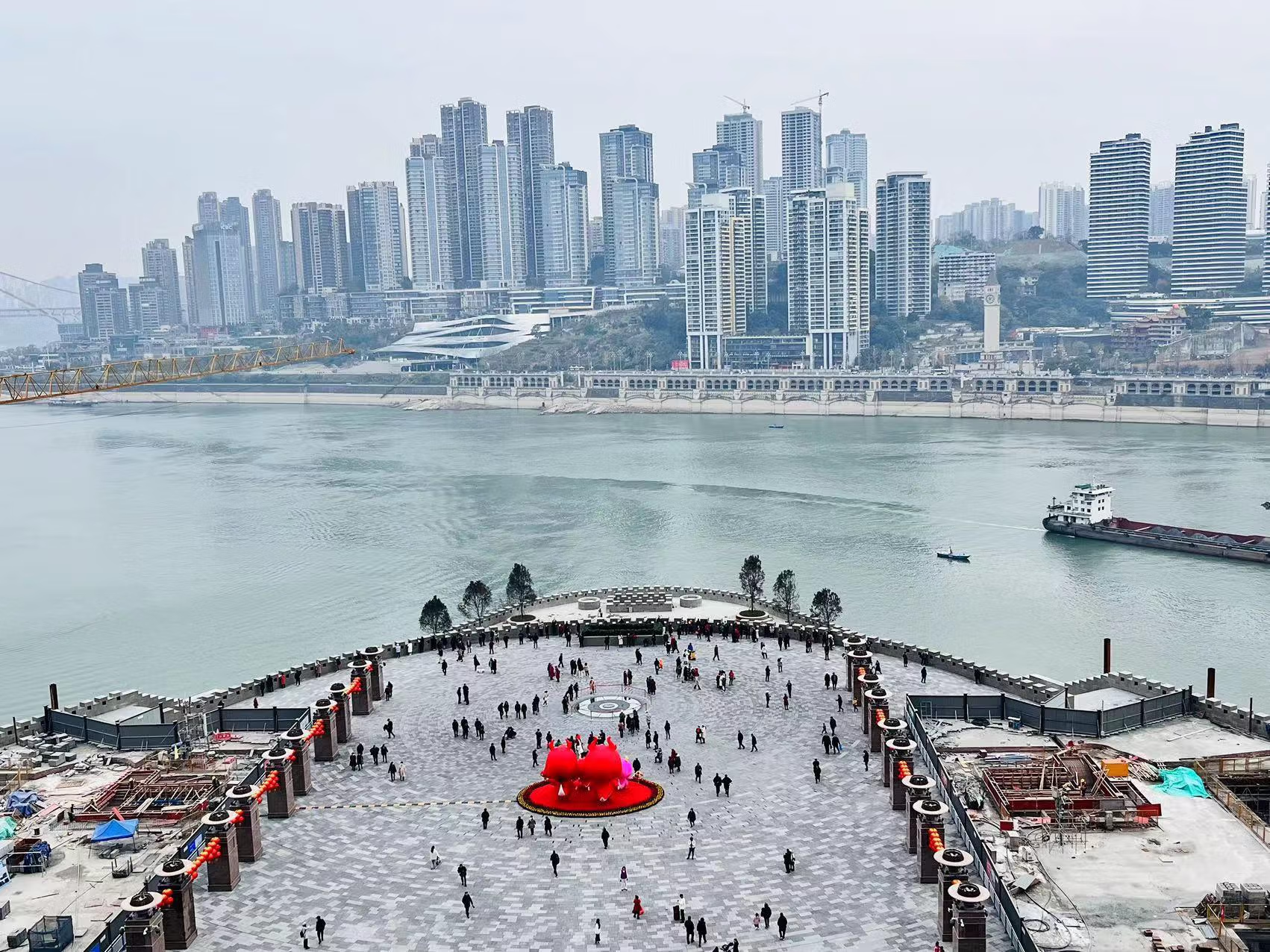
Chaotianmen Dock challenges: The dock is under reconstruction with no lift available. Travelers must climb hundreds of steep wooden ladders to reach the exit. If mobility is limited, downstream routes avoid this challenge at journey’s end.
Maoping Port access: All ships except Yangtze 1 use this port. It’s 1-1.5 hours from downtown Yichang, but complimentary shuttle buses run from the Visitor Center and Railway Station.
Shore excursion intensity: Both routes include hiking at cultural sites. Fengdu Ghost City, White Emperor City, and Shibaozhai all involve stairs and walking.
Special Route Considerations for 2026
Boarding Logistics
Chongqing Chaotianmen Dock: The port has 11 sub-piers spread across 180-850 meters. Arrive before 16:30 on boarding day. Taxis drop you at the entrance; you walk to your specific pier with luggage.
Yichang Maoping Port: Shuttle buses operate from the cruise terminal (17:30-20:00) and East Railway Station. The free transfer simplifies arrival.
Luggage Management
Large luggage (exceeding 20cm×40cm×50cm or 5kg) cannot enter Three Gorges Dam scenic area. Downstream passengers can consign luggage for 30 RMB per piece, retrieving it at Yichang Three Gorges Center Cruise Terminal.
Upstream passengers don’t face this restriction since they visit the dam before carrying luggage.
Route-Specific Viewing Advantages


Gorge Visibility by Direction
The three gorges appear at different times depending on direction.
Downstream sequence (most ships):
- Qutang Gorge (Day 3 morning)
- Wu Gorge (Day 3 morning/midday)
- Xiling Gorge (typically bypassed or traversed at night – NOT included in daytime viewing)
Important exception: Yangtze 1 is the ONLY ship sailing through all three gorges during daylight on its 5-day downstream route. Other ships arrive at Three Gorges Dam area after bypassing or passing Xiling Gorge at night.
Upstream sequence (all ships):
- Xiling Gorge (Day 2 afternoon – guaranteed daytime viewing)
- Wu Gorge (Day 3 morning)
- Qutang Gorge (Day 3 afternoon)
Wu Gorge is known for its mist drifting through mountains. Morning passages (upstream) catch this atmospheric effect better than midday viewing (downstream).
Photography Windows
Light angles change dramatically based on direction and timing.
Upstream ships traverse gorges slower, providing 30-50% more time to photograph formations. The slower speed also reduces motion blur for telephoto shots.
Downstream ships move faster but guarantee midday light for Qutang and Wu Gorges. The dramatic Qutang Gorge entrance—featured on China’s 10 RMB note—looks spectacular in morning light, which downstream routes catch perfectly.
Frequently Asked Questions

Is upstream or downstream better for first-time travelers?
Both work well for first visits. Choose downstream if you have limited time or connect from western China. Choose upstream if you prefer leisurely pacing and connect from eastern China. Over 90% of cruisers choose the classic Chongqing-Yichang itinerary as their first encounter with the Yangtze River, and both directions cover this golden section equally well.
Do upstream and downstream cost the same?
Yes. Upstream and downstream cruises share the same price, accommodation, and service level. The main differences are duration (4 vs 5 days) and gorge viewing—upstream guarantees daytime viewing of ALL three gorges, while most downstream ships skip or pass Xiling Gorge at night.
Can I see all three gorges on both routes?
Upstream cruises: YES – all ships show all three gorges (Xiling, Wu, and Qutang) during daylight hours.
Downstream cruises: MOSTLY NO – most 4-day ships bypass Xiling Gorge or pass through it at night, showing only Qutang and Wu Gorges in daylight.
Exception: Yangtze 1’s 5-day downstream route specifically includes daytime viewing of all three gorges. If seeing all three gorges matters to you, book either Yangtze 1 downstream OR any upstream cruise.
Which route has better weather for viewing?
Weather affects both routes equally since they sail the same section. The route doesn’t impact weather, but upstream’s slower pace gives you more chances to photograph during good light windows.
What if I have mobility challenges?
Choose downstream to avoid climbing hundreds of steep wooden ladders at Chongqing’s Chaotianmen Dock at journey’s end. Shore excursions on both routes involve stairs, but you can skip optional stops. Inform your travel consultant in advance for accommodation solutions.
Are there routes longer than 4-5 days?
Yes. Century Legend sails 11-day Chongqing to Shanghai and 12-day Shanghai to Chongqing routes. These extend beyond Three Gorges to major eastern cities. However, most travelers prefer the classic 4-5 day Three Gorges section.
Which route gives me more shore excursion time?
Upstream cruises typically include one additional shore excursion due to the extra day. The slower pace also means less rushing between activities.
Do all ships offer both upstream and downstream?
Yes, major cruise lines operate both directions. They simply use different vessels or alternate schedules. Check specific sailing calendars when booking.
Making Your Final Route Decision
The perfect Three Gorges cruise route aligns three elements: your broader China itinerary, your travel pace preference, and your time availability.
We recommend:
- Downstream for efficient travelers connecting from western China who want the classic experience in minimum time
- Upstream for leisurely travelers connecting from eastern China who want maximum gorge viewing time
- Special routes (Shennongjia, extended Yangtze) for repeat visitors seeking new experiences
Most importantly, both routes deliver the Three Gorges’ magnificent scenery. The “wrong” choice doesn’t exist—only the choice that fits your trip best.
Start by mapping your China destinations. Let geography and connections guide your direction. Then refine based on your pace preferences and available days.
The Yangtze River has flowed for millions of years. Whether you cruise downstream with the current or upstream against it, the gorges will amaze you equally.