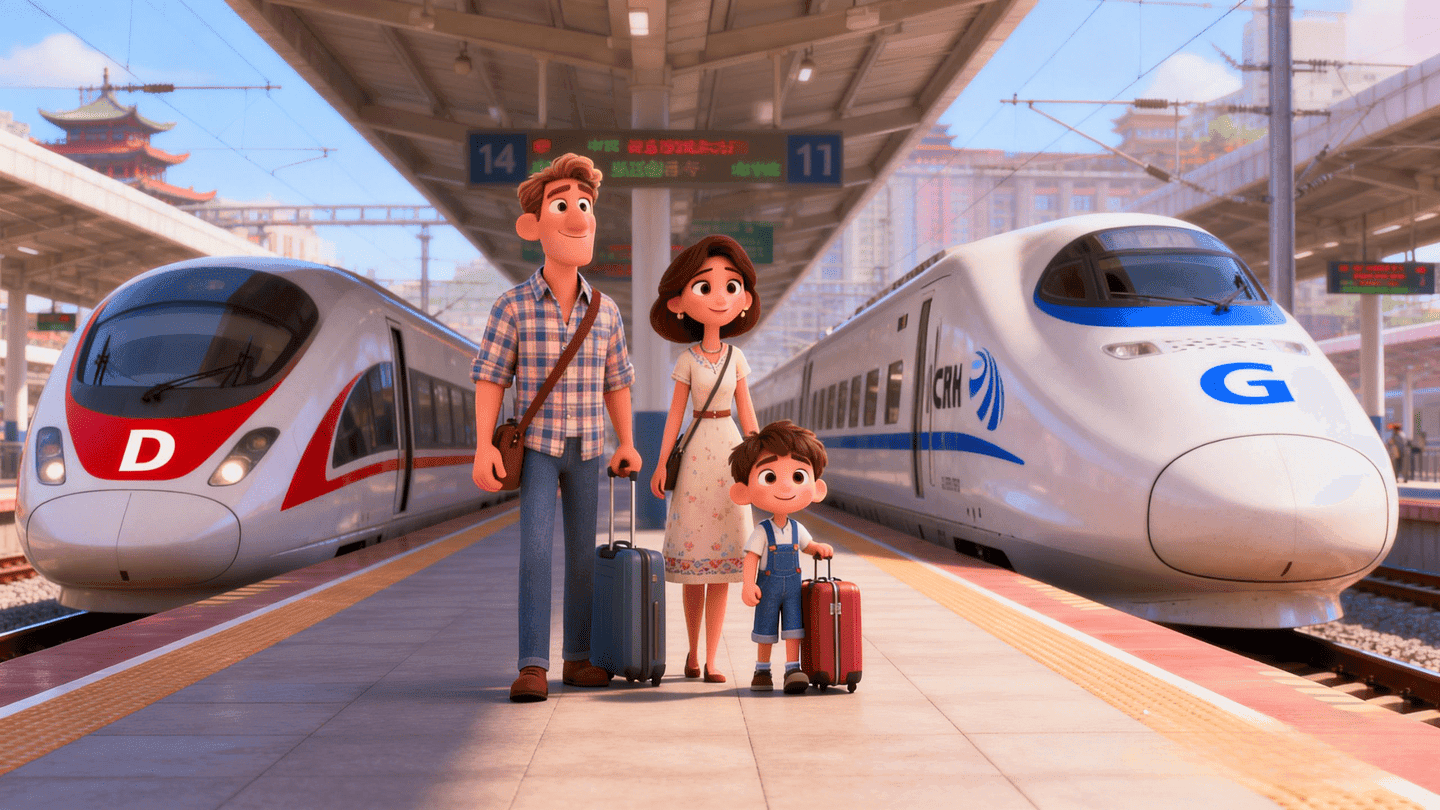
China’s G Train vs D Train: What Every Foreign Traveler Must Know
If you’ve tried booking a China train ticket and found yourself staring at a long list of G and D numbers wondering what the difference is — you’re not alone. This is one of the most common questions we get from first-time visitors.
We’ve been running inbound tours since 2006 — two decades of putting foreign visitors on the right train, and occasionally the wrong one. Here’s what we’ve learned, and what the basic explainers don’t tell you.
Table of Contents
1. The Short Answer First
Parameter \ Model | G Train | D Train |
|---|---|---|
Speed | 250–350 km/h | 200–250 km/h |
Track | High-speed only | High-speed + conventional |
Overnight sleeper | Almost never | Yes, on select routes |
Price (2nd class) | Higher | Lower |
Stations served | Major hubs | More cities |
Seat top end | Business class | Business class (some) |
Sleeper top end | None | Premium soft sleeper (高级软卧) |
Both G and D trains are modern, clean, and air-conditioned. The choice between them is less about comfort and more about your route, schedule, and budget.
2. What Do G and D Actually Stand For?
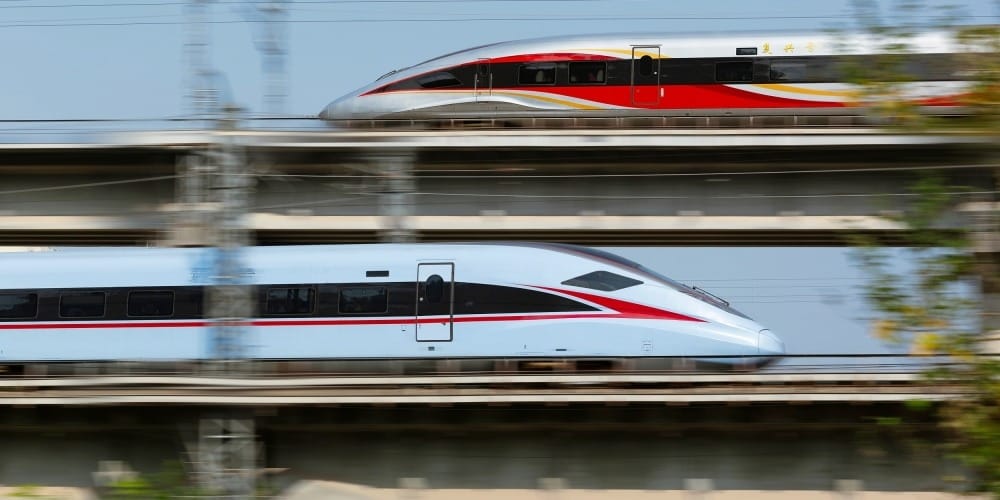
The letter codes come from the Chinese:
- G = 高铁 (Gāotiě) — literally “high-speed railway.” In everyday Chinese, people say 坐高铁 (zuò gāotiě) to mean taking the fast train.
- D = 动车 (Dòngchē) — literally “motor train” or EMU train. People call it 坐动车 (zuò dòngchē).
Here’s something that confuses even many Chinese passengers: technically, both G and D trains are 动车组 (EMU trains — electric multiple units). The distinction is that both the locomotive and the carriages have motors, unlike older trains where only the engine pulls.
In everyday speech, Chinese people use “动车” to refer to D trains and “高铁” to refer to G trains. But strictly speaking, 高铁 (high-speed rail) is the track standard, not just the train. A G train runs only on high-speed track. A D train can run on both high-speed and conventional upgraded track.
This has a real consequence: D trains reach destinations that G trains skip.
3. Speed: How Fast Is Each?
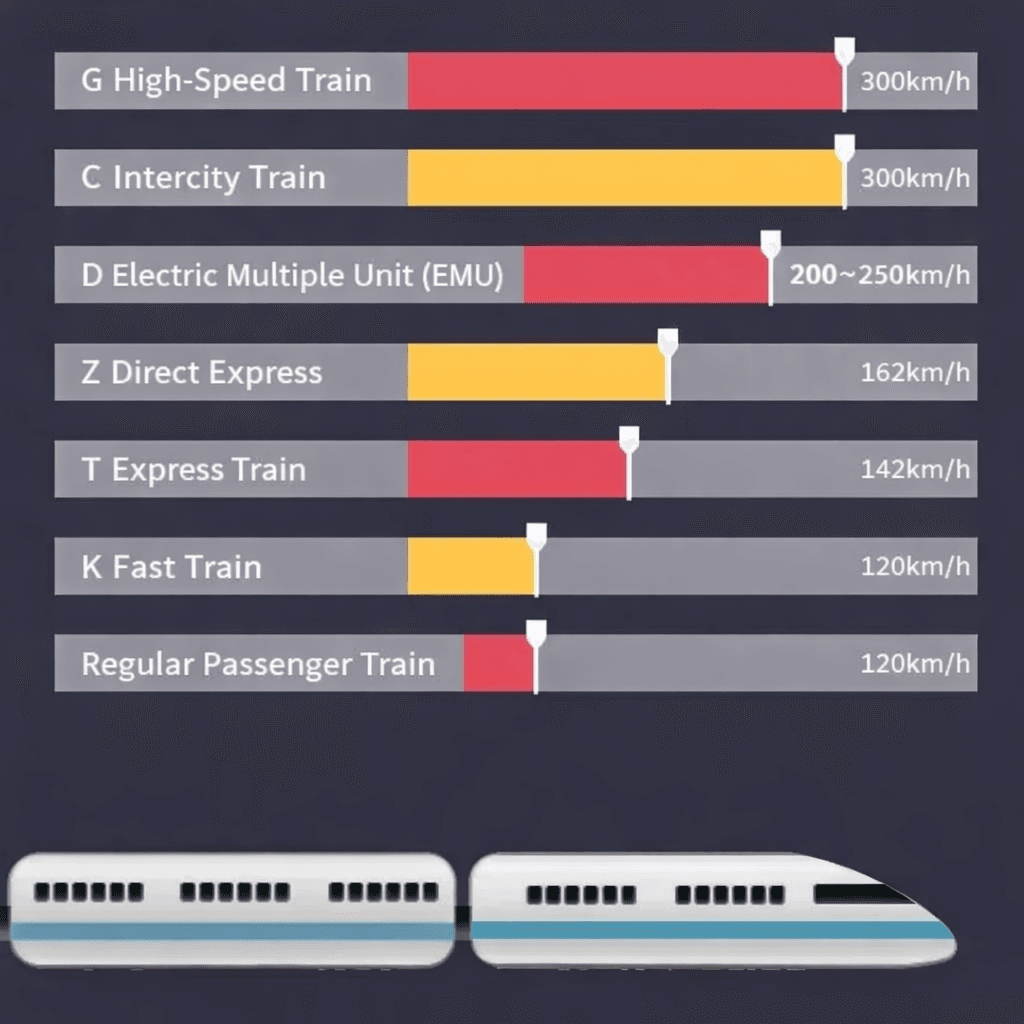
Train Type | Operating Speed | Notes |
|---|---|---|
G train | 250–350 km/h | Fuxing (复兴号) series reaches 350 km/h |
D train | 200–250 km/h | Capped at 250 km/h |
C train (intercity) | Up to 200 km/h | Short-haul city pairs only |
The fastest G trains use the Fuxing CR400 series, running at 350 km/h on the Beijing–Shanghai line. That covers roughly 1,300 km in about 4.5 hours.
D trains cap at 250 km/h. On the same Beijing–Shanghai corridor, an overnight D train takes around 12 hours — but you board at night and wake up at your destination. That has its own logic, which we’ll come back to.
4. Tracks: Why This Matters for Your Route
G trains run only on dedicated ballastless high-speed track. These purpose-built lines allow sustained speeds of 300–350 km/h with minimal vibration.
D trains are more flexible. They operate on both high-speed track and upgraded conventional track. This is why D trains often serve intermediate or inland cities that G trains bypass. If your destination is a smaller city in Fujian, Hunan, or a provincial town without dedicated HSR — check for D-train options first. They may be your only or most direct choice.
5. Seat Classes: What’s Available on Each
Seat Class | G Train | D Train |
|---|---|---|
Second Class (二等座) | ✓ | ✓ |
First Class (一等座) | ✓ | ✓ |
Business Class (商务座) | ✓ (most trains) | Some trains only |
Soft Sleeper (软卧) | ✗ | Overnight routes |
Premium Soft Sleeper (高级软卧) | ✗ | Select overnight routes |
Second class seats are arranged 3+2 across the aisle. Clean, air-conditioned, with a folding tray table and adjustable backrest. For journeys under 4–5 hours, most of our guests find second class perfectly comfortable.
First class is 2+2, wider, with a small pillow and footrest. Tickets run roughly 20–40% more than second class.
Business class is the premium option on G trains: wide fully reclining seats, 1+2 layout, personal service. Prices are roughly 3 times a second class ticket. Worth it for an overnight-equivalent rest on a 5-hour daytime journey — some guests use it as a moving office.
DIG DEEPER: China High-Speed Train Seat Classes: The Complete Guide to Choosing Your Perfect Seat
Sleeper options — this is where D trains have a clear advantage. Overnight D trains offer soft sleepers and premium soft sleepers on routes like Beijing–Shanghai, Beijing–Guangzhou, and Shanghai–Shenzhen. Read our full comparison of China train sleeper classes before booking.
G trains almost never run overnight, and very few G trains carry sleeper carriages.
6. Price: The Real Numbers
G trains cost more. Here’s a rough baseline for Beijing–Shanghai, based on standard fares before dynamic adjustments:
Class | G Train | D Train (overnight) |
|---|---|---|
Second Class Seat | ~¥553 | ~¥293 |
First Class Seat | ~¥933 | — |
Business Class | ~¥1,748 | — |
Soft Sleeper | — | ~¥440–601 |
These are approximate base fares and can shift considerably. With dynamic pricing now active on major G-train routes, the actual price you see may be higher or lower. Always check Trip.com or the 12306 app for live fares before planning.
The smarter comparison for overnight travel isn’t just ticket price — it’s G ticket + one hotel night versus D sleeper ticket. For long routes, the D sleeper often works out significantly cheaper once you factor in accommodation savings.
A note on dynamic pricing: Since 2024, China Railway has rolled out demand-based variable pricing across 130 high-speed lines, according to Nikkei Asia. This means G-train fares on busy corridors can now rise above or fall below the base price depending on day, time, and demand. On some off-peak services, discounts have reached as large as 60%. If you’re comparing options on Trip.com and the D train looks surprisingly competitive, that’s why.
7. What the Overnight D Train Actually Buys You
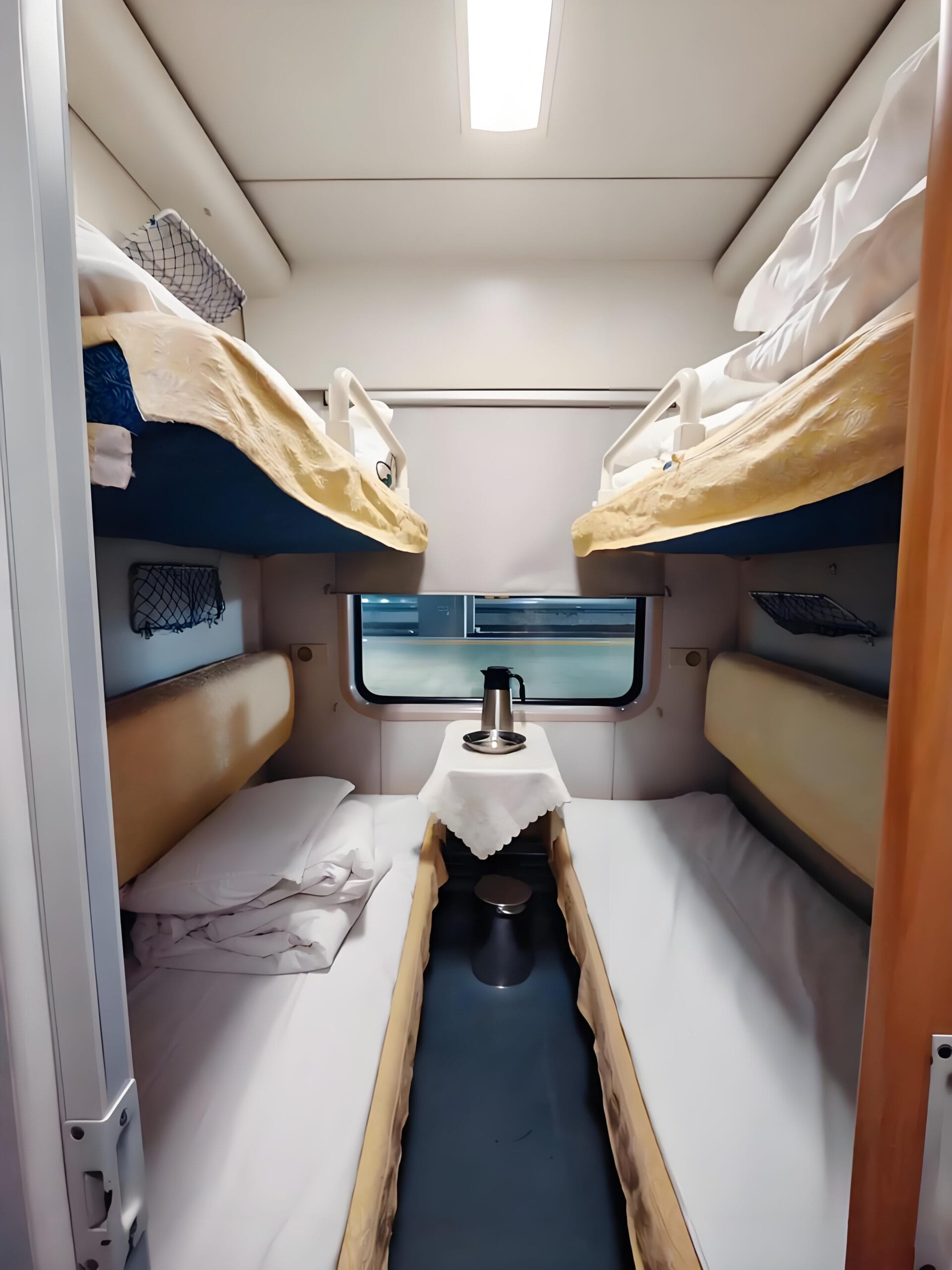
The overnight D sleeper argument gets made a lot online. We want to give you the honest version, not the marketing version.
When it works well, it works very well. We’ve had guests board the overnight Beijing–Shanghai D train at 10pm, fall asleep in a soft sleeper bunk, and step off in Shanghai the next morning ready to start the day — with one fewer hotel night paid. For budget-conscious travelers covering long distances, that’s a meaningful saving. The soft sleeper compartment has four berths with a lockable door, individual reading lights, and a power socket per berth. It’s quieter than most people expect.
When it’s less ideal: if you’re a light sleeper, or if your group includes young children who won’t settle in an unfamiliar bunk, the math shifts. A business class G train seat at 7am often beats a broken night in a sleeper.
Our general rule after years of booking both: the overnight D sleeper earns its place on routes over 8 hours where the timing works out — board late, arrive morning. On shorter routes, or where the D train departs mid-afternoon and arrives at 2am, it’s usually not worth it.
8. The One Mistake Most Travelers Make
The most common one we see: booking a G train to a city, then discovering the G-train station is 35 km from the old town, the hotel, and everything worth seeing. The older city-center station — the one that’s actually convenient — only gets D trains or conventional services. They end up spending an hour and a significant taxi fare just getting from the station to their hotel.
Always check which station your train uses, not just which letter prefix. This matters especially in smaller cities where the G-station was built for future network expansion rather than current passenger convenience.
G trains are faster point to point, but door to door is what counts.
G trains = daytime speed between major hubs. Ideal when you want to cover distance fast, arrive in the afternoon, and have the evening free.
D trains = route flexibility and overnight value. They serve more stations, reach cities G trains skip, and the sleeper option turns travel time into sleep time.
9. Onboard Experience: What Foreign Travelers Actually Say

We can describe the seats, but frequent foreign riders often say it better than we can.
Nerivania Nunes Godeiro, a Brazilian researcher who shuttles between Shanghai and Beijing, prefers the train to flying for one simple reason: it is comfortable and runs on time (via Hunan Daily / Xinhu’nan, June 2025).
Belgian MEP Martin Sonneborn highlighted how his Beijing–Hong Kong train stayed cool in summer heat, was kept spotless with regular mopping, and even let him order hot Chinese meals to his seat via an app (Reported by Guancha.cn, June 16, 2025).
In practice, both G and D trains are air-conditioned and quiet even at 300 km/h, with free boiled hot water at the end of each carriage, Western and squat toilets, and Wi‑Fi of varying quality — so it is best to download what you need before departure.
One practical note before you board: station security works like a small airport. Have your passport easily accessible — you’ll need it at security and again when boarding. For help with the booking process as a foreigner, see our guide on buying train tickets in China online and our comprehensive booking guide.
10. Which Should You Choose?
Use this as a quick reference. The real answer always depends on your specific route — but these rules hold in most cases.
Take the G train when:
- Time matters more than budget
- You’re traveling between major cities — Beijing, Shanghai, Xi’an, Chengdu, Guangzhou
- You want daytime travel with a view
- You prefer the fastest possible journey
Take the D train when:
- The D train is the only direct option to your destination
- You want to save money on an overnight route and skip a hotel night
- The D train’s station is more central than the G train’s station in your destination city
- Your route is over 8 hours and the departure time lines up with sleeping hours
Routes where overnight D trains make particular sense:
- Beijing to Shanghai (overnight soft sleeper saves one hotel night)
- Shanghai to Shenzhen / Guangzhou
- Some Yunnan, Guizhou, and Fujian destinations not yet on direct HSR
For help choosing the right train for your specific itinerary, or for booking assistance as a foreign traveler, contact our team or explore our customized China tour services.
11. FAQ – G Train vs D Train
Are G trains and D trains both considered high-speed trains?
Both are. D trains run at 200–250 km/h — faster than Amtrak’s Acela and comparable to France’s TGV. The G train is simply the faster of the two, and runs on a dedicated track that lets it sustain that speed without slowing for curves or mixed traffic.
Can I book both through the same platform?
Yes. Both G and D trains appear on Trip.com and the 12306 app. For foreign travelers, Trip.com is usually easier — it accepts international cards and has English-language customer service. See also: our guide to must-have apps for your China trip.
Do I need to collect a physical ticket at the station?
On most major routes, you can board directly with your passport and a QR code on your phone. Some older stations or rural routes may still require physical ticket collection at the counter. Arrive at least 30–45 minutes early either way — stations are large.
Is the D train always slower than the G train on the same route?
Generally yes, because D trains make more intermediate stops. On a few routes where both run on the same high-speed track with similar stop patterns, the difference may be only 20–30 minutes.
What is a C train?
C trains (城际动车, chéngjì dòngchē) are short-haul intercity services running at up to 200 km/h between nearby cities. Think of them like an express metro for adjacent hubs — Guangzhou–Shenzhen, Chengdu–Chongqing, Beijing–Tianjin. Frequent departures, no sleepers, no dining car.
Are overnight sleeper trains comfortable for foreign visitors?
We’ve put many groups on overnight sleepers. The most common reaction the next morning: surprise at how quiet it was. Soft sleeper compartments have four berths with a lockable door, individual reading lights, and a power socket per berth. Bedding is provided. Book early — lower berths sell out first.
Which app should I use to book train tickets?
Trip.com works well for most foreign travelers. The official 12306 app requires a Chinese phone number for full functionality but has improved its foreign-user interface. For complex multi-city itineraries, our team can handle the booking for you.
We’ve been matching foreign travelers to the right train since 2006. If you’re not sure whether to book a G train, D train, or overnight sleeper for your itinerary — tell us your route and travel dates. We’ll give you a straight answer, not a sales pitch.
Get in touch with our team → | Explore customized China tours →