China Hotel Rating System Explained: Stars, Diamonds & Dots
China’s hotel rating system isn’t one system — it’s three: stars, diamonds, and dots. Only stars are official, issued by the Chinese government. Diamonds and dots are both Trip.com‘s own creations, unrecognized by any regulator — but Trip.com (Ctrip) holds 56% of China’s OTA market by transaction volume, so its in-house ratings are impossible to avoid. We get asked about this constantly by first-time visitors staring at a search page, usually right after they’ve compared two “5-something” listings and can’t figure out why one costs three times the other.
Table of Contents
1. What Is China Hotel Rating System?
Here’s the quick version before we get into each one individually:
| Stars | Official government rating, 1 to 5 (plus Platinum 5-star), assigned by the Ministry of Culture and Tourism |
| Diamonds | Trip.com’s rating for standard hotels without a government star, assigned algorithmically by Trip.com / Ctrip |
| Dots | Trip.com’s rating for homestays, guesthouses, and apartments, based on finish quality and guest reviews |
| Half-point scores | A property scoring between two whole tiers (e.g. 3.5) |
We’ve booked several thousand hotel and guesthouse nights for foreign clients since 2006. Here’s what each hotel rating actually measures, and which one to trust for which kind of stay.
2. What Is the Star Rating?
The Official Government Classification
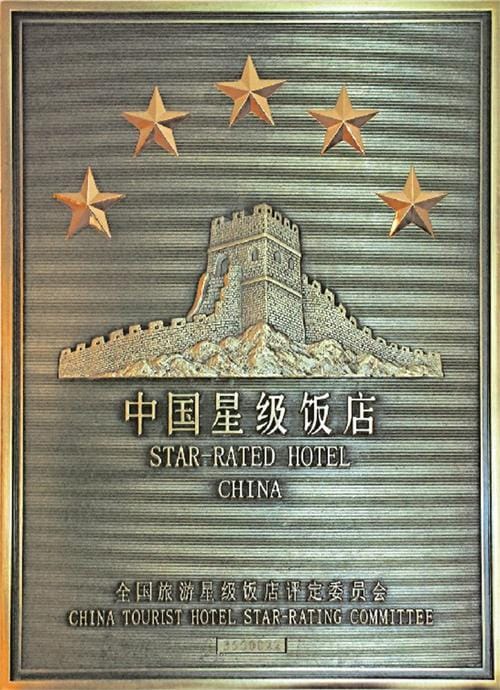
Stars are China’s official hotel classification — the only part of China’s hotel rating system that’s government-issued — and a rare one: China’s Ministry of Culture and Tourism counted 7,716 star-rated hotels nationwide at the end of 2024, against 348,717 total hotel-type properties reported by the China Hotel Association. Do the math and barely 2 in every 100 hotels in China actually carry one.
Share of Chinese Hotels With an Official Government Star
Sources: China Ministry of Culture and Tourism, China Hotel Association — end of 2024
How Stars Are Evaluated
China’s star system is a government classification under the national standard “Classification and Rating of Tourist Hotels,” administered by the Ministry of Culture and Tourism. The actual evaluation is carried out by the National Tourism Star-rated Hotel Assessment Committee — the body that sends inspectors, scores properties, and issues the star plaque and certificate. An inspector visits the property in person and scores it against a published checklist: room size, facilities, service protocols. The process can take months, and it only happens if a hotel formally applies — hotels need at least a year in business before they’re eligible.
The star system also draws a hard line partway up the scale. Under the current national standard, 1 to 3 stars are classified as “limited-service” hotels — the room itself is the core product, and requirements center on cleanliness, safety, and convenience. 4 and 5 stars are “full-service” hotels, expected to deliver complete facilities and comprehensive service around that core room product.
Star Level | Service Category | Minimum Facilities Score | Minimum Service Score | What to Expect |
|---|---|---|---|---|
1 Star | Limited-service | Not scored | Not scored | Clean, basic rooms and safety essentials; no expectation of extra facilities |
2 Stars | Limited-service | Not scored | Not scored | A step up in room comfort, still no real public facilities |
3 Stars | Limited-service | 220 / 600 | 70% | Reliable rooms and basic amenities; some public space, but not built around it |
4 Stars | Full-service | 320 / 600 | 80% | Full facilities — restaurants, gym, business services — delivered to a solid standard |
5 Stars | Full-service | 420 / 600 | 85% | Comprehensive facilities and polished service across the board; rooms held to stricter size and layout rules |
Platinum 5-Star | Full-service | Above 5-star baseline | Above 5-star baseline | An unofficial extra tier for a handful of hotels judged to exceed standard 5-star requirements |
Those facilities and service scores come from the standard’s own scoring rubric — a 600-point hardware checklist and a separate service-quality scorecard, each with its own minimum bar per star level. 1 and 2-star properties aren’t held to either minimum, since the standard doesn’t expect them to offer much beyond a clean room. At the 5-star level, the difference shows up in concrete build requirements, not just service polish — a majority of rooms have to clear a minimum floor area, and bathrooms are required to separate the wet and dry zones. That’s a genuinely different construction standard from what a 3-star property has to meet, not just a marketing label.
The star plaque itself is valid for 5 years under the current 2023 standard (up from 3 years under the previous version), and hotels are supposed to go through periodic review during that window. In practice, this still means a hotel’s star rating can lag years behind its actual condition — a lot can happen to a property’s hardware and service standards in a 5-year gap between reviews.
3. What Is the Diamond Rating?
What the Diamond Levels Mean
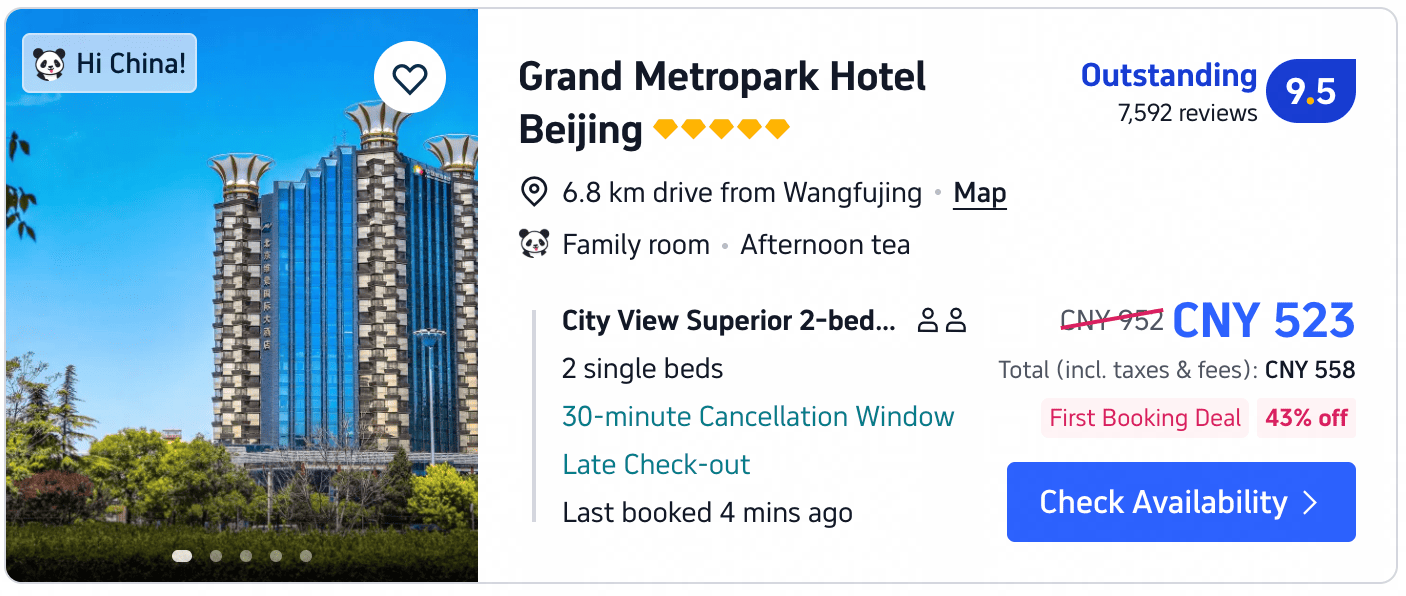
Trip.com‘s Diamond rating is a 1-to-5 China hotel rating score the platform assigns to standard hotels that lack an official government star rating. Most hotels in China never go through the process to earn a government star, so Trip.com built this scale to fill that gap.
Diamond Tier | Label | What to Expect |
|---|---|---|
1 Diamond | Budget | Basic backpacker-level lodging — most rooms lack a private bathroom or phone, minimal or no reception staff |
2 Diamonds | Economy | Clean and equipped with the essentials, staffed reception, some business services but no meeting rooms or gym |
3 Diamonds | Comfort | Fuller amenities and more thoughtful room finishes, standardized service |
4 Diamonds | High-end | Well-designed, upscale rooms, often full business and conference facilities |
5 Diamonds | Luxury | High-end finishes throughout, plus value-added services beyond the basics |
Gold / Platinum Diamond | Top-tier | Reserved for properties with exceptional guest scores sustained over time |
Trip.com states plainly that the diamond tier isn’t a direct measure of facilities — a hotel with excellent hardware can still sit at a lower tier if its historical pricing and guest sentiment don’t support a higher one. We’ve seen this trip up clients who assume more diamonds always means a nicer room. It doesn’t. It means the platform’s pricing and review data supports a higher tier — which usually, but not always, tracks with better facilities.
A 1-Diamond hotel is worth booking for solo budget travel, but confirm the property holds a foreigner-accepting license first — many 1-Diamond hotels in smaller cities don’t, and that’s not something you want to discover at the front desk. A 3-Diamond hotel is what most of our clients actually book for a standard city stay — private bathroom, air conditioning, a workable front desk, usually breakfast included.
You’ll also see half-diamond scores like 3.5 or 4.5. These mark a property that landed between two tiers. In our experience they’re often the better value pick — the hotel is pushing toward the tier above without yet charging that tier’s price.
How the Diamond Rating Is Calculated
Trip.com pulls the diamond score from three inputs: the hotel’s historical transaction prices on the platform, how many facilities and services it offers, and its accumulated guest review score. The app discloses this directly under the rating’s info icon. It’s also why diamond scores move over time. A hotel that raises prices, adds amenities, or picks up a run of bad reviews can shift a full tier within months.
This is why two nearly identical hotels — same brand, same room type, a few blocks apart — can sit a full diamond apart from each other, purely because one runs cheaper promo rates that drag its price average down. If you’re comparing two similar-looking properties and the diamond scores don’t match, check current prices before assuming the lower one is worse.
China’s Diamond Rating vs. Star Rating
The core difference comes down to how each one is produced: human inspection against a fixed checklist, repeated only once every 5 years, versus an automated score that updates continuously. That single fact explains almost every mismatch you’ll see between a hotel’s star rating and its diamond score — a hotel can hold a 4-star rating that’s still years from its next review while its diamond score today sits lower, simply because the diamond score keeps moving with live booking data and the star doesn’t.
Diamond Rating | Star Rating | |
|---|---|---|
Assigned by | Trip.com / Ctrip (platform) | Ministry of Culture and Tourism (government) |
Basis | Price history + facilities + guest reviews | On-site inspection checklist |
Update frequency | Continuous, algorithmic | Every 5 years, plus periodic review |
Coverage | Standard hotels without an official star | Only hotels that applied and passed |
Best for | Predicting current guest experience | Confirming formal facility standards |
4. What Is the Dot Rating?
What the Dot Levels Mean
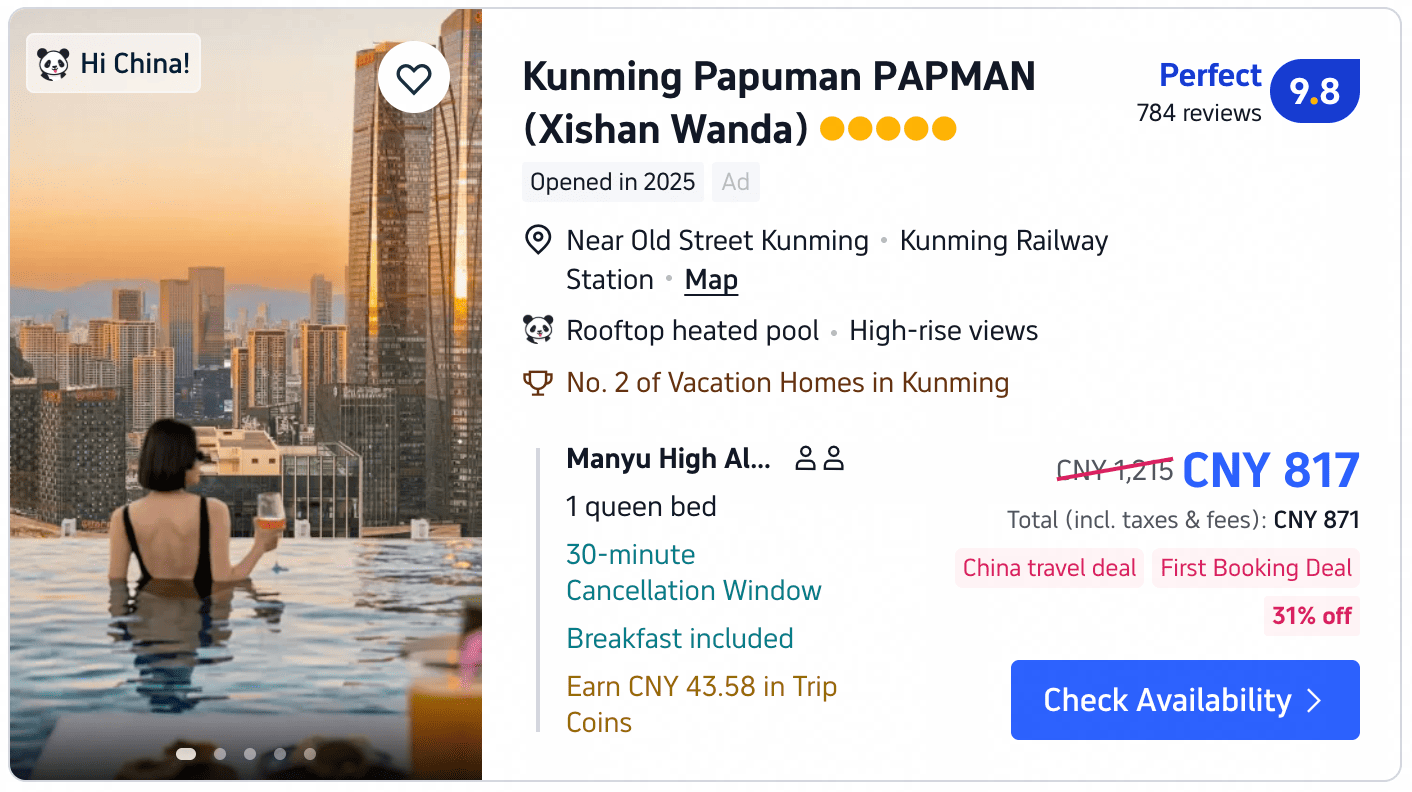
Trip.com’s dot rating is a separate 1-to-5 China hotel rating score for non-standard accommodation — homestays, guesthouses, small inns, apartments, villas, and specialty stays like campsites that don’t fit the traditional hotel mold to begin with. This isn’t a niche category: the China Hotel Association counted 221,387 non-hotel lodging facilities nationwide at the end of 2024 — close to four in every ten places to stay in the country. We book a fair number of these for clients who want something with more character than a chain hotel room, and the dot rating is the only real signal on the platform for judging them.
Dot Tier | Label | What to Expect |
|---|---|---|
1 Dot | Budget | Simple, plain finishes — basic lodging only, may have no staffed reception |
2 Dots | Economy | Clean and tidy, basic supplies and amenities covered, may still have no staffed reception |
3 Dots | Comfort | Warm, comfortable environment with basic service, well-equipped and attractive rooms, some architectural character that fits its surroundings |
4 Dots | High-end | Refined setting with personalized service, well-appointed rooms of good quality, some properties offer leisure activities or local cultural experiences |
5 Dots | Luxury | Luxurious setting with high-level service, varied leisure facilities, fully equipped rooms of top quality |
More dots generally means better fit-out, fuller amenities, or stronger guest sentiment. These properties are smaller and more individual than chain hotels, so we treat the dot rating as a looser signal than diamonds or stars. Read it alongside recent reviews rather than on its own — guest sentiment carries more weight here than any hardware checklist.
Dots vs. Diamonds
Trip.com’s own merchant documentation confirms the split directly: standard hotels (hotels, serviced apartments, hotel villas) get the diamond icon, while non-standard stays (homestays, apartments, villas, inns, guesthouses, specialty lodging) get the dot icon instead. A 5-dot guesthouse and a 5-diamond hotel promise very different things, even though both show five icons.
Diamonds and Dots Are Parallel Scales, Not One System
Source: Trip.com / Ctrip merchant documentation (EBooking) — official tier descriptions
5. Which China Hotel Rating Should You Trust?
Match the rating to the property type — that’s the single rule that resolves most confusion.
Property Type | Trust This Rating | Why |
|---|---|---|
Standard hotel | Star, if one exists; diamond as fallback | Stars are the most rigorous signal; diamonds cover the hotels that skipped the government process |
Guesthouse, apartment, or small inn | Dot rating + recent reviews | Stars and diamonds weren’t built for this property type — a missing icon here isn’t a red flag |
Where a hotel’s star and diamond ratings disagree sharply — five stars but only a 3-Diamond score, say — read that gap as a warning sign. It usually means guest reviews have slipped since the star inspection took place, and current pricing on the platform reflects it. The pattern is easy to spot once you know what you’re looking at: a government-run hotel in a secondary city, stars earned a decade ago, nothing reinvested since.
This is worth checking for specifically. Even with a 5-year review cycle, the star rating can still lag well behind a property’s actual condition — and it never tells you how long ago the hardware or the whole operating concept was last updated. Before booking a starred hotel, look up when the property opened and when it was last renovated — both are usually listed on the detail page. A 5-star hotel that opened in the 2000s and hasn’t touched its rooms since will often lose to a newer 4-Diamond or boutique dot-rated property on everything that matters day to day.
The review score itself matters more than the tier label. A 4-Diamond hotel with a 4.8 review score is a safer bet than a 4-Diamond hotel sitting at 4.1, even though the diamond label is identical. The tier is a band, not a precise ranking within that band.
6. How Do You Check a Listing’s Rating Yourself?
We ran into this ourselves while digging into a Kunming listing showing dots on what looked like a straightforward hotel search. Turned out the property was filed as a serviced apartment, not a hotel, and the search card just didn’t make that obvious.
If a listing’s icon doesn’t match what you expect, don’t trust the search-results card — go straight to the property’s own detail page instead:
- Open the listing and scroll to the “About This Property” section.
- Look for the classification stated in plain text — it will say whether the property is a licensed hotel or a non-standard stay being scored on the dot scale.
- Cross-check that against the icon shown on the search card.
This takes under a minute and settles the question for good, instead of guessing from the icon shape alone.
7. Does the Diamond Rating Apply Outside Mainland China?
Yes, but coverage varies. Trip.com applies its diamond system to hotels across mainland China, Hong Kong, and Macau, and extends a version of the same logic to overseas listings.
Hong Kong doesn’t actually run the mainland’s star system at all — there’s no official government star rating there. The Hong Kong Tourism Board uses its own separate classification (tariff bands like “High Tariff A” and “High Tariff B” rather than stars), so honestly, the diamond score on Trip.com is often the closest thing to a straightforward quality signal you’ll get for a Hong Kong property. International properties further afield are less likely to carry a diamond label at all if Trip.com has thin booking history for that hotel.
When we’re booking clients into Hong Kong or an overseas leg of a trip and a hotel shows no diamond score, we don’t read anything into it — it usually just means Trip.com hasn’t logged enough bookings for that property yet, not that something’s off with the hotel.
→ See our Trip.com vs Ctrip guide if you’re deciding which app to book through — the hotel rating systems are consistent across both, but pricing and foreigner-acceptance filtering are not.
8. Should You Book a Guesthouse Instead of a Hotel?
If you’re leaning toward a homestay, courtyard guesthouse, or small inn, ignore stars and diamonds entirely. Go by the dot rating plus recent reviews instead — that’s the scale actually built for this category.
A 3-dot or 4-dot guesthouse already promises a warm, well-equipped setting with some local character. That’s a different kind of stay than a mid-tier chain hotel room, not a lesser one. The dot scale was built to judge that experience on its own terms, not against a hotel checklist it was never trying to meet.
→ Our Hotels vs. Guesthouses in China guide covers how to choose between the two.
FAQ: China Hotel Rating System
Is a 5-diamond hotel the same as a 5-star hotel in China?
Not necessarily. A 5-Diamond Trip.com China hotel rating and a government 5-star rating come from different bodies using different methods, so a hotel can hold one without the other. Most genuine luxury properties eventually earn both. But a strong 5-Diamond score doesn’t guarantee the hotel has applied for or received the government 5-star classification.
Why does a hotel have diamonds but no stars?
Star ratings require a formal government inspection that many hotels, especially newer boutique properties, never apply for. Trip.com’s diamond score skips that step — it’s generated from booking data and guest reviews the platform already holds. A hotel can carry a solid diamond tier while remaining formally unstarred.
What does “half diamond” mean, like 3.5 diamonds?
The hotel’s calculated rating fell between two whole tiers rather than cleanly into one. It isn’t a separate category. It’s Trip.com’s algorithm showing a more precise position on the same 1-to-5 scale.
Are dots the same as diamonds on Trip.com?
No. They’re two separate hotel rating scales for two different kinds of accommodation. Diamonds rate standard hotels that lack an official government star, while dots rate homestays, guesthouses, apartments, and other non-standard stays that were never eligible for a hotel star to begin with. Both use a 1-to-5 scale with similar tier language, which is exactly why they get confused.
Can a hotel’s diamond rating change over time?
Yes. The diamond score comes from ongoing price history and guest reviews, so it updates as new bookings and reviews come in — a hotel can move up or down a tier within months. A government star rating changes far less often, since the hotel has to formally reapply for reassessment.
Where does Trip.com explain how its diamond rating works?
Trip.com discloses the calculation directly in the app, under the info icon next to a hotel’s diamond score. It doesn’t publish an exact formula, so the scale should be read as a relative ranking rather than a precise, reproducible score.
Not sure which hotel tier fits your itinerary? Get in touch and we’ll match you to a property we’ve actually vetted, not just a rating on a screen.