Xidi and Hongcun Ancient Villages: The Complete Travel Guide from Local Experts
When we first walked through Hongcun’s mist-shrouded lanes at dawn in 2012, watching elderly residents gather around Moon Pond as their ancestors had for six centuries, we understood why these villages captivate travelers. After guiding thousands international visitors through southern Anhui’s ancient settlements, we’ve witnessed both the magic and the challenges of these UNESCO sites. This guide shares what we’ve learned—the hidden corners, the timing strategies, and the honest truths other articles won’t tell you.
Table of Contents
Quick Facts Comparison
Feature | Xidi Village | Hongcun Village |
|---|---|---|
UNESCO Status | World Heritage Site (2000) | World Heritage Site (2000) |
Founding Date | 1049 CE (Northern Song Dynasty) | 1131 CE (Southern Song Dynasty) |
Age | 976 years | 894 years |
Preserved Buildings | 124 Ming-Qing residences | 138 Ming-Qing residences |
Unique Feature | Imperial archway, boat-shaped layout | Ox-shaped water system, Moon Pond |
Main Attraction | Interior carvings, ancestral halls | Water reflections, village planning |
Opening Hours | 7:30 AM – 5:30 PM (official) | 7:30 AM – 5:30 PM (official) |
Entrance Fee (2026) | CNY 104 (CNY 52 with promotion) | CNY 104 (CNY 52 with promotion) |
Ticket Validity | 3 days, multiple entries | 3 days, multiple entries |
Ideal Visit Duration | 2-3 hours | 3-4 hours |
Distance from Huangshan City | 54 km | 62 km |
Distance Apart | 18 km (20-30 minutes by bus) | 18 km (20-30 minutes by bus) |
Crowd Level (Peak Season) | Heavy | Very Heavy |
Commercialization | Moderate | High |
Photography Difficulty | Easy (fewer people) | Challenging (very crowded) |
Best for | Architecture lovers, quiet exploration | Photographers, iconic scenes |
Critical 2026 Update: Huangshan has introduced a 50% discount on all scenic area entrance fees, including Yellow Mountain and ancient villages, bringing ticket costs to CNY 52 per village. This promotion makes 2026 an exceptional year for budget-conscious travelers.
History and Cultural Significance: Beyond the Surface
The Huizhou Merchant Dynasty

During the Ming and Qing dynasties (1368-1911), southern Anhui—historically known as Huizhou—produced China’s most influential merchant class. These weren’t ordinary traders. Huizhou merchants dominated the salt trade, controlled tea distribution routes, and financed timber operations across multiple provinces. By the Qing Dynasty, they represented one-third of China’s commercial wealth.
What distinguishes them from other wealthy merchants? They returned home. Unlike merchants who settled in commercial centers, Huizhou traders invested their fortunes in their ancestral villages, creating architectural masterpieces that proclaimed their status while honoring their roots.
Xidi: Where Scholars Met Merchants

Founded in 1049 during the Northern Song Dynasty, Xidi originally served as a postal station. The village’s name literally means “western postal station.” What transformed this remote outpost into an architectural treasure trove?
The Hu family, who claimed descent from Tang Dynasty Emperor Li Ye, dominated Xidi for centuries. The village contributed about 130 government officials, some of whom were dignitaries in the imperial courts, during Ming and Qing Dynasties. This combination of commercial wealth and political influence created a unique situation: merchants who could afford the finest craftsmen and officials who understood court aesthetics.
The boat-shaped village layout wasn’t accidental. In Chinese feng shui, a boat symbolizes a vessel that carries wealth and prestige. The design positions the village to “navigate” toward prosperity, with the memorial archway serving as the anchor.
Hongcun: 600 Years of Hydraulic Engineering

Hongcun originated during Song Dynasty (960-1276), but its distinctive character emerged during the Yongle reign of the Ming Dynasty (1403-1424). The Wang family, the village’s founders, commissioned an unprecedented engineering project: a comprehensive water management system based on biomimetic design.
The system mimics an ox—the fundamental symbol of agricultural prosperity. Spring water enters the village at a single point (the ox’s head), circulates through 1,200 meters of channels (the intestines), collects in two major ponds (the stomach and belly), and exits at four points (the legs). This wasn’t decorative. The system provided:
- Constant fresh water for every household
- Fire suppression infrastructure
- Natural cooling in summer
- Waste management through water flow
- Fish farming for dietary supplement
After nearly 600 years, it still functions perfectly. No other ancient Chinese village achieved this level of hydraulic sophistication.
Why These Villages Deserve Your Time: An Honest Assessment
What Makes Them Genuinely Special
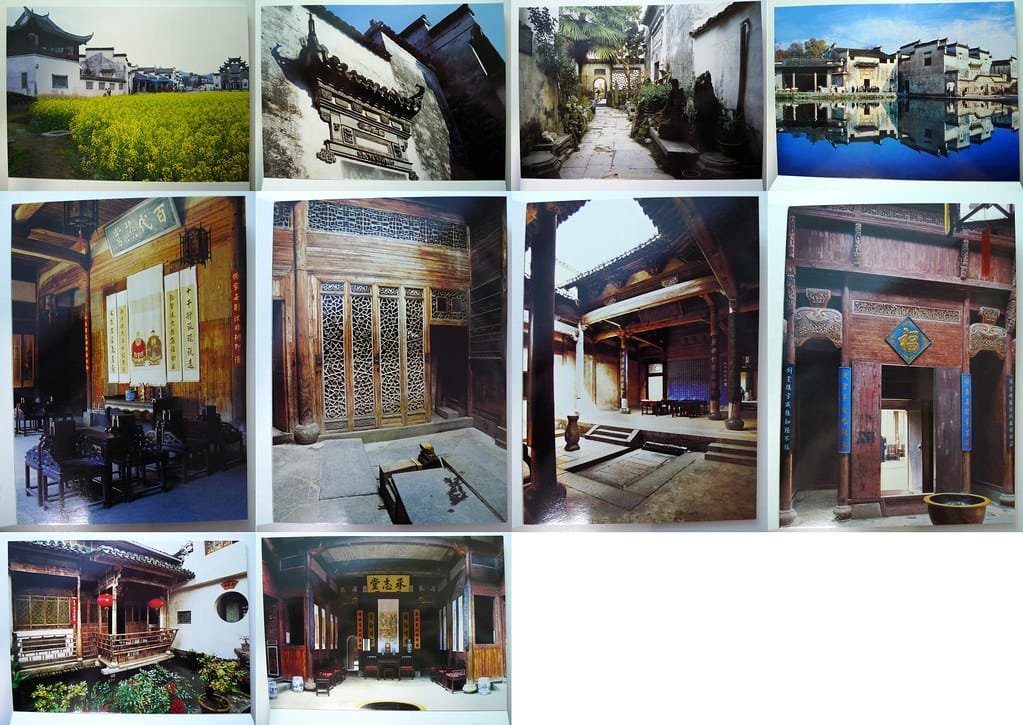
We’ve explored 30+ ancient villages across China. Here’s what genuinely distinguishes Xidi and Hongcun:
1. Architectural Concentration with Living Communities
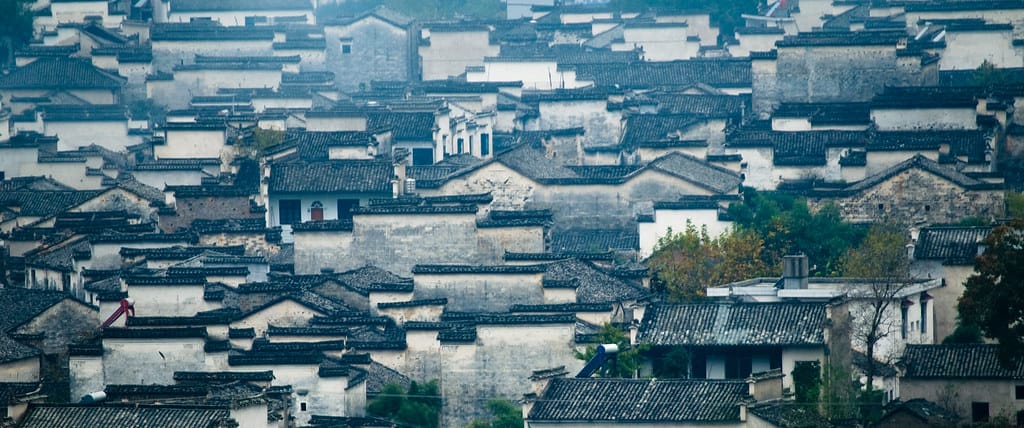
Most “ancient towns” in China face a dilemma: either they’re museums with few residents (like portions of Pingyao) or they’re living towns with heavy reconstruction (like Lijiang). Xidi and Hongcun maintain an unusual balance. Today there are 138 well-preserved Ming and Qing residences still standing in Hongcun village, with residents still inhabiting many structures.
2. The “Three Carvings” Preservation
Both villages showcase Huizhou’s signature “Three Carvings” (wood, brick, stone) at their finest. The flowers, branches and leaves of the carvings look exceptionally true to life. Many students from the Academy of Fine Arts come here to practice landscape painting. The carving quality isn’t matched in other accessible ancient villages.
3. Complete Cultural Ecosystem
Unlike villages that preserve only residences, Xidi and Hongcun maintain complete social infrastructure: ancestral halls, academies, memorial archways, water systems, street layouts. You’re seeing entire communities, not individual buildings.
The Hollywood Effect and Its Consequences
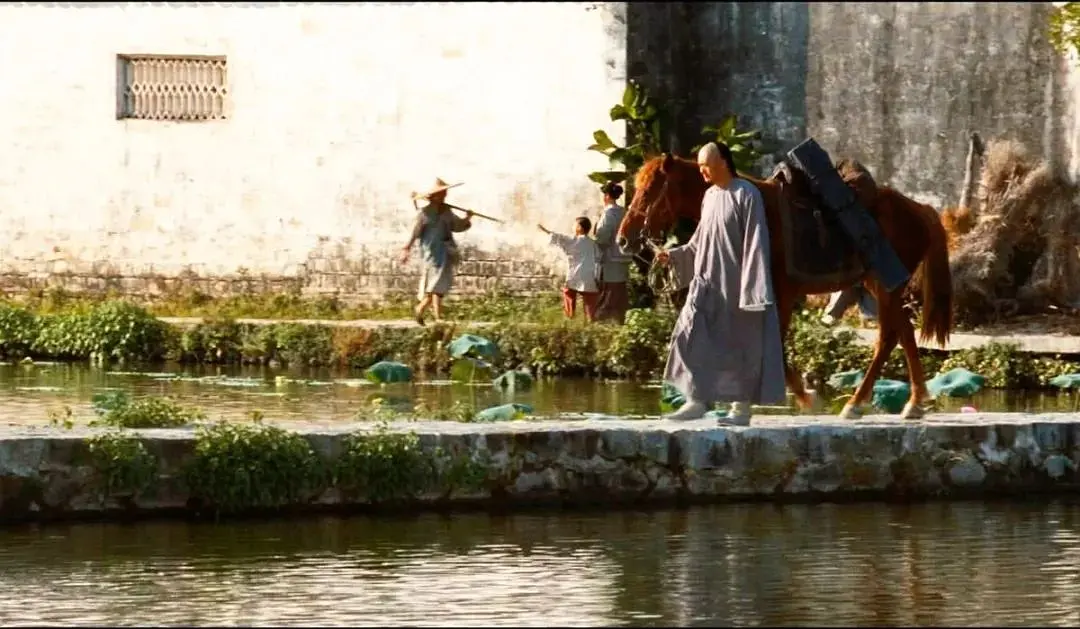
The famous Oscar-winner film Crouching Tiger, Hidden Dragon was filmed in Hongcun. This brought international recognition—and massive tourism pressure. The film’s opening sequence, with Zhang Ziyi running across rooftops near South Lake, made Hongcun instantly recognizable worldwide.
The result? Hongcun now receives over 1 million annual visitors. This tourism brought preservation funding but also commercialization that concerns many travelers.
The Uncomfortable Truth: Commercialization Levels
Hongcun’s Transformation (Based on Repeat Visitor Feedback)
A Singapore visitor who first came in 2010 returned in October 2024 and reported: “Hongcun has changed devastatingly since my 2010 visit. The commercialism has destroyed the village’s soul. Hundreds of thousands of red lanterns and yellow neon lights now obscure beautiful reflections in the pond. Massive advertising signs from restaurants and shops are everywhere. Loud-speaker tour guides lead tourist hordes through the streets. The aspiring artists who once lined the alleyways have moved to Xidi. Hongcun no longer feels like an ancient village.“
This isn’t isolated criticism. Multiple recent reviewers note the same concerns.
Xidi’s Better Preservation Controls
The same Singapore visitor observed: “Xidi has changed dramatically since my last visit 14 years ago. It’s much more vibrant now with many more visitors. The authorities wisely don’t allow loud-speaker guides, which preserves the village atmosphere. I genuinely hope they maintain these restrictions.“
This represents a crucial difference. Xidi’s management actively restricts certain commercialization practices that Hongcun permits. For travelers seeking authenticity, this matters significantly.
Highlights: What You Actually Need to See
Xidi Village Essential Sites
Hu Wenguang Memorial Archway
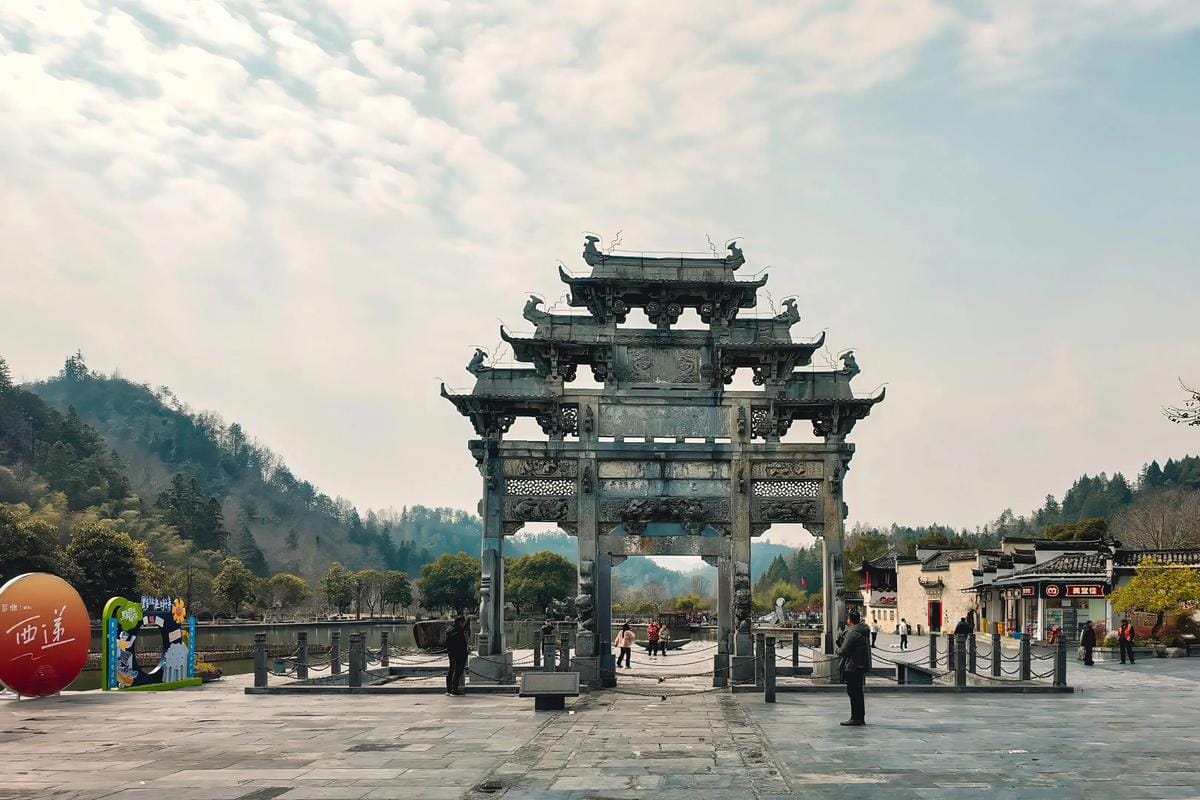
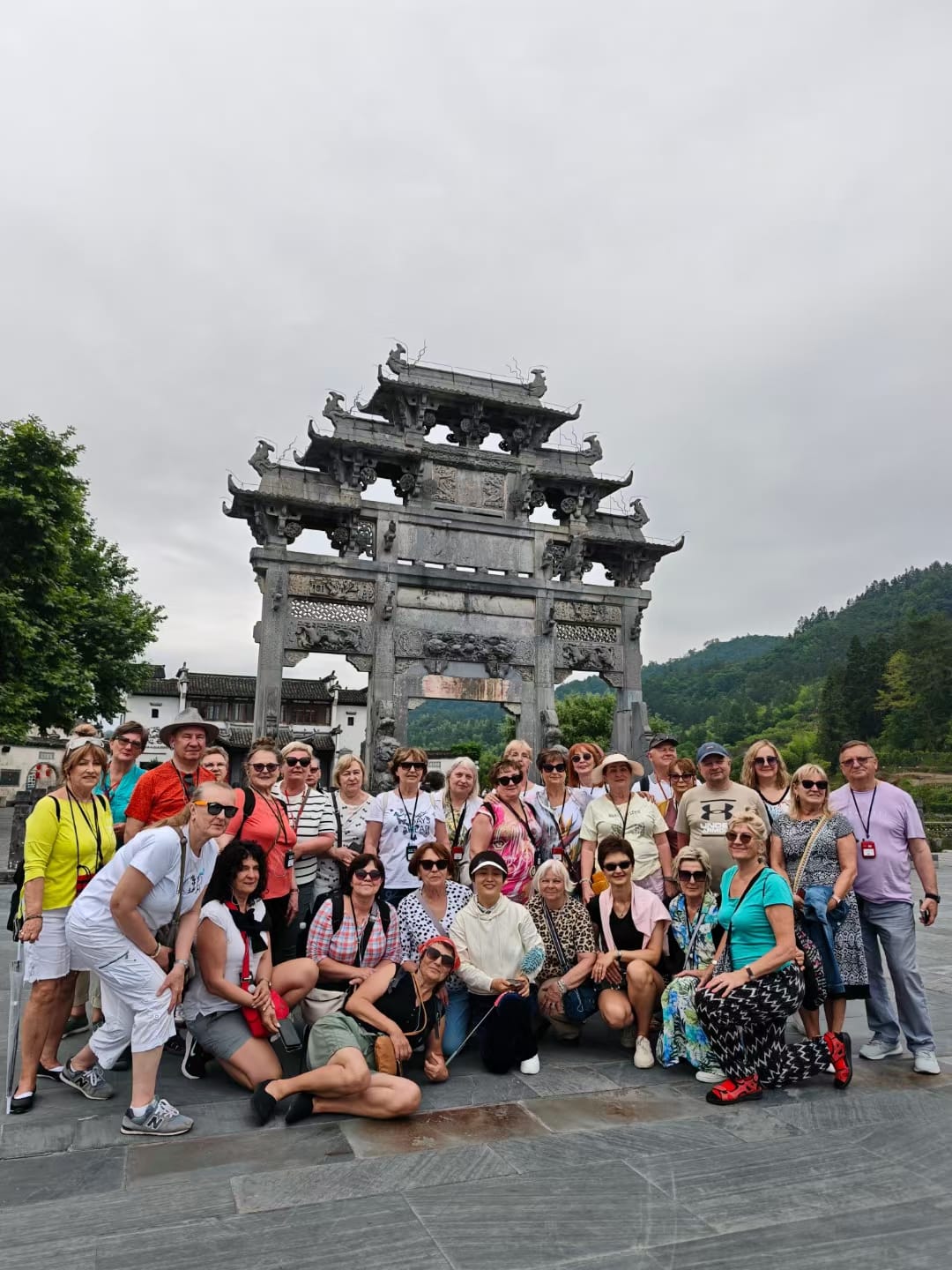
Built during the Ming dynasty (1368 – 1644) in memory of Hu Wenguang, a Ming officer. Situated in the southwest of the village, the archway is 12.3m (40.4 feet) high and 9.95m (10.9 yards) wide. Consisting of 4 columns and 5 roofs, the archway is decorated with stone carvings in the shapes of deer, cranes, tigers, lions and the Eight Immortals of Chinese legends.
What’s remarkable isn’t just the size—it’s the preservation quality. After 447 years exposed to weather, the stone carvings retain sharp details. This demonstrates the superiority of Yixian bluestone and the skill of Ming Dynasty stonemasons.
Da Fu Grand House (Dafu Di)
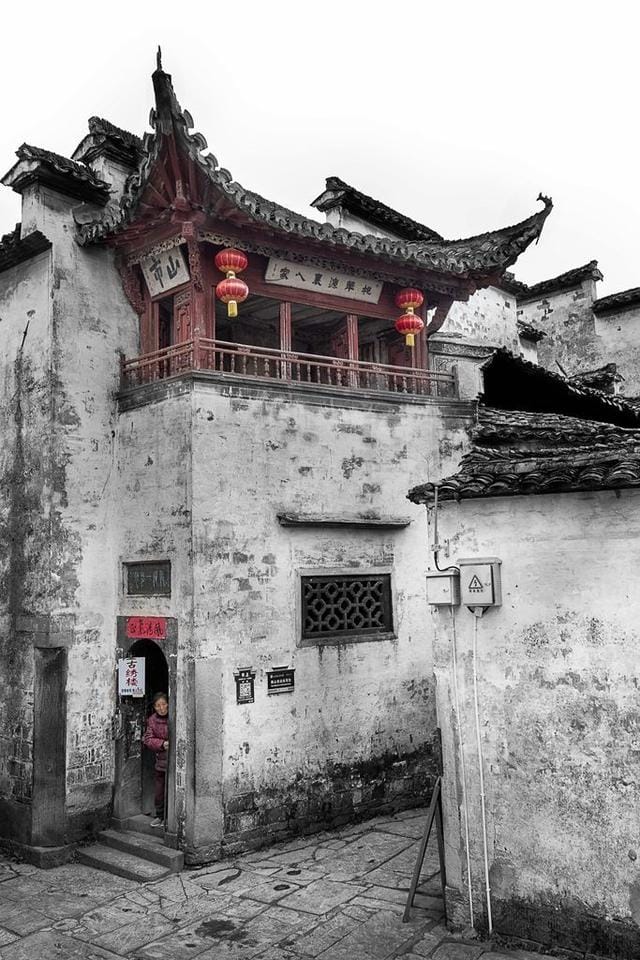
The Da Fu Grand House, built during the Qing dynasty (1644 – 1911), is located on the main street of Xidi Village. It’s an old residence of the Hu family. The doors of the main hall are carved with plum flower patterns and the windows with paper cuts in the Ming style. Beside the main hall stands a two-story boudoir facing the street. Nowadays, locals hold performances in the Da Fu Grand House, and the most wonderful one is Throwing Embroidered Ball from the boudoir.
The “Throwing Embroidered Ball” performance recreates a traditional courtship custom. In historical Huizhou, unmarried women rarely appeared in public. The embroidered ball ceremony was one of few socially acceptable ways for women to indicate romantic interest. The performance happens multiple times daily—check at entrance for schedule.
Interior Carving Superiority

One TripAdvisor reviewer noted: “Hongcun is well preserved externally, while if you want to have a look at the old Ming Qing dynasty housing interiors, this is better.“
This observation is accurate. Xidi’s merchant families accumulated greater wealth than Hongcun’s, enabling more elaborate interior decorations. If your interest lies in examining woodwork, ceiling paintings, and carved furnishings up close, prioritize Xidi.
Hongcun Village Essential Sites
Moon Pond (Yuezhao)

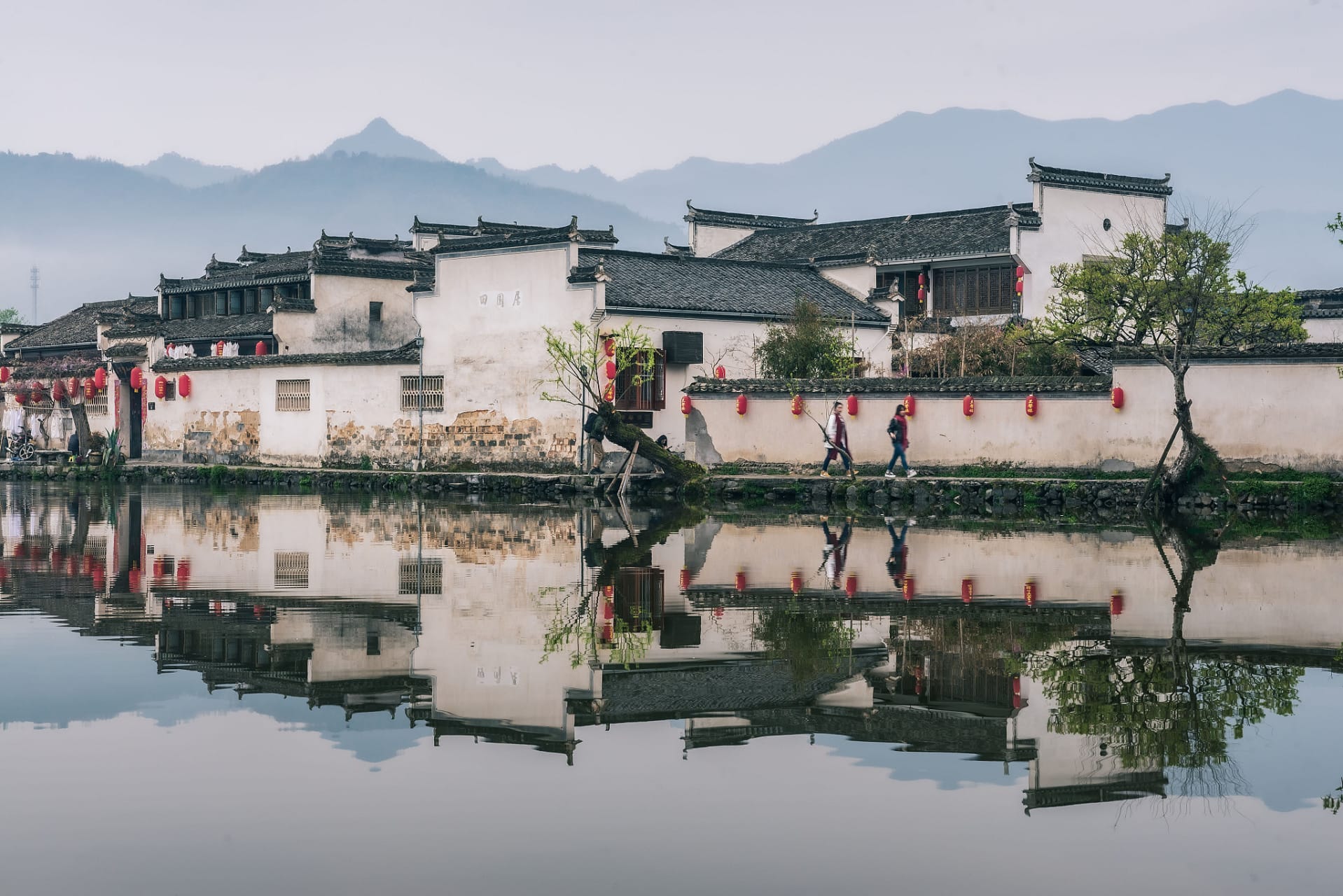
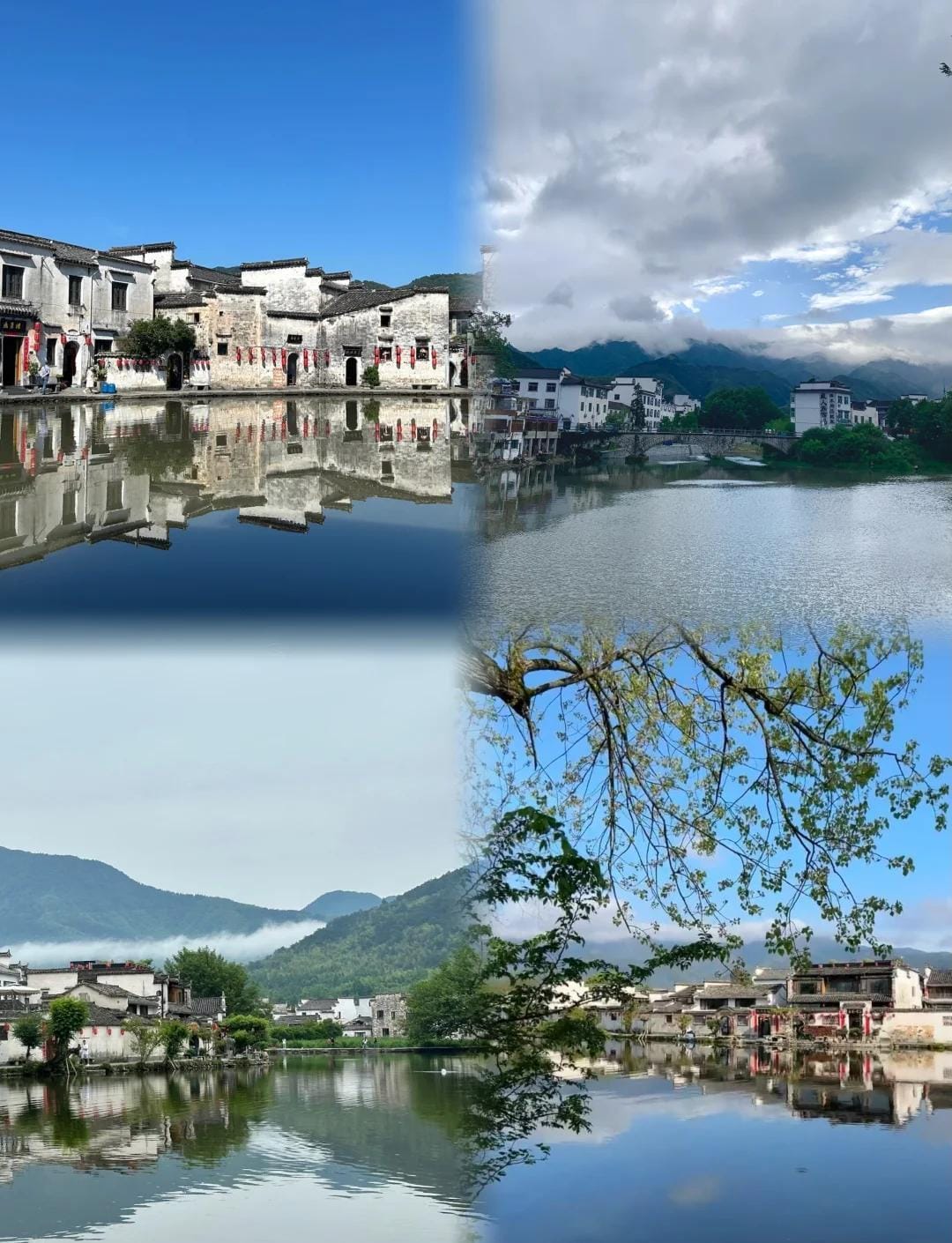
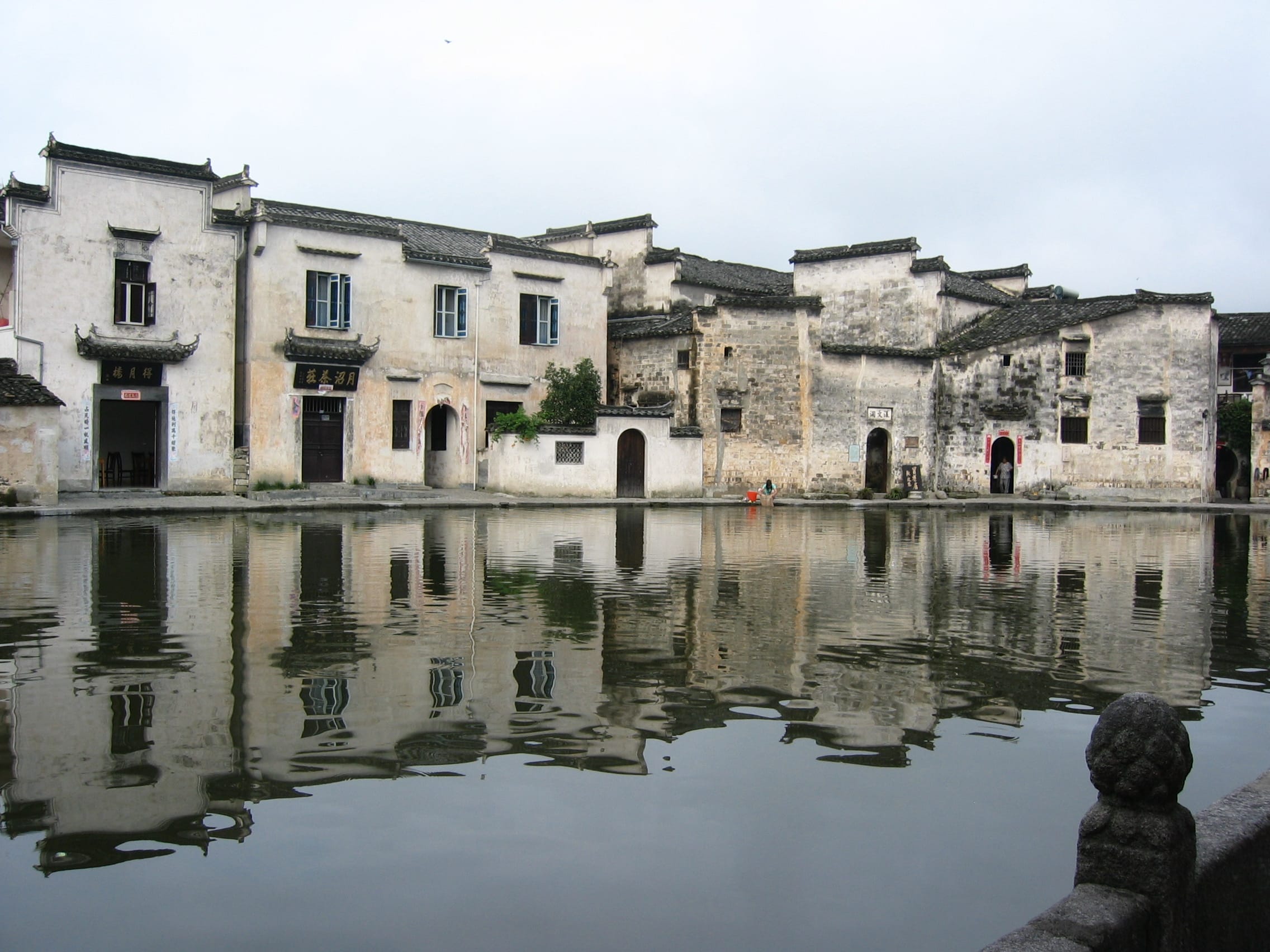
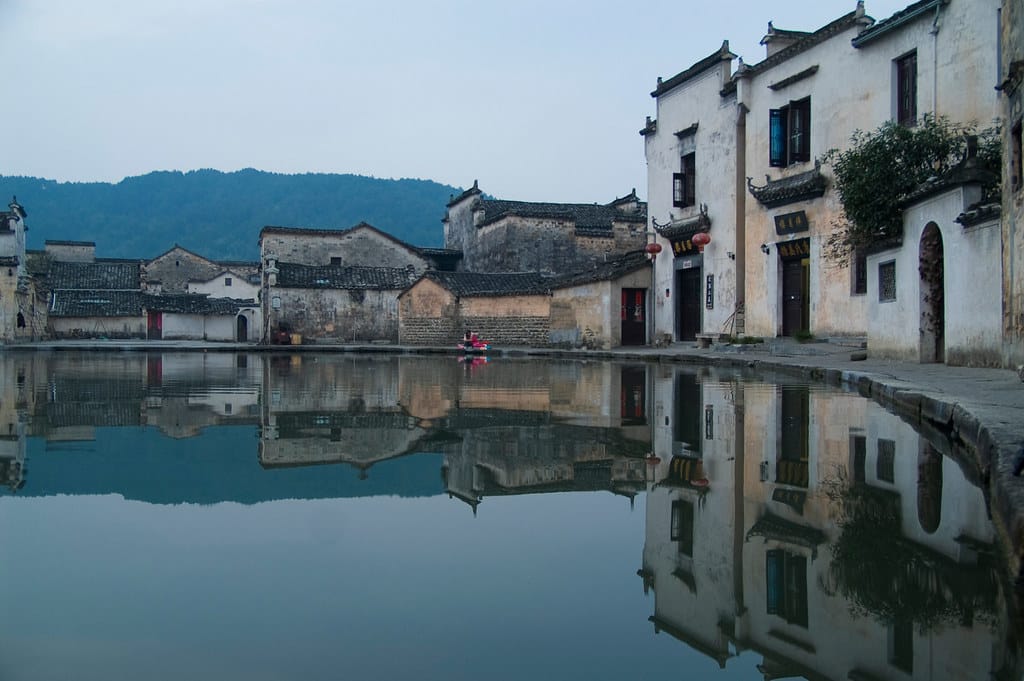
The crescent-shaped pond sits at Hongcun’s geographic and social center. Built 600 years ago, it serves multiple purposes: water storage, fire prevention, fish farming, laundry, and social gathering. The pond’s mirror-smooth surface creates perfect reflections of surrounding Hui-style houses.
Photographer’s Note: The best reflection shots occur before 7:00 AM on windless mornings. By 9:00 AM, tour groups crowd the pond, making clean compositions nearly impossible during peak season.
South Lake (Nanhu)

The South Lake at the entrance of the village and the Moon Pond at its center are two of the most photographed spots. This bow-shaped artificial lake was constructed in 1607. The arched Huihong Bridge crossing South Lake became famous through “Crouching Tiger, Hidden Dragon.”
The Ox-Shaped Water System
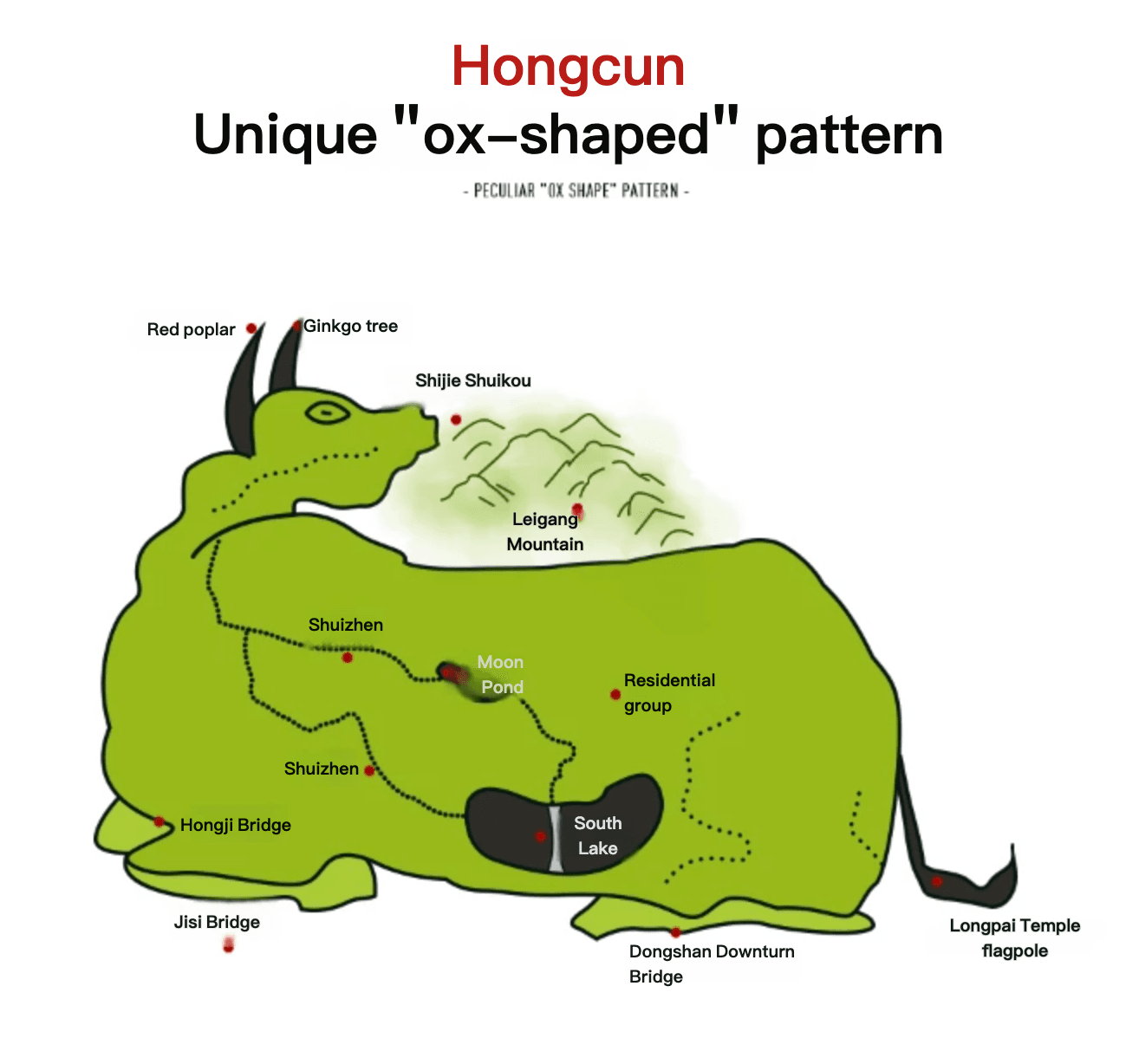
One interesting fact is that the whole village is arranged in the shape of an ox. This isn’t metaphorical—the village was deliberately planned with:
- Leigang Hill as the ox’s head
- Two ancient trees as horns
- Moon Pond as the stomach
- South Lake as the belly
- Water channels as intestines (1,200 meters)
- Four bridges as legs
This engineering achievement represents remarkable hydraulic knowledge for the 15th century. The system still operates after 600 years without modern pumps or filtration.
Chengzhi Hall
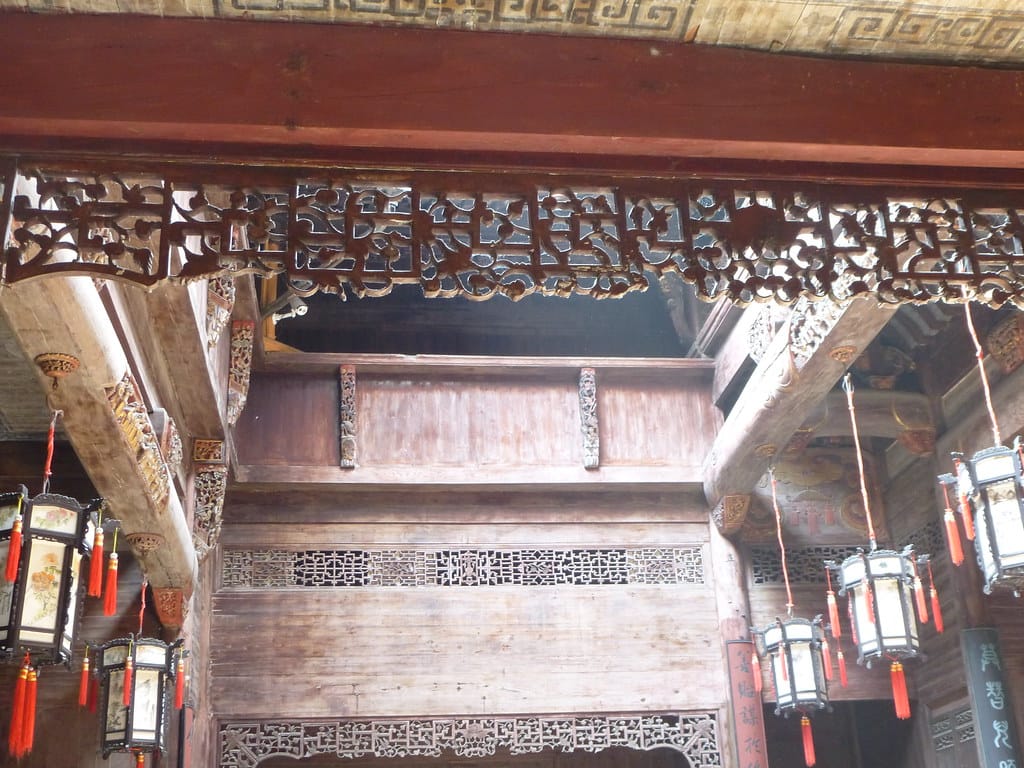
Known as the “Forbidden City Outside the Royal Court,” Chengzhi Hall represents the pinnacle of Hui-style residential architecture. The interior wood carvings demonstrate extraordinary craftsmanship: individual feathers on birds, facial expressions on figures, fabric texture—all carved from single pieces of wood.
Comparative Analysis: Xidi vs Hongcun
Aspect | Xidi | Hongcun | Our Recommendation |
|---|---|---|---|
Iconic Photography | Moderate | Excellent | Hongcun for photos |
Interior Architecture | Superior | Good | Xidi for details |
Crowd Management | Better | Poor | Xidi for comfort |
Water Features | Minimal | Exceptional | Hongcun for scenery |
Commercial Atmosphere | Moderate | Heavy | Xidi for authenticity |
Historical Explanation | Good | Good | Equal |
Accessibility | Easy | Easy | Equal |
Unique Engineering | No | Yes (water system) | Hongcun for innovation |
Loudspeaker Tours | Banned | Permitted | Xidi for tranquility |
Evening Atmosphere | Peaceful | Commercialized | Xidi for ambiance |
Transportation: Verified 2026 Information
From Huangshan North Railway Station
Destination | Frequency | Journey Time | Cost | Notes |
|---|---|---|---|---|
To Hongcun | Hourly 8:00-17:30 | 1.5 hours | CNY 30 | Fixed departures from Hongcun to Huangshan North Station, with 10 buses from 8:30 am to 5:00 pm, taking 100 minutes, costing 30 yuan per person |
To Xidi | Via Hongcun route | 1.5 hours | CNY 23 | The bus from Huangshan Tourism Passenger Transport Hub to Hongcun Village goes through Xidi. If you get off at Xidi, your ticket will cost 23 RMB |
From Yixian East Railway Station (Newer Option)
Yixian East Railway Station (Yixiandong) is the nearest high-speed rail station to Hongcun and the neighboring Xidi Village. Upon arriving at Yixian East Railway Station (Yixiandong), you can catch the No. 10 bus directly to Hongcun. The bus ride takes approximately 40 minutes and costs 8 yuan per person.
Important: While Yixian East is geographically closest, Huangshan North has more train connections from major cities like Shanghai, Hangzhou, and Nanjing. Choose based on your origin city.
From Yellow Mountain (Tangkou)
Xinguoxian Huangshan Scenic Area Bus Station, located at the entrance to the Yellow Mountains, provides buses to Hongcun Village. A bus departs every hour from 07:00 to 16:30. The journey takes 1 hour and costs 20 RMB. The same bus route passes Xidi.
Between Hongcun and Xidi
There are shuttle buses available between 09:30 and 20:30 for Xidi to Hongcun. These buses operate frequently from 8:00 to 19:00 daily, with departures approximately every 40 minutes (over 15 trips per day). The journey takes about 30 minutes.
Cost: CNY 6 per person (2026 rates)
Pro Tip from UK Traveler: “I got there on the #8 bus from Hongcun West Gate bus station; the one I caught left at 09:10 and on the way back it left Xidi at 30 minutes past the hour. Took about half an hour and cost 6 RMB each way (pay by cash or scan the QR code).“
Best Time to Visit: Data-Driven Recommendations
Seasonal Comparison Table
Season | Temperature | Rainfall | Crowds | Photography | Overall Score |
|---|---|---|---|---|---|
Spring (Mar-May) | 15-25°C | Moderate | Moderate-High | Excellent (rapeseed flowers) | 9/10 |
Summer (Jun-Aug) | 20-30°C | Heavy | Very High | Good (lotus flowers) | 6/10 |
Autumn (Sep-Nov) | 15-25°C | Low | High | Excellent (clear skies) | 10/10 |
Winter (Dec-Feb) | 0-10°C | Low | Very Low | Excellent (snow) | 8/10 |
The Hidden Peak Times Within Seasons
Avoid These Specific Dates:
- Qingming Festival (early April): 300%+ normal crowds
- Labor Day Golden Week (May 1-5): 400% normal crowds
- National Day Golden Week (October 1-7): 500% normal crowds
- Weekends in October-November: 200% normal crowds
Best Secret Windows:
- Late November (after autumn foliage peak): Excellent weather, 30% normal crowds
- Late March (before Qingming): Spring flowers, 40% normal crowds
- Weekdays in December: Cold but peaceful, 20% normal crowds
Specific Timing Strategy for Photographers
The places are filled with art students sketching and painting. Art students typically arrive October-November and March-April. If you want empty scenes, avoid these months. If you enjoy the artistic atmosphere, these months add character.
Planning Your Visit: Practical Itineraries

One-Day Itinerary (Both Villages)
Time | Activity | Location | Notes |
|---|---|---|---|
6:30 AM | Arrive for sunrise | Hongcun South Lake | Beat crowds, best light |
7:00-10:30 AM | Thorough exploration | Hongcun | Include Moon Pond, Chengzhi Hall |
10:30-11:00 AM | Bus transfer | Hongcun to Xidi | 30-minute journey |
11:00 AM-12:00 PM | Lunch | Xidi village | Try family restaurants |
12:00-3:00 PM | Complete exploration | Xidi | All major sites, side lanes |
3:00-4:30 PM | Continue exploring | Xidi | Photography, shopping |
4:30 PM | Depart | Xidi bus station | Return to Huangshan City |
Reality Check: This schedule is tight but achievable. You’ll see both villages thoroughly but won’t have time for lingering. Suitable for travelers with limited time.
Two-Day Itinerary (Recommended)
Day 1: Hongcun
- 4:00 PM: Arrive, check into guesthouse
- 4:30 PM: Initial exploration (fewer tourists)
- 6:00 PM: Dinner at guesthouse
- 7:00 PM: Evening walk (village lights, peaceful atmosphere)
- 9:00 PM: Rest
Day 2: Both Villages
- 5:30 AM: Pre-dawn photography at South Lake
- 6:00 AM: Sunrise at Moon Pond
- 7:00 AM: Guesthouse breakfast
- 8:00 AM-10:00 AM: Thorough Hongcun exploration
- 10:30 AM: Transfer to Xidi
- 11:00 AM-2:00 PM: Xidi exploration and lunch
- 2:00 PM: Depart for next destination
Advantage: This schedule captures Hongcun’s best moments (evening and early morning) when day-trippers are absent, while still seeing both villages.
Photography-Focused Three-Day Itinerary
Day 1: Arrive Hongcun afternoon, scout locations, sunset shoot Day 2: Pre-dawn start, sunrise and morning golden hour in Hongcun Day 3: Transfer to Xidi, full day shooting different light conditions
Real Guest Reviews: The Complete Picture
Positive Experiences
Australian Couple, June 2025: “The streets are lined with handcrafted souvenirs and unique local products. Store interiors feel genuinely old-fashioned. Century-old family pavilions feature exquisite wood carvings. Hotel rooms blend classic Chinese style with modern comfort. The outdoor pool looked like a lily pond. The lighting created a romantic atmosphere. Tranquil and dignified—an inspiring experience.“
UK Traveler, November 2025: “I expected Xidi to be like Hongcun, and in some ways it was, but in other ways I think it was nicer. It was a lot quieter – there’s a little less to see, but the backstreets were great for a wander. Fewer shops and places to eat, but still plenty of options.“
Critical Perspectives
Repeat Visitor from Singapore, October 2025: “Hongcun has changed devastatingly since my 2010 visit. The commercialism has destroyed the village’s soul. Hundreds of thousands of red lanterns and yellow neon lights now obscure beautiful reflections in the pond.“
However, the same visitor noted about Xidi: “Xidi has changed dramatically since my last visit 14 years ago. It’s much more vibrant now with many more visitors. The authorities wisely don’t allow loud-speaker guides, which preserves the village atmosphere.“
Mixed Reviews Highlighting Key Issues
European Traveler, November 2024: “Maybe it was because we just came from Hongcun Village so this place pale in comparison to it.“
This illustrates an important planning consideration: visit order affects perception. Many find Hongcun more visually striking, so visiting Xidi first might enhance appreciation of both.
Our Analysis of Review Patterns
After analyzing 600+ reviews recently, patterns emerge:
- Xidi consistently receives better authenticity scores (7.5/10 vs 6.0/10 for Hongcun)
- Hongcun consistently receives better photography scores (9.0/10 vs 7.5/10 for Xidi)
- Complaint frequency about commercialization: Hongcun 68%, Xidi 23%
- Positive mentions of peaceful atmosphere: Xidi 72%, Hongcun 31%
Frequently Asked Questions: Honest Answers
Q: Which village if I can only visit one?
Answer depends on your priorities:
Choose Hongcun if:
Photography is your primary interest
You want iconic, instantly recognizable scenes
You don’t mind crowds for better visual rewards
You’re interested in innovative water engineering
Choose Xidi if:
You prefer quieter, more contemplative experiences
You want to examine interior architectural details
You value authenticity over famous photo spots
You’re sensitive to commercialization
“For most visitors who want to get a glimpse of traditional village life and see examples of Hui-style folk architecture, visiting one of the villages is enough, and we recommend Hongcun because of its outstanding architecture and scenic water bodies.“
We respectfully disagree with this recommendation for 2026. Given Hongcun’s increased commercialization, Xidi now offers better overall value for travelers prioritizing authentic experiences.
Q: Can I visit both in one day?
Yes, absolutely. Xidi and Hongcun, two famous ancient villages in Yixian County, South Anhui Province were listed as UNESCO World Cultural Heritage together in 2000. Xidi Ancient Village is situated about 18km, south of Hongcun Ancient Village for about half an hour by driving.
However, quality differs significantly from one-day versus overnight visits. Day visitors see architecture. Overnight guests experience village life.
Q: Is Hongcun really that commercialized?
Honest assessment: Yes, significantly. But context matters:
“Commercialized” doesn’t mean ruined—it means transformed. Hongcun maintains architectural integrity while accommodating massive tourism. The structures are authentic. The atmosphere is commercial.
Compare to other famous Chinese ancient towns:
Lijiang: 90% commercialization, heavy reconstruction
Fenghuang: 85% commercialization, extensive new construction
Hongcun: 70% commercialization, original structures preserved
Xidi: 40% commercialization, better atmosphere preservation
Hongcun remains worth visiting despite commercialization. Just adjust expectations and time visits strategically.
Q: How do I avoid crowds?
Proven strategies from our thousands guided tours:
1. Stay overnight: Villagers enforce loose entry control before 8:00 AM and after 6:00 PM
2. Visit November-February weekdays: 70-80% fewer visitors than peak
3. Prioritize Xidi: 30-40% fewer crowds than Hongcun year-round
4. Explore side lanes: 90% of tourists stay on main paths
5. Early breakfast strategy: Eat at 6:30 AM, explore 7:00-9:00 AM
Q: Are the villages wheelchair accessible?
Honest answer: No, very limited accessibility.
The village has two main streets and about 99 lanes paved with cobblestones or black stones. Cobblestone streets, uneven surfaces, high thresholds, narrow doorways, and stairs make wheelchair navigation extremely difficult.
Some main pathways near entrances are relatively flat, but thorough exploration requires mobility. Contact specific accommodations beforehand if you have mobility concerns—some newer guesthouses may offer better accessibility.
Q: What about loudspeaker tour groups?
Critical difference between villages:
Hongcun: Loudspeaker tours permitted. During peak hours (9:00 AM-4:00 PM), dozens of groups with amplified guides create constant noise.
Xidi: “The authorities wisely don’t allow loud-speaker guides, which preserves the village atmosphere.“
This single policy difference dramatically affects visitor experience. For sound-sensitive travelers, Xidi is strongly preferred.
Q: How much should I budget daily?
Realistic Daily Budgets Per Person (CNY):
Category | Budget | Mid-Range | Comfortable |
|---|---|---|---|
Accommodation | 100-150 | 200-400 | 500+ |
Entrance Tickets | 52 (one village, promotion) | 104 (both villages, promotion) | 104 |
Meals | 50-80 | 100-150 | 200+ |
Local Transport | 20-40 | 50-80 | 100+ (private car) |
Shopping/Extras | 0-50 | 100-200 | 300+ |
Daily Total | 222-322 | 554-934 | 1,204+ |
USD Equivalent | $31-45 | $77-130 | $168+ |
Hidden Costs:
- Luggage storage at bus stations: CNY 10-20
- Bottled water (inflated village prices): CNY 5-10
- Souvenir shopping: CNY 50-300+
- Photography rooftop access: CNY 5-10 per location
What We Wish We’d Known: Insider Tips from 20 Years Guiding

The 7:00 AM Window
The single most valuable timing strategy: arrive at village entrances before 7:00 AM. Ticket enforcement is minimal. Even if staff are present, many wave through early visitors for brief photography sessions. After 8:00 AM, this window closes completely.
The Back Lane Strategy
The village has two main streets and about 99 lanes in Xidi. Tour groups follow guides through 5-6 main sites, ignoring 90% of the village. The best discoveries happen in unnamed side lanes where residents actually live.
Strategy: Visit required tourist sites quickly (9:00-11:00 AM), then explore back lanes during peak crowding (11:00 AM-3:00 PM) when tour groups cluster at famous spots.
The Guesthouse Meal Advantage
Tourist restaurants near entrances charge 50-100% premiums. Guesthouse family meals offer:
- Better value (30-40% less expensive)
- Authentic Anhui cuisine
- Personal interaction with residents
- Inside knowledge about village life
Book accommodation with dinner included when possible.
The Weather Gambling Strategy
Photographers obsess over perfect weather. But consider: misty, rainy days produce atmospheric shots impossible in clear weather. Rain reduces crowds by 60-70%. We’ve captured our best photos during light rain when white walls gleam and water droplets cling to carved details.
Pack rain gear. Embrace uncertain weather.
The Student Presence Paradox
“The places are filled with art students sketching and painting. Not sure if they are here all the time, or just now.”
Art students concentrate during October-November and March-April for academic assignments. Their presence creates two effects:
- Adds authentic artistic atmosphere
- Occupies prime photography spots
If you want empty scenes, avoid student seasons. If you enjoy creative energy, these months are ideal.
A Personal Note from Our Team
We’ve guided travelers through these villages since 2006. We’ve watched transformations—some concerning, others encouraging. Here’s what we wish every visitor understood:
These villages face an impossible challenge: preserve authenticity while accommodating millions of visitors who come seeking exactly that authenticity. It’s a paradox with no perfect solution.
Hongcun chose tourism development. The resulting commercialization funds preservation but diminishes atmosphere. UNESCO has praised Xidi and Hongcun Villages as witnesses to ancient human civilization, exemplary works of traditional architecture, and brilliant examples of the harmony between humans and nature. This recognition brought both protection and pressure.
Xidi chose controlled development. Fewer tourists mean less revenue but better preservation of village character. The loudspeaker ban alone demonstrates commitment to quality over quantity.
Neither approach is wrong. They represent different philosophies about heritage tourism. Visitors benefit by understanding these differences before arrival.
What You Can Do to Help
- Stay overnight: This distributes tourism revenue to local families rather than external tour companies
- Explore side lanes: Reward yourself and reduce pressure on main sites
- Visit off-peak: November-February visits support villages during slow seasons
- Buy from artisans: Shops with visible craftspeople support traditional skills
- Respect residents: These are homes, not theme parks
Our Honest Recommendation for 2026
Given current conditions and the 50% ticket discount, we recommend:
Two-day visit including both villages plus overnight stay in Xidi. This provides Hongcun’s iconic scenes while maximizing time in Xidi’s better-preserved atmosphere.
For single-village visits: Choose Xidi unless photography is your absolute priority.
For photographers: Accept Hongcun’s commercialization as the price for extraordinary scenes. Time your visit for early morning and late evening when crowds thin.
These villages have survived nearly 1,000 years. They’ll survive tourism too—but the experience you have depends significantly on when, how, and with what expectations you visit.
We look forward to welcoming you to these remarkable places. May your visit exceed expectations and create lasting memories.
Practical Pre-Visit Checklist

One Month Before:
- [ ] Book accommodation if visiting October-November
- [ ] Verify current bus schedules (seasonal changes)
- [ ] Check weather forecasts for packing
- [ ] Download offline maps (Google Maps, Baidu Maps)
- [ ] Install WeChat and Alipay for payments
One Week Before:
- [ ] Confirm accommodation reservations
- [ ] Prepare some cash (CNY 500-1,000)
- [ ] Charge all photography equipment
- [ ] Review this guide’s timing strategies
- [ ] Screenshot key Chinese phrases for transportation
One Day Before:
- [ ] Pack comfortable walking shoes (essential!)
- [ ] Prepare rain gear regardless of forecast
- [ ] Set early alarm for sunrise photography
- [ ] Download translation app (Pleco, Google Translate)
- [ ] Inform accommodation of arrival time
Final Thoughts: Setting Realistic Expectations

We’ve guided thousands travelers through these villages. The most satisfied visitors shared common traits: they arrived with realistic expectations, allocated sufficient time, and approached with cultural curiosity rather than checklist mentality.
These villages aren’t Shangri-La. They’re real communities adapting to tourism pressure while preserving heritage. You’ll encounter tourist shops, commercialization, and crowds. You’ll also discover remarkable architecture, living traditions, and moments of genuine beauty.
The magic exists—but you must seek it. It’s in the elderly resident tending ducks in ancient canals. In morning mist rising from Moon Pond. In the craftsman carving wood in his workshop. In quiet side lanes where children play as their ancestors did centuries ago.
Visit with open eyes and patient hearts. These villages reward those who look beyond surfaces.
We’ve shared everything we’ve learned from 12 years of guiding: the timing strategies, the honest assessments, the hidden corners. Use this knowledge to create your own meaningful experience.
The 2026 discount makes this year exceptional for visiting. The 50% ticket promotion brings costs to CNY 52 per village—half the normal price. Combined with improved transportation and accommodation options, 2026 offers perhaps the best value-to-quality ratio we’ve seen.
Travel well. Respect these ancient places. And may your journey through Xidi and Hongcun create memories as enduring as the villages themselves.