


The Tea Horse Road: A Complete Traveler’s Guide to China’s Soulful Mountain Corridor
The elderly Tibetan muleteer traced his palm’s creases. “Each line—a route I walked,” Tenzin Dawa said. “Forty years carrying tea from Yunnan to Lhasa. The mountains took three friends. But they gave me everything.”
We sat in his stone house outside Shangri-La, drinking butter tea. This wasn’t a museum performance. Tenzin, 73, is among perhaps two hundred people alive who actually worked the Tea Horse Road before trucks made mules obsolete in the 1990s.
His generation holds the last living memories of a trade network that, for thirteen centuries, moved more than commodity across the highest mountains on Earth—it moved culture, religion, language, and ideas.
Table of Contents
Understanding the Tea Horse Road
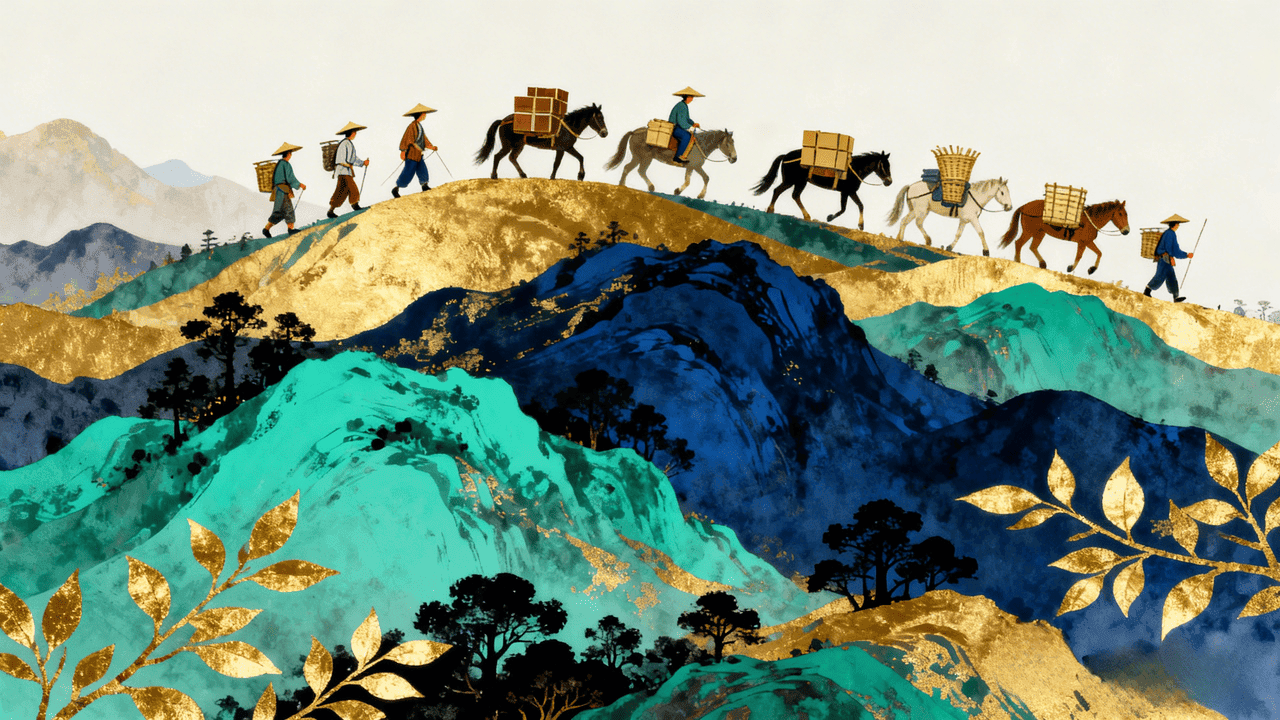
The Tea Horse Road (茶马古道, Chá Mǎ Gǔ Dào) wasn’t a single path. It was a complex network spanning over 5,000 kilometers across Southwest China’s most challenging terrain, connecting tea-producing regions in Yunnan and Sichuan with Tibet.
The Harsh Reality Behind the Romance
Forget romantic images of peaceful caravans. Between the 7th and 20th centuries, this route represented brutal economic necessity. Chinese dynasties desperately needed Tibetan horses for cavalry to fight northern nomadic groups. Tibet needed tea—their high-fat yak-meat diet required tea’s tannins for digestion and vitamin supplementation without which Tibetans could develop scurvy within months.
The numbers reveal the scale: During Song Dynasty peak (1074 CE), China traded 15,000-20,000 horses annually for tea. One horse cost 40-60 jin (25-35kg) of tea. That’s 375,000-700,000 kg of tea moving up mountains yearly—all on backs of humans and mules.
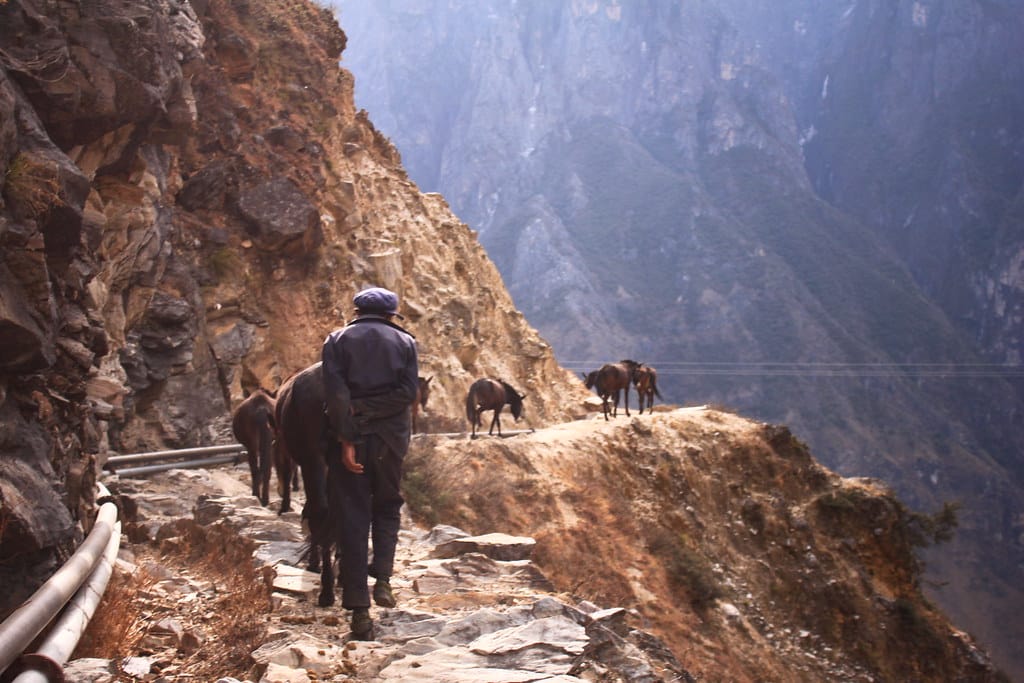
Historical records suggest 10-15% of traders died on each major journey from altitude sickness, falls, hypothermia, bandits, or blizzards. Tea porters carried 60-90 kg—often more than their bodyweight. They used metal-tipped staffs to rest mid-trail without lowering loads, because getting an 80kg pack back on your shoulders in thin air is nearly impossible alone.
Jeff Fuchs, the first Westerner to trek the entire route in 2006-2007, documented his seven-and-a-half-month journey. His account describes traders losing toenails from descents, snow blindness from glacier crossings, and psychological breaking points where men simply wept from exhaustion.
During World War II, when Japanese forces blocked coastal routes, the Tea Horse Road became critical for supplying inland China from India. According to National Geographic research, more than 25,000 horses and mules were used and over 1,200 trading firms operated along the road during this period.
What Actually Got Traded

The name “Tea Horse Road” is reductive. Yes, tea and horses dominated, but the route carried salt from Sichuan wells essential for Tibetan diet, medicinal herbs like cordyceps worth more than silver by weight, silk and textiles flowing both directions with Tibetan wool going east, metals including Tibetan gold and silver for Chinese bronze and iron, and jade from Burma through Yunnan into China.
More importantly, it moved culture. The Naxi people developed Dongba script—the world’s only living fully pictographic writing system with 1,400+ characters—partly to record multilingual trade transactions. This mixing created the ethnic diversity visible today across the region.
The Routes That Matter for Modern Travelers
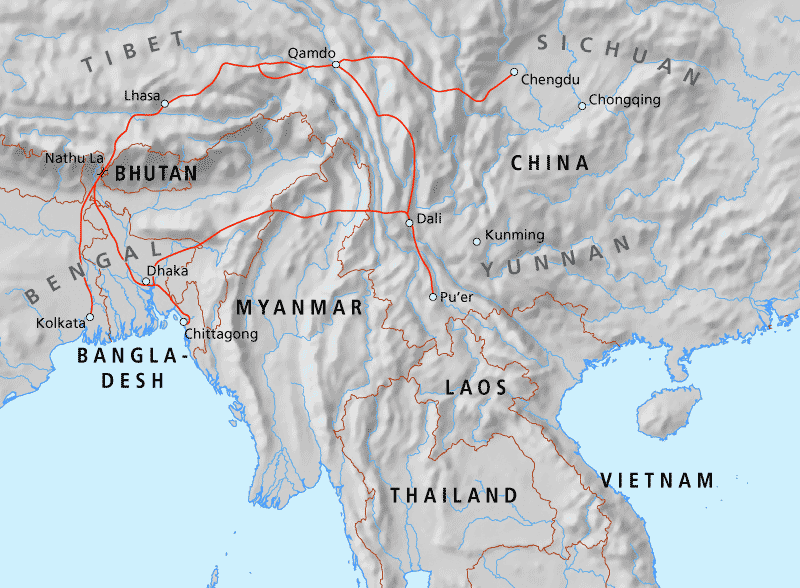
Stop thinking of the Tea Horse Road as a single path. It was a network comparable to interstate highways, but vertical instead of horizontal.
The Yunnan-Tibet Southern Route (Recommended)
Why this route matters: More accessible, no Tibet permits required for most sections, better-preserved towns, and more authentic cultural encounters still breathing with life.
The critical corridor: Xishuangbanna (tea source) → Pu'er → Dali → Shaxi → Lijiang → Tiger Leaping Gorge → Shangri-La → Deqin (Yunnan-Tibet border)
This route passes through the Three Parallel Rivers region—where the Salween, Mekong, and Yangtze flow through gorges separated by mountain ridges—a UNESCO World Heritage Site containing more plant species than all of Europe.
In last year, Shaxi Ancient Town received over three million visitors—significant growth but still far below crowds at Lijiang (50+ million annual visitors) or Dali (35+ million), meaning you can still experience authenticity without overwhelming tourist infrastructure.
The Sichuan-Tibet Northern Route
This higher-altitude route through Kangding, Litang, and Chamdo to Lhasa crosses multiple passes above 4,500 meters. Traders called it the “Sky Road” for good reason—the terrain and altitude were more severe.
Critical limitation: Foreign travelers require Tibet permits, which means mandatory registered tour groups, government-approved guides, restricted movement, and constant monitoring. We don’t recommend this route for independent travelers seeking cultural immersion. The bureaucratic barriers make authentic engagement nearly impossible.
Shaxi: The Most Authentic Tea Horse Road Town
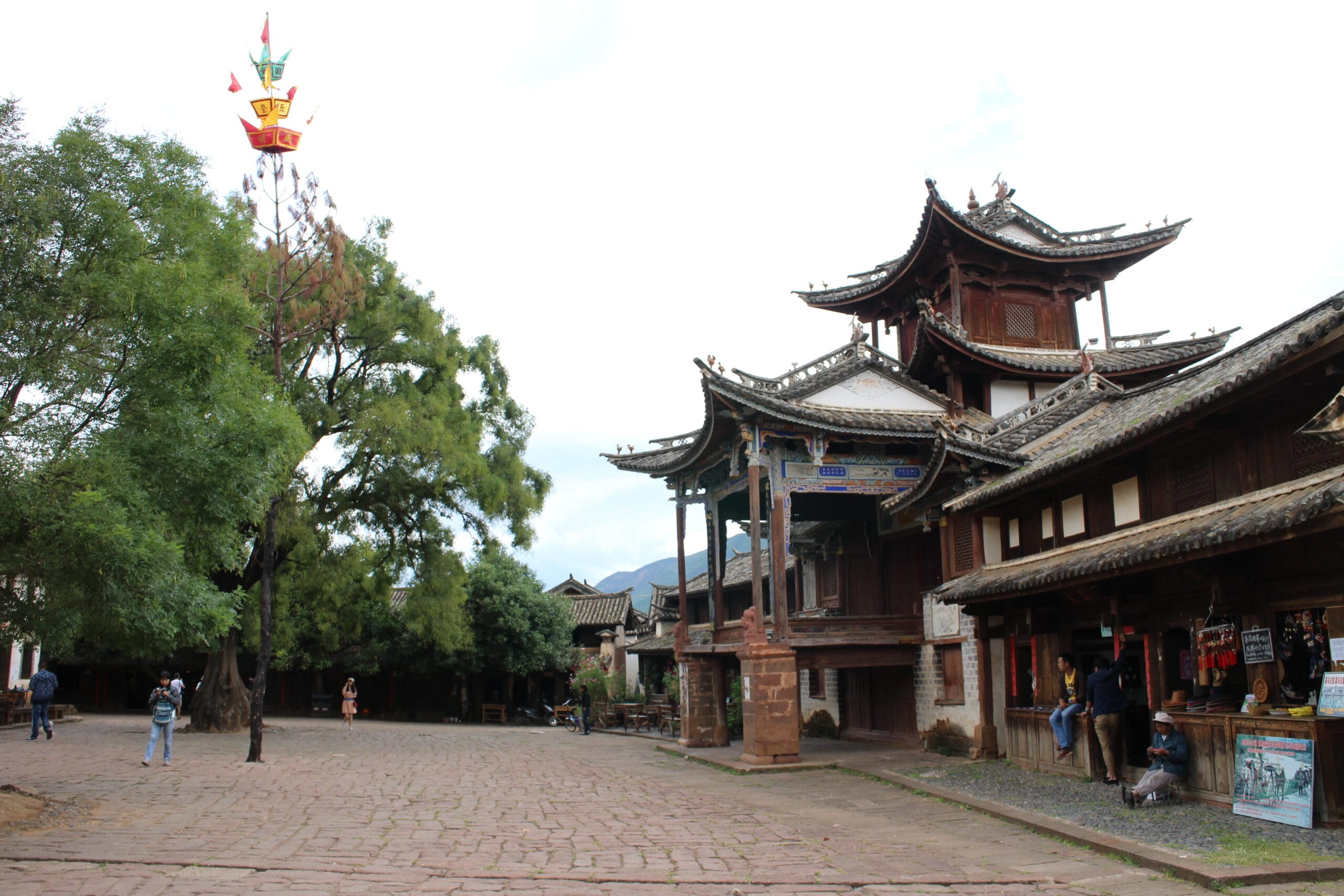
Every article mentions Shaxi. Few explain why it matters uniquely or what’s actually changed in 2026.
What Makes Shaxi Different
Shaxi’s Sideng Street was placed on the World Monument Watch list of the 100 most endangered sites in 2001—alongside Pompeii and sections of the Great Wall. This designation brought Swiss funding for meticulous restoration using original materials and traditional techniques, not the bulldoze-and-rebuild approach that destroyed much of Lijiang’s authenticity.
The result: Shaxi is the only surviving complete Tea Horse Road trading complex with all elements intact: the market square platform used continuously since approximately 700 CE, Xingjiao Temple built in 1415 with Ming Dynasty murals showing Central Asian artistic influences that prove cultural exchange, original caravansary inn with interior spaces designed for loading mules—wooden columns show rope-wear grooves from 300 years of use, and the Friday Market operating every week since approximately 1415.
Walk across Yujin Bridge and you’ll see stone pavers worn 5-10cm deep from hooves and boots—physical proof of traffic volume that no amount of description can convey.
The Shaxi Experience That Actually Matters
The Chinese drama “Meet Yourself” (去有风的地方) filmed in Shaxi in 2023 brought a surge of domestic tourists, but the town has absorbed this influx while maintaining authenticity far better than Lijiang or Dali managed. Here’s what to actually do:
Arrive Thursday evening: Stay at traditional courtyard guesthouses (150-300 RMB). Places like Horse Pen 46, Old Theatre Inn, or the newer boutique options like Kogongdi Culture Hall (modern, clean, 250-400 RMB) are restored caravanserais with original architecture. The evening is magical—elderly locals play mahjong in courtyards, children practice Bai opera songs, and the only sounds are water wheels and wind through eaves.
Friday market (5am-1pm): Wake at 5am. The market operates 5-7am for locals before tourists arrive. You’ll witness Bai women in traditional dress selling fresh goat cheese made that morning, wild mushroom vendors with species you’ve never seen (ask locals which are edible—some are psychedelic, some fatal), traditional medicine sellers with cordyceps and herbs whose names exist only in local dialects, and live animal trading that proves this is still a working agricultural market.
One traveler described finding rapeseed flowers blooming in late March last year, creating vast yellow fields perfect for photography. Another mentioned mushroom picking experiences in summer with local guides, followed by picnics and camping—activities you’d never find in commercialized Lijiang.

Walk the caravan path to Shibaoshan: Arrange a guide to walk the actual caravan path from Shaxi to Shibaoshan Buddhist grottoes—about 12km, moderate difficulty, 4-5 hours roundtrip. The path follows the exact route traders used, passing through Bai villages unchanged in layout for centuries. Shibaoshan contains over 130 rock carvings dating to the 9th-century Nanzhao and Dali Kingdoms, showing how Buddhism adapted as it moved along trade routes.
Evening activities: Unlike Dali and Lijiang’s staged performances, Shaxi offers authentic experiences. The Old Theatre Inn sometimes hosts traditional Bai music concerts. Small cafes like those near Yujin Bridge offer stunning mountain views for sunset. Or simply walk the bluestone roads where even the wind feels lazy, as one visitor described.
Current Reality Check (2026)
The town remains significantly less crowded than famous neighbors—weekdays see perhaps 100-200 tourists; Friday market brings 500-1,000. The authenticity concern: some newer guesthouses built in “traditional style” use concrete under wooden facades. Look for places with UNESCO restoration project documentation or recommendations from long-term expat residents.
Accommodation prices range widely: basic family guesthouses 80-150 RMB, mid-range restored courtyard houses 200-350 RMB, high-end boutique hotels like those featured in “Meet Yourself” drama 500-800 RMB. Book ahead for Friday nights and Chinese holidays.
Tiger Leaping Gorge: Understanding the Terrain
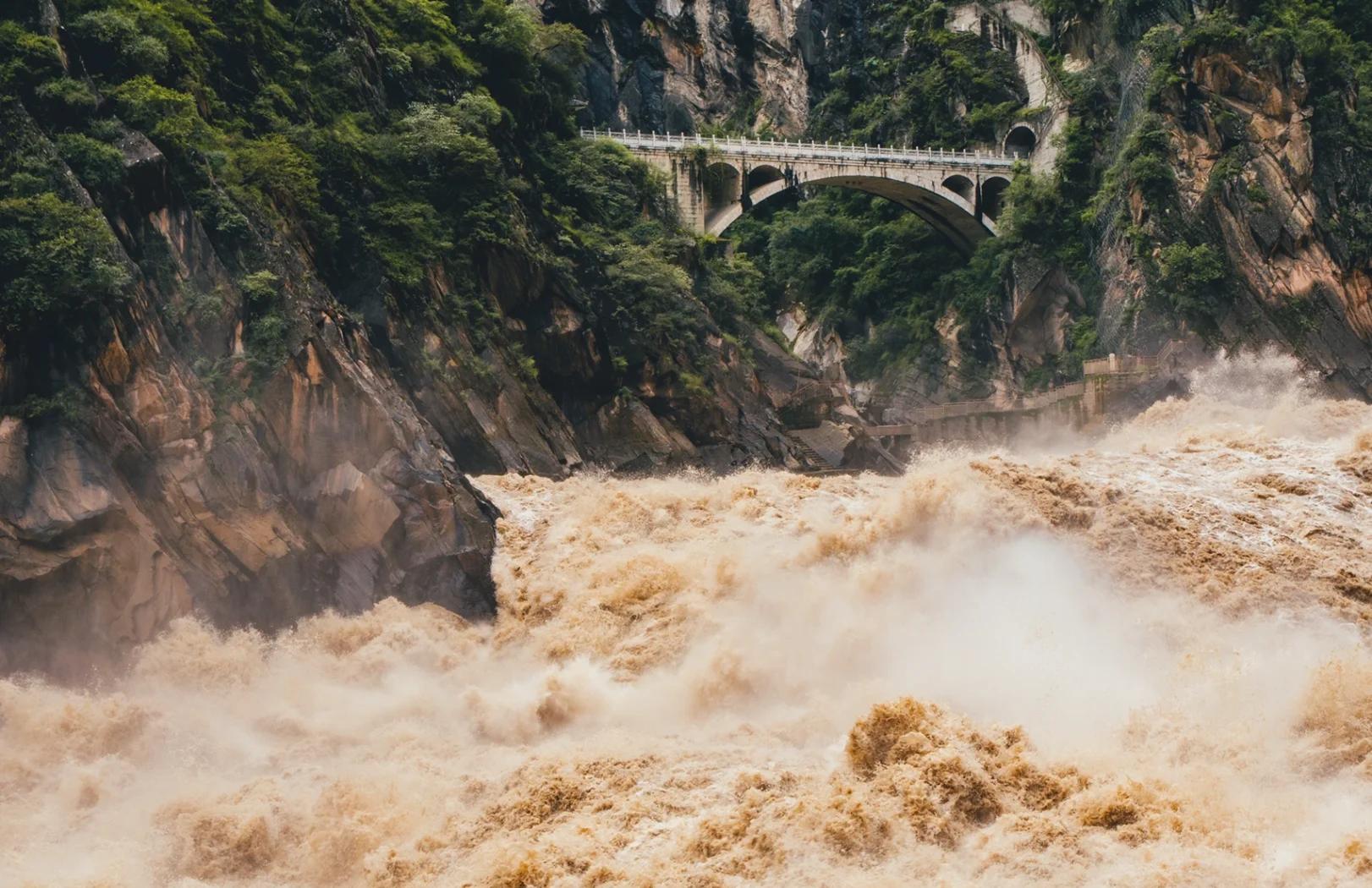
Most visitors do the Upper Gorge car tour—a boardwalk with selfie spots. That’s not the Tea Horse Road experience and misses the entire point.
The High Trail Reality
The high trail (高路, Gāo Lù) is the original caravan route, now a 24-28km trek typically done over two days. This isn’t casual walking—it’s understanding viscerally why trade routes followed specific paths determined by geology, weather, and human limits.
Physical demands (verified January 2026):
- Elevation range: 1,800m to 2,670m at Halfway Guesthouse
- Total elevation change: 2,000m+ of cumulative up and down
- Most challenging section: The 28 Bends (二十八拐, èrshíbā Guǎi)—switchbacks gaining 400m in 2km, comparable to climbing 130 floors
- Time: 10-12 hours total hiking spread over two days
- Terrain: Ancient stone steps, some cliff-edge sections with 100m+ drops, exposure requiring focus
Critical update: The Middle Gorge descent to Tiger Leaping Stone is CLOSED as of summer 2025 due to rockfall danger and has no reopening date. The high trail from Naxi Family Guesthouse to Teacher Zhang’s remains open and well-maintained. An alternate descent to the river exists near Walnut Grove but conditions vary seasonally.
Honest difficulty assessment: Travelers with regular hiking experience and reasonable fitness complete this comfortably. If you hike 15-20km routes with elevation gain at home, you’ll manage. The challenge comes from sustained elevation gain/loss, altitude affecting some people at 2,000-2,700m, length requiring endurance over two days, exposure on some sections demanding focus and sure footing, and weather that can change hourly from sun to rain to fog.
Multiple foreign tourists have died here over the years—primarily from falls during bad weather or attempting the trail while impaired. Local guides report 1-3 serious incidents annually. This is real mountain terrain with consequences, not a theme park. Respect it.
Practical Logistics (2026 Verified)
Getting there from Lijiang:
- Morning bus from Lijiang Bus Station to Qiaotou: 9am departure (sometimes 10am, verify day before), 25-30 RMB, 2-2.5 hours
- Private car/carpool: 150-200 RMB total, arrange through hostels like Mama Naxi Guesthouse
- The old “trekker shuttle” mentioned in Lonely Planet NO LONGER EXISTS—don’t plan for it
Luggage strategy: Leave bags at your starting guesthouse (typically Naxi Family GH in Qiaotou). They forward to your end point (typically Tina’s Guesthouse or Teacher Zhang’s) for 20-30 RMB per bag. Pack a daypack with water, snacks, rain gear, warm layer, and essentials.
Accommodation on trail:
- Night 1: Halfway Guesthouse (中途客栈, most popular stop) or Tea Horse Guesthouse—both offer 180-300 RMB private rooms with basic amenities, 80-120 RMB dorms
- Book via Trip.com or direct WeChat a day ahead during peak season (April-May, September-October)
- Off-season (November-March): walk-ins usually available but bring warm clothes—temperatures drop significantly
Departure from trail end:
- Buses from Tina’s GH to Shangri-La: typically 2pm and 4pm (verify current times, schedules shift)
- To Lijiang: usually 3:30pm
- Private car to Shangri-La: 150-200 RMB, can arrange through guesthouse
- Best strategy: confirm departure transport before starting trek
Hidden costs travelers don’t expect:
- Entrance fee: 65 RMB per person
- Water/snacks on trail: 2-3x normal prices (10 RMB for water, 15-20 RMB for instant noodles)
- “Photo fees” at certain viewpoints: locals sometimes charge 10-20 RMB (optional, sometimes aggressive)
- Meals at guesthouses: 40-80 RMB per meal depending on choices
- Total budget for 2-day trek: 450-650 RMB minimum per person including accommodation, meals, fees
Why This Section Matters
Standing on the Halfway Guesthouse balcony at dawn watching mist rise from the Jinsha River 1,000 meters below while Jade Dragon Snow Mountain (5,596m) turns pink with sunrise, you understand why the Tea Horse Road matters. Imagine doing this carrying 70kg of tea in cloth shoes with no safety gear, knowing your family’s survival depends on reaching the next town. That visceral understanding—of human capacity to endure, adapt, and push limits—is what makes this journey meaningful beyond tourism.
Pu’er: Following Tea to Its Source
Most travelers skip Pu’er (普洱市), rushing to Instagram-famous towns. This is a strategic mistake if you want to understand what actually created the entire trade system.
The Ancient Tea Mountains

The Jingmai Mountain area (景迈山) contains tea forests—not plantations—where trees grow wild for 1,000+ years. These are the source. Trees reach 20-30 meters tall with trunks 50cm+ in diameter. The Bulang people are traditionally considered the first to cultivate tea trees thousands of years ago, and their descendants still harvest using traditional methods—climbing trees with bamboo ladders to reach leaves.
Practical access: Jingmai Mountain is 170km from Pu’er city, 3-4 hours by hired car (500-600 RMB for the day including waiting time). The roads are paved but winding. Stay overnight in Jingmai village (basic guesthouses 100-200 RMB) for sunrise in the tea forests when mist clings to ancient trees and the silence is profound.
Understanding Pu’er Tea and Why It Mattered
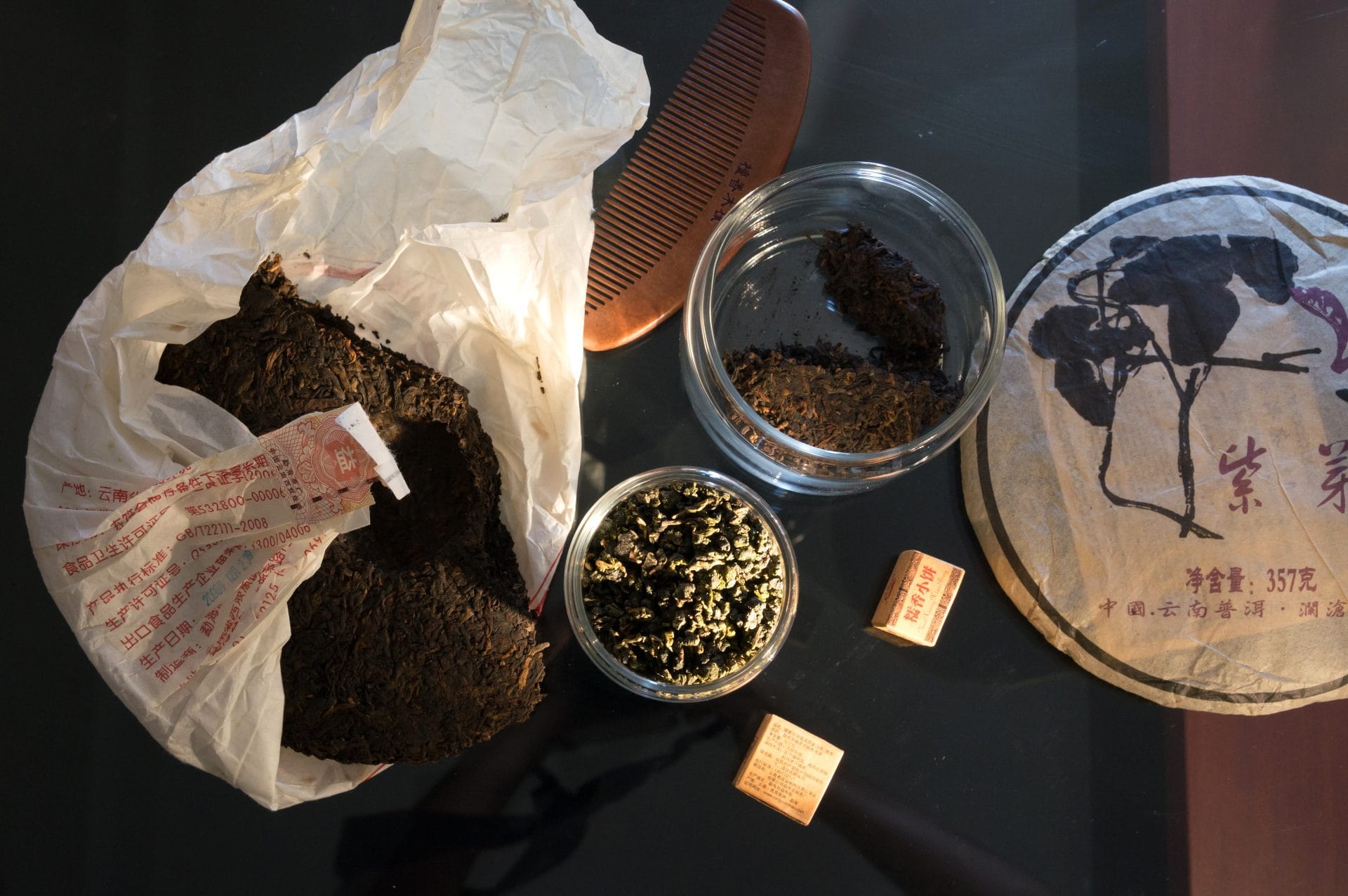
Raw Pu’er tea (生普, Shēng Pǔ) is not what you’re served in Chinese restaurants. Traditional Tibetan Pu’er was compressed into bricks or cakes (357g standard weight for transport efficiency), aged deliberately during the journey—fermentation in the humid air and temperature changes actually improved flavor, dark and earthy with intense strength after months of aging, and mixed with salt and yak butter to create po cha (酥油茶, butter tea).
The fat in butter tea isn’t luxury—it’s survival. At 4,000m elevation with subzero winters lasting six months, Tibetans needed 3,500-4,000 calories daily just to maintain body temperature. Butter tea provided fat calories while tea’s tannins helped digest high-protein diets and prevented scurvy. A Tibetan proverb states: “Better three days without food than one day without tea.”
Try real Tibetan-style tea: In Shangri-La’s Tibetan old town, find locals-only tea houses (ask your guesthouse for recommendations—these aren’t signed in English). Order sūyóu chá (酥油茶). The first sip is shocking—salty, oily, coating your mouth. By the third cup, you understand why Tibetans drink 15-20 cups daily. It’s liquid adaptation to one of Earth’s harshest environments.
DIG DEEPER: Discover the World of Chinese Tea: A Traveler’s Guide
Shangri-La: Where Han China Ends
The town was renamed from Zhongdian (中甸) to Shangri-La (香格里拉) in 2001 for tourism marketing after James Hilton’s “Lost Horizon.” The old town burned completely in 2014 and was rebuilt in “traditional” style with concrete under wooden facades. This feels Disney-fied and is. But the surrounding area remains deeply authentic.
DIG DEEPER: Shangri-La Travel Guide
What Actually Matters Near Shangri-La
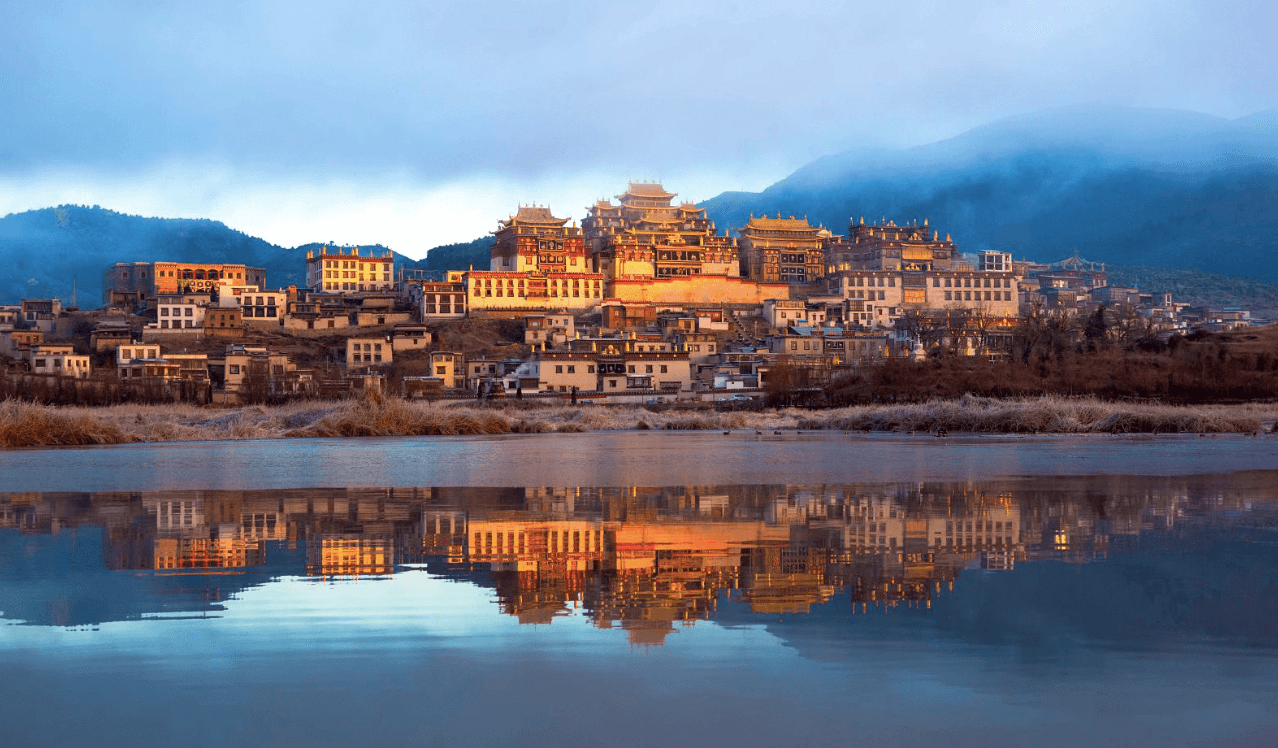
Songzanlin Monastery: Yunnan’s largest Tibetan Buddhist monastery, built 1679, housing 600+ monks. This is the real deal—active religious site with daily rituals. Arrive 6-7am for morning prayers open to respectful visitors. The chanting of hundreds of monks, smell of juniper incense, and butter lamps flickering create an experience photos cannot capture. Hire a Tibetan guide (150-200 RMB) who can explain rituals and translate monks’ conversations if you’re lucky enough to be invited for tea.
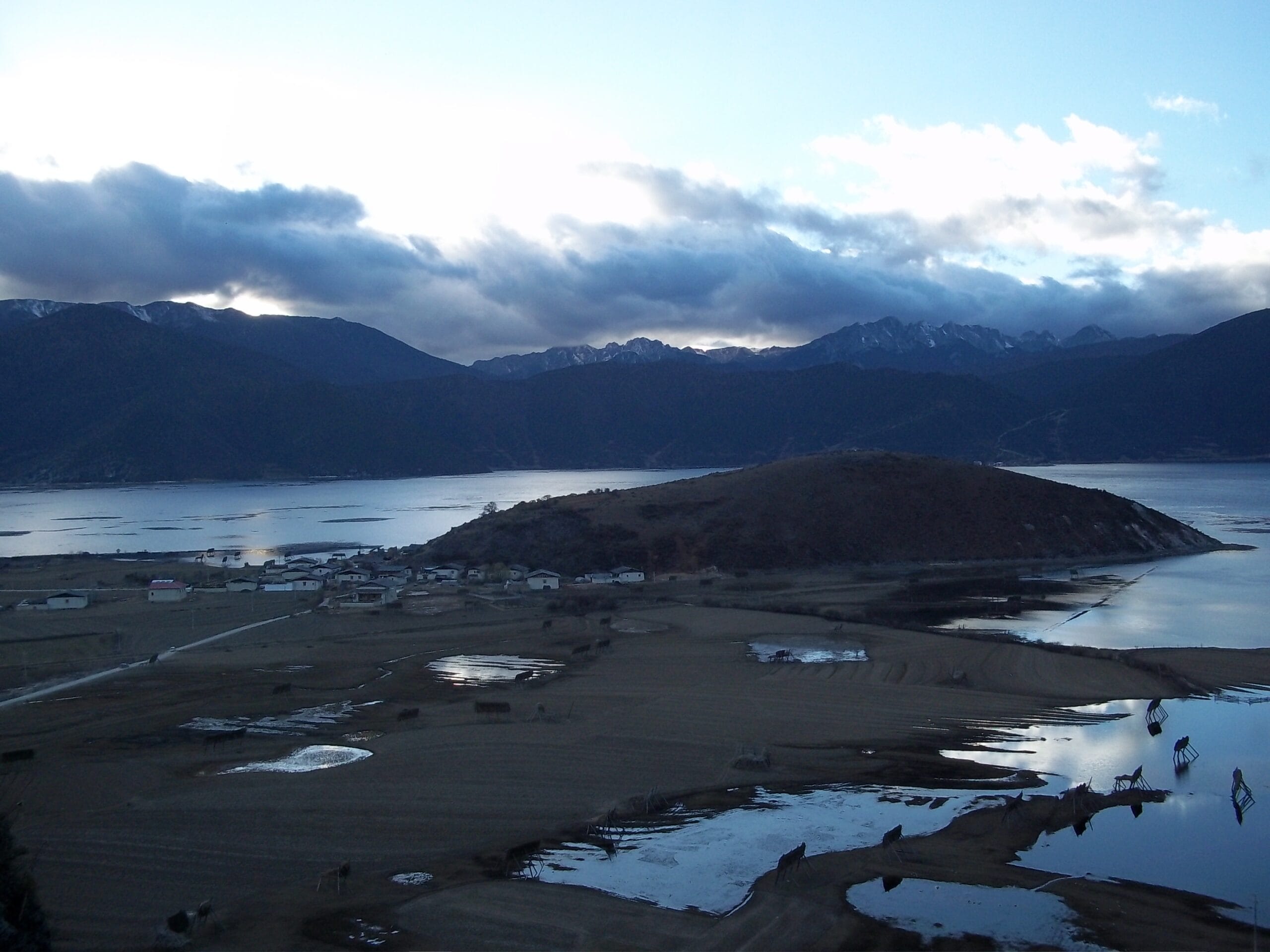
Napa Lake circuit: The 60km loop around Napa Lake passes through Tibetan villages where horse culture remains central to daily life, not tourism. Rent a bicycle (50-80 RMB per day) and ride to Jizhong village with homestays where families still practice traditional animal husbandry, prayer flag mountains where locals conduct sky burials (observe from distance only, photography is deeply taboo), and highland barley fields using irrigation systems unchanged for centuries.
Critical timing: Visit September-November for harvest season and migrating black-necked cranes arriving from northern breeding grounds. May-July brings wildflowers at higher elevations but also heavy rain and muddy roads making cycling difficult.
The Altitude Factor Nobody Adequately Explains
Shangri-La sits at 3,280m elevation. For many visitors arriving quickly from Kunming (1,890m) or even Lijiang (2,416m), altitude sickness is real and can be serious. Symptoms include headache that worsens when lying down, nausea and loss of appetite, fatigue despite rest, sleep disruption and bizarre dreams, rapid heartbeat even at rest, and shortness of breath from minimal exertion.
Who gets it: Anyone can regardless of fitness level. We met marathon runners hospitalized with altitude sickness while sedentary travelers felt fine. Susceptibility is genetic and unpredictable.
Prevention strategies that work:
- Spend 2-3 nights in Lijiang (2,400m) before ascending to Shangri-La—this gradual ascent matters more than any medication
- Avoid alcohol completely for first 48 hours at altitude
- Stay hydrated: drink 3-4 liters daily, more if exercising
- Eat light, frequent meals rather than large dinners
- Consider Diamox (acetazolamide) if you’ve had altitude issues before—consult your doctor pre-trip and start taking 24 hours before ascending
If symptoms develop: Mild headache and fatigue—rest, hydrate, wait 24-48 hours without ascending higher. Moderate symptoms including persistent headache, vomiting, or dizziness—stop all activity, take ibuprofen, monitor closely. Severe symptoms including confusion, inability to walk straight, or severe shortness of breath at rest—descend immediately to lower elevation, seek medical attention. Altitude sickness kills if ignored.
The local hospital in Shangri-La handles altitude cases regularly but has limited resources. Your travel insurance should cover medical evacuation to Kunming or beyond if necessary.
The Cultural Deep Dive: People Who Built the Route
The Tea Horse Road exists because of the ethnic groups it connected. Three deserve particular attention for travelers seeking authentic encounters.
The Bai (白族)
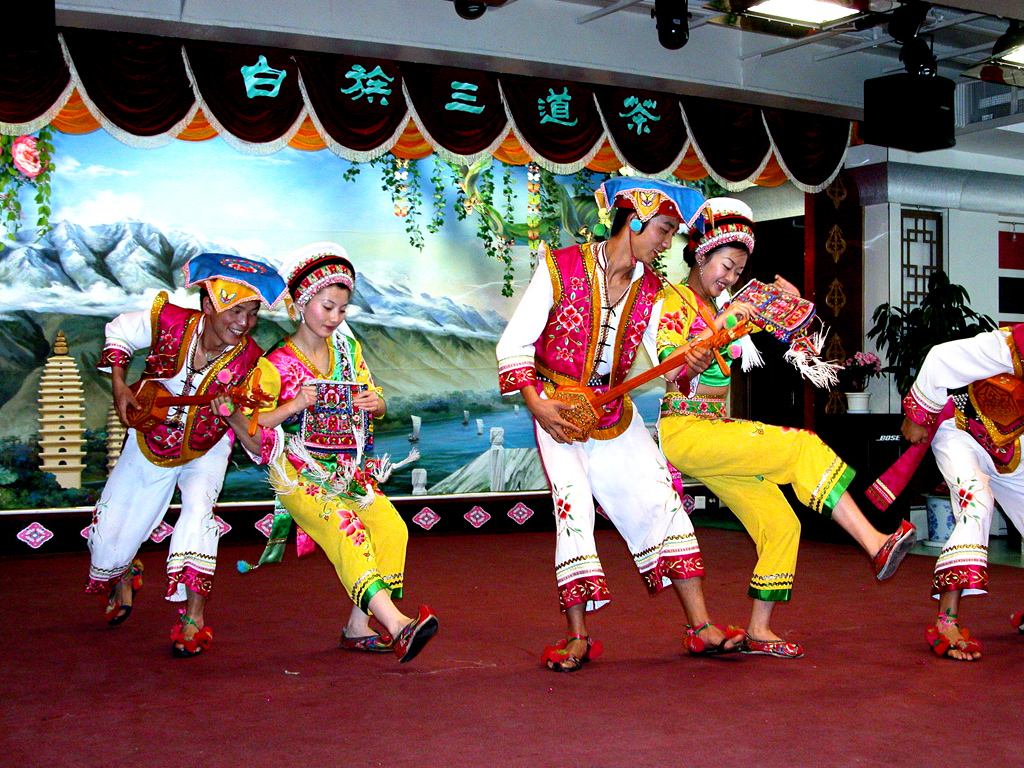
Centered around Dali and Shaxi, the Bai are master traders and craftspeople whose aesthetic sense shaped the region. Key cultural elements: tie-dye traditions (扎染, Zā Rǎn) using indigo from local plants and complex binding techniques passed through generations—workshops in Zhoucheng village offer hands-on classes (80-150 RMB for 2-3 hours), architecture with distinctive white walls, elaborate painted decorations, and carved eaves that require skilled craftsmen now becoming rare, and the three-course tea ceremony (三道茶, Sān Dào Chá) where bitter first cup represents life’s struggles, sweet second cup represents love and success, and aftertaste third cup represents reflection in old age.
Engage authentically: Book a homestay in rural Bai villages outside Shaxi (150-200 RMB including meals with the family). Participate in daily activities: tea picking in family plots, vegetable gardening using traditional methods, tie-dye making where you create your own piece. Evening meals with families build genuine connections that scripted cultural performances never achieve.
The Naxi (纳西族)
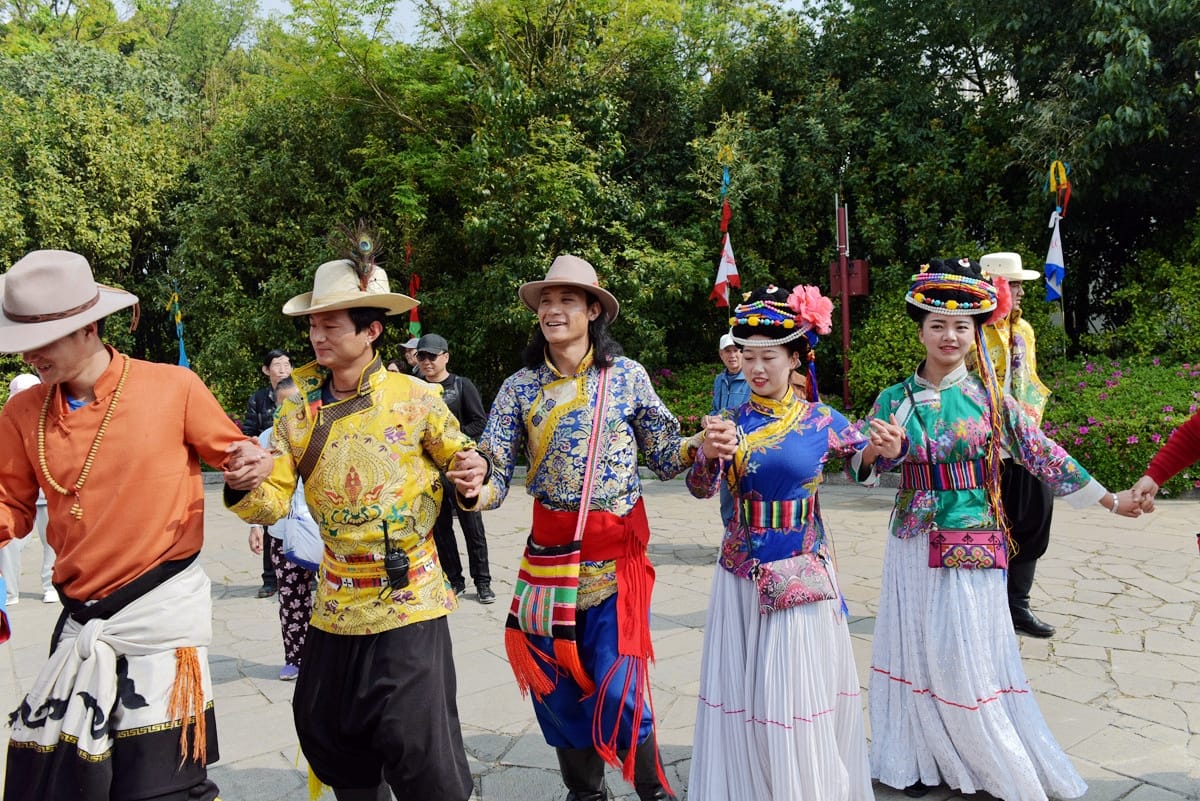
Based in Lijiang area, the Naxi are matrilineal with unique shamanic Dongba religion that predates Buddhism. Key elements: Dongba script using 1,400+ pictographic characters still taught to shamans and used for religious texts, music tradition where Lijiang ancient music orchestras preserve Tang Dynasty melodies using original instruments, architecture with wooden compounds, courtyards channeling water from Jade Dragon Snow Mountain, and distinctive women’s dress with “seven stars” back decorations representing Naxi origin myths from the Pleiades constellation.
Warning: Lijiang old town is over-touristed with commercialized everything. For authentic Naxi culture, visit Baisha village (8km north of Lijiang, accessible by public bus 6 RMB) where Dr. Ho’s clinic preserves traditional Naxi medicine, or stay in villages along Lashihai Lake where families still maintain traditional lifestyles mixing agriculture with tourism in balanced ways.
The Tibetans (藏族)

In areas around Shangri-La, Deqin, and higher elevations, Tibetan culture dominates completely. Daily prayers and butter lamp offerings at household shrines, horse culture where traditional societies revolve around horse breeding and racing competitions, architecture with stone houses featuring prayer flags and windows facing south/east to maximize precious sunlight, and sky burials where deceased are given to vultures—sacred practice that absolutely must not be observed by tourists without explicit community permission.
Respectful engagement requires learning:
- Basic Tibetan: “Tashi delek” (hello/blessing), “Thukje che” (thank you), “Kushok” (respectful address for monks)
- Cultural prohibitions: never touch someone’s head or hat (sacred), walk clockwise around stupas and temples always, don’t photograph prayer rituals without asking first
- Sky burial taboo: never request to observe or photograph sky burials—these are sacred death rites, not cultural performances
Planning Your Journey: Frameworks That Work
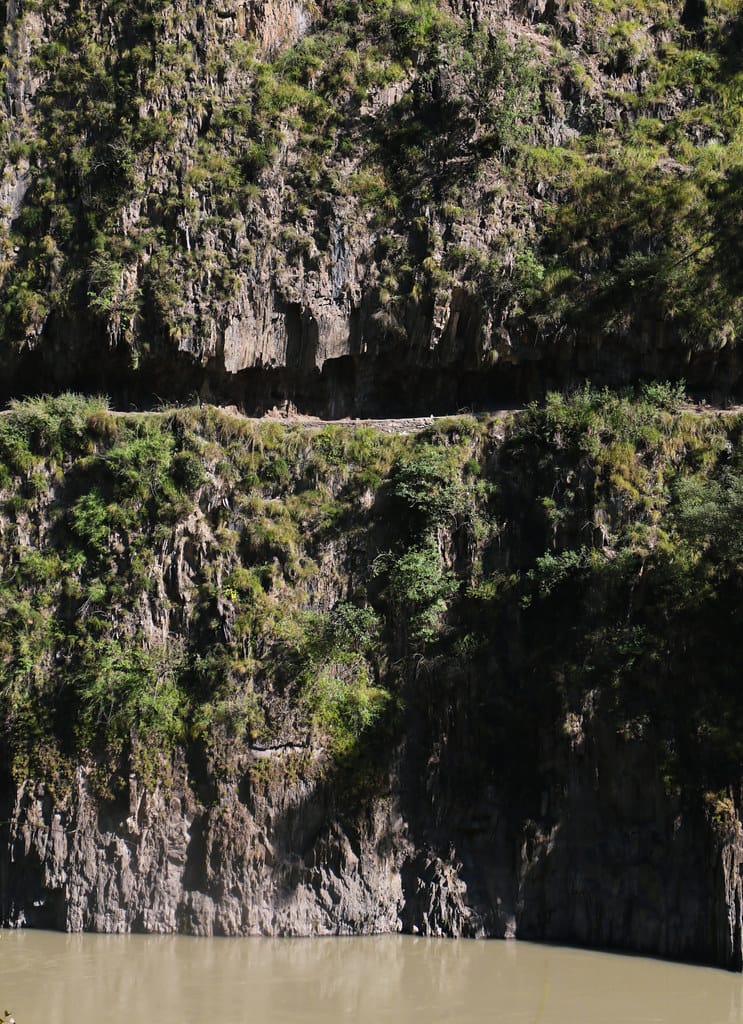
The 10-Day Essential Route
This gives you depth without rushing through experiences:
- Days 1-2: Kunming arrival, fly or high-speed train to Dali, explore old town and cycle around Erhai Lake
- Day 3: Drive to Shaxi (2.5 hours, 300 RMB private car or 40 RMB bus via Jianchuan), arrive by evening, Friday market preparation
- Day 4: Shaxi Friday market (predawn 5am start), afternoon trek to Shibaoshan grottoes or relax in town
- Day 5: Drive to Lijiang (2.5 hours), visit Baisha village for authentic Naxi culture
- Day 6: Tiger Leaping Gorge start from Qiaotou, trek to Halfway Guesthouse
- Day 7: Complete gorge trek to Tina’s, afternoon bus to Shangri-La
- Days 8-9: Shangri-La area including Songzanlin Monastery, Napa Lake cycling, Tibetan village homestay
- Day 10: Fly Shangri-La to Kunming or Chengdu for connections
Realistic costs: 8,000-12,000 RMB ($1,100-1,700 USD) mid-range including accommodation (mix of guesthouses and mid-range hotels), private drivers for some segments, meals at local restaurants, entrance fees and activities.
Best Seasons Based on Actual Conditions
Season | Temperature Range | Conditions | Best For | Avoid If |
|---|---|---|---|---|
March-May | 12-20°C days | Wildflowers, stable weather, fewer crowds | Photography, trekking, cultural tours | You need guaranteed dry weather |
June-August | 18-25°C days | Monsoon rains, landslides, peak tourist crowds | High-altitude sections only | Doing Tiger Leaping Gorge or any trekking |
September-November | 10-18°C days | Best weather, clear mountain views, harvest festivals | All activities—optimal season | Budget travel (prices peak) |
December-February | -5 to 10°C days | Cold, snow closures, lowest prices, authentic local life | Budget travelers avoiding crowds | You dislike cold or want guaranteed access |
Optimal season explained: September through early November offers best conditions: stable weather with minimal rain, clear mountain views for photography, comfortable temperatures neither too hot nor cold, harvest season bringing authentic agricultural activities, and traditional festivals occurring in many villages.
Documents and Current Regulations
- No permits needed: All Yunnan sections including Pu’er, Dali, Shaxi, Lijiang, Shangri-La, and Deqin
- Tibet permits required: Entering Tibet Autonomous Region from Yunnan requires Tibet Tourism Bureau permit taking 15-20 days to process, must book through registered travel agency paying 5,000-10,000+ RMB for permit plus mandatory guide and transport, cannot travel independently under any circumstances
- Border restrictions: Some areas near Myanmar border require additional permits—check current regulations before planning routes
Why This Journey Matters Now

Standing at high passes where prayer flags snap in wind so cold it burns your lungs, you understand something fundamental about human capacity.
For thirteen centuries, humans carried leaves from tropical forests to the roof of the world despite 10-15% mortality rates, despite passes where blizzards killed without warning, despite bandits and the hundred ways mountains can kill.
They did it because on both ends, people needed what the other had. This wasn’t adventure tourism. This was survival economics creating something larger—cultural exchange so profound that entire ethnic groups emerged from the mixing, languages blended into new dialects, religious practices merged creating unique syncretic forms, and genetic mixing visible today in faces showing Tibetan cheekbones on Han features.
Before we left his stone house, Tenzin Dawa said something that stayed with us: “Young people now fly from Kunming to Lhasa in two hours. They think that’s progress. Maybe it is. But they’ll never know what it costs to move something precious across mountains. They’ll never understand what we understood—that the hard path teaches you what the easy path cannot. When you walk our old roads, remember: every stone you step on, a thousand boots touched before yours. Honor that. The mountains remember even when people forget.“
Frequently Asked Questions
How difficult is Tiger Leaping Gorge really?
The 28 Bends section gains 400m in 2km—comparable to climbing 130 floors. Average hikers with basic fitness complete it in 2-3 hours with breaks. The full high trail spans 22-28km over two days. Altitude (2,000-2,700m) affects some people. Deaths have occurred from falls during bad weather or attempting the trail impaired. If you hike regularly, you’ll be fine. If you don’t exercise regularly, train beforehand or choose easier sections like Shaxi area treks.
Is Shaxi worth visiting if I’ve already been to Lijiang?
Yes, completely different experiences. Shaxi received 3 million visitors in 2024 compared to Lijiang’s 50+ million—fundamentally different scale. Shaxi preserves authentic architecture because UNESCO restoration used original materials and techniques, not demolish-and-rebuild. The Friday market remains a working agricultural market where locals actually shop. Lijiang old town is commercialized theme park where almost no locals live anymore. Shaxi is worth it specifically because it’s not Lijiang.
Do I need a guide?
For popular sections (Shaxi to Shibaoshan, Tiger Leaping Gorge), no—trails are well-marked, guesthouses are frequent, and other trekkers provide reassurance. For remote sections (Deqin area, secondary routes), yes—local guides know water sources, shortcut trails during emergencies, weather patterns, and can arrange village homestays impossible to find independently. Guides cost 300-500 RMB daily and provide cultural context worth far more than the navigation fee. Consider guides essential for cultural learning and remote area safety, optional for popular tourist routes.
What language skills do I actually need?
Basic Mandarin helps significantly. Download offline translation apps like Pleco or Google Translate with offline Chinese data. In villages, elderly locals often speak only minority languages (Bai, Tibetan, Naxi), but younger family members usually speak Mandarin fluently. Learn greetings in local languages: “Tashi delek” (Tibetan hello), “Kua dei” (Naxi hello), “Xièxiè” (thank you in Mandarin). Hand gestures, smiles, and patience communicate more than you’d expect—we had profound moments of connection with elders who spoke no Mandarin through shared tea and patience.
When is the absolute best time to visit?
September through early November offers optimal conditions: stable weather with minimal rain, clear mountain views for both photography and safety, comfortable temperatures requiring only light layers, harvest season bringing authentic agricultural activities you can participate in, and traditional festivals occurring in many villages. This is peak season with highest prices and most visitors, but crowds are nothing like peak season in Lijiang or Dali. March-May provides excellent alternative with wildflowers and fewer crowds but slightly less predictable weather.
Is altitude sickness a serious concern?
Yes, for routes above 2,500m. Shangri-La (3,280m) causes symptoms in 20-30% of visitors arriving quickly from lower elevations. Symptoms include headache, nausea, fatigue, sleep disruption, rapid heartbeat. Prevention: ascend gradually spending nights at intermediate elevations (Lijiang at 2,400m before Shangri-La at 3,280m), stay hydrated drinking 3-4L daily, avoid alcohol first 48 hours at altitude, consider Diamox if you’ve had previous altitude issues after consulting your doctor. Severe altitude sickness can be fatal—descend immediately if symptoms worsen despite rest. We met travelers hospitalized in Shangri-La from ignoring symptoms. Take it seriously.
How much does it actually cost?
Budget travelers: 5,000-8,000 RMB ($700-1,100 USD) for 10 days using local buses, basic guesthouses (80-150 RMB/night), simple meals (30-50 RMB each), and minimal entrance fees. Mid-range: 10,000-15,000 RMB with private drivers for some segments (600-800 RMB/day), comfortable hotels (200-400 RMB/night), quality meals (60-100 RMB), and organized day tours. Comfortable: 20,000-30,000 RMB for boutique hotels (400-800 RMB/night), private guides throughout, flexible transport, and premium experiences. Major costs: transport especially private drivers, accommodation in peak season, and organized guides for cultural depth.
Can I buy authentic Pu’er tea along the route?
Yes, but quality varies dramatically and tourist prices are heavily inflated. Best sources: tea factories near Pu’er city especially Jingmai Mountain where you can visit the actual tea forests, tea shops in Shaxi run by families who’ve traded for generations (ask locals for recommendations, not shops on main tourist streets), and direct from farmers in tea-growing villages if you spend time building relationships. A quality 357g Pu’er cake costs 100-400 RMB from reputable sources. Tourist shops charge 200-1,000+ RMB for equivalent quality. Learn to identify aged tea versus artificially darkened new tea. Consider hiring a knowledgeable guide for tea shopping if purchasing significant quantities—the investment pays off in avoiding expensive mistakes.