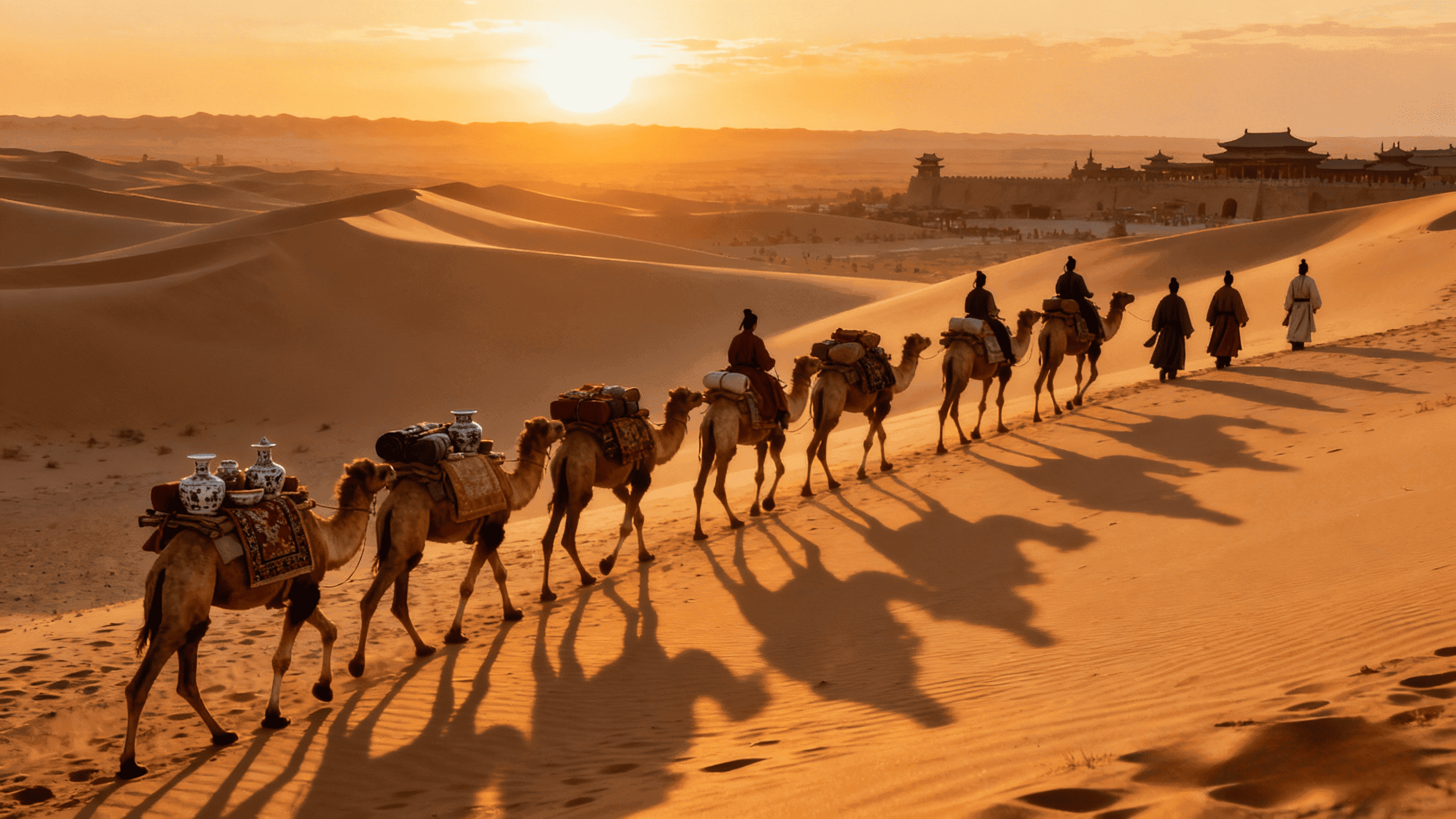
The Silk Road China: Complete Travel Guide
Standing at Mogao Cave 96 in Dunhuang, we watched morning light illuminate a 35-meter Buddha carved in 695 CE. Our Uyghur guide touched the ancient wall. “My grandfather’s grandfather traded on the Silk Road here,” he said quietly. “The ancient Silk Road never died. It just moved into our homes.“
That moment changed how we understand China’s Silk Road. It’s not museum history. It’s alive in every bazaar transaction, every recipe, every craft workshop we discovered across 4,000 kilometers of this legendary trade route.
Table of Contents
What Is the Silk Road?
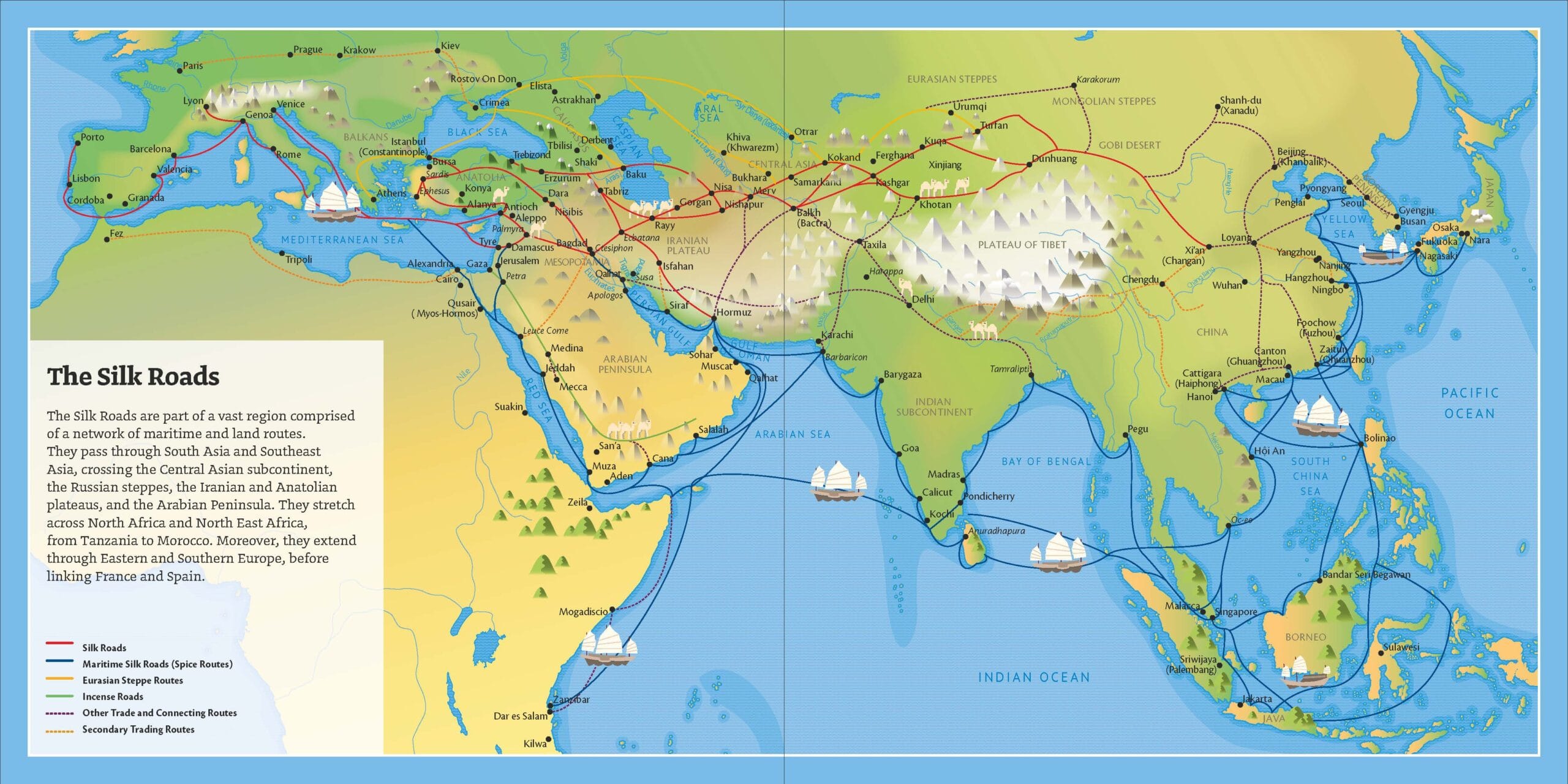
The term “Silk Road” misleads travelers. German geographer Ferdinand von Richthofen coined it in 1877, but no single road existed. Instead, picture a vast web of trading routes spanning 6,400 kilometers from Chang’an (modern Xi’an) to Rome.
These routes connected civilizations from 130 BCE to 1453 CE – nearly 1,600 years. Merchants didn’t just trade silk. They exchanged porcelain, spices, jade, Buddhism, Islam, Christianity, papermaking, and gunpowder across continents.
The network peaked during Tang Dynasty (618-907 CE). Chang’an hosted nearly one million residents. Markets buzzed with Persian merchants, Indian monks, and Sogdian traders conducting business in Chinese, Arabic, Persian, and Sanskrit.
Complete Silk Road Route: Major Cities
Here’s every significant stop along China’s Silk Road, organized for easy planning:
City | Elevation | Days | Distance from Previous | Must-See Sites |
|---|---|---|---|---|
Eastern Section | ||||
Xi’an | 400m | 2-3 | Start | Terracotta Warriors, Muslim Quarter |
Hexi Corridor | ||||
Lanzhou | 1,520m | 1 | 670km | Transit hub, Gansu Museum |
Zhangye | 1,470m | 2 | 260km | Rainbow Mountains (UNESCO) |
Jiayuguan | 1,600m | 1 | 230km | Great Wall fortress |
Dunhuang | 1,140m | 2-3 | 400km | Mogao Caves (UNESCO) |
Xinjiang | ||||
Turpan | -154m | 2 | 600km | Ancient cities, extreme heat |
Urumqi | 900m | 1 | 180km | Xinjiang Museum (mummies) |
Kashgar | 1,290m | 2-3 | 1,500km | Sunday Market, Old City |
Critical Distances:
- Xi’an to Dunhuang: 1,880km (flight + train combo)
- Dunhuang to Kashgar: 1,350km (flight required)
- Full China route: 4,000+ kilometers
Planning Your Silk Road Journey
How Long Do You Need for the Silk Road?
One Week (Minimum)
Xi’an (2) → Dunhuang (2) → Turpan (1) → Urumqi (1) + travel days
Touches highlights. Feels rushed. You’ll miss cultural depth entirely.
Two Weeks (Recommended)
Xi’an (2) → Zhangye (2) → Jiayuguan (1) → Dunhuang (3) → Turpan (2) → Urumqi (1) → Kashgar (3) + travel days
Allows proper exploration. This is what 75% of travelers choose.
Three Weeks (Comprehensive)
Add Hotan (jade markets, 2 days), Kuqa (Kizil Caves, 2 days), Tashkurgan (Pamir Highway, 2 days).
Enables off-trail exploration and deeper cultural immersion.
When to Visit: Month-by-Month Reality
Region | Best Period | Temperature | Critical Info |
|---|---|---|---|
Xi’an | Apr-May, Sep-Oct | 15-25°C (59-77°F) | Chinese holidays (May 1-5) = massive crowds |
Hexi Corridor | May-Jun, Sep-Oct | 18-28°C (64-82°F) | Spring sandstorms possible April |
Dunhuang | May, Sep-Oct | 20-30°C (68-86°F) | Book Mogao 30 days advance |
Turpan | May, Sep-early Oct | 20-35°C (68-95°F) | Jun-Aug = 40-50°C (dangerous) |
Kashgar | Apr-May, Sep-Oct | 15-28°C (59-82°F) | Ramadan affects restaurant hours |
Best overall: Late September to mid-October offers ideal temperatures (18-25°C), harvest festivals, fewer crowds, and crystal-clear skies.
Worst times:
- June-August: Turpan reaches 50°C. We’ve witnessed three tourists requiring medical evacuation for heat stroke in single July week.
- Chinese holidays (May 1-5, Oct 1-7): Prices increase 30-50%, crowds triple, train tickets sell out.
- December-February: Many sites close, temperatures drop to -20°C.
Transportation Between Cities
Route | Distance | Train Duration | Flight Duration | Our Recommendation & Cost |
|---|---|---|---|---|
Xi’an → Lanzhou | 670km | 3-4 hrs | 1.5 hrs | High-speed train ¥180-240 (scenic) |
Lanzhou → Zhangye | 550km | 4-5 hrs | No direct | Train ¥150-200 |
Zhangye → Jiayuguan | 230km | 1.5 hrs | No flights | Train ¥80-120 |
Jiayuguan → Dunhuang | 400km | 3 hrs | 50 min | Train ¥120-160 (cheaper) |
Dunhuang → Turpan | 600km | No train | 1 hr + 2hr drive | Flight ¥400-700 + vehicle |
Turpan → Urumqi | 180km | 2 hrs | 40 min | Train ¥50-80 |
Urumqi → Kashgar | 1,500km | 16 hrs | 2 hrs | Flight ¥500-900 (essential) |
Critical Transportation Tips:
- Book high-speed rail tickets exactly 30 days in advance online (12306.cn) for best prices
- Xinjiang airports require 3-4 hours pre-departure for security screening
- Private vehicles with drivers: ¥1,200-1,800 daily (vehicle + driver + fuel + tolls)
- Download offline maps – Google Maps blocked in China, use Baidu Maps
Tour Costs: Realistic Budget
Quick reference based on our 20+ years operating tours:
Private Tours (per person):
- 10-day budget (10-14 people): $2,200-2,800
- 10-day mid-range (6-10 people): $3,200-3,900
- 10-day premium (4-6 people): $4,500-5,400
- 14-day mid-range: $4,800-5,800
- 14-day premium: $6,800-8,200
Private Tours (2 people):
- 10 days: $3,800-10,500 depending on hotel standards
- 14 days: $5,800-16,500 depending on hotel standards
What’s typically included: Domestic transport, accommodation, English-speaking guides, entrance fees, some meals (usually breakfast + 50% other meals).
NOT included: International flights ($800-1,800), China visa ($140-185), travel insurance ($100-180), personal expenses, tips ($10-15/day recommended).
Independent travel daily budget:
- Budget: $100-200 (3-star hotels, public transport, street food)
- Mid-range: $350-550 (4-star hotels, mix of transport, restaurant meals)
- Luxury: $700+ (5-star hotels, private drivers, premium experiences)
Detailed Silk Road Itineraries
10-Day Classic Silk Road Route
Day | Destination | Activities | Accommodation |
|---|---|---|---|
1 | Arrive Xi’an | Hotel check-in, rest, evening Muslim Quarter food tour | Xi’an |
2 | Xi’an | Morning: Terracotta Warriors; Afternoon: City Wall bike tour | Xi’an |
3 | Xi’an → Dunhuang | Morning flight, afternoon rest, evening Shazhou Night Market | Dunhuang |
4 | Dunhuang | Morning: Mogao Caves + Digital Exhibition; Afternoon: rest | Dunhuang |
5 | Dunhuang | Morning: Yadan Geopark; Evening: Mingsha Sand Dunes sunset | Dunhuang |
6 | Dunhuang → Turpan | Flight + 2hr drive | Turpan |
7 | Turpan | Early morning: Jiaohe Ancient City; Afternoon: Grape Valley, Karez System | Turpan |
8 | Turpan → Urumqi | Morning: Flaming Mountains drive-by; Afternoon: train to Urumqi | Urumqi |
9 | Urumqi | Morning: Xinjiang Museum; Afternoon: Grand Bazaar shopping | Urumqi |
10 | Depart Urumqi | Morning flight home or onward travel | – |
14-Day Comprehensive Silk Road Journey
Day | Destination | Activities | Accommodation |
|---|---|---|---|
1 | Arrive Xi’an | Hotel check-in, rest, Muslim Quarter evening | Xi’an |
2 | Xi’an | Terracotta Warriors, City Wall, Giant Wild Goose Pagoda | Xi’an |
3 | Xi’an → Zhangye | High-speed train to Lanzhou, transfer to Zhangye | Zhangye |
4 | Zhangye | Sunrise at Danxia Geopark, afternoon Binggou Danxia | Zhangye |
5 | Zhangye → Jiayuguan → Dunhuang | Morning: Giant Buddha Temple; Afternoon: train to Jiayuguan, evening train to Dunhuang | Dunhuang |
6 | Jiayuguan | Sunrise at Jiayuguan Fortress, Overhanging Wall, First Beacon Tower | Dunhuang |
7 | Dunhuang | Mogao Caves (advance booking required) | Dunhuang |
8 | Dunhuang | Yadan Geopark, evening Mingsha Sand Dunes | Dunhuang |
9 | Dunhuang → Turpan | Flight + drive | Turpan |
10 | Turpan | Early morning Jiaohe, Grape Valley, Karez, evening local dinner | Turpan |
11 | Turpan → Urumqi → Kashgar | Morning train to Urumqi, afternoon flight to Kashgar | Kashgar |
12 | Kashgar | Old City exploration, Id Kah Mosque, Abakh Khoja Tomb | Kashgar |
13 | Kashgar | Sunday Market (if Sunday), afternoon handicraft workshops | Kashgar |
14 | Depart Kashgar | Morning departure | – |
21-Day Ultimate Silk Road Experience
Add to 14-day itinerary:
- Days 15-16: Hotan (jade markets, carpet factories, White Jade River)
- Days 17-18: Kuqa (Kizil Caves, Subashi ruins)
- Days 19-20: Tashkurgan (Karakul Lake, Pamir Highway, Stone Fort – permits required)
- Day 21: Return to Kashgar for departure
Pro planning tips:
- Book Mogao Caves tickets exactly 30 days in advance
- Xinjiang flights often have weather delays – build buffer days
- Sunday Market in Kashgar is worth adjusting schedule for
- Avoid traveling on Chinese holidays (May 1-5, Oct 1-7)
China Visa and Xinjiang Permit Information
2026 China Visa-Free Countries (30-Day Stay)
Great news! As of November 2025, China extended visa-free entry through December 31, 2026 for citizens of 46 countries:
- Europe (34 countries): Germany, France, Italy, Spain, Netherlands, Belgium, Luxembourg, Austria, Switzerland, Ireland, Hungary, Poland, Portugal, Greece, Cyprus, Denmark, Norway, Sweden, Finland, Iceland, Slovenia, Slovakia, Bulgaria, Romania, Croatia, Estonia, Latvia, Montenegro, North Macedonia, Malta, Andorra, Monaco, Liechtenstein
- Asia-Pacific (6): Japan, South Korea, Australia, New Zealand, Brunei, Singapore
- Americas (5): Brazil, Argentina, Chile, Peru, Uruguay
- Middle East (4): Saudi Arabia, Oman, Kuwait, Bahrain
- Russia: Separate visa-free policy (valid through September 14, 2026)
Visa-free conditions:
- Stay up to 30 days
- Purposes: Tourism, business, family visits, cultural exchange, transit
- Cannot engage in paid employment
- Passport valid for 6+ months beyond departure date
DIG DEEPER: 30-Day Visa-Free Policy in China: Everything You Need to Know
For other nationalities:
Standard tourist visa (L visa) required:
- Application time: 4-5 business days (can expedite)
- Cost: $140-185 depending on nationality
- Validity: Usually 3-6 months with 30-day stay
- Required documents: Passport with 6 months validity, completed application form, hotel bookings, round-trip flight tickets, passport photo, proof of funds
Apply through: Chinese embassy/consulate in your home country or visa service centers
Xinjiang Travel Permits: What You Need to Know
Good news: Most Silk Road destinations do NOT require special permits.
No permit needed for:
- Urumqi
- Kashgar (city)
- Turpan
- Hotan (city)
- Kuqa
- Korla
Permit REQUIRED for these border areas:
1. Tashkurgan County + Karakul Lake (Pamir Highway)
- Application time: 5-7 days before arrival
- Must apply through licensed travel agency
- Required documents: Passport copy, valid China visa, entry flight/train details
- Cost: Usually included in tour package or ¥200-300 if arranging separately
2. Bayinbuluk Grassland + Duku Highway (G217)
- Application time: 60-90 days in advance (strict!)
- Only a few authorized agencies can process
- Required: Passport, visa, detailed itinerary, sometimes photo
- Cost: ¥300-500
3. Other restricted areas (foreigners NOT allowed):
- Baihaba Village
- Red Flag Lapopu Border
- Khunjerab Pass China-Pakistan border (restricted access)
How to get Xinjiang permits:
Option 1: Through tour operator (recommended)
- We handle all permit applications
- Included in our tour packages
- No hassle, guaranteed approval
- Submit documents 10-15 days before travel
Option 2: Apply yourself in Xinjiang
- Go to Public Security Bureau (PSB) in Kashgar or Urumqi
- Bring passport, visa, hotel bookings, detailed itinerary
- Approval takes 1-2 hours to 2 days
- No guarantee of approval
- Difficult to find correct office
Important permit notes:
- Carry physical permit copies at all checkpoints
- Independent travel to restricted areas generally not allowed
- Permits specify exact dates and routes
- Cannot extend once issued
Travel insurance recommendation: Get comprehensive coverage including:
- Medical evacuation from remote areas (essential)
- Trip cancellation/interruption
- Lost luggage
- Coverage for Xinjiang region (some policies exclude it)
Cost: $100-180 for 2-3 weeks Recommended providers: World Nomads, Allianz, Travel Guard
Essential Silk Road Destinations
Xi’an: Where It All Began (2-3 Days)

Terracotta Warriors prove early Silk Road trade existed before official establishment. The tomb complex used lapis lazuli from Afghanistan (4,000km away), gold from Central Asia, and jade from Hotan. This demonstrates international networks predating Zhang Qian’s 138 BCE mission.
Insider visiting strategy: Arrive at 8:30 AM sharp when gates open. By 10 AM, tour groups flood all pits. We’ve timed this 6 times – early visits have 70% fewer crowds.
Most tourists spend 90% of time in Pit 1 (the impressive army formation) and rush Pits 2-3. But Pit 3 offers more intimate experience – the command headquarters with officers showing distinct facial expressions and tactical positions.
Cost: ¥120 (book 7 days ahead at www.bmy.com.cn) Time needed: 3 hours minimum, 4 hours ideal Money-saving tip: Public bus #306 from Xi’an train station costs ¥7 vs. taxi ¥180-200
Muslim Quarter – Beyond Tourist Traps

Hui Muslims descended from 7th-century Arab and Persian traders maintain 1,300-year-old communities here. But 80% of Beiyuanmen Street sells tourist junk now.
Where locals actually eat:
- Yangrou paomo: Lao Sun Jia Restaurant (老孙家, established 1898, ¥35-45) – break flatbread into pieces, add to rich lamb soup
- Biangbiang noodles: Yongmingqi (永明岐, ¥15-20) – hand-pulled noodles named for the sound of slapping dough
- Roujiamo (Chinese hamburger): Qinyu Roujiamo (秦豫肉夹馍, ¥12) – crispy flatbread with braised pork
Visit 6-8 PM when locals shop for dinner. Avoid restaurants with English picture menus and staff standing outside soliciting customers.

Xi’an City Wall Rent bikes at South Gate, cycle counter-clockwise (easier ramp climbs). Complete 13.7km circuit takes 2-3 hours. Sunset timing (5-7 PM) offers best light for photography.
Cost: ¥54 entrance + ¥45 bike (2 hours) or ¥90 (4 hours)
Zhangye: Rainbow Mountains (2 Days)
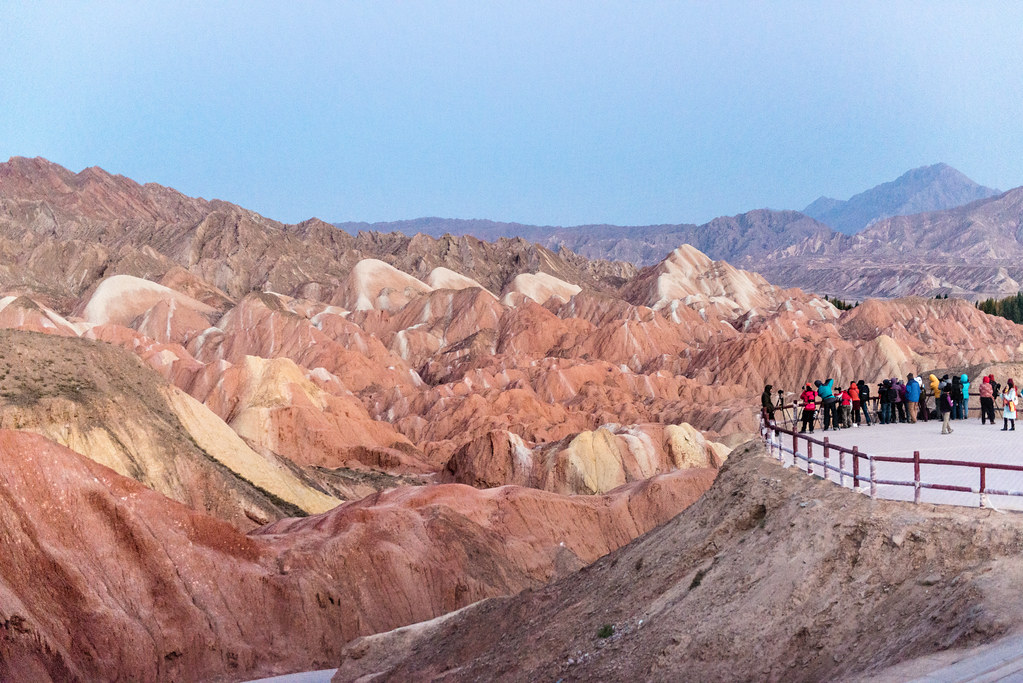
Danxia National Geological Park creates surreal multi-colored mountains formed over 24 million years through mineral deposits and tectonic collisions. UNESCO Global Geopark since 2020.
Photography timing matters:
- Sunrise (6-7 AM): Soft light, 80% fewer people, cooler temperatures (15-20°C vs. 30°C+)
- Sunset (5-7 PM): Dramatic golden light, intense crowds (3,000+ people), best colors
- Overcast days: Colors appear more vivid without harsh shadows – counterintuitive but true
We prefer Viewing Platform 4 for sunrise, Platform 1 for sunset. Most tourists only visit Platforms 1-2.
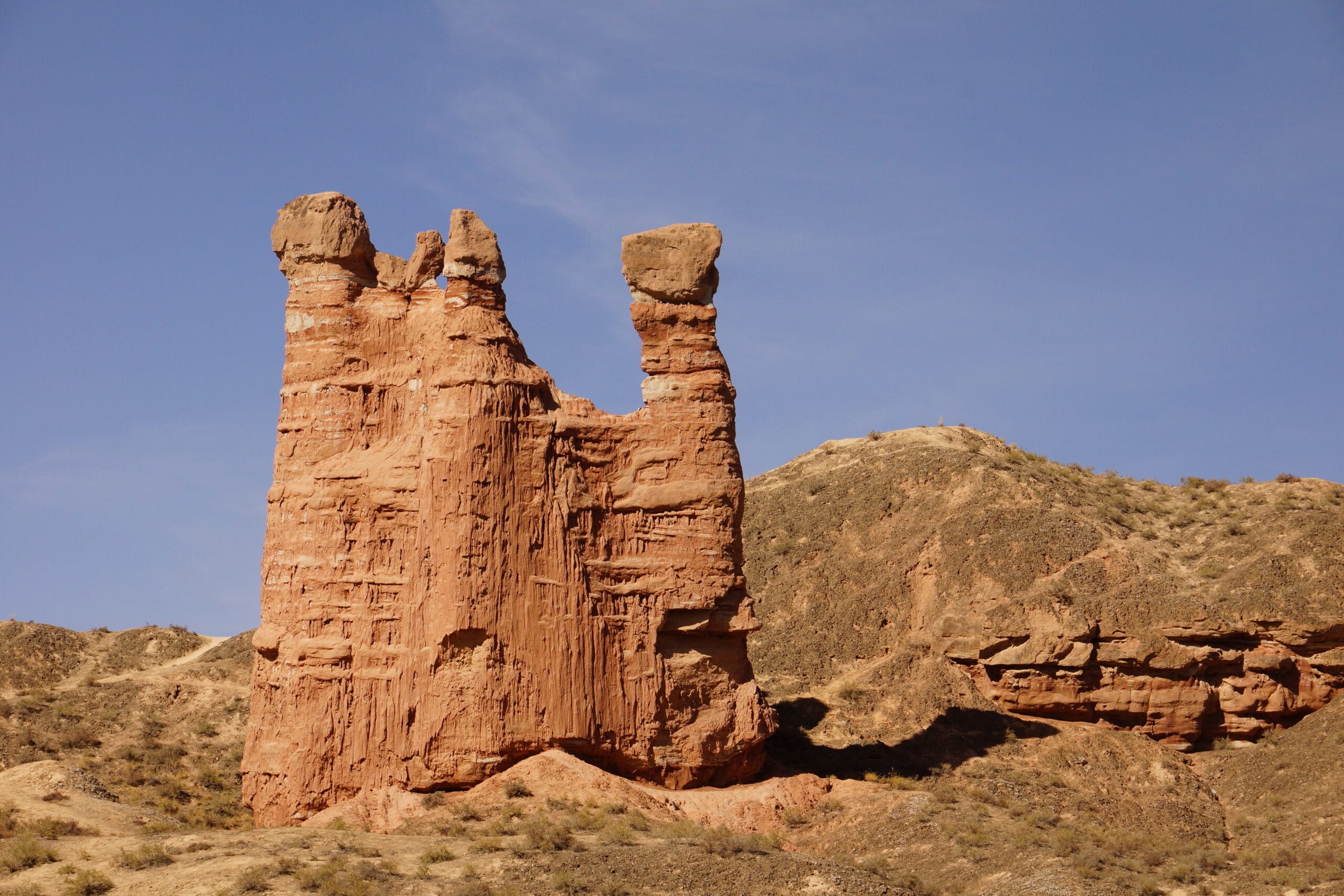
Binggou Danxia Park (17km away, separate entrance) receives 90% fewer visitors. Formations emphasize dramatic erosion patterns over colors. If you enjoy photography without crowds fighting for tripod space, this beats the main park.
Cost: Main park ¥75 + mandatory shuttle ¥20; Binggou ¥60 Pro tip: Stay two nights in Zhangye. Day 1 main park at sunset, Day 2 Binggou at sunrise + Giant Buddha Temple.
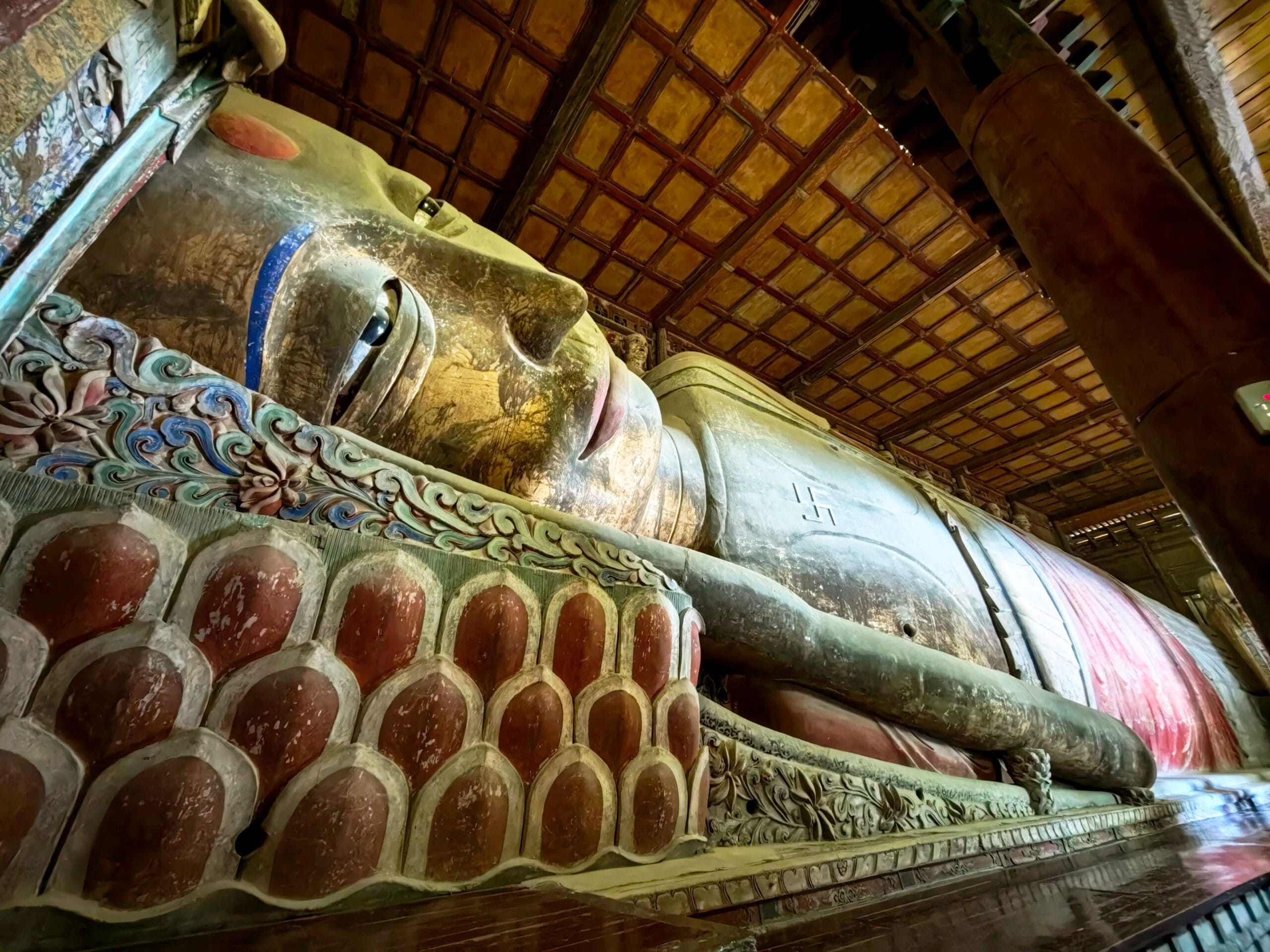
Giant Buddha Temple Houses China’s largest indoor reclining Buddha (34.5 meters). Built 1098, Kublai Khan was born in this temple complex in 1215. The wooden architecture predates Beijing’s Forbidden City by 300 years.
Cost: ¥41
Jiayuguan: The Last Fortress (1 Day)
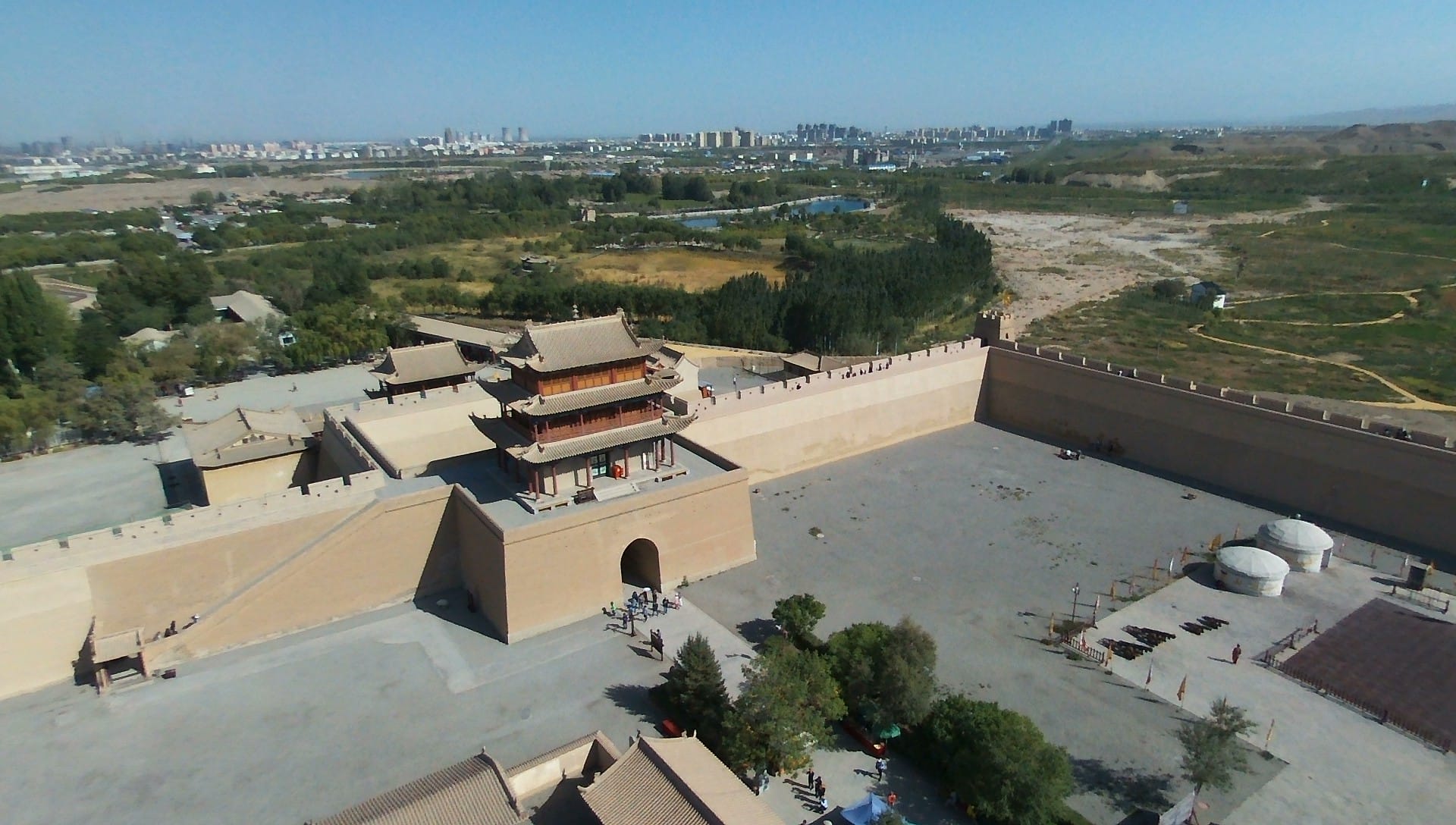
Jiayuguan Fortress marks where Ming Great Wall ends in Gobi Desert. Completed 1372, the 10-meter walls once stored grain for 1,000 soldiers guarding the narrowest point between Qilian Mountains and desert.
Sunrise visit (6:30-8 AM summer, 7:30-9 AM spring/autumn) offers dramatic light illuminating fortress, desert, and snow-capped mountains simultaneously. Plus, you’ll have the fortress nearly alone for 30-40 minutes.

The Overhanging Great Wall clings to Black Mountain at 45-degree angle. Only 750 meters survive from original Ming construction. The steep physical challenge reveals why this section deterred invaders – climbing in 35°C heat while wearing armor would be impossible.
Combination ticket: ¥110 covers fortress, Overhanging Wall, and First Beacon Tower Transportation: Hire taxi full day (¥200-250) or join small group tour (¥120-150 per person with transport + guide)
Dunhuang: The Desert Crossroads (2-3 Days)

Mogao Caves contain 492 Buddhist caves carved 366-1368 CE, housing 45,000 square meters of murals – humanity’s most extensive continuous Buddhist art collection.
Booking reality check: Standard tickets show 8 random caves plus 2 digital films. You cannot choose which caves. Daily limit: 6,000 visitors. May-October books out 30 days in advance.
Foreign traveler challenge: Online booking requires Chinese phone number and ID. Solutions:
- Book through tour operator (adds ¥50-100 service fee but guaranteed)
- Visit Digital Exhibition Center ticket office at 7:30 AM (limited foreign quota, first-come basis)
- Emergency “B” tickets (¥100, only 4 caves, Chinese-language only, same-day availability)
Standard ticket: ¥238 (includes 2 digital films + 8 caves + 4 related museums)
Caves you’re likely to see:
- Cave 96: 35-meter seated Buddha (Tang Dynasty, 695 CE) – visible from outside, always included
- Cave 17: Library Cave where 50,000 manuscripts were discovered in 1900 (most now in British Museum – controversial)
- Cave 148: 158-meter reclining Buddha (Tang Dynasty)
- Caves 419, 420: Well-preserved Sui Dynasty (581-618 CE) murals
Photography: Strictly forbidden inside caves. Confiscation of devices for violations. Metal detectors at cave entrance.
Mingsha Sand Dunes and Crescent Moon Spring
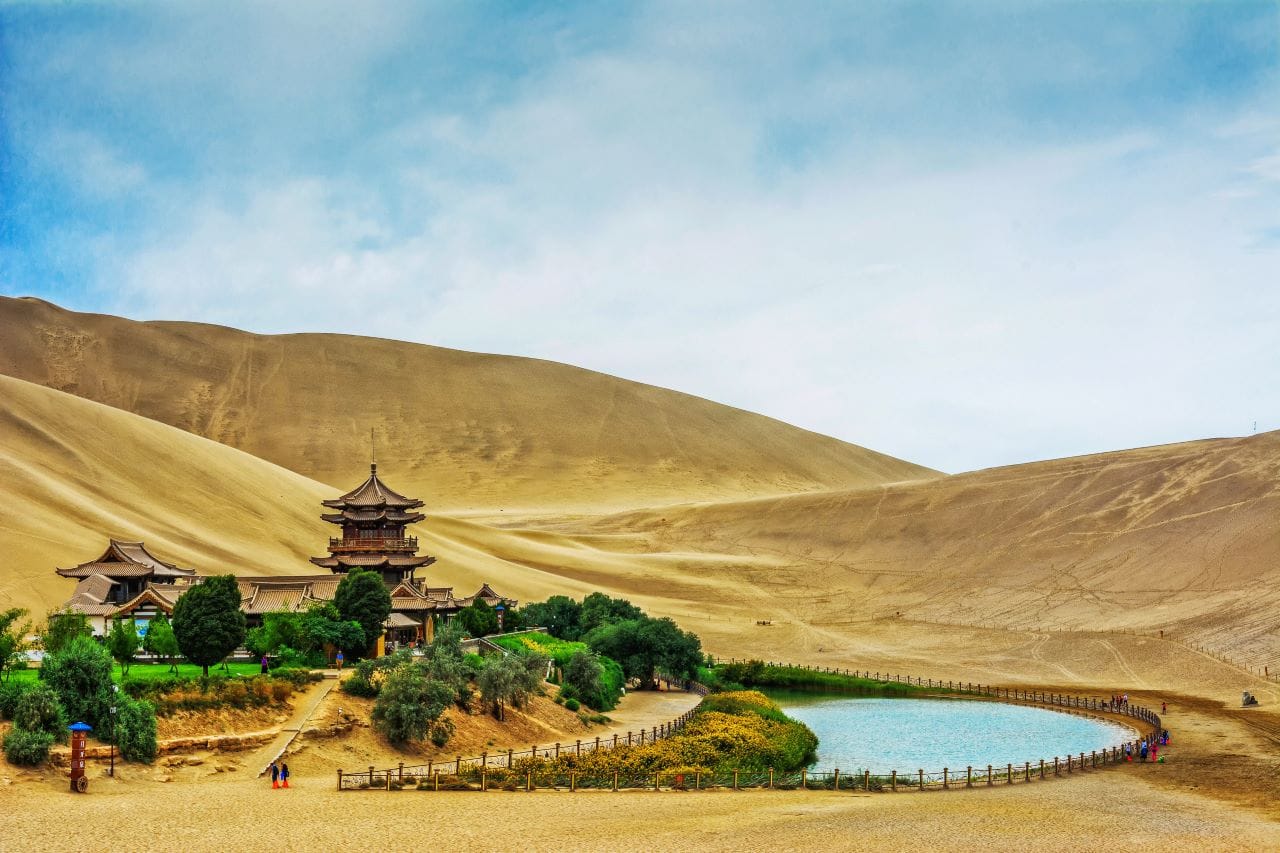
The spring has survived 2,000 years despite 250-meter sand dunes surrounding it. Recent years saw water level dropping due to groundwater extraction – government pumps now maintain it artificially.
Activities and real costs:
- Camel rides: ¥120 for 30-minute 2km trek (negotiable to ¥100 if you haggle)
- Sand sledding: ¥25
- Helicopter tours: ¥1,500 (8 minutes)
- Sunrise dune climbs: Free with entrance
We recommend sunset visits (5-7:30 PM). Temperature drops from 35°C to 25°C, light turns golden, and camel silhouettes create dramatic photos.
Cost: ¥110 (valid 3 consecutive days if you register fingerprint at entrance) Pro tip: Wear closed shoes. Sand reaches 50-60°C in summer, causing burns through thin soles. Bring 2+ liters water – no vendors once inside.
Turpan: Silk Road Desert Oasis (2 Days)
Turpan sits 154 meters below sea level, making it China’s lowest point and hottest location along the ancient Silk Road. Summer regularly exceeds 45°C. Yet 2,000-year-old irrigation systems enabled thriving Silk Road cities here.
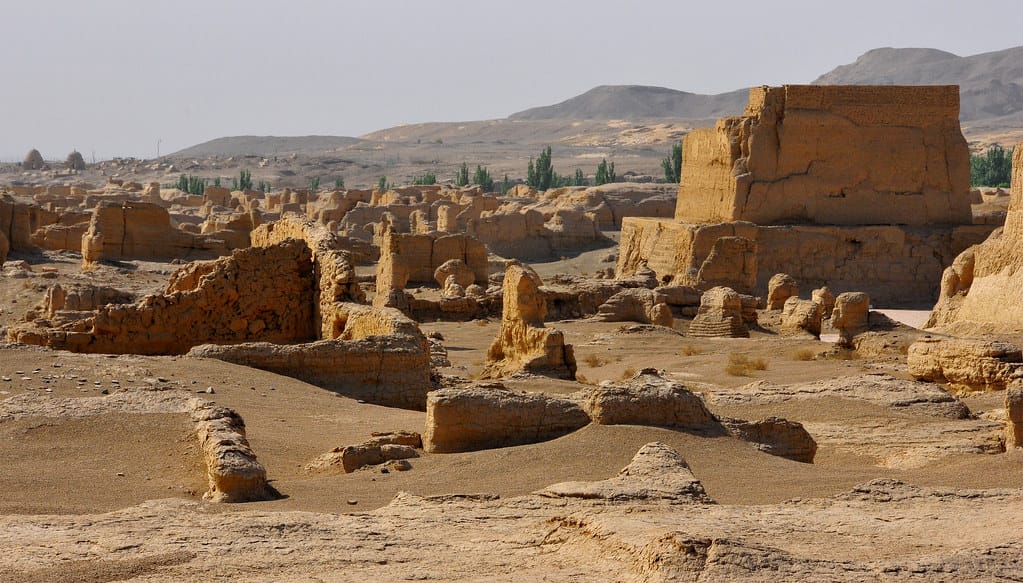
Jiaohe Ancient City was one of the world’s largest earth-architecture Silk Road cities until recent rain damage. Built 200 BCE entirely by carving down into loess plateau cliff – a unique Silk Road construction method.
Critical safety warning: Visit before 9 AM or you risk heat exhaustion. In July 2023, three tourists required hospitalization after visiting at 2 PM. Afternoon temperatures on exposed earth surface reach 55-60°C.
We’ve visited 4 times – best experience was 7 AM visit when temperature was 22°C, light was soft, and we had the ruins nearly alone for 45 minutes.
Cost: ¥70 Time: 1.5-2 hours (longer if weather cool)
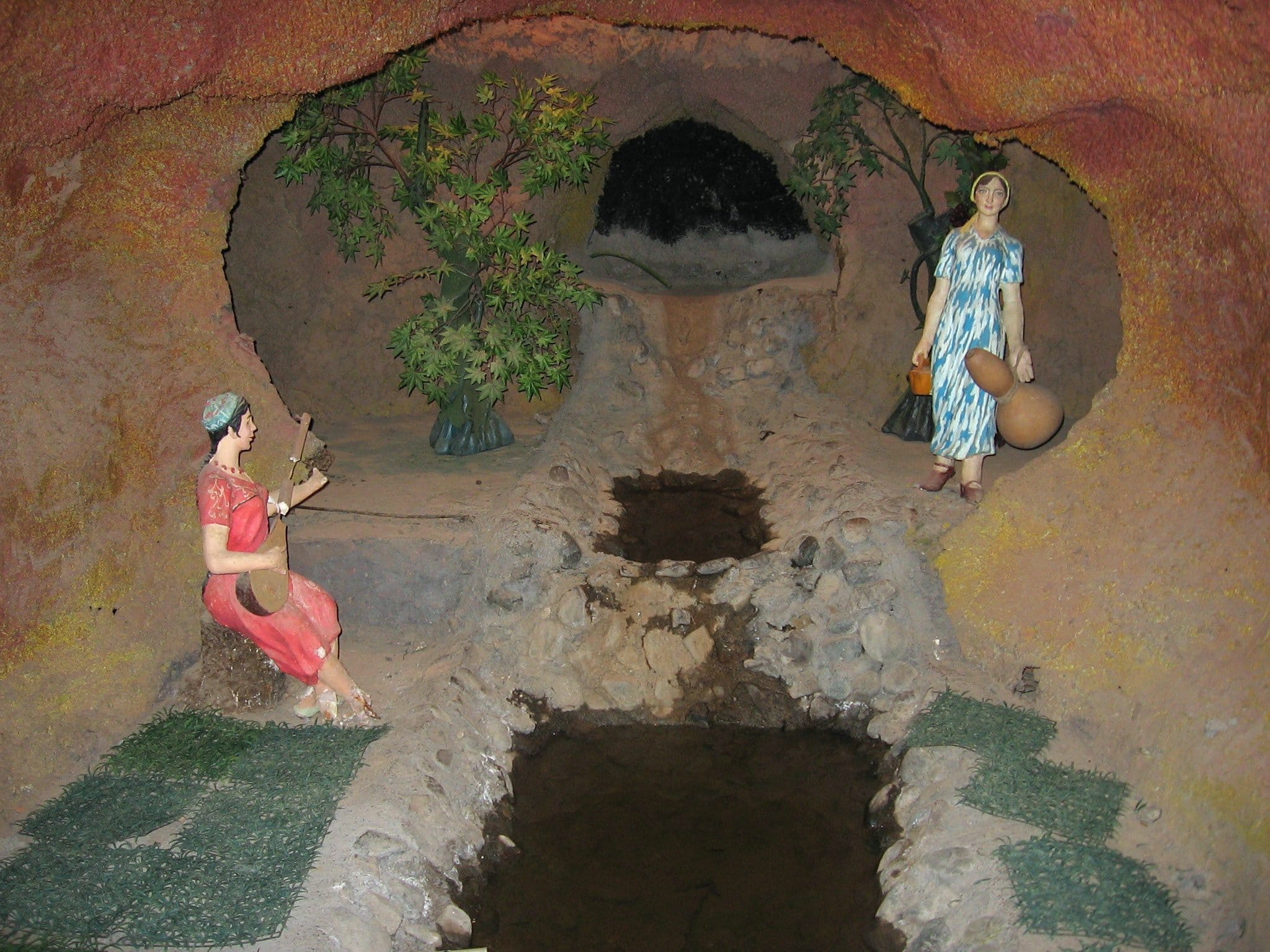
Karez System Museum Explains the ingenious underground irrigation bringing snowmelt from Tianshan Mountains 100 kilometers away. Turpan’s 1,000+ kilometers of karez tunnels still supply 40% of irrigation using 2,000-year-old engineering.
Workers dug vertical shafts every 20-30 meters, then connected them underground. This prevented evaporation in extreme heat – brilliant solution for desert agriculture.
Cost: ¥40 Practical value: Understand why ancient civilizations thrived here despite brutal conditions
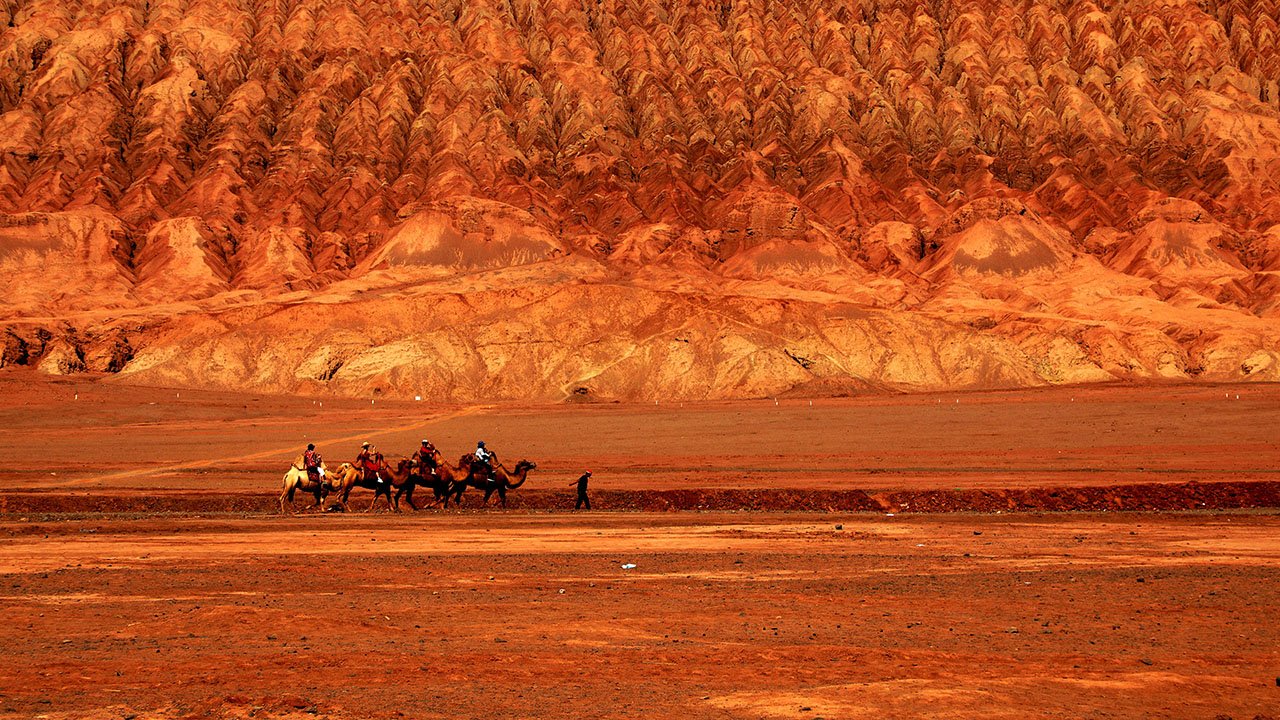
Flaming Mountains Named for red iron oxide coloration and extreme surface temperatures – scientists recorded 67°C (152°F) in summer 2019. The mountains gained fame from 16th-century novel “Journey to the West” where Monkey King fought fire demons.
There’s a giant thermometer monument tourists photograph. Skip the ¥40 entrance unless you’re a “Journey to the West” super-fan. Best viewed while driving between Turpan and Grape Valley.

Grape Valley stays 15-20°F cooler than surroundings thanks to overhead grape trellises creating natural shade. Sample 40+ grape varieties. August-September offers fresh grapes; raisins available year-round from traditional drying houses using ventilation instead of heat.
Cost: ¥75
Turpan summer survival tips:
- Visit June-August ONLY if you have serious heat tolerance
- Carry 3+ liters water daily (dehydration happens fast)
- Schedule ALL outdoor activities before 10 AM or after 5 PM
- Wear light-colored, long-sleeved clothing for sun protection
- Take mandatory midday breaks in air-conditioned hotels
Kashgar: Western Silk Road Terminus (2-3 Days)
Kashgar marks the western end of China’s Silk Road, feeling like entering Central Asia. Located 2,500 miles from Beijing but 250 miles from Kyrgyzstan, this historic Silk Road city retains authentic Uyghur character.

Old City underwent controversial 2009-2015 reconstruction. Government demolished 85% of traditional homes citing earthquake concerns. Critics argue this destroyed irreplaceable cultural heritage. What remains or was rebuilt still offers narrow alleys where craftsmen maintain centuries-old crafts.
How to explore respectfully:
- Request permission before photographing people (“Sura cheklisam bolam?” in Uyghur)
- Show subjects photos afterward – builds rapport
- Small gifts (¥5-10) appreciated if you photograph craftspeople extensively
- Don’t photograph women without explicit permission

Sunday Market (大巴扎) operates daily but expands dramatically Sundays. The livestock section (8-11 AM) sees farmers trading sheep, cattle, horses, camels in traditional manner unchanged for centuries.
We watched a carpet negotiation last 45 minutes. Both parties drank three rounds of tea. Seller examined knot density (600 knots per square inch), checked wool quality, discussed natural dye colors. Seller quoted ¥5,000. Buyer offered ¥2,000. They settled ¥3,200 after friendly haggling. Both seemed satisfied.
Sunday crowds: 100,000+ people. Pickpockets active in dense areas. Keep valuables in front pockets or money belt.
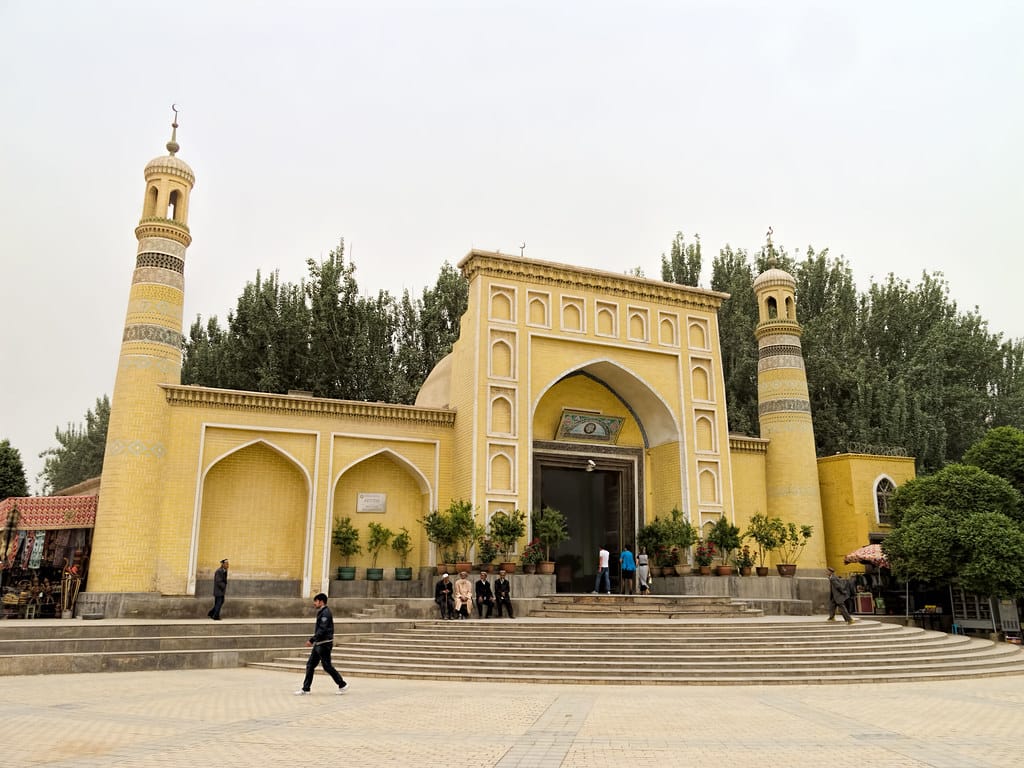
Id Kah Mosque China’s largest mosque, built 1442, accommodates 20,000 worshippers. Non-Muslims may visit outside five daily prayer times (dawn, midday, mid-afternoon, sunset, evening – times vary by season).
Dress code: Women must cover hair, arms to wrists, legs to ankles. Men should wear long pants. Scarves available for rent (¥10) if needed.
Cost: ¥45
Where to eat (not touristy):
- Polo (pilaf): Small restaurant locals call “Ablajan’s” near Yaks Street. No English sign. Go 12:30-1:30 PM. ¥25-30 per person.
- Morning samsa (烤包子): Vendors in Old City with tandoor ovens dug into walls. Fresh batches 11 AM and 5 PM. ¥3-5 each.
- Kebabs: Night market vendors near People’s Park. Look for ones using only lamb ribs, cumin, salt. ¥3 per skewer.
Urumqi: Modern Transit Hub (1 Day)

Xinjiang Regional Museum houses “Tarim Mummies” – 3,800-year-old naturally preserved bodies showing European features. “Loulan Beauty” (died ~1800 BCE) and “Cherchen Man” (died ~1000 BCE) prove diverse ethnic groups inhabited Xinjiang millennia ago.
The mummy hall explains controversies around ethnic claims. Display is educational and scientifically accurate.
Admission: Free with passport (register at entrance) Hours: Wednesday-Monday 10 AM-6 PM (last entry 5 PM) Photography: Allowed except in mummy hall
Use Urumqi as one-night transit between Turpan and Kashgar. The city itself offers limited tourist appeal besides the museum.
Living Silk Road Culture
Food: Where Silk Road Cuisines Collide
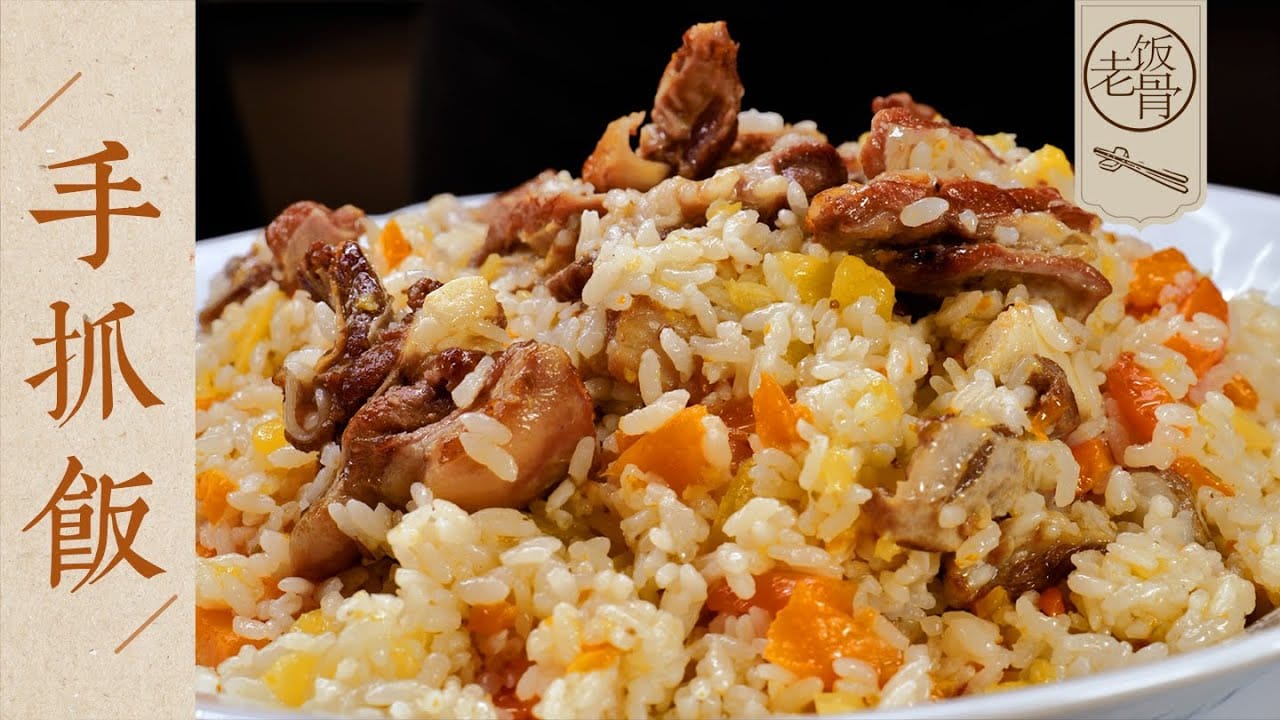
Polo (手抓饭) came from Persian pilaf along the Silk Road ~1000 years ago. Xinjiang versions evolved distinct Silk Road characteristics:
- Uyghur: Mutton fat, cumin, chili flakes, less liquid
- Kazakh: Beef, dried apricots, raisins, more oil
- Uzbek: Chicken option, chickpeas, julienned carrots
The rice is special – grown in Xinjiang’s unique soil and climate. When properly made, each grain remains separate, not clumped.
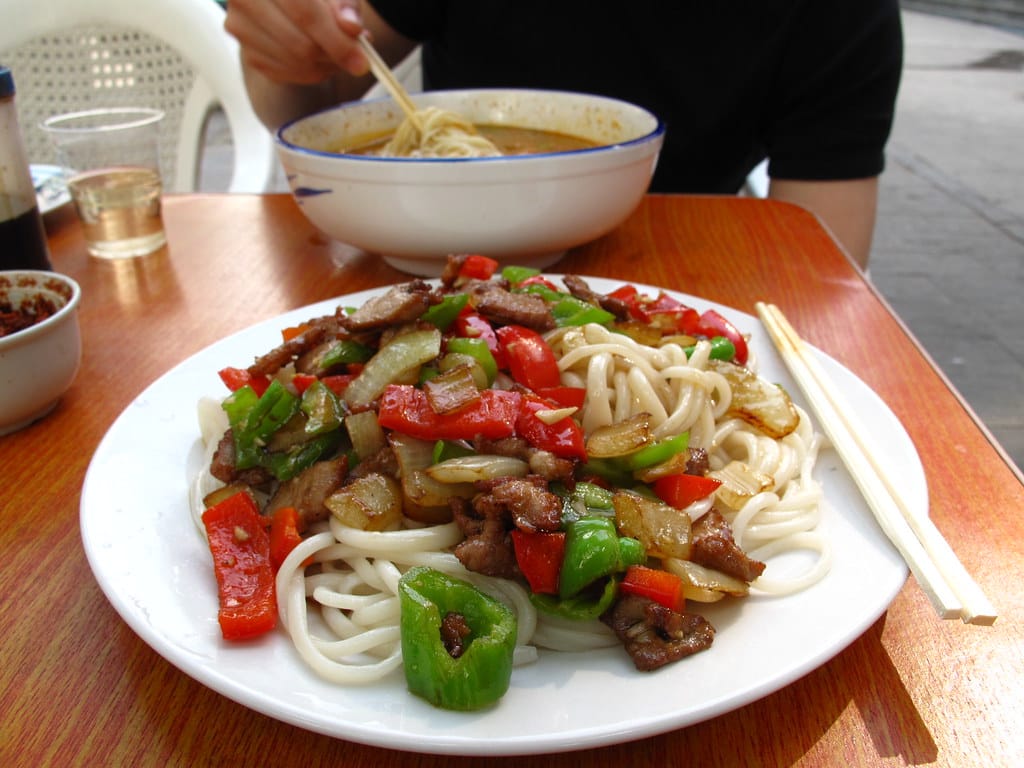
Laghman (拉条子) hand-pulled noodles demonstrate skill perfected over years. Chefs stretch dough into 2-meter strands through rhythmic motions. The thick tomato-pepper-lamb sauce blends Chinese stir-fry technique with Central Asian spice profiles.
Watch noodle-making demonstrations at Erdaoqiao Market in Urumqi (free entertainment).
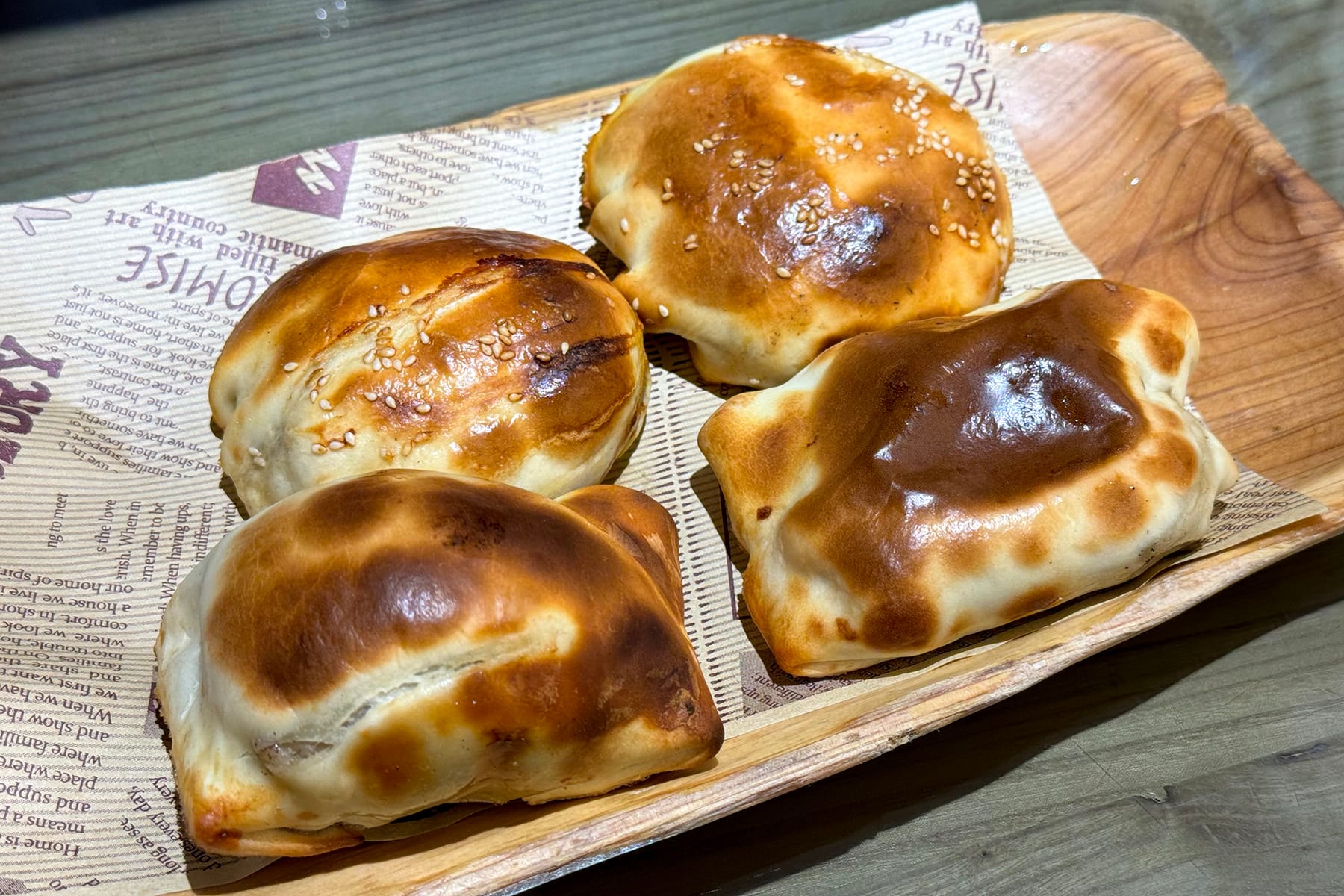
Samsa (烤包子) evolved from Central Asian samosa. Key difference: baked in tandoor ovens with apricot wood coals (not fried). The flaky pastry uses rendered lamb tail fat – yes, specifically tail fat for authentic version.
Fresh samsa come out 11 AM and 5 PM daily in Kashgar Old City. Look for ovens dug into walls with smoke rising.
Crafts: Ancient Silk Road Techniques Surviving
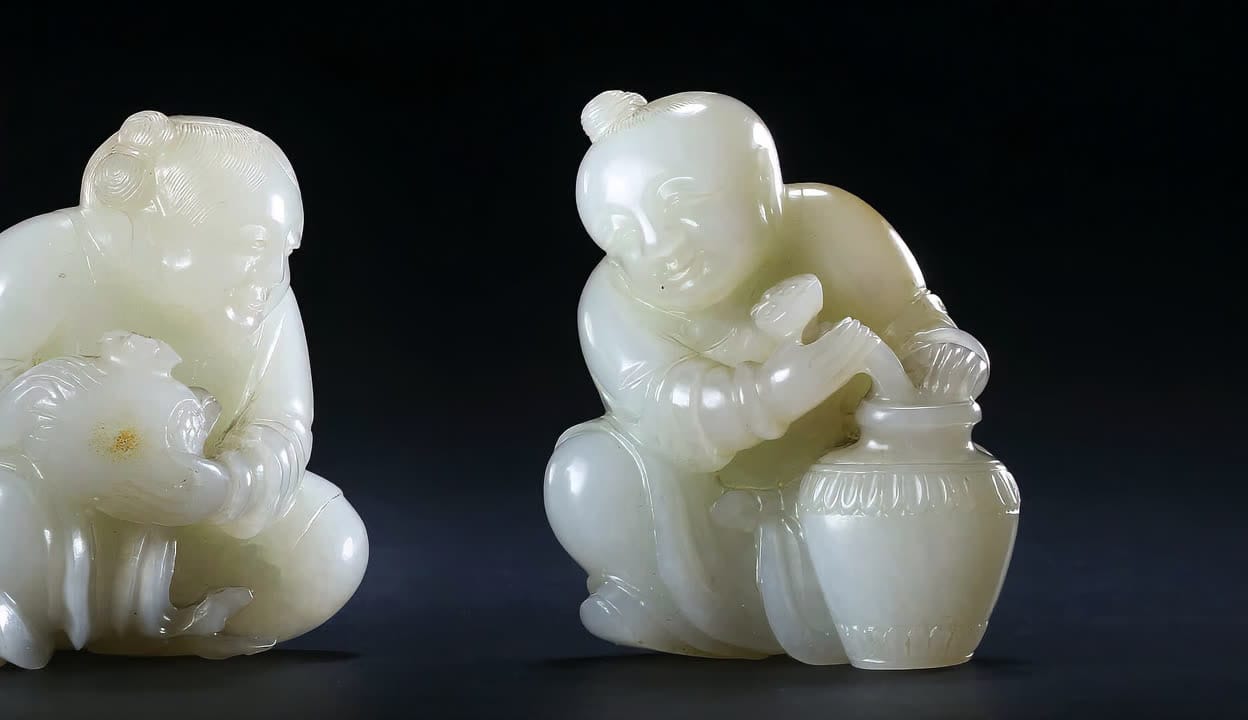
(Old Collection)
Dimensions: 10.3 cm (L) × 4.7 cm (W) × 10.7 cm (H)
Hotan jade carving continues Han Dynasty techniques from the ancient Silk Road (2000+ years). Master carvers complete 15-year apprenticeships working only by hand with simple tools – traditions passed down through generations of Silk Road artisans.
Quality indicators:
- Color uniformity (pure white or “mutton fat” white most prized)
- Translucency (hold to light – good jade glows)
- Knot density in carved details
- Hand feel (cool to touch, dense weight)
Prices range ¥2,000-50,000+ depending on size, quality, intricacy. Hotan jade commands 3-5x price of Burmese jade in Chinese market.
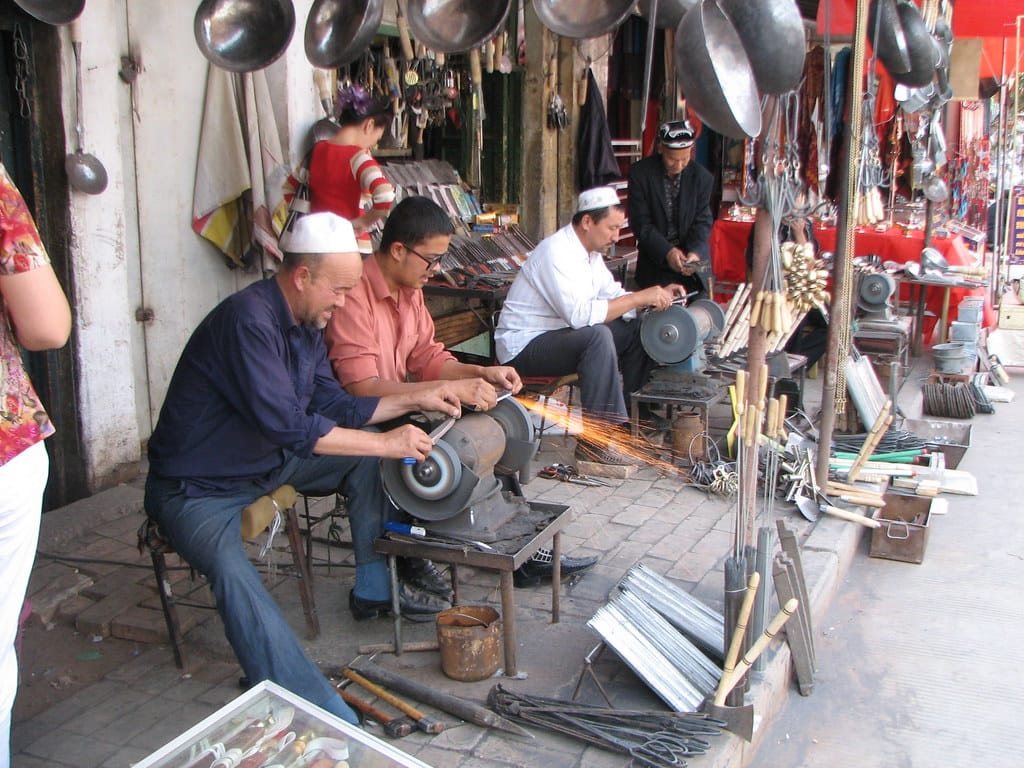
Kashgar knife-making produces blades famous throughout Central Asia. Blacksmiths forge high-carbon steel through repeated heating and hammering. Horn handles come from Marco Polo sheep. Islamic geometric engravings reflect 1,000-year artistic traditions.
Watch craftsmen in Old City workshops (free). Quality knives: ¥500-2,000.
Export warning: Chinese customs prohibits knives over 15cm blade in checked luggage. Ship separately or buy smaller versions.
Practical Travel Tips
What to Pack – Essentials
Sun protection (critical):
- SPF 50+ sunscreen (reapply every 2 hours)
- Wide-brimmed hat
- UV-blocking sunglasses
- Long-sleeved light shirts (better than sunscreen alone)
Temperature management:
- Layering clothing (20°C temperature swings common)
- Warm jacket for evenings (even summer nights cool at altitude)
Desert/dust management:
- N95 masks (spring sandstorms, dusty roads)
- Wet wipes (many facilities lack water)
- Electrolyte supplements (dehydration happens fast)
Technology:
- Power bank 20,000+ mAh
- Offline maps downloaded before arrival (Google blocked)
- VPN for accessing blocked websites
- Universal adapter (outlets sometimes inconsistent)
Safety and Health Reality
Generally safe. We’ve had zero security issues across 20+ years of operations.
Food safety:
- Eat at busy restaurants (high turnover = fresh food)
- Avoid raw vegetables in small towns
- Stick to hot, freshly cooked food
- Bottled water essential (tap water unsafe)
Altitude concerns: Pamir Highway reaches 3,600+ meters. Symptoms: headaches, nausea, fatigue, insomnia. Ascend gradually. Carry altitude medication (acetazolamide). Descend immediately if symptoms worsen.
Heat dangers: Turpan summer requires serious precautions. We’ve coordinated three medical evacuations for heat stroke in past 5 years – all preventable with proper preparation.
Respecting Local Cultures
In Muslim areas (Kashgar, Hotan, parts of Dunhuang):
- Dress modestly: shoulders and knees covered
- Women consider headscarves in mosques and religious areas
- Avoid eating/drinking publicly during Ramadan daylight hours
- Don’t point feet toward people when sitting
- Use right hand for eating and giving/receiving items
- Request permission before photographing people
Cultural sensitivity around politics: Avoid discussions about Xinjiang politics, ethnic tensions, or government policies. These topics are sensitive. Focus on culture, history, food, crafts.
Frequently Asked Questions
How long should we spend on the Silk Road?
Minimum two weeks to cover major sites without constant rushing. Three weeks for comprehensive exploration including off-trail destinations. One week touches highlights but sacrifices cultural depth and authentic experiences.
What’s the absolute best time to visit?
Late September through mid-October offers ideal conditions: moderate temperatures (18-25°C), autumn harvest festivals, 40% fewer tourists than summer, crystal-clear skies. Early May offers secondary window but spring sandstorms more common.
Is it safe for independent travelers?
Generally yes, but we recommend organized tours for first-time visitors to Xinjiang. Challenges: language barriers (English rare), permit requirements (some areas restricted), remote locations (transport limited), and navigation complexity.
Can vegetarians find suitable food?
Limited options. Meat (especially lamb) dominates cuisine. Vegetarians can find noodles, vegetables, fruits, bread, but selections restricted. Vegan travel quite difficult. Bring protein supplements for strict dietary requirements.
What are the biggest mistakes travelers make?
1. Underestimating distances (2-day drives between some cities)
2. Visiting Turpan in summer without heat preparation
3. Bringing insufficient cash (cards not widely accepted)
4. Not hiring knowledgeable guides (context crucial for appreciation)
5. Rushing major sites (Mogao Caves needs 3+ hours minimum)
6. Failing to respect local customs (causes friction)
7. Not booking Mogao Caves 30 days advance
How much does it actually cost?
Organized tours: $2,200-8,200 for 10-14 days depending on group size, comfort level, inclusions.
Independent travel: $100-200 daily (budget), $350-550 (mid-range), $700+ (luxury).
Add international flights ($800-1,800), visa ($140-185), insurance ($100-180), personal expenses, tips.
Are photography restrictions strict?
Very strict inside cave temples (device confiscation for violations). Military installations, government buildings, security checkpoints prohibit photography. Always request permission before photographing people. Drone use requires permits (rarely granted to tourists).
Our Final Thoughts
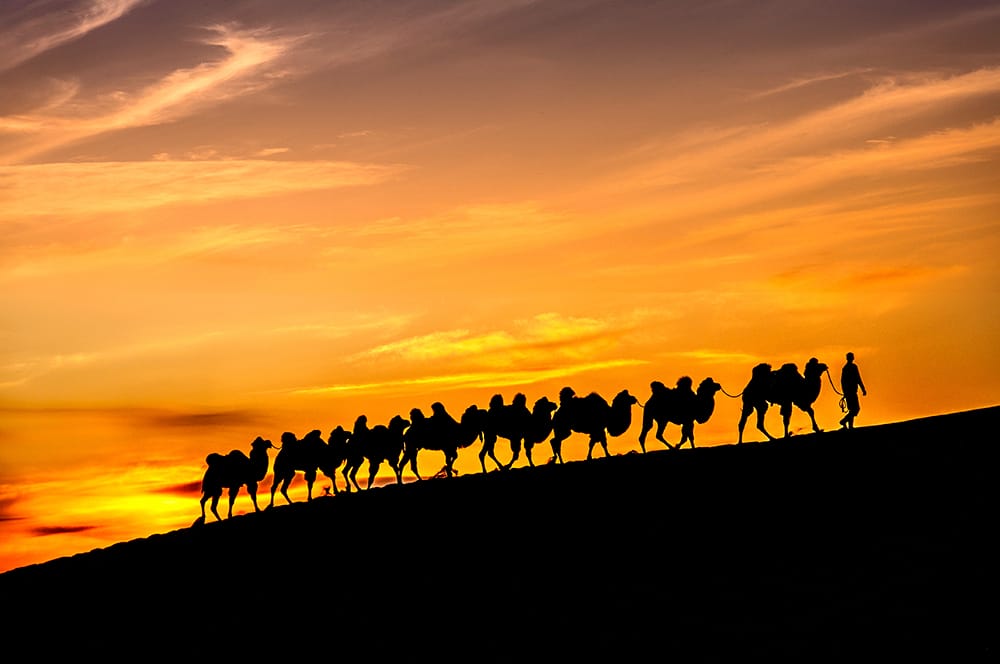
The Silk Road transformed how we understand cultural exchange. We arrived expecting archaeological ruins and departed understanding how civilizations create themselves through mixing rather than isolation – the essence of what made the Silk Road significant.
Walking through Kashgar markets where Central Asian traders haggle in Uyghur, eating pilaf recipes from Persian cooking adapted over 1,000 years along the Silk Road, listening to Muqam music blending Chinese and Arabic scales – these Silk Road experiences prove cultural exchange enriches rather than dilutes identity.
We watched a 70-year-old craftsman in Hotan carving jade using techniques his grandfather taught him. His grandfather learned from his grandfather, who learned from Silk Road traders arriving 300 years ago. This unbroken chain represents the Silk Road’s true legacy.
The morning after our Jiaohe visit, our guide’s grandmother served polo using her grandmother’s recipe. She explained how each ingredient traveled the Silk Road: cumin from Iran, black pepper from India, rice from Fergana Valley in Uzbekistan.
“The Silk Road isn’t just trails through desert,” she said, stirring the pot. “It’s every meal we cook, every word from another language, every prayer we learned from travelers. The Silk Road never ended. It moved into our homes.”
That lesson stays with us across thousands of kilometers. The Silk Road lives in daily practices of millions maintaining traditions passed through 70+ generations. Travelers engaging with this living Silk Road culture become part of its continuing story.
READ ALSO: The Tea Horse Road: A Complete Traveler’s Guide to China’s Soulful Mountain Corridor
Travel China With Me specializes in authentic Silk Road experiences combining historical depth with cultural immersion. Our expert Silk Road guides include historians and cultural specialists who bring these ancient trade routes to life. We design Silk Road tours for travelers seeking understanding beyond sightseeing – because the Silk Road deserves more than rushed photos at tourist spots.
Contact us to plan your Silk Road journey along the world’s most important trade route. Let us show you the Silk Road that still breathes.