


Wild Elephant Valley: Complete Guide to Seeing Wild Elephants in China
At 7:15 AM on a November morning, four elephants walked out from the forest below our viewing platform. The matriarch led them straight to the salt lick. For 35 minutes they fed, bathed in the pond, and interacted while we watched from the elevated boardwalk 50 meters above.
This is what Wild Elephant Valley delivers when conditions align. But here’s the reality: wild elephant sightings depend entirely on season and timing, the experience mixes genuine conservation with controversial performances, and success requires managing expectations.
Table of Contents
Quick Facts
Information | Details |
|---|---|
Location | Mengyang Town, 47km north of Jinghong, Xishuangbanna |
Best Season | November-February (dry season) |
Entrance Fee | ¥60 (cable car ¥70 round-trip extra) |
Opening Hours | 8:00 AM – 6:00 PM daily |
Time Needed | 3-4 hours minimum |
Wild Elephants | ~130 individuals in the valley area |
Sighting Odds | 60-70% Nov-Feb mornings; 20-30% other times |
Altitude | 747-1,055 meters |
Why Wild Elephant Valley Exists
By the 1980s, China’s wild Asian elephant population had crashed to dangerously low numbers. Rubber plantations replaced forests. Elephants raided crops, farmers retaliated, conflict escalated.
Conservationists noticed elephants still frequented this valley where three rivers converge. The area became locally known as “Sanchahe” (Three-Fork River). They began placing salt blocks at natural licks—elephants need salt for biological functions and returned regularly. In 1990 the area became a protected research site. The first observation tower went up in 1991.
Today it operates as China’s only Asian Elephant Breeding and Rescue Center. The facility has rescued over 20 injured elephants, rehabilitated orphaned calves, and successfully bred nine babies using assisted reproduction—significant for a species with 22-month pregnancies and complex social needs.
China has roughly 300 wild Asian elephants total, all concentrated in Xishuangbanna and neighboring Pu’er. For comparison: India has 27,000-29,000, Thailand has 3,000-4,000. China’s population is tiny, isolated, and critically vulnerable. This valley protects the only place where you can observe them.
Will You Actually See Wild Elephants?
The critical question first: sighting probability varies dramatically.
November-February, arriving before 8:00 AM: Rangers estimate herds appear at valley water sources 3-4 days per week during dry season. Our experience across multiple visits: elephants sighted on 4 out of 7 morning sessions. Your odds are good but never guaranteed.
March-October: Chances drop significantly. Elephants disperse throughout the wider region where water is abundant. You might see tracks, fresh dung, or forest damage, but actual sightings become unlikely.
Important context: These elephants are genuinely wild. They’re not fed by staff. They cross the China-Laos border freely. They follow ancient migration routes. Rangers strategically place salt blocks near observation platforms because elephants naturally seek salt, but the animals come by choice.
When elephants appear, they’re behaving naturally in their own territory—not performing for tourists.
Our June visit? Zero elephant sightings despite two full days. Our Jan visits? Multiple sightings each time. Timing is everything.
What Makes Wild Elephant Valley Worth Visiting
China’s Only Wild Elephant Observation Site

If you want to see wild Asian elephants in China, this is your only option. The entire country’s wild population survives in Xishuangbanna’s tropical rainforests. Wild Elephant Valley offers the highest probability of safe, ethical sightings.
Unlike many Asian elephant destinations where “wild” means semi-captive animals in clearings, these elephants are genuinely wild. They follow natural patterns. They behave naturally because this is their home.
The Infrastructure Actually Works
After visiting elephant sites across Southeast Asia, we can say Wild Elephant Valley’s infrastructure sets a high standard.

2.3km elevated walkway: Winds through rainforest canopy at 6 meters height. Built along natural elephant trails and watering spots. Two sections: 920m from Bird Park to Asian Elephant Museum (secondary forest, excellent for birds), and 1,360m from museum to main observation platform (primary forest where elephants concentrate).
The elevated design protects humans and elephants. No direct contact. Observation from safe distance. When elephants appear below, you watch them behave naturally without disturbing their activities.

2km cable car: China’s first rainforest sightseeing cableway glides silently over forest canopy for 35 minutes. Excellent perspective of forest structure and landscape. Spotting elephants from above requires luck—they’re below dense canopy—but the ride itself offers unique rainforest views.
Observation platforms: Multiple viewing stations at strategic points. Main platform overlooks the primary salt lick where elephants appear most frequently during dry season.
Real Conservation Work
Your entrance fee directly funds the Xishuangbanna Asian Elephant Breeding and Rescue Center. This isn’t marketing talk—we’ve met veterinarians and keepers who work here.
They’ve successfully rescued and rehabilitated elephants injured by electric fences defending farmland, orphaned calves whose mothers were killed, and animals hit by vehicles. The center has achieved nine successful births over the past decade using assisted reproductive technology.
Camera trap networks throughout the reserve track individual elephants (identified by unique ear patterns and tusk shapes). This monitoring provides critical data on migration patterns, social structures, and population health.
The Highlights: What to Experience
Wild Elephant Observation
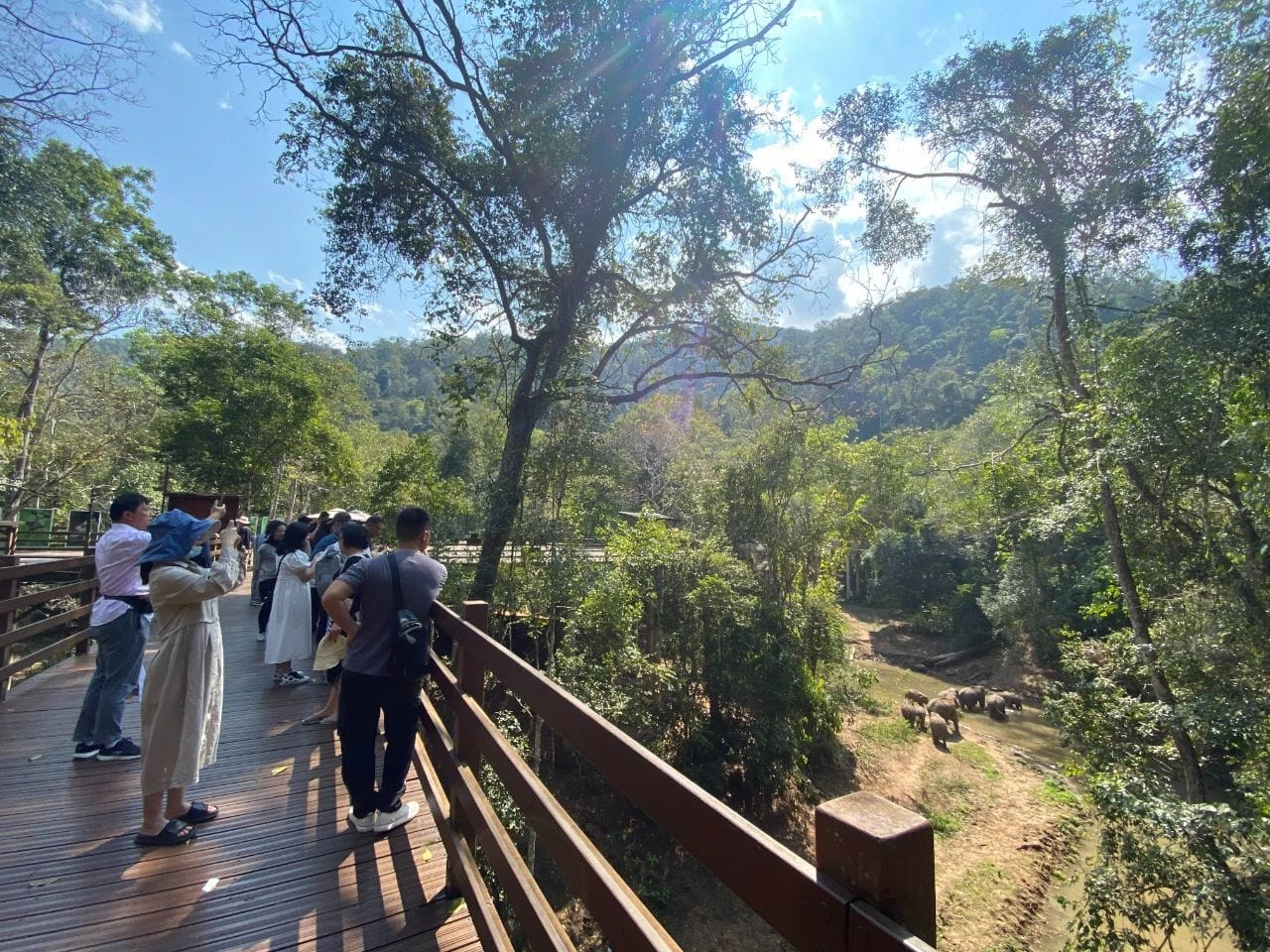
This is why you’re here. The best strategy:
Timing: Arrive before 8:00 AM. Take cable car up immediately to reach observation platform during peak elephant activity hours (7:30-9:30 AM). Walk elevated boardwalk slowly, stopping frequently to watch and listen.
What to look for: Fresh tracks (three-toed prints in mud are distinctive), broken vegetation, fresh dung piles. Rangers use these signs to predict where elephants might appear.
If elephants appear: Stay quiet. No sudden movements. Photography without flash. Telephoto lens essential—elephants appear 30-100 meters away. Phone cameras capture unusable gray dots.
Realistic expectations: Morning observation sessions last 2-3 hours. You might see elephants within 30 minutes or spend the full time without sighting. This is wildlife, not a zoo.
The Asian Elephant Museum

Most visitors rush through or skip entirely. Mistake.
This museum explains conservation beyond “elephants are cute.” The human-elephant conflict section discusses crop raiding, property damage, and occasional injuries on both sides. No sugarcoating.
One exhibit documents the “wandering elephant herd”—15 elephants that migrated 500km north from Xishuangbanna in 2020-2021, became international news. Shows satellite tracking data, community responses, and challenges managing wildlife in developed areas.
Reproductive biology section: 22-month gestation, complex social structures, why breeding programs are difficult. Life-size models show differences between Asian and African elephants.
Takes 30-40 minutes if you actually read exhibits. Educational value is high.
The Rainforest Ecosystem
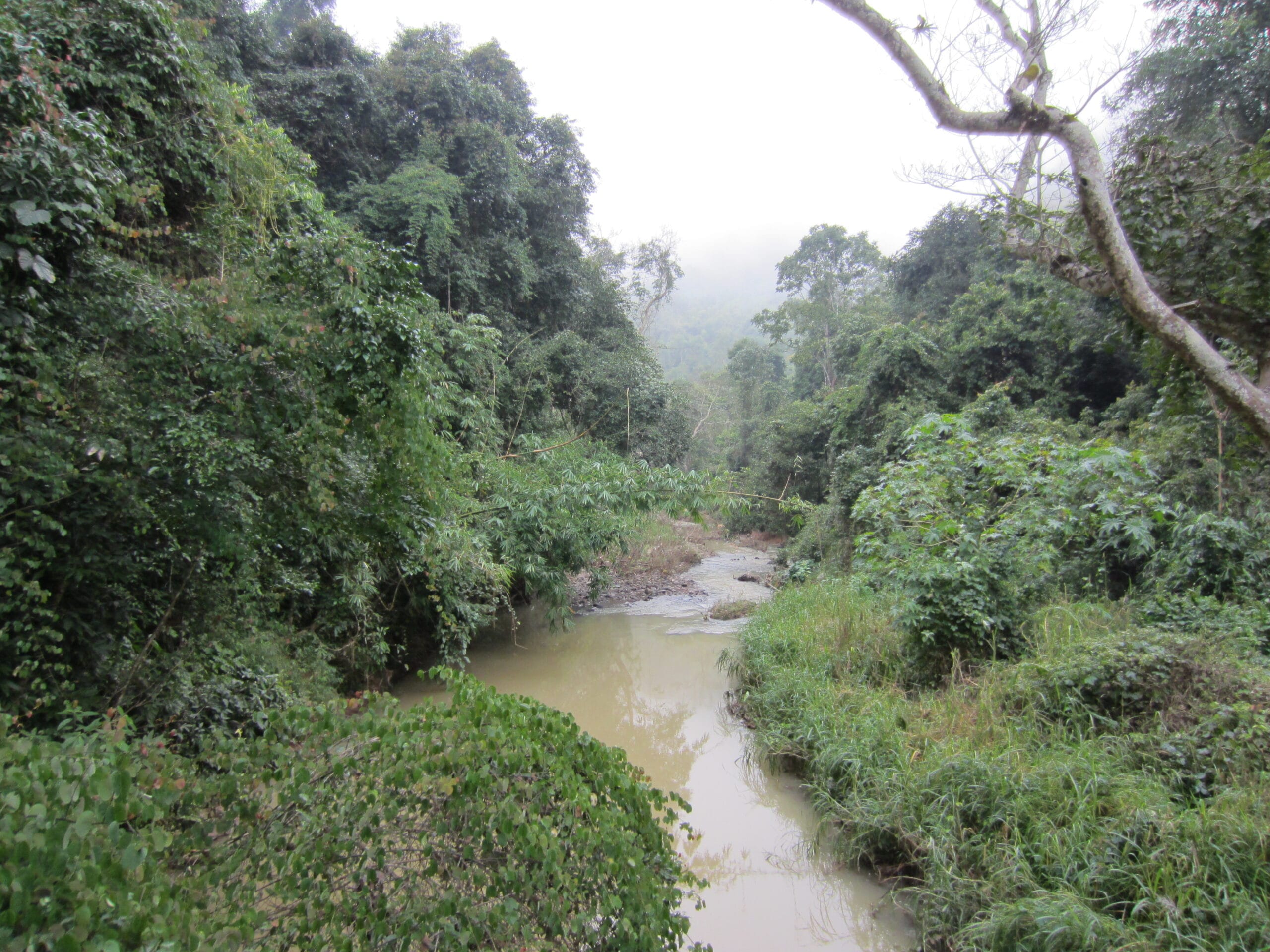
Wild Elephant Valley protects pristine tropical rainforest with remarkable biodiversity beyond elephants.
White-cheeked gibbons: Listen for distinctive morning calls—haunting whooping sounds carrying across forest 6:30-7:30 AM. Watch for them swinging through upper canopy in family groups.
Indian bison (gaur): Massive wild cattle reaching 1,000kg. Shy and rare. We’ve spotted them twice on early morning visits, both times near the Siang River area.
Macaques: Multiple species including stump-tailed and pig-tailed macaques. Common along boardwalks. Never feed them—creates aggressive behavior and dependence.
Green peafowl: Endangered species displaying spectacular tail feathers during March-May breeding season. More common than elephants—you’ll almost certainly see them.
Hornbills: Great hornbills, wreathed hornbills, and others. Look for them in fruiting trees. Loud, distinctive calls announce their presence.
Birds: We’ve documented 280+ species across visits. Excellent birding opportunities, especially during migration seasons March-April and September-October.
Over 400 plant species grow along elephant migration routes alone, including rare strangler figs, dragon blood trees, and various medicinal plants used by local ethnic minorities.
The Butterfly Garden and Other Exhibits

The Butterfly Garden showcases 50+ native species in a walk-through enclosure. Impressive diversity but wild butterflies throughout the forest are more meaningful encounters.
Snake & Lizard Garden features nationally protected reptiles. Educational for those interested, but basic exhibits.
Orchid Garden displays some of the 200+ wild orchid species found in the valley. March-April during peak bloom is spectacular.
The Elephant Performances: An Honest Discussion
We need to address this directly. Three rescued elephants perform at 11:00 AM and 2:30 PM daily. They paint, play with balls, and do tricks for crowds.
The facts: These aren’t wild elephants. They’re rescue animals that cannot survive in wild: one injured by electric fence while protecting crops, one orphaned calf whose mother was killed, one hit by vehicle collision. They cannot be released.
The controversy: Whether performances are ethical even for rescue animals is debated. The valley claims it’s enrichment and education. Critics call it exploitation regardless of rescue status.
What we’ve observed: Training uses positive reinforcement, not brutality. But elephants still do unnatural behaviors for entertainment. The performances have been reduced from five daily shows to two—improvement, but still controversial.
Our position: The wild elephant observation justifies visiting Wild Elephant Valley. The rescue work is legitimate. The performances make some visitors uncomfortable, including us.
Skip the shows if you’re uncomfortable. Focus on wild observation—that’s the real value here.
Best Time to Visit
November-December: Optimal Window
Temperature: 18-25°C, comfortable all day
Rainfall: Minimal
Elephant sightings: Best odds all year (60-70% probability mornings)
Crowds: Moderate, heavier weekends
Why it works: Dry conditions force elephants to concentrate at valley water sources when other areas dry up
This is when we schedule most tours. Book Jinghong accommodation at least 2-3 weeks advance.
January-February: Peak Dry Season
Temperature: 15-24°C, chilly mornings (bring light jacket)
Rainfall: Rare
Elephant sightings: Excellent
Crowds: Massive during Spring Festival week, manageable otherwise
Critical warning: Avoid Spring Festival entirely (late January/early February depending on lunar calendar). We once waited 90 minutes for cable car during holiday.
March-April: Transition Period
Temperature: 22-30°C, warming
Rainfall: Increasing scattered showers
Elephant sightings: Declining but still possible (30-40%)
Crowds: Low
Bonus features: Spectacular orchid blooms, peacock displays, butterfly activity
Underrated months. Trade reduced elephant odds for beautiful forest conditions and solitude.
May-October: Rainy Season
Temperature: 25-33°C, hot and humid
Rainfall: Daily afternoon storms
Elephant sightings: Low probability (20% or less)
Crowds: Very few tourists
Only recommend if: You’re interested in lush rainforest ecology more than elephants
The forest reaches maximum beauty—everything green, rivers full, waterfalls active. But elephants completely dispersed throughout wider region.
How to Get There
From Jinghong (47km, approximately 1 hour)
Public bus (most practical for independent travelers):
Jinghong South Bus Station. Any Simao/Pu’er-bound bus. Tell driver “Yexianggu” (野象谷). Cost: ¥15-20. Buses run every 30 minutes, 7:00 AM – 6:00 PM. Journey takes 60 minutes.
Taxi/Didi:
¥120-150 one-way. Negotiate ¥300 for round-trip including waiting time. If using Didi, book return pickup in advance—service can be sparse at park.
Tour bus:
Xishuangbanna Tourism Line 3 departs Manting Park 9:00 AM daily with guides (¥80-120 including transport). Convenient but arrives after prime elephant viewing hours.
Note on Wild Elephant Valley Railway Station:
The station exists on the Kunming-Jinghong rail line but it’s 20km from park entrance, requiring another ¥60 taxi ride. Not practical unless coming directly from Kunming direction by train.
Best strategy: Morning bus from Jinghong, return by mid-afternoon bus. Or hire taxi for full day if traveling with 3-4 people to split cost.
From Kunming
Direct flights to Jinghong Gasa International Airport (1 hour, ¥300-800 depending on season). High-speed trains now connect Kunming to Jinghong in approximately 3 hours (¥220-350 depending on class).
Opening Hours and Tickets

Park hours: 8:00 AM – 6:00 PM daily (ticket sales and entry stop at 4:30 PM)
Cable car last departure: 4:00 PM from lower station, 4:30 PM from upper station for descents
Ticket prices (2026):
- Entrance: ¥60 (official price, some online discounts available)
- Cable car one-way: ¥50
- Cable car round-trip: ¥70
- Electric cart (optional, connects gates): ¥20-40
Discounts:
- Students with valid ID: 50% off entrance
- Children under 1.2m: free entrance
- Seniors 60+: reduced rates (check at ticket office)
Where to buy: Online via Trip.com, Ctrip, or official WeChat mini-program (search “野象谷景区”) for slight discounts. Can purchase at park entrance for same-day visits.
Recommended Visit Route

The Morning Wildlife Focus (3-4 hours)
This maximizes elephant sighting probability:
6:45 AM: Leave Jinghong hotel
7:30 AM: Arrive park south gate, purchase tickets
7:45 AM: Take cable car up (beats morning crowds, reaches observation platform during peak elephant activity)
8:00-9:30 AM: Walk elevated boardwalk slowly. Stop frequently. Watch for elephant movement and forest activity
9:30-10:30 AM: Asian Elephant Museum (actually educational)
10:30 AM: Exit via north gate or return to south gate
11:00 AM: Catch bus back to Jinghong
We’ve used this schedule repeatedly with high success rates November-February.
The Photography Intensive (5-6 hours)
For serious wildlife photographers:
Morning session: 7:30-11:00 AM (prime light and elephant activity)
Midday break: Return to Jinghong or rest at park
Afternoon session: 3:30-6:00 PM (second chance for sightings, golden hour light)
Requires flexibility and patience. Not all visits yield elephants, but when they do, you’ll have optimal lighting conditions.
What to Skip Unless You Have Extra Time
- Butterfly Garden (wild butterflies throughout forest are better)
- Snake & Lizard Garden (basic exhibits)
- Elephant performances (controversial, optional)
- Bird Park (wild birds along trails more interesting)
Focus on wild elephant observation and the museum. Everything else is secondary.
What to Bring
Essential items:
- Telephoto lens or quality binoculars (elephants appear 30-100m away; phone cameras capture unusable dots)
- Long pants and closed shoes (walkway has gaps, plants brush against legs, protection from insects)
- Insect repellent with DEET (mosquitos present, especially rainy season)
- Water bottle (refill stations available at visitor center and museum)
- Sun protection (hat, sunscreen, sunglasses—tropical UV is intense)
- Cash ¥100-200 (some vendors don’t accept mobile payments)
Recommended:
- Light rain jacket (afternoon showers possible even in dry season)
- Portable phone charger (for GPS, photography)
- Offline translator app (Google Translate with downloaded Chinese pack)
- Snacks (park food is convenience-quality, not memorable)
What you don’t need:
- Heavy hiking boots (paved elevated walkways)
- Massive backpack (walking 3-4km maximum)
- Flash photography equipment (prohibited and useless for distant wildlife)
Photography Tips
Based on multiple visits testing various equipment:
Lens requirements:
- Minimum 300mm for usable elephant photos (elephants appear 30-100m distant)
- 400-500mm ideal for frame-filling shots
- 70-200mm good for landscape and forest atmosphere
- Wide angle (24-35mm) captures boardwalk perspective and scale
Timing specifics:
- Sunrise: 6:30-7:00 AM winter months
- Morning mist: Burns off 8:00-9:00 AM, creates dramatic backlit conditions
- Avoid: 12:00-3:00 PM harsh overhead sun creates terrible contrast
- Elephants rarely appear midday anyway
Common mistakes we see:
- Flash photography (prohibited and useless—animals too far away)
- Phone cameras for elephants (capture dots, not details)
- Shooting through cable car glass (reflections and distortion)
- Ignoring composition elements (boardwalk railings, tropical plants provide context)
Best opportunities: Elephants at salt lick with morning backlight, gibbons silhouetted against sky, hornbills in flight against clouds, mist rising through canopy at dawn.
Understanding the Rescue Center
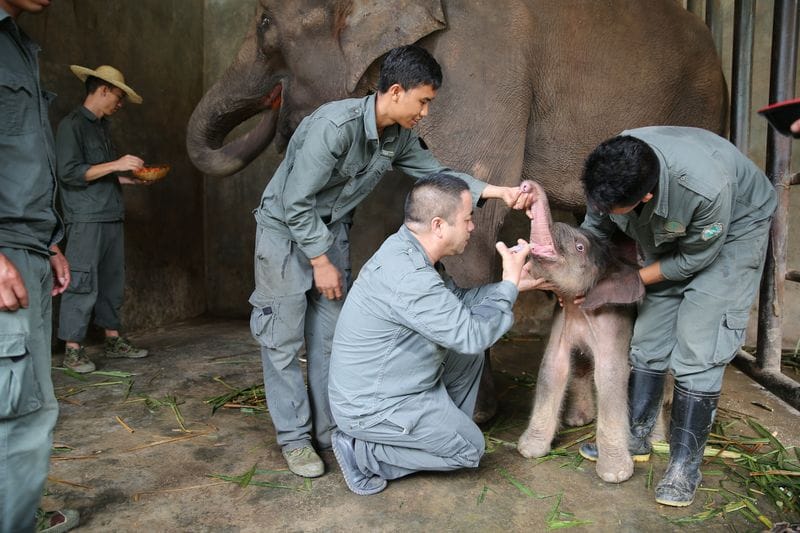
The Asian Elephant Breeding and Rescue Center operates mostly behind scenes. Here’s what they actually do:
Injury treatment: Elephants hit by vehicles, caught in snares, burned by electric fences defending farmland. One elephant lost partial trunk to snare—required months of specialized feeding while wound healed. Another suffered severe burns from high-voltage fence meant to protect crops.
Orphan rehabilitation: Baby elephants whose mothers were killed. Infants require milk, social learning, physical development guidance. Staff bottle-feed newborns, gradually transition to solid foods, socialize them with stable adult elephants.
Behavioral rehabilitation: Some rescued elephants are psychologically traumatized from illegal captivity or trauma. Requires patient socialization and gradual exposure to forest environments.
Release challenges: Not all rescued elephants can return to wild. Hand-raised infants lack crucial survival skills learned from mothers. Severely injured animals can’t defend themselves from predators or navigate difficult terrain. Psychologically damaged elephants might approach humans dangerously. Those elephants stay permanently in human care.
Breeding program: Nine successful births since 2010 using artificial insemination and managed reproduction. Success rate is low—elephant reproduction is complicated, temperamental, and requires precise timing with 22-month gestation periods.
One keeper told us about “Yangniu,” a calf born with umbilical infection and heart arrhythmia, abandoned by its mother. Three years of intensive veterinary care enabled full recovery. Stories like this demonstrate the facility’s genuine conservation value beyond tourism.
Conservation Challenges Beyond Tourism
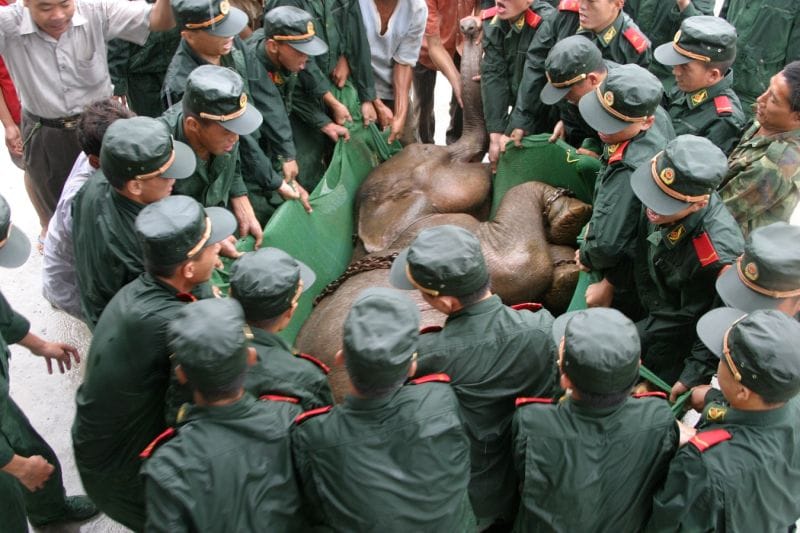
Understanding the bigger picture enriches your visit.
Habitat Corridor Crisis
China’s wild elephants don’t live solely within protected reserves. They migrate across hundreds of square kilometers following seasonal patterns. But rubber plantations have fragmented traditional routes. Elephants get trapped in habitat islands, increasing human-wildlife conflict.
Wild Elephant Valley works with surrounding communities to maintain green corridors—strips of native vegetation connecting habitat patches. During our 2024 visit, rangers showed us newly planted corridor zones where fruit trees replace portions of rubber plantations.
It’s slow, unglamorous work visitors never see. But it’s essential for preventing genetic isolation in an already tiny population.
Human-Elephant Conflict
One elephant family consumes 200-300kg vegetation daily. When forest foods are scarce, they raid crops. Farmers lose income. Some retaliate through electric fences, poisoning, or harassment.
The valley operates an early warning system—text messages alert farmers when elephants approach fields, allowing protection without confrontation. Sounds simple. Implementation is complicated. Not all farmers have smartphones. Some ignore warnings. Elephants learn patterns and adapt their routes.
Government compensation doesn’t fully cover crop losses. Valley supplementary payments help but don’t eliminate economic pressure on farming communities.
Climate Change Impacts
Dry seasons are extending—historically November-March, now often into April-May. Rainy seasons bring more intense but less predictable rainfall. Flowering patterns of key elephant food plants are shifting, sometimes mismatching with reproductive cycles.
Wild Elephant Valley’s long-term monitoring provides critical data on how elephants adapt to changing conditions. This research informs conservation strategies across Asian elephant range countries facing similar challenges.
Real Guest Experiences
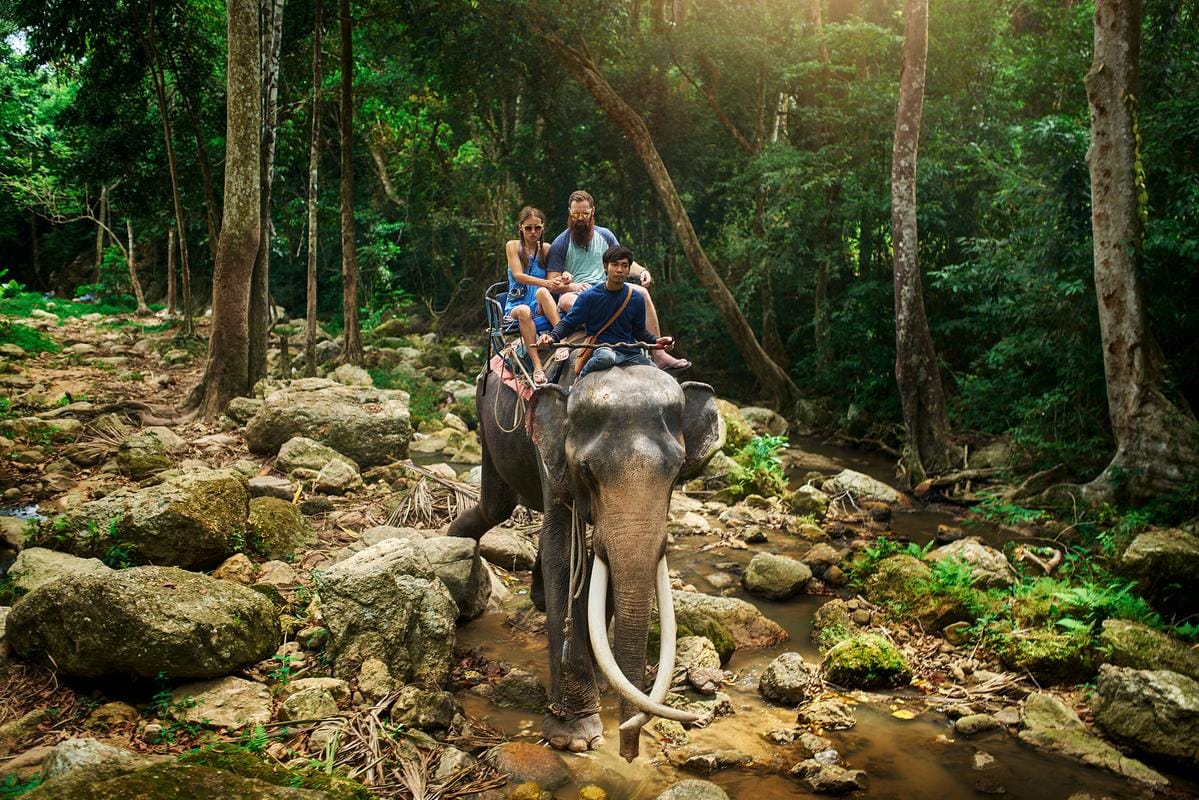
Michael, USA (November 2025):
“Didn’t see elephants first morning, disappointing. Guide suggested returning at dawn next day. At 7:15 AM, family group of seven emerged. Matriarch led them to salt lick. For 40 minutes we watched interactions. Baby elephant tried repeatedly drinking with trunk, failed hilariously each time before just sticking face in water. Completely worth the extra day.”
Sarah, Singapore (December 2025):
“I’ve visited elephant sanctuaries in Thailand and Sri Lanka, had reservations about Wild Elephant Valley. Would it be commercialized? I was wrong. Seeing elephants cross natural clearing, behaving completely naturally, no handlers in sight—that’s what wildlife tourism should be. Conservation messaging is serious, not superficial.”
Liu Wei, Beijing (January 2026):
“博物馆真的很专业。Exhibits explain why conservation matters beyond just ‘elephants are cute.’ Information about habitat corridors and human-elephant conflict taught me things I never knew. More Chinese attractions should have this educational quality.”
James, UK (June 2025):
“Visited rainy season knowing sightings unlikely. Didn’t see elephants. But rainforest was spectacular—orchids blooming, birds everywhere, dramatic afternoon storm. Museum better than expected. Cable car gave amazing forest perspective. Wasted trip? No. Would I return in dry season? Yes.“
Frequently Asked Questions

What are my actual chances of seeing wild elephants?
November-February, arriving before 8:00 AM: approximately 60-70% based on ranger estimates and our experience across multiple visits. March-April: 30-40%. May-October rainy season: 20% or less. These are wild animals—sightings are never guaranteed.
Are the elephant performances ethical?
This is debated. Performing elephants are rescues that cannot survive in wild. No riding is permitted anymore. Training uses positive reinforcement. However, any performance raises welfare questions about natural behavior and dignity. Skip if uncomfortable—wild elephant observation is the real value.
Can I visit independently without a tour?
Absolutely. Public bus access from Jinghong is straightforward. Park is well-designed for independent exploration. English signage is limited but adequate for basic navigation. Consider hiring local guide if you want deeper ecological interpretation and wildlife expertise.
Is one day enough?
For most visitors, yes. Arrive early (7:30 AM), spend 3-4 hours, you’ll experience the highlights. Wildlife enthusiasts might want two days for multiple morning observation sessions. We typically recommend one full morning in Wild Elephant Valley as part of broader 3-4 day Xishuangbanna exploration.
What if I visit during rainy season?
Forest is dramatically greener and lusher. Far fewer tourists mean quieter experience. However, elephant sightings drop significantly as wild herds disperse to abundant water sources throughout the region. Rain also makes photography challenging and some trails become muddy.
How does this compare to Thailand or Sri Lanka elephant tourism?
More emphasis on genuine wild observation rather than interaction. Less commercialized than major Thai elephant tourism destinations. Comparable to responsible sanctuaries like Elephant Nature Park (Thailand) or Uda Walawe (Sri Lanka) in conservation focus. The cable car and elevated walkway infrastructure is unique globally for elephant habitat observation.
What about language barriers?
Almost no English-speaking staff. Museum has English labels (sometimes awkward translation but understandable). Download offline translator app (Google Translate with Chinese language pack, or Pleco dictionary). Hiring guide (¥200-400 for half-day) adds substantial interpretation value if you want deeper understanding.
How much should I budget total?
Entrance ¥60 + cable car ¥50 + bus ¥40 round-trip + lunch/snacks ¥50. Budget ¥300 total including incidentals and unexpected purchases.
Is it suitable for young children?
Age 6+ generally works fine. Younger children struggle with walking distances (3-4km total) and patience required for quiet wildlife observation. Elevated walkways are safe but require supervision—gaps exist where small items could fall through. The cable car ride is exciting for kids regardless of elephant sightings.
Practical Travel Tips

Arrive before 8:00 AM for serious elephant observation. Tour groups arrive 9:00-10:00 AM. You want quiet observation time before crowds and noise.
Walk slowly on elevated boardwalk. Most visitors rush through. Stop frequently. Listen for gibbon calls. Watch canopy for bird movement. Check ground for fresh elephant tracks. Slow, attentive observation yields better experiences than racing through.
Bring telephoto lens or good binoculars if you care about elephant photos. Phone cameras cannot capture usable images at 30-100m distance.
Skip performances if uncomfortable with captive animal shows. Wild observation is why you’re here. Rescued elephant demonstrations are optional and controversial.
Don’t feed wildlife especially macaques along boardwalks. Feeding creates aggressive behavior, dependency, and health problems for wild animals.
Respect designated paths. Never leave elevated walkways or marked trails. This protects both you and elephants. If an elephant unexpectedly appears while you’re on ground-level trail, back away slowly without running.
Stay hydrated in tropical heat. Refill water bottles at visitor center and museum rather than buying repeatedly.
Download offline maps and translator app before visiting. Cell coverage is generally good but having offline resources helps navigation and communication.
Mistakes We Made (So You Don’t Have To)

Visit 1 (June): Arrived midday, stayed until closing. Saw zero elephants (expected for rainy season), but also rushed through in afternoon heat. Left exhausted and disappointed. Lesson: Morning arrival essential. Rainy season means accept no elephants or don’t visit.
Visit 2 (December): Spent entire day including both morning and afternoon. Morning was excellent (saw elephants), afternoon was pointless (brutal sun, no wildlife, exhausted). Lesson: Half-day visit focusing on morning is optimal. Leave before noon.
Visit 3 (November): Wore shorts. Brushed against unknown plant on boardwalk, developed itchy rash lasting three days. Lesson: Long pants aren’t excessive caution—they’re practical protection.
Visit 4 (February, Spring Festival week): Massive crowds, 90-minute cable car wait, 40+ people on observation platform simultaneously talking loudly and scaring wildlife. Lesson: Avoid major Chinese holidays completely or arrive before 7:00 AM.
Visit 5 (December, 8:30 AM arrival): Missed elephants by 30 minutes—ranger said herd left observation area at 8:00 AM. Lesson: “Early” means 7:30 AM maximum, preferably earlier during peak season.
Final Assessment
After organizing tours to Wild Elephant Valley for over a decade, we’ve learned what creates successful versus disappointing visits.
You’ll have a great experience if:
- You visit November-February (especially December)
- You arrive before 8:00 AM
- You accept that wild animals follow their own schedule
- You appreciate the entire ecosystem, not just elephants
- You understand conservation challenges beyond simple preservation
You’ll be disappointed if:
- You visit rainy season expecting guaranteed sightings
- You arrive midday when elephants are inactive and heat is brutal
- You want interaction rather than observation
- You expect zoo-like reliability with genuinely wild animals
Wild Elephant Valley delivers authentic wilderness experience when approached with realistic expectations and proper timing. It represents what wildlife tourism can achieve when conservation goals and sustainable tourism align.
We return because it’s working. Elephant populations remain stable despite pressures. Critical habitat is protected. Research advances understanding of elephant ecology. Community conflicts are gradually decreasing through creative programs. Next generation conservation initiatives are developing.
When you stand on that elevated walkway watching wild elephants behave naturally in primary tropical rainforest, you’re witnessing conservation success in a country where such successes are limited. These elephants cross international borders freely. They follow ancient migration routes. They live wild in their own territory.
That’s increasingly rare globally. That’s worth the journey to Yunnan‘s tropical south.
This guide reflects multiple visits 2006-2026, conversations with conservation staff and rangers, client feedback from 200+ organized tours, and ongoing monitoring of Wild Elephant Valley operations. All practical information verified February 2026. Wildlife sightings vary by season and conditions—always check official sources for current operating details before travel.
Contact Travel China With Me for customized Xishuangbanna itineraries combining Wild Elephant Valley wildlife observation with cultural immersion and sustainable travel throughout Yunnan’s tropical regions.
