Kunming Railway Stations Guide: Don’t Go to the Wrong Station!
Navigating Kunming’s railway network shouldn’t feel like solving a puzzle. Yet we’ve watched countless travelers arrive at the wrong station, miss connections, or spend hours figuring out basic logistics. This guide exists to solve those problems with concrete, tested advice from people who actually use these stations regularly.
Table of Contents
Why This Guide Exists
After helping thousands of travelers navigate Kunming’s railway system, we noticed a pattern. Generic guides miss the details that actually matter. They tell you a station has “good facilities” but don’t explain that the metro connection requires a 10-minute walk with luggage. They mention ticket offices without clarifying that foreigners often get redirected to specific windows.
This guide covers what we wish we’d known during our first confusing station visit.
Kunming’s Three-Station Reality
Kunming operates three stations, but only two matter for most travelers. The third handles primarily freight.
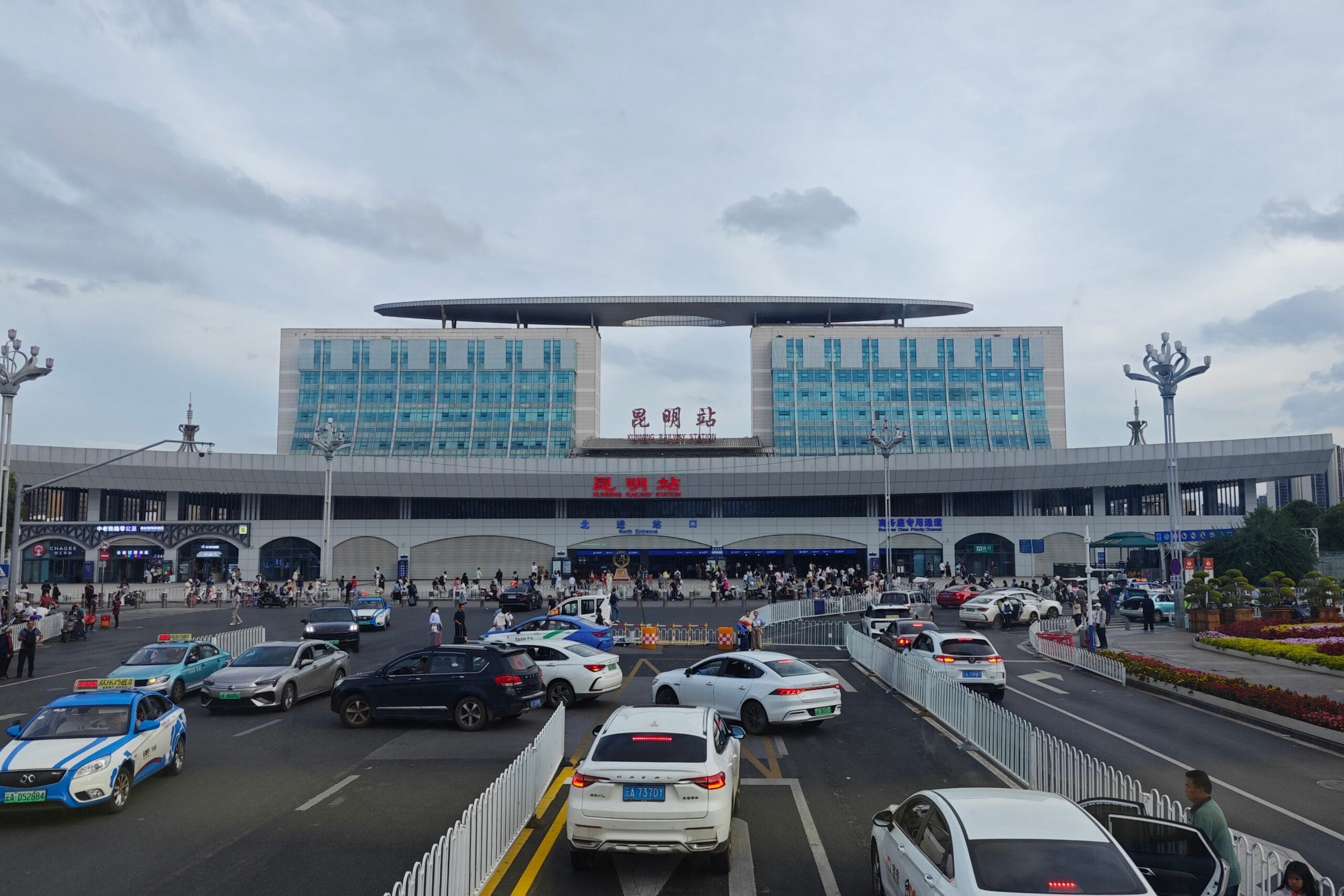
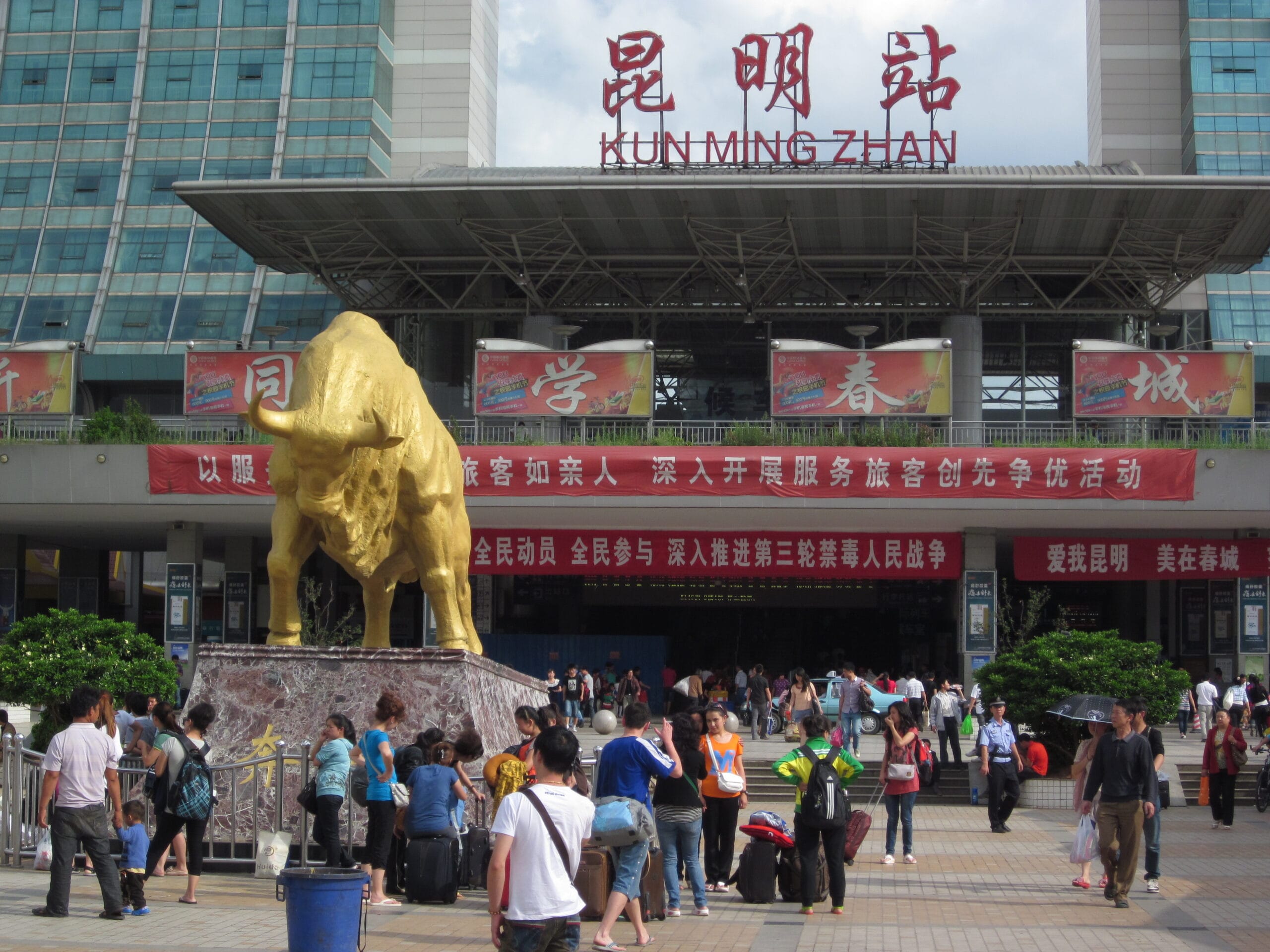
Kunming Railway Station (昆明站 / Kunming Zhan) sits 3.5 kilometers from downtown at No.1 Beijing Road, Guandu District. Opened in 1970 and renovated in 2004, it covers 25,000 square meters with 9 platforms and 14 tracks. This station handles conventional trains and select high-speed services to Dali and regional Yunnan destinations.
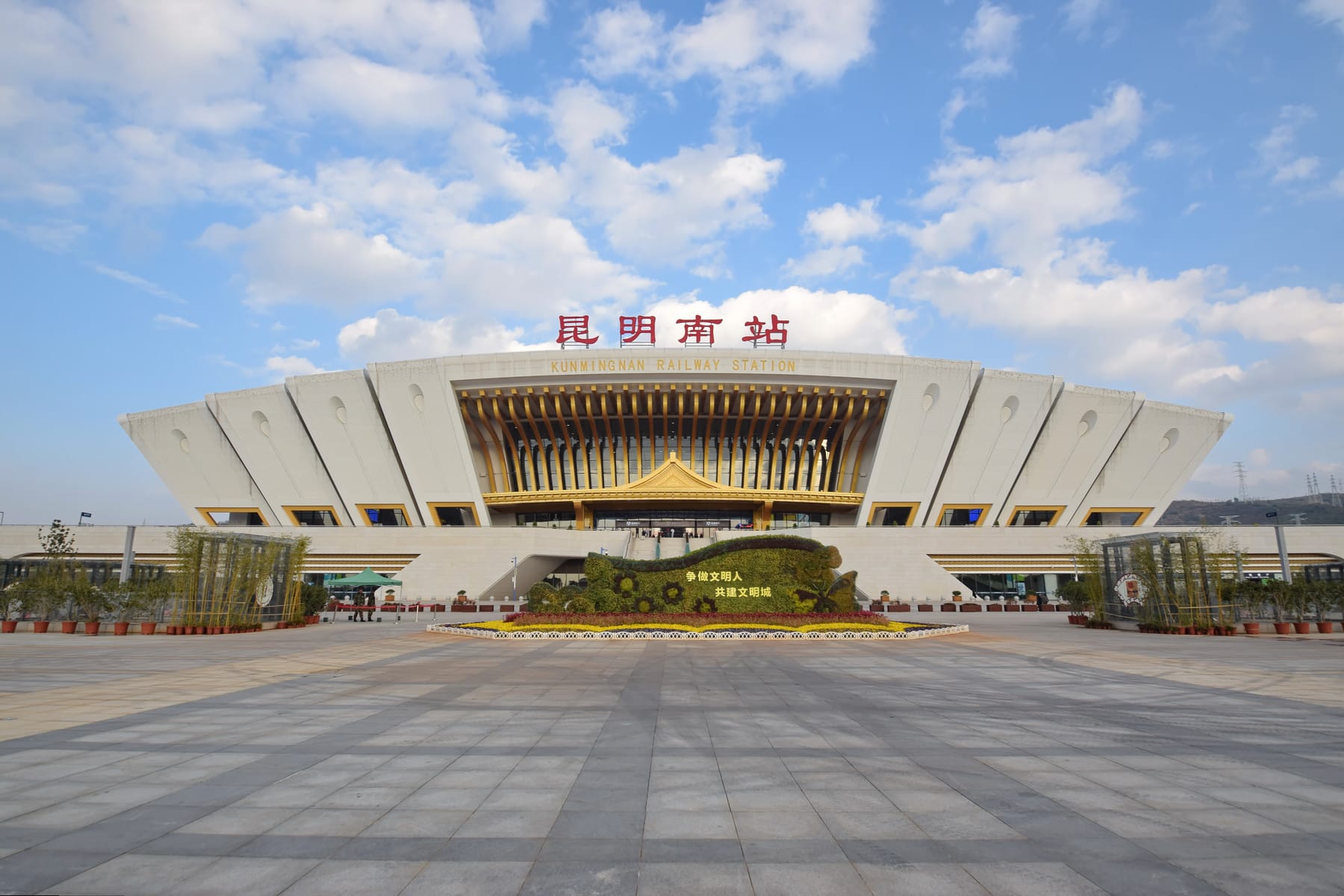
Kunming South Railway Station (昆明南站 / Kunming Nan Zhan) sprawls across 120,000 square meters in Chenggong District, 29 kilometers southeast of downtown. Opened December 2016, it features 16 platforms and 30 tracks. This handles exclusively high-speed rail services including Shanghai, Beijing, Guangzhou connections and the China-Laos International Railway.
Kunming West Railway Station (昆明西站) operates primarily for freight. Few passenger services run here. Most travelers never use this station.
The Critical Station Selection Question
This single decision determines whether your journey starts smoothly or stressfully. We base recommendations on verified travel times and actual user experiences.
Choose Kunming Railway Station when:
- Your hotel is central Kunming (Green Lake, Nanping Street, Wuhua District)
- You’re heading to Dali, Lijiang, or regional Yunnan cities
- Your train is conventional overnight service
- You value convenience over modern facilities
- You have limited connection time
Choose Kunming South Railway Station when:
- You’re traveling to major Chinese cities (Beijing, Shanghai, Guangzhou, Chengdu)
- You’re taking the China-Laos Railway to Vientiane
- Your hotel is in Chenggong District
- You prioritize modern amenities
- You have adequate transfer time (allow 60+ minutes from downtown)
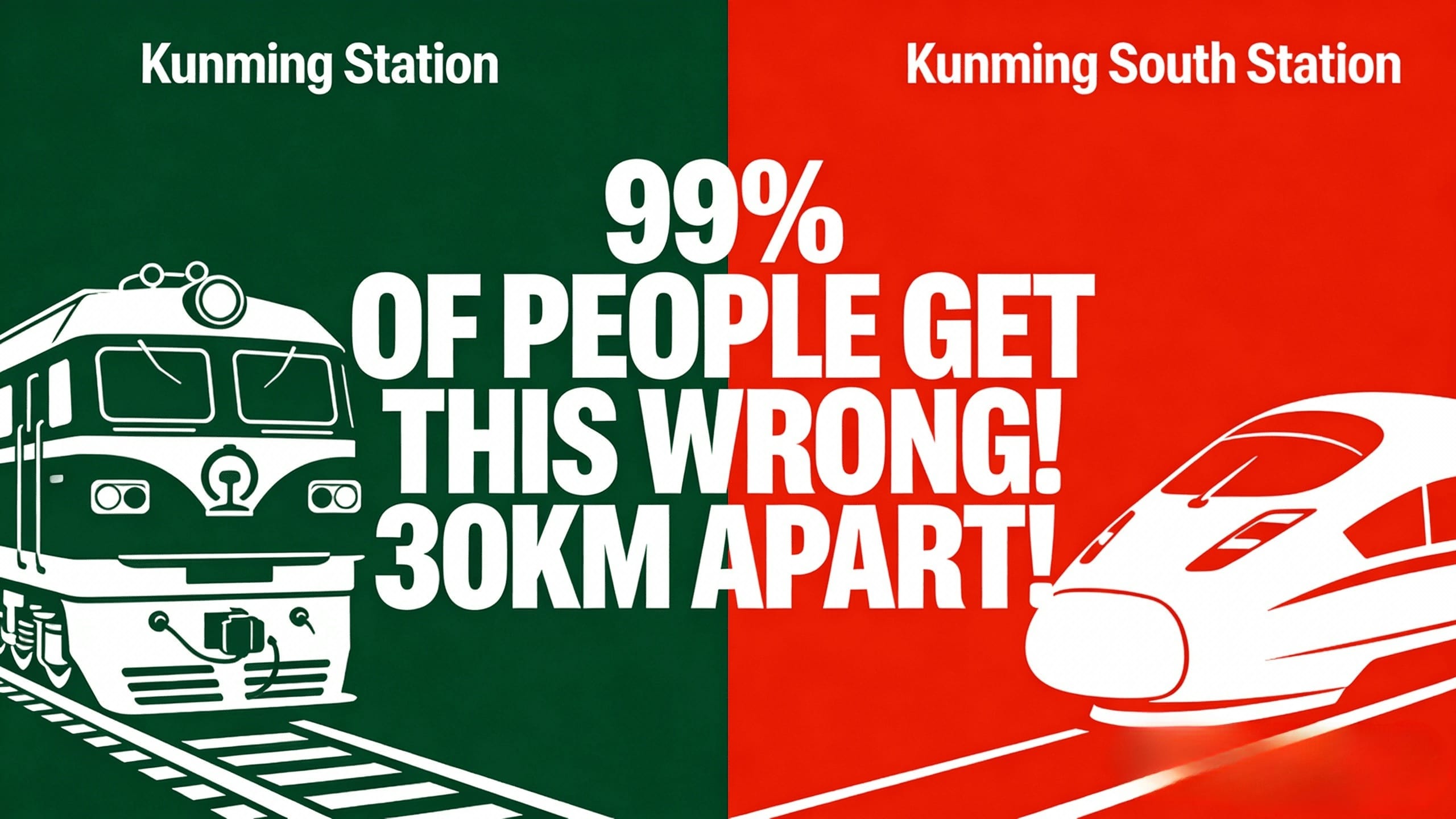
The Distance Problem: These stations sit 28 kilometers apart. Getting from one to the other takes 40-90 minutes depending on transport method. We’ve seen travelers miss connections by going to the wrong station. Always verify your departure station when booking tickets.
Kunming Railway Station: The Practical Downtown Hub
Real Location Details
Located at Beijing Road’s southern section, this station serves roughly 3.5 kilometers south of Jinbi Square. A taxi from popular Green Lake area hotels costs 12-18 RMB and takes 10-15 minutes in normal traffic. During rush hours (7:30-9:00, 17:00-18:30), allow 25 minutes.
The 2014 attack prompted major security overhauls. Current entrance security screening resembles airport procedures. Budget 10-20 minutes for security during normal hours, 30+ minutes during holidays.
Three-Floor Navigation System
First Floor houses the primary entrance, ticket offices, waiting areas, left-luggage services, restaurants, and arrival passages. Security screening occurs here before entering waiting areas.
Second Floor contains eight waiting halls (候车室) numbered 1-8, plus a dedicated China-Laos Railway international waiting area. Your ticket indicates which waiting hall to use. Gates open 20-30 minutes before departure.
Basement Level provides taxi stands, parking, and arrival exits. This level connects directly to platforms.
Critical Navigation Tip: The Metro Line 1 station exits at the South Square, not the main North Square entrance. This creates a painful 1-kilometer walk with luggage. From the metro, either walk 10-12 minutes to the north entrance or take shuttle bus 199 (runs every 15-20 minutes, free with train ticket).
Facilities That Actually Matter
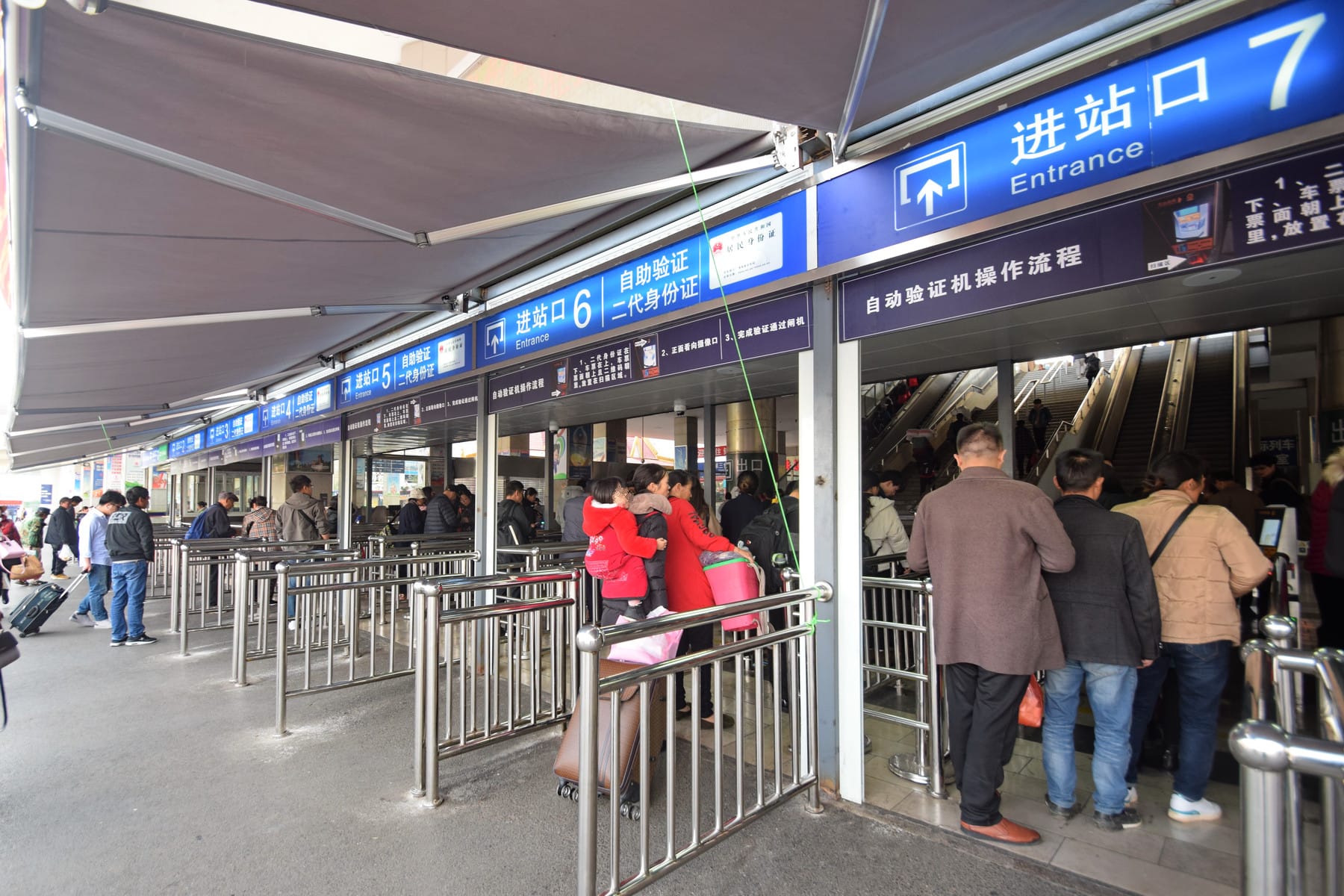
Ticket Collection: Two centers operate—one beside Waiting Room No.1 on the first floor, another at South Square. Windows marked “取票窗口” (pick up tickets) handle paper ticket collection. International passport holders should head to windows marked with passport symbols. Average wait time: 5-15 minutes during normal periods, 30+ minutes during holidays.
Left Luggage: Located first floor near Dicos restaurant, immediately after security screening on the left side. Costs 5-10 RMB for small items, 10-15 RMB for large suitcases per day. Operating hours match station hours (typically 05:30-24:00). The service holds items for up to 5 days.
Food Options: Dicos fast food, small restaurants serving Yunnan rice noodles (20-30 RMB per bowl), convenience stores, and a shopping corridor. Prices run 30-50% above street level. Smart travelers eat before arriving or bring snacks.
WiFi Reality: Free WiFi (network: KM_WiFi) requires Chinese phone number registration. International travelers without local SIM cards cannot connect. Download maps and essential information before arriving.
Transportation Connections Tested
Metro Access Confusion: Line 1 stops at Kunming Railway Station, but the station entrance sits at South Square. From the metro exit, the walk to the main north entrance takes 10-12 minutes dragging luggage. Escalators don’t reach all areas. Shuttle bus 199 connects South Square to North Square, running every 15-20 minutes.
Bus Routes Worth Knowing:
- Bus 44: Kunming Railway Station → Haigeng Park (Dianchi Lake access), 50 minutes, 1 RMB
- Bus 47: Kunming Railway Station → Expo Garden / Golden Temple, 35-45 minutes, 1 RMB
- Bus 2: Downtown Zhengyi Road flower market area, 25 minutes, 1 RMB
- Bus 68: Nanping Pedestrian Street area, 20 minutes, 1 RMB
Taxi Realities: Basement level taxi stands provide legitimate metered service. Day rate (06:00-22:00): 8 RMB base for first 3 km, then 1.8 RMB per km. Night rate (22:00-06:00): 9.6 RMB base, 2.1 RMB per km. Add 1 RMB fuel surcharge. Downtown trips cost 12-20 RMB typically.
Avoid unofficial “helpers” outside who offer taxi services at “fixed prices”—these always cost more. Use official stands or DiDi app (Chinese equivalent of Uber).
Popular Routes and Current Schedules
We’ve compiled the most useful train information for major tourist destinations from Kunming. This table shows realistic travel times and current ticket prices.
Route | Trains Daily | Journey Time | Second-Class | First-Class | Departure Station |
|---|---|---|---|---|---|
Kunming → Dali | 83+ trains | 2 hours | 145 RMB | 230 RMB | Kunming / Kunming South |
Kunming → Lijiang (High-speed) | 6 trains | 3.5 hours | 208 RMB | 332 RMB | Kunming / Kunming South |
Kunming → Lijiang (Overnight) | 1 train | 9 hours | 141.5 RMB (sleeper) | 217 RMB (sleeper) | Kunming |
Kunming → Vientiane (Laos) | 1 train | 9.5 hours | 542 RMB | 864 RMB | Kunming South |
Kunming → Shanghai | 10+ trains | 10-11 hours | 678 RMB | 1,086 RMB | Kunming South |
Kunming → Beijing | 5+ trains | 14 hours | 1,147 RMB | 1,835 RMB | Kunming South |
Kunming → Guangzhou | 8+ trains | 9.5 hours | 514 RMB | 822 RMB | Kunming South |
Kunming → Chengdu | 15+ trains | 6-7 hours | 249 RMB | 398 RMB | Kunming South |
Key Booking Insights:
- First trains typically depart 06:30-08:00, last trains around 20:00-21:30
- Dali and Lijiang tickets sell out 7-10 days ahead on weekends and holidays
- China-Laos Railway requires advance visa—no visa-on-arrival at border
- Most long-distance trains (Shanghai, Beijing, Guangzhou) only depart from Kunming South
- Regional Yunnan trains (Dali, Lijiang) serve both stations
The Yunnan Tourism Coach Station Connection
Located 900 meters east of the main hall, this bus station provides backup transport to Dali, Lijiang, Shilin, and regional destinations. Useful when train tickets sell out. Walk takes 12-15 minutes or take a taxi (starting fare 8 RMB).
Kunming South Railway Station: The Modern High-Speed Hub
Genuine Location Understanding
Situated in Chenggong District’s developing zone, this station sits 29 kilometers southeast of central Kunming. The “Spring City” center feels distant—because it is. Metro requires 50-70 minutes from downtown hotels. Taxi costs 60-80 RMB and takes 60-80 minutes in normal traffic, 90+ during peak hours.
Many first-time visitors underestimate this distance. We’ve talked to travelers who allowed 30 minutes from downtown hotels and missed their trains. Always budget 90 minutes minimum for downtown-to-platform transit.
Four-Floor Architecture Explained
Third Floor serves as the main level with waiting hall, boarding gates, service desks, and four entrances. West entrance serves metro arrivals. East entrance handles bus passengers. North and south entrances accommodate taxis and private vehicles. This floor’s mezzanine contains restaurants and shops.
Second Floor houses all platforms and ticket offices. Eastern and western ticket offices operate, with special windows for China-Laos Railway international tickets marked “国际售票窗口.”
First Floor manages arrivals with clearly marked exit passages, taxi stands, and ground-level transportation.
Basement Level connects Metro Lines 1 and 4 directly. This underground connection represents Kunming South’s major advantage—no outdoor walk to metro access.
Design That Actually Helps
The peacock-tail architecture looks impressive but serves function too. The massive waiting hall reduces crowding despite handling 185+ daily trains. Ceiling height and natural lighting create less claustrophobic atmosphere than older stations.
Four separate entrances distribute passenger flow effectively. Security screening occurs at each entrance rather than one central choke point. This speeds entry during normal periods, though all entrances face significant queues during holidays.
Facilities Inventory
WiFi That Works: Free WiFi (network: KM_WiFi) covers the station with better coverage and speed than Kunming Railway Station. Still requires Chinese phone registration, but some areas allow WeChat-based guest access.
Dining Hierarchy: Mezzanine level above third floor concentrates food options. KFC, McDonald’s, Dicos provide familiar fast food (40-80 RMB meals). Yunnan rice noodle shops charge 25-35 RMB per bowl. Dine before arriving to save money—station prices run 80-100% above street level.
Luggage Storage: Services near east square exit charge 15 RMB per piece daily. Self-service lockers scattered throughout provide smaller storage. Maximum storage period: 5 days. Service operates 05:00-23:30 daily.
The Flower Shop Detail: Located near west entrance escalator, this shop sells fresh-cut flowers—fitting for Kunming’s “flower capital” status. Staff provide tape at service desks for secure wrapping. Travelers frequently buy flowers as gifts. We’ve successfully transported flower bouquets on high-speed trains; staff offer sturdy wrapping.
Metro Integration That Functions
Lines 1 and 4 connect at basement level. First trains start 06:28, last trains run until 23:00. Fares range 4-8 RMB based on distance.
Line 1 Route to Downtown: Kunming South → Dounan (flower market) → Chunrong Street → University Town → New Asia Athletics Park → Dongfeng Square (city center transfer hub). Journey to Dongfeng Square: approximately 45 minutes.
Line 4 Route: Kunming South → Juhua (transfers to Line 6 for airport) → Bailong Road → Kunming North Railway Station → various stations. Provides northern Kunming access and airport connections via Line 6.
The Transfer Reality: From Kunming South to central hotels near Green Lake requires: Line 1 to Dongfeng Square (45 min) → Line 2 to Chuanxin Drum Tower (10 min) → taxi (5 min). Total: 60-75 minutes door-to-door minimum.
Bus Network Complexity
Twenty-five regular bus routes plus specialized K-series express buses serve the station. Most useful routes:
K36: Direct Kunming South → Kunming Railway Station service (70-90 minutes, 5 RMB). Critical for station transfers. Runs 06:00-20:00 approximately every 30 minutes.
K37, K38: Express routes to different downtown areas (50-70 minutes depending on destination, 5 RMB).
Standard buses (170, 180, 920-931 series) take longer but cost less (2-3 RMB). Check current schedules—routes change periodically.
Taxi Stand Operation
Third-floor drop-off and pick-up areas operate smoothly except during train arrival waves. Taxi fare to downtown: 60-80 RMB, 60-80 minutes journey. DiDi rideshare often costs less (45-60 RMB) but may face station access restrictions during peak hours.
Night rates (after 22:00) increase costs 20-30%. Some drivers refuse long downtown trips during shift changes (around 16:00-18:00). Have hotel address written in Chinese characters.
The China-Laos Railway Game-Changer
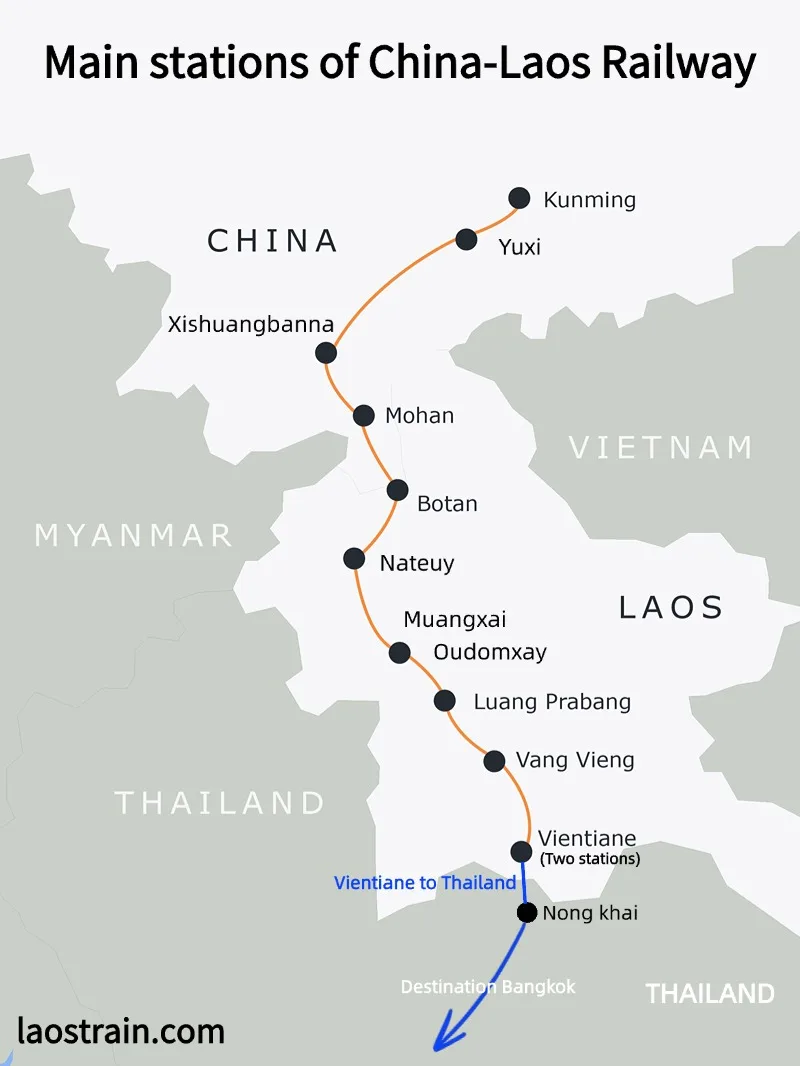
December 2024 marks three years since this 1,035-kilometer railway launched. Current verified statistics show remarkable growth.
Passenger Numbers: Over 43 million passenger trips completed through December 2024. Monthly volume grew from 600,000 initially to 1.6 million currently. Cross-border passengers exceeded 346,000 from 108 countries, with approximately 49,000 foreign nationals (87% entering China visa-free through Mohan checkpoint).
Service Quality: The TQI (track quality index) stays below 2.7 millimeters—meeting high-speed railway standards. This enables the famous “coin balance test” where coins stand upright during travel.
Route Evolution: Two daily trains now operate. Train D87 departs Kunming South at 08:08, arriving Vientiane at 17:44 (9.5 hours). Train D887 provides additional schedule flexibility. Both feature comfortable seats, functioning toilets, and dining cars.
Ticket Costs: Second-class 552 RMB, first-class 881 RMB to Vientiane. Book 7-10 days ahead during peak travel seasons. Special windows at Kunming South Railway Station handle international railway tickets.
Border Process: Trains stop at Mohan border station for passport and customs checks. Process typically takes 30-60 minutes. Bring passport, visa (if required—many nationalities now enjoy visa-free entry), and customs declaration. Don’t pack prohibited items.
What Changed: Previously, reaching Laos from Kunming required expensive flights or grueling 24-hour bus journeys. Now comfortable train service creates genuine overland travel possibilities. September 2024 saw the first multimodal freight train connecting China-Laos-Thailand, completing the journey in 3.5 days. Similar passenger expansions may follow.
Station Comparison: The Data That Matters
Factor | Kunming Railway Station | Kunming South Railway Station |
|---|---|---|
Downtown Distance | 3.5 km | 29 km |
Taxi Time to Center | 10-15 min (12-18 RMB) | 60-80 min (60-80 RMB) |
Metro Access Quality | Poor (1 km walk to entrance) | Excellent (direct basement) |
Primary Function | Mixed conventional + HSR | Exclusively high-speed |
Daily Train Volume | ~48 trains | 185+ trains |
Best For Destinations | Dali, Lijiang, regional Yunnan | Beijing, Shanghai, Guangzhou, long-distance |
Hotel Options Nearby | Many (100+ within 2 km) | Few (developing area) |
Food Quality | Basic station fare | More variety, chains |
Luggage Storage Cost | 5-15 RMB/day | 15 RMB/day |
Opening Year | 1970 (renovated 2004) | 2016 |
Station Size | 25,000 sqm | 120,000 sqm |
Navigation Complexity | Moderate | High (easy to get lost) |
Practical Problems Nobody Talks About
The Metro Walk Trap at Kunming Railway Station
Every guide mentions Metro Line 1 serves Kunming Railway Station. Few explain the reality. The metro station sits at South Square. The main passenger entrance operates at North Square. These connect via a 1-kilometer outdoor walk—roughly 10-12 minutes without luggage, 15-20 minutes dragging suitcases.
No covered walkway protects from rain. During summer downpours, this walk becomes miserable. Escalators don’t serve all areas. Shuttle bus 199 theoretically connects squares but runs irregularly (every 15-25 minutes, no fixed schedule).
Our Solution: If staying near Green Lake or Nanping Street, take taxi directly to station (12-18 RMB). If using metro, allow 20 minutes from metro exit to platform. Plan accordingly.
The Ticket Window Confusion
International passport holders face specific challenges. Not all ticket windows serve foreigners. Windows display symbols—look for passport icons. During peak periods, these specialized windows face long queues while other windows sit empty.
Some staff redirect foreigners to specific windows without explanation. Don’t take this personally. The system requires different processing for international passports versus Chinese ID cards. Expect 10-30 minute waits.
E-tickets now work for most trains, allowing direct boarding with passport. We still recommend collecting paper tickets once. Paper tickets display waiting hall numbers and Chinese characters—helpful when asking directions. The ticket also serves as a souvenir and concrete booking record.
The Boarding Gate Timing Reality
Your ticket indicates a waiting hall number. Gates for that hall open 20-30 minutes before departure. Boarding closes strictly 5 minutes before departure time. No exceptions.
We’ve watched travelers arrive 10 minutes before departure and get refused boarding despite holding valid tickets. Train schedules in China run with military precision. Trains depart exactly on time. Don’t test this.
Arrive at your assigned waiting hall 45 minutes before domestic trains, 60 minutes before international services. This provides cushion for security delays, bathroom visits, and navigation errors.
The Wrong Station Disaster
This happens more than you’d think. Travelers book tickets online, assume they depart from Kunming Railway Station (being the “main” station), and discover their train leaves from Kunming South—28 kilometers away.
The stations sit far enough apart that no rapid fix exists. Taxi takes 40-60 minutes in perfect traffic, longer during rush hours. Bus K36 requires 70-90 minutes. Metro needs 60-80 minutes with transfers.
Prevention: Always verify departure station when booking. Kunming Railway Station tickets show “昆明站” or “Kunming Zhan.” Kunming South shows “昆明南站” or “Kunming Nan Zhan.” These differences matter.
The Luggage Space Challenge
High-speed trains provide limited luggage storage. Overhead racks accommodate standard carry-on sizes. Large suitcases must fit in car-end storage areas—these fill quickly.
Train staff may refuse oversized bags. Maximum dimensions: 130 cm (length + width + height combined). Weight limit: typically 20 kg for adults. Most travelers don’t face issues with standard tourist luggage, but multiple large suitcases create problems.
The New Solution: June 2024 saw launch of “Easy Travel” luggage delivery service. Pay 68 RMB per piece for door-to-station delivery. This eliminates hauling bags through security, crowds, and platforms. Service requires advance booking (usually 1-2 days). Not all routes covered yet—check availability.
Money-Saving Transportation Hacks
Airport to Stations Budget Routing
Cheapest (Airport → Kunming Railway Station): Metro Line 6 → transfer Line 3 at East Bus Station → transfer Line 2 at Dongfeng Square → Line 1 to Kunming Railway Station. Total: 6-7 RMB, 90-110 minutes. Requires three transfers with luggage.
Moderate (Airport → Kunming Railway Station): Airport shuttle bus to Xiyi Hotel near station (25 RMB, 60-75 minutes). One bus, no transfers, accommodates luggage better.
Premium (Airport → Anywhere): Taxi costs 70-90 RMB to central hotels, 80-100 RMB to Kunming Railway Station, 100-120 RMB to Kunming South. DiDi offers similar or slightly lower rates.
Best (Airport → Kunming South): Metro Line 6 → transfer Line 4 at Juhua → Kunming South. Total: 6 RMB, 75-90 minutes, only one transfer.
Between-Station Transfer Economics
Budget: Metro Line 1 throughout (various transfers required), 60-80 minutes, 5-7 RMB.
Fast: Bus K36 direct route, 70-90 minutes, 5 RMB. Less convenient than metro but no transfers.
Emergency: Taxi direct, 40-60 minutes perfect traffic (often longer), 50-70 RMB. Only choose this for tight connections.
Hotel Location Strategy
Smart travelers book hotels considering station access. Staying near Green Lake or Nanping Street provides excellent Kunming Railway Station access (10-15 minute taxi, 20 RMB). These areas offer restaurants, attractions, and atmosphere.
Staying in Chenggong District near Kunming South saves station access time but sacrifices city exploration. Few tourist amenities exist nearby. This works for quick train connections, not for experiencing Kunming.
Most travelers benefit from central hotels near Kunming Railway Station. The extra metro time to Kunming South (50-60 minutes) matters less than daily convenience.
Common Traveler Mistakes
Mistake 1: Wrong Station Assumption Solution: Always verify departure station. Check both booking confirmation and ticket carefully.
Mistake 2: Insufficient Transfer Time Solution: Allow 90+ minutes for downtown-to-Kunming South trips. Allow 3+ hours when connecting between different stations.
Mistake 3: Last-Minute Arrival Solution: Reach assigned waiting hall 45-60 minutes before departure. Gates close 5 minutes before train leaves.
Mistake 4: No Cash Backup Solution: Carry 200-300 RMB in small bills. Some services require cash despite mobile payment dominance.
Mistake 5: Overlooking Ticket Details Solution: Check waiting hall number, platform number, carriage number, seat number. All this information guides you from waiting area to correct seat.
Mistake 6: Heavy Luggage Without Plan Solution: Consider luggage delivery service (68 RMB/piece), pack lighter, or choose hotels with station pick-up services.
Mistake 7: No Offline Resources Solution: Download maps, translation apps, hotel addresses, and booking confirmations before needing them. Station WiFi often fails for foreigners.
Emergency Contacts and Resources
Police: 110 (emergency situations) Medical Emergency: 120 (ambulance services) China Railway Hotline: 12306 (Chinese language only, booking and schedule info)
Station Information Desks:
- Kunming Railway Station: First floor main hall
- Kunming South Railway Station: Third floor main level
Lost and Found:
- Kunming Railway Station: 失物招领处 on first floor
- Kunming South Railway Station: Service desk on third floor
Report lost items immediately. Recovery rates exceed expectations—staff take lost property seriously. Provide detailed descriptions and contact information.
Medical Services: Both stations maintain first-aid rooms with basic medical supplies and trained personnel. For serious medical issues, staff can arrange ambulance transport to nearby hospitals:
- From Kunming Railway Station: Yunnan Provincial First People’s Hospital (15 minutes)
- From Kunming South Railway Station: Chenggong Hospital (20 minutes)
Final Thoughts: Making Trains Work
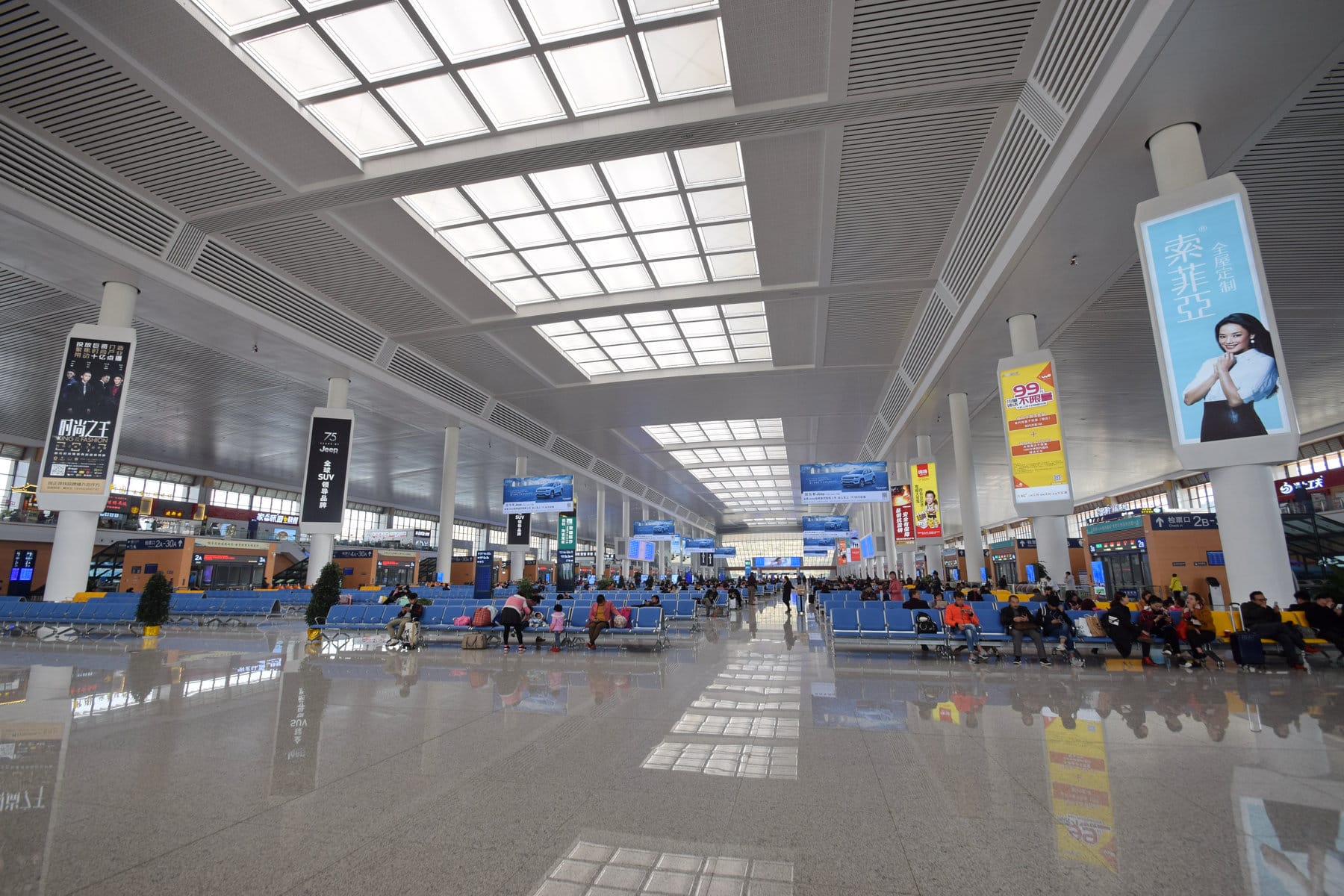
Kunming’s railway stations represent Southwest China’s most important travel hub. The system works efficiently once you understand the structure.
Our core recommendations:
- Choose station based on destination and hotel location, not assumptions
- Always verify departure station when booking
- Allow generous time for security and navigation
- Collect paper tickets at least once for Chinese character reference
- Book high-demand routes 10-15 days ahead
- Carry 200-300 RMB cash backup
- Download offline maps and translation apps before needing them
- Arrive at assigned waiting hall 45-60 minutes before departure
The China-Laos Railway exemplifies this region’s transformation. Three years ago, overland Southeast Asia travel from Yunnan required grueling bus journeys. Today, comfortable trains reach Vientiane in under 10 hours. Future expansions promise more possibilities.
We’ve learned that successful railway travel combines advance planning with flexible adaptation. Book tickets early but build schedule buffers. Research your route but remain open to unexpected discoveries. Technology helps, but local kindness often saves the day.
Whether boarding a bullet train to Dali’s ancient city or embarking on an international adventure to Laos, these stations serve as more than transit points. They’re where journeys begin, where excitement builds, and where travel dreams become reality.
Safe travels through Yunnan’s incredible railway network.
FAQ: Kunming Railway Stations
Q: Can I board trains with e-tickets using my passport?
A: Yes, most high-speed trains accept e-tickets now. Show your passport at security and boarding gates. However, we recommend collecting paper tickets at least once—they display Chinese characters for waiting halls and gates, making navigation easier.
Q: How early should I arrive at the station?
A: Domestic high-speed trains require 45-60 minutes early arrival. China-Laos International Railway needs 60-90 minutes due to border procedures. Conventional overnight trains need 30-45 minutes. Security screening and finding your waiting hall take time—gates close strictly 5 minutes before departure.
Q: Which station serves the China-Laos Railway?
A: Both stations now operate Laos trains. Train D86 departs Kunming Railway Station at 10:55 daily. Train D87 departs Kunming South at 08:08 daily. Both reach Vientiane in approximately 9-10 hours. Verify your specific departure station when booking.
Q: Is luggage storage available at both stations?
A: Yes. Kunming Railway Station charges 5-15 RMB per piece daily (first floor near Dicos). Kunming South charges 15 RMB per piece (near east square exit, plus self-service lockers). Both hold luggage up to 5 days. Remove valuables before storage.
Q: How do I get between Kunming Railway Station and Kunming South?
A: Three options exist. Metro Line 1 takes 60-80 minutes including transfers (5-7 RMB). Bus K36 provides direct service (70-90 minutes, 5 RMB). Taxi costs 50-70 RMB and takes 40-60 minutes in normal traffic. Allow 3+ hours between connecting trains at different stations.
Q: Can I buy tickets at the station without booking online?
A: Yes, ticket windows sell same-day and advance tickets. However, popular routes (Kunming-Dali, China-Laos Railway) often sell out, especially during holidays and weekends. We strongly recommend booking 10-15 days ahead through 12306 app, Trip.com, or booking services.
Q: Why does my Metro Line 1 trip to Kunming Railway Station take so long?
A: The metro station sits at South Square. The main passenger entrance operates at North Square—requiring a 1-kilometer walk (10-12 minutes with luggage). This design dates before metro construction. Shuttle bus 199 connects squares but runs irregularly.
Q: What food options exist at the stations?
A: Kunming Railway Station offers basic options: convenience stores, small restaurants, Dicos fast food (20-40 RMB meals). Kunming South provides better variety: KFC, McDonald’s, Dicos, Yunnan rice noodle shops (40-80 RMB meals). Both charge 30-100% above street prices. Bring snacks from outside convenience stores.
Q: Do I need a visa for the China-Laos Railway?
A: Depends on nationality. Many countries now enjoy visa-free entry to China for 15-30 days. Check current visa requirements for your nationality. Laos offers visa-on-arrival for most nationalities at the border (around $30-50 USD). The train stops at Mohan border station for passport and customs verification.
Q: Which station should I use for Dali?
A: Both stations serve Dali with similar frequency and timing (2 hours journey, 145 RMB second-class). Choose based on hotel location. Central Kunming hotels favor Kunming Railway Station (10-15 minute taxi). Chenggong District hotels favor Kunming South (direct metro access). Journey time and cost are nearly identical.
Q: Can foreigners use the 12306 app?
A: Yes, the 12306 app now accepts international passports and credit cards. The English version improved significantly. Requires account registration with passport details. Alternatively, use Trip.com or Ctrip for English interfaces and customer service (adds 5-10% service fee).
Q: What if I miss my train?
A: Go immediately to ticket windows for exchange to next available service. Some tickets allow free same-day exchanges, others require fees or price differences. Speed matters—later you wait, fewer options remain. Train departure time precision means no exceptions for late arrivals.
Q: Are there hotels near Kunming South Railway Station?
A: Few hotels operate near Kunming South—Chenggong District remains developing. Most travelers stay central Kunming near Green Lake, Nanping Street, or Wuhua District. These areas offer restaurants, attractions, nightlife, and excellent Kunming Railway Station access. The metro journey to Kunming South (50-70 minutes) matters less than daily convenience.
Q: How do I know which waiting hall to use?
A: Your ticket displays waiting hall number (候车室 + number). Look for this on paper tickets or booking confirmations. Digital displays at station entrances also show train numbers and corresponding waiting halls. Gates open 20-30 minutes before departure. Boarding closes 5 minutes before train leaves—strictly enforced.
Q: What’s prohibited in luggage on high-speed trains?
A: Lighters (except one small pocket lighter), large sharp objects, flammable liquids over 100ml, spray paint, matches, gasoline, and live animals (except service dogs). Small scissors, travel-size toiletries, and pocket knives under 6cm typically pass. Security screening at station entrance checks all bags.
Q: Does station WiFi work for international travelers?
A: Technically yes, practically challenging. Free WiFi (network: KM_WiFi) requires Chinese phone number registration. International travelers without local SIM cards often cannot connect. Download maps, translation apps, and essential information before arriving at stations.
Q: What’s the best route from Kunming to Stone Forest?
A: High-speed train from either station to Shilin West Station (47-57 minutes, 28.5 RMB second-class), then bus No.99 to scenic area (30 minutes, 10 RMB). Total journey: approximately 90 minutes, 38.5 RMB. Alternatively, tourist buses depart station squares (25 RMB, 90 minutes direct) but run on sporadic schedules. The scenic area requires 3-4 hours minimum exploration.
Q: How much does taxi service cost from each station?
A: Kunming Railway Station to downtown: 12-18 RMB (10-15 minutes). Kunming South to downtown: 60-80 RMB (60-80 minutes). Day rate (06:00-22:00): 8 RMB base for 3 km, then 1.8 RMB per km. Night rate (22:00-06:00): 9.6 RMB base, 2.1 RMB per km. Add 1 RMB fuel surcharge universally. Use official taxi stands or DiDi app—avoid unofficial “helpers.”