China High-Speed Train Seat Classes: The Complete Guide to Choosing Your Perfect Seat
After some first business class mistake (¥1,748 for a 4-hour Beijing-Shanghai trip when first class would’ve been fine), we learned China high-speed train seat classes matter more than you’d think.
This guide combines the basics you need to know with the insights other articles won’t tell you.
READ ALSO: High-Speed Train Travel in China: Your Ultimate Guide
Table of Contents
Understanding the Seat Class Hierarchy
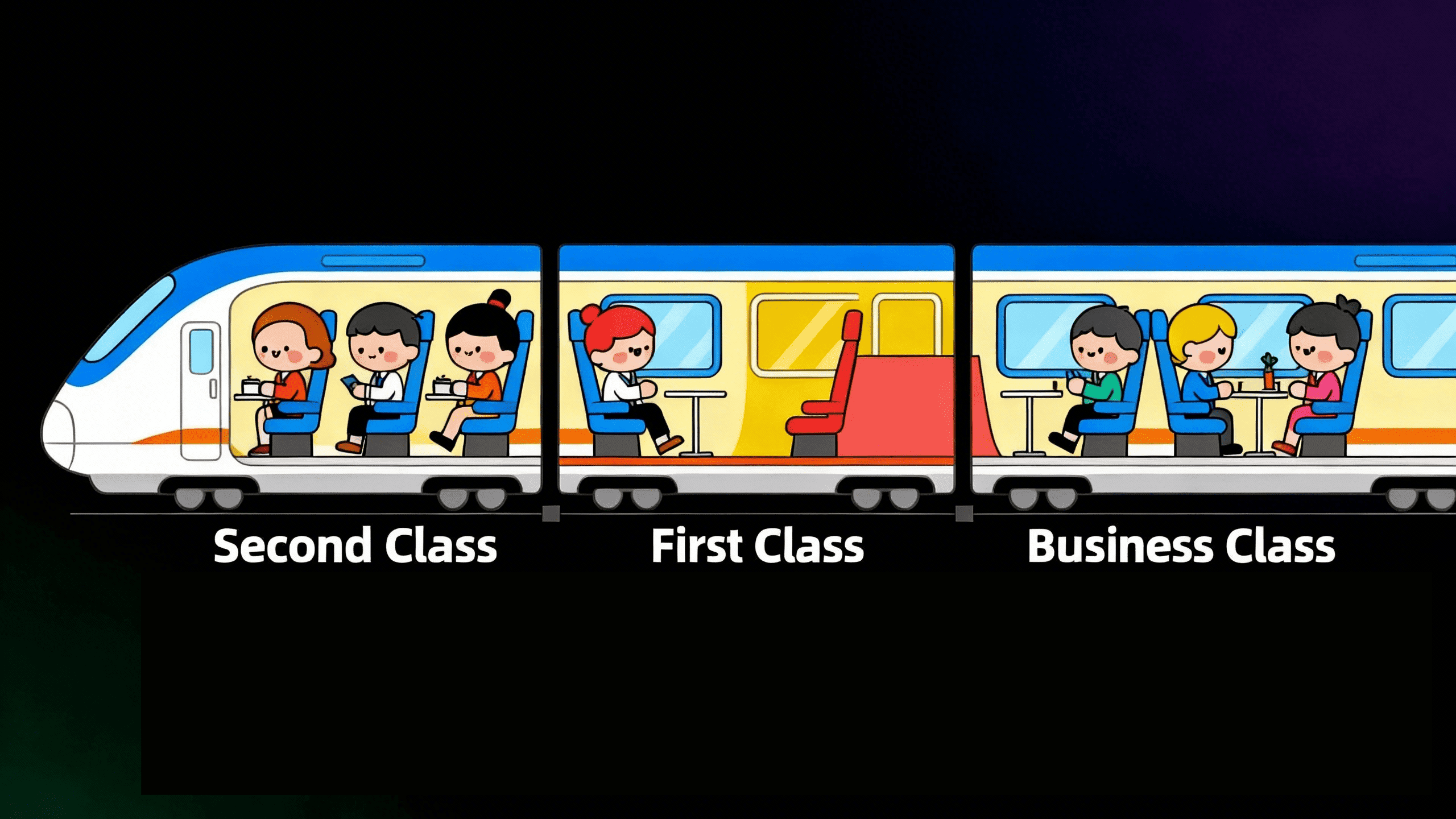
China’s high-speed trains offer four main seat classes:
- Business Class (商务座) – Most expensive, fully reclining seats
- First Class (一等座) – Mid-tier premium option
- Second Class (二等座) – Standard economical choice
- Premium First Class (特等座) – Rare, only on select Beijing-Shanghai Fuxing trains
Unlike airplanes where first class is the top tier, trains put business class at the premium level. This distinction matters for pricing expectations.
Second Class: The Standard Choice
What You Actually Get
Seat configuration: 3-2 layout (5 seats per row)
Seat width: 42-45cm (16.5-17.7 inches)
Legroom: 40cm (15.7 inches) between rows
Recline: 24-26 degrees maximum
Price: Baseline fare
Each second class carriage fits about 90-100 passengers. The 3-2 arrangement means some passengers get middle seats with neighbors on both sides.
Actual Features
- Seats rotate 180 degrees (always face forward regardless of travel direction)
- Tray table attached to front seatback
- Power outlets between or under seats
- Armrests fold up between seats
- On newer Fuxing trains: USB charging ports at every seat
The tray table placement creates a problem when traveling face-to-face with companions. Turn the seats around to chat, and you lose access to your tray table (it’s now behind you on someone else’s seatback).
Seat Letter Breakdown
A = Window (3-seat side)
B = Middle (3-seat side)
C = Aisle (3-seat side)
D = Aisle (2-seat side)
F = Window (2-seat side)
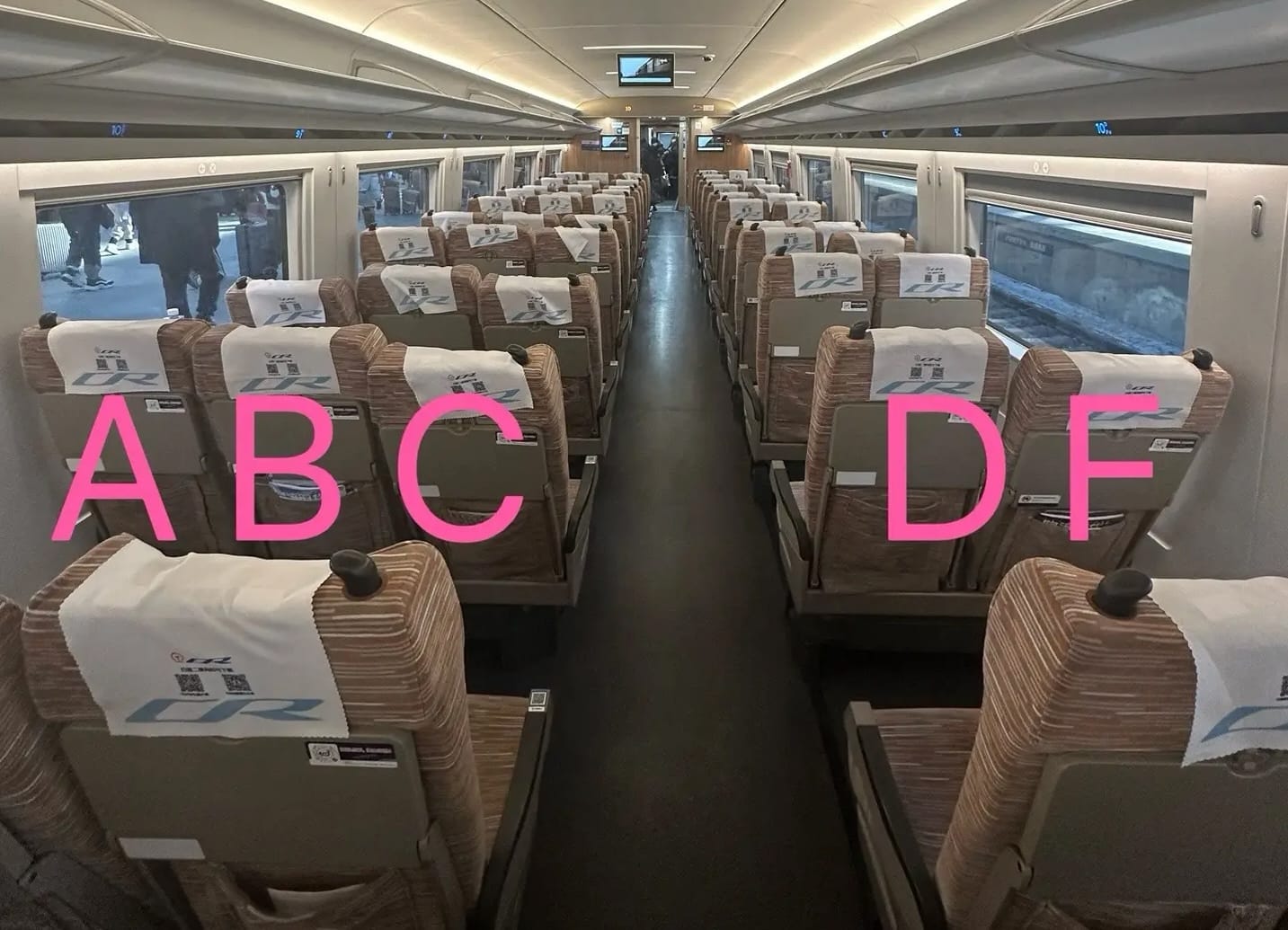
No E seat exists—the system copies airplane conventions even though row widths differ.
Solo travelers: Book F (window on 2-seat side). You get window views with only one neighbor instead of being boxed in with two on the A side.
Couples: Book D-F together on the 2-seat side.
Groups of 3: ABC seats keep you together.
Never book: Seat B unless you enjoy being sandwiched between strangers.
The Silent Carriage (静音车厢)
This is a game-changer we always suggest booking. On the 12306 app, look for the “Silent” icon. In these cars, phone calls are banned and volumes must stay low. It makes Second Class feel like First Class for no extra cost.
When Second Class Works
Routes under 2 hours (Shanghai-Suzhou 30 min, Beijing-Tianjin 33 min, Guangzhou-Shenzhen 1 hour)—the journey’s too short to justify premium pricing.
Budget travel where every yuan counts. Second class costs 40-50% less than first class on most routes.
Groups of 3+ wanting adjacent ABC seats to stay together.
Off-peak travel when carriages aren’t packed. A half-empty second class carriage feels completely different from a sold-out one.
When Second Class Fails
Peak travel periods. During Spring Festival, National Day, and summer holidays, second class sells out first. Standing passengers (yes, standing tickets exist) can crowd the aisles. We experienced this on a Labor Day Beijing-Shanghai train—couldn’t walk to the toilet without saying “excuse me” 15 times.
Routes over 4 hours if you’re taller than 180cm (5’11”). The 40cm legroom and 24-degree recline start causing back complaints around hour 3.
When you need to work. Noise levels make video calls impossible. Families with children, loud phone conversations on speaker, and general chatter are normal in second class.
Real Guest Experiences
“Second class Beijing-Shanghai was fine until hour 3. Then my back started complaining about the shallow recline.” — Mark, 185cm tall
“For Shanghai-Nanjing (1.5 hours), second class was perfect. Clean, quiet, cheap. No complaints.” — David, budget traveler
“The afternoon train had people standing in our carriage during Golden Week. Couldn’t walk around freely.” — Lisa, holiday traveler
Pricing Examples
- Beijing-Shanghai (1,318km, 4.5 hours): ¥553 ($77 USD)
- Shanghai-Hangzhou (159km, 45 min): ¥73 ($10 USD)
- Guangzhou-Shenzhen (102km, 1 hour): ¥79.5 ($11 USD)
- Shanghai-Nanjing (300km, 1.5 hours): ¥134.5 ($19 USD)
First Class: The Sweet Spot
Physical Specifications
Seat configuration: 2-2 layout (4 seats per row)
Seat width: 47-48cm (18.5-19 inches) — 5cm wider than second class
Legroom: 40-50cm (15.7-19.7 inches) between rows
Recline: 60 degrees (vs. 24 degrees in second class)
Price: 60-80% more than second class
No middle seats exist. Everyone gets either a window or aisle.
Enhanced Features
Pillow attached to every headrest—not decorative, actually useful for neck support
Footrest adjustable, both hard and soft options
Tray table built into armrest (right side)—this matters more than it sounds
Multiple power outlets on both sides of each row
Headphone jack with volume controls (rarely used)
Reading light at each seat
Quieter carriage with fewer passengers and less foot traffic
The armrest tray table solves second class’s face-to-face problem. You can use it regardless of seat direction because it’s not attached to the seatback in front of you.
Seat Letters
A = Window
C = Aisle
D = Aisle
F = Window
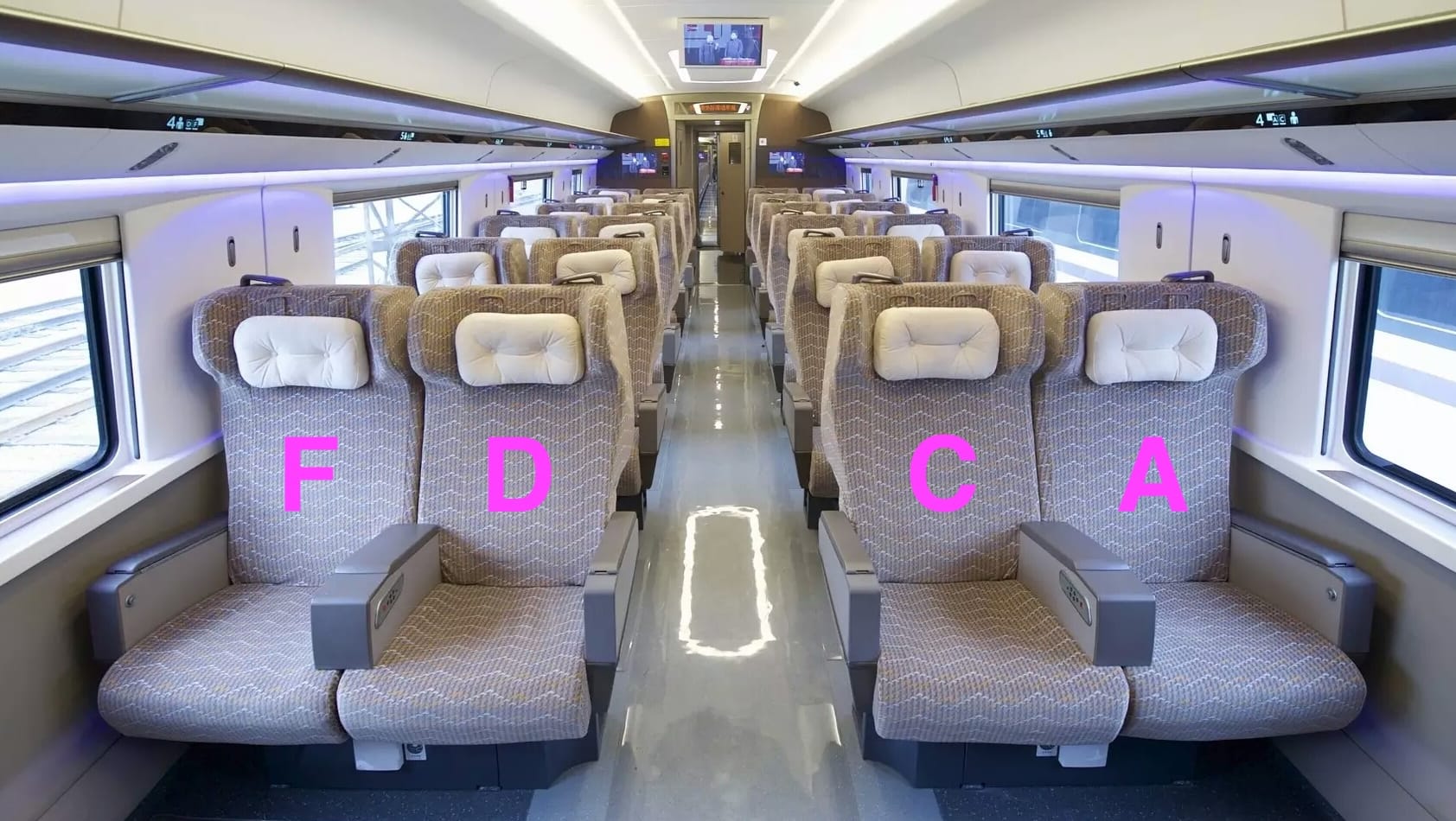
Letters B and E are skipped to maintain the A/F = window, C/D = aisle pattern.
The Footrest Difference
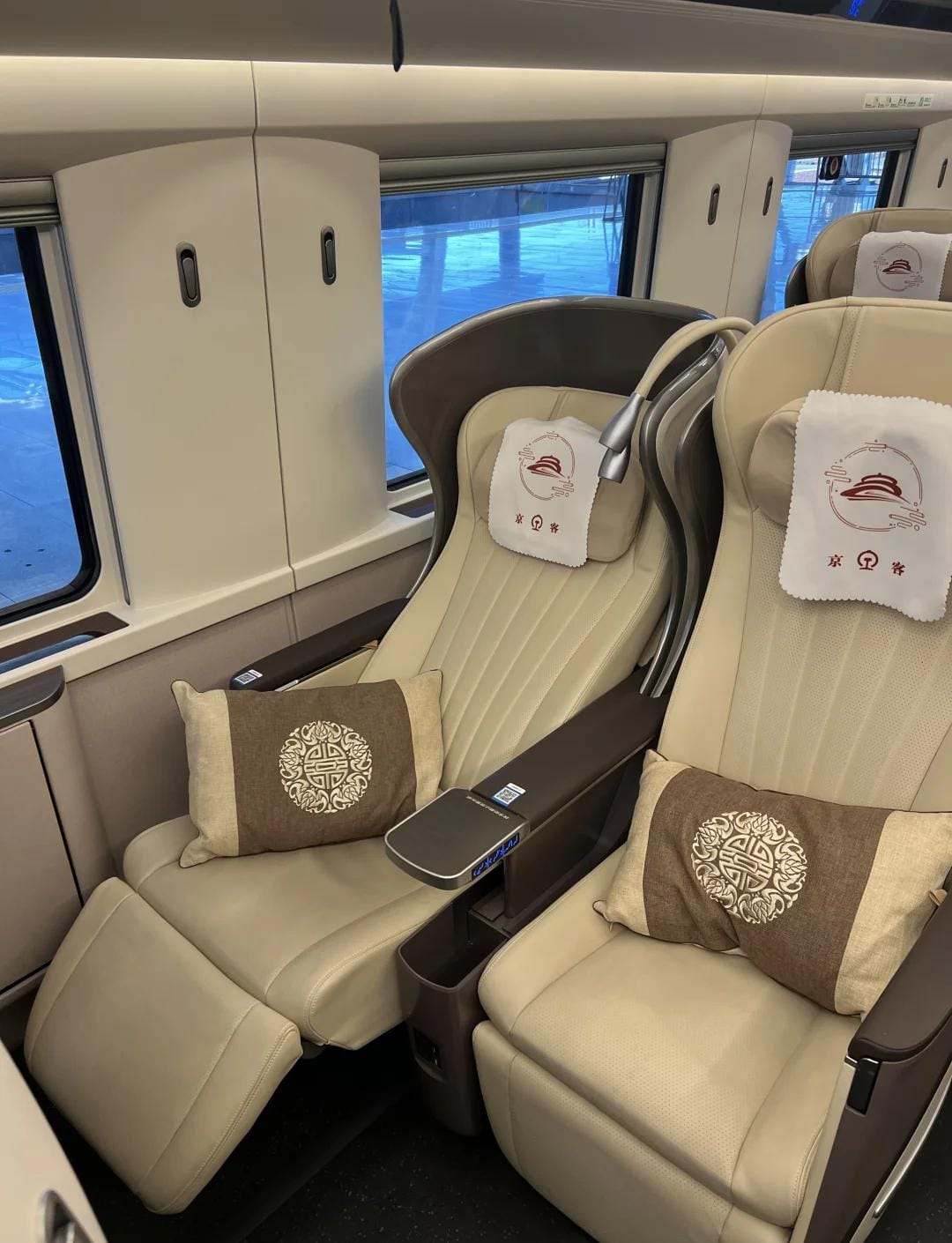
This isn’t about luxury—it’s about circulation during long trips. After 2-3 hours sitting upright, your legs need somewhere to go. The footrest makes 5-hour journeys dramatically more comfortable.
One passenger with circulation issues noted: “Being able to elevate my feet made the 6-hour trip comfortable. Without it, my legs would’ve been swollen.“
Pricing Reality
- Beijing-Shanghai: ¥933 ($130) — ¥380 more than second class
- Shanghai-Hangzhou: ¥117 ($16) — ¥44 more
- Guangzhou-Shanghai: ¥862 ($120) — ¥309 more
Calculate cost per hour: Beijing-Shanghai first class upgrade = ¥380 ÷ 4.5 hours = ¥84/hour. That’s reasonable for significantly better comfort.
Shanghai-Hangzhou first class upgrade = ¥44 ÷ 0.75 hours = ¥59/hour. Still reasonable but less value since you barely sit down before arriving.
When First Class Makes Sense
Routes 3-8 hours long. Beijing-Xi’an (4-5 hours), Shanghai-Chengdu (7 hours), Guangzhou-Shanghai (7 hours)—the footrest and deeper recline justify the premium.
Anyone taller than 180cm. The extra 5-10cm legroom prevents knee compression.
Business travel requiring laptop work. The quieter environment and armrest tray table create a functional workspace.
When the absolute price gap is under ¥100/hour. If you’re paying ¥50-80/hour extra for measurably better comfort, that’s fair value.
Peak season travel. The quieter, less crowded environment becomes more valuable when second class is packed.
When First Class Is Overkill
Routes under 2 hours. You’re paying for amenities you won’t use. A 45-minute trip doesn’t give you time to appreciate the footrest.
Traveling as groups of 3+. Second class ABC seats keep you together. First class 2-2 layout splits you up.
Overnight sleeper trains. You’re lying flat in a bed regardless of seat class during the day portion.
Our Guest Reality Check
“First class Shanghai-Beijing was noticeably quieter. Business travelers, some sleeping, occasional typing. Second class had crying kids and FaceTime calls on speaker.” — Jennifer, monthly traveler
“I booked first class thinking I’d work. Ended up staring out the window the whole time. Nice experience but not necessary for me.” — Tom, one-time trip
“The tray table in the armrest is genius. We could eat snacks while sitting face-to-face with our kids. Second class passengers can’t do that.” — Richard, family travel
Business Class: What They Don’t Tell You
Three Different Configurations Exist
You cannot choose which type when booking. The train model determines what you get:
1. Traditional “Egg Shell” Seats (Most Common)
- 2-1 or 2-0 layout per row
- Fully reclining leather seats
- Separate carriage with automatic door
- Found on most CRH and older Fuxing trains


2. Business Studio (Rare)
- Staggered 1-1 layout
- Better privacy between seats
- Specific train numbers only
- Superior to traditional layout
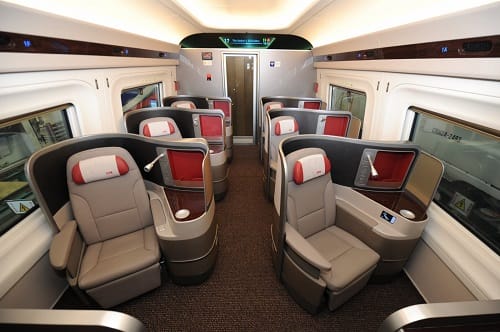
3. Herringbone Layout (Rarest)
- Angled seats for maximum privacy
- Mostly on select Beijing-Shanghai Fuxing trains
- Best configuration but hardest to book
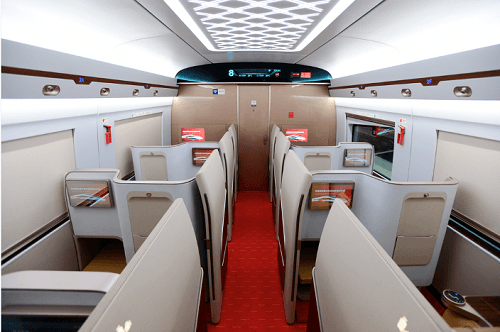
The booking problem: Neither Trip.com nor 12306 shows which configuration you’re getting. You might pay ¥1,748 expecting a business studio and receive a traditional egg-shell seat instead.
Actual Specifications
Seat width: 55-60cm (21.7-23.6 inches)
Recline: 180 degrees (completely flat)
Full length when flat: 180-190cm (71-75 inches)
Row spacing: 200cm (79 inches)
Configuration: Usually 3 seats per row (2-1 or 1-1 layout)
These aren’t seats. They’re leather recliners that transform into near-flat beds. You don’t stick your feet into a cub hole and there’s enough room for you to wiggle.


What’s Actually Included
Free meals during specific windows:
- Breakfast: Before 8:00 AM
- Lunch: 11:30 AM – 1:00 PM
- Dinner: 5:30 PM – 7:00 PM
Miss these windows and you only get the snack box (6-8 items, usually nuts, crackers, dried fruit).

The meal reality: One reviewer called it “aggressively mediocre”—airplane-quality microwaved food. It’s free, but don’t expect restaurant quality.
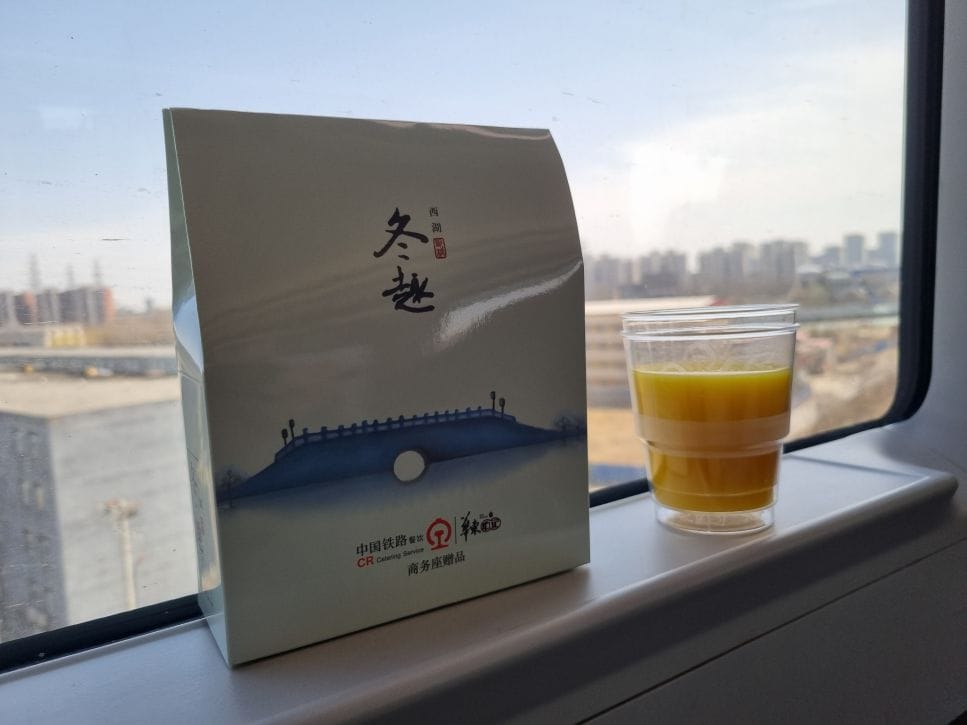

Complimentary items:
- Disposable slippers
- Blanket and cushion
- Snack box
- Tea, coffee, soft drinks
- Sometimes bottled water
VIP lounge access — Only at major stations (Beijing South, Shanghai Hongqiao, Guangzhou South). Secondary stations like Nanjing South have no lounge despite business class tickets saying you get access.


Priority boarding — Attendant escorts you to platform. Works at major stations, doesn’t exist at smaller ones.
Personal entertainment — Mini LED TV in armrest with movie selection. Quality varies by train age.

The “Sightseeing Seat” Problem
Rows 1-2 in business class sometimes advertise “panoramic views” through the driver’s cab window. Sounds premium. Actually problematic:
- Less legroom (cab wall reduces space)
- Harsh sunlight reflection through the panoramic window
- Often not even window seats despite the “sightseeing” label
Experienced travelers avoid these rows.
Service Quality Varies By Railway Bureau
Same train model, drastically different service. Shanghai Railway Bureau business class = attendant hands you the meal box and leaves. Zhengzhou Railway Bureau = proactive drink service, blankets without asking, better hospitality.
You cannot predict which bureau operates your train when booking.
Pricing
Business class costs roughly:
- 2x first class price
- 3x second class price
- Sometimes 3.5-4x second class on premium routes
Beijing-Shanghai: ¥1,748-2,318 ($244-324)
Shanghai-Guangzhou: ¥1,518 ($212)
Hong Kong-Guangzhou: ¥274 ($38) for 30 minutes
Calculate value: Beijing-Shanghai business class costs ¥1,195 more than first class for 4.5 hours. That’s ¥266/hour extra for:
- Fully flat seat (useful if sleeping)
- Free meal (worth maybe ¥60)
- Lounge access (only at major stations, often crowded)
- Quieter carriage (not guaranteed—one noisy passenger ruins this)
When Business Class Actually Makes Sense
Overnight routes where you need to sleep. Beijing-Shenzhen overnight (8+ hours)—the flat bed justifies the cost.
Medical conditions requiring fully reclined positions. Back problems, circulation issues, pregnancy.
Company expense accounts. If you’re not paying personally, enjoy the experience.
Confirmed business studio or herringbone trains. If you verify the specific train model offers superior configuration.
When Business Class Is Wasteful
Routes under 2 hours. “Booked business class Hong Kong-Guangzhou (30 minutes). Barely sat down before we arrived. Absolutely pointless.” — Sarah
Anytime first class delivers 80% of comfort at 53% of the price. The incremental benefit rarely justifies doubling your fare.
Trains operated by inconsistent railway bureaus. You might pay premium price for mediocre service.
Three Experiences That Sum It Up
“The Shanghai bureau vs Zhengzhou bureau difference is real. Same train type, drastically different service quality.” — Alex, frequent traveler
“First class offers the best value. Business class is like airline first class—looks impressive, marginally better, usually not worth double the price.” — Martin, former aviation blogger
“I booked business class for an 8-hour overnight trip. Being able to sleep completely flat made the premium worthwhile. For daytime travel, I always choose first class now.” — David, monthly traveler
The Comparison Table That Actually Helps
What Matters | Second Class | First Class | Business Class |
|---|---|---|---|
Seat width | 42-45cm | 47-48cm | 55-60cm |
Legroom | 40cm | 40-50cm | 200cm |
Recline angle | 24-26° | 60° | 180° (flat) |
Seats per row | 5 (3-2) | 4 (2-2) | 2-3 (varies) |
Footrest | No | Yes | Built-in |
Pillow | No | Yes | Yes + blanket |
Tray table | Seatback (front) | Armrest | Armrest |
Free meals | No | Sometimes water | Yes (meal times) |
Noise level | Moderate-high | Low-moderate | Very low |
Can you sleep? | Light dozing | Reclined rest | Fully flat bed |
Can you work? | Difficult | Yes | Best option |
Bathroom crowding | Often lines | Less wait | Least crowded |
Price (Beijing-Shanghai) | ¥553 | ¥933 (+¥380) | ¥1,748 (+¥1,195) |
Decision Framework: Which Class to Choose
Choose Second Class If:
Your trip is under 2 hours — you won’t sit long enough to appreciate premium amenities
You’re traveling as a group of 3+ — ABC seats keep you together (first class splits groups)
Budget is the primary concern — second class costs 40-50% less
You’re comfortable in airplane economy seats — second class offers similar or better space
Traveling off-peak when carriages aren’t full — half-empty second class feels completely different
Choose First Class If:
Your journey is 3-8 hours — the footrest and deeper recline become valuable
You’re taller than 180cm — extra legroom prevents discomfort
You need to work during travel — quieter environment, better workspace
The price gap is under ¥100/hour — reasonable value for better comfort
You want a quieter, less crowded environment — especially valuable during peak travel
You’re traveling with one companion — comfortable paired seating
Choose Business Class If:
Your trip is 8+ hours overnight — flat bed makes the premium worthwhile
You have medical needs for fully reclined positions
Company is paying — enjoy the experience
You’ve confirmed the train has business studio or herringbone layout — superior configuration
You simply want the premium experience and budget isn’t a constraint
Skip the Upgrade If:
Trip is under 90 minutes — won’t use amenities enough to justify cost
Traveling overnight sleeper with actual beds — paying for seats you won’t sit in
Peak season pricing exceeds normal fares by 50%+ — poor value
You’re on a tight budget — second class delivers solid comfort for much less
Common Booking Mistakes to Avoid

Mistake #1: Booking Last-Row Seats
Last rows in each carriage don’t recline fully—they hit the wall. Booking systems rarely warn you. We learned this on G1 Beijing-Shanghai when seat 14C maxed out at 30 degrees instead of 60.
Solution: Check seat maps when available. Avoid the last row (usually row 12-14 in second class, row 8-9 in first class).
Mistake #2: Ignoring Train Numbers
G1-G100 trains often = newest Fuxing trains = best amenities across all classes. Higher G numbers might be older CRH trains with dated facilities.
Same ticket price, different experience. The Fuxing trains have:
- USB ports at every seat
- Better cushioning
- Quieter motors
- Newer toilets
- More reliable power outlets
Solution: When multiple trains serve your route at similar times, choose lower G numbers if price is identical.
Mistake #3: Assuming All “Business Class” Is Equal
Traditional egg-shell seats vs. business studio vs. herringbone—¥1,748 buys very different products.
You cannot see the configuration when booking on Trip.com or 12306. It’s random assignment based on which train model operates that specific departure.
Solution: Research specific train numbers on forums or WeChat groups to learn which models run which routes. Or accept the gamble.
Mistake #4: Not Checking Actual Seat Position
12306 app shows exact carriage and seat location. Trip.com usually doesn’t until after booking.
Seats near bathrooms = more foot traffic and door noise
Seats near large luggage areas = convenient for bags but noisier
Middle carriages = generally quietest
Front/rear carriages = business/first class usually located here
Solution: Use 12306 for booking if seat location matters. Trip.com is easier for foreigners but gives less control.
Mistake #5: Believing “Free WiFi” Claims
Business class theoretically has WiFi. Reality: inconsistent, slow, drops frequently. First and second class: no WiFi at all despite what some guides claim.
4G/5G mobile coverage works excellently throughout most routes. Don’t count on train WiFi.
Solution: Use mobile data. It’s reliable.
Practical Booking Strategy
Timing Matters
14-30 days before travel: Tickets release. Peak routes (Beijing-Shanghai, Guangzhou-Shanghai) sell out in minutes for holiday periods.
7-10 days before: Some discount pricing appears for less popular departure times. Second class might drop 10-15% for odd-hour trains.
Day of travel: Last-minute tickets sometimes available but often only standing room during busy periods.
The cancellation window trick: Chinese passengers book multiple tickets and cancel later. Check the app 2-3 times before your travel date—tickets appear randomly as others cancel and receive refunds.
Seat Selection Reality
You can choose window vs. aisle when booking on 12306. You cannot choose specific carriage or row number—that’s random assignment.
The couple’s problem: Business class bookings sometimes place couples in separate carriages. We booked together and got Car 1 and Car 8 (opposite ends of the train). Had to cancel and rebook—still got separate seats but at least same carriage.
Groups face similar issues. Three people might get seats scattered across different carriages unless you book simultaneously and get lucky.
Which Platform to Use
12306 (Official China Railway App)
- ✅ Shows train models (Fuxing vs. CRH)
- ✅ Shows exact seat maps
- ✅ No service fees
- ✅ Best seat selection control
- ❌ Harder foreigner setup (requires verification)
- ❌ Chinese interface primarily (English version limited)
Trip.com
- ✅ Easy English interface
- ✅ Foreign payment methods
- ✅ 24/7 customer service
- ❌ ¥10-15 service fee per ticket
- ❌ Doesn’t show train models
- ❌ Limited seat selection visibility
- ❌ Sometimes sold out when 12306 still has tickets
Our recommendation: Use 12306 if you can set it up. The control and information justify learning the interface. Use Trip.com if you need simplicity and don’t mind the service fee.
DIG DEEPER: How to Book Hotels, Flights, and Train Tickets Online in China: A Comprehensive Guide
Station Experience Differences
Business Class Perks (Major Stations Only)
VIP Waiting Lounge:
- Beijing South, Shanghai Hongqiao, Guangzhou South = spacious lounges with tea, snacks, comfortable seating
- Secondary stations (Nanjing South, Hangzhou East) = maybe a small room, often just standard waiting area
- Small stations = zero special treatment despite business class ticket
Priority Security:
- Dedicated entrance saves 10-15 minutes during peak times
- Only exists at the largest stations
- Not always clearly marked—ask staff
Priority Boarding:
- Attendant escorts you to platform
- Helps with luggage
- Major stations only
All Classes Face These Realities
Arrival time: 30 minutes minimum before departure. Major stations are airport-sized. Security checks, finding your platform, and locating your carriage number all take time.
International travelers: Add 5-10 minutes for passport scanning. The machines sometimes need manual verification if your passport photo is old or you’ve changed appearance.
Standing passengers: Can board second class if tickets sell out. Standing ticket = same price as seated second class. This happens during Spring Festival, National Day, Golden Week, summer holidays. Aisles fill with standing passengers.
Frequently Asked Questions
Why isn’t there an E seat?
The lettering system copies airplane conventions: A and F = windows, C and D = aisles. The system skips B and E to maintain this pattern even though train rows have different widths than airplane rows.
Can I upgrade onboard?
Sometimes. Ask the conductor and pay the fare difference if seats are available. During peak travel (holidays, weekends), forget it—trains are sold out.
Which carriage is quietest?
Carriages 3-6 (middle of train) generally quieter. Avoid Carriage 1 (business class means people walking through to toilets) and the last carriage (more noise from train mechanics).
Our Final Recommendations After 50+ Journeys
Budget travelers: Second class for routes under 3 hours. First class for routes over 5 hours (your back will thank you).
Business travelers: First class minimum. Business only for 6+ hour trips where sleeping flat matters.
Families with children: Second class ABC seats keep you together. First class 2-2 layout splits groups across the aisle.
Elderly or those with mobility issues: First class for footrests and easier bathroom access. Business class for fully flat option if needed.
First-time riders: Try first class on your longest route. Then decide if second class suffices for shorter trips. The experience difference is clearer when you test both.
The obsession with business class is mostly marketing. First class delivers 80% of the comfort at 53% of the cost on most routes. That’s the real value proposition.
For routes under 2 hours, even second class feels like overkill—you barely have time to settle in before arriving.
READ ALSO: China Train Sleeper Guide: Hard vs Soft vs Premium Sleepers – Which to Choose?
Based on extensive testing of all seat classes on major routes. No sponsorships. No affiliate commissions. Just honest experience.