Yangjiajie in Zhangjiajie: The Wild Side of Avatar Mountains
Ever squeezed sideways through a 30cm gap in solid rock while your backpack scraped both walls? That’s your introduction to Yangjiajie—Zhangjiajie’s untamed cousin that most tourists never discover.
While 50,000 people queue for the Bailong Elevator in Yuanjiajie, maybe 2,000 venture into Yangjiajie. We’ve been guiding here for over a decade, and we can tell you exactly why this matters: Yangjiajie is what Zhangjiajie looked like before the crowds arrived. Raw trails, iron ladders up cliff faces, and stone walls that have stood for 380 million years.
Is it harder? Yes. Worth it? Absolutely.
Table of Contents
Quick Facts
What You Need to Know | Details |
|---|---|
Location | Northwest of Zhangjiajie National Forest Park |
Main Attractions | Natural Great Wall, Wulong Bandit Village, Tianbo Mansion |
Time Needed | 3-4 hours (highlights) to full day (complete) |
Difficulty | Moderate to challenging—actual hiking required |
Crowds | 80-90% less than Yuanjiajie |
Best For | Fit travelers who want adventure over convenience |
Ticket | Included in CNY 227 park pass (4 days valid) |
Cable Car | CNY 76 one-way, 10 minutes, highly recommended |
Why Visit Yangjiajie?
Escape the Masses
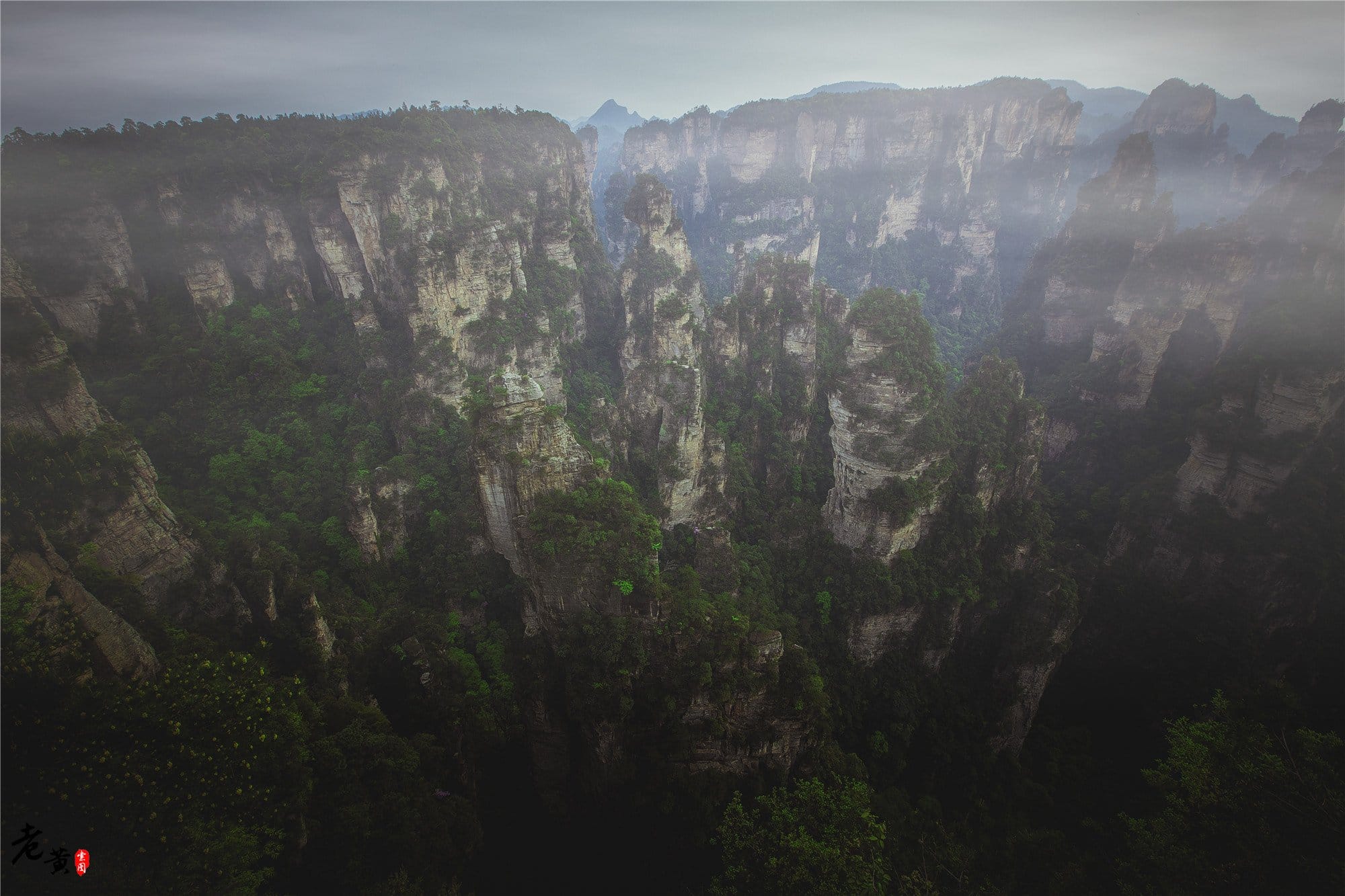
Last October during China’s Golden Week, Yuanjiajie had 40,000+ daily visitors. Yangjiajie? About 2,000. We guided a couple to Tianbo Mansion at sunrise—they were the only two people on the platform. Twenty minutes of complete solitude surrounded by seven stone walls emerging from morning mist.
When was the last time you experienced that at a major Chinese attraction?
Real Wilderness, Real Adventure
This is the only area in Zhangjiajie where you must use your hands to climb. We’re talking near-vertical iron ladders, passages so narrow you turn sideways to squeeze through, unpaved trails where a wrong step means tumbling into bushes.
“The hike to Wulong Village felt like stepping into a kung fu movie,” Sarah from our May group told us. “When you finally reach the top and look back at what you just conquered—that’s what travel should feel like.”
Peak Walls, Not Pillars
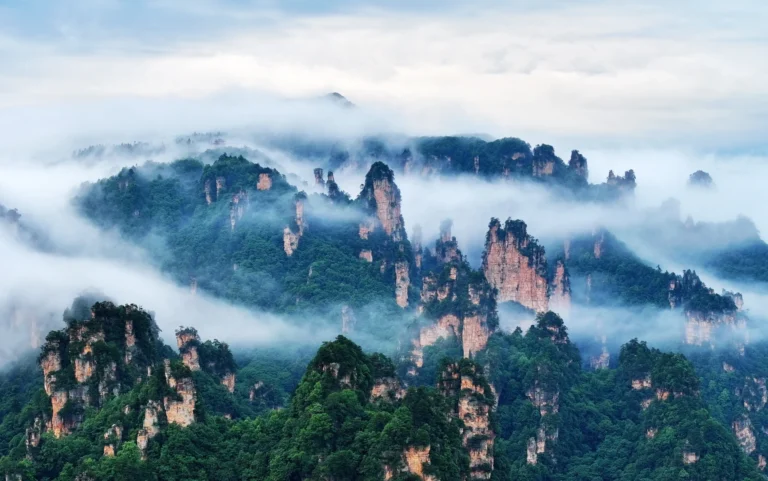
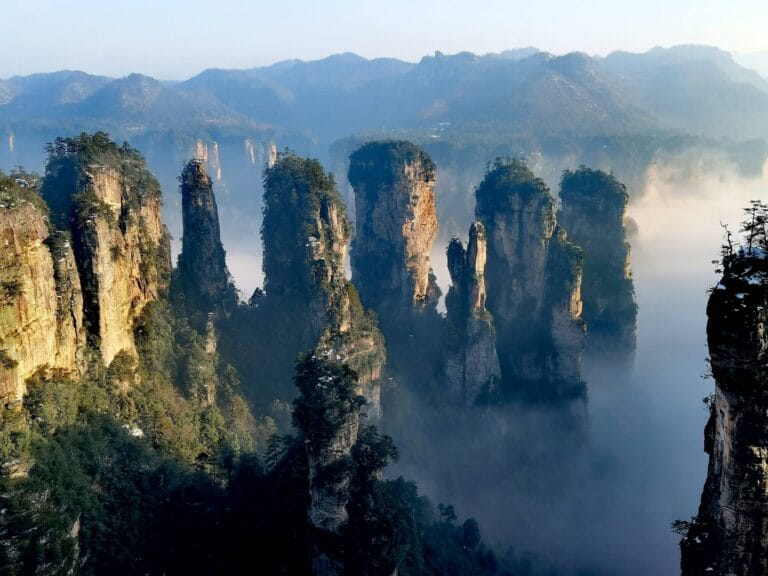
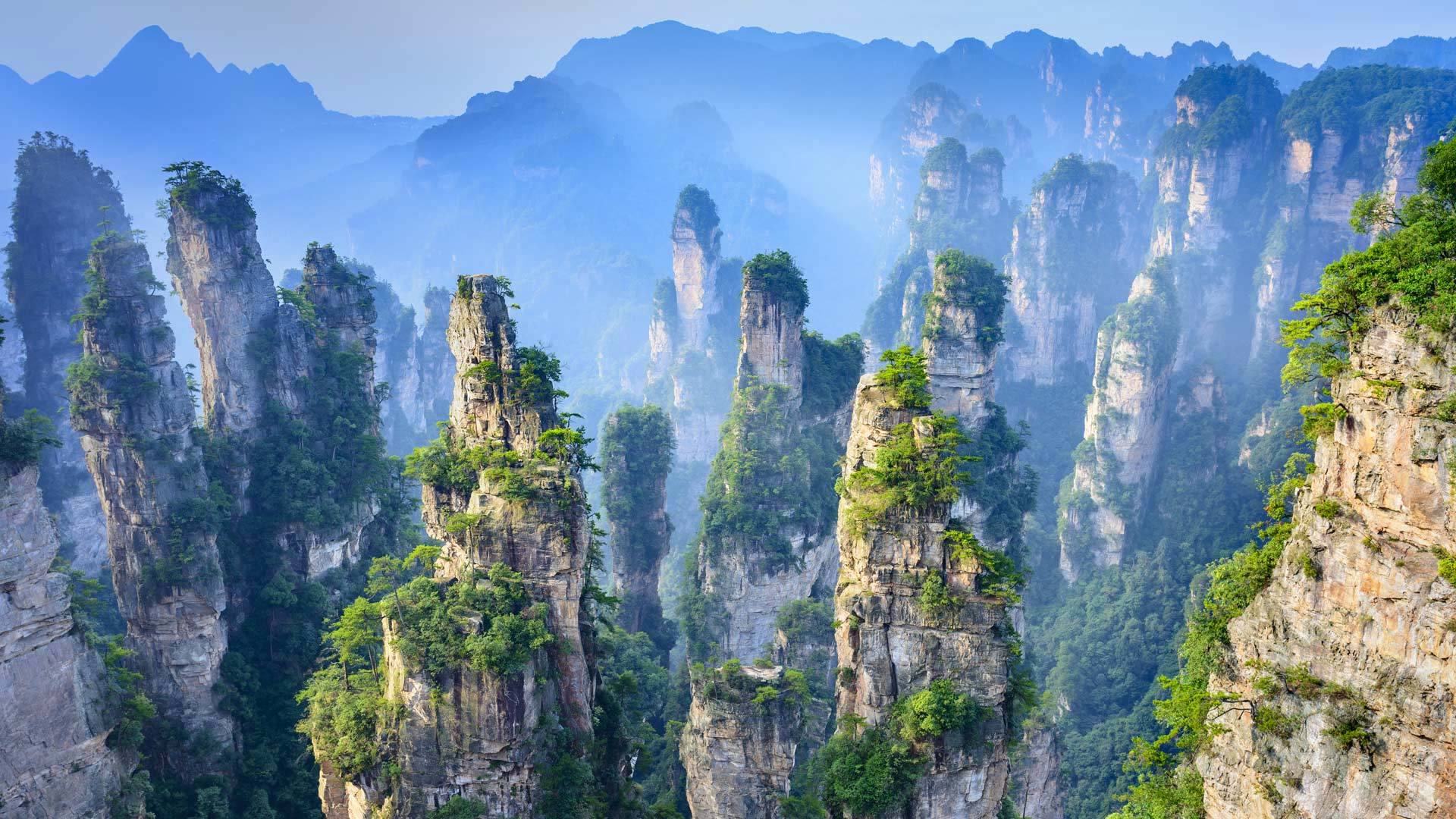
Yuanjiajie has vertical pillars. Yangjiajie has stone walls—continuous ridges stretching hundreds of meters. The Natural Great Wall shows dozens of these walls marching across the landscape like pages in an ancient book. Geologists call it “the most significant landform discovery in Zhangjiajie.”
For photographers, the layering effect with telephoto lenses creates images impossible to capture anywhere else in the park.
The History Behind Yangjiajie
Yang Family Warriors: From Military Heroes to Tourism Legend
During the Song Dynasty (960-1279 AD), General Yang Ye pursued rebel forces into these mountains. The warfare lasted so long his generals settled families here. Over generations, descendants established permanent communities among the peaks, giving the area its name—”Yangjiajie” literally means “territory of the Yang Family.”
This isn’t romanticized folklore. Scenic spots throughout the area reference Yang Family Generals: Tianbo Mansion (named after Yang Yanzhao), Zongbao Wan (after Yang Zongbao), and others. The Yang Family Generals remain legendary in Chinese culture—their stories of loyalty and sacrifice appear in countless films, TV series, and operas.
Standing at Tianbo Mansion, you understand why generals chose this location: seven parallel stone ridges create natural defensive walls requiring minimal fortification. From this single vantage point, you can observe seven different approach routes. Any army approaching would be visible for hours.
Wulong Village: China’s Last Bandit Stronghold
If the Yang Family built military infrastructure, later inhabitants turned it into bandit paradise. Wulong Village served as an active bandit stronghold until 1949—one of the last in China.
The village sits 300 meters above surrounding valleys, accessible only via a single path deliberately designed for defense. Walking it today, the strategic brilliance becomes obvious: Thread Valley forces single-file passage where ambush is simple. Three Ghost Gates create natural barriers three defenders could hold against dozens. Multiple escape routes meant bandits could vanish into unmapped canyons if one path fell.
Local elderly residents still tell stories their grandparents shared—of bandit chiefs, midnight raids on merchant caravans, and the final siege when Communist forces dislodged the last holdouts in 1949.
Unlike reconstructed “ancient villages” elsewhere, Wulong Village wasn’t built for tourists. Every defensive feature served real military purpose.
380 Million Years of Geology
What makes Yangjiajie geologically unique? Peak wall formations. While vertical joints in Yuanjiajie created isolated pillars, horizontal stratification in Yangjiajie produced layered walls.
The process began 380 million years ago when this region sat beneath a shallow sea. Marine sediments compressed into quartz sandstone. Tectonic uplift pushed them skyward. Then erosion removed softer material between resistant layers, leaving these extraordinary walls—some stretching hundreds of meters unbroken.
The Natural Great Wall exemplifies this. From the viewpoint, dozens of parallel ridges march across the landscape. Each “wall” represents a single resistant layer, with softer material eroded away above and below. The resemblance to China’s Great Wall isn’t coincidental—both follow natural ridge lines for maximum defensive advantage.
Highlights of Yangjiajie
The Natural Great Wall (天然长城)
Location: 10 minutes from cable car station
Time Required: 20-30 minutes
Difficulty: Easy
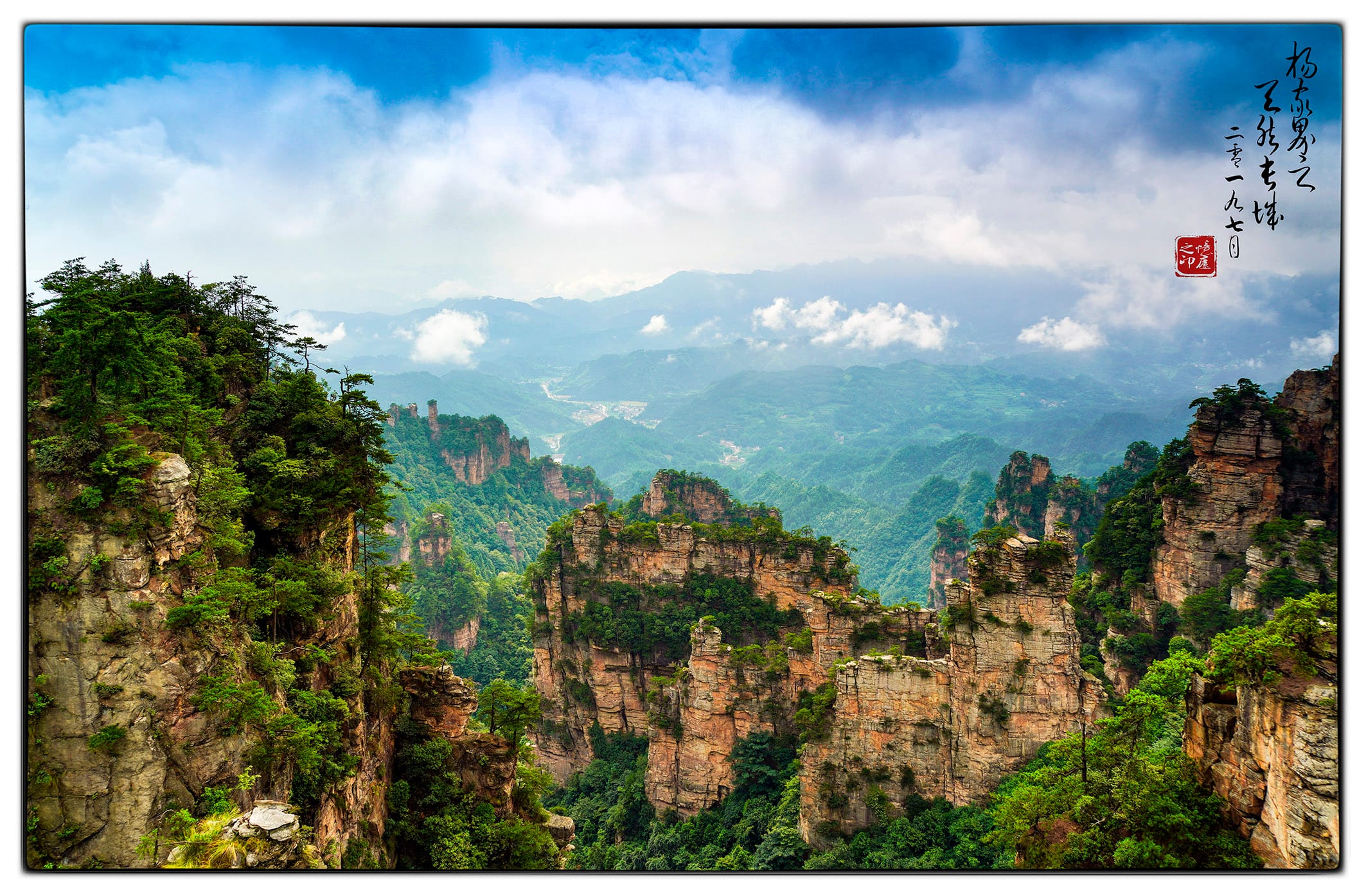
This is Yangjiajie’s signature view and the most accessible. Dozens of mountain walls stand out majestically with asymmetrical scattered mountains having high similarity to the Great Wall of China.
The viewpoint sits at the edge of a cliff with protective railings. Dawn and dusk offer the best photography—the low-angle sunlight accentuates the layered texture of the rock walls. We recommend arriving by 6:30 AM for sunrise shoots with virtually no other photographers present.
Photography Tip: Use a telephoto lens (70-200mm) to compress the layers and emphasize the wall-like effect. A graduated neutral density filter helps balance the bright sky against darker valleys.
Wulong Village (乌龙寨)
Location: 1 km north from cable car station
Time Required: 2-3 hours round trip
Difficulty: Moderate to challenging

The approach to Wulong Village tests both physical stamina and nerve. You’ll navigate:
- Thread Valley: A passage between two cliffs barely 30 cm wide at its narrowest point
- One-line Sky: A vertical crevice where you look straight up to see sky
- The Three Ghost Gates: A series of natural barriers that once kept bandits safe
There is a small shop in Wulong Village which provides luggage storage service—take advantage of this before attempting Tianbo Mansion.
Traveler’s Experience: “The hike to Wulong Village felt like stepping into a martial arts film,” shares Sarah from our 2024 tour group. “When you finally reach the village platform and look back at the narrow path you just conquered, you feel like you’ve earned that view.“
Tianbo Mansion (天波府)
Location: Beyond Wulong Village
Time Required: 40 minutes from cable car station, 15 minutes beyond Wulong Village
Difficulty: Challenging
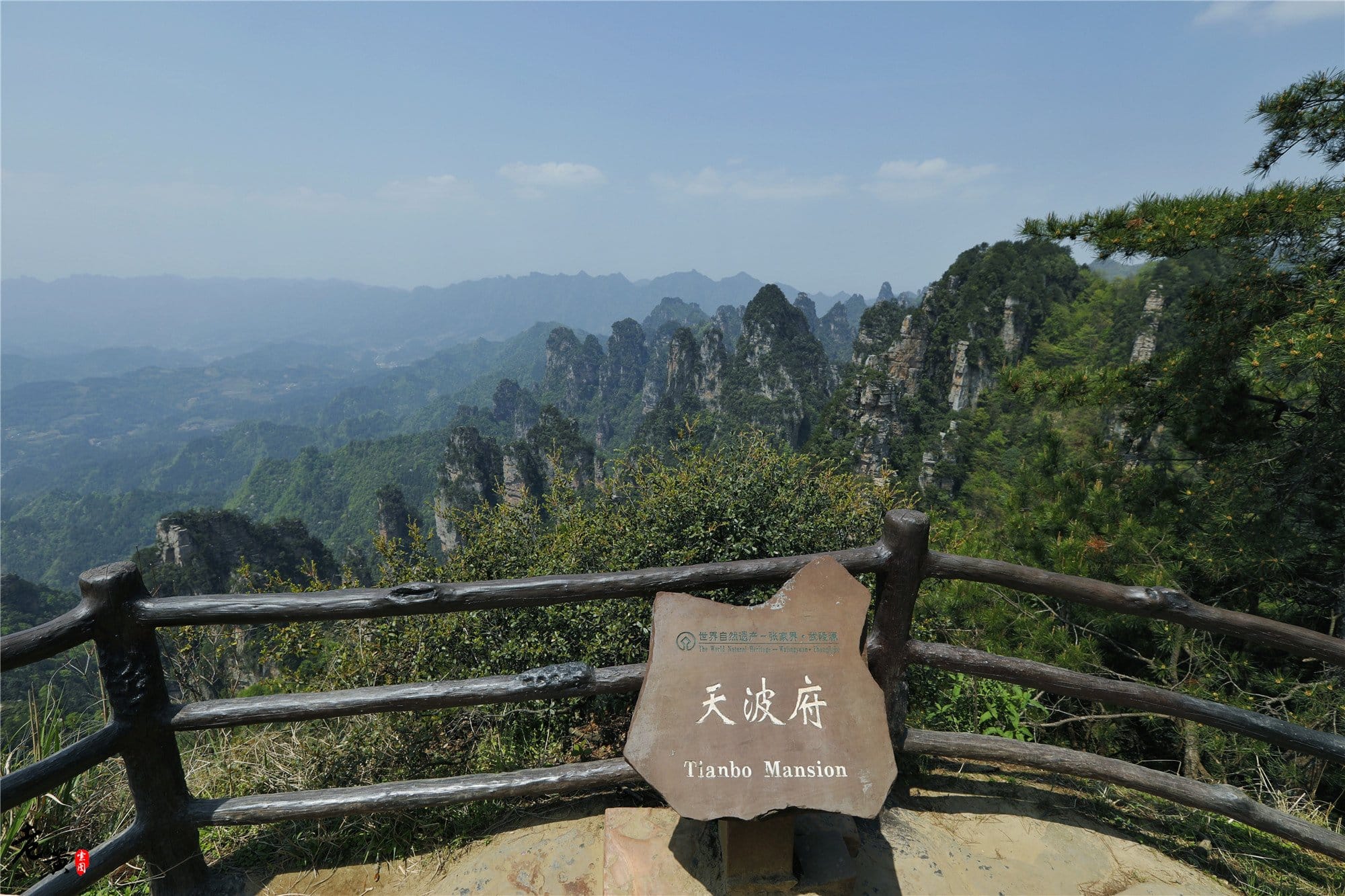
Here’s what awaits: Reaching Tianbo Mansion requires a steep climb of 32 steps up an iron ladder to a flat summit at 1,130 meters above sea level. The ladder is nearly vertical. One person climbs at a time. Those afraid of heights should seriously reconsider.
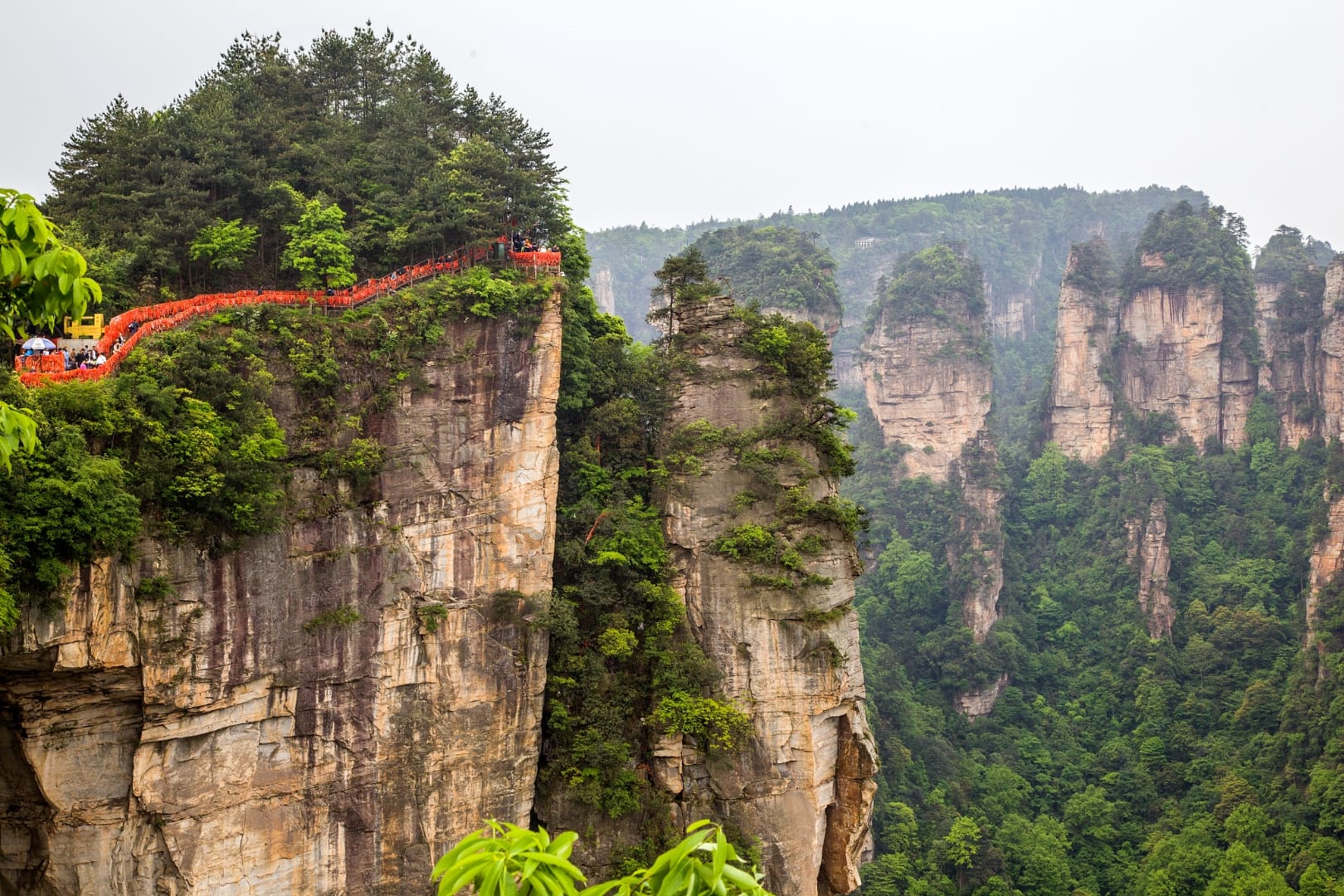
But if you make it, the platform offers a panoramic view of seven mountain ridges and iconic landmarks like Huangshizhai and Longfengya in the distance.
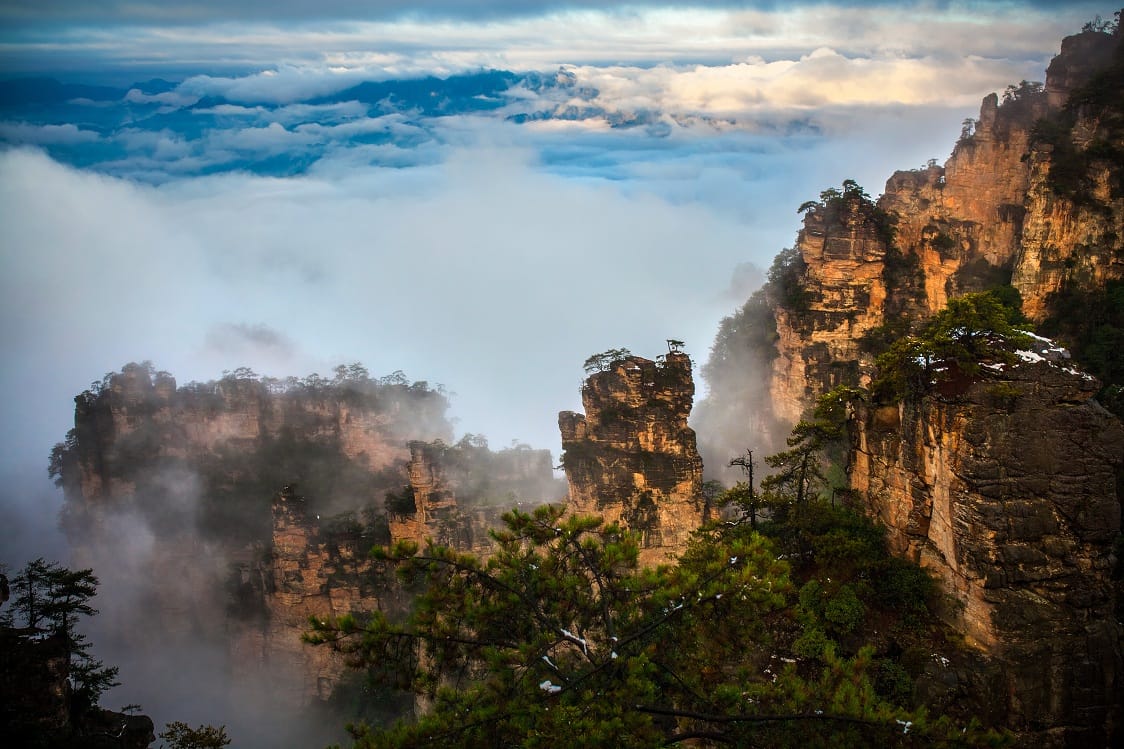
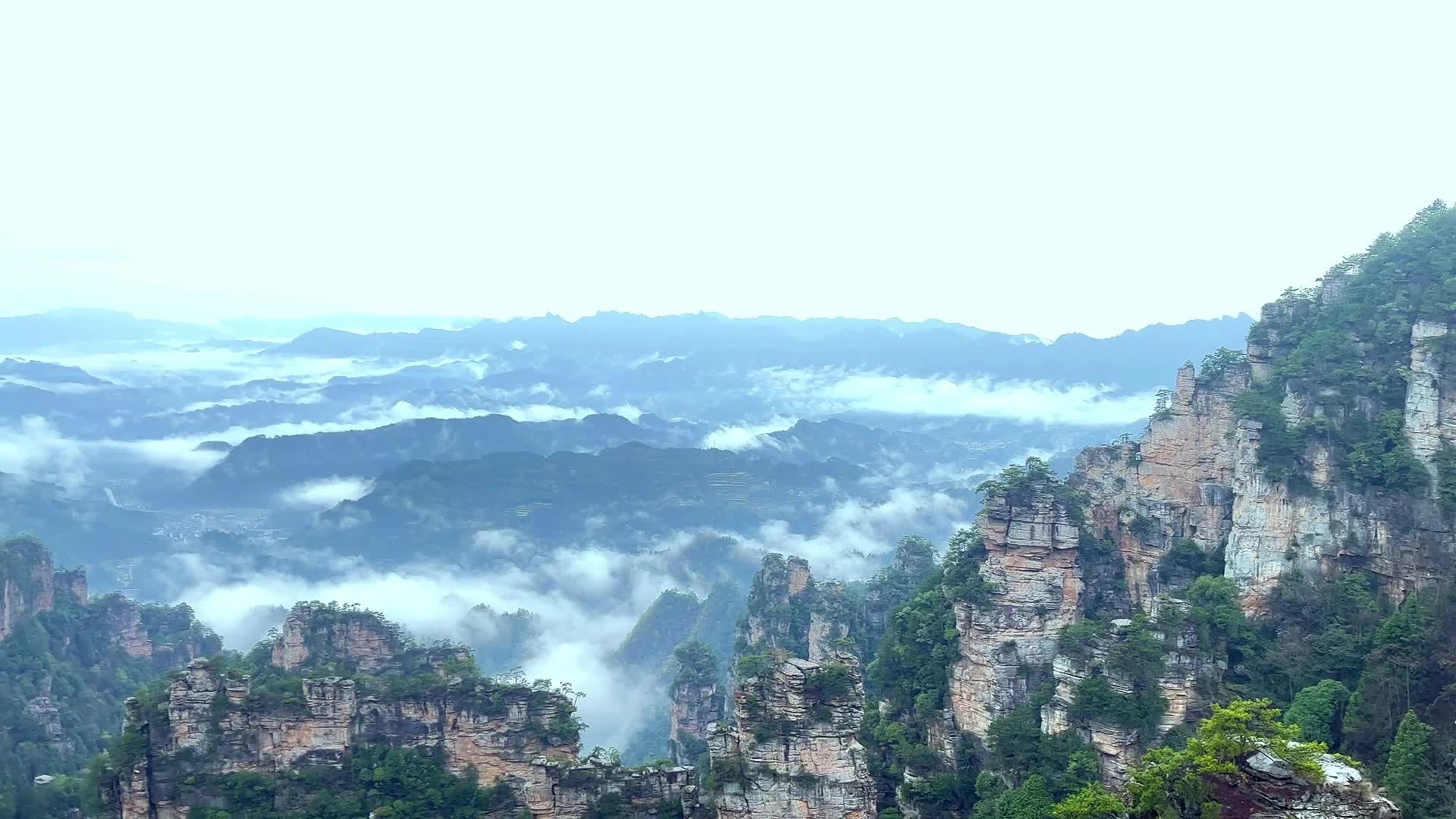
We’ve been to Tianbo Mansion on both clear and misty mornings. Clear days provide vast panoramas. Misty mornings create ethereal scenes where the seven stone walls emerge from clouds like ships from fog. Both are spectacular, just differently.
Safety Note: The narrowest space between stone walls is only 30 cm. Watch for protruding branches. The iron ladder gets slippery when wet—avoid this climb during or immediately after rain.
One Step to Heaven (一步登天)
Location: Southern section of Yangjiajie
Time Required: 1.5-2 hours from cable car station
Difficulty: Challenging
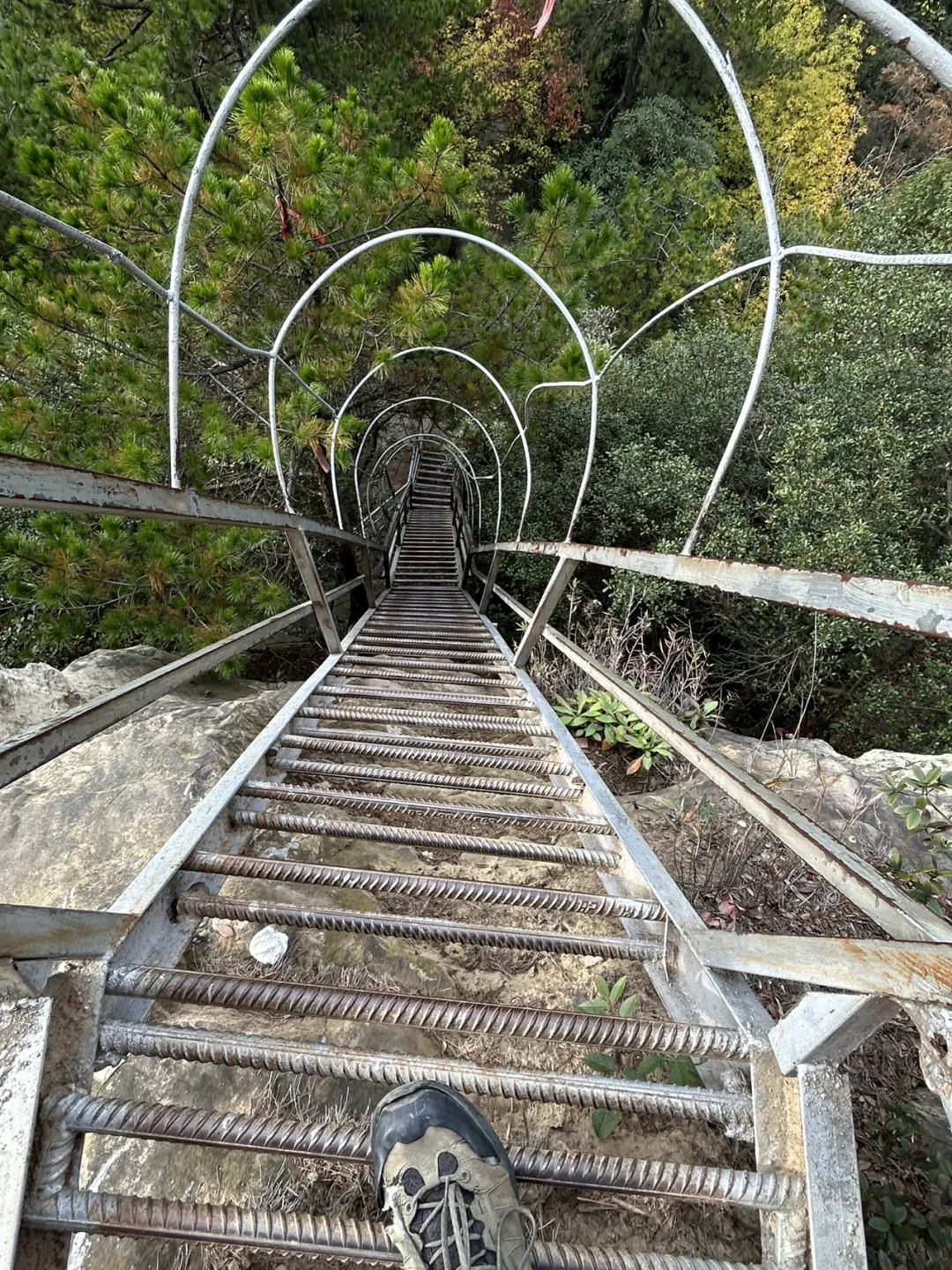
To reach the viewing deck, you must climb very narrow iron stairs so narrow that only one person can pass at a time. The 32 iron stairs lead to a mountaintop at 1,130 meters above sea level. The summit platform measures 5 meters long and 4 meters wide, enclosed with iron railings.
The name suggests proximity to heaven—and at the peak, surrounded by nothing but sky and distant mountains, it feels accurate.
Air Corridor (空中走廊)
Location: Southern section, beyond One Step to Heaven
Time Required: 3-4 hours round trip from cable car station
Difficulty: Very challenging
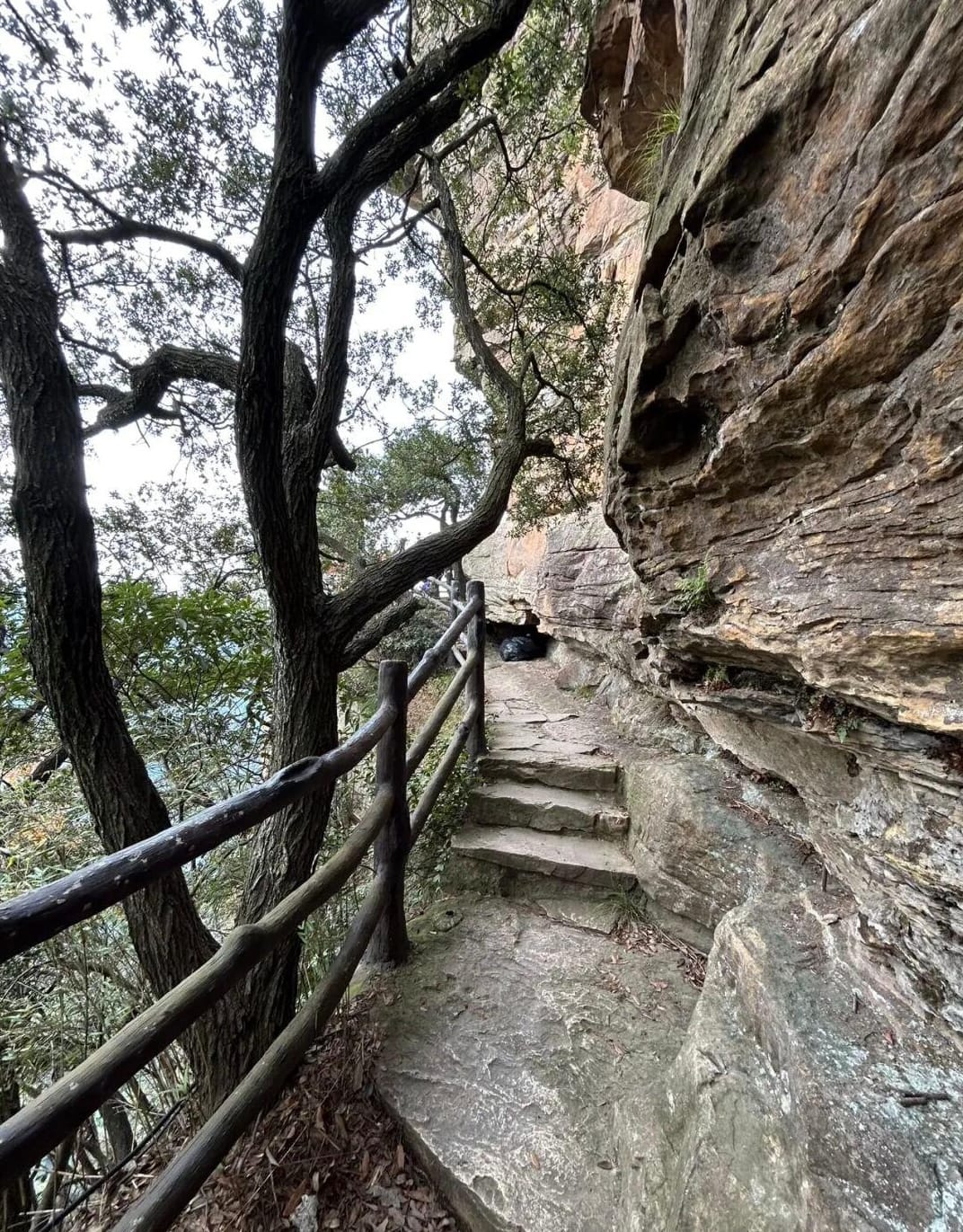
This is for serious adventurers only. The Air Corridor is a narrow passage carved into the middle of a cliff, stretching 300 meters with a width ranging from 0.1 to 1 meter. One side drops into an abyss. The other rises into towering cliffs.
Few tourists make it here. One visitor reported being among the final three people left in Yangjiajie when reaching Air Corridor near sunset, having the platform entirely to themselves.
Warning: This requires a strenuous hike of 1-2 hours each direction. Tourists with a relatively weak strength should better end the tour in Oolong Village.
Yangjiajie vs The Competition


Before you commit to Yangjiajie’s challenges, understand what makes it different:
Feature | Yangjiajie | Yuanjiajie | Tianzi Mountain |
|---|---|---|---|
Crowds | Very low ★★★★★ | Overwhelming ★☆☆☆☆ | Heavy ★★☆☆☆ |
Difficulty | Challenging | Easy (paved paths) | Easy to moderate |
Time Required | 3-9 hours | 2-3 hours | 2-4 hours |
Highlight | Peak walls, bandit fortress | Avatar Hallelujah Mountain | Panoramic vistas |
Trail Type | Unpaved, steep, iron ladders | Fully paved | Mostly paved |
Best For | Adventure seekers | First-timers, families | Photographers, seniors |
Our take: First time in Zhangjiajie? Start with Yuanjiajie for the famous views. Got 2+ days and decent fitness? Yangjiajie shows you what makes this place truly special.
Three Recommended Routes
Route 1: Northern Highlights (3-4 hours) ★★★★★
Best for: First-timers with moderate fitness
7:30 AM – Cable car up
7:45 AM – Natural Great Wall (30 min)
8:20 AM – Hike to Wulong Village (1 hour)
9:20 AM – Rest, store luggage
9:45 AM – Tianbo Mansion climb (40 min total)
10:30 AM – Return journey (1.5 hours)
12:00 PM – Back at cable car
Why this works: Covers the three most iconic spots. Morning timing means fewer crowds. You finish before fatigue sets in.
Route 2: Southern Explorer (5-6 hours) ★★★★☆
Best for: Experienced hikers wanting solitude
Head south from cable car to One Step to Heaven (2 hours), continue to Air Corridor (1.5 hours), return (2-3 hours). You might encounter fewer than 10 people all day.
Warning: Trails are less maintained and more primitive. Don’t attempt in rain or fog.
Route 3: Combined Yuanjiajie + Yangjiajie Day (8-10 hours) ★★★★☆
Best for: Visitors with only one day on the mountain
7:00 AM – Bailong Elevator to Yuanjiajie
7:30-10:00 AM – Yuanjiajie highlights
10:15 AM – Shuttle bus to Yangjiajie
10:45 AM-2:30 PM – Yangjiajie Northern Route
3:00 PM – Finish
This is demanding but doable for fit travelers. Pack high-calorie snacks and pace yourself.
Best Time to Visit
Season | Temp | Rating | What to Expect |
|---|---|---|---|
Spring (Mar-May) | 15-25°C | ★★★★★ | Fresh greenery, azaleas bloom, morning mist. May gets rainy. |
Summer (Jun-Aug) | 25-32°C | ★★★☆☆ | Lush vegetation but crowded, afternoon storms, slippery trails. |
Autumn (Sep-Nov) | 15-25°C | ★★★★★ | Clear skies, golden foliage, comfortable hiking. Best season! |
Winter (Dec-Feb) | 0-10°C | ★★★☆☆ | Snow-covered beauty, virtually empty, but cold and icy. |
Optimal windows:
- Best overall: Mid-September to mid-November (avoid Oct 1-7)
- Budget-friendly: December-January
- Photography: April-May (mist) or October (autumn colors)
Absolutely avoid: National Day (Oct 1-7), summer weekends
Getting There & Practical Info
Transportation
From | Method | Time | Cost | Best For |
|---|---|---|---|---|
Zhangjiajie City | Taxi/DiDi | 40-50 min | CNY 100-150 | Groups of 3-4 |
Zhangjiajie City | Public bus | ~60 min | CNY 12-13 | Budget travelers |
Yuanjiajie | Free shuttle | 10-15 min | Free | Day visitors |
Tianzi Mountain | Free shuttle | 20-30 min | Free | Multi-area visits |
Cable Car Details
- Hours: 7:30 AM-6:00 PM (peak), 8:00 AM-5:00 PM (low season)
- Price: CNY 76 one-way, CNY 150 round-trip
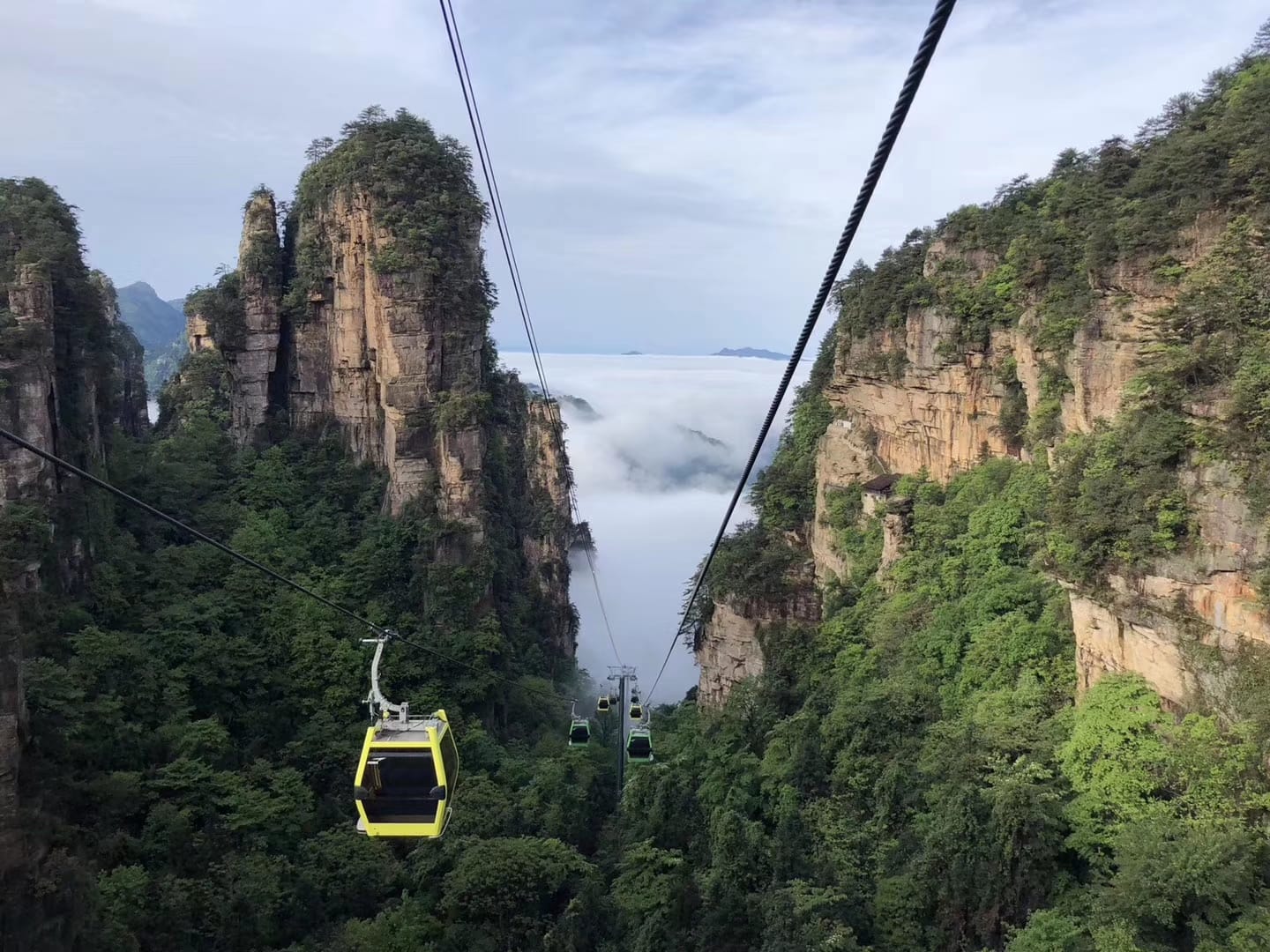
- Duration: 10 minutes (1,876m length, 517m elevation gain)
- Worth it? Absolutely. Hiking up takes 4 hours and exhausts you before sightseeing begins.
Tickets
Park entrance: CNY 227 (peak season), CNY 145 (low season), valid 4 days
Includes: All four areas, shuttle buses
Doesn’t include: Cable cars, Bailong Elevator
All-inclusive pass: CNY 445 (peak) includes entrance + all cable cars/elevators—saves CNY 50-80 if using multiple transport options.
The Monkey Situation
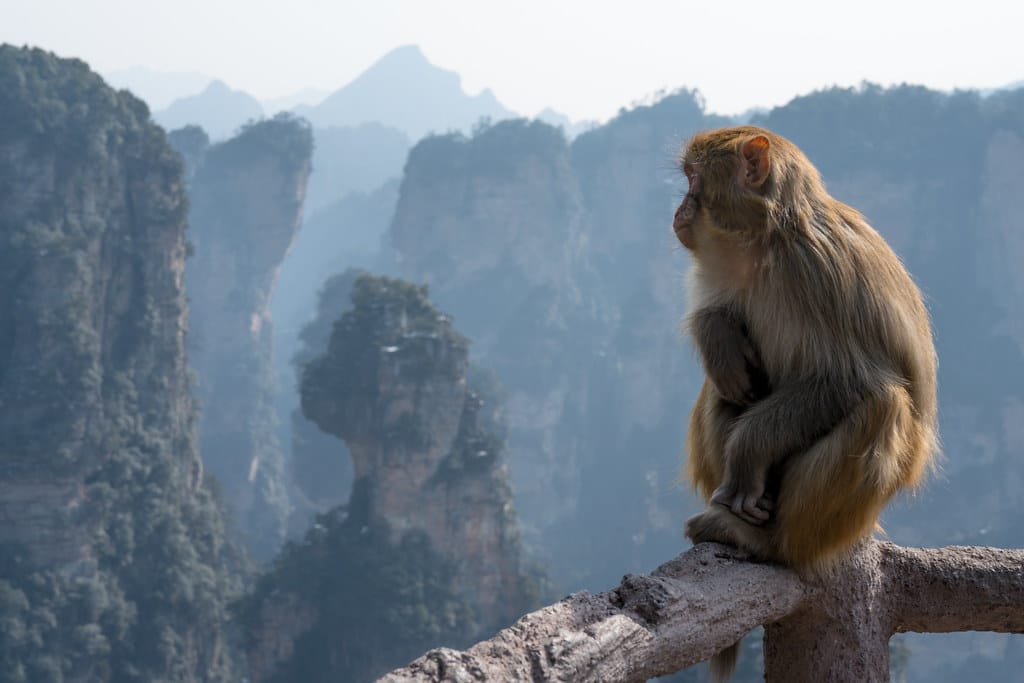
Yangjiajie’s monkeys are particularly aggressive. They’ve learned tourists carry food. Last month, a couple fed one monkey a cookie—within 30 seconds, six monkeys surrounded them demanding more.
How to handle encounters:
- Keep all food sealed in backpack
- Don’t make eye contact
- Don’t run (triggers chase instinct)
- If they grab something, let it go
- Call for guide if situation escalates
If bitten: Wash immediately, descend, seek medical attention. Rabies post-exposure prophylaxis is essential.
Real Traveler Experiences

David, Australia (October 2025):
“The mountains and scenery are nothing like anything I’ve seen—I class them as the best in my life. We spent 4 hours in Yangjiajie and still felt we could have stayed longer. My wife was terrified of the Tianbo ladder but conquered it. She hasn’t stopped talking about that view since.“
Sarah, UK (May 2025):
“That narrow passage isn’t exaggerated—I’m slim and still had to angle carefully through the Three Ghost Gates. When you realize this was actual bandit defense, not tourist entertainment, it changes your perspective.“
Jake, USA (September 2025):
“We arrived at Air Corridor near sunset and had the platform entirely to ourselves. After three hours hiking, being one of the final people in Yangjiajie felt like discovering a secret. I run half-marathons regularly and still felt it.“
Anonymous (TripAdvisor):
“Yangjiajie is spectacular but hard to explore. I saw a lady wheelchaired to the airport with a bandaged leg from a fall. The trails aren’t dangerous if you’re careful, but they’re unforgiving if you’re not. I wish someone had told me this wasn’t suitable for my fitness level.“
Deep Dive: The Complete Yangjiajie Experience

Trail Network Explained
Yangjiajie’s 16-kilometer trail network confuses first-time visitors. Unlike Yuanjiajie where you can walk a simple loop, Yangjiajie requires U-turns—northern and southern attractions extend from a central cable car hub in opposite directions.
Northern Section (most popular):
- Natural Great Wall → Wulong Village → Tianbo Mansion
- 3-4 hours round trip
- Moderate to challenging difficulty
- Where 90% of visitors focus their time
Southern Section (for adventurers):
- One Step to Heaven → Air Corridor
- 5-6 hours round trip
- Very challenging difficulty
- Where you’ll find genuine solitude
The Choice: Unless you’re ultra-fit with a full day available, choose one section. Most select northern highlights—it’s more accessible from the cable car and includes Yangjiajie’s most iconic views.
Photography Guide: Capturing Yangjiajie
After guiding photographers for years, we’ve learned what works:
Best Times:
- Dawn (6:30-8:00 AM): Natural Great Wall with sidelight illuminating layered walls
- Mid-morning (9:00-10:30 AM): Tianbo Mansion as fog lifts from valleys
- Late afternoon (4:00-5:30 PM): Warm golden light across peaks
Essential Gear:
- Telephoto (70-200mm or 100-400mm): For compressing peak walls
- Wide-angle (16-35mm): Dramatic cliff perspectives
- Graduated ND filter: Balancing bright sky against darker valleys
- Polarizer: Reducing atmospheric haze
Post-rain conditions: The day after rain provides clearest air and most dramatic clouds. Professional photographers specifically target these windows.
David from New Zealand, a landscape photographer, told us:
“Yuanjiajie gives you vertical drama. Yangjiajie gives you horizontal depth. For compression shots showing layer after layer receding into distance—you need these peak walls. This is world-class landscape photography most tourists completely miss.“
Weather Patterns: What We’ve Learned
Zhangjiajie weather changes rapidly. We’ve seen sun, rain, fog, and clear skies rotate through the same afternoon. But patterns exist.
Temperature: Yangjiajie sits at 900-1,130m elevation. Expect temperatures 2-5°C cooler than Zhangjiajie city, with higher humidity.
Morning fog: Most frequent in spring and autumn. Creates ethereal scenes but reduces visibility. Stone walls emerging from clouds like ships from fog—spectacular for photography, challenging for navigation.
Afternoon thunderstorms: Common June-August. Usually arrive 2-4 PM. If you hear thunder, descend immediately—metal cables and ladders attract lightning.
Winter ice: Can make trails impassable, especially iron ladders. Check conditions before attempting winter visits.
Our protocol when weather deteriorates:
- Light rain: Manageable with rain gear
- Heavy rain: Descend (trails become dangerously slippery)
- Lightning: Evacuate immediately
- Dense fog: Stay on main trails or return to cable car
Physical Requirements: The Honest Truth

We’ve guided everyone from ultra-marathoners to casual walkers. Here’s what different routes actually demand:
Natural Great Wall only:
- Required: Can walk 30 minutes on flat ground
- Succeeds: Everyone including seniors and children
- Time: 20-30 minutes
Southern Route (includes Air Corridor):
- Required: Can hike 12-15km in mountains without extended breaks
- Succeeds: Regular hikers, trail runners, athletes
- Struggles: Anyone without consistent cardio training
- Time: 5-6 hours
Northern Route (includes Tianbo Mansion):
- Required: Can hike 6-8km with elevation changes, comfortable on steep terrain, can climb ladder using arm strength
- Succeeds: Regular walkers, occasional hikers, active individuals
- Struggles: Sedentary lifestyle, knee problems, serious fear of heights
- Time: 3-4 hours
Self-assessment questions:
- Can you hike continuously for 3+ hours with only brief rests?
- Can you climb 500+ steps without stopping?
- Are you comfortable on steep, uneven terrain?
- Can you climb a ladder using mostly arm strength?
- Do you have knee, ankle, or back problems?
If you answered “no” to 1-4 or “yes” to 5: Stick to Natural Great Wall.
Age isn’t the determining factor—fitness is. We’ve guided 65-year-old marathoners who completed the full circuit and 30-year-old office workers who struggled with Wulong Village.
Food and Hydration Strategy
No restaurants exist inside Yangjiajie. Small vendors appear occasionally with limited selection and 200-300% markups. A bottle of water costing CNY 2 outside might be CNY 5-8 here.
What we pack:
- Breakfast: Eaten before entering or during cable car ride
- Mid-morning snack: Energy bars, trail mix (sealed in backpack to avoid attracting monkeys)
- Lunch: Sandwiches, baozi (steamed buns), fruit—nothing messy
- Afternoon snack: Chocolate, dried fruit
- Water: 2-3 liters minimum per person
Where to buy supplies:
- Wulingyuan town supermarkets near park gates
- Your hotel (many offer packed lunch service—order night before)
- Any convenience store in Zhangjiajie city
Accommodation Strategy

Where you stay significantly impacts your Yangjiajie experience:
Option 1: Near Yangjiajie West Gate
- Pros: Closest to entrance, quieter, lower prices, easy early access
- Cons: Limited options, basic facilities, fewer restaurants
- Best for: Budget travelers, Yangjiajie-focused visits
- Cost: CNY 100-400/night
Option 2: Wulingyuan Town
- Pros: Most hotels, restaurants, services, central for all park areas
- Cons: Most crowded, higher prices, 30-40 min to Yangjiajie
- Best for: First-timers, comfort-priority travelers
- Cost: CNY 150-1,500+/night
Option 3: Zhangjiajie City
- Pros: Widest selection, authentic local experience, transportation hub
- Cons: 45-60 min to park, daily commute required
- Best for: 1-2 day park visits, longer city stays
- Cost: Varies widely
Our recommendation: First visit (2-3 days)—stay Wulingyuan for convenience. Yangjiajie focus (2+ days)—split between Wulingyuan and West Gate area.
Guide Services: Worth It?
Cost: CNY 900/day
English-speaking: Cost more but provide better experience for foreigners
Why hire a guide:
- Signage is minimal and entirely Chinese
- Trail junctions can be confusing
- Weather knowledge (when to avoid exposed areas)
- Timing optimization (avoiding crowds, best photography light)
- Safety support if problems arise
- Cultural and historical context
Linda from Singapore told us:
“Hiring a local guide cost extra but made all the difference. While others wandered aimlessly, we walked straight onto the cable car with zero wait, visited every viewpoint at optimal times, and learned stories no guidebook shares. Invaluable.“
Safety Tips from Years of Experience
Travel in groups: Hiking with companions makes trips safer—especially on steep trails—and allows sharing transportation costs.
Monkey protocol: Common in Yangjiajie and may snatch bags or food. Don’t provoke them or display food openly. If bitten, seek immediate medical attention—rabies post-exposure prophylaxis is essential.
Stay on marked trails: Areas marked “No Entry” or “Danger” are restricted for safety reasons. People ignore signs and get injured every year.
Weather awareness: Check forecasts. Don’t attempt iron ladders during or immediately after rain. If thunder occurs, descend immediately.
Know your limits: More injuries happen from overconfidence than from trail difficulty. There’s no shame in turning back.
Emergency contacts: Save these numbers before entering:
- Park emergency: 110
- Medical emergency: 120
- Your guide/hotel contact
Frequently Asked Questions
Is Yangjiajie suitable for elderly or children?
The Natural Great Wall (10 min from cable car) is accessible to most. Beyond that, steep stairs, narrow passages, and iron ladders make it challenging. Generally not recommended for elderly, young children, or those with limited mobility.
Can I visit both Yuanjiajie and Yangjiajie in one day?
Yes, but it’s demanding. Start at Yuanjiajie early (7:30 AM), spend 2-3 hours, then move to Yangjiajie for afternoon, focusing on Northern Route. Total: 8-10 hours of active touring.
How fit do I need to be?
For Northern Route: Can you hike 6-8km with elevation changes? Comfortable on steep, uneven terrain? Can climb a ladder using mostly arm strength? If yes, you’re good. If no, stick to Natural Great Wall only.
Are there restaurants?
No. Small snack vendors at cable car station and Wulong Village with limited selection and 200-300% markup. Bring all food and drinks from outside.
What if weather turns bad?
If heavy rain: descend immediately (trails become dangerous). If fog thickens: stay on main trails or return to cable car. Lightning: never attempt iron ladders. No refunds for weather closures.
Can I use a drone?
No. Drones are prohibited in Zhangjiajie National Forest Park. Park security may confiscate unauthorized drones.
What’s the best route for photography?
Natural Great Wall + Tianbo Mansion. Arrive Natural Great Wall for sunrise (6:30 AM), proceed to Tianbo by 8:30 AM for mid-morning light. Post-rain conditions provide clearest air and most dramatic clouds.
Can I hire a porter?
Yes. Cost CNY 200-400 depending on weight and distance. Available at cable car station. However, porters cannot assist with physical climbing (iron ladders)—you’re on your own there.
How crowded during peak season?
Even during National Day (October 1-7), Yangjiajie sees only 2,000-3,000 daily visitors versus 40,000+ in Yuanjiajie. Natural Great Wall gets moderate crowds. Everything beyond stays relatively quiet.
What if I can’t complete my planned route?
Turn back. Seriously. We’ve seen people push beyond their limits requiring assistance—dangerous for everyone. The mountain will still be here tomorrow.
Can I camp in Yangjiajie?
No. Camping is strictly forbidden in Zhangjiajie National Forest Park to prevent forest fires and environmental damage.
Are there toilets on trails?
Yes, but basic and sometimes lacking supplies. Bring tissues. Facilities exist at cable car station, Wulong Village, and major junctions.
What about travel insurance?
Essential. Comprehensive travel insurance should cover trip interruption and medical emergencies. Purchase before traveling to China.
A Final Word from Our Team
This isn’t research from other websites—it’s knowledge earned through countless mornings watching fog lift from Tianbo Mansion, afternoons guiding nervous travelers up iron ladders, and evenings discussing discoveries over local cuisine.
We’ve guided through Yangjiajie in all conditions—sun, rain, fog, crowds, and blissful solitude. One thing never changes: when guests reach Tianbo Mansion after that challenging climb, they don’t immediately pull out phones. They stand quietly, catching their breath, absorbing those seven stone ridges emerging from mist.
That moment of earned wonder—that’s what travel should feel like.
Yangjiajie isn’t for everyone. It demands preparation, physical capability, and respect for nature. But if you’re willing to venture beyond well-trodden tourist circuits, if you want Zhangjiajie before mass tourism reshaped it, if you’re seeking genuine connection with landscape and history that only comes from effort—Yangjiajie will reward you beyond expectation.
The pristine scenery, the absence of commercial traps, the physical challenges that make success meaningful—these aren’t obstacles but features that preserve what makes this place special.