Xixinan Village: Complete Travel Guide to Huangshan’s Hidden Ancient Water Village
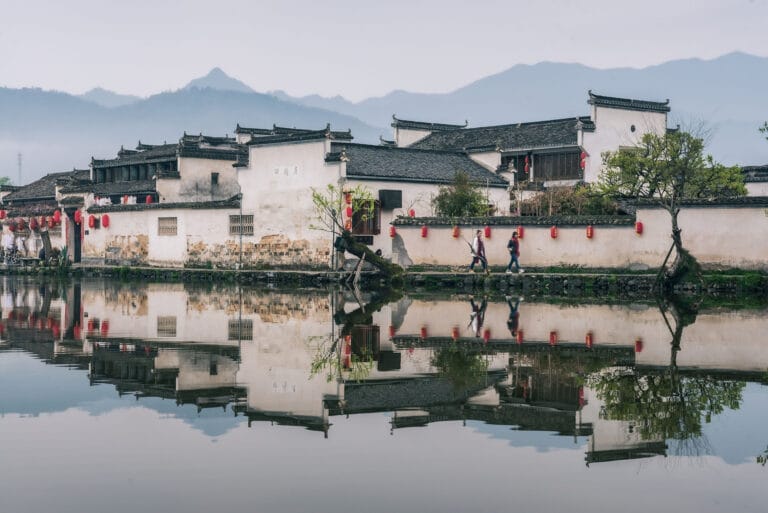
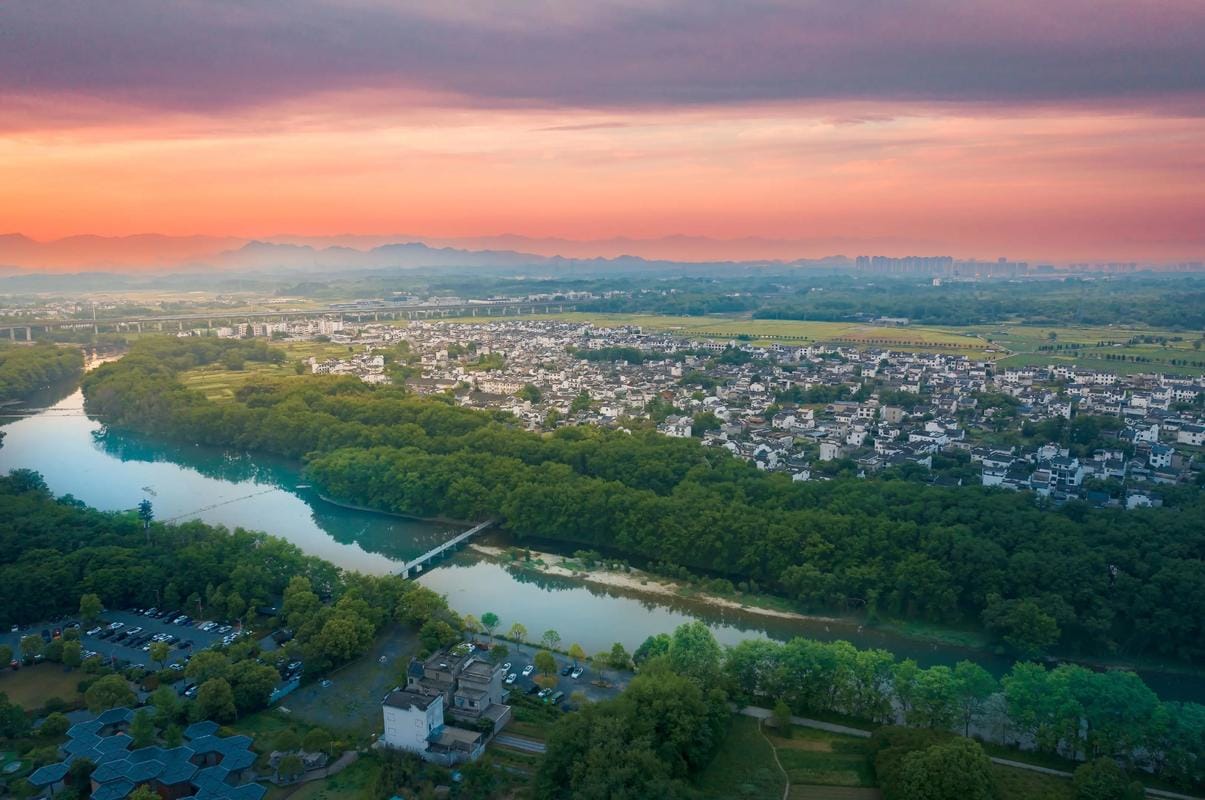
When we arrived at Xixinan Village on a misty April morning, something felt different from every other ancient village we’d explored in Anhui. No ticket booth blocked the entrance. No souvenir hawkers rushed toward us. Instead, elderly residents practiced tai chi along the Fengle River, their movements reflected in water that has shaped this settlement for 1,200 years. Located just 5 kilometers from Huangshan North Station, this village offers what’s become precious in modern China: authentic cultural immersion where tourism enhances rather than erases community life.
Table of Contents
Quick Facts About Xixinan Village
Detail | Information |
|---|---|
Chinese Name | 西溪南村 (Xīxīnán Cūn) / 西溪南古村落 |
Location | Xixinan Town, Huizhou District, Huangshan City, Anhui Province |
Established | 860 AD (Tang Dynasty – Xiantong Era) |
Distance from Transport | 5 km from Huangshan North Station (15 min), 25 km from Huangshan Airport |
Village Access | Free entry, no tickets required (open village) |
Individual Attractions | Some historic buildings CNY 10-30 |
Best Visit Duration | 4-6 hours (day visit) or overnight recommended |
Protected Buildings | 100+ Ming-Qing structures, 2 national cultural relics |
Annual Visitors (2024) | Over 600,000 (exceeded 2023 total) |
Best Seasons | Spring (March-May), Autumn (September-November) |
History and Cultural Significance: Where Dynasties Left Their Mark
Xixinan’s founding predates most European medieval towns. Established in 860 AD during the Tang Dynasty, the village occupies a strategic position along the Fengle River’s southern bank. The name literally means “west brook south,” but this geographical reference masks extraordinary cultural depth.
The Scholarly Golden Age
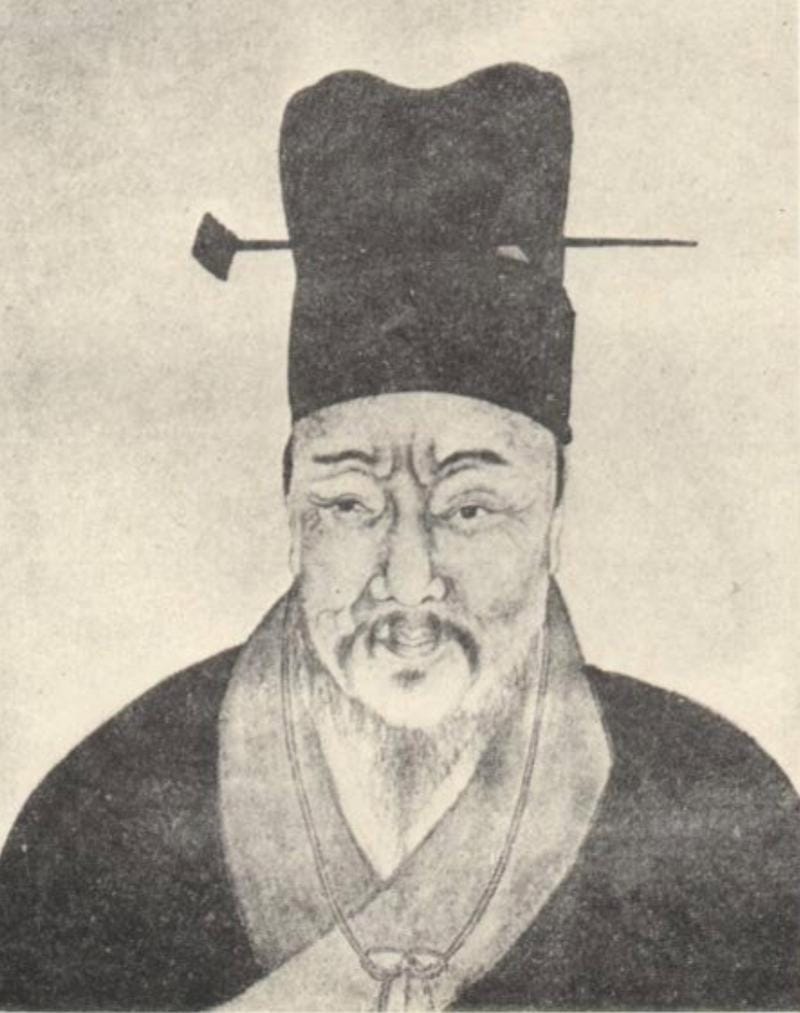
 Zhu Zhishan
 Calligraphy works by Zhu Zhishan

During Ming and Qing dynasties, Xixinan became what we’d now call an intellectual hotspot. The statistics tell part of the story: this single village produced Huizhou region’s first ever imperial examination champion (Zhuangyuan) and 46 presented scholars (Jinshi). But numbers don’t capture the cultural magnetism that drew China’s artistic elite here.
Zhu Zhishan (祝枝山, 1460-1526), one of the Mid-Ming Dynasty’s “Three Great Calligraphers,” visited his uncle in Xixinan in 1498. The landscape so captivated him that he composed poems celebrating the “Eight Scenic Wonders of Xixinan”—verses that would influence Chinese landscape art for centuries.
Two hundred years later, Shi Tao (石涛, 1642-1707), the Qing Dynasty Buddhist monk and revolutionary landscape painter, resided here. He created eight paintings interpreting Zhu Zhishan’s poems. These works, now preserved in Shanghai Museum as national treasures, helped establish Xixinan’s place in Chinese art history.
Other cultural luminaries connected to Xixinan include Dong Qichang, the famous Ming Dynasty painter and calligrapher, and Wang Daokun, the Ming Dynasty dramatist and general who built the renowned “Diaoxue Garden” (Fishing Snow Garden), one of Xixinan’s “Ten Famous Gardens.”
The Huizhou Merchant Legacy
Ming-Qing Xixinan wasn’t just culturally rich—it was extraordinarily wealthy. Huizhou merchants from this village established trading networks spanning Yangzhou, Nanjing, and Hangzhou. The Wu family epitomized this success: historical records show Wu Tianxing and Wu Yangchun were called “Sheyi’s wealthiest”.
Here’s a fact most sources omit: half of the calligraphy and paintings in the Qing Dynasty royal collection came from Wu Ting’s private holdings. This single merchant’s collection rivaled the emperor’s.
Wealth funded cultural infrastructure. The village once boasted over ten private gardens (collectively called “Xixinan Ten Gardens”), including Fruit Garden, Fishing Snow Garden, High Scholar Garden, Curved Water Garden, Wild Path Garden, and the Twelve Buildings complex. Most were destroyed during the Taiping Rebellion’s battles in 1856, when Taiping forces and Qing troops fought through the village. Historical records state the conflict left Xixinan “nine of ten households empty,” with most structures burned.
Why Xixinan Deserves Your Attention in 2026
After exploring 30+ ancient villages across Anhui over the past decade, we’ve developed strong opinions about what makes destinations special. Xixinan stands out for reasons beyond pretty pictures.
1. No-Ticket Tourism Model (A Radical Approach)
Most Chinese scenic villages charge CNY 80-150 entrance fees. Hongcun costs CNY 104. Xidi charges CNY 104. Xixinan charges nothing.
This wasn’t always intentional. Academic research reveals the village initially tried ticket-based tourism but failed commercially. Rather than abandon tourism, local government pivoted to what they call “no tickets, strong business formats”. Instead of extracting money at entry gates, Xixinan developed creative businesses, boutique homestays, and cultural experiences that generate sustainable revenue while keeping the village accessible.
This model attracts different visitors—fewer bus tour groups checking boxes, more independent travelers seeking genuine cultural exchange.
2. The Chinese Wingnut Forest Wetland (Ecological Rarity)
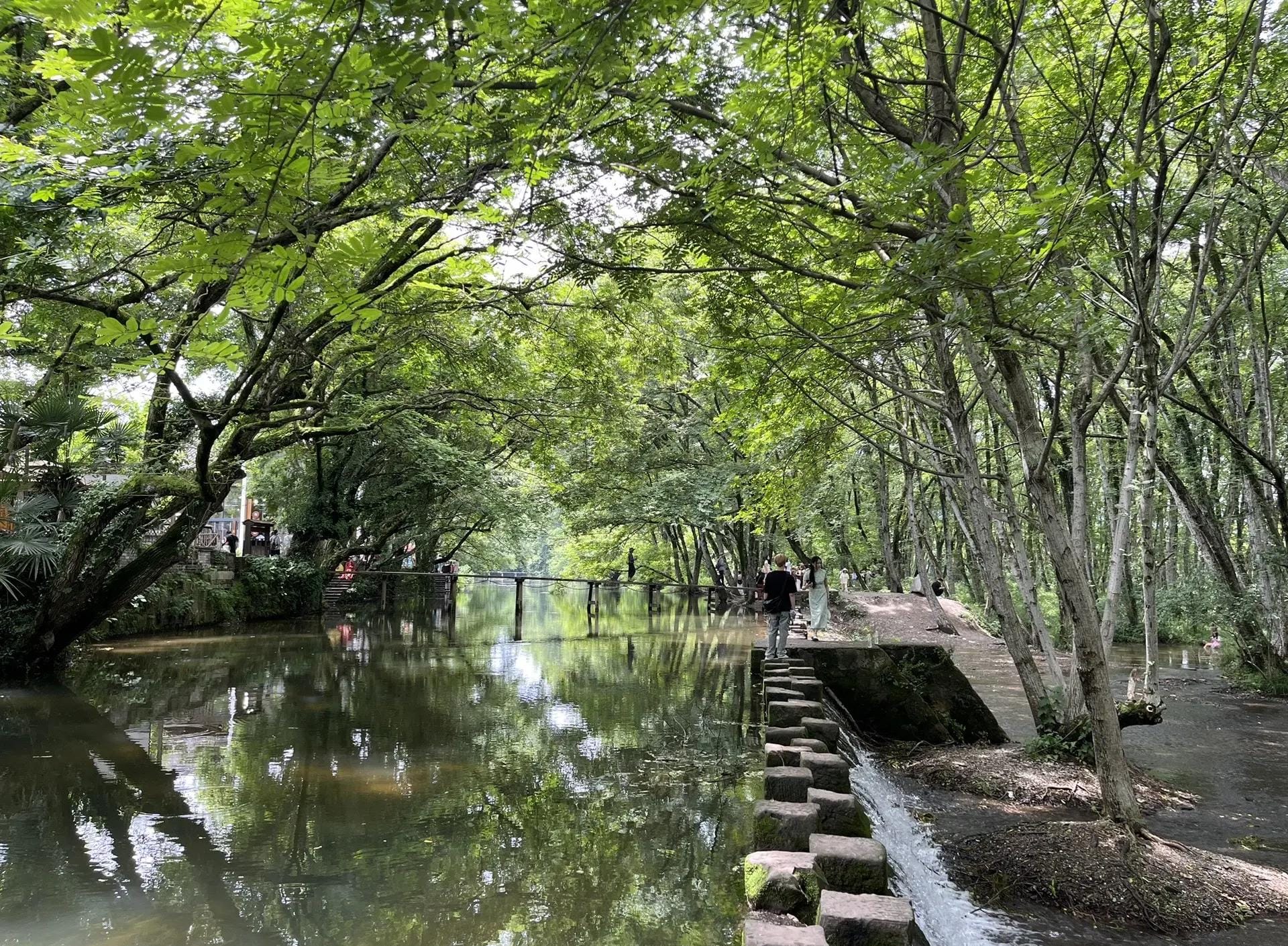
Stretching 4 kilometers along the Fengle River, Xixinan preserves southern Anhui’s most intact natural Chinese wingnut (枫杨, Pterocarya stenoptera) forest wetland. This ecological feature is genuinely rare—not manufactured for tourists.
The trees’ complex root systems perform essential ecosystem services: soil stabilization, water purification, and microclimate regulation. During summer, the wetland keeps village temperatures 3-5°C cooler than surrounding areas. This natural air conditioning made Xixinan livable before modern technology.
Bird species migration patterns through the wetland change seasonally, making it popular with birdwatchers who rarely appear in generic village guides.
3. Living Architecture, Not Museum Exhibits
Xixinan contains 100+ authentic Ming-Qing Dynasty buildings. Key protected structures include:
- Laowu Pavilion (老屋阁) – Wu Mansion: National-level cultural relic, Ming Dynasty, intricate brick carvings
- Lürao Pavilion (绿绕亭) – National-level cultural relic, Ming Dynasty garden architecture
Unlike many “preserved” villages where historic buildings become gift shops, most Xixinan structures remain family homes. The Wu family descendants still live in parts of Wu Mansion, maintaining family records spanning generations.
4. Creative Economy Success Story
Since 2015, Xixinan implemented “micro-renovations” (微改造) balancing preservation with modern functionality. The results attract international attention:
Turenscape Academy, founded by renowned Chinese landscape architect Kongjian Yu, established three converted heritage hotels and an educational institute here. The academy partners with universities in the USA, UK, Switzerland, Australia, Hong Kong, and Taiwan, bringing international design students for study programs.
This attracted 73 creative professionals and 19 creative businesses by 2021. Young entrepreneurs opened boutique cafes, design studios, and artisan workshops in converted Qing Dynasty courtyards. The village demonstrates rural revitalization without sacrificing authenticity—a balance government officials from across China study.
Xixinan Village Highlights: What to Actually See and Do
Laowu Pavilion (老屋阁) – Wu Mansion
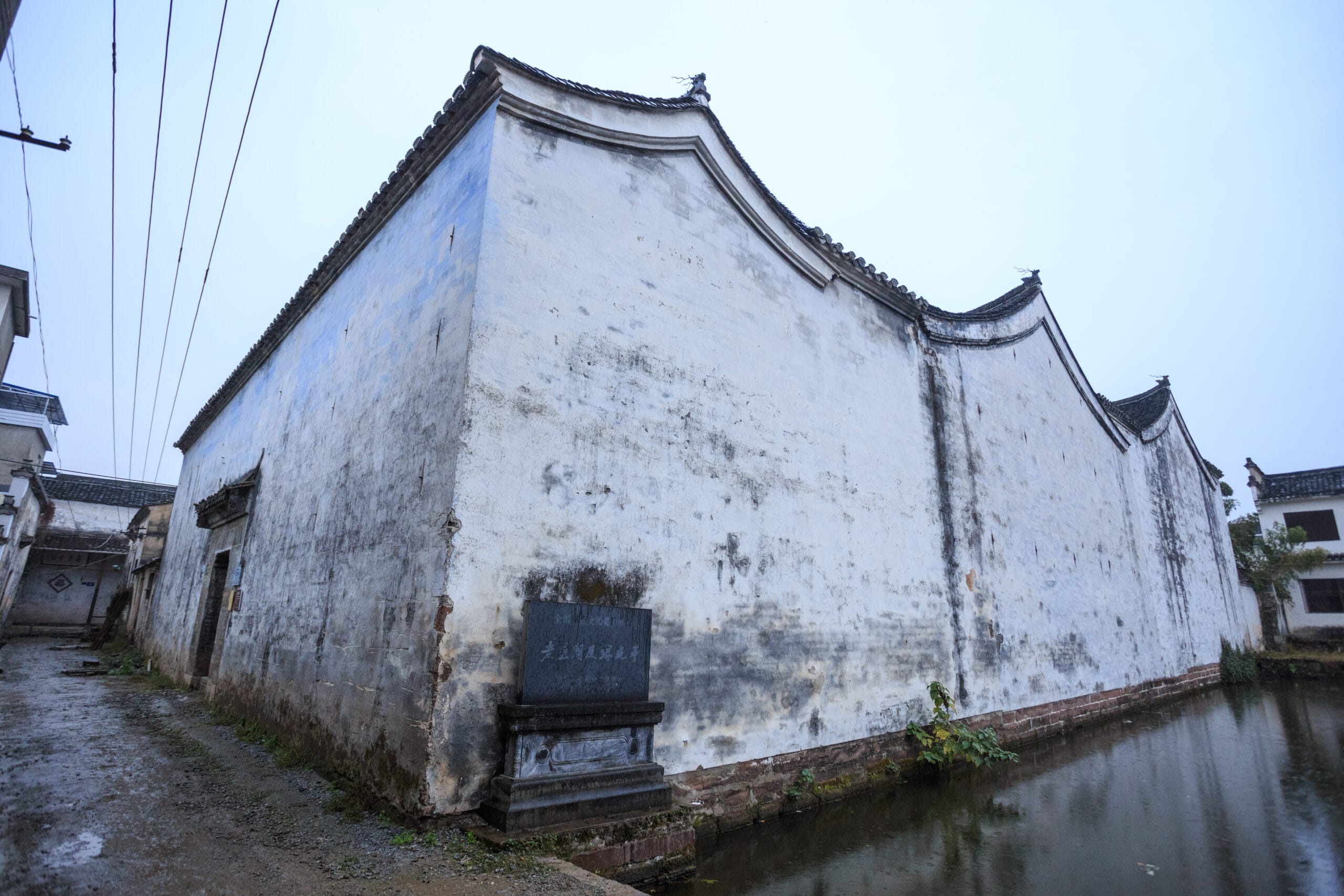
This Ming Dynasty architectural masterpiece deserves careful examination. As a national key cultural relic, it showcases elite Huizhou residential design principles.
What Makes It Special:
- Three-courtyard layout demonstrating feng shui principles
- Brick carvings above doorways depicting auspicious symbols (still crisp after 500+ years)
- Original wooden beam carvings with cloud patterns
- Family artifact collection maintained by Wu descendants
Visit Strategy: Late afternoon light (4:00-5:30 PM) illuminates carved details beautifully. Wu family members occasionally offer informal tours sharing family history spanning 20+ generations. No official schedule—just friendly conversation if they’re available.
Admission: CNY 20-30 (supports building maintenance)
Lürao Pavilion (绿绕亭) and Historic Gardens
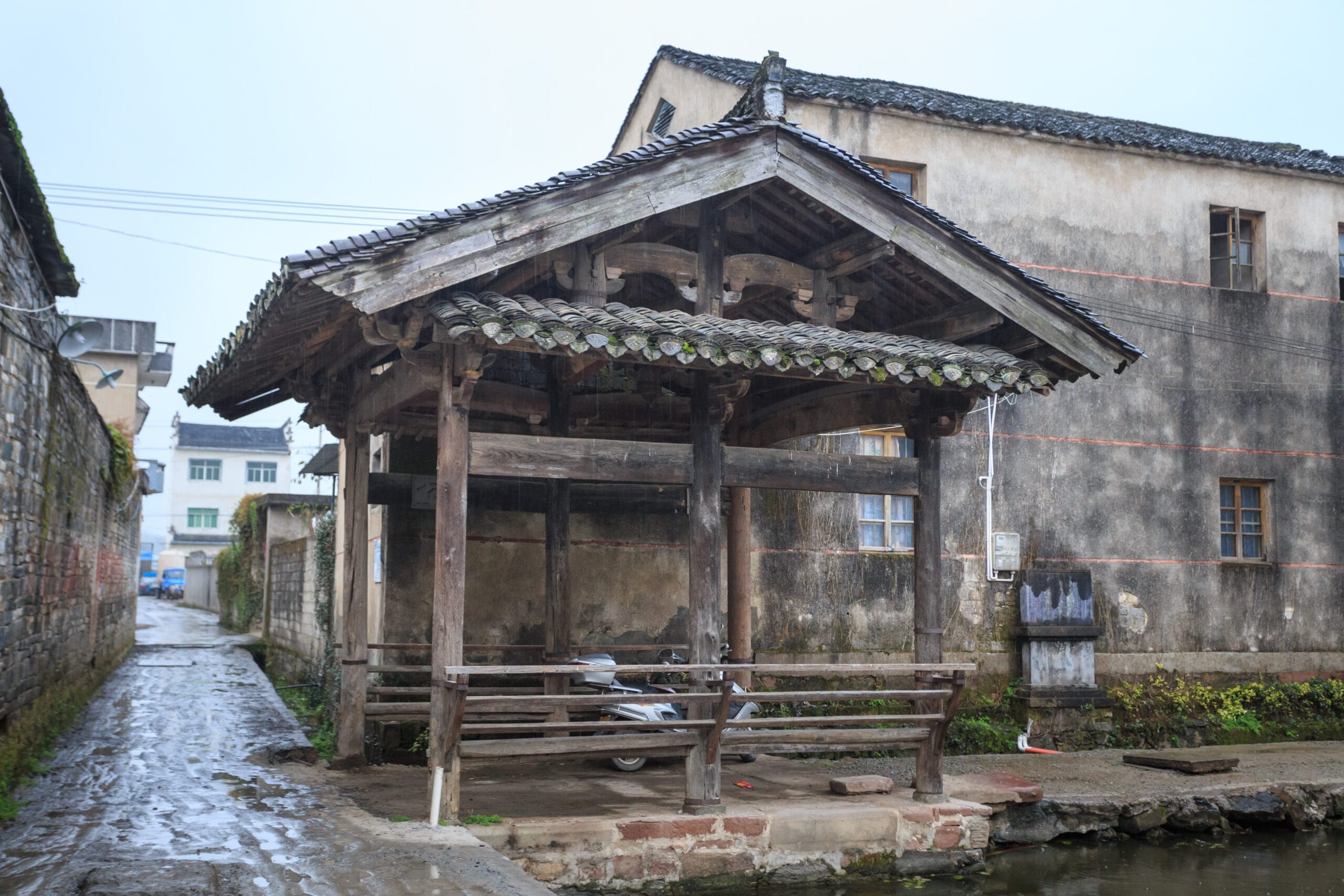
The name “Lürao” means “embraced by green.” This Ming Dynasty pavilion demonstrates classical Chinese garden design where architecture and nature integrate seamlessly.
While most “Ten Famous Gardens” were destroyed in the 1850s, archaeological traces of Fruit Garden (果园), Fishing Snow Garden (钓雪园), and other estates remain identifiable. Local guides can show you foundation stones and altered topography indicating former garden locations.
The Legendary Eight Scenic Wonders
Zhu Zhishan’s 1498 poems immortalized eight landscapes. Five centuries later, several remain identifiable:
- Ancient Tung Trees (古桐乔木) – Centuries-old trees still standing
- Meixi Study (梅溪书屋) – Former scholarly retreat, traces remain
- Southern Mountain Emerald Screen (南山翠屏) – Mountain backdrop creating natural feng shui protection
- Axis of Green Fields (轴畴绿绕) – Agricultural landscapes showing traditional farming
- Clear Stream Reflecting the Moon (清溪涵月) – Fengle River’s moonlit beauty (best viewed during mid-autumn)
- Western Ridge Hiding Clouds (西陇藏云) – Misty mountain vistas, spectacular early morning
- Bamboo Forest Phoenix Cry (竹林凤呜) – Bamboo groves where wind creates haunting sounds
- Mountain Spring Swelling (山源春涨) – Natural springs feeding the water system
Chinese Wingnut Forest Wetland
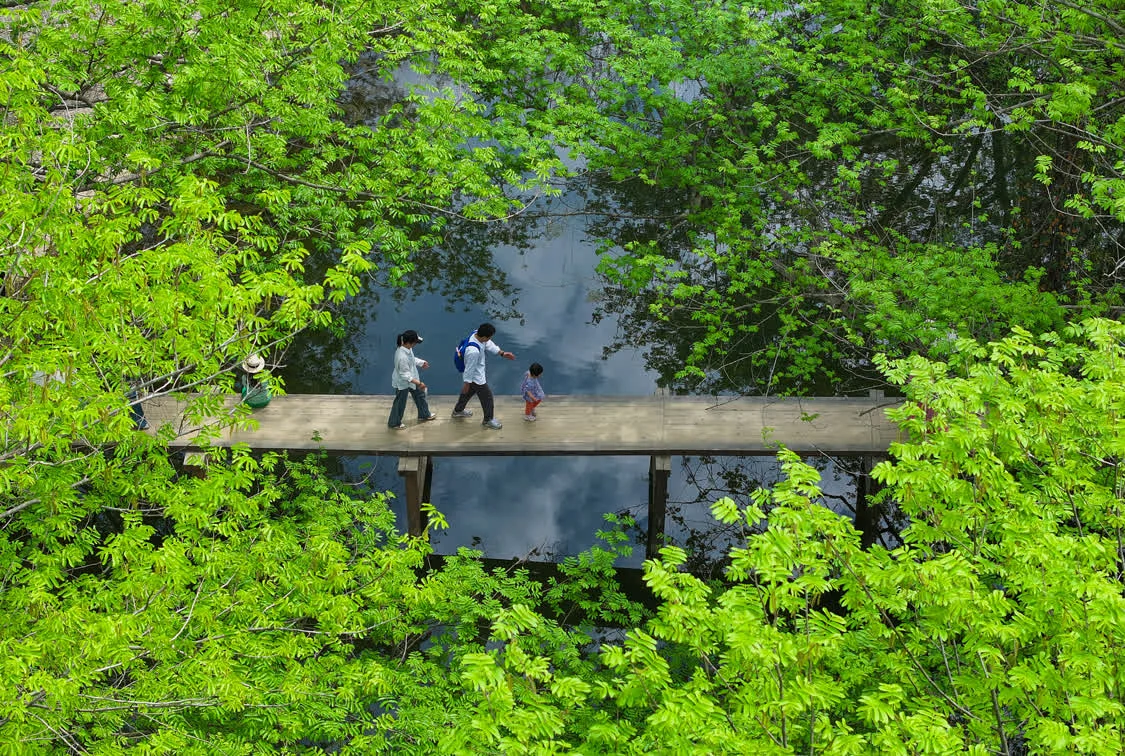
CICPHOTO / Photo by Shi Yalei
This 4-kilometer wetland corridor at the village entrance offers unexpected biodiversity. The Chinese wingnut trees (Pterocarya stenoptera) create a distinctive canopy rarely seen elsewhere in China.
Ecological Details: The trees’ three-level root system (main roots, lateral roots, fibrous roots) prevents soil erosion while filtering water naturally. This ecosystem supports diverse bird species during migration seasons (March-May, September-November).
Walking the Wetland: Wooden boardwalks allow intimate forest access without damaging sensitive areas. Early morning (6:00-8:00 AM) offers best wildlife observation and mist photography.
What We Noticed: Unlike many “ecological” attractions that feel manufactured, the wetland’s unmanicured appearance—fallen logs, natural undergrowth, occasional muddy paths—signals authentic ecosystem function. This is wetland as working nature, not theme park.
Fengle River Ancient Water Management System
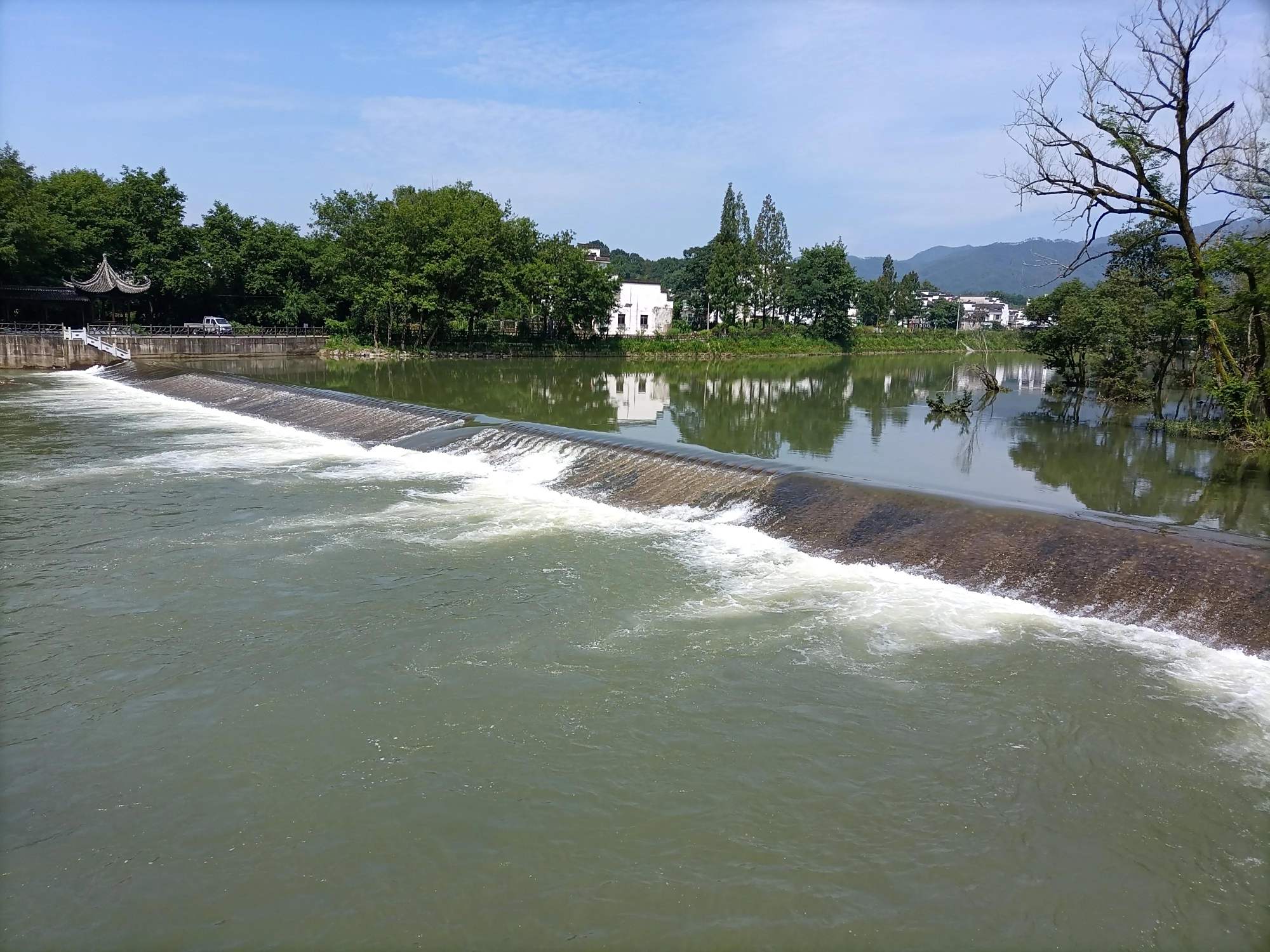
Xixinan’s ingenious water system demonstrates pre-modern engineering sophistication. Villagers constructed three low dams upstream (条堨, 陇堨, 雷堨) creating water level differences that naturally divert Fengle River water into village canals.
This gravity-fed system provides:
- Drinking water (after settling and natural filtration)
- Fire prevention (water available throughout village)
- Agricultural irrigation
- Temperature regulation (flowing water cools microclimate)
- Waste management (designed for natural cleansing)
Stone Stepping Path: The Instagram-famous spot features small stone dams creating mini-waterfalls, with stepping stones allowing river crossing. A small wooden footbridge connects banks. Expect to queue during peak times (10:00 AM – 4:00 PM weekends).
Photography Tip: The best compositions come from the wooden bridge looking upstream toward the wingnut forest. Early morning mist (6:30-7:30 AM) creates ethereal atmospheres. Afternoon (4:00-5:00 PM) provides warm light on white-washed walls.
Turenscape Academy and Creative Spaces
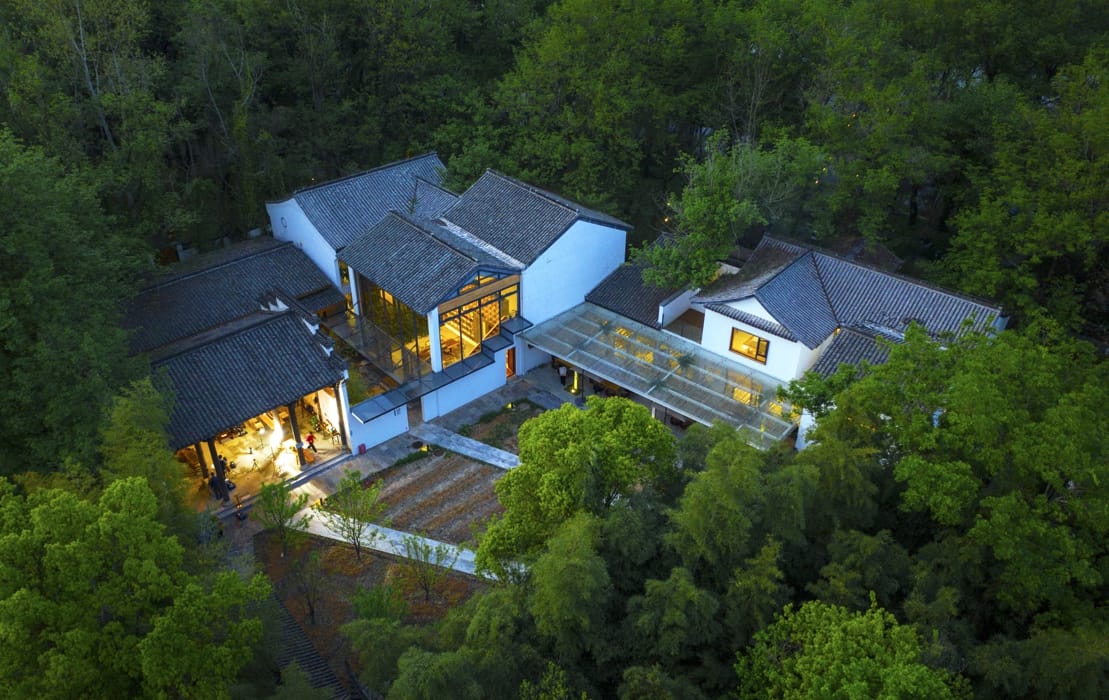
Turenscape Academy occupies converted former factories, schools, and grain warehouses. While primarily educational, the architecture itself—showcasing adaptive reuse of industrial heritage—merits examination.
The academy occasionally hosts public lectures, exhibitions, and workshops. Check their schedule if you’re interested in landscape architecture, urban planning, or heritage conservation.
Traditional Alleyways and Architectural Details
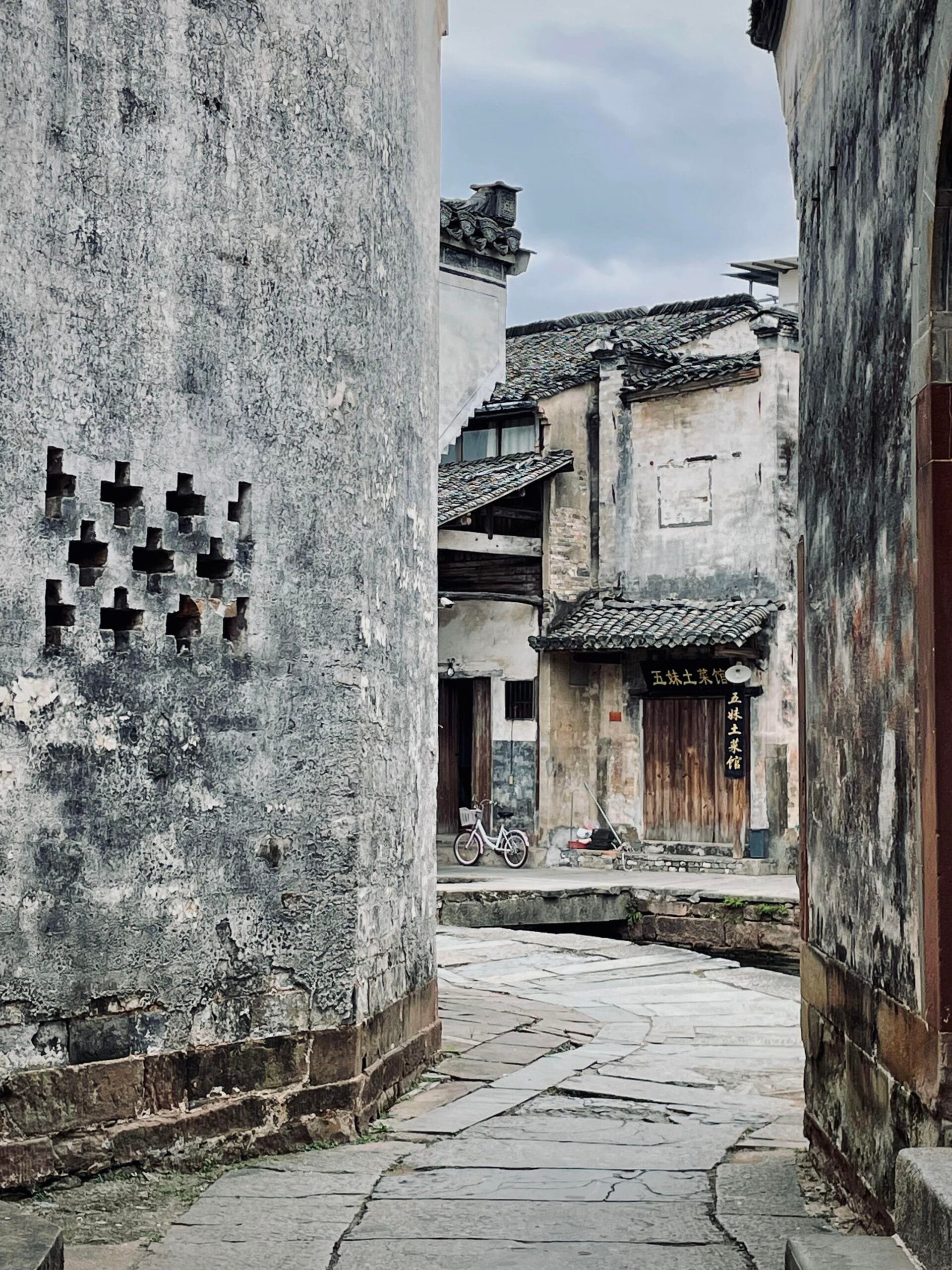
Xixinan’s labyrinthine cobblestone alleys reveal treasures around every corner:
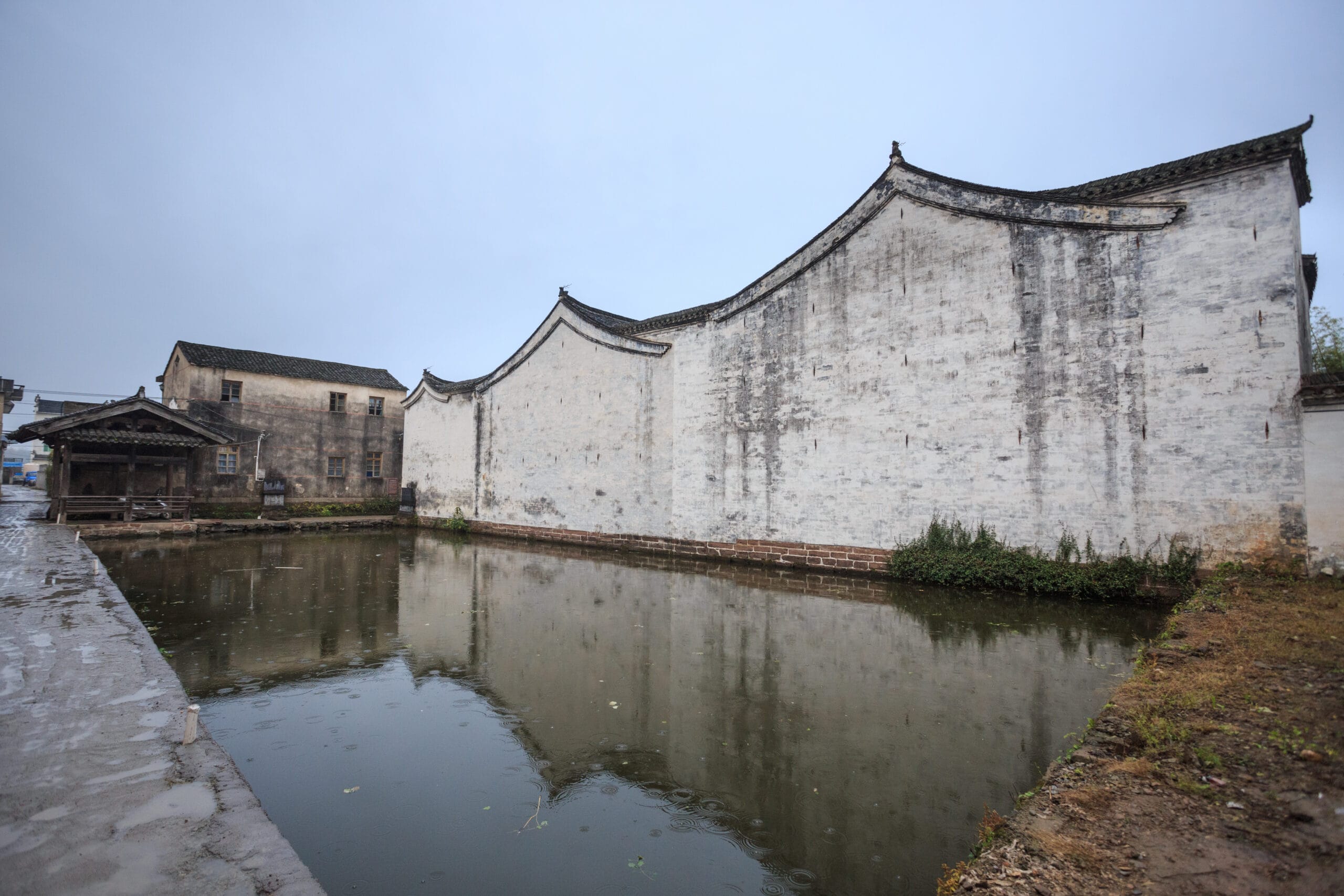
- Horse-head Gables (马头墙) – Fire-prevention walls extending above rooflines, resembling horses’ heads
- Skywell Courtyards (天井) – Internal courtyards collecting rainwater, regulating interior climate
- Carved Door Lintels – Intricate brick carvings above doorways depicting auspicious symbols
- Stone Drum Pedestals – Carved stones flanking entrances indicating family status
- Wooden Lattice Windows – Geometric patterns allowing ventilation while maintaining privacy
Navigation Note: The village layout is intentionally confusing (traditional feng shui defense against invaders). Download offline maps or be prepared to ask locals for directions.
Special Cultural Experiences That Set Xixinan Village Apart
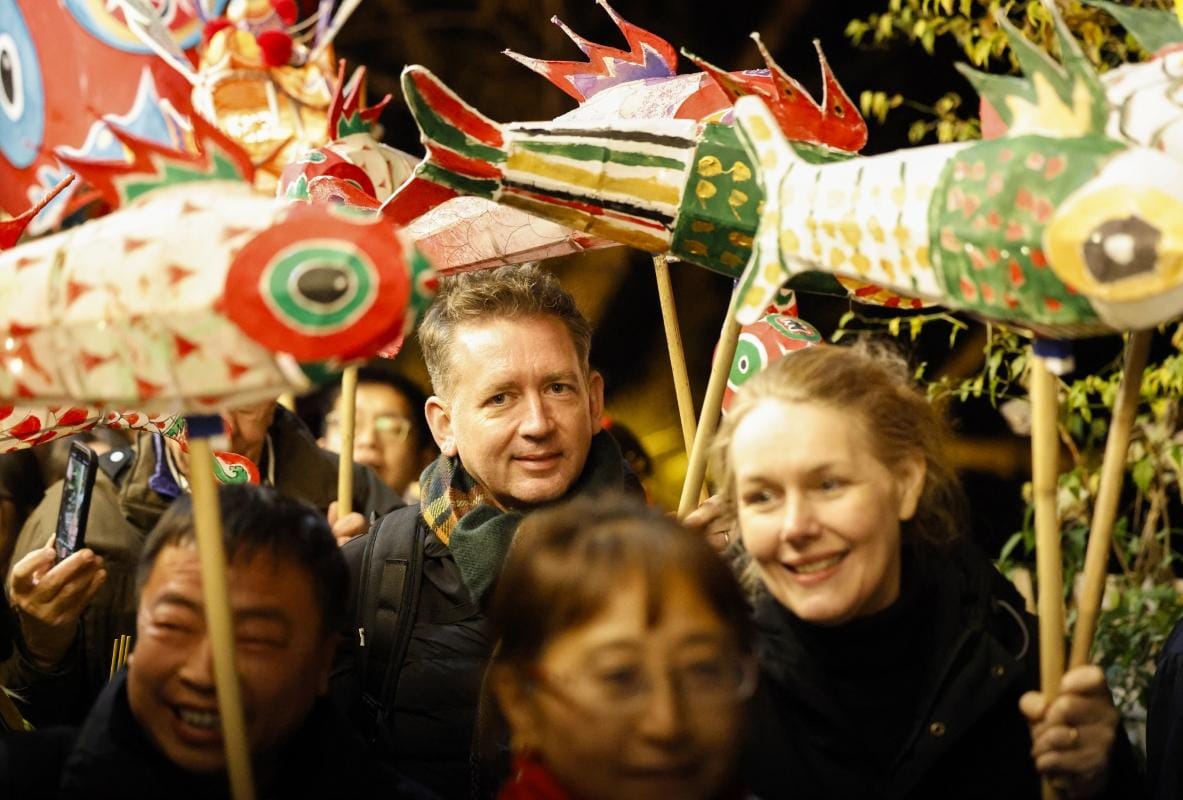
Fish Lantern Parade (鱼灯会) – Living Intangible Heritage

Xixinan’s fish lantern parade represents one of Anhui’s most enchanting folk traditions. This centuries-old celebration illuminates ancient streets with handmade fish-shaped lanterns.
When It Happens:
- Chinese New Year period (January/February) – Main annual event
- Select summer evenings – Check with local homestays for schedule
- Chinese Lantern Festival (15th day of 1st lunar month) – Peak celebration
The Experience: Locals handcraft bamboo-frame lanterns covered with silk or colored paper, shaped like carp, catfish, and other fish species. As darkness falls, parade participants carry these glowing fish through cobblestone streets, accompanied by traditional Hui opera music, drums, firecrackers, and community celebration.
The procession culminates at the Fengle River, where participants release floating river lanterns and launch fireworks. The river reflects the spectacle, doubling the visual impact.
What Makes It Authentic: Unlike performances in tourist areas staged multiple times daily, Xixinan’s fish lantern parade serves the local community first. Villagers from Xixinan and surrounding settlements participate, maintaining community bonds through shared cultural practice. Tourists are welcomed but aren’t the primary audience.
Attending Tips:
- Book homestays 1-2 months advance for Chinese New Year period
- Arrive 1+ hour early for prime viewing spots along the river
- Bring tripod for long-exposure photography
- Participate if invited—locals often welcome visitors to carry lanterns
- Learn basic Mandarin phrases for “thank you” (谢谢, xièxie) and “beautiful” (漂亮, piàoliang)
Our 2025 Experience: We attended the January fish lantern parade. The sight of dozens of illuminated fish “swimming” through narrow alleys—with traditional opera echoing off ancient walls—created magical atmosphere. An elderly Wu family member invited us into his courtyard for rice wine, explaining through gestures and translator app how his grandfather taught him lantern-making techniques seven decades ago. These unscripted moments define Xixinan’s character.
Authentic Hui Cuisine (Not Tourist Food)

Several family-run restaurants serve authentic Hui dishes in converted historic residences. Quality varies—here’s what we learned:
Must-Try Specialties:
- Stinky Mandarin Fish (臭鳜鱼) – Don’t let the name deter you. This fermented fish represents Hui cuisine’s pinnacle. Fresh mandarin fish undergoes controlled fermentation in wooden barrels with salt brine, developing complex umami flavors. The result smells pungent but tastes remarkably delicious—tender, savory, with subtle funkiness.
- Hairy Tofu (毛豆腐) – Fermented tofu developing surface mold (resembling “hair”). Pan-fried until crispy outside, creamy inside. The fermentation creates complex flavors impossible with fresh tofu.
- Bamboo Shoots (笋干) – Locally harvested mountain bamboo shoots, dried and braised with pork. Spring brings fresh bamboo shoots—sweet, crunchy, nothing like canned varieties.
- Hui-style Braised Pork (红烧肉徽州做法) – Differs from Shanghai’s sweet version. Hui style uses rock sugar sparingly, emphasizing soy sauce, Shaoxing wine, and slow braising.
- Local River Fish (河鱼) – Freshwater fish from Fengle River, steamed with ginger and scallions. Morning catches appear on lunch menus.
Where to Eat:
Xibian 55 Cafe/Restaurant (溪边55) combines traditional Hui cuisine with modern presentation. Occupies a beautifully renovated Qing Dynasty residence with riverside courtyard seating. The owner, a rural returnee who studied culinary arts in Shanghai, creates fusion dishes respecting Hui fundamentals while appealing to contemporary palates.
Price: CNY 80-150 per person Bonus: Offers personalized photography services
Small Family Restaurants line main streets. Look for places filled with local construction workers and elderly residents—that’s where to eat. These establishments serve hefty portions at CNY 30-50 per person.
Vegetarian Options: Hui cuisine is meat-heavy, but most restaurants accommodate vegetarian requests. Simple stir-fried vegetables, tofu dishes, and noodles are readily available. Say “wǒ chī sù” (我吃素, “I eat vegetarian”) or show this phrase on your phone.
Food Safety: We ate at various establishments without issues. Rural Anhui maintains food safety standards. If concerned, stick to fully cooked dishes and avoid raw vegetables washed in local water.
Modern Creative Spaces

Xixinan’s creative economy flourishes through innovative businesses:
Boutique Tea Houses occupy traditional courtyards, serving locally grown tea in atmospheric settings. Some offer tea ceremony demonstrations, explaining Huizhou tea culture’s connection to merchant wealth and scholar refinement.
Artist Studios and Galleries scattered throughout the village showcase contemporary art engaging with traditional themes. One studio we visited featured an artist creating modern ink paintings incorporating ancient Huizhou architectural elements—literal layers of old and new.
Coffee Shops with Soul – Several cafes occupy converted heritage buildings. Unlike formulaic chains, these spaces maintain architectural character while providing modern comfort. We spent afternoons working in a cafe where Ming Dynasty wooden beams met reliable WiFi.
Hands-On Cultural Activities
Some homestays and cultural centers offer experiential learning:
- Traditional Calligraphy Lessons – Learn basic brush techniques using traditional materials
- Hui-style Architecture Workshops – Understand design principles through hands-on model building
- Pottery Classes – Work with rural returnee ceramicists maintaining traditional techniques
- Organic Farming Experiences – Plant or harvest in village fields (seasonal availability)
- Bamboo Weaving Demonstrations – Watch artisans create traditional baskets and containers
- Hui Opera Introductions – Learn about this regional opera style, sometimes with costume try-ons
Availability varies by season and staffing. Ask your homestay to arrange experiences matching your interests.
Best Time to Visit Xixinan Village
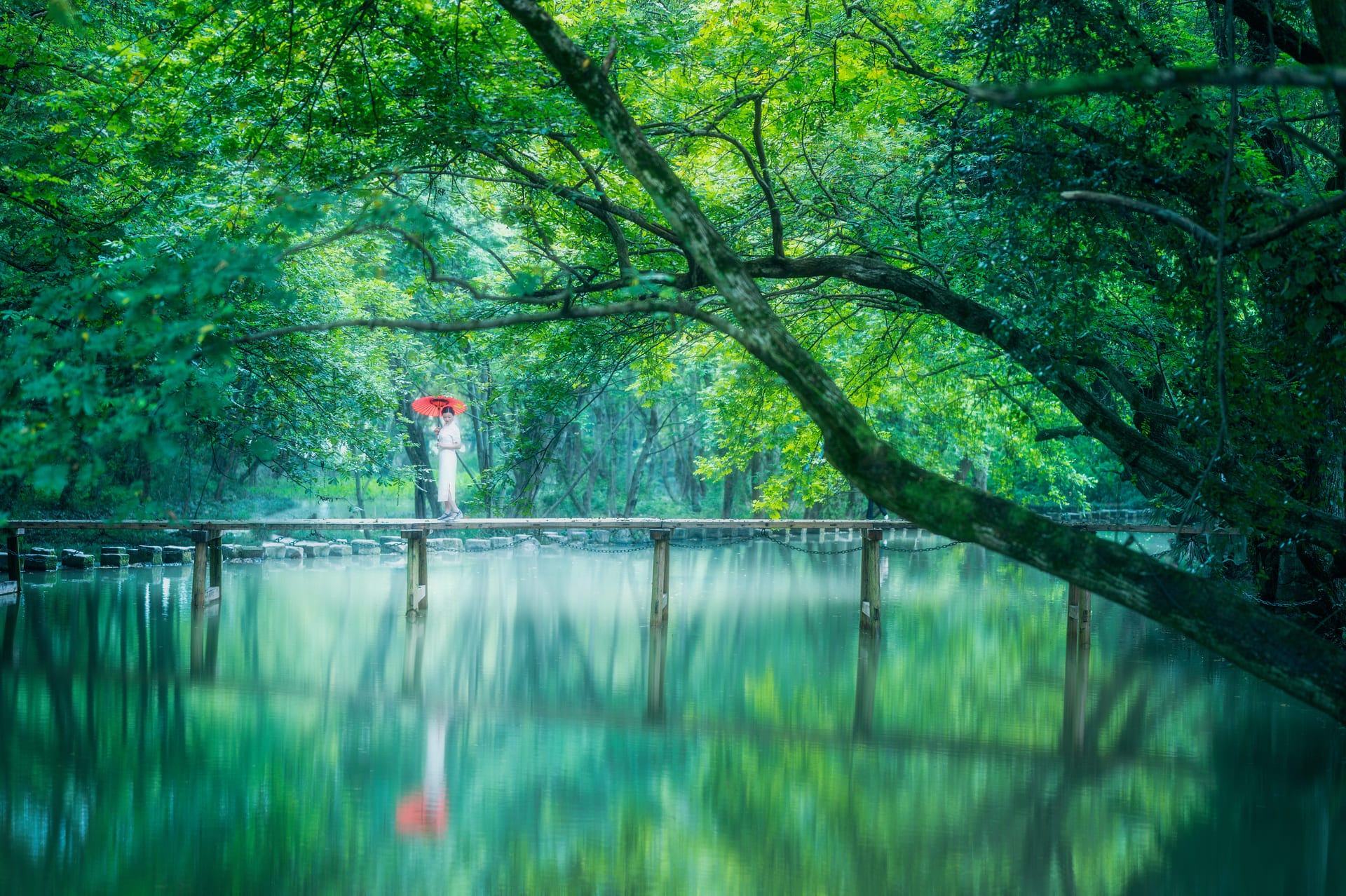
Spring (March – May) ★★★★★
Why We Love It: Spring represents Xixinan’s most photogenic season. Rapeseed flowers bloom in surrounding fields, creating golden landscapes. Bamboo shoots emerge, appearing on restaurant menus. Temperature ranges 15-25°C (59-77°F)—ideal for walking cobblestone streets hours on end.
Specific Advantages:
- Spring rains enhance the village’s poetic atmosphere rather than hindering it
- Bird migration through wetland peaks (bring binoculars)
- Fresh produce season (bamboo shoots, spring vegetables)
- Blooming fruit orchards surrounding the village
- Moderate tourism crowds (less than summer/autumn peaks)
Potential Drawbacks:
- Occasional heavy rain (1-2 days during visit)
- Some mold/humidity in older homestays
- Festival period crowds if overlapping with Chinese holidays
Summer (June – August) ★★★
Why Consider It: The Chinese wingnut forest provides natural cooling. River-fed irrigation creates pleasant microclimate. However, this is peak domestic tourism season with larger crowds.
Specific Advantages:
- Lush greenery, full wetland ecosystem function
- Summer evening fish lantern parades (select dates)
- Longer daylight hours for photography
- Natural air conditioning from wetland (3-5°C cooler than surrounding areas)
Significant Drawbacks:
- Crowded weekends and holidays
- Heat/humidity (though mitigated by wetland effect)
- Higher accommodation prices
- Occasional heavy rainfall
Pro Strategy: Visit early morning (before 9:00 AM) to avoid midday heat and crowds. Many domestic tourists arrive late morning.
Autumn (September – November) ★★★★★
Why This Is Peak Season: Autumn rivals spring as Xixinan’s ideal visiting period. Comfortable temperatures (15-25°C / 59-77°F), spectacular fall foliage, and harvest festivals. The wingnut forest turns golden and amber. Clear skies offer excellent photography conditions.
Specific Advantages:
- Chinese wingnut and maple autumn colors (October-early November)
- Harvest season cultural activities
- Chrysanthemum displays in courtyards
- Stable weather patterns (less rain than spring)
- Comfortable walking temperatures
- Fresh persimmons, chestnuts from local farms
Potential Drawbacks:
- Peak tourism season (book accommodations weeks in advance)
- Higher prices during National Day holiday (October 1-7)
- Competitive photography spots during golden hour
Winter (December – February) ★★★
Why Consider It: Winter brings fewer tourists and atmospheric morning mist rising from Fengle River. The Chinese New Year fish lantern parade (January/February) provides spectacular cultural immersion.
Specific Advantages:
- Authentic cultural experience (Chinese New Year celebrations)
- Misty morning landscapes, dramatic photography conditions
- Lowest accommodation prices
- Intimate village atmosphere with minimal tourists
- Snow-dusted ancient architecture (occasional)
Significant Considerations:
- Cold temperatures: 2-10°C (36-50°F)—dress in warm layers
- Some businesses close for Chinese New Year family celebrations
- Reduced restaurant options
- Short daylight hours (sunset by 5:30 PM)
Planning Your Visit: Comprehensive Practical Guide

Getting to Xixinan Village
From Shanghai (Most International Travelers)
High-Speed Train (Recommended):
- Shanghai Hongqiao Railway Station to Huangshan North Station
- Journey time: 2.5-3 hours
- Ticket price: CNY 150-220 (second class), CNY 240-350 (first class)
- Multiple daily departures (check 12306.cn or Trip.com for schedules)
- Huangshan North Station to Xixinan: 5 km, 15 minutes by taxi (CNY 20-30)
Flight Option: Shanghai Hongqiao/Pudong to Huangshan Tunxi International Airport (1 hour flight), then 25 km (40 minutes) to Xixinan
Why High-Speed Train Wins: More convenient station location, frequent departures, scenic countryside views, no airport security delays, direct connectivity to Xixinan
From Hangzhou
High-Speed Train:
- Hangzhou East Station to Huangshan North Station
- Journey time: 1.5-2 hours
- Ticket price: CNY 80-120 (second class)
- Taxi to Xixinan: 15 minutes, CNY 20-30
By Car: 3-hour scenic drive via Hui-Hang Expressway. Rental cars available in Hangzhou. Parking available in Xixinan (CNY 10-20/day at designated lots).
From Beijing
High-Speed Train:
- Beijing South Station to Huangshan North Station
- Journey time: 6-7 hours
- Multiple daily departures
- Ticket price: CNY 400-600 (second class)
Flight: Beijing Capital/Daxing Airport to Huangshan Tunxi International Airport (2 hours), then ground transport
Our Recommendation: High-speed train offers comfortable travel with meal service. The 6-7 hour journey provides productive work time or countryside sightseeing.
From Hong Kong/Shenzhen
Via Guangzhou: Guangzhou South Station to Huangshan North Station (4-5 hours high-speed train)
Via Shanghai: Fly to Shanghai, then high-speed train to Huangshan North
Transportation from Huangshan North Station
Taxi (Most Convenient):
- Official taxi stand outside station exits
- Fixed route to Xixinan Village: CNY 20-30
- Journey time: 15 minutes
- Tell driver: “Xixinan Gucun Luo” (西溪南古村落) or show this: 黄山市徽州区西溪南镇西溪南村
Ride-Hailing Apps:
- Didi (Chinese Uber) works well
- English-language app available
- Usually CNY 15-25
- Specify pickup location: Huangshan North Station (黄山北站)
Private Car/Hotel Pickup:
- Most Xixinan homestays offer pickup service: CNY 30-50
- Book via WeChat or phone when reserving accommodation
- Provide train number and arrival time
Public Bus:
- Limited direct service to Xixinan
- Requires transfer at Huizhou District terminal
- Not recommended for first-time visitors with luggage
- Service frequency: every 1-2 hours
Our Experience: Taxi remains easiest option. Drivers know Xixinan. Have your accommodation address in Chinese characters ready.
Navigating Within Xixinan Village

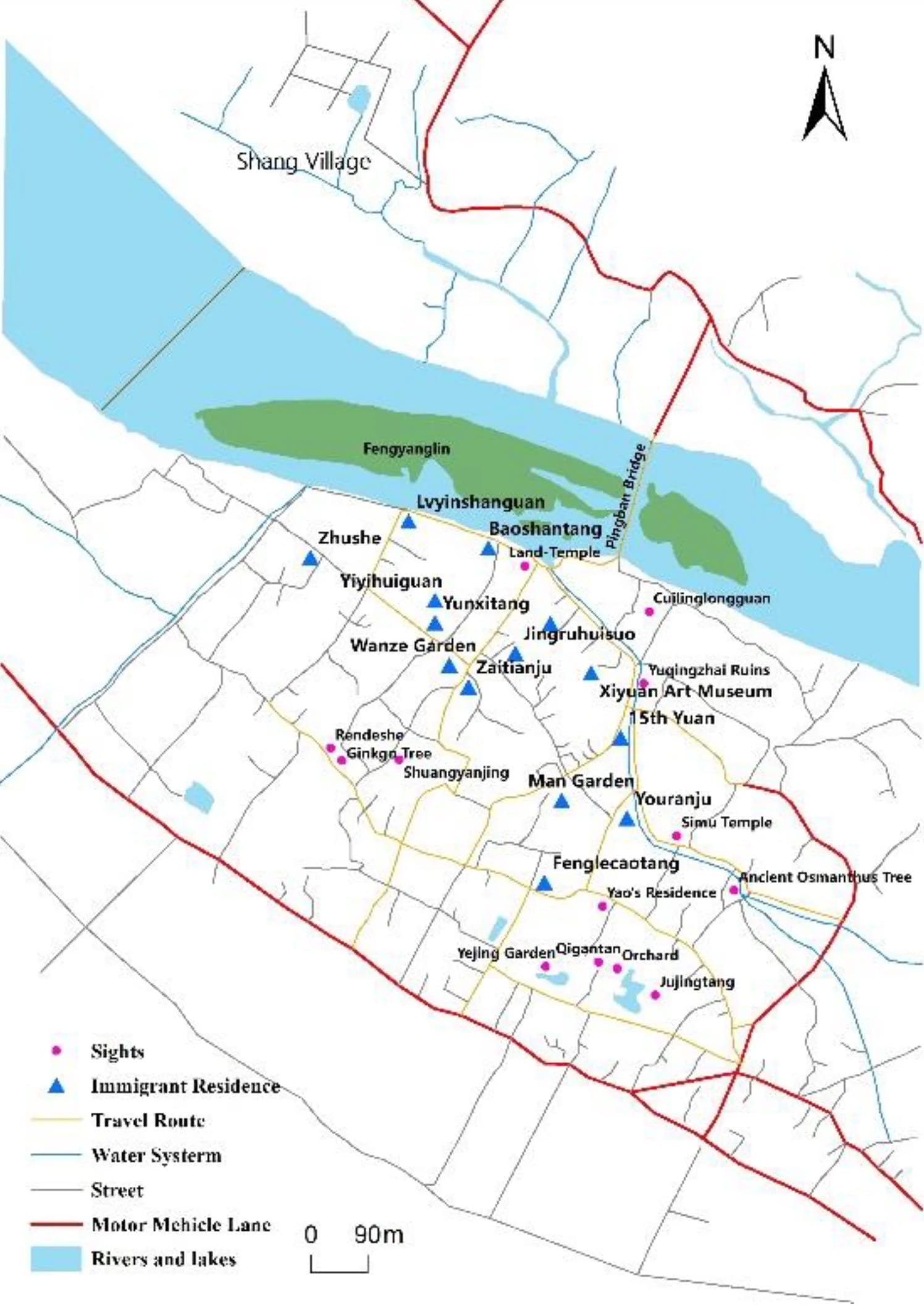
On Foot (Primary Method): The entire village is walkable. Three main streets (Brookside Street/溪边街, Middle Street/中街, Back Street/后街) run parallel, connected by narrow alleyways.
Walking radius from main entrance to furthest attraction: 30-45 minutes at leisurely pace.
Critical Footwear Advice: Cobblestone streets and uneven paths demand comfortable, closed-toe walking shoes with good grip. We witnessed multiple tourists struggling in sandals or dress shoes, with one person twisting an ankle in heels. This isn’t exaggeration—the paths are genuinely challenging in inappropriate footwear.
Village Layout: The traditional feng shui layout intentionally creates maze-like passages (defensive design against invaders). Getting slightly lost is part of the experience. Locals happily provide directions if you show your destination in Chinese.
Bike Rentals: Some homestays offer bicycle rentals. Useful for exploring countryside beyond the village core, but impractical for cobblestone alleys within the historic area.
No Motor Vehicles: Central historic areas prohibit vehicles. Electric carts occasionally transport elderly visitors or heavy luggage with special permission.
Opening Hours and Admission Fees
Village Access: 24/7, completely free. Xixinan is an open, living village, not a ticketed scenic area. You can walk streets any time.
Individual Historic Buildings:
- Laowu Pavilion (Wu Mansion): CNY 20-30, open 8:00 AM – 5:00 PM
- Lürao Pavilion: CNY 10-20, open 8:00 AM – 5:00 PM
- Other family-owned historic buildings: Some charge small fees (CNY 10-20), others free if owners invite you in
Turenscape Academy: By appointment for non-students; occasional public events (check their website or WeChat official account)
Cafes and Restaurants: Generally 9:00 AM – 9:00 PM (varies by establishment)
Practical Travel Tips from Extensive On-Site Experience

Photography Strategy and Best Spots
Golden Hour Locations:
Sunrise (6:30-8:00 AM):
- Fengle River with wingnut forest reflections
- Wetland boardwalk looking east
- Village alleyways as morning light enters
- Farmers’ morning routines (ask permission before photographing people)
Sunset (5:00-6:30 PM, varies by season):
- Wooden footbridge over river
- Horse-head gables against western sky
- Wu Mansion courtyard with warm light on white walls
- River stepping stones with reflections
Blue Hour (30 minutes after sunset): Artificial lights illuminate architecture beautifully. Narrow alleyways with hanging lanterns create atmospheric compositions.
Overcast Days: Perfect for architectural detail photography. Soft light enhances carved brickwork and wooden elements without harsh shadows.
Drone Photography: Check current local regulations before flying. Generally permitted in open areas, restricted near national cultural relics. Respectful flying—avoid hovering over private courtyards or disturbing residents.
Weather Considerations: Morning mist (March-May, September-November) creates ethereal atmosphere. Arrive at river by 6:30 AM before sun burns off the mist.
Avoiding Crowds: Strategic Timing
Best Days: Tuesday-Thursday significantly less crowded than weekends. Monday and Friday experience moderate traffic.
Worst Days: Saturday-Sunday, Chinese public holidays
Best Months: Late March-April, September-October offer pleasant weather with manageable crowds.
Months to Avoid:
- Chinese New Year (January/February, dates vary)—unless specifically for fish lantern parade
- National Day Golden Week (October 1-7)—overwhelming domestic tourism
- May Day holiday (May 1-3)
Time of Day Strategy:
- Early morning (7:00-9:00 AM): Peaceful, beautiful light, residents performing daily routines
- Midday (11:00 AM-2:00 PM): Busiest period as tour groups arrive
- Late afternoon (4:00-6:00 PM): Crowds thin, excellent photography light
- Evening (after 7:00 PM): Very quiet, atmospheric street lighting, few tourists
Tour Group Patterns: Domestic tour groups typically arrive late morning (10:00-11:00 AM), stay 2-3 hours, depart by early afternoon. Scheduling around this pattern provides more solitary experiences.
Real Traveler Reviews: Unfiltered Experiences
We collected detailed feedback from international travelers who visited Xixinan in 2025. These represent genuine experiences, not promotional content.
“Finally, An Authentic Village Experience” – Emma R., Netherlands (April 2025)
“After visiting four ‘ancient villages’ in three days—Hongcun, Xidi, Nanping, Chengkan—I was exhausted by aggressive souvenir sellers and staged ‘cultural performances.’ Xixinan felt like discovering a secret. The buildings are equally impressive, but without the aggressive commercialization.
I spent six hours just wandering. No one pressured me to buy anything. An elderly woman invited me into her courtyard for tea, communicating through smiles and translator app. She showed me family photos spanning four generations. That spontaneous interaction meant more than any ticketed attraction.
My only regret? Planning just half a day. The village deserves overnight stay to experience morning mist and evening tranquility.”
Our Analysis: Emma’s experience reflects Xixinan’s core appeal—cultural depth without commercial pressure. The no-ticket model filters out bus tour groups, attracting more independent, culturally curious travelers.
“Photographer’s Paradise” – David Chen, Singapore (November 2025)
“As a landscape photographer, I spent three full days in Xixinan and could have stayed longer. The wetland ecosystem offers incredible biodiversity. I photographed egrets, herons, and migratory waterfowl in the wingnut forest at dawn.
The village architecture provides endless compositions. Horse-head gables against autumn skies, narrow alleyways with perfect light at 4:00 PM, courtyard details revealing centuries of craftsmanship.
Pro tip: Stay at Yuqingzhai Homestay. The Wu family opened their private courtyard for my sunrise shoot—access you can’t get as a day visitor. The courtyard’s internal perspectives rival anything in Hongcun.
Challenges: Limited English signage, no designated viewpoints. But for serious photographers, that’s actually positive. You discover your own compositions rather than photographing the same spots as everyone else.”
Our Analysis: David highlights Xixinan’s photographic value. The lack of designated viewpoints means photographers must observe, explore, and create original compositions—more satisfying than shooting overused angles.
“Language Barrier Was Real But Manageable” – Sofia M., Spain (March 2025)
“I speak zero Chinese. Xixinan has virtually no English signage, and English speakers are rare among residents. Translation apps were absolutely essential.
That said, I never felt unwelcome or stranded. Locals were incredibly patient and helpful. When I got lost, an elderly man walked me 10 minutes to my homestay, refusing any money I offered. A restaurant owner spent 15 minutes with my translator app explaining each dish’s ingredients to accommodate my vegetarianism.
The language barrier exists, but Chinese hospitality transcends words. Travelers comfortable with uncertainty and willing to use technology will enjoy Xixinan. Those requiring extensive English support might find it challenging.”
Our Analysis: Sofia’s experience reflects reality—English is limited, but hospitality and technology bridge gaps. Patient, resourceful travelers thrive here. Those needing constant English guidance should consider guided tours.
“Perfect Family Day Trip” – The Anderson Family, Australia (April 2025)
“We traveled with three children (ages 7, 10, 13). All three enjoyed exploring the village. Our 10-year-old called it ‘like stepping into an ancient Chinese video game.’ The wetland walk fascinated them—spotting birds, crossing stepping stones, examining strange trees.
Challenges: Uneven cobblestones required constant supervision with our 7-year-old. She tired after three hours of walking. The village isn’t stroller-accessible—we had to carry our youngest several times.
Recommendations: Visit with kids ages 8+. Bring comfortable shoes. Plan shorter visits (3-4 hours) for younger children. The adventure of exploring a living historic village appeals to curious kids without feeling like an educational punishment.”
Our Analysis: Xixinan suits families with older, adventurous children. Physical demands (walking, uneven surfaces) challenge younger kids. The exploratory nature appeals to children who enjoy discovery over structured activities.
“Excellent Value Compared to UNESCO Villages” – Thomas B., Germany (September 2025)
“I visited Hongcun (CNY 104 entrance), Xidi (CNY 104 entrance), and Xixinan (free) within four days. Honestly? The architecture and cultural atmosphere are comparable. Xixinan’s lack of entrance fee and lower accommodation/meal prices made it significantly better value.
We stayed at a boutique homestay (CNY 480/night with breakfast)—excellent by any standard. Meals averaged CNY 60-80 per person for excellent Hui cuisine. The stinky mandarin fish was better than what we ate in Hongcun.
For budget-conscious travelers who want authentic Huizhou village experience, Xixinan delivers without compromising quality.”
Our Analysis: Thomas’s cost comparison proves valuable. Xixinan’s free access and competitive pricing offer budget advantages without sacrificing cultural authenticity or architectural quality.
“Unexpected Creative Energy” – Rachel K., USA (May 2025)
“I expected another ‘frozen in time’ ancient village. Instead, I discovered vibrant creative community. Young entrepreneurs have opened fascinating cafes, design studios, and galleries throughout the village—all in converted historic buildings.
I spent an afternoon in a cafe where Qing Dynasty wooden beams met specialty coffee and reliable WiFi. Had conversations with a rural returnee who left Shanghai tech job to open a pottery studio in his grandmother’s old house. Met international design students from Turenscape Academy exploring vernacular architecture.
This mix of preservation and innovation makes Xixinan feel alive in ways heavily touristed villages don’t. It’s not a museum—it’s a evolving cultural ecosystem.”
Our Analysis: Rachel highlights Xixinan’s unique characteristic—thriving creative economy integrated with heritage preservation. This living culture distinguishes it from frozen-in-time museum villages.
Frequently Asked Questions
Is Xixinan Village really free to enter?
Yes, completely free. No entrance tickets, no barriers, no access control. Xixinan is a living village, not a ticketed scenic area. You can walk streets any time, day or night. Some individual historic buildings (Wu Mansion, Lürao Pavilion) charge small fees (CNY 10-30) to support maintenance, but village access costs nothing.
How does Xixinan compare to Hongcun and Xidi UNESCO villages?
Similarities: All three showcase magnificent Huizhou architecture, ancient water systems, Ming-Qing Dynasty buildings, and cultural heritage.
Key Differences:
Aspect | Xixinan | Hongcun | Xidi |
|---|---|---|---|
Entrance Fee | Free | CNY 104 | CNY 104 |
UNESCO Status | No | Yes (2000) | Yes (2000) |
Annual Visitors | 600,000+ | 2+ million | 1.5+ million |
Commercialization | Low | High | High |
Tour Groups | Some | Many | Many |
Authentic Atmosphere | High | Moderate | Moderate |
English Support | Limited | Moderate | Moderate |
Unique Features | Wingnut wetland, creative economy | Moon Pond, South Lake | 224 open residences |
Our Recommendation:
- Visit Xixinan first for authentic experience
- Add Hongcun if you want the “classic” image (Moon Pond reflection photo)
- Add Xidi if you’re architecture enthusiast wanting to see 200+ residences
- If time limited, Xixinan provides comparable value with better atmosphere
Can I visit Xixinan and Yellow Mountains in one day?
Technically possible, but we strongly advise against it. Yellow Mountains requires full-day commitment (cable car up, hiking trails, cable car down = 5-6 hours minimum). Xixinan deserves 4-6 hours for meaningful exploration. Combining both creates exhausting, unsatisfying experience.
Better Itinerary:
- Day 1: Arrive Huangshan North Station → Xixinan Village (afternoon exploration, overnight in village)
- Day 2: Early morning Xixinan (sunrise, breakfast) → Yellow Mountains (full day hiking) → Huangshan city accommodation
- Day 3: Another ancient village or departure
This pacing allows proper appreciation of both destinations without brutal rushing.
When exactly is the fish lantern parade held?
2026 Dates: Lantern Festival will fall on February 1, 2026
Getting Current Information: Contact your homestay or check Xixinan’s official WeChat account (西溪南古村落) for confirmed parade schedules. Dates may shift based on weather or local organizing capacity.
Are there wheelchair-accessible facilities?
Unfortunately, no. Xixinan’s historic character creates significant accessibility challenges:
- Cobblestone streets are uneven and steep in places
- Narrow alleyways (some under 1 meter wide)
- Multiple steps into most buildings
- Historic buildings lack elevators or ramps
- Modern accessibility modifications would damage cultural heritage
We don’t recommend Xixinan for travelers requiring wheelchair accessibility. The physical environment is genuinely challenging even for fully mobile visitors.
Alternatives: Tunxi Old Street in Huangshan city offers some accessibility with smoother paving and fewer elevation changes, though still not fully wheelchair-friendly.
Are there any hidden costs or tourist traps?
Xixinan has remarkably few tourist traps compared to heavily commercialized villages.
Legitimate Costs:
- Individual building entrance fees (CNY 10-30) clearly posted
- Restaurant meals at menu prices
- Homestay accommodation at agreed rates
- Transportation (taxis charge reasonable fixed rates)
Potential Issues:
- Unofficial “guides” approaching at entrance (politely decline if not interested)
- Restaurants near main tourist spots charging slightly higher prices (eat where locals eat)
- Photography fees at some private courtyards (CNY 10-20, usually posted)
No Major Scams: We haven’t encountered aggressive overcharging, fake goods, or significant scams. The village maintains relatively honest business practices.
Our Advice:
- Agree on prices before services/purchases
- Check restaurant menus before ordering
- Don’t feel obligated to buy from persistent sellers (rare in Xixinan)
- Carry small bills (CNY 10, 20, 50) to avoid change-making issues
A Personal Note from Our Team
We believe Xixinan offers something increasingly precious in modern travel: genuine cultural immersion where tourism enhances rather than erases community character. As China continues rapid development, such places become more valuable, not less.
Visit sooner rather than later. Xixinan is evolving as popularity grows. We hope thoughtful development continues, but momentum has its own force. The tranquil atmosphere we treasure in 2026 may shift in coming years.
When you walk Xixinan’s ancient alleyways at dawn, watching mist rise from the Fengle River while elderly residents practice tai chi, you’re not observing history behind velvet ropes. You’re experiencing living cultural landscape where past and present interweave naturally.
That’s what we believe travel should be—not just seeing places, but connecting with living cultures in ways that enrich both travelers and communities. Xixinan makes this possible.
Contact us to start planning your Xixinan experience. Let’s create memories that transcend typical tourism—moments of genuine connection, cultural insight, and personal discovery in one of China’s most remarkable villages.