Jade Buddha Temple: A Journey Into the Soul of the City
Stepping through the gates of Shanghai’s Jade Buddha Temple feels like crossing into another world. The modern city’s constant hum fades away, replaced by the gentle scent of burning incense and the rhythmic chanting of monks. We’ve guided hundreds of travelers through this sacred space, and each visit reveals something new—a quiet moment of meditation, the sparkle of jade catching the morning light, or simply the contrast between Shanghai’s gleaming skyscrapers and this century-old sanctuary.
Quick Facts
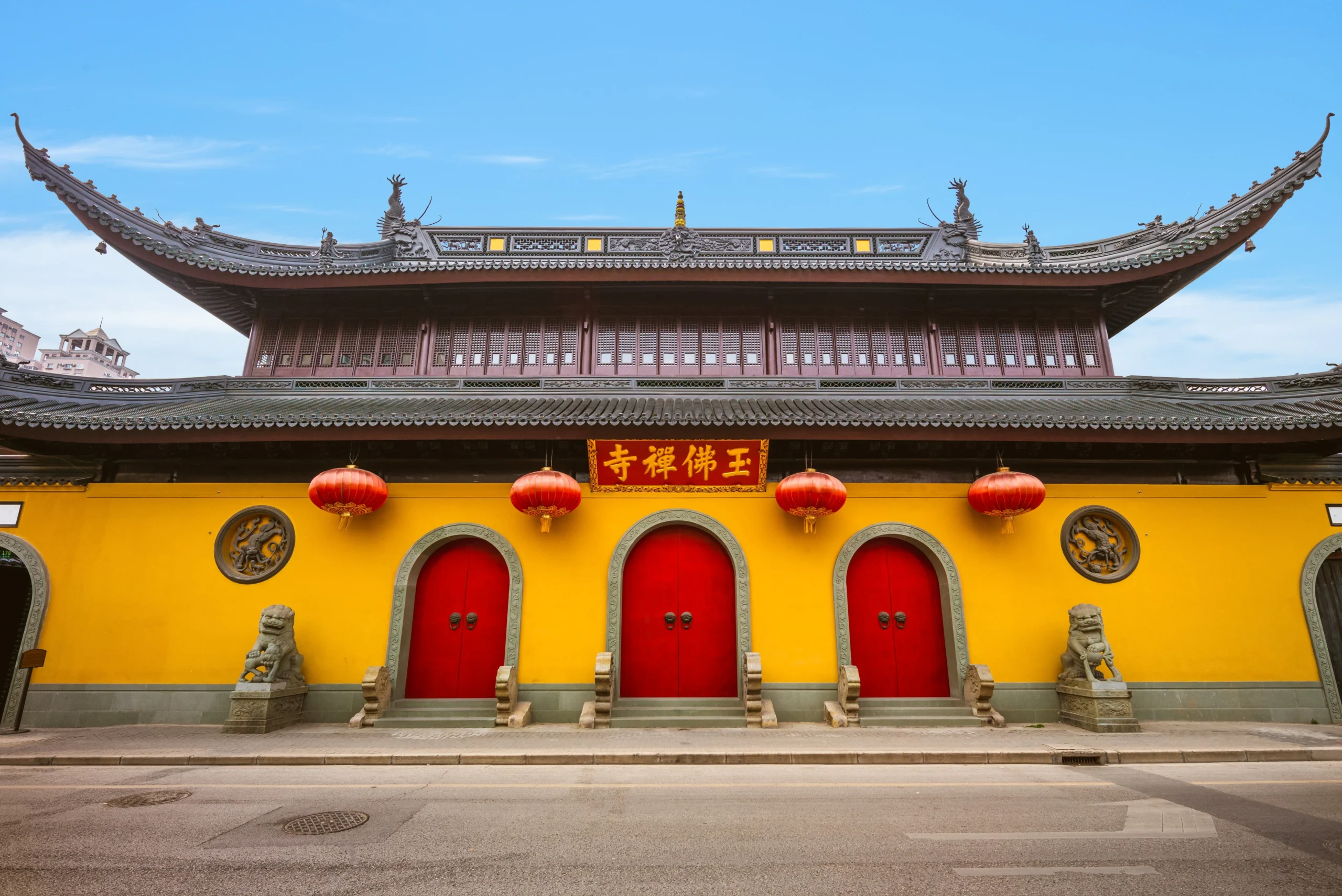
Chinese Name: 玉佛禅寺 (Yùfó Chán Sì)
Location: No. 170, Anyuan Road, Putuo District, Shanghai
Founded: 1882 (rebuilt 1918-1928)
Religious Order: Chan (Zen) Buddhism, Linji School
Entry Fee: Free admission; 10 RMB for Jade Buddha Chamber
Opening Hours: 8:00 AM – 4:30 PM daily (7:00 AM on Buddhist festivals)
Visit Duration: 1-2 hours recommended
Active Monastery: Yes, approximately 120 resident monks
UNESCO Status: Not listed, but protected cultural site
Best For: Cultural immersion, spiritual reflection, photography
Table of Contents
History and Cultural Significance
The Journey of Two Jade Buddhas
The temple’s story begins not in Shanghai, but in Myanmar. In 1882, during the Guangxu Emperor’s reign, Master Huigen—a Buddhist monk from Mount Putuo—embarked on a pilgrimage following the ancient path of Xuanzang, the legendary Tang Dynasty monk who journeyed westward for Buddhist scriptures.
After traveling through Mount Wutai, Mount Emei, and Tibet, Master Huigen reached Myanmar. There, a generous overseas Chinese resident named Chen Jun-Pu donated five exquisite white jade Buddha statues to him. Huigen transported two of these treasures back to Shanghai’s Jiangwan area, where the original temple was constructed with community donations in 1882.
Surviving Revolution and Cultural Upheaval
The temple’s resilience tells a compelling story of survival. The original structure was destroyed during the 1911 revolution that toppled the Qing Dynasty. Remarkably, the precious jade Buddhas survived unscathed. A monk named Kechen recognized their cultural and spiritual value and initiated reconstruction at the current location.
Built between 1918 and 1928 with land donated by Sheng Xuanhuai (a senior Qing official whose family were devoted Buddhists), the new temple adopted the grand Song Dynasty architectural style. This ten-year construction project created the harmonious complex we see today.
During the Cultural Revolution of 1966-1976, monks displayed remarkable ingenuity by affixing posters of Mao Zedong on the temple’s exterior walls—a strategic move that successfully prevented Red Guards from destroying the complex. While many religious sites across China suffered devastation, the Jade Buddha Temple remained intact, making it one of Shanghai’s few completely preserved Buddhist monasteries from that turbulent era.
In 1983, the Shanghai Institute of Buddhism was established here, and by 1985, regular scripture lectures, meditation sessions, and traditional temple activities resumed, breathing new life into this sacred space.
A Living Spiritual Center
Today, the temple stands as one of Shanghai’s three most renowned Buddhist temples, alongside Jing’an Temple and Longhua Temple. What distinguishes it is that this isn’t merely a tourist attraction—it remains a fully functioning monastery where monks live, pray, and study. This authentic spiritual atmosphere provides visitors with a genuine window into Chinese Buddhist practice.
Why the Jade Buddha Temple Deserves Your Visit

An Oasis of Calm in Urban Chaos
Shanghai’s relentless energy can be overwhelming. We’ve seen countless travelers arrive at the temple looking frazzled from navigating the metro and crowded streets, only to visibly relax within minutes of entering the courtyard. The transformation is palpable.
Visitors often report a remarkable shift in atmosphere upon entering, with the city’s noise fading away and being replaced by the gentle scent of incense and quiet murmur of prayers. This contrast isn’t accidental—the temple’s design creates natural buffer zones from urban chaos, with courtyards and halls arranged to progressively deepen the sense of tranquility.
Witnessing Active Buddhist Practice
Unlike many tourist-oriented temples, you’ll encounter actual monastic life here. Monks can be seen and heard conducting Buddhist ceremonies throughout the day. On the 1st and 15th of each lunar month, the temple buzzes with devotees burning incense and offering prayers—participating in practices that have remained unchanged for centuries.
During our visits, we’ve observed monks engaged in scripture study, meditation sessions, and ceremonial rituals. For travelers seeking authentic cultural experiences rather than staged performances, this living tradition provides invaluable insight into Chinese Buddhism.
Architectural Excellence
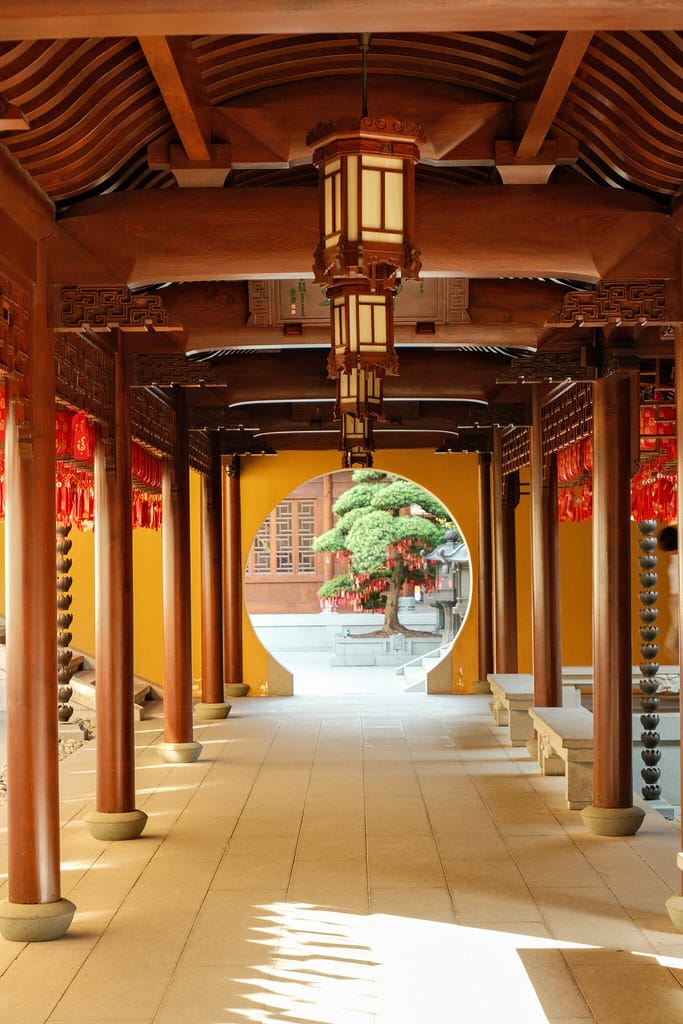
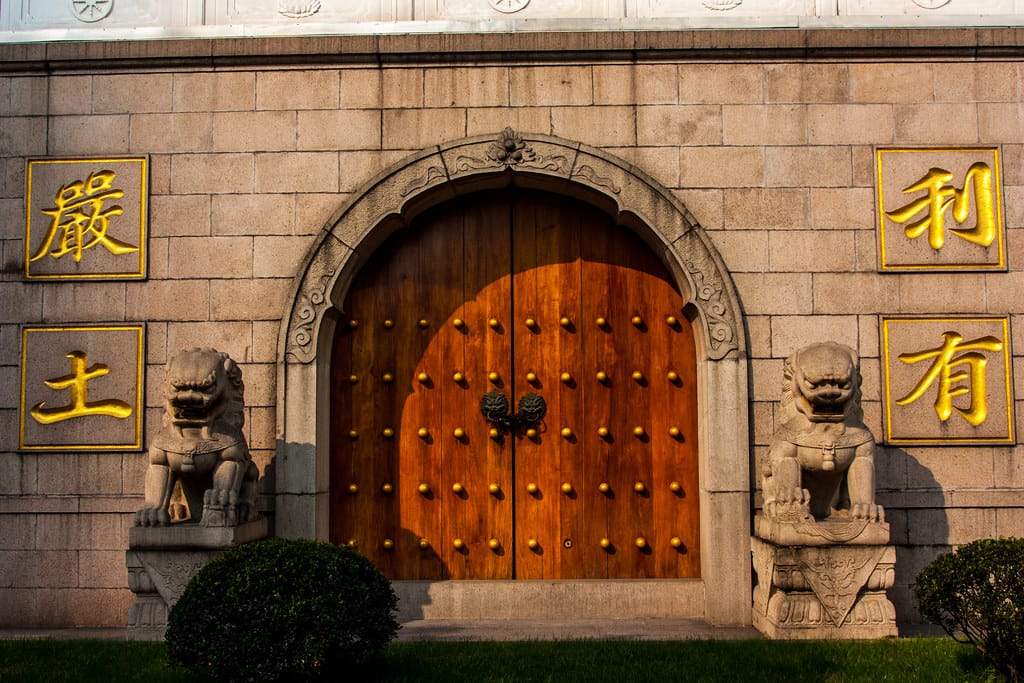
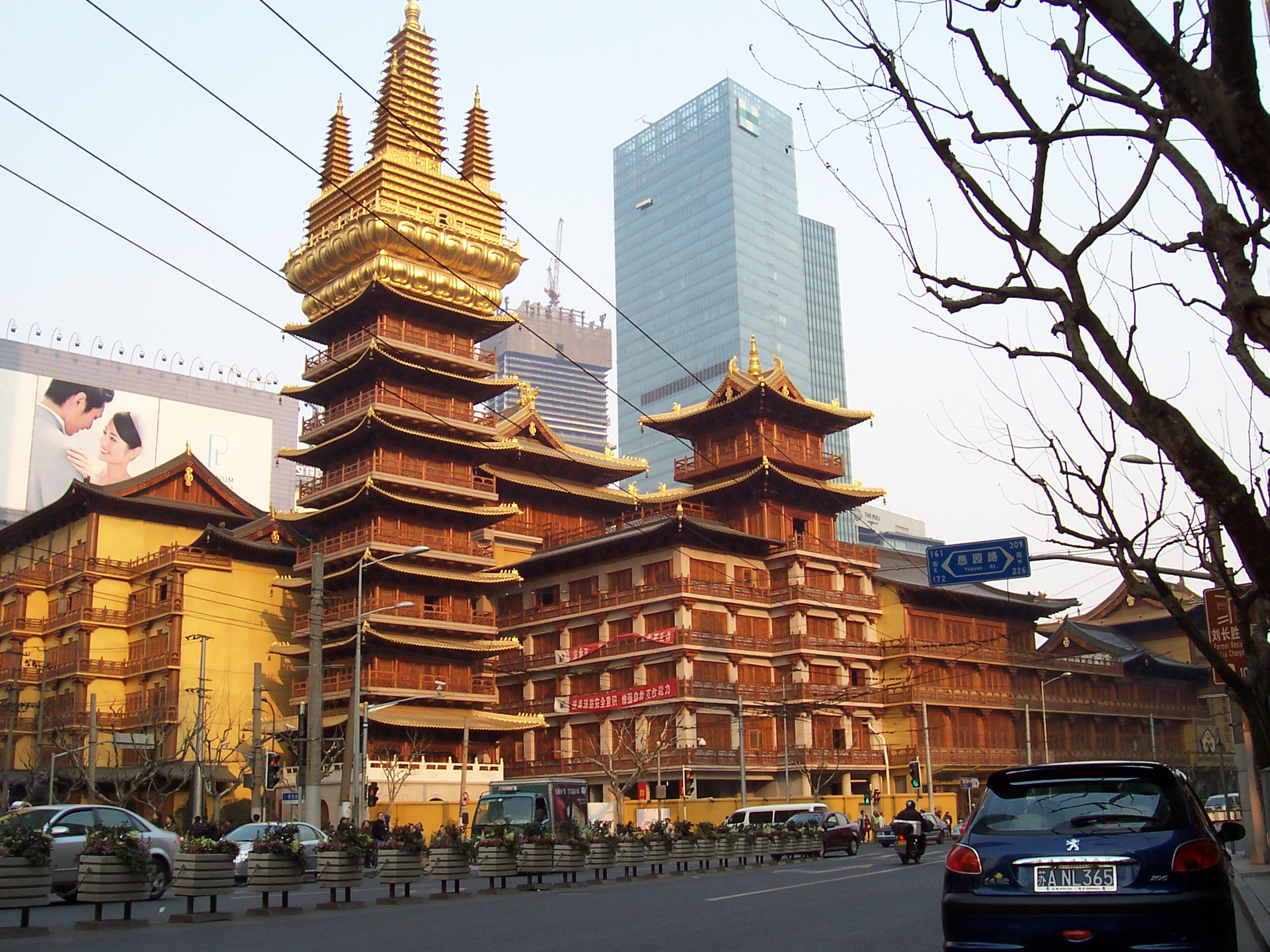
The temple showcases classical Song Dynasty palace architecture—a rarity in modern Shanghai. The complex spans approximately 11.6 acres with symmetrical layouts, sweeping curved eaves, ornamental carvings, and bright yellow walls that create stunning photo opportunities, especially against blue skies.
Priceless Artistic Treasures
Beyond the famous jade Buddhas, the temple houses an impressive collection of religious artifacts spanning multiple dynasties—Tang, Song, Wei, Yuan, Ming, and Qing. More than 7,000 Dazang sutras are preserved in the Jade Buddha Tower, representing inestimable cultural and scholarly value.
Temple Highlights: What Not to Miss
The Sitting Jade Buddha (Main Treasure)
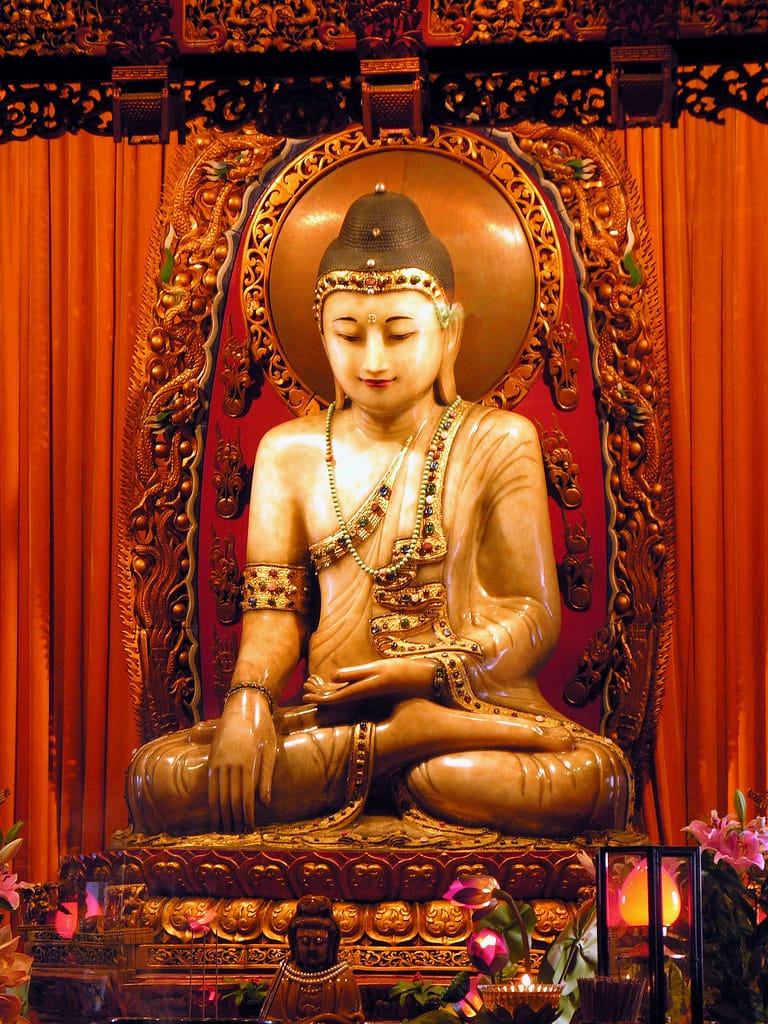
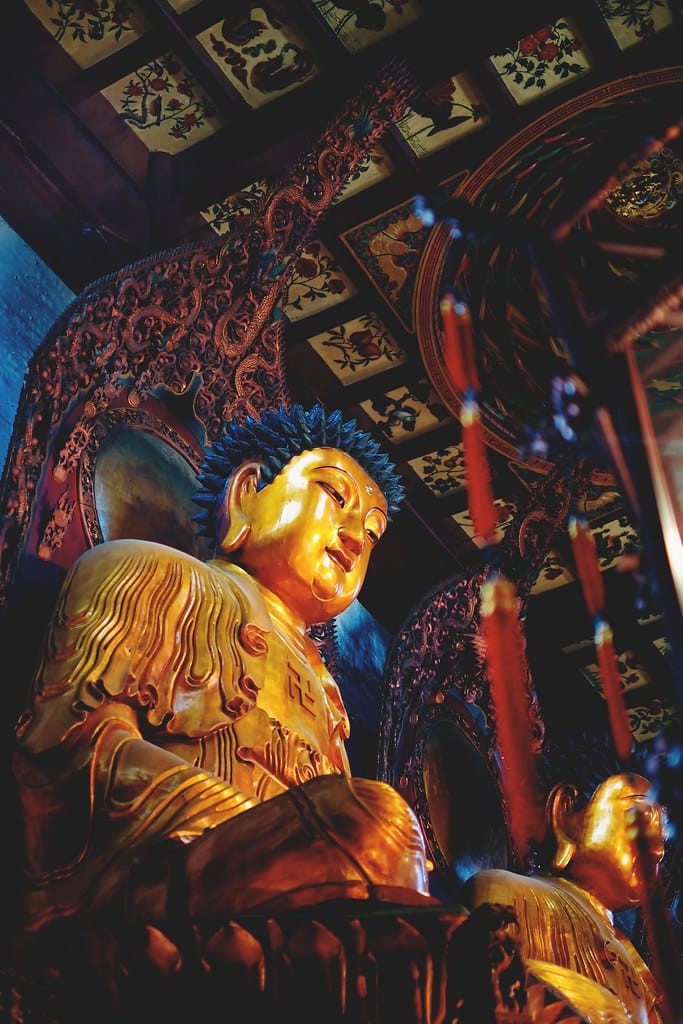
Located in the Jade Buddha Chamber on the second floor, this masterpiece commands reverence. Standing 1.95 meters tall and weighing 3 tons, this seated Buddha is carved from a single piece of pale green jade. The statue depicts Shakyamuni Buddha at the moment of enlightenment, seated in meditation upon a lotus throne.
The surface is adorned with gold leaf and encrusted with sparkling gemstones—emeralds and agates—creating an otherworldly luminescence. What photographs cannot capture is the jade’s inner glow, a translucent quality that seems to emanate light even in dim conditions.
The chamber itself deserves attention. Look up to discover the ceiling decorated with 500 gilded Buddha figures, creating a celestial canopy above the main statue. This extra 10 RMB fee is absolutely worth paying for access to this extraordinary space.
Important note: Photography is strictly prohibited inside the Jade Buddha Chamber. Guards monitor carefully, and we’ve seen visitors asked to delete photos. Respect this rule—the experience of standing before this sacred artwork without the distraction of cameras proves more meaningful than any photograph.
The Reclining Jade Buddha (Hidden Gem)

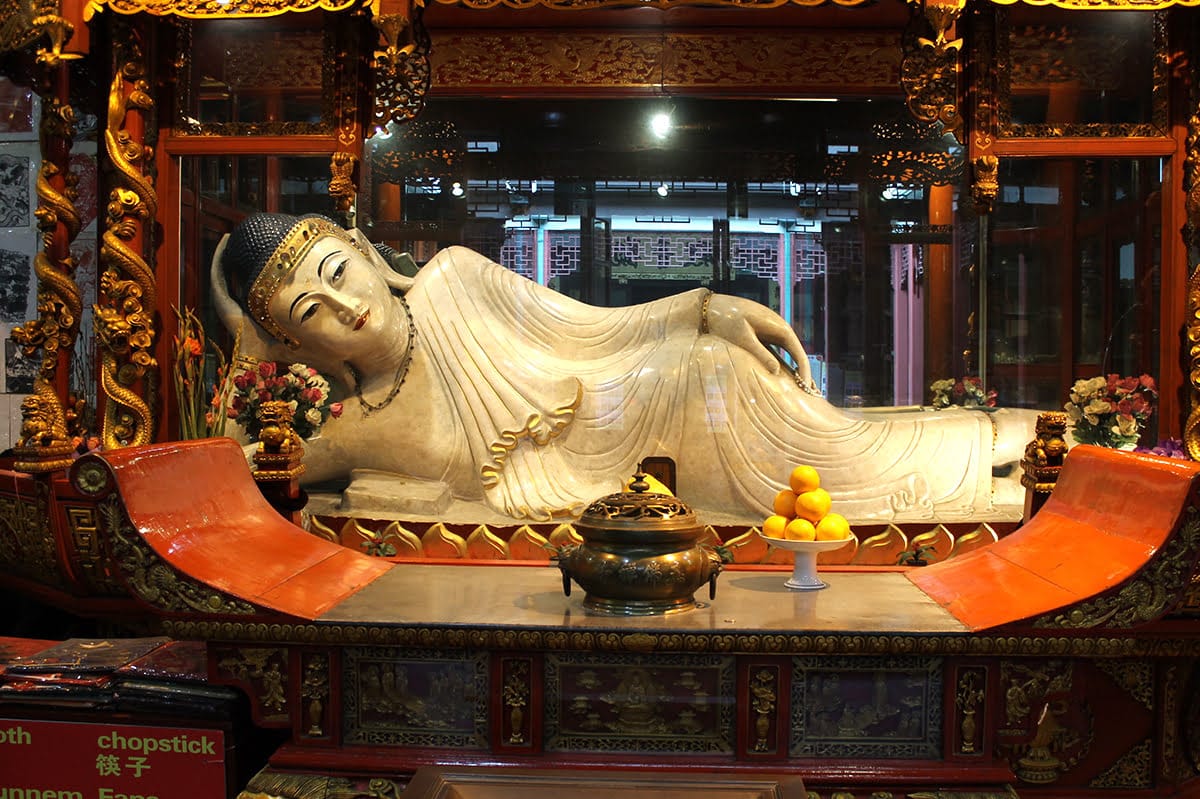
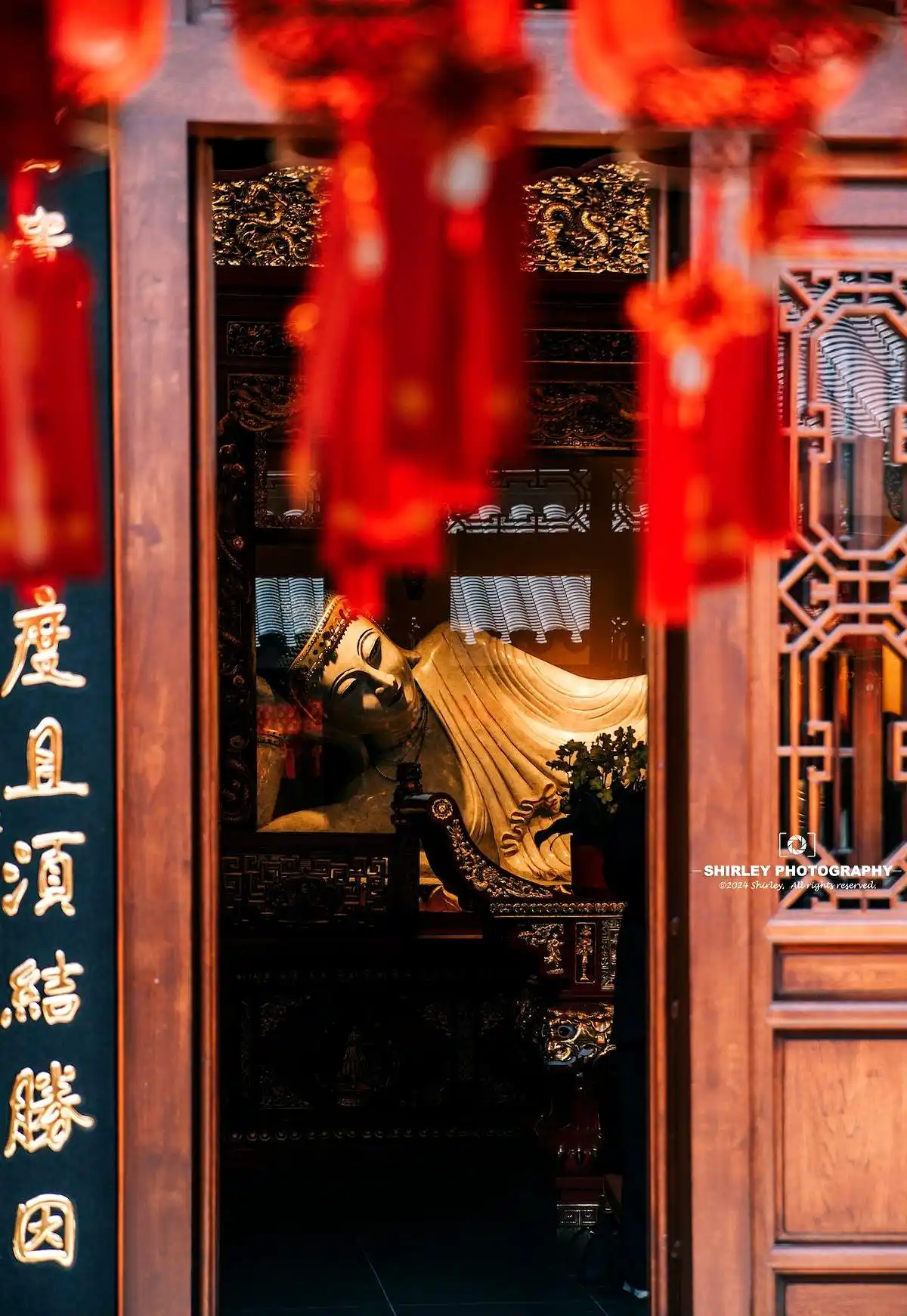
Many visitors overlook this treasure in the Reclining Buddha Hall. The smaller reclining Buddha measures 96 centimeters long and depicts Shakyamuni Buddha at the moment of entering nirvana at age 80. Carved from a single piece of white jade, it shows the Buddha lying on his right side, right hand supporting his head, left hand resting on his left leg—the “auspicious repose” position.
The serene expression carved into jade captures the peaceful transition from earthly existence to nirvana. Unlike the imposing seated Buddha, this intimate sculpture invites quiet contemplation.
Visitor tip: The hall also contains a much larger reclining Buddha—a 4-meter marble statue brought from Singapore in 1989. Don’t confuse this impressive but newer addition with the original jade treasure.
Hall of Heavenly Kings (Tianwang Hall)

This hall features four heavenly kings surrounding additional Buddha figures, acting as divine protectors. The statues of Maitreya (the laughing Buddha) and Weituo Bodhisattva greet visitors, setting the tone for spiritual exploration.
The Four Heavenly Kings—representing favorable circumstances and cosmic balance—stand as imposing guardians. Each holds symbolic objects: a pipa (musical instrument), an umbrella, a snake, and a sword, representing control over wind, rain, time, and spiritual protection respectively.
Grand Hall (Mahavira Hall)

The architectural and spiritual heart of the complex, this hall contains extraordinary treasures. Three Golden Buddhas represent the incarnations of Buddha—past, present, and future. The central figure depicts Gautama Buddha, flanked by Amitabha Buddha (left) and Bhaisajyaguru, the Medicine Buddha (right).
Along the hall’s sides stand the Twenty Heavens Gods, covered in gold leaf, creating a shimmering corridor. We recommend visiting during late afternoon when sunlight streams through windows, illuminating these figures in golden light.
Behind the main altar, a magnificent statue of Guanyin (Avalokitesvara Bodhisattva) towers at the northern entrance. Shen Cai stands at Guanyin’s side, with sculptures representing his 53 teachers arranged above, illustrating the Buddhist concept of enlightenment through learning.
Lesser-Known Halls Worth Exploring

Manjusri Hall: Houses the Bodhisattva of Wisdom, often depicted riding a lion. Students and scholars traditionally come here seeking blessings for academic success.
Medicine Buddha Hall: Contains shrines to the healing Buddha. Animal lovers should visit here to spot the friendly temple cats who’ve made this hall their territory—watching them nap peacefully among devotees adds unexpected charm.
Samantabhadra Hall: Dedicated to the Bodhisattva of Universal Virtue, representing the practical application of wisdom through action and compassion.
Special Experiences at Jade Buddha Temple
Vegetarian Dining: A Culinary Revelation

The temple’s vegetarian restaurant surprises most visitors. Located on the second floor with its own street entrance, it serves simple noodle dishes for approximately 5 yuan per bowl, with the popular “double mushroom noodles” being a specialty.
The system works differently from typical restaurants. You purchase colored tickets at the entrance, then exchange them inside the dining room for your meal, which arrives at communal tables you may share with monks, devotees, and other visitors.
Recent renovations added a modern café serving matcha, hojicha, and sesame-based drinks, featuring minimalist design with white walls, smooth wood, and soft music—almost Scandinavian in aesthetic until you notice monks drifting past the windows.
The food itself follows Buddhist vegetarian principles—no meat, eggs, or allium vegetables (garlic, onions, leeks). Expect braised tofu, steamed greens, sesame noodles, and sweet potato soup. The simplicity allows ingredients to shine, and meals prove surprisingly satisfying.
Practical tip: The restaurant gets busy between 11:30 AM and 1:00 PM. Arriving slightly earlier or later ensures a more peaceful dining experience.
Incense Offering Ceremony

The Incense Offering Ceremony provides visitors an opportunity to participate in traditional Buddhist rituals believed to bring good luck, health, and blessings. Temple guides explain proper incense-holding techniques and the significance of offerings to various deities.
Incense sticks are available for purchase within the temple for 25 RMB. Do not bring outside incense—this supports the temple and ensures quality. The ceremony involves lighting three sticks, holding them at forehead level while bowing three times, then placing them in designated urns before different Buddha statues.
We recommend experiencing this ritual, even if you’re not Buddhist. The meditative quality of the slow, deliberate movements and the fragrant smoke rising through ancient halls creates a memorable moment of mindfulness.
READ ALSO: The Complete Guide to Burning Incense in China: Traditions, Etiquette, and Cultural Significance
Meditation Sessions with Resident Monks
The temple occasionally offers meditation sessions led by resident monks, who guide participants through proper posture, breathing techniques, and methods for quieting thoughts. These sessions accommodate both beginners and experienced practitioners.
The temple even hosts intensive 30-hour silent retreats once monthly, where participants live like monks, surrendering phones and technology for a complete weekend of meditation, vegetarian meals, and spiritual practice. Contact the temple directly for current schedules, as timing varies.
Witnessing Morning and Evening Chanting
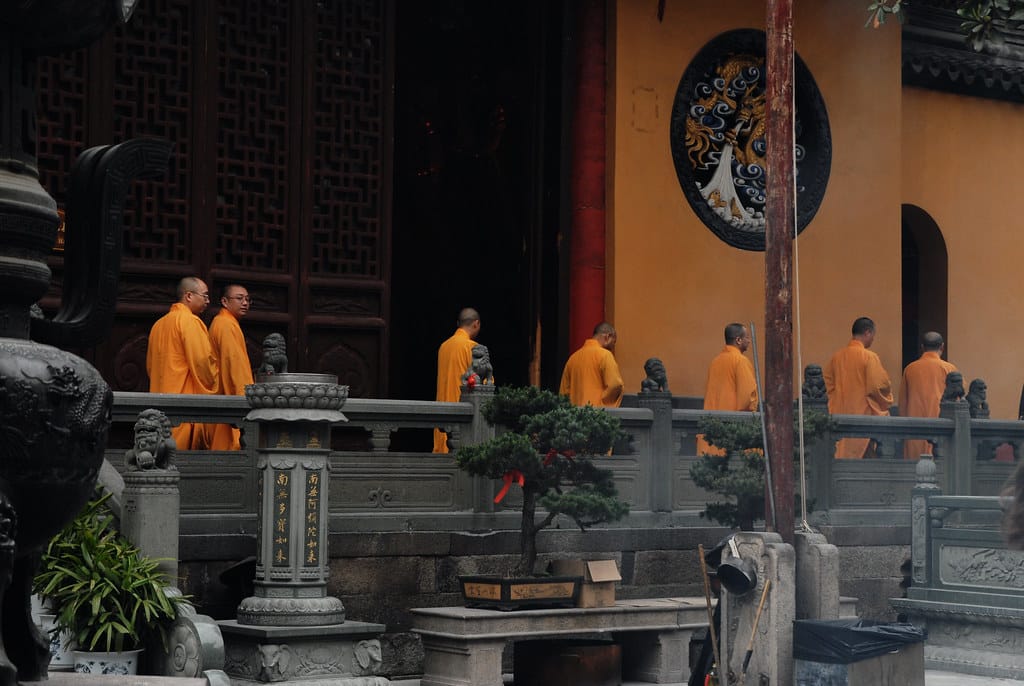
Arriving early or staying until closing time allows you to observe monks conducting daily ceremonies. The communal chanting—over 100 voices in synchronized recitation—creates a powerful atmospheric experience. The deep, rhythmic chants resonate through wooden halls, accompanied by drums, bells, and wooden fish percussion instruments.
These aren’t performances for visitors but authentic religious practices. Maintain respectful silence and distance, allowing monks and devotees space for worship.
How to Visit: Practical Navigation Guide

Getting There by Metro (Recommended)
Take Metro Line 13 to Jiangning Road Station (江宁路). The temple is approximately a 10-minute walk from Exit 3 or 4. This remains the most economical and efficient option, avoiding Shanghai’s notorious traffic.
Alternative metro routes include:
- Line 7 to Changshou Road Station (长寿路), followed by a slightly longer 15-minute walk
- Line 13 offers the most direct access
By Bus
Multiple bus routes serve the area:
- Routes 19, 206, 316, 328, or 738: Alight at Jiangninglu Anyuanlu Station (江宁路安远路)
- The temple entrance is visible from the bus stop
By Taxi or Ride-Hailing
Show drivers this address: 上海市普陀区安远路170号 (170 Anyuan Road, Putuo District, Shanghai). Most Shanghai taxi drivers recognize “玉佛寺” (Yùfó Sì). Using Didi (Chinese equivalent of Uber) proves reliable for non-Chinese speakers.
Walking from Nearby Attractions
- From Jing’an Temple: 3 kilometers, approximately 35-minute walk or 10-minute taxi ride
- From People’s Square: 5 kilometers, best reached by metro
- From The Bund: 6 kilometers, combine metro with short walk
Best Time to Visit Shanghai Jade Buddha Temple
By Time of Day
Early Morning (8:00-9:30 AM): Arriving before 9 AM offers the most peaceful experience, with soft light, rising incense, and few crowds. This is when we consistently guide our clients—the temple belongs to worshippers and early-bird photographers.
Morning prayers typically occur between 8:00-8:30 AM, providing opportunities to witness authentic ceremonies. The golden hour light streaming through courtyards creates stunning atmospheric photographs.
Mid-Morning to Afternoon (10:00 AM-3:00 PM): Expect heavier foot traffic, especially weekends and holidays. Tour groups tend to arrive during these hours, making quiet contemplation challenging. However, this period offers good natural lighting for photography.
Late Afternoon (3:30-4:30 PM): The crowds thin as closing time approaches. Monks prepare for evening ceremonies, and the lowering sun casts dramatic shadows across courtyards. Last admission is 3:30 PM, so arrive no later than 3:00 PM to explore properly.
By Season
Spring (March-May): Ideal visiting season. Mild temperatures (15-25°C/59-77°F), cherry blossoms in nearby parks, and comfortable humidity make exploration pleasant. Book accommodations early as this is peak tourist season.
Summer (June-August): Hot and humid (28-35°C/82-95°F) with occasional typhoons. The temple’s courtyards offer shade, but prepare for heat. Fewer Western tourists mean smaller crowds at this active pilgrimage site for Chinese Buddhists.
Autumn (September-November): Another excellent period. Clear blue skies, moderate temperatures (18-26°C/64-79°F), and brilliant golden leaves create perfect conditions. Mid-Autumn Festival brings special ceremonies worth timing your visit around.
Winter (December-February): Cold (2-10°C/36-50°F) but manageable. The temple takes on a stark beauty against grey skies, and you’ll have spaces largely to yourself. Dress warmly, as traditional buildings offer limited heating.
Special Days to Avoid or Target
Chinese New Year (late January to mid-February): The temple is particularly famous for its “first incense” ritual on Lunar New Year’s Day, when devotees wait at gates from New Year’s Eve, hoping to offer the first incense at dawn for good fortune. If you want authentic cultural immersion, this is spectacular. If you prefer tranquility, avoid this period entirely—the crowds are intense.
1st and 15th of Lunar Calendar: These days see thriving incense offerings with continuous visits from devoted worshippers. Excellent for observing authentic practice, but expect crowds and long queues.
Buddhist Festivals: The temple opens earlier (7:00 AM) on special Buddhist holidays. These include Buddha’s Birthday (eighth day of the fourth lunar month) and Enlightenment Day (eighth day of the twelfth lunar month). The atmosphere intensifies with special ceremonies and decorations.
Planning Your Visit: Essential Information
Opening Hours and Ticket Information
Detail | Information |
|---|---|
Daily Hours | 8:00 AM – 4:30 PM |
Buddhist Festivals | 7:00 AM – 4:30 PM |
Last Admission | 3:30 PM (arrive by 3:00 PM recommended) |
General Admission | Free entry |
Jade Buddha Chamber | Additional 10 RMB fee |
Reservations | Not required (except Chinese New Year period) |
Payment Methods | Cash, WeChat Pay, Alipay accepted |
Current 2026 update: The temple confirmed free admission with no advance reservation required, though some online sources still mention a 20 RMB fee. We verified during recent visits that general entry remains free, with only the Jade Buddha Chamber requiring payment.
What to Bring
Essential Items:
- Comfortable walking shoes (you’ll be on your feet exploring)
- Modest clothing covering shoulders and knees
- Small bills (cash) for donations and incense
- Refillable water bottle (Shanghai’s heat demands hydration)
- Sunscreen and hat for summer visits
Photography Equipment:
- Camera or smartphone (outdoor photography permitted)
- Wide-angle lens for architecture
- Note: No photography inside main halls or near jade Buddhas
Optional Enhancements:
- Notebook for reflection or journaling
- Chinese phrasebook or translation app
- Small backpack (large bags may require checking)
Dress Code and Temple Etiquette
Appropriate Attire: Casual, comfortable clothing is acceptable, but avoid short skirts, shorts above the knee, sleeveless tops, and slippers out of respect for the sacred site. Think modest and respectful—your outfit wouldn’t look out of place visiting any religious site worldwide.
During hot summer months, breathable long pants or maxi skirts with covered shoulders work well. In winter, layer warmly as temple buildings retain cold.
Behavioral Guidelines:
- Maintain quiet voices throughout the complex
- Remove hats upon entering halls
- Walk clockwise around halls (following traditional Buddhist practice)
- Don’t point fingers or feet at Buddha statues
- Ask permission before photographing monks or worshippers
- Photography is prohibited inside the Jade Buddha Chamber and certain other halls
- Turn off mobile phone ringers
- Don’t eat or drink inside halls
- Children should be supervised to respect the sacred atmosphere
Photography Rules: Outdoor courtyards and architecture: Permitted Inside main halls: Generally not allowed Jade Buddha Chamber: Strictly prohibited Monks and worshippers: Request permission first
Duration and Itinerary Suggestions
Quick Visit (45-60 minutes):
- Hall of Heavenly Kings (10 min)
- Grand Hall (15 min)
- Jade Buddha Chamber (15 min)
- Quick courtyard walk (10 min)
Standard Visit (1.5-2 hours):
- Systematic exploration of all major halls (45 min)
- Jade Buddha viewing (20 min)
- Courtyard contemplation and photography (20 min)
- Vegetarian lunch or tea break (25 min)
In-Depth Experience (2.5-3 hours):
- Early morning arrival for meditation session (45 min)
- Comprehensive hall exploration (60 min)
- Extended Jade Buddha contemplation (20 min)
- Vegetarian meal (45 min)
- Library or bookstore browsing (20 min)
- Final courtyard reflection (20 min)
Practical Travel Tips from Our Experience

Money-Saving Strategies
Free Entry Advantage: Unlike Jing’an Temple (50 RMB admission), the Jade Buddha Temple offers free general admission, making it budget-friendly. Only budget 10 RMB for the Jade Buddha Chamber.
Affordable Dining: Temple vegetarian noodles cost only 5 yuan per bowl, dramatically cheaper than commercial restaurants. A filling meal runs 15-25 RMB total.
Photography Permission: The outdoor areas provide stunning photo opportunities at no additional cost. Skip overpriced professional photo services outside the temple—your own photography proves equally effective.
Combined Itinerary: Located near Jing’an Temple (3 km) and reasonably close to People’s Square area, you can visit multiple Shanghai highlights in one day, saving multiple metro trips.
Avoiding Common Pitfalls
Fortune Teller Scammers: The temple unfortunately attracts fortune tellers who aggressively approach tourists. Politely but firmly decline their services. These individuals aren’t affiliated with the temple and charge extortionate rates for dubious predictions.
Confusing Buddha Identification: Don’t mistake the large marble reclining Buddha from Singapore for the original jade treasure. The jade reclining Buddha is smaller (96 cm) and located in a separate hall—temple signage helps distinguish them.
Jade Buddha Chamber Fee: Some visitors skip this 10 RMB additional charge, thinking they’ve seen everything. This is a mistake—the seated jade Buddha represents the temple’s absolute highlight and justifies its small fee.
Peak Time Disappointment: Arriving midday on weekends means navigating tour groups and losing the contemplative atmosphere that makes this temple special. Adjust your schedule for early morning arrival.
Photography Violations: Guards strictly enforce photography restrictions inside halls. We’ve witnessed tourists forced to delete photos, causing embarrassment and disrupting their visit. Respect the rules from the start.
Health and Safety Considerations
Heat and Hydration: Summer temperatures exceed 30°C/86°F with high humidity. Dehydration occurs quickly. Drink water regularly, especially when walking between metro and temple.
Air Quality: Check Shanghai’s AQI (Air Quality Index) before visiting. On heavily polluted days (AQI above 150), consider postponing if you have respiratory sensitivities. The temple’s incense smoke can exacerbate breathing difficulties when combined with urban pollution.
Crowd Management: The temple sees lower foot traffic than major Shanghai attractions, but Chinese New Year and festival days bring massive crowds. Those uncomfortable with dense crowds should avoid these periods.
Accessibility Considerations: The temple’s traditional architecture includes stairs to second-floor halls (where the Jade Buddha sits). Wheelchair users face challenges accessing upper levels. Contact the temple in advance for accessibility accommodations.
Cultural Sensitivity Tips
Understanding Buddhist Practice: Remember you’re visiting an active monastery, not a theme park. Monks and devotees engage in genuine spiritual practice. Observe respectfully without treating their worship as entertainment.
Donation Boxes: Multiple donation boxes appear throughout the complex. Giving is optional but appreciated—suggested donations range from 10-50 RMB depending on your budget. These funds support temple maintenance and monastic community.
Incense Offering Etiquette: If participating in incense offerings, use the temple’s incense (supporting their operations) rather than outside products. Hold incense sticks between your palms at forehead height, bow three times, then place them gently in urns—never stabbing them forcefully into ash.
Respectful Language: Keep conversations subdued. Laughing, loud talking, or animated discussions disturb the contemplative atmosphere that makes this temple meaningful.
Real Traveler Reviews: Authentic Visitor Experiences

What Travelers Love
Peaceful Atmosphere: “Stepping inside immediately transported me away from Shanghai’s chaos. The incense smoke, soft chanting, and serene Buddha statues created a meditative environment I wasn’t expecting in such a massive city” — Sarah M., United States
Living Buddhist Community: “This is still a functioning temple with resident monks, which adds tremendously to the experience. Watching actual Buddhist practices rather than staged performances made the visit authentic and moving” — Ronald L., Colorado
Value for Experience: “Along with Longhua and Jing’an, this is one of Shanghai’s three most popular temples, but unlike Jing’an (50 yuan), entry here is free. For everyone who loves Buddhist temples, this is mandatory” — RecorriendoChina, August 2025
Architectural Beauty: “The temple consists of multiple Buddhist halls on a fairly large site. All temples are freely accessible with all kinds of statues and gods. Very beautiful and definitely worth an extended visit” — Pim G., Netherlands
Constructive Feedback
Photography Restrictions: “You cannot photograph the jade statue and they watch you strictly” — Multiple reviewers
Size Expectations: “The jade Buddha in question is small—don’t expect something gigantic” — RecorriendoChina
Crowd Management: Several 2026 visitors note that weekends and late morning periods see significant crowds, recommending early arrival for the best experience.
Lack of Context: “Unfortunately I ended up without a guide to explain what was happening. The temple is impressive with loads of Buddhas and undoubtedly many stories, but I missed the deeper understanding” — Solo traveler
Most Memorable Moments
Meditation Retreat Transformation: “I participated in the 30-hour silent retreat, living like monks. The experience was profoundly moving—chanting with 120 monks at sunset in the Grand Hall, heavy incense filling the air, creating an overwhelmingly beautiful atmosphere” — Retreat participant
Unexpected Café Discovery: “The modern café inside the temple grounds serves excellent sesame hojicha lattes in a minimalist space with white walls and smooth wood. Sitting by the window watching incense smoke rise from the courtyard created a perfect moment of tranquility” — Rose C., travel blogger
Temple Cats: “Animal lovers should visit the Medicine Buddha Hall to catch a glimpse of the friendly temple cats napping among devotees—an unexpected touch of charm” — Multiple reviewers
Vegetarian Food Quality: “The monk-run cafeteria serves simple, nourishing food that’s astonishingly good—braised tofu, sesame noodles, steamed greens, sweet potato soup. The space feels almost monastic with clean lines, pale wood, and filtered sunlight” — Travel reviewer
Frequently Asked Questions

Q: Is Shanghai Jade Buddha Temple worth visiting?
Absolutely. As one of Shanghai’s top 10 attractions, the temple offers a rare combination of cultural significance, architectural beauty, and authentic spiritual atmosphere. Unlike purely tourist-oriented sites, this active monastery provides genuine insight into Chinese Buddhism while serving as a peaceful refuge from urban intensity.
Q: How much time should I spend at Jade Buddha Temple?
We recommend allocating 1.5-2 hours for a thorough visit. Quick visits (45-60 minutes) cover main highlights, while 2.5-3 hours allows for meditation participation, vegetarian dining, and unhurried contemplation.
Q: Can I take photos inside the temple?
Outdoor photography is permitted throughout courtyards and external architecture. However, photography is strictly prohibited inside main halls, particularly the Jade Buddha Chamber. Respect these restrictions—guards actively monitor and may ask you to delete photos.
Q: Do I need to book tickets in advance?
No advance reservations are required for regular visits. The temple offers free admission (with 10 RMB additional fee for Jade Buddha Chamber). However, during Chinese New Year period, the temple may implement reservation systems to manage crowds.
Q: Is the temple accessible for people with mobility challenges?
The ground floor halls are reasonably accessible, but the Jade Buddha Chamber requires climbing narrow stairs to the second floor. Wheelchair users should contact the temple in advance to discuss accommodations and alternative viewing arrangements.
Q: What’s the difference between this temple and Jing’an Temple?
Both rank among Shanghai’s top three Buddhist temples. Jing’an Temple is larger, more centrally located, and charges 50 RMB admission. The Jade Buddha Temple offers free entry, houses unique jade treasures, and maintains a quieter, more contemplative atmosphere with its active monastic community.
Q: Can non-Buddhists visit the temple?
Absolutely. The temple welcomes visitors of all faiths and backgrounds. Respectful observation of Buddhist practices enriches the experience regardless of personal beliefs. Many non-Buddhist visitors find the temple meaningful for its cultural, artistic, and contemplative value.
Q: Is there food available at the temple?
Yes. The temple operates a vegetarian restaurant serving traditional Buddhist cuisine at remarkably affordable prices (5-25 RMB for meals). A modern café also offers matcha, hojicha, and sesame drinks. These dining options prove popular with both visitors and local worshippers.
Q: What should I do if fortune tellers approach me?
Politely but firmly decline. These individuals aren’t affiliated with the temple and often charge excessive fees for dubious services. Simply saying “No, thank you” in English while walking away proves effective. Temple staff won’t pressure you to engage with fortune tellers.
Q: Can I participate in Buddhist ceremonies?
Visitors are welcome to observe ceremonies respectfully. The incense offering ritual is open for participation—purchase incense inside the temple (25 RMB) and follow observed practices. For meditation sessions or special events, inquire at the visitor services office about current schedules.
Q: What’s the best way to learn about the temple’s history during my visit?
Consider hiring a knowledgeable guide who can explain the significance of various halls, statues, and practices. Alternatively, the temple’s bookstore sells English-language materials about Buddhist culture and temple history. Some visitors find that pre-reading about Chan Buddhism enhances their appreciation during the visit.
Shanghai’s Top Three Buddhist Temples: Comprehensive Comparison
Choosing which temple to visit in Shanghai? We’ve created this detailed comparison based on years of guiding experience and verified 2026 information. Each temple offers distinct advantages depending on your interests and travel style.
Complete Temple Comparison Table
Feature | Jade Buddha Temple | Jing’an Temple | Longhua Temple |
|---|---|---|---|
Chinese Name | 玉佛禅寺 (Yùfó Chán Sì) | 静安寺 (Jìng’ān Sì) | 龙华寺 (Lónghuá Sì) |
Founded | 1882 | 247 CE | 242 CE (legend: 977 CE documented) |
Historical Significance | ★★★☆☆ | ★★★★★ | ★★★★★ |
Admission Fee | Free (10 RMB Jade Buddha Chamber) | 50 RMB | 10 RMB |
Opening Hours | 8:00 AM – 4:30 PM | 7:30 AM – 5:00 PM | 7:00 AM – 4:30 PM |
Size | Medium (11.6 acres) | Large (22,000 sq meters) | Largest (20,000 sq meters) |
Location | Putuo District (residential) | Jing’an District (downtown) | Xuhui District (south Shanghai) |
Metro Access | Line 13 (Jiangning Road) | Lines 2, 7, 14 (Jing’an Temple) | Lines 11, 12 (Longhua Station) |
Walking from Metro | 10 minutes | Direct (Exit 1) | 5 minutes (Exit 3) |
Crowd Level | Moderate | Very High | Moderate |
Tourist vs. Local | Balanced mix | Heavily tourist-oriented | More local worshippers |
Active Monastery | Yes (120 monks) | Limited monastic presence | Yes (active monastic community) |
Unique Treasures | Two jade Buddhas from Myanmar | 15-ton silver Buddha, 11-ton jade Buddha | 40-meter Song Dynasty pagoda |
Architectural Style | Song Dynasty palace style | Tibetan-influenced yellow-wall | Traditional Song Dynasty Chan |
Spiritual Atmosphere | ★★★★★ (Highly contemplative) | ★★★☆☆ (Crowded, commercial) | ★★★★☆ (Authentic, peaceful) |
Commercialization | Low | High (extensive gift shops) | Moderate |
Vegetarian Dining | Excellent (5-25 RMB) | Available (moderate prices) | Famous (renowned noodles, 20 RMB) |
Photography Rules | Outdoor only; Jade Buddha forbidden | Restricted in main halls | Generally permitted outdoors |
English Signage | Good | Excellent | Moderate |
Peak Season | Chinese New Year, Buddhist festivals | Year-round crowds | Spring (peach blossoms), New Year |
Special Events | Monthly meditation retreats | Annual Temple Fair (April) | Longhua Temple Fair (March), Bell ringing ceremony |
Historical Preservation | Well-preserved (1918-1928 buildings) | Rebuilt 1983-1990 | Multiple restorations, Song-style maintained |
Notable Features | 1.95m seated jade Buddha, 96cm reclining jade Buddha | 26m-tall Mahavira Hall with 46 teak pillars | Seven-story octagonal pagoda, 5-ton bronze bell |
Time Needed | 1.5-2 hours | 1-1.5 hours | 2-3 hours (larger complex) |
Cultural Revolution Survival | Survived intact (monks protected it) | Destroyed; completely rebuilt | Partially preserved |
Buddhist Academy | Shanghai Buddhist Institute (1983) | No academy function | Educational programs available |
Best For | Spiritual seekers, jade art enthusiasts, peaceful contemplation | First-time visitors wanting central location and impressive architecture | History buffs, pagoda lovers, authentic temple atmosphere |
Surrounding Area | Quiet residential streets, less commercial | High-end shopping malls, luxury brands, urban bustle | Martyrs Cemetery, parks, more suburban feel |
Value for Money | ★★★★★ (Free entry) | ★★★☆☆ (Expensive but grand) | ★★★★★ (Low cost, rich experience) |
Instagram-Worthy | ★★★★☆ (Courtyard shots, jade details) | ★★★★★ (Modern skyline contrast) | ★★★★★ (Pagoda, peach blossoms) |
A Personal Note from Our Team
After guiding countless travelers through Shanghai’s attractions, we’ve learned that the most memorable experiences often occur in moments of unexpected tranquility. The Jade Buddha Temple consistently delivers these moments.
We remember a winter morning when we brought a family from Chicago to the temple. Their teenage daughter, initially reluctant to visit “another old temple,” sat in the courtyard watching incense smoke spiral upward, completely absorbed. She later described it as the first time she’d felt truly calm during their rushed China tour. Her parents credited that moment with transforming their approach to travel—slowing down, sitting longer, absorbing rather than photographing.
We think of the Australian businessman who extended his Shanghai layover by a day specifically to return to the temple after his first brief visit. He spent three hours there, mostly sitting in the gardens, explaining later that the space helped him process difficult business decisions with greater clarity.
We recall the elderly couple from Taiwan who wept quietly before the Jade Buddha, explaining through tears that they’d visited this temple with their parents in the 1940s before fleeing to Taiwan. Returning after 70 years, finding the temple preserved and still functioning, gave them a sense of continuity with their past they’d thought impossible.
These stories remind us why we do this work. Shanghai offers countless attractions—glittering skyscrapers, world-class museums, historic architecture, culinary excellence. But the Jade Buddha Temple provides something increasingly rare in modern travel: authentic spiritual space where time seems to suspend, where ancient wisdom remains accessible, where travelers can simply be rather than constantly do.
We’ve witnessed the temple work its quiet magic on stressed executives, skeptical teenagers, devout Buddhists, curious atheists, professional photographers, and exhausted backpackers. The common thread is that almost everyone leaves more peaceful than they arrived.
About Travel China With Me: We specialize in crafting authentic, culturally immersive China travel experiences that go beyond standard tourist itineraries. Our team of experienced guides and travel designers brings deep knowledge of Chinese history, culture, and Buddhist traditions to create meaningful journeys. Whether you’re planning your first visit to Shanghai or returning to explore deeper, we’re here to ensure your experience captures the real essence of China. Contact us to design your perfect Shanghai itinerary, including expert-guided visits to the Jade Buddha Temple and other cultural treasures.