Tianzi Mountain in Zhangjiajie: The Complete Insider’s Guide
When we first stood on Tianzi Mountain’s summit at dawn, watching mist curl around thousands of sandstone pillars like fingers reaching toward heaven, we understood why locals call it “The Monarch of the Peak Forest.” But here’s what most guidebooks won’t tell you: the mountain we see today is actually 318 million years old, and its name comes from a rebel leader who declared himself “Son of Heaven” here in 1353 AD. This isn’t just another pretty viewpoint—it’s where geology, history, and myth collide in one of China’s most dramatic landscapes.
During our extensive research and visits over the past three years, we’ve watched Tianzi Mountain evolve from a relatively quiet corner of Zhangjiajie into one of the park’s most photographed destinations. Yet despite averaging 20,000 visitors daily during autumn peak season, we’ve discovered hidden trails where you can still experience the mountain in near solitude. This guide shares everything we’ve learned, from the secret timing that helps you beat the crowds to the lesser-known viewing platforms that even many Chinese tourists miss.
Table of Contents
Quick Facts About Tianzi Mountain
Before we dive deep, here’s what you need to know at a glance:
Detail | Information |
|---|---|
Location | Wulingyuan District, northern Zhangjiajie National Forest Park |
Area | 67 square kilometers (16,550 acres) |
Highest Peak | Kunlun Peak at 1,262.5 meters (4,142 feet) |
Lowest Point | Shilanyu at 534 meters (1,752 feet) |
UNESCO Status | Part of Wulingyuan World Heritage Site since 1992 |
Opening Hours | 7:00 AM – 5:30 PM (cable car until 5:30 PM) |
Best Visiting Time | April-May and September-October |
Average Visit Duration | 3-4 hours minimum, full day recommended |
Entrance Fee | CNY 227 (peak season, valid 4 days) |
Cable Car | CNY 72 one-way, CNY 144 round-trip |
History and Cultural Significance
The Rebel King Who Became a Legend
Tianzi Mountain wasn’t always called by this dramatic name. Before the Ming Dynasty, locals knew it as “Qingyan Mountain” (Green Rock Mountain) for its verdant stone formations. The transformation came in 1353 during the tumultuous Yuan Dynasty.
Xiang Dakun, a charismatic leader of the Tujia ethnic minority, rallied farmers and ethnic groups against oppressive imperial rule. He established his stronghold on this mountain and proclaimed himself “Xiang Wang Tianzi”—literally “Xiang King, Son of Heaven,” using the traditional title reserved for Chinese emperors. For over three decades, his rebellion held out against imperial forces.
In 1385, Emperor Zhu Yuanzhang finally sent ten thousand soldiers to crush the uprising. Rather than surrender, Xiang Dakun and his remaining forces made their last stand. Legend says he leaped from Shentang Bay’s precipice rather than face capture. The locals, moved by his sacrifice, renamed the mountain “Tianzi” in his honor—a name that endures 640 years later.
Geological Marvel: 318 Million Years in the Making
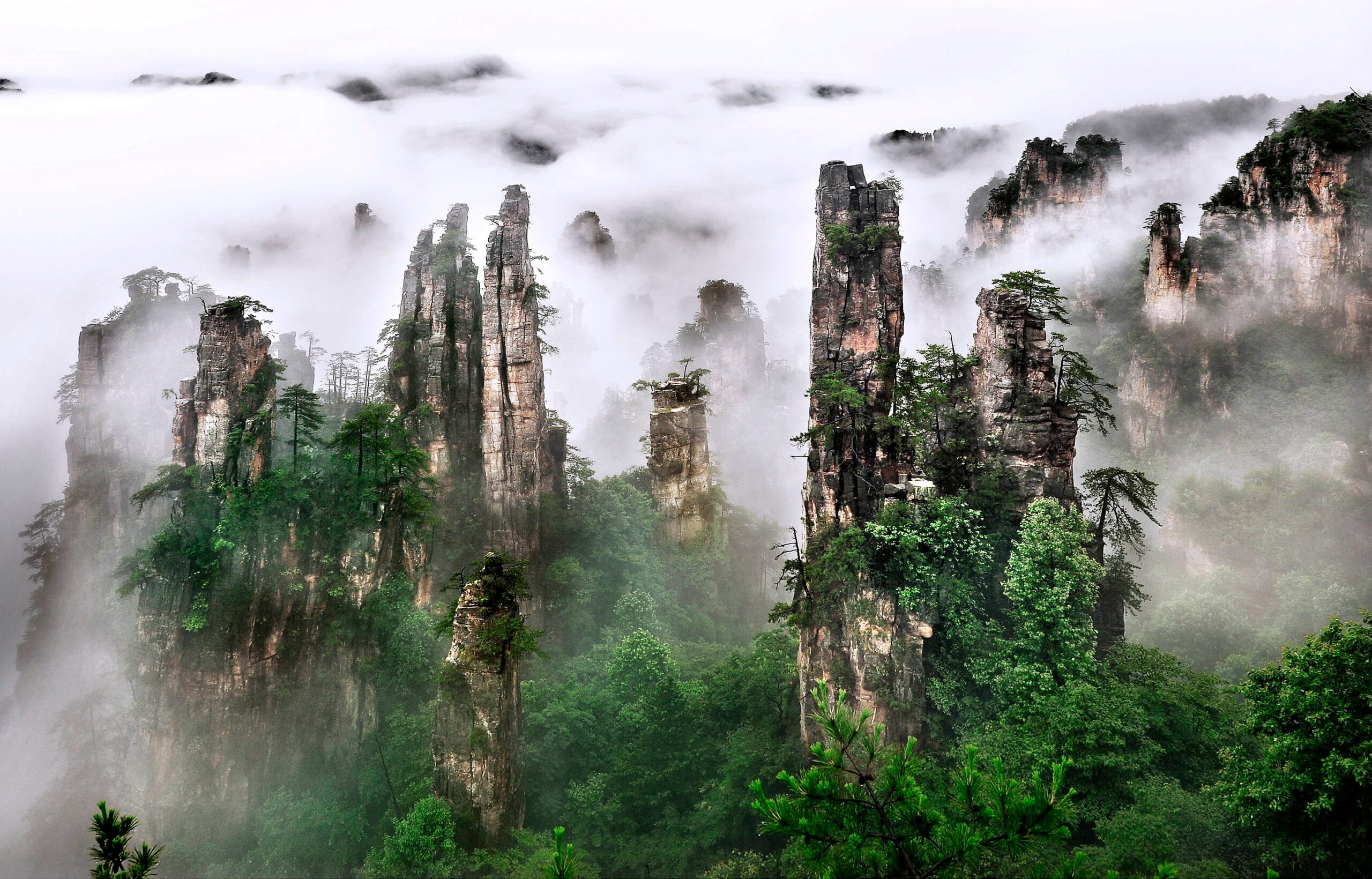
What makes Tianzi Mountain truly extraordinary isn’t just its history but its age. The quartz sandstone pillars we see today began forming 318 million years ago when this region lay beneath an ancient ocean. As the seabed lifted and water receded, sedimentary rocks slowly transformed into the quartz sandstone we see today.
Wind and water carved these formations over eons, creating the “forest of peaks” that defines Tianzi Mountain. The geological layer here reaches 500-600 meters thick—one of the world’s most dramatic examples of pillar karst topography. In 2010, this unique landscape was officially named “Zhangjiajie landform,” joining terms like “karst” and “geyser” as internationally recognized geological classifications.
Why Tianzi Mountain is Worth Your Visit
Beyond the Avatar Comparisons
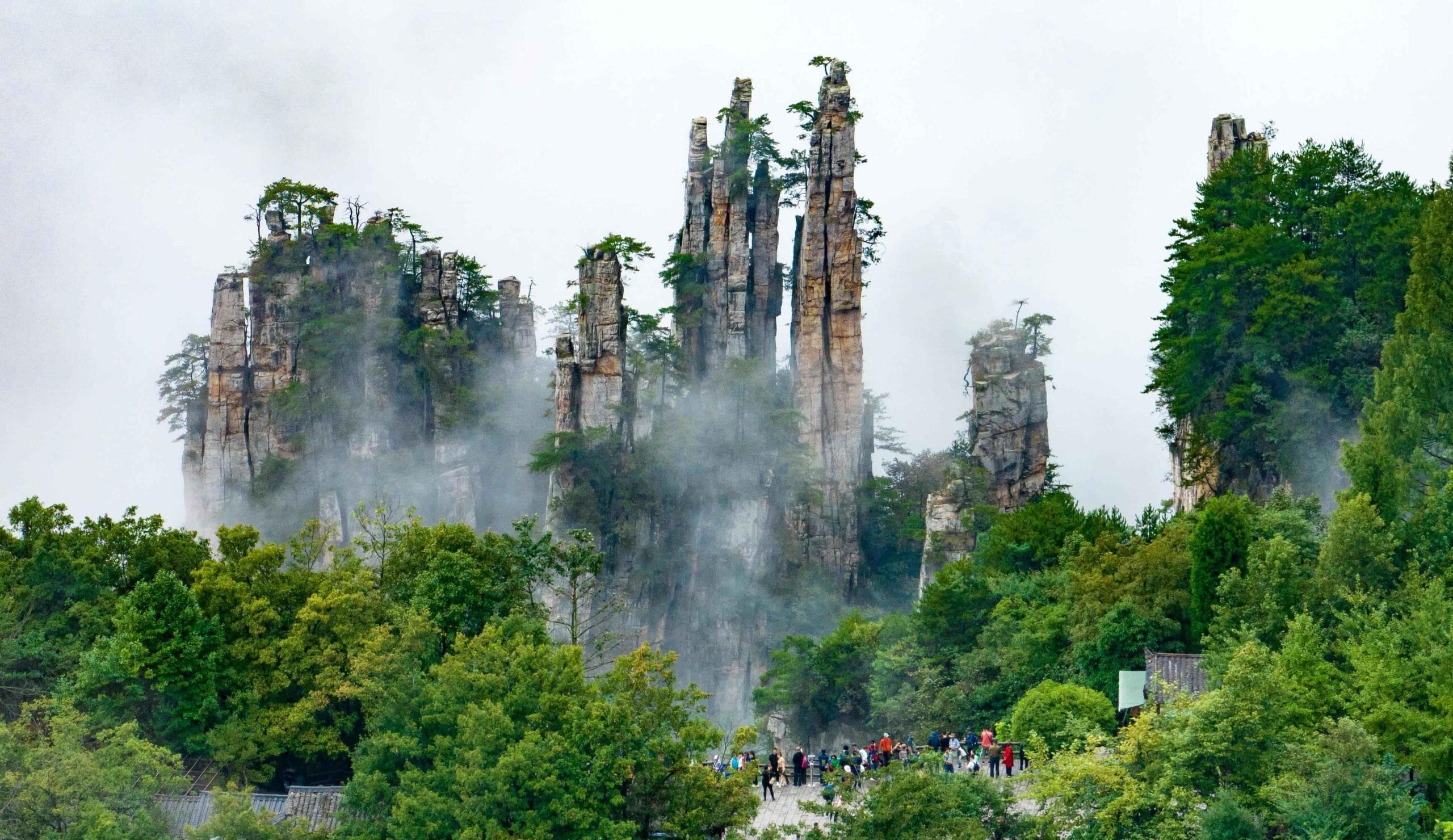
While neighboring Yuanjiajie claims fame as the “Avatar Mountain” inspiration, Tianzi Mountain offers something different: the highest vantage point in the entire Wulingyuan Scenic Area. From its summit, you command views of all four subsections—Zhangjiajie National Forest Park, Suoxiyu Valley, Yangjiajie, and Tianzi Mountain itself.
We’ve visited at different seasons and times of day. Here’s what makes this mountain uniquely compelling:
The Scale is Unmatched: While Yuanjiajie shows you the pillars up close, Tianzi Mountain lets you see them in context—thousands upon thousands extending to the horizon. On clear days, the view encompasses over 100 square kilometers of this prehistoric landscape.
The Four Wonders: Tianzi Mountain is celebrated for four seasonal phenomena that transform its appearance throughout the year. We’ll explore these in depth, but these natural spectacles—the Sea of Clouds, Moonlight Radiance, Sunrise Rays, and Winter Snow—create dramatically different experiences depending on when you visit.
Fewer Crowds on Hiking Trails: Most visitors stick to the cable car and main viewing platforms. Walk just 15 minutes down any hiking trail, and the crowds vanish. During our last visit in October 2024, we hiked the Southern Heavenly Gate route and encountered only three other groups in two hours.
Highlights and Must-See Attractions
Helong Park and the Bronze Statue

Your first stop after reaching the summit should be Helong Park, created in 1986 to commemorate Marshal He Long’s 90th birthday. He Long was a revolutionary military leader from nearby Sangzhi County who fought in the same mountains where Xiang Dakun once rebelled.
The park’s centerpiece is China’s largest bronze statue from the past century—a 6.5-meter figure of He Long astride his horse, gazing toward his hometown. What most visitors miss: walk to the western edge of the park for stunning views of the West Sea Stone Forest, especially beautiful in early morning light when mist fills the valleys below.
Imperial Writing Brush Peaks (Yubi Feng)
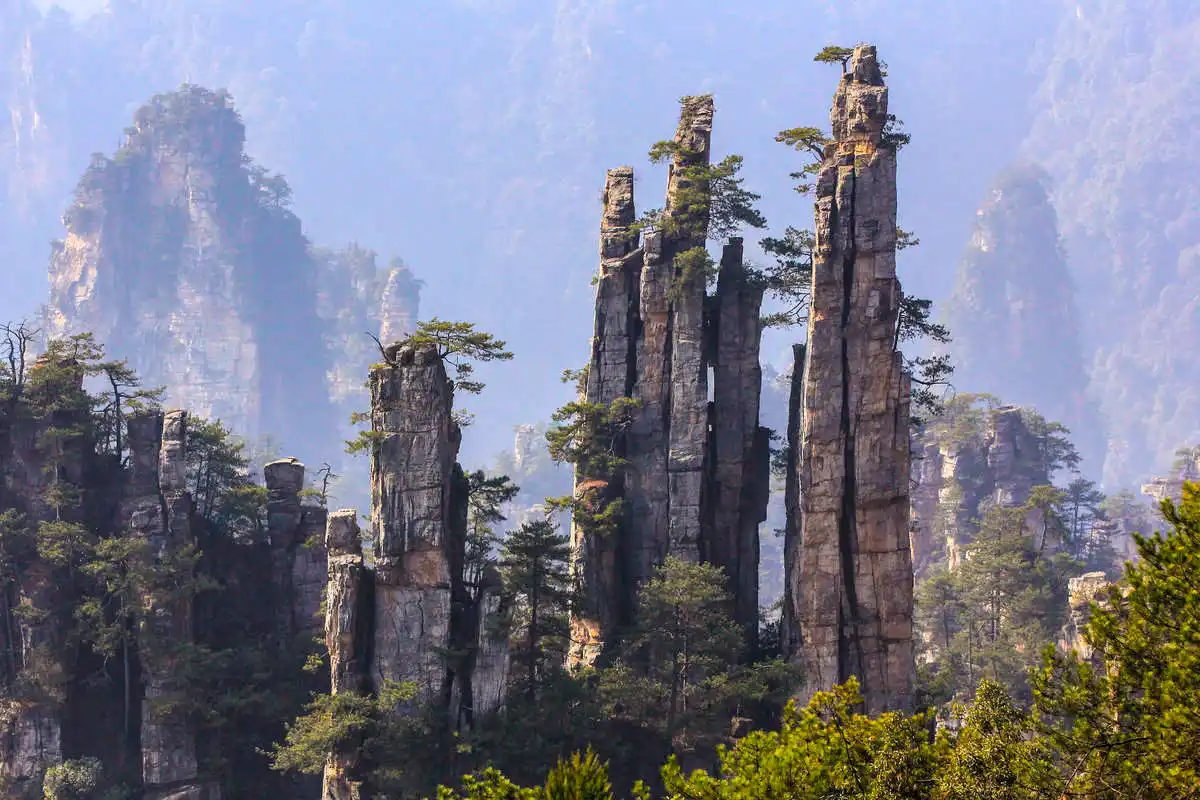
These iconic formations appear on every Wulingyuan ticket and promotional material, yet their story remains little known. Legend says these slender pillars—resembling traditional Chinese calligraphy brushes standing upright—are the petrified writing instruments of Xiang Dakun himself.
The best photography spot isn’t the main viewing platform where everyone congregates. Walk 100 meters past the crowded area to the secondary platform. You’ll find a cleaner angle without other tourists’ heads in your frame, and the morning side-lighting creates better definition on the peaks.
Fairy Offering Flowers (Xian Nv San Hua)
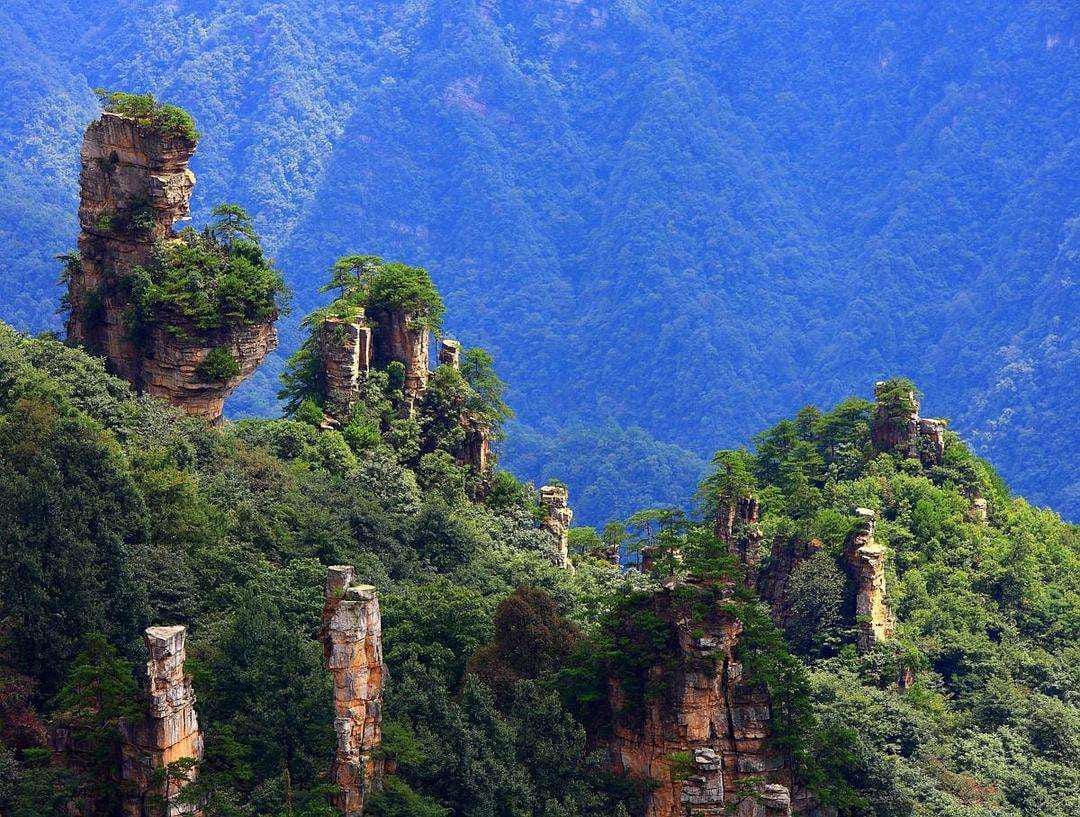
Opposite the Imperial Brush Peaks stands a formation of three-layered peaks. The central pillar resembles a young woman holding a flower basket, her stone “dress” adorned with pine trees that sway in mountain winds.
The legend behind this formation adds poignancy to Tianzi Mountain’s history: after Xiang Dakun’s death, a young woman who loved him searched these mountains for his body. She scattered flowers over the cliffs where he fell and was herself transformed into stone, forever mourning her lost love.
Tianzi Pavilion (Tian Zi Ge)

Located 200 meters east of Helong Park, this six-story traditional pavilion serves as Tianzi Mountain’s highest viewing deck. At 30 meters tall, it towers above the already elevated mountain platform.
Climb to the fifth floor for a 360-degree panorama—this is the single best viewpoint in the entire mountain area. The pavilion also houses exhibitions about Tujia culture and the mountain’s history, though labels are primarily in Chinese.
Insider tip: Most tourists photograph from the ground floor and leave. Climb to the top floor around 4:30 PM. You’ll have the upper levels nearly to yourself, and the late afternoon light paints the peaks in gold.
Fields in the Air (Kong Zhong Tian Yuan)
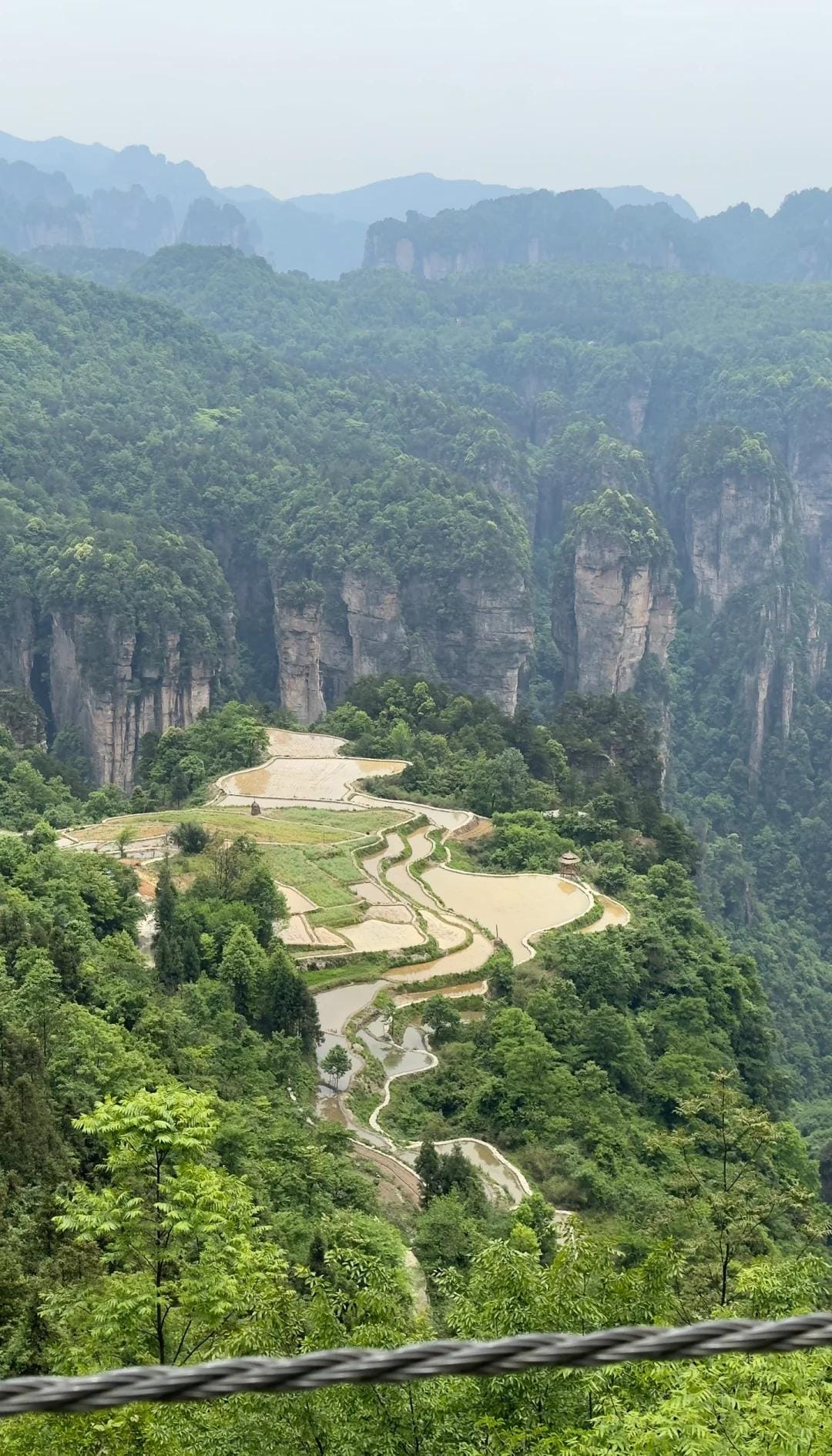
This might be the most surreal sight on Tianzi Mountain. At over 1,000 meters elevation, a 3-hectare terraced field somehow exists atop the mountain, surrounded on three sides by sheer cliffs and clouds.
The terraces aren’t ancient—local Tujia families have farmed this land for generations, carrying supplies up steep paths to cultivate corn and vegetables. During summer, the green terraces create a striking contrast against gray stone and white clouds. By October, golden harvest colors replace the green.
Getting there requires a 20-minute walk from Helong Park, but the trail is well-maintained and mostly flat. We recommend visiting before 10 AM when morning mist still lingers in the valleys below, creating an ethereal atmosphere.
Shentang Gulf (Shen Tang Wan)
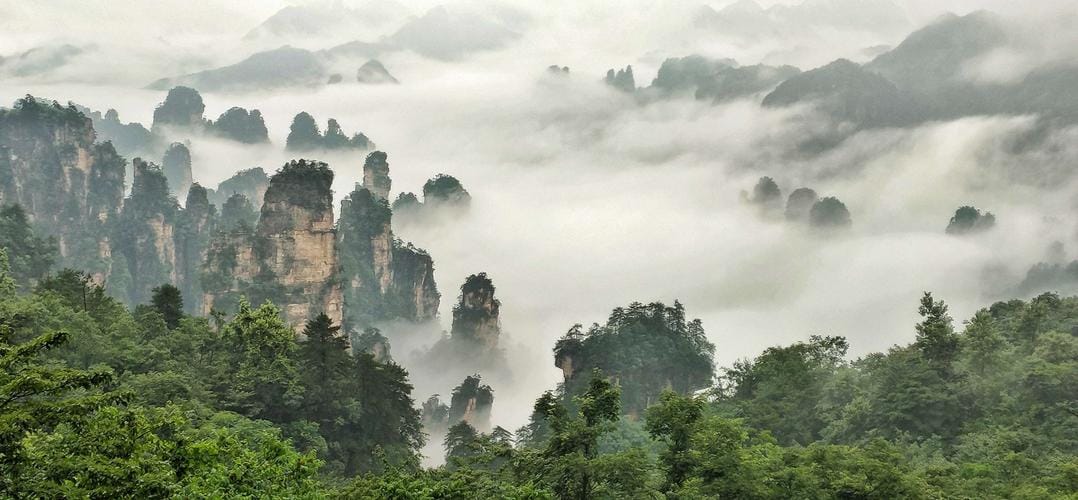
This forbidden gorge remains one of Tianzi Mountain’s most mysterious locations. Bottomless mists fill the gulf year-round, concealing depths no one has measured. According to legend, this is where Xiang Dakun made his final leap.
The viewing platform at Commanding Point requires a 30-minute walk from the main area, but it’s worth the effort. Strange phenomena occur here: visitors report hearing drums, gongs, and horse neighs echoing from the depths—sounds locals attribute to Xiang Dakun’s ghostly army still training in the mists below.
Safety note: The viewing platform is secure, but fog can roll in quickly. If visibility drops below 10 meters, return to the main area immediately.
West Sea Stone Forest
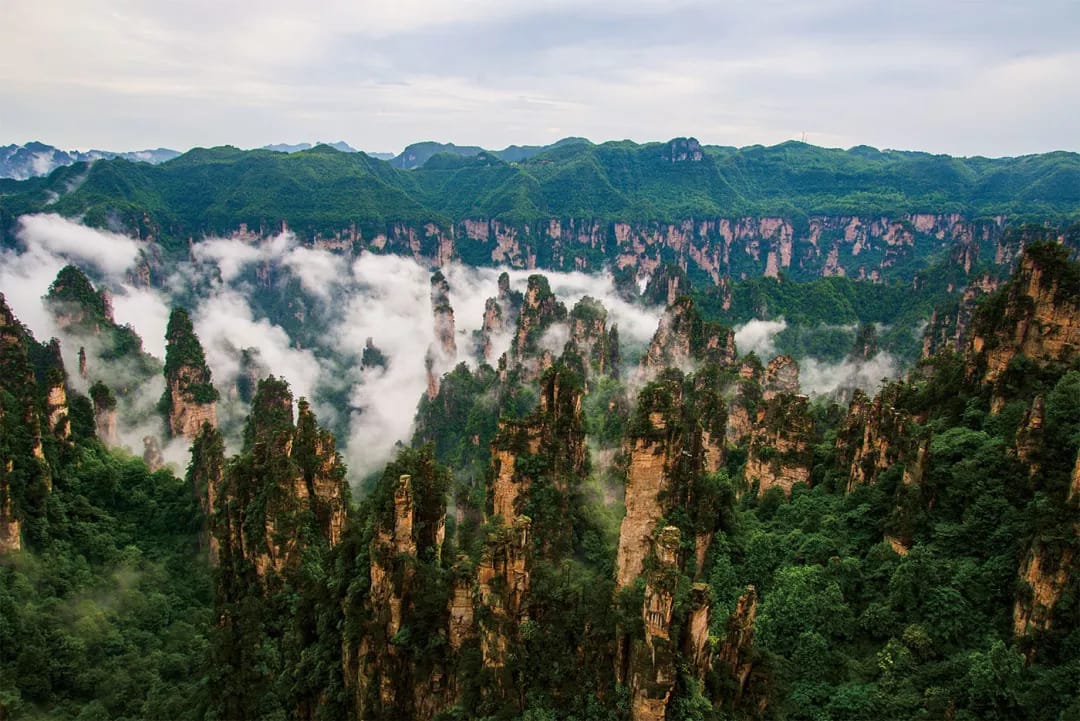
This vast “stone forest” extends west of Helong Park—a seemingly infinite array of peaks described by Chinese poets as “an expanded bonsai” or “miniature fairyland.” During our research, we found that most visitors photograph from the main platforms and miss the full spectacle.
Take the free shuttle bus from Helong Park to Daguantai (大观台) intersection. From there, a short trail leads to Emperor’s Throne viewpoint. On clear days, this perspective reveals the true scale of the stone forest—peaks extending in every direction, some standing alone, others clustered like forest groves made of rock instead of trees.
Special Experience: Witnessing the Four Wonders
1. Sea of Clouds

This is Tianzi Mountain’s most famous phenomenon and the one you’re most likely to experience. After rainfall, clouds and fog rise from the valleys below, surrounding the peaks in a roiling white ocean. Higher formations emerge like islands, while shorter peaks disappear completely beneath the cloud layer.
When to see it: March through October, especially after rain. Morning hours (6-9 AM) offer the best chance.
Best viewing location: Helong Park and Tianzi Pavilion upper floors provide the widest views. For a more intimate experience, walk to the Wo Long Range trail—you’ll be above the clouds with fewer people around.
What we learned: Don’t give up if it’s raining when you arrive. The sea of clouds typically forms as rain clears. During our April 2024 visit, we waited through 90 minutes of drizzle, and our patience was rewarded with spectacular cloud seas that lasted three hours.
2. Moonlight Radiance

Under full moon, Tianzi Mountain transforms into an otherworldly realm. Peaks cast long shadows, and silver moonlight creates an eerie, almost supernatural atmosphere.
When to see it: Clear nights around the full moon, any season.
Best viewing location: Tianzi Pavilion stays open until 9 PM during summer months (May-September).
Practical challenge: Most tourists leave by afternoon, and evening cable cars stop at 5:30 PM. To experience moonlight, you’d need to stay overnight at one of the rare mountaintop guesthouses or hike down in darkness—not recommended. We’ve only achieved this during our research stays with special arrangements.
3. Sunrise Rays

Sunrise from Tianzi Mountain ranks among Zhangjiajie’s most spectacular sights. As the sun breaks the eastern horizon, it paints the peaks in progressive waves of color—deep purple giving way to crimson, then orange, and finally golden light.
When to see it: Year-round, weather permitting. Spring and autumn offer the clearest skies.
Best viewing location: Upper cable car station and surrounding platforms. The sunrise point changes seasonally—ask staff where to position yourself for that specific date.
Reality check: To catch sunrise, you must either stay overnight on the mountain (expensive and limited options) or hike up in predawn darkness (challenging but feasible for fit hikers). The cable car doesn’t operate before 7:30 AM.
4. Winter Snow

After snowfall, Tianzi Mountain becomes a monochrome masterpiece. White snow covers the green pines atop each peak, creating stark contrasts against gray stone and dark valleys.
When to see it: Late December through February, following cold fronts. Snow typically lasts 2-5 days before melting.
Best viewing location: All main viewing platforms offer spectacular winter views.
What surprised us: Winter receives fewer than 15% of annual visitors. If you can handle the cold (temperatures drop to -5°C), you’ll have the mountain nearly to yourself. We visited in January 2024 and counted fewer than 100 other visitors across the entire day.
How to Visit Tianzi Mountain
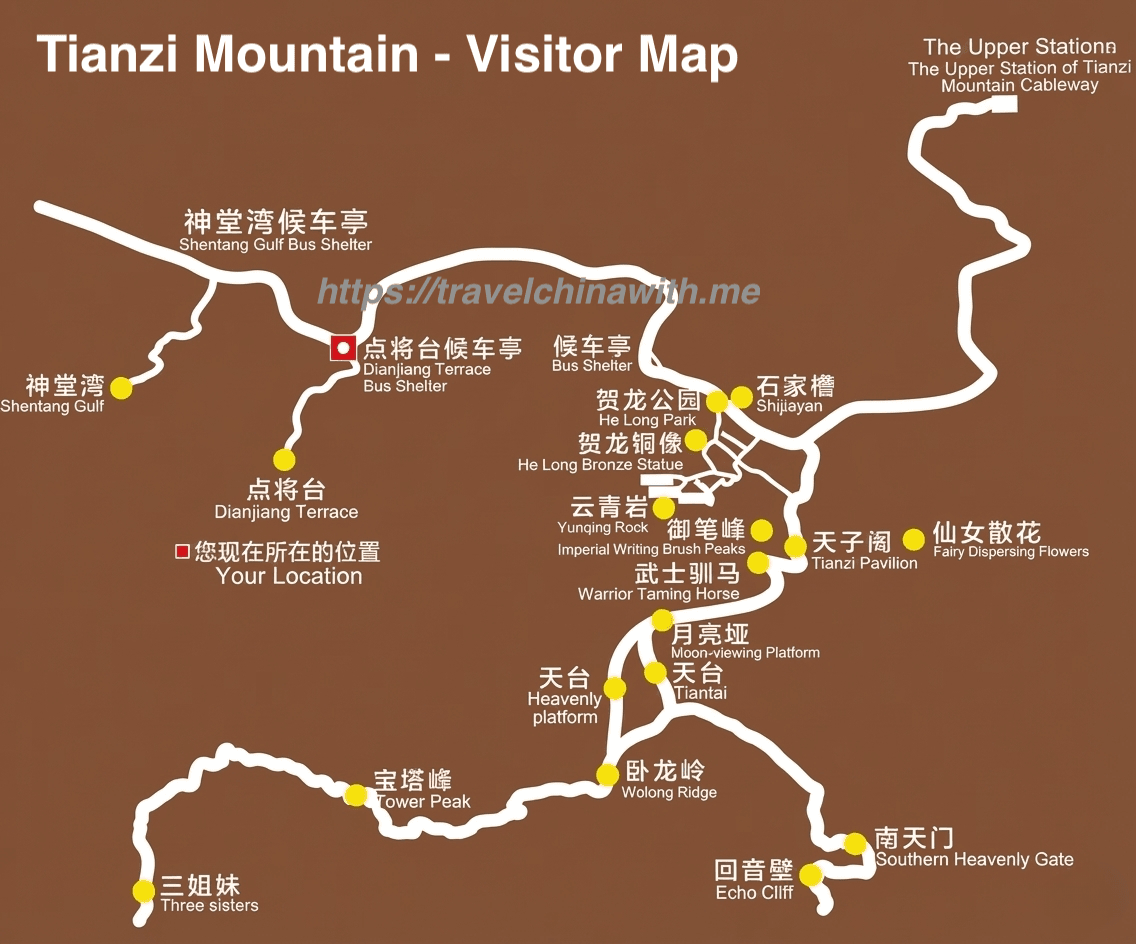
Three Main Routes
Cable Car Ascent (Most Popular)
Start at Wulingyuan East Gate. Take the free shuttle bus to Tianzi Mountain cable car lower station (10-minute ride). The cable car climbs 2,084 meters over 8-10 minutes, lifting you 692 vertical meters.
Advantages: Fast, scenic, saves energy for mountaintop exploration.
Disadvantages: Long queues during peak season (wait times can exceed 90 minutes on holidays), costs CNY 72 one-way.
Our recommendation: Arrive before 8 AM or after 2 PM to minimize wait times.
Ten-Mile Gallery Hiking Trail
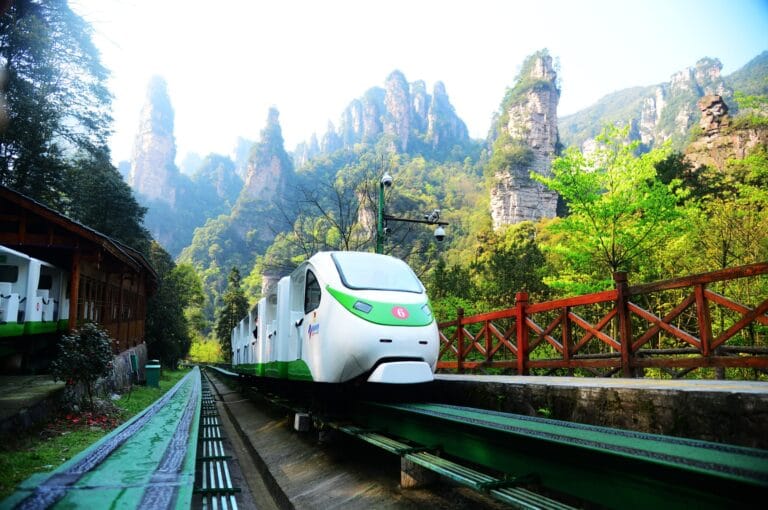
From Wulingyuan East Gate, take the shuttle bus to Ten-Mile Gallery intersection. Walk or take the sightseeing tram (CNY 38 one-way) through Ten-Mile Gallery to Three Sisters Peak. From there, stone stairs climb 4 kilometers to Tianzi Pavilion.
Advantages: Beautiful scenery along the entire route, excellent exercise, almost no crowds after the first kilometer.
Disadvantages: Steep in sections (approximately 2,900 steps), requires 2-3 hours of steady climbing.
Our recommendation: This is our favorite approach. Start early when it's cool, carry water, and take breaks at the numerous small viewing points along the way. You'll see formations that cable car riders completely miss.
Via Yuanjiajie
Take the Bailong Elevator (world’s tallest outdoor elevator) from the valley floor to Yuanjiajie. Explore Yuanjiajie‘s Avatar Mountains, then catch a free shuttle bus to Tianzi Mountain (40-minute ride).
Advantages: Combines two major scenic areas in one visit, uses the impressive Bailong Elevator.
Disadvantages: Elevator queues can be horrendous (2+ hours during peak times), shuttle bus adds travel time.
Our recommendation: Only choose this route if you want to see both Yuanjiajie and Tianzi Mountain in one day. Otherwise, visit them separately for a more relaxed experience.
Hiking Routes for Adventurers
For hikers seeking solitude and unique perspectives, two less-traveled routes offer rewarding alternatives:
Southern Heavenly Gate Descent (3 hours down)
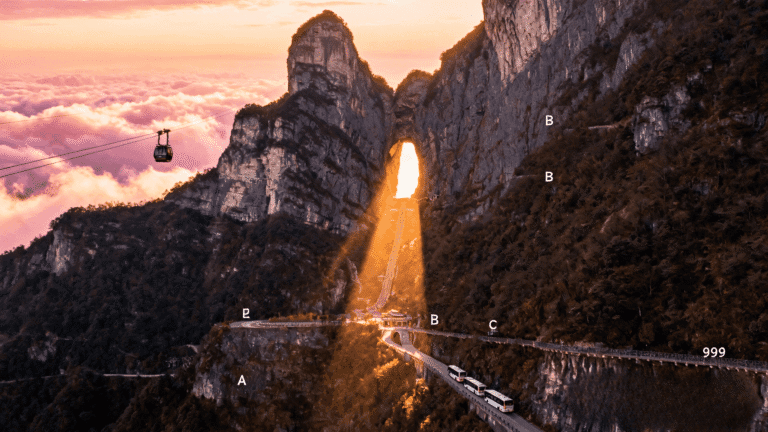
From Tianzi Pavilion, follow signs toward the Southern Heavenly Gate (Nan Tian Men). This ancient trail descends through a natural stone arch that once formed when erosion created a hole in a sandstone pillar, eventually causing the lower section to collapse.
The trail winds through forested sections with occasional dramatic cliff-edge views. Near the bottom, you’ll cross a picturesque arched bridge over a mountain stream. This route exits near the cable car lower station.
Trail condition: Well-maintained stone steps, but steep in sections. Not recommended in wet weather.
What makes it special: We encountered waterfalls, ancient trees, and complete solitude. The forest sections feel primeval—this is what Zhangjiajie looked like before tourism development.
Moon Pass to Sansuo Route (4 hours)
This trail descends from Tianzi Pavilion via Moon Pass, Heaven Platform, Wolong Range, and South Heaven Gate, ending at Sansuo shuttle bus station.
Trail condition: Mix of stairs and natural paths, moderately challenging.
Highlight: The Wolong Range section offers some of the mountain’s most dramatic views, with far fewer visitors than the main areas.
Important: This trail is less maintained than others. Bring a trail map or use GPS, as signage can be unclear in places.
Best Time to Visit
Seasonal Breakdown
Spring (March-May)
- Pros: Fresh green foliage, wildflowers blooming, sea of clouds frequent
- Cons: April-May sees increased domestic tourism
- Weather: 12-20°C, occasional rain
- Verdict: Excellent choice, especially early April
Summer (June-August)
- Pros: Lush vegetation, escape from valley heat (10°C cooler at summit)
- Cons: Peak tourism season, heavy afternoon rain common, humidity high
- Weather: 20-28°C, frequent storms
- Verdict: Visit only if heat doesn’t bother you; mornings are best
Autumn (September-November)
- Pros: Clear skies, comfortable temperatures, autumn foliage
- Cons: October holiday week (Oct 1-7) brings massive crowds
- Weather: 15-22°C, mostly sunny
- Verdict: Best overall season; visit mid-September or November to avoid crowds
Winter (December-February)
- Pros: Potential for snow wonders, minimal tourists, crystal-clear air
- Cons: Cold, some facilities reduced hours, cable car may close during heavy snow
- Weather: 0-10°C, can drop to -5°C
- Verdict: Adventurous choice for those seeking solitude and winter beauty
Ideal Time of Day
- 6:00-9:00 AM: Best for sunrise, sea of clouds, and empty trails. Cable car opens at 7:30 AM (8:00 AM in winter).
- 9:00 AM-2:00 PM: Busiest period. Crowds peak around 10-11 AM. If visiting during these hours, head immediately to lesser-known viewpoints like Emperor’s Throne.
- 2:00-5:00 PM: Crowds thin as tour groups depart. Afternoon light becomes warmer and more photogenic. Last cable car down is around 5:30 PM.
- Evening: Only feasible if staying overnight on the mountain. Summer sunset around 7:30 PM can be spectacular.
Planning Your Visit
Getting There from Zhangjiajie City
Option 1: Public Bus to Wulingyuan From Zhangjiajie Central Bus Station, frequent buses run to Wulingyuan District (40-minute journey, CNY 12 per person). Buses operate 6:30 AM-6:00 PM. From Wulingyuan town, it’s a 5-minute walk or short taxi ride to the East Gate entrance.
Option 2: Taxi/DiDi Direct taxi from Zhangjiajie city center to Tianzi Mountain cable car station costs CNY 80-120 (35km, 50-minute drive). Note that DiDi charges additional road tolls and parking fees.
Option 3: Via Zhangjiajie National Forest Park If staying near the park’s other entrances (South Gate, etc.), free shuttle buses connect all areas within Wulingyuan Scenic Area. Simply board any bus and tell the driver “Tianzi Shan” (天子山).
Opening Hours and Entry Time Slots
Park hours: 7:00 AM – 5:30 PM (last entry 5:00 PM)
Cable car hours: 7:30 AM – 5:30 PM (peak season), 8:00 AM – 5:00 PM (winter)
Time slot booking: Zhangjiajie National Forest Park uses a time slot system with six daily sessions: 7:30-8:00, 8:00-9:00, 9:00-10:00, 10:00-11:00, 11:00-12:00, 12:00-5:00 PM. Your first entry must be during your booked slot, but you can stay as long as you want afterward.
Tickets and Costs
Ticket Type | Peak Season (Mar-Nov) | Off Season (Dec-Feb) |
|---|---|---|
Park Entrance | CNY 227 (4-day pass) | CNY 115 (4-day pass) |
Tianzi Cable Car (one-way) | CNY 72 | CNY 72 |
Tianzi Cable Car (round-trip) | CNY 144 | CNY 144 |
Ten-Mile Gallery Tram (one-way) | CNY 38 | CNY 38 |
Combined Park + Transport Pass | CNY 445 | CNY 298 |
Discounts available:
- Youth 14-17 years: 50% off entrance
- Seniors 60-64 years: 50% off entrance
- Seniors 65+ years: CNY 33 special ticket
- Children under 120cm: Free entrance, half-price transport
Real-name booking: You must provide passport information when booking. Tickets are non-transferable.
Where to Eat
On Tianzi Mountain: Limited options near Helong Park include small restaurants serving noodles, rice dishes, and simple stir-fries (CNY 30-50 per meal). There’s even a McDonald’s near the cable car station—surprising but convenient.
Our advice: Prices are inflated on the mountain. Bring snacks and water, then eat properly after descending. If you must eat on the mountain, the small family-run restaurants near the hiking trails offer better prices and quality than the tourist restaurants near the main attractions.
Practical Travel Tips
Crowd Management Strategies
- Arrive before 8 AM: We cannot overstate this. The difference between 7:30 AM and 10:00 AM is dramatic—from peaceful enjoyment to shoulder-to-shoulder crowds.
- Avoid Chinese holidays: National Day (October 1-7), Spring Festival (late January/early February), and Labor Day (May 1-3) bring massive domestic tourism. Visitor numbers can exceed 50,000 daily during these periods.
- Use hiking trails as shortcuts: When shuttle buses are packed, walking between viewpoints takes the same time and provides better experiences.
- Reverse the flow: Most tourists go cable car up, bus to Yuanjiajie, Bailong Elevator down. Do the opposite: Elevator up to Yuanjiajie, bus to Tianzi Mountain, cable car or hike down.
Weather Preparation
Mountain weather changes rapidly. We’ve experienced all four seasons in a single day here. Check the forecast, but prepare for anything:
- Rain: Afternoon thunderstorms are common April-September. Morning visits minimize rain risk. Trails become slippery when wet—use handrails and walk carefully.
- Fog: Reduces visibility to near zero but creates dramatic atmospheres. If fog rolls in, wait 20-30 minutes—it often clears temporarily, giving you windows for photography and views.
- Wind: Strong at exposed viewpoints. Hold onto hats and secure cameras. The Tianzi Pavilion upper floors can be particularly windy.
- Temperature: Drops approximately 6°C from valley floor to summit. Bring a light jacket even on warm days.
Photography Tips
Best shots:
- Imperial Brush Peaks from the secondary platform (morning side-light)
- Sea of clouds from Tianzi Pavilion top floor (wide-angle essential)
- West Sea Stone Forest from Emperor’s Throne viewpoint (requires short hike)
- Silhouettes of peaks against sunset from Helong Park
Equipment: Wide-angle lens (16-35mm) essential for landscape scale. Telephoto (70-200mm) useful for isolating individual peaks. Polarizing filter reduces haze on clear days. Tripod helpful for low-light and long exposures, but challenging on crowded platforms.
Timing: Soft morning light (7-9 AM) and warm evening light (4-5:30 PM) create the most dramatic images. Harsh midday sun flattens the landscape—use this time for hiking between locations rather than photography.
Physical Considerations
Tianzi Mountain isn’t technically difficult, but it requires reasonable fitness:
If taking cable car: Mostly flat walking at the summit with well-maintained paths. Suitable for most fitness levels including families with children. The Tianzi Pavilion’s six stories of stairs are the main challenge.
If hiking up: Expect 2,900+ steps over 2-3 hours. This is genuine physical exertion. People with heart conditions, severe knee problems, or poor fitness should use the cable car.
If hiking down: Descent is actually harder on knees than ascent. Use hiking poles if you have them, take frequent breaks, and don’t rush.
Altitude: At 1,262 meters, altitude sickness is unlikely, but some people may feel slightly short of breath during exertion.
Real Traveler Reviews
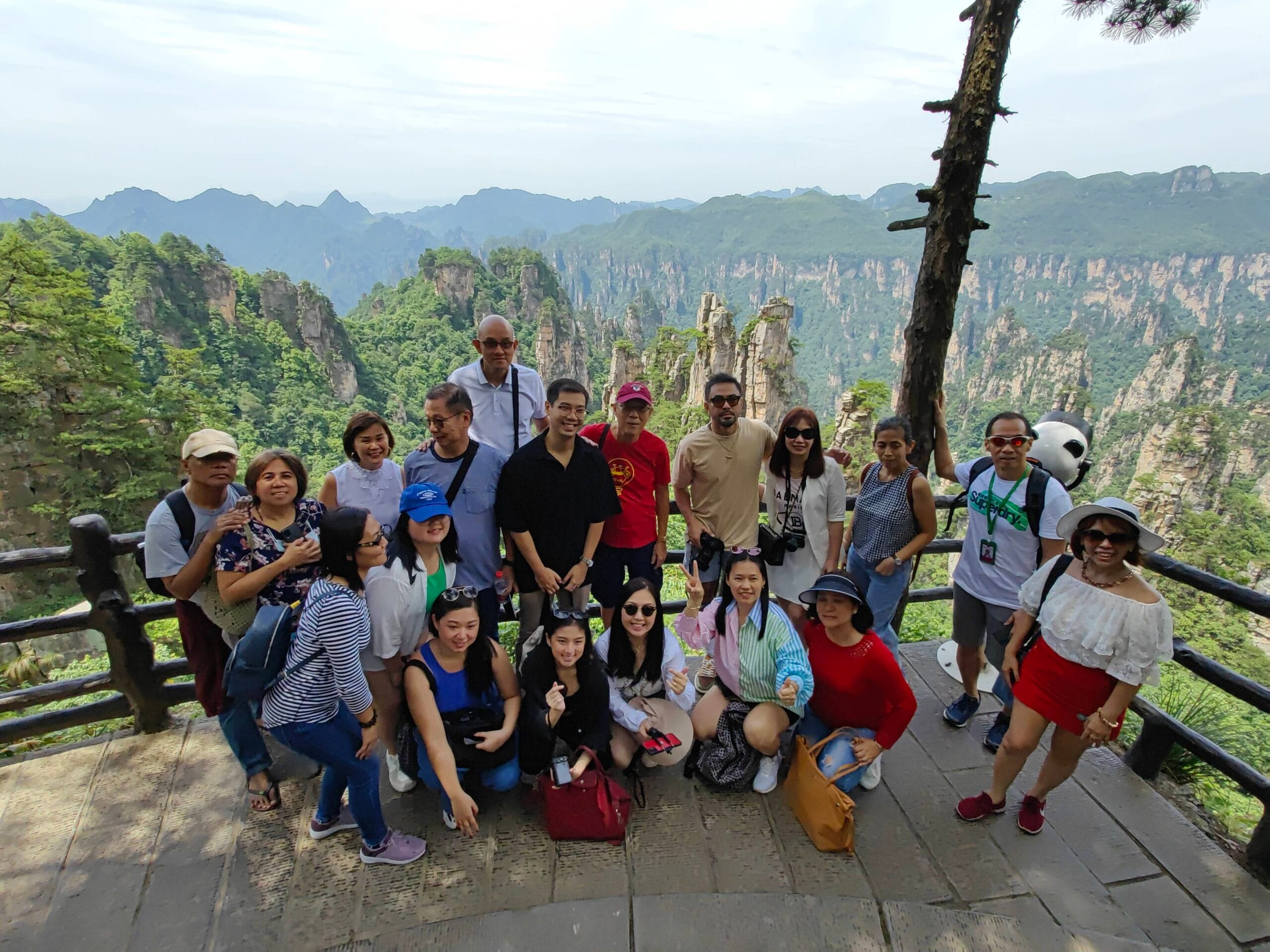
During our research, we collected unfiltered experiences from our guests who explored Tianzi Mountain this or last year:
Caroline, Netherlands (visited in April): “We hiked up the 2,900 steps in company with a local guide. The pace was reasonable with numerous stops to admire the rock formations. What surprised me were the monkeys—babies hanging onto their mothers, strengthening their arms for future climbing. Reached the summit in about 1:15 and the views justified every step. The walk back down via a different trail took us past formations that cable car users never see.“
Marcus, Germany (visited in October): “Absolutely worth hiking down instead of taking the cable car. We chose the Southern Heavenly Gate route and were rewarded with complete solitude after months of dealing with tourist crowds in China. The forest sections feel ancient and untouched. Only drawback: by the time we reached the bottom and heard the loudspeakers of tour guides, we felt genuinely sad to return to the commercialized areas.“
Priya, India (visited in July): “Visited during monsoon season—risky but worth it. Morning fog was so thick we couldn’t see anything. We almost left disappointed, but our guide insisted we wait. After 90 minutes, the fog lifted just enough to reveal the sea of clouds. For 2-3 hours, we witnessed one of the most spectacular natural phenomena I’ve ever seen. Butterflies were everywhere, adding magical touches to an already surreal landscape.“
Tom, USA (visited in March): “The maps are confusing—even our Lonely Planet guide didn’t make the layout clear. Tianzi Shan refers to the high plateau area within the park. South and west edges are where the famous pillars stand. Most tourists cluster at the cable car area. Our advice: walk just 15 minutes in any direction and you’ll escape the crowds completely. We hiked from Tianzi Mountain down to a bus stop and had the trail almost entirely to ourselves.“
Sophie, Australia (visited in January): “Winter visit was a gamble that paid off spectacularly. Snow covered everything—temperatures hit -3°C, but we saw Tianzi Mountain in white splendor with fewer than 50 other visitors all day. The contrast of white snow on green pines against gray stone was hauntingly beautiful. Bring serious cold-weather gear if attempting this.“
Frequently Asked Questions
How long should I spend at Tianzi Mountain?
Minimum 3-4 hours if using the cable car up and down. This allows time for main viewpoints and Helong Park. For a relaxed visit including hiking trails and secondary viewpoints, plan 5-6 hours. Serious hikers combining ascent and descent on foot need a full day.
Can I visit Tianzi Mountain and Yuanjiajie in one day?
Yes, this is common and recommended. Start early (7:30 AM), take Bailong Elevator to Yuanjiajie (2 hours exploring), shuttle bus to Tianzi Mountain (2-3 hours exploring), then cable car down. Total time: 6-8 hours. Reverse this route to start at Tianzi Mountain.
Is the cable car safe?
Absolutely. The Tianzi Mountain cable car is Austrian-made by Doppelmayr, installed in 1997 and upgraded in 2016. It has transported millions of visitors without serious incident. Each cabin holds 8 passengers and travels at 5 meters/second with emergency backup systems. However, it closes during severe weather (heavy rain, strong winds, thunderstorms).
What if it rains during my visit?
Don’t cancel immediately. Light rain often produces the best conditions for seeing the sea of clouds phenomenon. Heavy rain reduces visibility and makes trails slippery—this is when the cable car is preferable to hiking. Check the forecast: isolated afternoon thunderstorms are common and usually pass quickly. Persistent all-day rain is less common.
Can elderly or less mobile visitors enjoy Tianzi Mountain?
Yes, with the cable car. The summit area has paved paths and railings. Wheelchairs can access main viewing platforms near the cable car station, though Tianzi Pavilion’s stairs are not wheelchair-accessible. Elderly visitors should use the cable car rather than hiking—the stairs are genuinely challenging.
How crowded does it get?
Peak season weekends and holidays can see 20,000+ daily visitors at Tianzi Mountain alone. Cable car lines may reach 90-120 minute waits. However, crowds concentrate at main viewpoints—walk 10-15 minutes on any trail and you’ll encounter few people. Weekdays outside holidays are significantly quieter. Winter sees minimal crowds but reduced services.
Should I book tickets in advance?
Yes, especially during peak seasons (April-May, September-October). The park uses a real-name booking system requiring passport information. Popular time slots (8-10 AM) sell out days in advance during busy periods. Book 7-14 days ahead during peak season, 3-5 days ahead during normal times. Off-season walk-up tickets are usually available.
What makes Tianzi Mountain different from Yuanjiajie?
Yuanjiajie shows you the famous “Avatar Mountains” up close—you walk among the pillars. Tianzi Mountain gives you the highest panoramic viewpoint—you look down on thousands of peaks from above. Think of Yuanjiajie as the forest experience, Tianzi Mountain as the summit vista. Both are worth visiting for different perspectives.
Are there hotels on Tianzi Mountain?
Very few and basic. A handful of guesthouses exist near the summit, mainly serving Chinese tour groups. Most international visitors stay in Wulingyuan town (20-minute drive) or Zhangjiajie city (50-minute drive), visiting the mountain as a day trip.
What should I do if the cable car breaks down?
Cable cars have backup systems and rarely stop for long. If you’re caught mid-ride during a stoppage, remain calm—cabin staff can communicate with ground control. In the unlikely event of extended closure, park staff organize shuttle buses around the mountain or refund tickets. This is extremely rare—we’ve never experienced or heard of significant delays during our research visits.
A Personal Note from Our Team

After years researching Zhangjiajie and more than a dozen visits to Tianzi Mountain specifically, we still discover something new each time. Last autumn, we watched mist spirits (what locals call the small whirlwinds of fog) dance between the peaks at dawn. Last winter, we photographed icicles hanging from the Imperial Brush Peaks—formations that exist for perhaps five days per year.
What strikes us most about Tianzi Mountain isn’t just its geological magnificence or historical resonance. It’s the fact that despite 318 million years of existence and 640 years bearing its current name, this mountain still surprises us. Stand at the right spot at sunrise, and you’ll understand why Xiang Dakun chose this place for his rebellion. From these heights, you truly feel like the “Son of Heaven”—sovereign over an impossible landscape that seems to exist at the boundary between earth and sky.
We created this guide to help you experience Tianzi Mountain beyond the typical tour bus stops and selfie platforms. The mountain deserves more than a 90-minute cable car visit. Whether you choose to hike its trails, wait for the sea of clouds, or simply sit quietly on a lesser-known viewing platform and contemplate peaks that watched dinosaurs roam—we hope you’ll leave with the same sense of wonder that brings us back again and again.
The Tujia people have a saying: “If you haven’t been to Tianzi Mountain, you haven’t truly seen Wulingyuan.” After countless visits, we finally understand what they mean. This isn’t about checking off a tourist attraction—it’s about standing somewhere that fundamentally changes how you think about landscape and time.
We hope this guide helps you not just visit Tianzi Mountain, but truly experience it. Share your own discoveries with us—every traveler sees something unique in these ancient stones.