

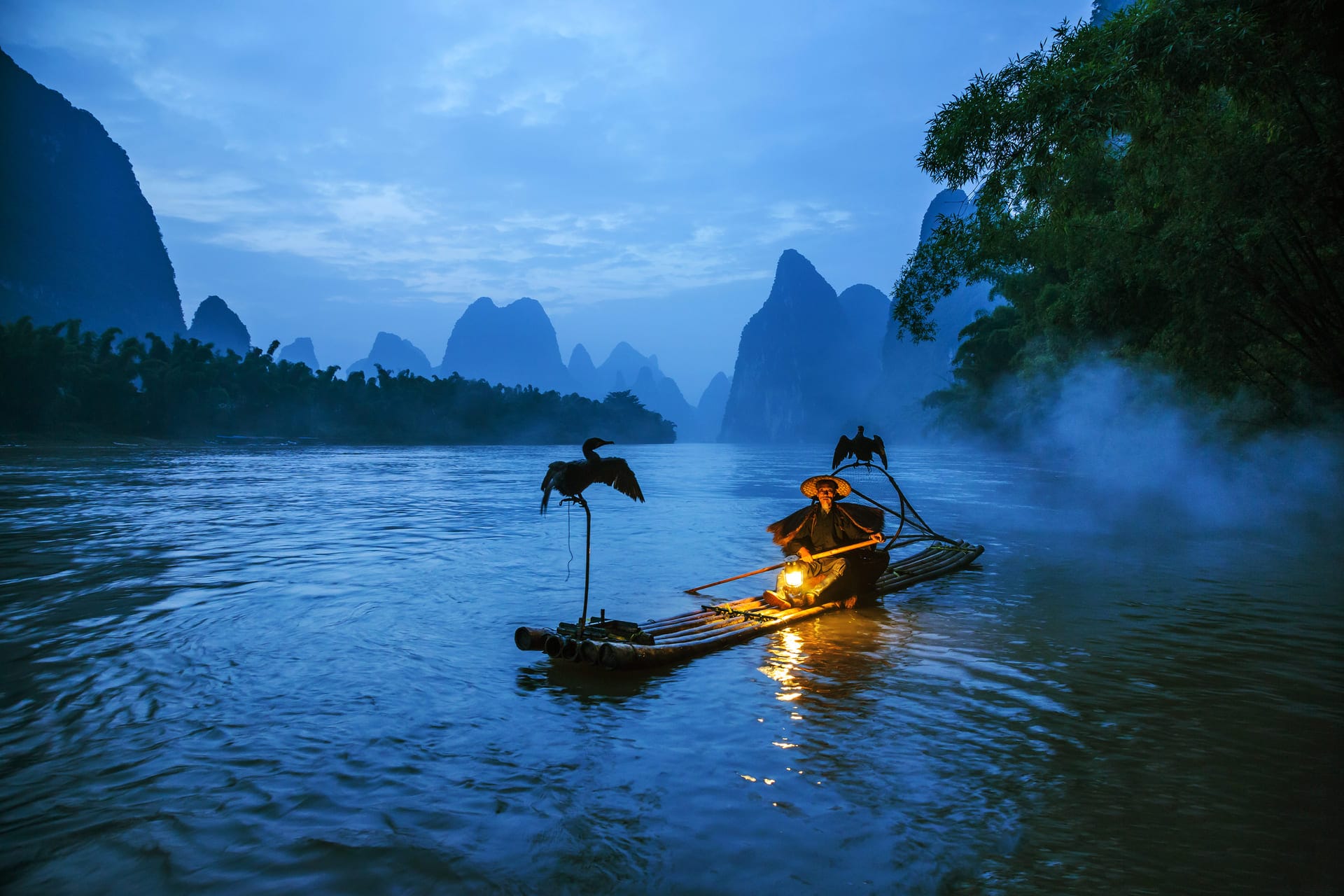
Li River
The Li River is not just water. It is a painting that never dries.
Welcome to the definitive guide to China’s most iconic natural wonder. If you are reading this, you are likely planning a trip to Guilin and Yangshuo. You have seen the photos. You know the ones: misty peaks rising from the water, fishermen on bamboo rafts, and green hills that look impossible.
We are Travel China With Me. We have navigated these waters hundreds of times. We have taken the luxury cruises. We have hiked the muddy banks. We have haggled with raft masters.
This guide is different. We won’t just tell you “it’s beautiful.” We will tell you exactly which boat to book. We will tell you where to sit for the best photos. We will explain why the bamboo rafts are loud, but why you might love them anyway.
Here is everything you need to know about the Li River for your upcoming 2026 adventure.
Quick Facts
Location: Guangxi Zhuang Autonomous Region, South China
Route: Flows from Guilin (North) to Yangshuo (South)
Length: Approx. 83 kilometers (52 miles)
UNESCO Status: Part of South China Karst World Heritage Site
Famous View: The 20 RMB Banknote scenery (Yellow Cloth Shoal)
Best Activity: River Cruise (Relaxing) or Motorized Bamboo Raft (Adventure)
Time Required: 4 to 5 hours (Cruise) or 1 to 2 hours (Raft)
Departure Piers: Mopanshan (3-Star Boat) or Zhujiang (4-Star Boat)
Table of Contents
Why the Li River is Worth the Hype

Travelers often ask us if the Li River is a tourist trap. It is certainly popular. Millions visit every year. But is it a trap? No.
The geology here is unique. It is called Karst topography. Millions of years ago, this was an ocean floor. The water receded. Acidic rain eroded the limestone bedrock. It carved out the caves and left behind these needle-like peaks.
Nowhere else on Earth looks quite like this. It inspired the “Shan Shui” style of Chinese painting. “Shan” means mountain. “Shui” means water. When you drift down the river, you understand why ancient poets wrote so many verses here. The scenery changes with every bend. It feels ancient. It feels otherworldly.
Even with the crowds, the scale of the landscape makes you feel small. It commands silence. It commands respect.
The “Ink Painting” Effect
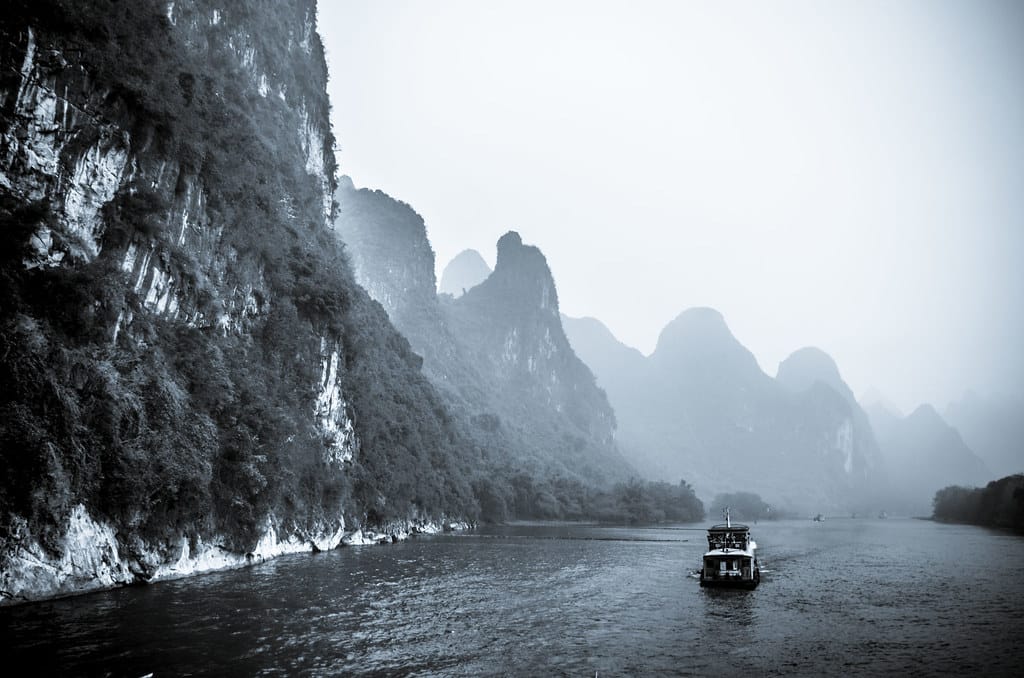
You will hear this term often. It refers to the atmospheric effect when it rains or is cloudy. The peaks fade into layers of grey and blue. It looks exactly like a traditional Chinese ink wash painting. This is why many photographers actually prefer “bad” weather here.
A Journey Through History
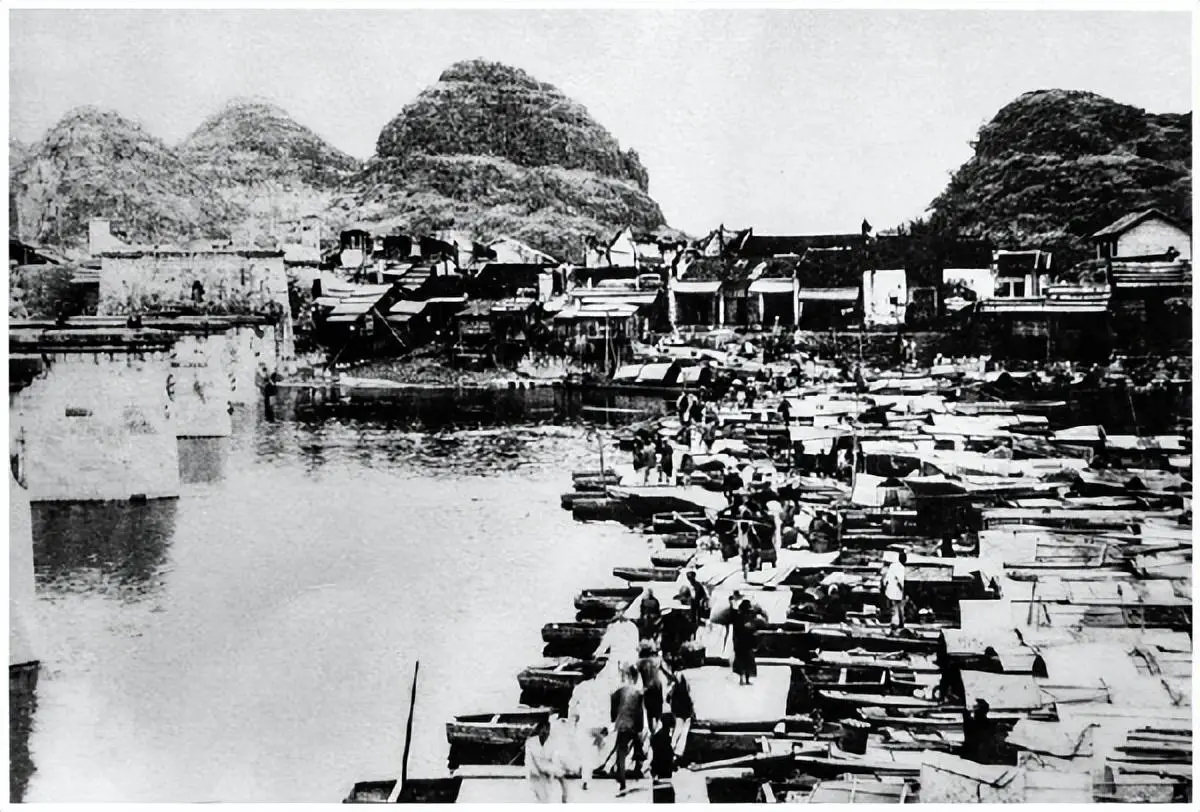
The Li River has been a lifeline for over 2,000 years. It is more than just scenery; it is a historical highway.
During the Qin Dynasty (221–207 BC), the First Emperor ordered the construction of the Lingqu Canal. This was an engineering marvel. It connected the Li River to the Xiang River.
Why does this matter? It linked the Yangtze River system in the north to the Pearl River system in the south. Suddenly, the Li River was a strategic military route. It allowed supplies to reach the deep south. It unified China.
For centuries, it was a trade highway. Salt, cloth, and iron moved upstream. Rice and timber moved downstream. Along the banks, villages like Xingping and Daxu flourished. You can still see the ancient flagstone streets today. They were built for commerce. Now, they are preserved for history. Walking through them feels like stepping back into the Ming Dynasty.
The Three Ways to See the Li River
This is the most important decision you will make. How do you want to experience the river?
You have three main options. You can take a large cruise boat. You can take a small bamboo raft. You can hike the banks.
Each has pros and cons. We break them down below based on our real experience.
Option 1: The Classic Cruise (Comfort & Ease)
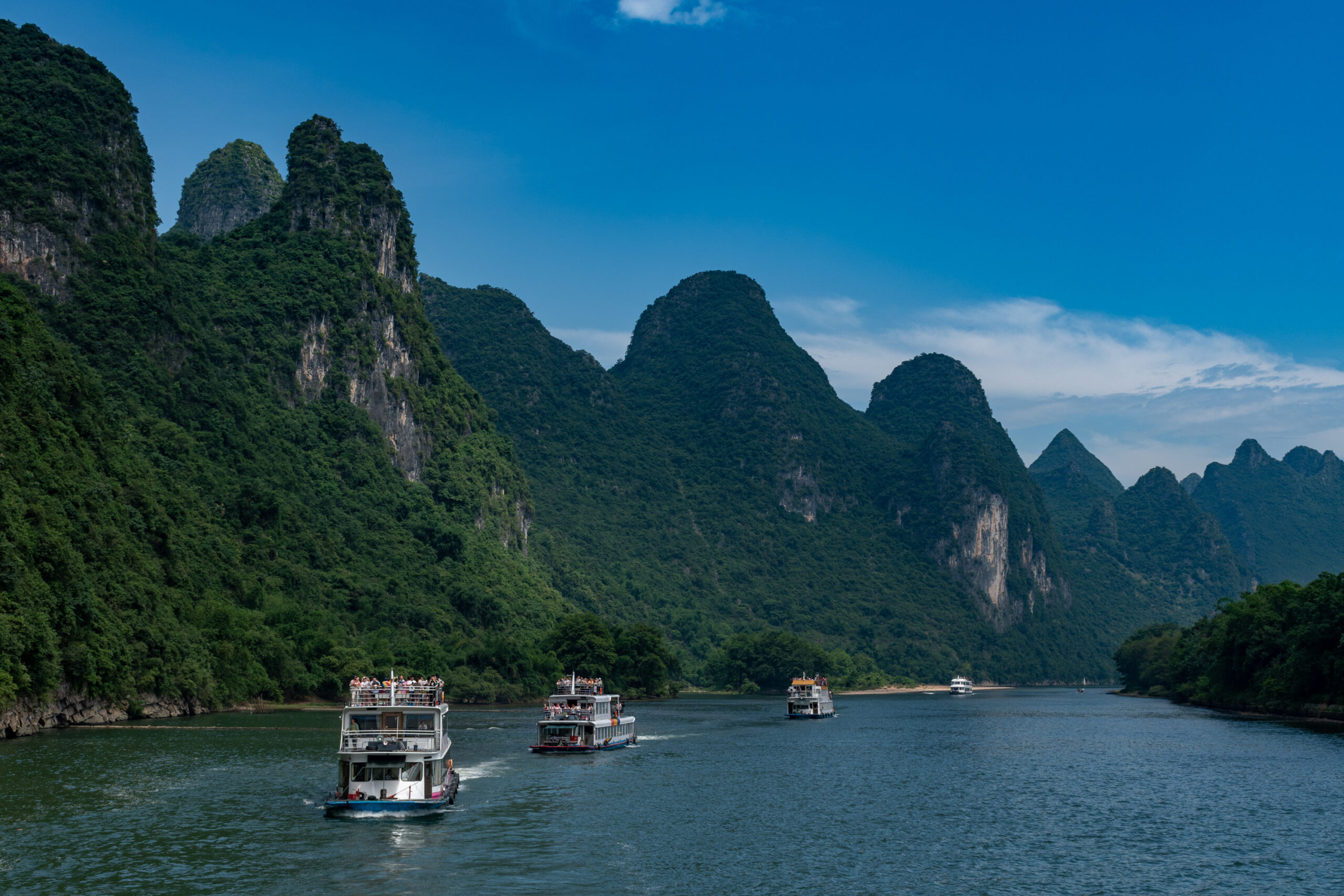
This is the choice for 90% of first-time visitors. It is safe, reliable, and covers the longest distance.
The cruises travel one-way from Guilin to Yangshuo. You board in the morning (usually between 9:00 AM and 9:40 AM). You arrive in the early afternoon. The journey covers about 50 miles. It takes roughly 4 to 4.5 hours depending on the water levels.
There are two main classes of boats available for daily booking: 3-Star and 4-Star.
Comparison: 3-Star vs. 4-Star Cruise Boats
Choosing the right boat makes or breaks your experience. Here is the honest breakdown.
Feature | 3-Star Cruise (Standard) | 4-Star Cruise (Deluxe) |
|---|---|---|
Best For | Budget travelers, Backpackers | Families, Couples, Photography enthusiasts |
Price (Approx.) | $60 – $80 USD | $90 – $120 USD |
Crowd Level | High (100-150 passengers) | Medium (70-80 passengers) |
Seat Comfort | Tight rows, airline-style seating | Spacious, tables for 4-6 people, more legroom |
Lunch Quality | Simple Box Lunch (Rice + Chicken/Veg) | Buffet Lunch (Chinese & Western options, fruit, dessert) |
Toilets | Mostly Squat Toilets (Bring paper!) | Western Sit-down Toilets (Cleaner) |
Departure Pier | Mopanshan Pier | Zhujiang Pier |
Our Verdict | Good if you just want to see the view and save money. | Worth the upgrade. The extra comfort and better food are essential for a 4-hour trip. |
Crucial Advice on Piers: Pay attention to your ticket. Mopanshan and Zhujiang are different piers. They are about 30km (45 minutes) from downtown Guilin. You cannot walk there. You need a taxi or a pre-booked transfer. If you go to the wrong pier, you will miss your boat. The boats do not wait.
DIG DEEPER: Guilin Li River Cruise: 3-Star vs 4-Star – An Expert Guide
Is there a 5-Star Cruise?
Yes, but it is rare. It only runs on specific dates or for private charters. It is very expensive ($230+ USD). Unless you are looking for ultra-luxury, the 4-star boat is sufficient.
Option 2: The “Bamboo” Raft (Adventure & Thrills)
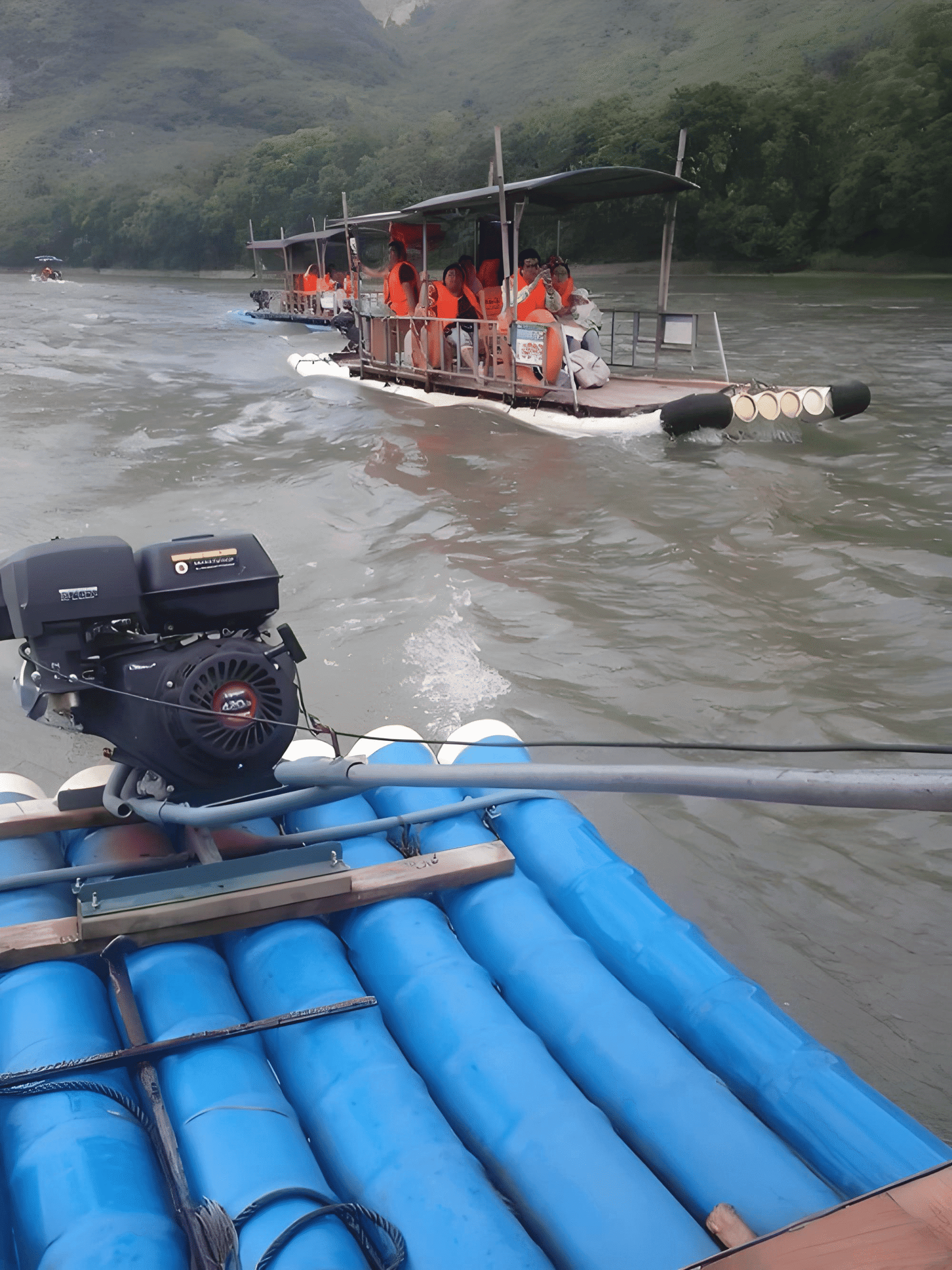
Do you want to get closer to the water? Choose the raft.
But first, a reality check. These are not the silent, hand-poled rafts of the Yulong River. These are made of PVC pipe that looks like bamboo. They have loud diesel motors attached to the back.
The Noise Factor
We must be honest. The motors are noisy. It sounds like a lawnmower. If you want silence, this is not it. However, the thrill is unmatched. You are inches above the water. You feel the spray. You see the mountains tower directly above you.
The Routes
Rafts do not go the whole way from Guilin to Yangshuo. They operate on specific scenic sections.
- Yangdi to Nine Horse Fresco Hill: This is a popular one-way route. You drift through the most dramatic peaks. It takes about 1 hour.
- Xingping to Nine Horse Fresco Hill: This is a round-trip loop. It is easier to access if you are already in Yangshuo. It takes about 50 minutes.
Strict Restrictions (Updated for 2026)
The government is strictly enforcing safety rules on the Li River rafts.
- Height: Children must be taller than 1.2 meters (about 4 feet).
- Age: No children under 7 years old (usually). No seniors over 70 years old.
- Pregnancy: Pregnant women are not allowed.
They check IDs. They check heights. Do not try to sneak a small child on. You will be turned away at the dock. If you have small kids, take the big cruise boat.
At a Glance: Big Cruise vs. Motorized Bamboo Raft
Do you want comfort or adventure?
| Feature | The Big Cruise (3/4 Star) | The Bamboo Raft |
| Route | Full Route (Guilin to Yangshuo, ~4 hours) | Short Highlights Only (Yangdi/Xingping section, ~1 hour) |
| Adventure Level | Low (Relaxing, Indoor A/C option) | High (Open air, close to water, spray) |
| Noise Level | Quiet engine hum | Loud diesel motor noise (Earplugs recommended) |
| Luggage | Allowed (Carry-on suitcases ok) | Not Allowed (Must use luggage transfer service) |
| Age/Height Rules | All ages welcome | Strict: No kids <1.2m, No seniors >70, No pregnancy |
| Weather Impact | Runs in rain, A/C for heat | You get wet if it rains; hot sun exposure |
Option 3: Hiking (Nature & Solitude)
For the active traveler, hiking is magical.
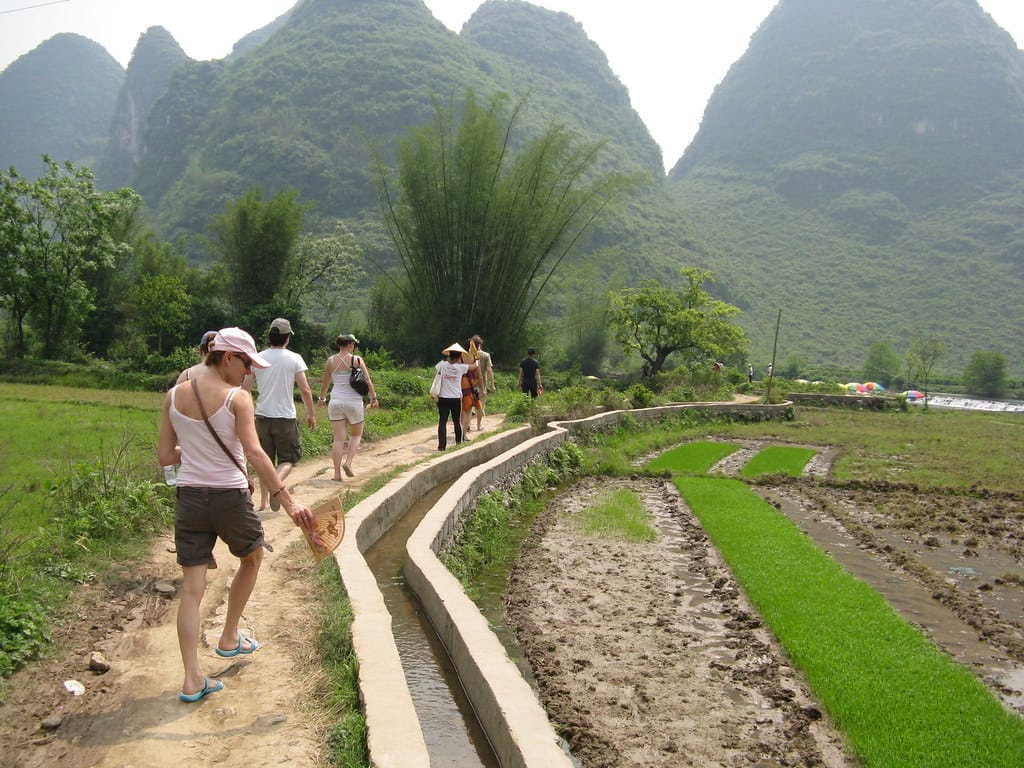
The trail runs from Yangdi to Xingping. It is about 12 to 15 kilometers (7-9 miles). You walk along the riverbank. You walk through pomelo orchards. You walk through quiet villages.
The Ferry Challenge
You cannot walk the whole way without crossing the river. The trail switches banks. You must take local ferries.
- Crossing 1: Yangdi to the other side.
- Crossing 2: Langshi Village area.
- Crossing 3: Near Nine Horse Fresco Hill.
Warning: Sometimes ferries stop running if the water is too high or if the local government changes regulations. Always check with your hotel or a local guide before you start. Bring cash (RMB) for the ferry fees (usually 10-15 RMB per crossing).
We love the hike because it is quiet. You escape the motor noise of the rafts once you get away from the main channel. You see local life. You see farmers tending their water buffalo.
Key Highlights Along the Li River
Whether you cruise or hike, these are the landmarks to watch for. The guides on the boat will point them out, often with laser pointers.
1. Nine Horse Fresco Hill (Jiu Ma Hua Shan)
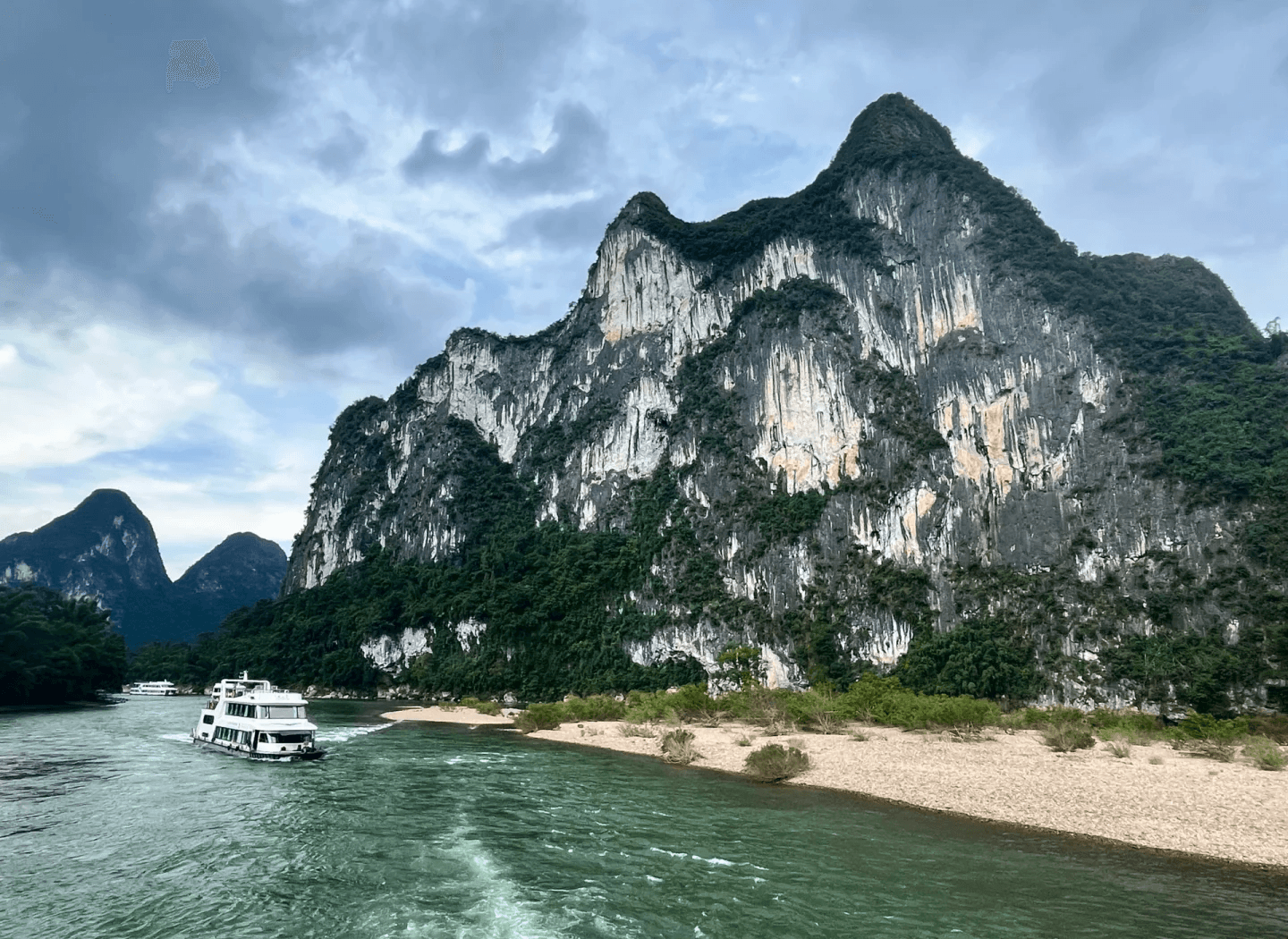
This is a massive cliff face. It rises sheer from the water. The rock is weathered in black, white, and grey colors. Legend says you can see nine horses hidden in the rock patterns.
It is said that a monkey god scared the horses from heaven. They ran down to the river to drink. They turned to stone when they were found.
The Challenge: Can you spot them? Most people see three or four. Only the lucky (or the very imaginative) see nine. Legend says if you see all nine, you will become a Prime Minister!
2. The Yellow Cloth Shoal
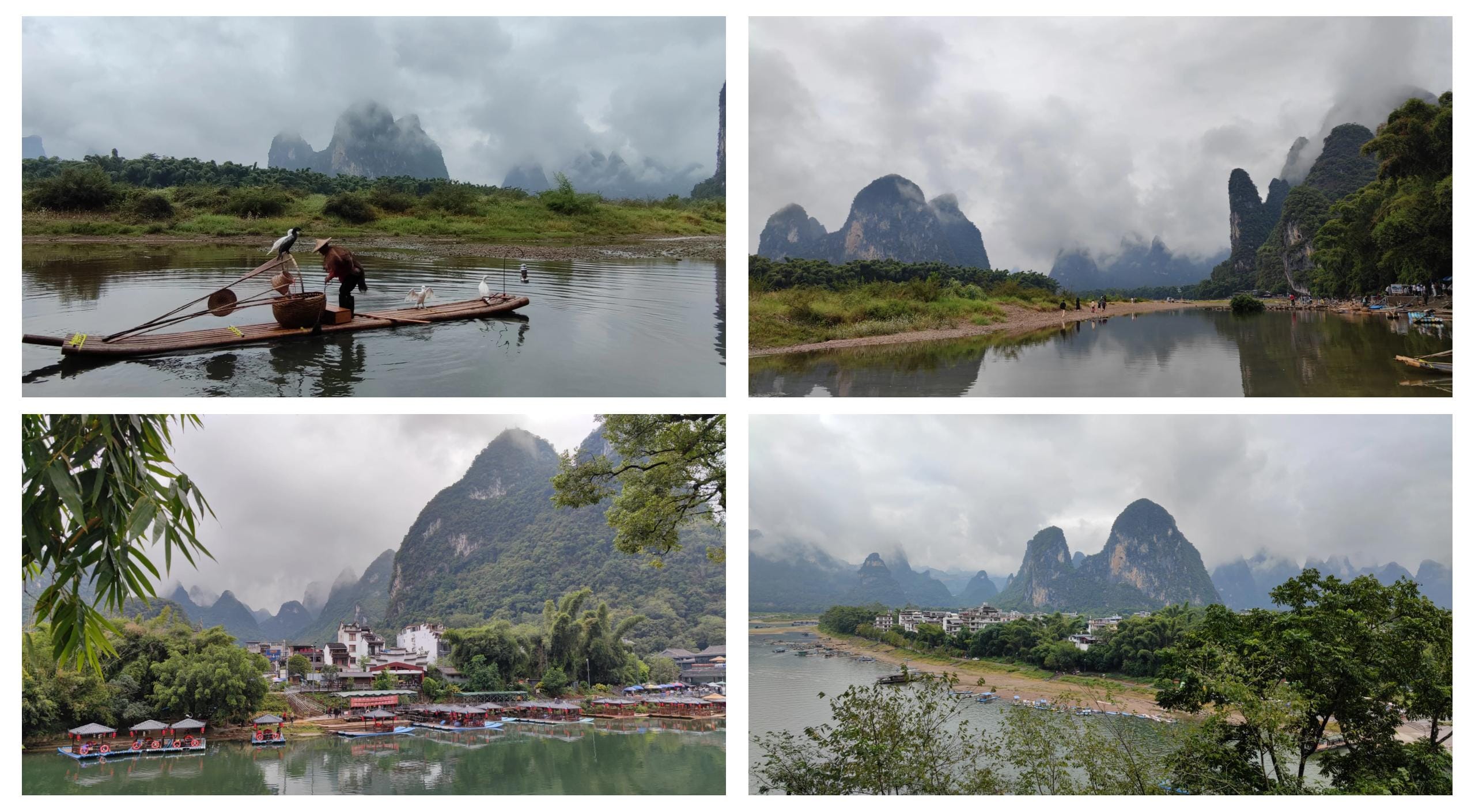
This is the calmest part of the river. The water is wide and flat.
A large yellow rock lies beneath the surface. It looks like a piece of yellow cloth spread on the riverbed.
Because the water is so still, the reflections here are perfect. The seven peaks on the banks are mirrored in the water. This is the spot for reflection photography.
3. The 20 RMB Note Viewpoint

Reaching into your wallet? Take out a 20 Yuan note. Look at the back.
That image? It is right here.
It is located near Xingping. If you take the cruise, you will pass it. If you take the raft from Xingping, you will stop here.
Thousands of people take photos here holding the money against the mountains. It is a cliché. But you have to do it. It is iconic.
4. Xingping Ancient Town
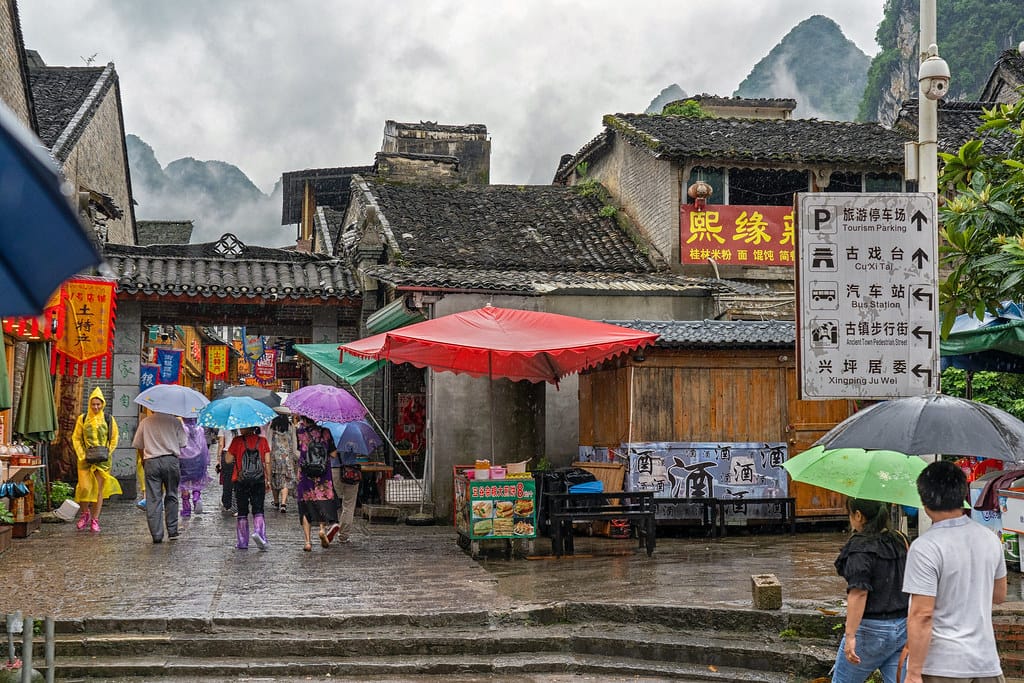
Most cruises pass by here, but hikers end here.
Xingping is over 1,300 years old. It is smaller than Yangshuo. It is more authentic.
The streets are lined with old brick houses. Visit the ancient theater. Visit the fishing village.
Recommendation: If you stay in Yangshuo, come back here for a half-day trip. The sunset here is better than anywhere else.
Special Experience: Cormorant Fishing

You have likely seen the photos. An old man with a long white beard. He stands on a bamboo raft at sunset. He has a gas lamp. He has large black birds.
This is cormorant fishing.
How it Works
The fishermen tie a snare near the base of the bird’s throat. The bird dives. It catches a fish. It tries to swallow. The fish gets stuck in the throat because of the snare. The fisherman brings the bird back to the raft. He retrieves the fish.
The Reality vs. The Romance
We want to be transparent. Today, this is mostly a show for tourists. It is no longer a viable commercial way to fish.
The fishermen you see modeling are often elderly locals who make a living from photography.
Is it fake? Yes, in a commercial sense.
Is it worth it? Visually, absolutely. The contrast of the orange gas lamp against the blue twilight and the karst mountains is stunning. If you want that National Geographic shot, this is how you get it.
- Tip: You can book a private sunset photography session in Xingping. You pay the fisherman a fee, and he will pose for you, cast his net, and light the lamp.
When is the Best Time to Visit?

The Li River changes with the seasons. There is no “wrong” time, but there are different moods.
Seasonal Travel Guide: What to Expect
Season | Months | Weather & Mood | Recommendation Score |
|---|---|---|---|
Spring | March – May | Misty & Rainy. The classic “Ink Painting” look. High humidity. | ⭐⭐⭐⭐ (Best for atmosphere) |
Summer | June – Aug | Hot & Stormy. Clear blue skies after rain. High water levels. Very crowded. | ⭐⭐⭐ (Good for clear photos, but draining) |
Autumn | Sept – Nov | Cool & Clear. Comfortable temps. Osmanthus flowers bloom. | ⭐⭐⭐⭐⭐ (Top Pick) |
Winter | Dec – Feb | Cold & Dry. Low water levels. Grey skies. Fewer tourists. | ⭐⭐ (Only if you hate crowds) |
Planning Your Visit: Logistics & Details

Let’s get practical. Here is how to make the trip happen smoothly.
1. Booking Your Tickets
- Pre-book is Essential: Do not just show up at the pier. Tickets sell out, especially for the 4-star boats and during holidays. Book at least 3-7 days in advance.
- Passport Required: You need your passport to book and to board. It is like an airplane. The name on the ticket must match your passport exactly.
- E-Tickets: Most agencies give you a code or use your passport number. You pick up the paper ticket at the counter with your passport.
2. Getting to the Piers from Guilin
Most tours start early. The boats depart between 9:00 AM and 9:40 AM.
Logistics Cheat Sheet: Piers & Transfers
Activity | Departure Location | Distance from Guilin City | Transfer Time | Estimated Taxi Cost |
|---|---|---|---|---|
3-Star Cruise | Mopanshan Pier | ~30 km | 45-60 mins | ~100-120 RMB |
4-Star Cruise | Zhujiang Pier | ~32 km | 50-60 mins | ~120-150 RMB |
Bamboo Raft | Yangdi Pier | ~50 km | 70-80 mins | ~200 RMB (or take bus) |
Bamboo Raft | Xingping Pier | Accessible from Yangshuo | 20 mins from Yangshuo | ~30-50 RMB |
- Hotel Transfer: Most hotels in Guilin can arrange a van. This is the stress-free option. We recommend this. You don’t want to be stressing about a taxi at 8:00 AM.
3. Arrival in Yangshuo
The cruise ends in Yangshuo.
- Longtoushan Pier: This is the main arrival pier for most large boats. It is slightly north of the town center.
- Getting to Town: From Longtoushan, it is a long walk to West Street. There are electric golf cart shuttles.
- Cost: About 15 RMB per person.
- Route: They drop you off at the edge of the pedestrian zone. You then walk to your hotel.
4. Luggage Management
- On the Cruise: Yes, you can take luggage. There is a storage area for suitcases on the big boats (3-star and 4-star). You carry it on, store it, and carry it off.
- On the Raft: No. You cannot take large suitcases on a bamboo raft. There is no space, and they might get wet. You must send your luggage by car to Yangshuo or leave it in Guilin.
Practical Travel Tips from Our Team
We learned these the hard way, so you don’t have to.

1. The Toilet Paper Rule
Always bring your own toilet paper. The toilets on the 3-star boats often run out. Even in public restrooms in scenic areas, paper is not guaranteed. Carry a small packet of tissues in your pocket at all times.
2. Sun Protection on the Water
The reflection off the water amplifies the sun. Even on cloudy days, UV rays are strong.
- Wear a hat.
- Wear sunglasses (polarized is best to see into the water).
- Apply sunscreen before you board.
3. Avoiding the “Up-sell”
On the boat, the staff might try to sell you things.
- Souvenir Books: They will take your photo and try to sell you a printed album. You can say no.
- VIP Deck Upgrade: On the 3-star boat, you can pay extra (usually 50-100 RMB) to sit on the upper deck. Tip: This is often worth it if the main cabin is noisy and crowded. Go check the deck first, then decide.
4. Motion Sickness?
Generally, the Li River is very calm. It is not like the ocean. The boat moves slowly. Motion sickness is rare. However, if you are very sensitive, bring medication just in case. The smell of diesel on the bamboo rafts can sometimes bother people more than the motion.
5. Connectivity
- Wi-Fi: The 4-star boats often advertise Wi-Fi, but it can be spotty in the remote karst mountains.
- 4G/5G: Mobile signal is generally good along most of the river, but there are dead zones between high peaks.
Real Traveler Reviews
Don’t just take our word for it. Here is what our recent guests from 2025 have said.

Sarah from UK (Visited October 2025):
“We debated between the raft and the cruise. We chose the 4-star cruise because we had luggage. I am glad we did. It was relaxing. The buffet was surprisingly good—lots of fresh fruit. The scenery is exactly like the pictures. It felt like a dream. The 4 hours went by very fast.“
Mike from USA (Visited September 2025):
“The bamboo raft was fun but LOUD. Seriously, bring earplugs if you are sensitive. But being right on the water was cool. We got soaked a little bit from the spray. It felt more adventurous than the big boat, but my back hurt a bit after sitting on the small plastic stool for an hour.“
Wei from Singapore (Visited November 2025):
“Xingping is beautiful but very crowded at the 20 RMB spot. Everyone is fighting for the same photo. My advice? Walk 500 meters further down the path. The view is just as good, and there are no people. Also, try the local Guilin Rice Noodles in Xingping town—delicious!“
Frequently Asked Questions (FAQ)
Q: Is the 4-star boat really worth the extra money?
A: In our opinion, yes. The difference in comfort is significant. The 3-star boat can feel like a crowded cafeteria. The 4-star boat feels like a lounge. For a once-in-a-lifetime trip, the extra $25-$30 is well spent. Plus, the Western toilets are a big plus for many.
Q: Can I swim in the Li River?
A: Generally, no. It is a busy shipping lane with large boats and propellers. It is dangerous. There are undercurrents. If you want to swim, go to the Yulong River or a hotel pool.
Q: What if it rains on the day of my cruise?
A: The boats still run. The rafts still run (unless there is a typhoon or extreme flooding). Rain adds to the mystical atmosphere. The clouds hanging low over the mountains are beautiful. Just buy a cheap plastic poncho at the pier (sellers will be everywhere).
Q: Can I do the cruise in reverse (Yangshuo to Guilin)?
A: Technically, yes, there are some boats. But 99% of tourists go Guilin to Yangshuo. Going upstream takes longer and fights the current. Most itineraries are designed to end in Yangshuo so you can enjoy the evening there.
Q: Is the bamboo raft safe?
A: Yes. You must wear a life jacket. The rafts are inspected. The drivers are licensed. However, they are open to the elements.
A Personal Note from Our Team

We have seen the Li River in pouring rain. We have seen it under a scorching sun. We have seen it at dawn when the world feels silent.
It never gets old.
There is a moment on every trip. The engine hums. The wind cools your face. You look up and see a peak that looks like a dragon or a camel. You realize that nature is the greatest artist. You realize how small you are in the grand timeline of these rocks.
We hope you find that moment too.
Whether you choose the luxury cruise or the noisy raft, just go. Do not skip it. It is the soul of China. It is the China you have imagined since you were a child.
Safe travels, and we hope to see you on the water!
